Category Archives: political news

Dr. Carson may be a tad too candid

AAgh1vB

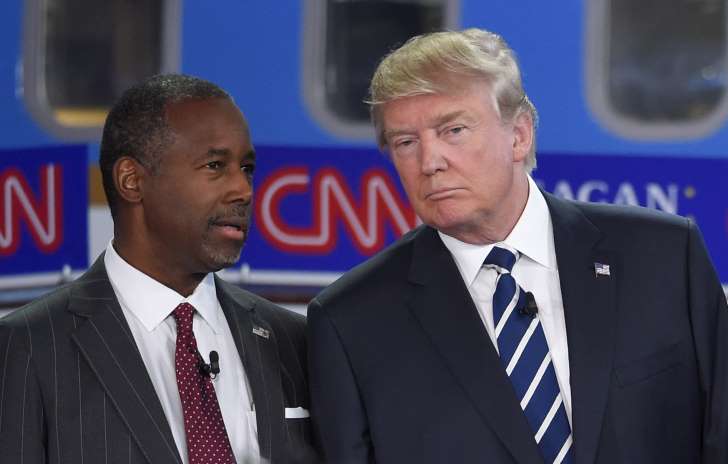
Man, you have to hand it to Dr. Ben Carson.

When politicians switch their allegiance and make surprise endorsements, they usually waffle, wiggle and weasel their way out of answering direction questions as to, “Why?”

Not the doc.

He said he endorsed fellow Republican Donald J. Trump because he couldn’t find another candidate to back, meaning another candidate who (a) could win and (b) fit his own political world view.

There’s another reason: Trump has offered him a spot in a possible (gulp!) Trump administration.

Yep, Carson said so. Out loud. For the record.

Don’t you just love it? I surely do.

Carson’s candor seems to have caught the attention of some legal experts as well. Some have suggested that Trump might have broken federal election law by flat-out “buying” an endorsement by offering a paid position within his administration in the even hell freezes over and Trump is actually elected in November.

New Jersey Gov. Chris Christie is the only other former GOP presidential primary foe to endorse Trump. His own explanation for his switch was so standard. He sought to tap dance all around the fact that he once declared Trump “unfit” to be commander in chief. Now, according to Christie, Trump is, um, “fit.”

Dr. Carson’s candor is refreshing in its way. Politicians are schooled on evasiveness. If you ask a trained pol a direct question about, say, a statement they or someone they support has made, they’re going to revert immediately to a rote response.

It’s as though they’re under some sort of post-hypnotic spell: Ask them a tough question and you trigger a telepathic switch that makes them say what they’re programmed to say.

The good doctor isn’t like that.

I appreciate that he answered so directly: Trump isn’t really my guy. I would have preferred to back someone else. But heck, he made me an offer I couldn’t refuse.

Awesome!


It’s time to start providing some detail, Mr. Trump

GOP%20Caricatures_Edit

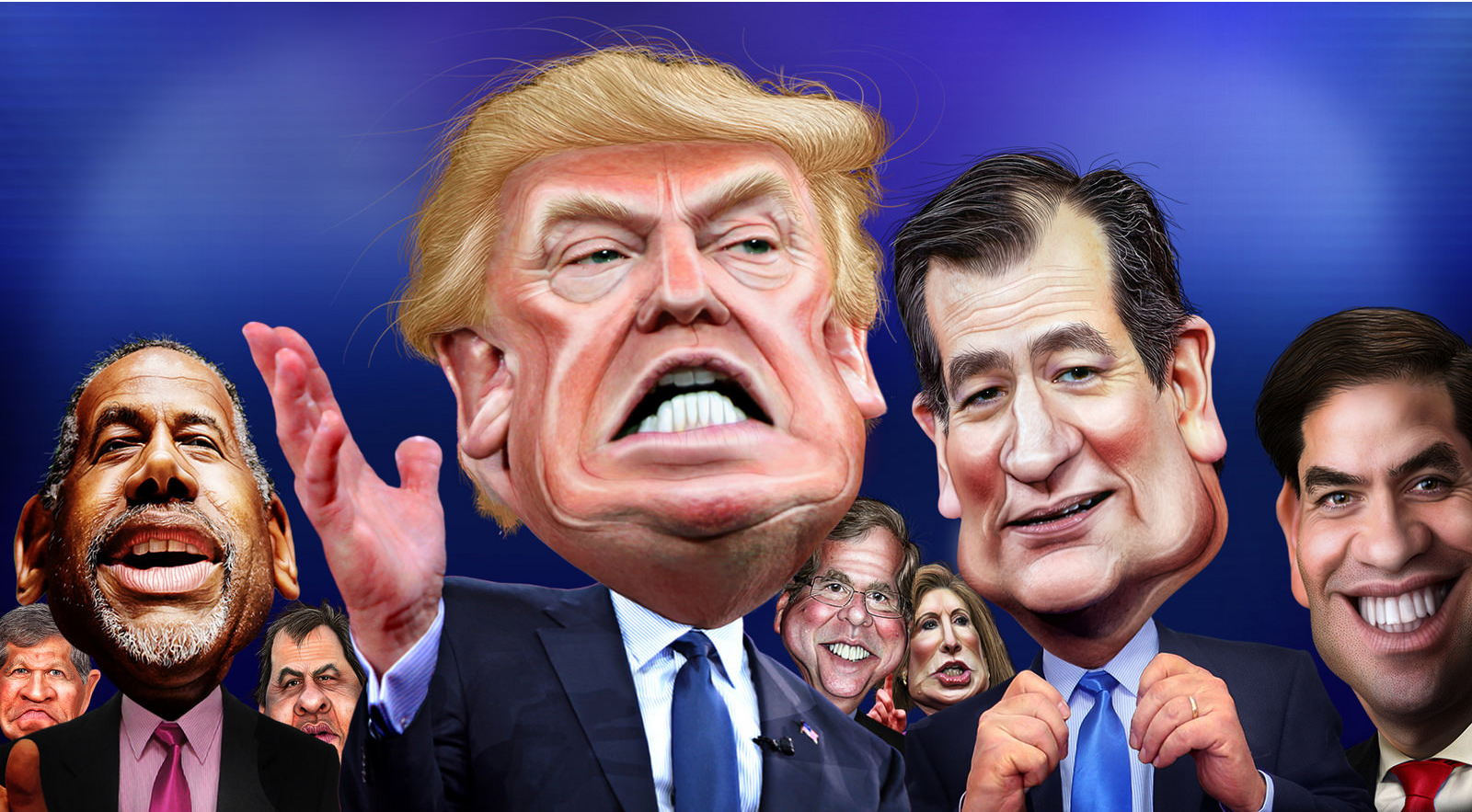
I am acquainted with a young woman who has decided that Donald J. Trump should be elected the next president of the United States.

I didn’t know precisely what drew her to climb aboard Trump’s bandwagon. So, I did what I thought was the correct thing to do: I asked her directly.

I’ll refrain from identifying her. It’s true she’s just one person, but she seems to sound like countless other Trumpsters who’ve thrown in with the real estate tycoon/reality TV celebrity.

I just want to share her written response to my query.

“First, I have believed that our country should be run by a businessman/woman who understands profit/overhead/dealmaking/etc., as opposed to career politicians who have no problem freely spending tax money and demanding more.

“I am also I am also vehemently opposed to Political Correctness. It is both a false way to live and a maniacal way of attempting to force others to tow your chosen line, not their own. I detest racism with a passion, but I firmly defend the right of the Black Lives Matter movement to spew their prejudices …

“I believe, and always have, in a strong military. To me, the main objective is to protect our borders and citizens. Welfare, Planned Parenthood, etc., are all fine ventures, but should be privately funded, in my opinion. I truly admire that Trump says what he thinks and does not “sugar coat” in an effort to appear “perfect” because nobody is perfect and I hate that Politician Fakeness.

“The funny thing is, when Trump first announced I laughed him off as a joke looking for attention. But, I slowly realized that, love him or hate him, he speaks from his heart with no care for what others think. He has failed and rebounded more than once. Most people never achieve great success because they fear failure. He is an Alpha Male and I prefer that to a milquetoast.”

The thing that jumps out at me as I have studied her answer is  absence of any policy analysis. She has joined others in backing Trump because, as I read this, he hates “political correctness,” and has the kind of background, acumen and savvy that would enable him to run the country like a business.

How does he intend to build that wall along our southern border? How does he intend to bring back all those jobs? How is he going to negotiate with Russia, with Iran? With what will he replace the Affordable Care Act? How does his tax plan work? How will he reduce the national debt? What is his view of the ideal Supreme Court justice? How — precisely — is he going to win the war against international terrorism?

These are the things Trump ought to spell out. He’s not doing any of that. Instead, he tosses out innuendo and insults. He demands apologies from media outlets that criticize him, such as what he demanded this week of the Wall Street Journal for publishing a critical editorial.

But it’s OK with those who have signed on because, they say, he speaks for them. He says what others are thinking but don’t have the guts to say out loud.

He “tells it like it is.”

My question is this: What is the “it” he’s talking about?


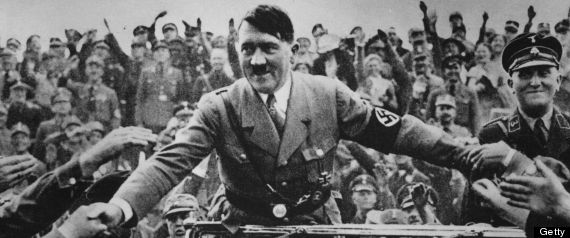
Hitler is dead already! Let’s keep him that way!

1933:  Adolf Hitler (1889 - 1945), chancellor of Germany, is welcomed by supporters at Nuremberg.  (Photo by Hulton Archive/Getty Images)

Adolf Hitler is dead.

What passes for his spirit remains very much alive in the guise of contemporary political debate … although I hesitate to use such soaring terminology to identify much of the back-and-forth that’s been occurring these days.

The latest object of the Hitler comparison is Donald J. Trump, the leading Republican Party candidate for president of the United States.

Do not misunderstand me on this point: I find Trump to be among the most repulsive major U.S. political figures of my lifetime. With every idiotic utterance that flies out of his pie hole, he moves closer to the very top (or bottom) of my unofficial list of despicable American political leaders.

I am weary to the max, however, of the Hitler references.

Of all the beasts who have passed themselves off as human beings, Hitler stands alone. The Holocaust defies any human being’s ability to comprehend such a dastardly act. The murderous regime he led for a dozen years and the war he started in Europe produced a bloodbath beyond all reckoning.

Hitler is without question the 20th century’s most hideous tyrant.

Trump’s world view — such as it is — deserves to be critiqued on its own. That said, I do not care to see these Hitler references attached to anything Trump has to say.

To be sure, the current president of the United States has been demonized in this manner as well, as have have previous presidents of both major political parties.

Many politicians provide ample grist for criticism. Is it really necessary to invoke Hitler’s name whenever we disagree with what a contemporary U.S. politician has to say?

To my ears, doing so seems to fall into the category of foul-mouth comedians. Someone once said that comics who depend on verbal filth usually have run out of clever things to say.

Politicians and pundits who invoke Hitler’s name to offer criticism, then, might be falling into the same category.

Does the GOP really want a mainstream jurist on the court?

imagesM3AI6GFF

We hear it constantly from the right side of the political spectrum.

Courts shouldn’t be full of “judicial activists.” The culprits, in their eyes, usually come from the left. Those liberals are just too prone to “legislate from the bench.” Or so it goes from the right-wing mantra machine.

How did Barack Obama answer that with his choice for the U.S. Supreme Court? The president chose as mainstream, moderate and even-tempered a fellow as he could find. Merrick Garland deserves to take his seat on the nation’s highest court.

His record is exemplary. His temperament and judicial philosophy would seem to fit the bill perfectly for Senate Republicans who hold the key to whether Garland even gets a hearing, let alone a vote by the full Senate.

Now, though, all those qualities that conservatives say they admire in a judge don’t apply. Garland must be too, uh, moderate. Too measured. Too studious. Too mainstream.

Compared to the individual he would replace — the late Justice Antonin Scalia — perhaps there’s some merit to the criticism in the eyes of the Senate Republican caucus.

What they want is another Scalia.

Yes, the late justice was a brilliant legal scholar. He called himself a “strict constitutionalist”; to be honest, I’m not smart enough to argue that point.

I am reasonably intelligent enough, though, to know that he was rigid in his approach to interpreting the Constitution. He was an ideologue. However, his ideology fit nicely with the politicians who control the Senate.

Garland’s doesn’t. He’s too centrist. Too moderate and mainstream.

One man’s ideological purist is another man’s near-perfect fit for the job of interpreting the Constitution.

So, it’s fair to ask: Do the Senate Republicans who keep insisting that the next president make this pick really oppose the current choice on judicial and philosophical grounds, or are they just playing politics?


Daunting task: explaining U.S. politics to Europeans

GTY_hillary_clinton_donald_trump_split_jt_150912_16x9_992

Later this year — in late summer — my wife and I are going to face a daunting task.

We’re going to fly to Germany, where we’ll spend time visiting friends and touring the beautiful region of Bavaria. We plan as well to visit other friends in The Netherlands while we’re across The Pond.

OK, that’s not the daunting part. The challenge will occur in explaining the American political system to sophisticated western Europeans.

It’s not that I haven’t had similar challenges before.

In November 2000, we traveled to Greece. Voting in the U.S. presidential election had just concluded — but we didn’t yet have a new president. Vice President Al Gore had collected more votes than Texas Gov. George W. Bush, but the outcome had been thrown into a tizzy over those “hanging chads” in Florida.

Our Greek hosts — who also are quite sophisticated — kept peppering me with questions that centered on this idea: How is that one candidate can get more votes than the other guy but still not win?

That’s when I sought to explain the Electoral College system and how electoral votes are allocated based on which candidate wins a particular state. The bigger the state, the more electors they get. I tried to explain that the system has worked generally pretty well.

The Bush-Gore election and its immediate aftermath shot that idea all to hell.

This year, the presidential election is heading into a climactic phase as my wife and I are vacationing in Western Europe. I’m expecting our friends to introduce us to their friends as “visitors from America.”

I can see the eyebrows raising as they ask us about  “you know who.”

I also can anticipate the question: How in the world can a major American political party nominate someone like Donald J. Trump?

To be honest, I haven’t yet formulated my answer. Neither has my wife. We’re throwing up our hands in dismay at the prospect of this know-nothing narcissist accepting the Republican Party presidential nomination — against the expressed wishes of the GOP’s wise men — and then taking his campaign of innuendo and insults against Hillary Rodham Clinton.

Both of us mounted valiant efforts in 2000 to explain our political system to the inquisitive Greeks.

This year, according to my wife, it’s hopeless.

“I think this time,” she said, “I’m going to say, ‘Yep, you’re right. We’ve messed up.'”

I’m thinking of following her lead.


Garland the perfect choice for SCOTUS … normally

Caplan-Merrick-Garland2-1200

Under normal circumstances — without such historic potential consequences on the line — President Obama’s choice for the U.S. Supreme Court would be considered damn near perfect.

Merrick Garland fits the bill — to the letter.

Brilliant legal scholar; strict adherent to the Constitution; moderate judicial philosophy; meticulous writer; tremendous personal story; varied legal career in private practice and as a federal prosecutor; many years of experience on the federal bench; virtually unanimous admiration among his peers.

Then again, he’s got this particular problem that is not of his making.

He’s been chosen to the highest court in the land during an election year. That, by itself, isn’t a deal breaker. Except that Republicans who control the U.S. Senate, which must confirm the appointment, have made it one.

They’ve declared that Obama shouldn’t get to pick someone to replace the late conservative ideologue Antonin Scalia during the heat of a presidential election campaign. They want to hand that duty over to the next president who, they hope, will be a Republican.

They’ve declared that the current president doesn’t get to his job, which the U.S. Constitution says includes making appointments to the federal bench. He’s made a big choice. Garland is been named to fill some huge shoes on the Supreme Court.

His only drawback, if you want to call it that, is that he isn’t the rock-ribbed, ironclad conservative in the mold of Scalia. Oh, no. Garland is a moderate. He’s a mainstream, thoughtful jurist with a gleaming reputation for careful legal scholarship.

What, do you suppose, will be the American Bar Association’s rating of this guy, when the ABA decides to make that declaration? I’ll predict he’ll get the highest recommendation possible from the bar.

So what in the world is holding up his confirmation? It’s the obstruction of the Senate Majority Leader, Mitch McConnell, who vows to block any attempt even to conduct a confirmation hearing before the Senate Judiciary Committee.

And to think that McConnell had the brass to say that the president is “politicizing” this pick by criticizing Republicans’ effort to block it.

The stunning lack of self-awareness here is beyond belief. It’s McConnell and his Senate lieutenants who have politicized this process by stating that the 44th president of the United States shall not have his judicial appointment even considered for confirmation.

Why? Because they hope to get one of their fellow Republicans elected president this November.

Something tells me McConnell and his gang of Senate GOP obstructionists are flirting with political disaster if they insist on continuing to play this foolish game.


Let’s talk, Mr. Senate Majority Leader

48604710.cached

Every effective American politician has a consigliere — a wise man, or perhaps a wise woman — who’ll tell them the unvarnished truth.

JFK had Bobby; George H.W. Bush had Jim Baker; Ronald Reagan had Nancy.

I’m wondering this morning who in Senate Majority Leader Mitch McConnell’s inner circle fills that role. Hmm. It might be his wife, Elaine Chao, a former labor secretary during W’s administration.

Whoever it is, are they having a serious, candid and frank discussion with the boss? Are they hunkered down in some ante room in his spacious office in the Senate wing of the U.S. Capitol Building?

Here’s a thought, offered from the Flyover Country Peanut Gallery, on how that talk might proceed:

McConnell: OK, I sense we have a problem with this Supreme Court pick. I’ve declared my intention to block whoever Barack Obama nominates. I’m trying to stand on some sort of principle but my knees are buckling just a little.

Wise Man: And they should, Mitch. You’ve boxed yourself into a corner. Did you think Obama was going to pick some flaming, judicial activist liberal? He didn’t. He went with this Merrick Garland fellow. Everyone loves the guy. You love the guy. Hell, Mitch, you voted to confirm him to the D.C. court nearly 20 years ago.

McC: True. But that was then. The stakes this time are gigantic. They’re y-u-u-u-u-ge! (Laughter). I hope you don’t mind my saying it that way. Antonin Scalia’s death upset everything. He was one of our guys. Now Obama has picked one of their guys to replace Scalia. The balance of the court will change.

WM: So, what’s your point? Did you think Obama was going to select an archconservative like Scalia? We all knew this would happen if one of our guys died. But hey, he didn’t pick a flamer, Mitch. He picked a mainstream moderate judge. Hasn’t he done well on the D.C. court?

McC: Yeah, he has. He’s been the kind of judge I said he was when I spoke in his favor in 1997. I get that he’ll be that kind of justice on the Supreme Court, too. But it’s different now. I’ve got those TEA Party yahoos who want me to dig in. They insist — in that way of theirs — that Barack Obama’s re-election doesn’t really count. And you don’t need to remind me of what I said early in Obama’s presidency about making him a “one-term president” being my top priority. I get that it didn’t work out.

WM: So, consider this, too. We’re about to nominate Donald Trump as our candidate for president. The Democrats are going to nominate Hillary as their candidate. Trump vs. Clinton. One of them will get to pick the next Supreme Court justice if we continue to obstruct this selection. Who between them do you want? Trump, who you’ve criticized before for the outrageous accusations he has made along the campaign trail? Or Clinton, who the TEA Party wing hates nearly as much as it hates Obama? Don’t you think maybe that Merrick Garland is going to be the best choice we’re going to get?

McC: I get your point. But what about the principle we’re standing on here? What about giving in to the Democrats? I’m going to get fried if I cave in.

WM: Well, Mitch, a lot worse is going to happen to you if we obstruct this nomination, Hillary makes a huge campaign issue of it, wins in a landslide and the Democrats retake the Senate.

McC: How do you propose I back off? How do I justify this to my base — our base?

WM: Look, Mitch. I might be a wise man. But I’m not a magician. You figure it out.


‘American people’ have spoken, Mr. Leader

mitch

U.S. Senate Majority Leader Mitch McConnell is really starting to tick me off.

He keeps harping on this idiotic notion that “the American people” deserve to have a voice in determining who the president should nominate to a seat on the U.S. Supreme Court. Their voice has been heard, Sen. McConnell. It was heard four years ago when the country re-elected President Obama.

Thus, he greeted today’s nomination of an eminently qualified jurist — Merrick Garland — with his vow to block it out of hand. Judge Garland will get no hearing; Republican senators won’t meet with him; there will be no vote.

The Senate won’t do its job. It won’t follow through on President Obama’s nomination. Why? Because, according to McConnell, Barack Obama’s time as president is about up and the next president should make the appointment.

So, with that, the majority leader of the Senate has decided that Barack Obama’s second term will be cut short by nearly a year. No need to consider an appointment that the incumbent president sends to the Senate, because the legislative body’s upper chamber won’t do anything about it.

This is an outrage of the first order.

Merrick Garland is a first-class jurist. Senators thought so when they confirmed his nomination to the D.C. Circuit Court in 1997. Republicans joined Democrats in praising Garland’s credentials.

Now, though, it’s different. McConnell said today it’s not “personal.” Of course it is! He and Senate Republicans don’t want Garland to fill a court vacancy created by the untimely death of the court’s leading conservative ideologue, Justice Antonin Scalia.

Garland is not a flaming liberal. His judicial record is the model of judicial moderation. Indeed, leftists today expressed disappointment with the president over his selection of someone who is not a favorite of the Democratic Party’s liberal base.

American citizens have spoken already, Mr. Leader, about who should sit on the Supreme Court. They spoke clearly in the November 2012 general election.

Five million more Americans voted for Barack Obama than voted for Mitt Romney. Case closed.

For the Republican leader of the Senate to suggest that the president’s pick should be stalled because GOP senators don’t want him to do his job is an outrage.


Who will join Cruz in stopping Trump?

cruz

Ted Cruz has a problem.

He wants to become the “anti-Trump” candidate for president of the United States. He’s seeking a way to get Ohio Gov. John Kasich to bow out. He believes he can coalesce enough “true conservatives” behind him to derail Donald J. Trump’s march to the Republican Party presidential nomination.

The junior U.S. senator from Texas, though, needs some help from his colleagues in the Senate. But as Politico reports, he is nearly universally detested by his fellow senators. And that’s just the Republicans with whom he serves.

Cruz needs to build some relationships. I don’t mean “rebuild.” He’s got to start from scratch.

He’s been in the Senate for slightly more than three years. He’s halfway through his very first term in the very first elected public office he’s ever held.

As Politico reports: “Cruz’s relationship with his colleagues is now a central paradox of his campaign: He’s openly arguing for the party to rally behind him, but Republican senators are plainly wary of going anywhere near him. Those who feel burned by Cruz in the past say he’ll come to them only if he decides it’s in his self-interest. ”

The man who leads the Senate — the body’s top Republican — once was on the receiving end of a barrage that Cruz leveled at him. Remember when the Cruz Missile called Majority Leader Mitch McConnell a “liar” in a speech on the floor of the World’s Greatest Deliberative Body?

How does McConnell put that epithet behind him? How does McConnell gather the forces to help one of their own take down this “interloper” named Trump.

Moreover, Sen. John McCain — the GOP’s 2008 presidential nominee — has taken Cruz to task in public for his intemperate remarks about a couple of fellow Vietnam War combat veterans, John Kerry and Chuck Hagel.

Finally, he’s been campaigning against the very “Washington establishment” where he works these days. He’s an “outsider,” he says.

Something tells me Cruz’s efforts to put distance between himself and his Senate colleagues ain’t going well with the ladies and gents with whom he serves.


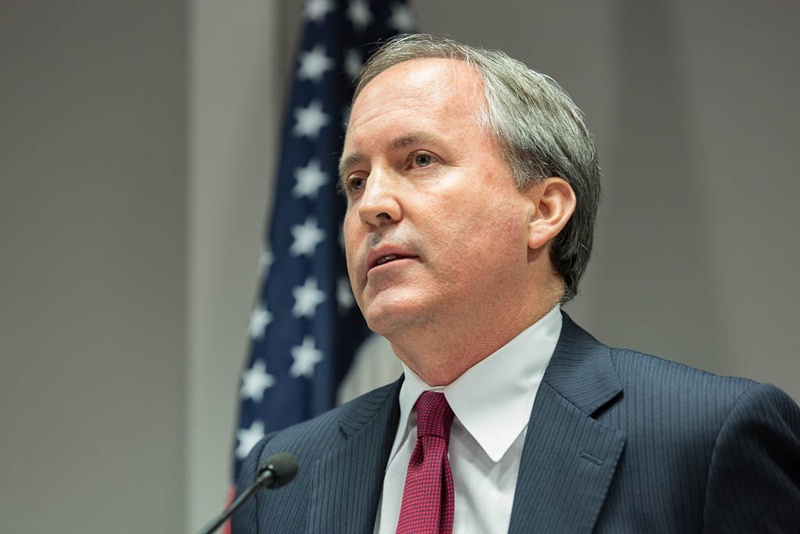
‘Rampant’ voter fraud in Texas? Not even close

7C2A3553_jpg_800x1000_q100

Texas Gov. Greg Abbott describes the instances of voter fraud in this state as “rampant.”

The state, he said, has sought to curb the epidemic of voter fraud by requiring voters to produce photo ID — driver’s licenses, passports, etc. — when they go to the polling place.

The Texas Tribune’s Ross Ramsey, though, has shot down the governor’s assertion with an interesting analysis of Abbott’s challenge to a President Obama’s critique of Texas’ historically poor voter turnout.

The evidence of fraud is “scant,” according to Ramsey.

Here’s part of what Ramsey writes: “A study done by News21, an investigative journalism project at Arizona State University, looked at open records from Texas and other states for the years 2000-2011 and found 104 cases of voter fraud had been alleged in Texas over that decade.

“Chew on this: If you only count the Texans who voted in November general elections — skipping Democratic and Republican primaries and also special and constitutional elections — 35.8 million people voted during the period covered by the ASU study.

“They found 104 cases of voter fraud among 35.8 million votes cast. That’s fewer than three glitches per 1 million votes.”

Does that fit the description of “rampant” voter fraud?

Not exactly.

Obama made the point at a fundraiser the other evening that Texas remains one of the nation’s poorest-turnout states. I am not going to blame the voter ID push for driving down the turnout. Suffice to say, though, that Texas can — and should — do more to promote greater turnout.

I’ve lived in Texas for 32 years. I have been watching, reporting and commenting on the political process here for that entire time. I have no recollection ever of the state — from the governor’s office on down — launching a concerted effort to drive up voter participation.

There has seemed over all that time to be a sense of complacency, that the state puts little emphasis on greater turnout.

“The folks who are governing the good state of Texas aren’t interested in having more people participate,” the president told The Texas Tribune’s Evan Smith at South by Southwest Interactive.

Abbott’s response? He trotted out the allegation of “rampant” voter fraud. The numbers don’t add up.