Category Archives: political news

Hey, Hillary … take a look at what these guys are saying

BudgetDeficit

Hillary Rodham Clinton may be the inevitable Democratic Party presidential nominee.

It’s not a done deal just yet, given Sen. Bernie Sanders’s big wins this weekend in Washington, Alaska and Hawaii. Clinton, though, still has the big lead in delegates and the primary campaign is heading into more Clinton-friendly territory.

But here’s the thing, according to Bill Moyers (yes, that Bill Moyers) and Michael Winship: She remains captive to the big-money interests that are poisoning the political system. It’s time for Clinton to stand up, spit into her palms and then do what she needs to do, they say, which is call for the immediate resignation of Chicago Mayor Rahm Emmanuel and Democratic National Committee Chairwoman Debbie Wasserman Schultz.

They ask a valid question: Is she the candidate of the past or of the future?

If it’s the latter, then she needs to demonstrate it. Forcefully.

These two figures — Emmanuel and Schultz — represent what’s wrong with the Democratic Party, say Moyers and Winship.

Emmanuel’s tenure as mayor has been rocked by controversy. The shooting death of an African-American teenager, Laquan McDonald, went unreported for months. Laquan was shot to death by Chicago police while he was strolling down the street. He presented no weapon; his hands were in the air. A cop shot him multiple times dead in the street.

Emmanuel then took responsibility for the shooting, given that he’s the mayor and the chief of police answers to him.

But before he became mayor he was a three-term Illinois congressman and White House chief of staff for President Obama. He is soaked in corporate money. Emmanuel, Moyers and Winship write, “chaired the fundraising Democratic Congressional Campaign Committee (calling on his Wall Street sources to get in on the gravy by electing so-called New Democrats over New Deal Democrats), and soon was back in the White House as Obama’s chief of staff. There, he infamously told a strategy meeting of liberal groups and administration types that the liberals were ‘retarded’ for planning to run attack ads against conservative Democrats resisting Obamacare. Classy.”

He’s a longtime ally of Hillary and Bill Clinton, which is why he continues to loom so large on the Democratic Party landscape.

Schultz is just as tainted by money, say Moyers and Winship, who write that “she embodies the tactics that have eroded the ability of Democrats to once again be the party of the working class. As Democratic National Committee chair she has opened the floodgates for Big Money, brought lobbyists into the inner circle and oiled all the moving parts of the revolving door that twirls between government service and cushy jobs in the world of corporate influence.”

Of the two essayists, Moyers — of course — is the better known. He’s an East Texan who came to prominence during the Lyndon Johnson administration, where he served his fellow Texan as White House press secretary. He then went on to become a fixture on public television.

The Sanders campaign has lit a fire all by itself with the candidate’s call for reform of the political financing system. His sole aim is to finance presidential campaigns solely with public funds, while seeking to overturn the Citizens United Supreme Court ruling that unleashes corporate donors.

Moyers and Winship make the case fairly persuasively that Hillary Clinton is too wedded to the deep-pocketed donor class that they say has corrupted the political system.

She well might want to consider seriously what these men are suggesting, which is to cut her ties to the past and demonstrate that she’s the Democratic Party’s best hope for the future.
 

‘Transformational’ takes on new meaning

Cruz_Trump_ap_img

There once was a time in politics when those who practice the craft sought to become “transformational” figures.

Barack Obama saw himself in that light in 2008. Ronald Reagan, too, was considered a “transformational” candidate. The Gipper reshaped the political landscape with his landslide victory in 1980. The jury is still out on Obama’s impact.

Thus, the term was thought to constitute high praise.

These days, “transformational” seems to have taken on a new meaning.

And it’s not flattering in the least.

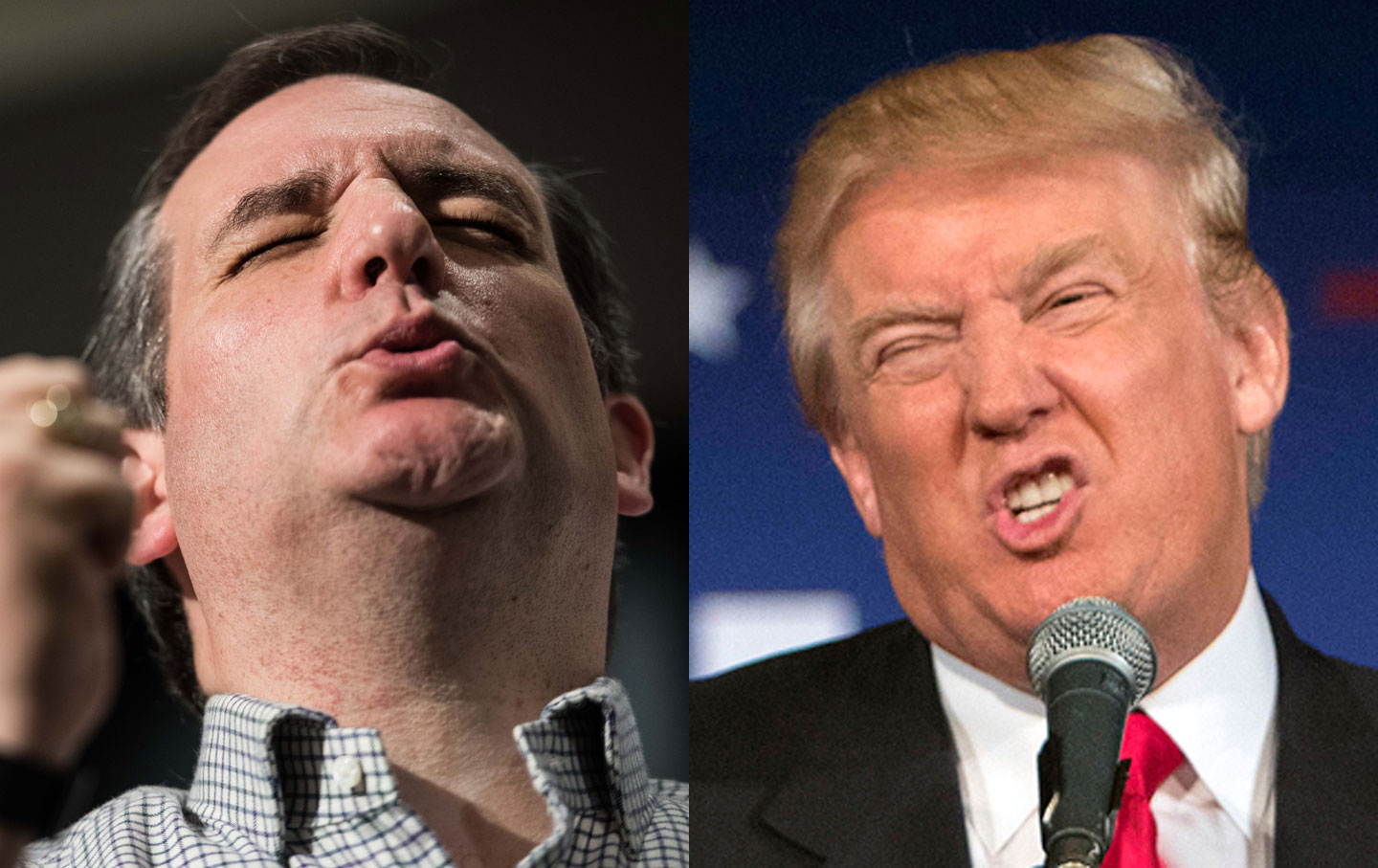
Donald J. Trump and Rafael Edward Cruz have “transformed” the political craft into something cheap, tawdry, childish, petulant and utterly without substance.

They’ve been bickering over social media about their wives.

And as the accompanying New York Times essay seeks to explain, they seem to treat women — even the women in their lives — as objects.

They’ve lowered the bar to new depths.

Yes, the candidates have quarreled over the Internet about insults, innuendo, threats and retribution against their wives.

It has been a disgraceful exhibition that in normal election cycles would have no place anywhere near two leading major-party candidates for the presidency of the United States.

I am quite certain the rest of the world is laughing hysterically at what has become of the formerly great political party known as the Republican Party.

The Party of Lincoln has become the Party of Chuckleheads.

Please, spare me the bleating by “true Republicans” that Trump isn’t one of them. He’s chosen to line up on the Republican side of the gate in this race for the White House, so the GOP must accept that he’s now one of their own.

And Cruz? His response to the Brussels terrorist attack was the Mother of All Doozys. He wants to beef up police patrols in “Muslim neighborhoods.” Yeah, boy. That’ll show them Muslims what we’re all about here.

Is there a greater Islamic State recruitment tool — other than Trump’s stated desire to ban all non-American Muslims from entering the United States — than this?

But instead of debating the idiocy of such a policy pronouncement, we’re left to wonder what in the name of political sanity has become of a party that features two men quarreling out loud about the nasty things being said about their wives?

This is the new definition of “transformational” politics.

We’ve transformed what the late Robert F. Kennedy used to describe as a “noble profession” into something not worthy of a middle-school food fight.


Still waiting for answers from Bernie

berniesanders-61515-1434466786

Some of us might recall a quip made famous by former Vice President Walter Mondale as he competed for the Democratic presidential nomination in 1984.

His chief foe that year was U.S. Sen. Gary Hart of Colorado. The two of them squared off in a debate and Mondale turned to Hart and asked him: Where’s the beef?

The question has become something of a punch line.

I think it’s fair ask another challenger for the Democratic nomination essentially the same question. It ought to go to Sen. Bernie Sanders of Vermont.

Where is the beef, Bernie? Where are your constructive solutions to what you say ails the country?

I’m not hearing them.

Sanders captured two Democratic caucuses today, in Washington and Alaska. The frontrunner for the party’s nomination remains Hillary Clinton.

I listened last night to quite a bit of Sanders’s rally in Seattle. He stood at a lecturn in the middle of Safeco Field and kept saying what he’s been saying all along.

The campaign system is corrupt and he wants to bring public financing to presidential elections; the top 1 percent are getting richer while the rest of America is suffering; he wants to provide free college education for every student in America; he says every American is entitled to “universal health care.”

OK. Fair enough. I get the message.

The question: How are you going to make any — let alone all of it — a reality?

It occurred to me this afternoon while visiting with a friend: Sanders sounds a little like Donald J. Trump. Yes, he’s tapping into voters’ anxiety, anger, fear and frustration, just like Trump.

The difference, though, lies in the tone and tenor of his remarks … not to mention the tone and tenor of his response to criticism.

As I listen to Sanders, though, I keep hearing the same refrain.

Wall Street is bad. The political system is corrupt. Wages are unequal.

What is the candidate going to do — precisely, I must ask — to fix it?

Where, Sen. Sanders, is the beef?


Who’s to know who gets our vote?

curbelo

Someone must have asked U.S. Rep. Carlos Curbelo a direct question, such as: Do you plan to vote for Donald J. Trump if he’s the Republican nominee for president of the United States?

Curbelo, a GOP congressman from Florida, then must have felt compelled to answer, which is that he cannot rule out possibly voting for presumed Democratic nominee Hillary Clinton this fall.

It begs this question, in my mind at least: Who cares how he votes?

Here’s another question: Is it anyone’s business how one votes, given that we vote in secret?

Rep. Curbelo has placed himself on the hot seat.

By my reckoning, he didn’t need to answer the question at all.

They cast secret ballots in Florida, just as we do in Texas and — I am going to presume — they do all the other 48 states and the U.S. territories.

How we vote is the individual’s business exclusively.

The Trump factor, though, has thrown Republicans officeholders and candidates into a tailspin as they talk to the public — and among themselves — about whether they would support Trump if he becomes the party’s presidential nominee.

Do they need to say how they would vote? No. I guess, though, it becomes a matter of “public interest,” given that members of Congress, governors and elected officials at all levels of government take an oath to represent our interests.

Who gets his vote?

So the question of how they vote in the privacy of their voting booth becomes the public’s business. Is that correct?

I tend to think not.

Sure, I’ve declared in my blog that I’ve voted for Democratic presidential candidates in every election dating back to 1972. I guess, therefore, I’ve made one element of my voting record other people’s business.

But I’ve never divulged that information publicly in advance by declaring right up front who is getting my vote.  Readers of this blog are free to draw whatever conclusions they wish.

As for members of Congress, such as Rep. Curbelo, for whom you vote in private is no one’s concern. Heck, they can even fib about it if they want … and no one will be the wiser.


Hoping it’s true that we’re beating ISIS

carter

Oh, how I want to believe this assertion.

Defense Secretary Ash Carter says we’re turning the corner in the fight against the Islamic State.

He is pushing back against criticism — chiefly from the remaining Republican candidates for president and their allies in Congress — that we are “losing” the fight.

Carter and Joint Chiefs Chairman Joseph Dunford today told the media that the death this week of the Islamic State’s chief financial officer — the No. 2 man in the ISIS high command — illustrates the progress U.S. and allied forces are making in the fight against ISIS.

“The momentum of this campaign is now clearly on our side,” Carter declared.

Carter: We’re turning the tide

OK. Maybe it is. I have long endorsed the air campaign that we’ve launched against ISIS, believing that a concentrated aerial barrage of military targets could eventually destroy the monstrous terrorist cult.

Indeed, we keep killing ISIS leaders, not to mention the fighters who follow them.

Our allies in Iraq and resistance forces in Syria reportedly are taking back ISIS-held territory.

We keep getting news of “setbacks” and defeats of ISIS on the battlefield.

Is it true? Are these victories real?

Part of me wants to believe they are. Another part of me remembers a day when military leaders and their civilian bosses in government said the same thing about another war, the one in Vietnam. Americans were assured that more ground troops and greater concentrations of military power would demoralize the enemy and force them to give up the fight against a superior military machine.

It didn’t quite work out that way.

I know this fight is different. I also know that a victory declaration will be harder to come by.

We’ve all known when this war commenced that it required maximum patience among Americans.

My own patience is still pretty stout. It does, however, have its limits.

I just hope Secretary Carter and Gen. Dunford are telling us the actual truth this time.


Cruz affairs? Probably not, but then again …

Cruz_Detroit2_jpg_800x1000_q100

Oh, brother. Here we go.

The National Enquirer reports that U.S. Sen. Ted Cruz has had at least five extramarital affairs.

Bombshell news, right? Maybe. Or, maybe not.

The fiery Texas Republican is in the middle of a heated fight with fellow GOP presidential candidate Donald J. Trump. Cruz says Trump’s allies have planted that rumor at the Enquirer.

I need to stipulate something. I do not read the National Enquirer, which I do not consider to be a legitimate news-gathering organization.

However …

Before we dismiss the National Enquirer reporting as hogwash — which it usually is — we need to remember something.

The National Enquirer broke the story of 2004 Democratic vice-presidential nominee John Edwards’ affair with Rielle Hunter while his late wife, Elizabeth, was battling cancer. The affair produced a child. The former senator, meanwhile, was proclaiming publicly his love for his wife and holding himself up as a courageous and dedicated family man.

Remember how Edwards called the story trash? Untrue? Full of lies?

Uh, the story turned out to be quite true.


Sen. Moran stands up for integrity

jerrymoran

I’m now going to salute a Republican member of used to be considered — maybe some folks still think it is — the World’s Greatest Deliberative Body.

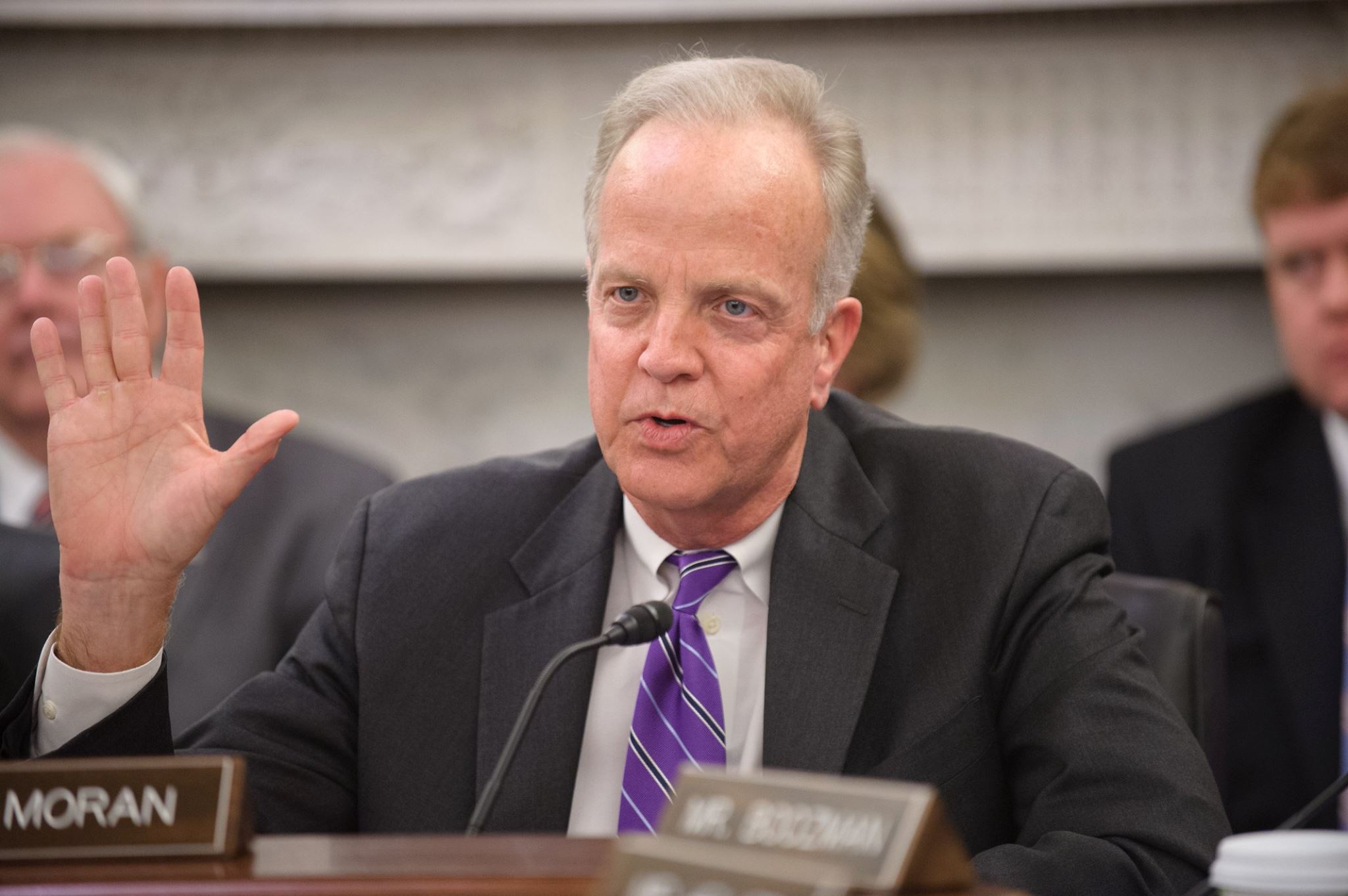
Stand up, U.S. Sen. Jerry Moran of Kansas. Take a bow.

You, sir, are standing on a critical principle, which is that Kansans sent you to the Senate to do your job and you are insisting that your senatorial leadership follows your lead.

Good luck with that.

Moran told a town hall gathering earlier this week that he wants the Senate to consider the nomination of Merrick Garland to the U.S. Supreme Court. He is bucking the edict handed down by Majority Leader Mitch McConnell, who says the Senate should wait until after the election this November to consider an appointment made by the next president of the United States.

Moran, a conservative Republican representing a blood-red Republican state, is in no serious danger of losing his Senate seat this fall. Still, to hear him say that his party’s Senate leader is wrong is, well, uplifting.

Moran isn’t endorsing Garland’s nomination. He told the town hall group that he cannot imagine President Obama ever nominating someone to his liking.

But he said he is obligated to do his job as a U.S. senator.  “I think the process ought to go forward,” he said.

He said it’s better for his constituents to tell him he “voted wrong on nominating  somebody than saying I’m not doing my job.”

Moran joins two other GOP senators

It’s one thing for a senator such as Kelly Ayotte of New Hampshire or Mark Kirk of Illinois — who also have called for hearings and a confirmation vote — to say they’ll meet with Garland and want to consider his nomination.

It’s quite another for someone representing a safe Republican state — whose re-election this fall is a virtual certainty — to weigh in on the side of senatorial responsibility.

If only the obstructionist who leads the Senate would follow suit.

Ryan: We’re heading for ‘divisiveness’ as a nation

90

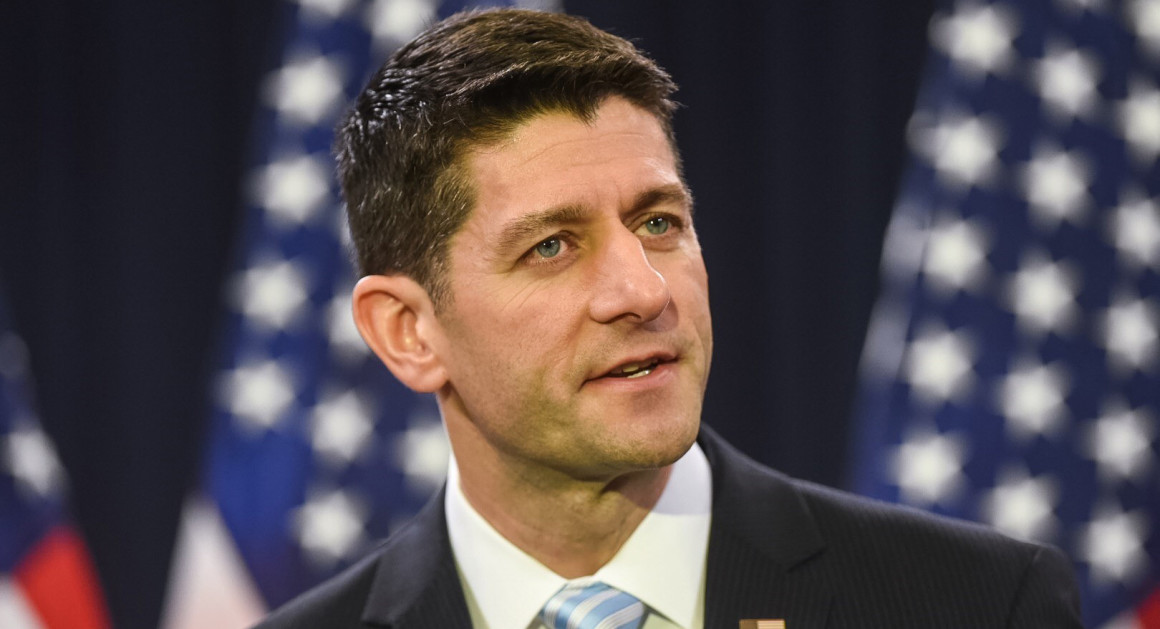
Speaker of the U.S. House of Representatives Paul Ryan is partially correct when he says the nation “is becoming divisive.”

I believe we’re already there, Mr. Speaker.

It’s not a condition that has just developed overnight, or certainly during the current election cycle.

It seems to my reckoning to have its roots in the 2000 election season, when a candidate for president was elected by the narrowest margin imaginable — and under circumstances that to this day hasn’t been accepted by many millions of Americans.

George W. Bush won the presidency after the Supreme Court stopped the recounting of ballots in Florida. The Texas governor had 537 more votes than Al Gore in that state. He won that state’s electoral votes, giving him the election — even though Gore had amassed more popular votes nationally than Bush.

For the record, I’ve never doubted the legitimacy of Bush’s election as president. The constitutional system worked.

But …

The spillover through the next several elections has seen a palpable division among Americans.

The current campaign has delivered an intense ratcheting up of the division that’s been there for some time now.

I’m not a fan of the speaker, but I do applaud him for speaking to our national idealism. He clearly was taking dead aim at the tone being delivered on the campaign trail by Donald J. Trump, who he didn’t mention by name. Everyone in the congressional conference room who heard Ryan knew of whom he was speaking.

As Politico described Ryan’s remarks: “He decried identity politics, criticizing those who pit groups of Americans against each other. He said the nation’s political system doesn’t need to be this bad. He accused both parties of staying comfortably in their corners, only talking to those who agree with them.”

Ain’t that the truth?

There once was a time when members of Congress — from both parties — talked openly with each other about how to legislate for the good of their states or the country. The Texas congressional delegation was known to have bipartisan breakfasts weekly, with House members breaking bread with each other and talking about issues that needed attention.

It doesn’t happen these days.

Instead, we’re seeing and hearing candidates and their rhetoric demonizing “the other side.” The No. 1 instigator of this campaign-trail anger is the GOP’s leading presidential candidate — Trump.

Ryan’s message will not resonate with the segment of the population that has bought into the Us vs. Them mantra that Trump and others are promoting. Ryan is now seen as a member of the hated “establishment.”

Ryan said: “What really bothers me the most about politics these days is this notion of identity politics. That we’re going to win election by dividing people. That we’re going to win by talking to people in ways that divide them and separate them from other people. Rather than inspiring people on our common humanity, on our common ideals, on our common culture, on things that should unify us.”

Is his message too sunny, too optimistic, too idealistic?

For the sake of our political future, I hope not.

If only the VP hadn’t said what he said …

Supreme-Court-blue-sky

Vice President Joe Biden delivered a stern message today to some university students and faculty members

about the obstruction occurring in the U.S. Senate.

It’s threatening the core of our republic, he said. Senate Republicans must not obstruct President Obama’s effort to fill a Supreme Court vacancy; they must allow nominee Merrick Garland to have a hearing, then they must debate the merits of his nomination and they must then vote on it.

True enough, Mr. Vice President.

But what about those remarks you made in 1992 about whether President George H.W. Bush should be able to nominate someone to the high court in an election year? Today’s Republicans are seeking to block Obama’s pick because this, too, is an election year and they want the next president to make the selection.

The GOP has beaten the vice president over his remarks then.

What they don’t say is that Biden also declared that he would support a “consensus candidate” in an election if one were to be presented to the Senate Judiciary Committee, which Biden chaired at the time.

Biden told the Georgetown law students and faculty members: “Dysfunction and partisanship are bad enough on Capitol Hill. But we can’t let the Senate spread that dysfunction to another branch of government, to the Supreme Court of the United States.”

It’s fascinating to me that then-Sen. Biden’s remarks now have become known as the “Biden Rule,” which has never existed.

I won’t defend Biden for making his remarks in 1992. He was wrong to suggest that a sitting president shouldn’t be allowed to perform his job if he had been given the chance to do so. President Bush did select a Supreme Court justice in 1991, when he nominated Clarence Thomas to take the seat vacated by the death of Thurgood Marshall.

However, I won’t condemn Biden for holding that view. He did, after all, add the caveat that he would support a consensus candidate for the Supreme Court.

The here and now stands on its own.

The vice president is correct to insist that today’s Senate should stop its obstruction and allow the president to fulfill his constitutional duty — and do its own duty to give an eminently qualified nominee the fair hearing he deserves.


Social media have become a campaign curse

[ File # csp7860124, License # 1321135 ] Licensed through http://www.canstockphoto.com in accordance with the End User License Agreement (http://www.canstockphoto.com/legal.php) (c) Can Stock Photo Inc. / Blotty

I think I’ve discovered an undeniable truth.

Social media are to blame for the ghastly decline of intelligent political discourse in this great country of ours.

It’s not a big-time flash. Others likely have drawn similar conclusions and written about it.

I am now going to refer to the Twitter War that’s going on between Donald J. Trump and Rafael Edward Cruz. Donald vs. Ted. It’s getting childish in the extreme and it’s lending nothing whatsoever to any kind of intelligent discussion among Republicans over which of these men should be their party’s nominee for president of the United States.

The crux of the Twitter fight centers on their wives. Melania Trump and Heidi Cruz are now being kicked around like the proverbial footballs that they are not.

It’s sickening me.

A pro-Trump super-PAC put something out there about Mrs. Trump appearing in the nude. Trump tweeted some threats to Cruz about it, threatening to say something mean about Mrs. Cruz.

Ted Cruz denied having anything to do with the ad. Trump ain’t buying it. Now it’s Cruz calling Trump a “coward.”

Back and forth they go.

And voters are supposed to make intelligent decisions — based on this petulant patter — on which of them should carry the GOP banner forward against the Democratic nominee this fall?

Give me a break!

Maybe the mainstream media — and I don’t mean as the conservative epithet the term has come to mean — is responsible. By “mainstream,” I refer to the major broadcast and cable news networks and the print media who keep reporting this stuff.

Heck, bloggers all along the political spectrum have weighed in on it — as this blog is doing at this moment.

So … I’ll accept my share of the blame for this social media craze and its alleged “contribution” to the quality of our national political debate.

I’m not proud of myself.

My only recourse is to ignore this social media sniping.

Therefore, I will.