Category Archives: political news

Liberal offers an instructive scolding to liberals

diversity

When a conservative scolds liberals about being intolerant, one can chalk it up to sour grapes or to the bias of the person doing the scolding.

The same can be said when the roles are reversed.

However, when a liberal scolds liberals — or when a conservative scolds his or her brethren — that gets people’s attention.

New York Times columnist Nicholas Kristof has offered an interesting lecture about liberal intolerance.

Here it is: http://www.nytimes.com/2016/05/08/opinion/sunday/a-confession-of-liberal-intolerance.html?_r=0

He says liberal thinkers are none too tolerant of conservative thinkers on our nation’s higher education campuses. The intolerance undercuts liberals’ time-honored call for greater “diversity” of thought.

Hmmm. He’s suggesting that liberals want diversity as long as it agrees with their world view.

College and university campuses have erupted over many years when administrators invite conservatives to speak at, say, convocations or commencement exercises. Kristof’s essay talks about the reluctance of higher ed institutions to hire conservatives as faculty members.

Even in politically conservative regions, such as the Texas Panhandle, we’ve seen similar reactions to the presence of conservatives on college campuses.

Do you remember the mini-uproar that boiled up years ago when West Texas A&M University invited Karl Rove — the architect of President George W. Bush’s winning campaigns — to speak at an event honoring WT graduates? Some faculty officials disliked having Rove speak to the students.

Universities ought to welcome, embrace, even solicit differing — and diverse — points of view.

According to Kristof, though, they’ve become havens for liberal/progressive thinkers who dislike mingling with those on the other side of the fence.

Message received, Mr. Kristof.
 

‘We let bygones be bygones’

Perry_presser_photoTT_jpg_800x1000_q100

I generally like the craft of politics and, yes, I like some of those who practice the craft.

One of the aspects of politics, though, is the ease with which politicians can set aside amazingly hurtful comments they make about each other to pursue newfound friendships and alliances.

Take the case of former Texas Gov. Rick Perry and the presumptive presidential nominee of the Republican Party, Donald J. Trump.

I would have bet real American money that the two men truly detested each other after hearing Perry skin Trump alive with comments about the real estate mogul being a “cancer on conservatism.”

Not long after that, Perry dropped out of the GOP primary race and then endorsed the formerly “cancerous” Trump’s bid for president.

https://www.texastribune.org/2016/05/06/perry-defends-trump-endorsement/

According to the Texas Tribune: “We are competitors, and so the rhetoric is in the heat of battle. It’s in the chaos of a presidential bid,” Perry said, also noting his criticism of Mitt Romney during the 2012 presidential campaign. “If no one doesn’t understand that, then they don’t understand how our process of elections work. We compete, and then we let bygones by bygones.”

I guess Perry deserves credit for being a good sport. So, too, does Trump for accepting the Perry endorsement.

The things they say to and about each other, though, do seem to cross some imaginary boundary of decency.

I look back at the 2000 contest for the U.S. Senate seat in New York. The Democratic Party nominee for that seat was none other than first lady Hillary Rodham Clinton. I considered it astonishing then that Clinton would want to serve in the legislative body with senators who actually voted to convict her husband of charges brought against him in that impeachment.

It also astounded me, after she won the seat, that Clinton managed to form constructive working relationships with her Republican Senate colleagues, who, you’ll recall, voted to convict President Clinton of the charges brought against him.

I didn’t think she’d run for the Senate seat. Nor did I believe she could ever trust her GOP colleagues as far as she could throw them.

I’m left to ask myself: Could I ever let “bygones be bygones” and throw in with former adversaries?

Umm. No.


GOP walks tightrope with Trump at top of ballot

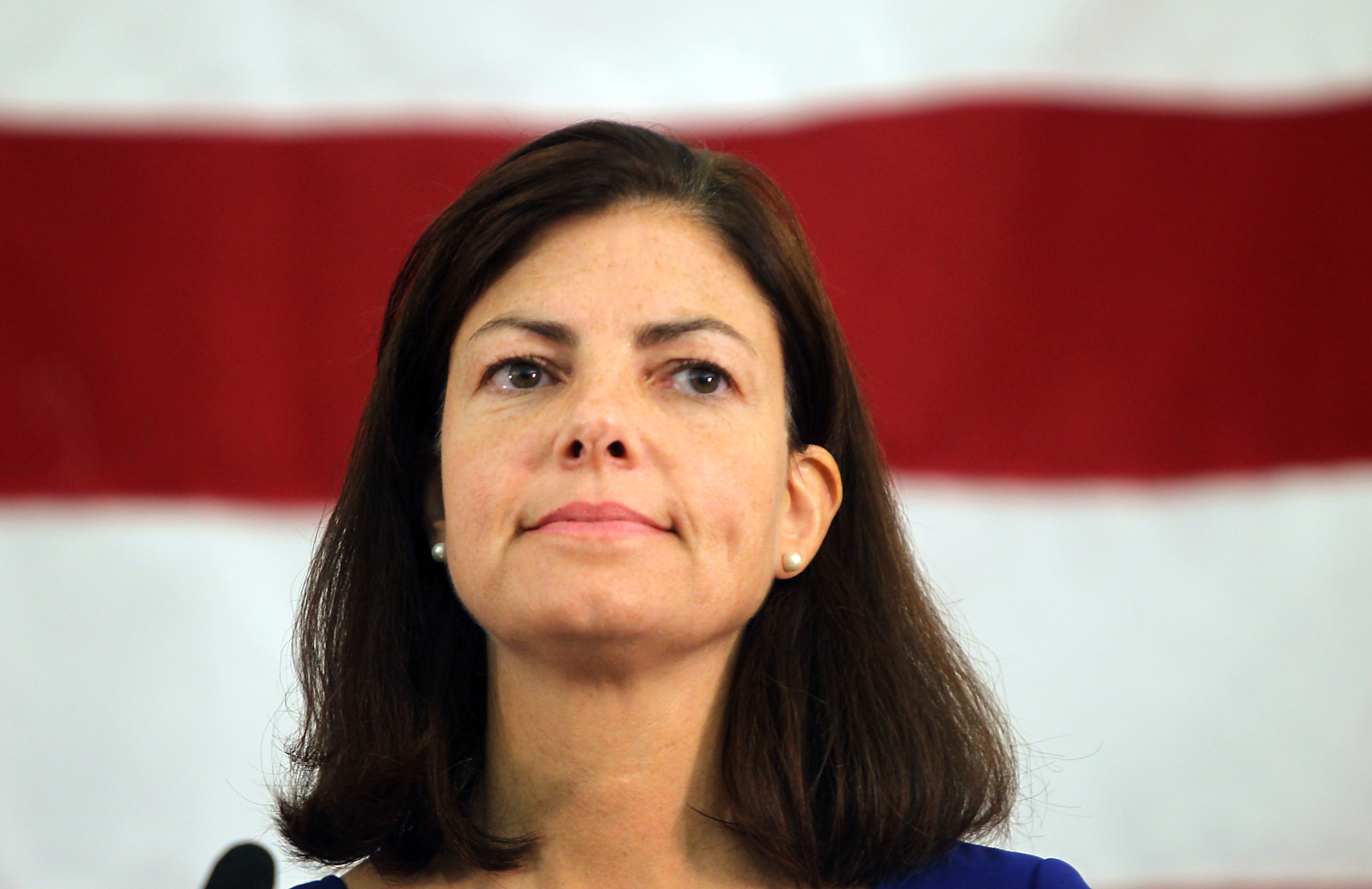
Republican hopeful Kelly Ayotte, former Attorney General of the State of New Hampshire, of Nashua, at a debate at Franklin Pierce University in Rindge, N.H., Tuesday, Aug. 31, 2010.  The Republican hopefuls are running for the United States Senate seat being vacated by Sen. Judd Gregg, R-N.H. (AP Photo/Cheryl Senter)

You’ve heard the phrase, no doubt, of “a distinction without a difference.”

How does a politician “support” another politician without “endorsing” that individual?

This is one of the myriad dilemmas facing Republican pols across the nation as the party gets ready to nominate a certifiable huckster as its next nominee for president of the United States.

http://www.nytimes.com/interactive/2016/05/08/us/politics/trump-endorsements-congress-republicans-gop.html?hp&action=click&pgtype=Homepage&clickSource=story-heading&module=b-lede-package-region&region=top-news&WT.nav=top-news

I refer to Donald J. Trump as the huckster.

Some leading Republican politicians, though, are seeking to hedge their bets in occasionally awkward manners.

Consider the statement of U.S. Sen. Kelly Ayotte, the GOP senator from New Hampshire, who said she can “support” Trump but cannot “endorse” him.

Ayotte is facing a potentially difficult re-election effort as Democrats likely will send Gov. Jean Shaheen against her. Ayotte can’t take the full plunge by endorsing Trump but, by golly, she’s going to support him.

A distinction without a difference?

It looks that way to me.

Other leading Republicans are walking away from Trump. Still others are offering tepid support. Sure, some have endorsed the hotel mogul and reality TV celebrity; former campaign foes New Jersey Gov. Chris Christie, who once called Trump “unfit” for the presidency, and former Texas Gov. Rick Perry, who once called Trump a “cancer on conservatism” have endorsed him.

It’s the Ayotte caveat, though, that I find most intriguing.

I’ve been watching politics for nearly 40 years. I studied political science in college. I became engaged in the presidential election process starting around 1968, when I shook Sen. Robert Kennedy’s hand at a chance meeting one week before an assassin robbed us all of a chance to see if RFK could be elected president.

This truly is the first time I’ve witnessed such intraparty reticence to clutch the coattails of the presumed party presidential nominee.

But it’s there. It’s real.

Sure, Trump has appealed to millions of Americans who claim to be “angry” with politics as usual. This clown “tells it like it is,” supporters tell us, while they ignore — or laugh off — the abject crassness of his rhetoric and the tastelessness of his insults.

Sen. Lindsey Graham of South Carolina, another former primary campaign foe, said it well: “I just really believe that the Republican Party has been conned here, and this guy is not a reliable conservative Republican.”

Just today, on “Meet the Press,” Trump said he would consider raising taxes on wealthy Americans, which by my way of thinking runs utterly counter to standard Republican Party tax principles.

This is the problem facing Republicans across the country as they ponder their own political futures. How do they run with someone who says whatever pops into his head?

Or do they seek to split hairs as finely as they can by “supporting” him without “endorsing” him?

It is tough to be a Republican these days.


Palin illustrates GOP affliction

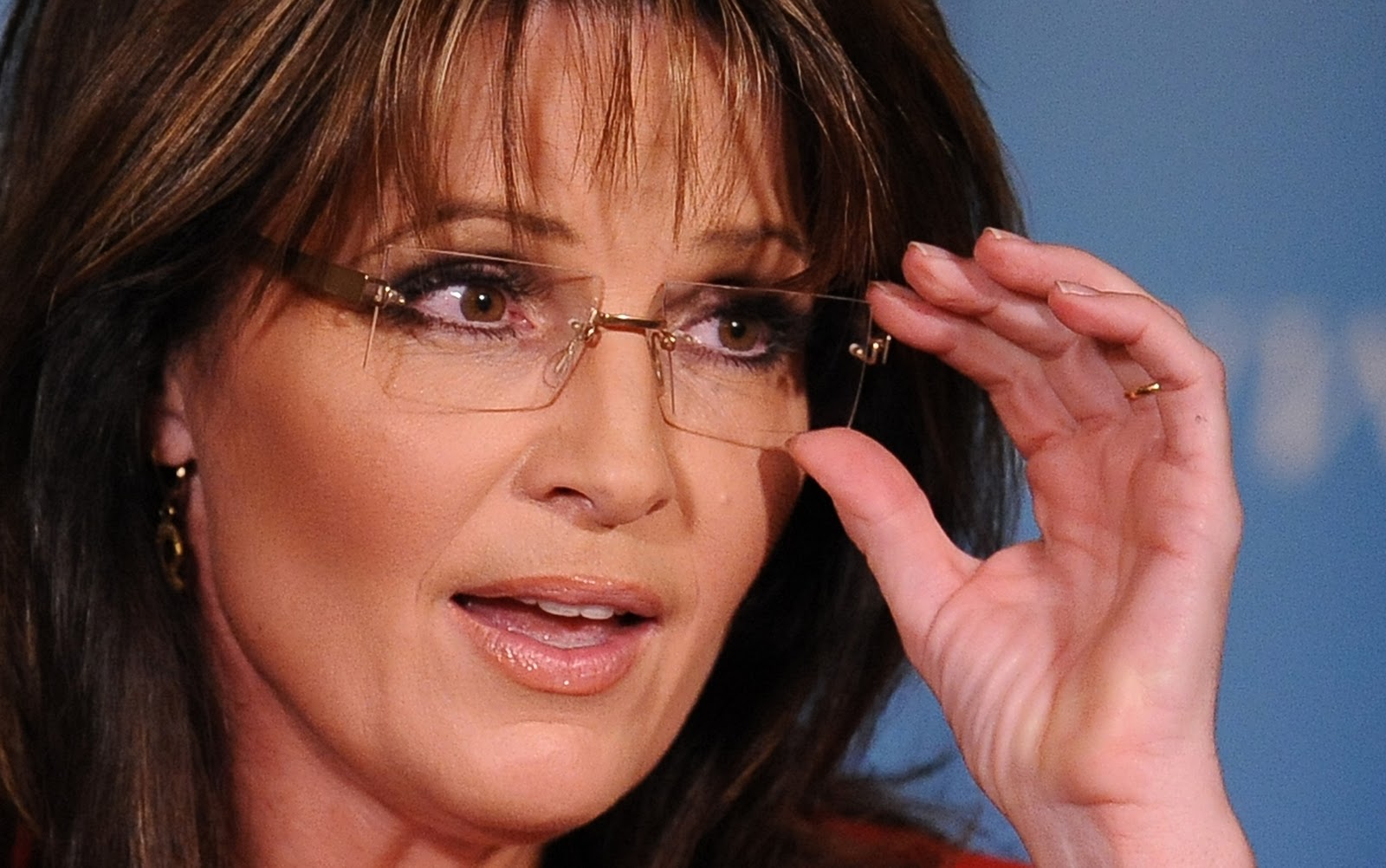
5-sarah-palin

You might be wondering: Just how messed up is today’s Republican Party?

I might have an example to share with you.

The former half-term Alaska governor, Sarah Palin, said she’s going to work to defeat House Speaker Paul Ryan in Wisconsin’s upcoming Republican primary.

Why would the 2008 GOP vice-presidential nominee do such a thing? Because the speaker says he cannot “yet” support the probable 2016 GOP presidential nominee, Donald J. Trump.

Palin has endorsed Trump. Ryan has so far declined. It’s not clear that he ever will. Why do you suppose the speaker is withholding his support?

My guess is that Trump isn’t a “real Republican,” that he doesn’t adhere sufficiently to basic Republican principles to suit the speaker.

Palin calls herself a true-blue Republican. But she’s backing Trump. Now she wants to work against a fellow true GOP believer, Ryan.

http://www.cnn.com/2016/05/08/politics/sarah-palin-paul-ryan-paul-nehlen-endorsement/index.html

As near as most of us can tell, the only principle to which Trump holds dear is to himself. I believe that’s why he’s been labeled a narcissist.

Sure, it’s appealing to a lot of Republican “base” voters who like how Trump “tells it like it is.” Someone, though, has to explain to me what “it” really is.

Trump and Ryan plan to meet this week, as I understand it. Will they settle their differences? Don’t look for a kumbaya moment after their meeting.

As for Palin, I guess she’s trying to make herself relevant yet again by seeking to defeat the nation’s most powerful Republican politician.

What she is managing to do, though, is demonstrate — as if it needed further demonstration in the context of this year’s presidential primary season — how dysfunctional this once-great political party has become.


Perry portrait unveiled … sans glasses

7C2A9423_jpg_800x1000_q100

Let’s talk about something truly insignificant for a moment.

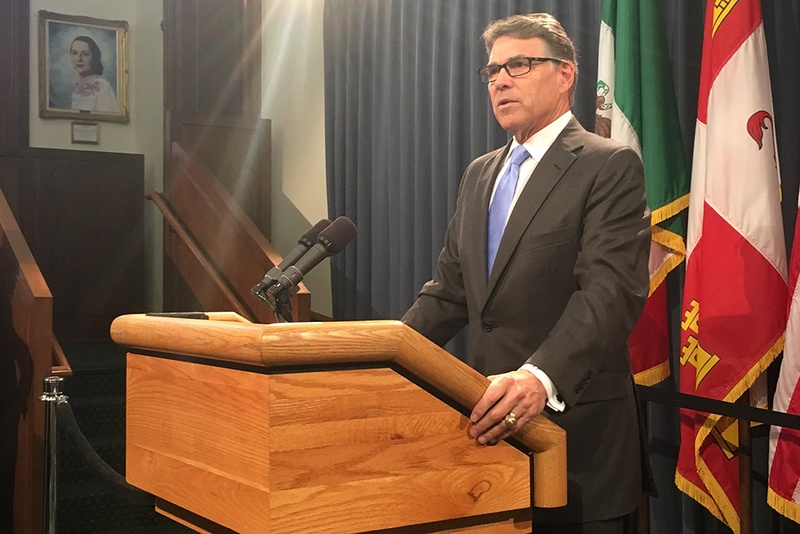
I’ve had a busy day doing one of my part-time jobs. I am a bit worn out, so I thought I’d share my view on former Texas Gov. Rick Perry’s portrait unveiling at the State Capitol in Austin.

He’s not wearing the glasses he donned prior to running for president the second time.

No, his portrait depicts him barefaced. No specs.

That’s all right with me. I came to know the governor without the corrective lenses. I always thought he donned the glasses prior to running for president for effect, anyway. They were intended to make him look smarter.

Actually, he didn’t need them for that purpose.

It’s not that I believe the former governor is a dummy. I don’t … and he isn’t.

https://www.texastribune.org/2016/05/06/perry-portrait-unveiled-and-burning-question-answer/’

As a glasses-wearing individual myself, I am kind of partial to eye wear on politicians.

Now for a quick aside: I’ve worn specs since the eighth grade. I want to salute Mr. King, my science teacher at Parkrose Heights Junior High School in suburban Portland, Ore., for noticing I was squinting one day while watching a film strip.

The bell rang for the next class and he took me aside and asked, “Can you read what’s on the blackboard?” I responded incredulously, “Well, no-o-o-o,” as if he thought I should be able to read it.

He sent me home that day with a note to my parents.

Looking back on it many decades later I am convinced I was born blind.

I got the glasses. I threw up in the car on the way home from the optometrist. Why? Seeing the leaves blowing in the breeze made me sick to my stomach.

The glasses might have made me look smarter, too. They didn’t make me a better student.

Back to the former governor …

I’m glad the portrait shows him without the eyeglasses. I made his acquaintance in 1990 when he campaigned for Texas agriculture commissioner without them.

He did pretty well over the years in Texas — politically speaking — without dressing up his face.

Once again: Constitution is a secular document

delay_constution_140220a-2-800x430

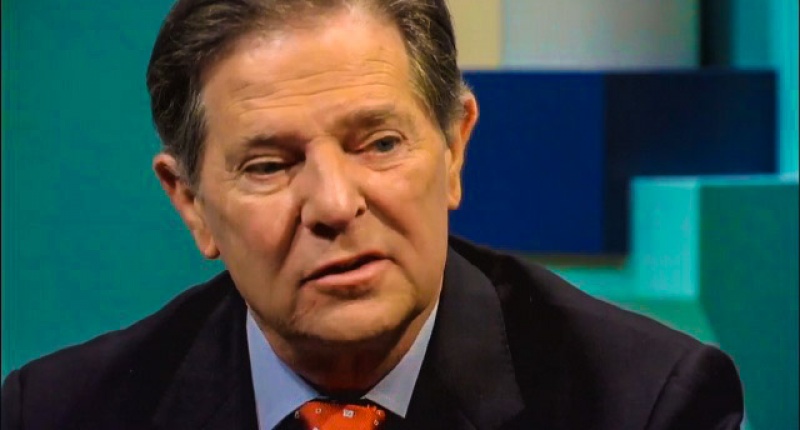
Tom DeLay knows his audience and he speaks their language.

In this case, the former U.S. House majority leader was speaking a couple of years ago on a religious program hosted by John Hagee Ministries.

If only, though, he would speak accurately about the very founding of this great republic.

Host Matt Hagee asked DeLay where he thought the nation had gone wrong. DeLay’s response was, shall we say, more than little off the mark.

http://www.rawstory.com/2014/02/tom-delay-people-keep-forgetting-that-god-wrote-the-constitution/#.VTt_WhZmKvw.facebook

“I think we got off the track when we allowed our government to become a secular government,” DeLay explained. “When we stopped realizing that God created this nation, that he wrote the Constitution, that it’s based on biblical principles.”

Well …

Where do we begin?

We’ve had a “secular government” since its very founding. The Constitution — as I’ve noted in this blog before — contains precisely two religious references. That would be in Article VI, which declares that there should be “no religious test” for anyone seeking election to public office; and in the First Amendment, where the founders declared there would be “no law respecting an establishment of religion.”

That’s it, folks.

The founders knew precisely what they were doing when they omitted any other religious references in the Constitution. They intended for the government to be free of religious pressure or coercion.

I happen to be totally OK with that.

DeLay, though, sought to parse the Constitution differently when he told the Hagee Ministries audience about how God “wrote the Constitution.”

This gets to the debate that continues to this day. Indeed, it’s been going on virtually since the United States of America emerged from its revolution.

The Rawstory item showed up on my Facebook feed today I suppose as a reminder that this national debate likely never will go away.

Can’t we just accept the notion that the founders built a government framework that would be free of religion, but which allowed each of us to worship as we see fit?

That happens to be — in my humble view — one of the true-blue beauties of a secular government.

Now, here’s a political dilemma

1407859219000-Election-3-

My dictionary defines “conundrum” most succinctly.

“A riddle; a dilemma.”

By that definition, the Republican Party is facing a classic conundrum with its presumptive nominee for president of the United States, Donald J. Trump.

Do the conservative purists who run he party want to stick with their guy — who they detest — and watch him lead the party to a potentially historic defeat? Or do they look for an alternative, a true believer, to run as an independent candidate and then assure that historic loss?

http://thehill.com/homenews/campaign/278941-third-party-push-gaining-steam

The Hill reports that the third-party push is “gaining steam” within the ranks of the GOP.

The publication says the push got some added juice when House Speaker Paul Ryan said he cannot support Trump’s nomination. At least not yet. Trump’s got to “unify” the party, Ryan said.

Frankly, I don’t care which way the GOP goes as it struggles with this, um, dilemma.

Were the party brass to ask me, though, I’d possibly advise them to back their guy. Stand by their nominee and then set out to rebuild the party once the ballots are counted in November.

The Republican Party as many of us have known and respected — if not loved — appears to be drawing its final breaths.

It’s no longer even the party of Ronald Reagan, let alone the party of Abraham Lincoln. It’s the party of Trump. Think about that for a moment.

A man with zero government experience — at any level — is about to become the party’s nominee for president of the United States. By almost every calculation imaginable, he is patently unfit for the office he seeks. Qualifications? He possesses none of them.

The fitness level, though, is even more frightening.

Either way the party goes, from my perspective — and factoring in my own bias — the GOP is headed for the political boneyard. A third-party/independent bid by a true believer merely seals the party’s fate.

I’ve long favored a robust two-party system. I like having two healthy parties argue policy differences in public. I’ve grown used to divided government, but prefer it to actually work, to function productively. We haven’t seen much productivity in the past eight or 10 years.

And, yes, Democrats bear some responsibility for the stalemate as well.

Maybe once the smoke clears from the upcoming election, we’ll find a Republican Party ready to reach out and re-engage in the act of governing.

Why the soft-shoe on Trump, congressman?

Thornberry_9

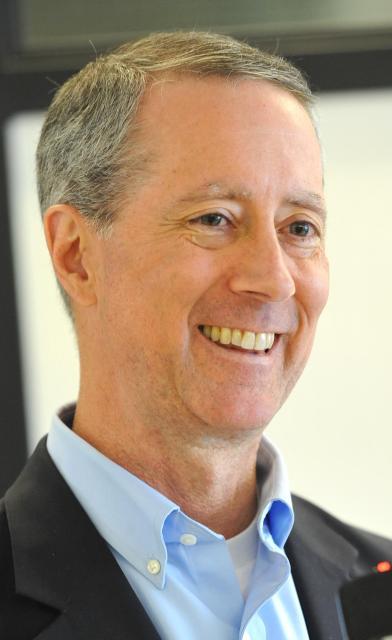
Mac Thornberry is going to be re-elected to the U.S. House of Representatives this fall.

The veteran Republican lawmaker is going to win big. He’d win big even if he had a Democratic opponent. He has represented one of the House’s most reliably Republican congressional districts — the 13th — since 1995.

Why, then, does he waffle on whether he intends to “support” or “endorse” the pending GOP presidential nominee, Donald J. Trump?

http://amarillo.com/news/latest-news/2016-05-05/thornberry-evades-endorsement-urges-voters-watch

He came back to the Texas Panhandle congressional district this week and fielded some questions about whether he intends to endorse Trump.

Thornberry didn’t commit to it.

C’mon, Mac! You’re in zero danger of losing your House seat. Step into it, man.

The chairman of the House Armed Services Committee is playing his cards much too carefully. If he were in any jeopardy, I might understand some reluctance to offer an endorsement.

Instead, he said something about endorsements carrying little weight — and even less so in this election cycle.

Well, tell that to former Gov. Rick Perry, who has announced his endorsement of Trump. For that matter, tell it to other former Trump opponents who’ve gone the other direction by refusing to endorse because they think so little of the presumptive nominee.

So, you might be wondering: Why try to speak for the congressman? Why not let him make up his own mind?

He works for me. He’s my congressman. I believe all his constituents — his bosses — have the right to hold him accountable for issues such as who he plans to endorse to become the next head of state, head of government and commander in chief of the greatest military machine on Earth.

Remember that GOP pledge of support?

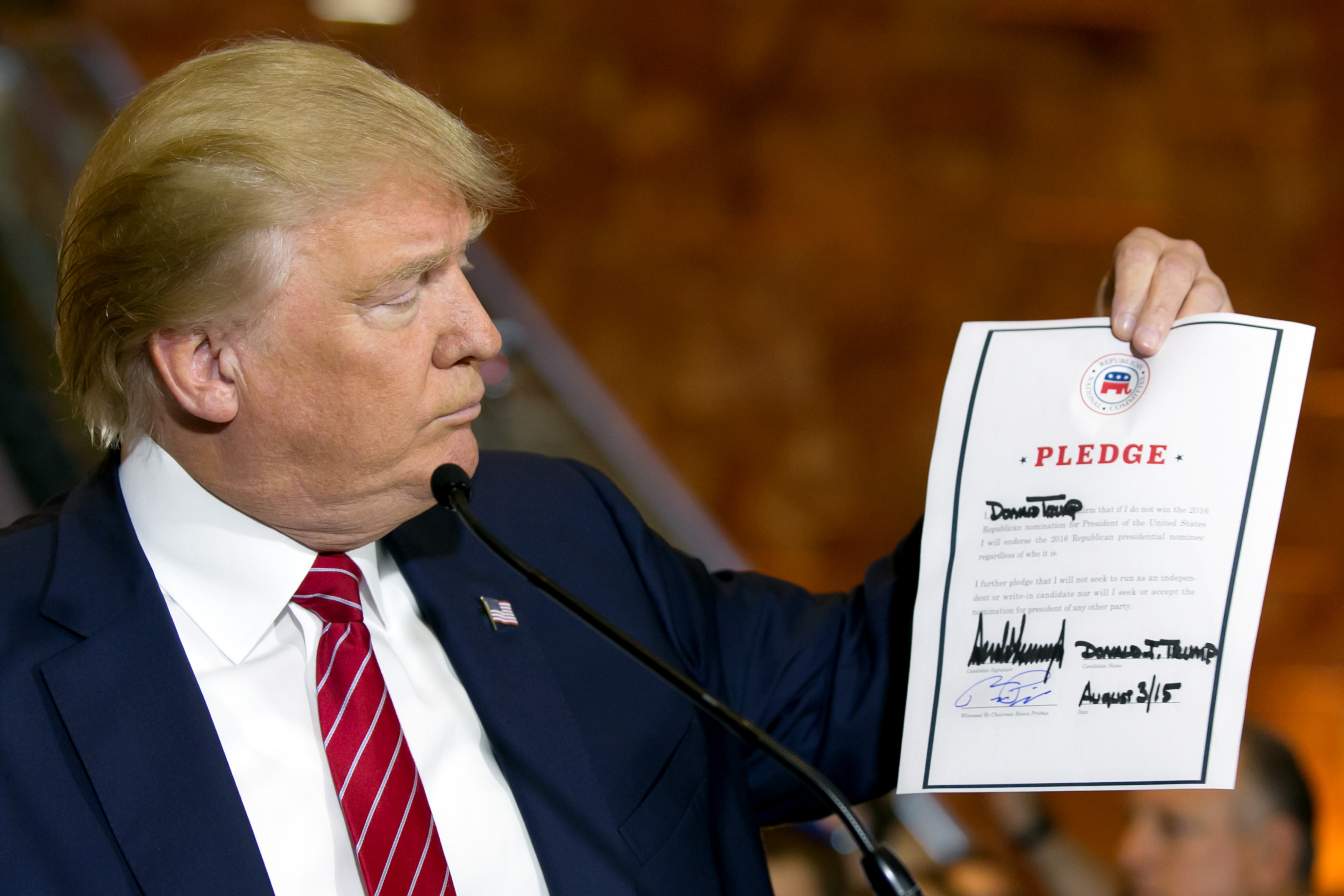
Republican presidential candidate Donald Trump looks at a signed pledge during a news conference in Trump Tower, Thursday, Sept. 3, 2015 in New York. Trump ruled out the prospect of a third-party White House bid and vowed to support the Republican Party's nominee, whoever it may be. (AP Photo/Richard Drew)

U.S. Sen. Lindsey Graham says he won’t vote for, or support, presumptive Republican presidential nominee Donald J. Trump.

Former Florida Gov. Jeb Bush echoes that view. Bush says Trump is unfit for the presidency and won’t get his vote.

These two men have something in common apart from their mutual distrust and loathing of the guy who beat them in the GOP presidential primary.

They both signed the “pledge” to support the Republican presidential nominee — no matter who he or she is.

Didn’t former New York Gov. George Pataki say just recently that he won’t support Trump?

To be sure, we need to hear from a lot of other former Republican candidates. Sen. Ted Cruz signed the pledge. His running mate — for all of nine days — Carly Fiorina signed it, too. The last candidate to drop out, Ohio Gov. John Kasich, also has made his feelings quite clear about Trump: He can’t stand him, either — and, oh yes, he signed the pledge, too.

Ben Carson’s already on board with Trump. So is former Texas Gov. Rick Perry and New Jersey Gov. Chris Christie.

We need to hear from the rest of the once-huge field.

This is why such phony pledges get candidates in trouble.

I happen to respect Sen. Graham and Gov. Bush very much. I believe they’re standing on a principle. They do not want their party represented by a huckster, which is what they’ve determined Trump to be.

Interestingly, the only GOP candidate to refused initially to sign the pledge was Donald Trump, who later signed it … and then recanted his pledge.

Still, the others did put their names on that pledge.

I guess Graham and Bush can take it all back. Politicians do it all the time.

Political alliances are shifting … rapidly

DonaldAndRick_jpg_800x1000_q100

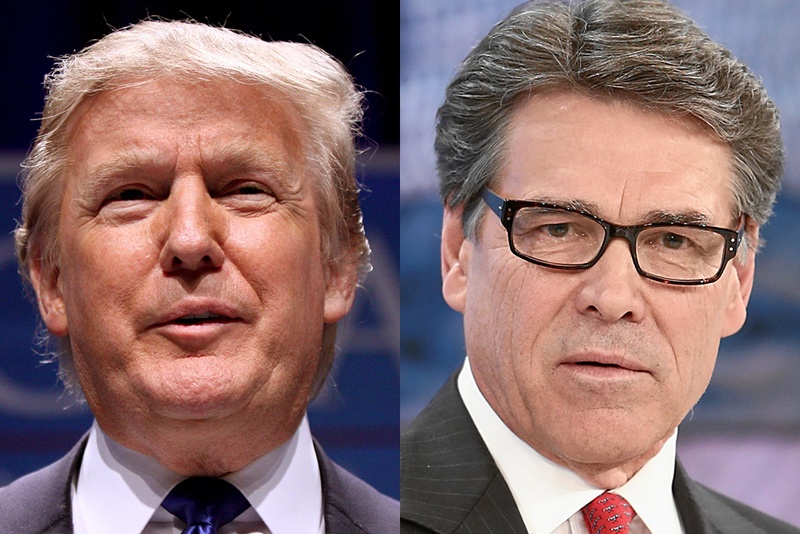
Rick Perry once called Donald J. Trump a “cancer on conservatism.”

He then backed fellow Texan Ted Cruz, who — before bowing out of the Republican presidential campaign this past week — called Trump a “pathological liar.”

Now the former Texas governor has endorsed Trump.

I guess the “cancer” has been cured.

https://www.texastribune.org/2016/05/05/perry-endorses-trump-president/

According to the Texas Tribune, Perry then offered up the obvious: “‘He is not a perfect man,’ Perry told (CNN). ‘But what I do believe is that he loves this country and he will surround himself with capable, experienced people and he will listen to them.'”

There you go. Yesterday’s cancer becomes today’s panacea.

This is part of what makes politics such a maddening thing to witness.

Opponents are capable of saying the most horrific things about each other. Then, when opportunity knocks, they bury hatchets — and not in each other’s skulls — and make nice as if nothing ever happened.

That’s what Perry seems to have done here. He also told CNN that he “wouldn’t say ‘no'” to Trump if the reality TV celebrity/real estate mogul/presumptive GOP presidential nominee offers a spot on the ticket this fall.

For his part, Trump now says he’s going to stick with a true-blue Republican as his running mate. He wants someone with political experience. He’s also said something about selecting someone with legislative experience.

Former Gov. Perry is a real Republican. He’s got loads of political know-how, although he has been unable to take the success he enjoyed in Texas beyond the state’s borders. The legislative background is a bit sparse, as he didn’t serve all that long in the Texas Legislature before aspiring to statewide office.

It appears, to me at least, that his willingness to endorse Trump after tearing the bark off of him before bowing out of the race himself, that he’s putting party loyalty first.

As the Tribune reports: “Trump, Perry told CNN, ‘is one of the most talented people who has ever run for the president I have ever seen.'”

Trump might have been a “cancer,” but he’s got talent.

Go figure.