Category Archives: national news

American Muslims need to stand up for their nation

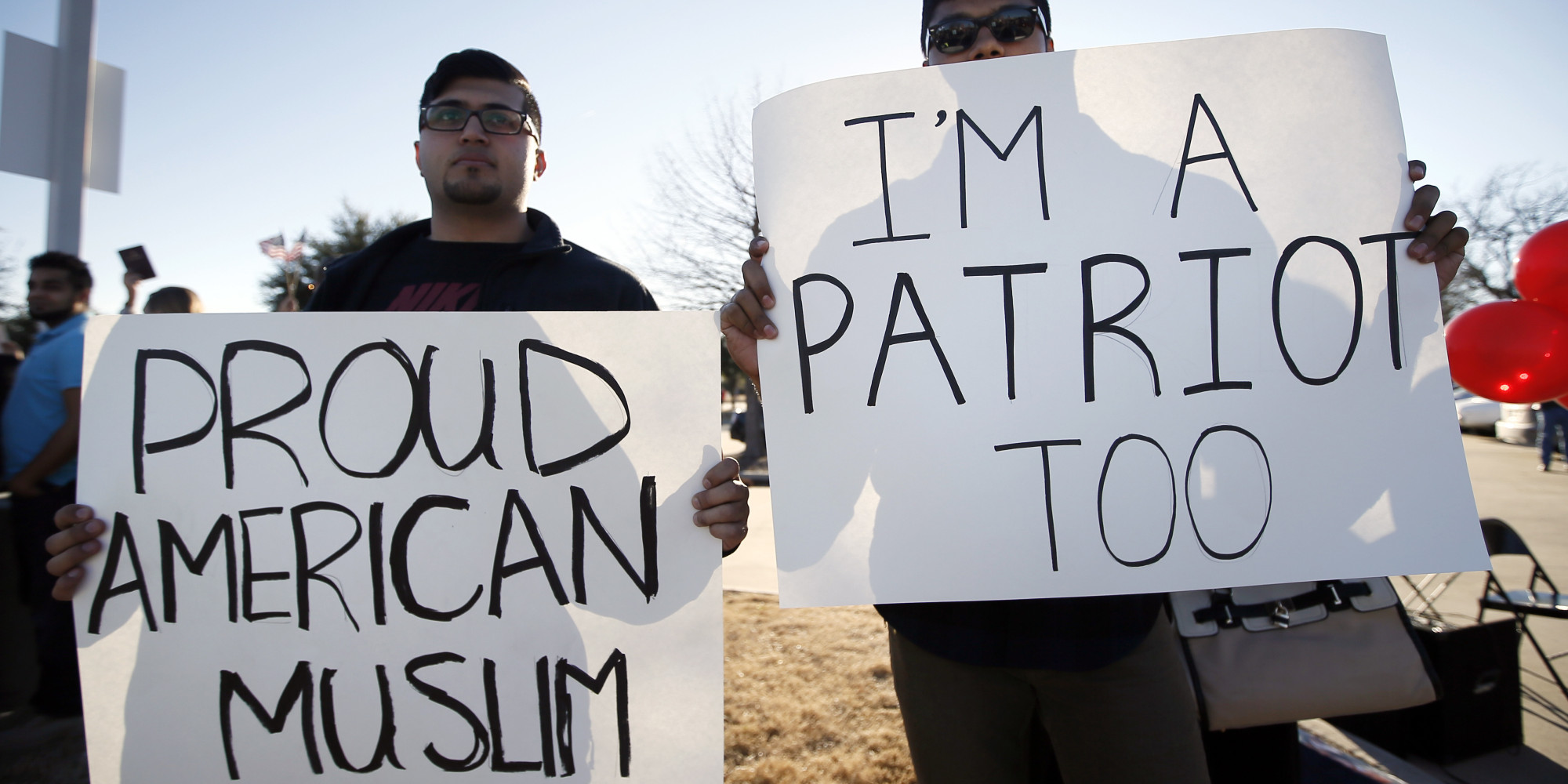
Sharjeel Hassan, left, and Yusuf  Alwar,, both of Richardson, Texas, holds signs as they stand with supporters outside the Curtis Culwell Center, Saturday, Jan. 17, 2015, in Garland, Texas. A muslim conference against terror and hate was scheduled at the event center. (AP Photo/Tony Gutierrez)

I keep waiting to hear it.

The chants of “USA, USA, USA!”

Those chants need not come from large crowds at football games, necessarily. Instead, I am waiting to hear those chants coming from American Muslims who are standing up for their country.

I get that Muslims are upset at mosques being defaced. I have great sympathy for those who feel the pain of discrimination because of their faith. I share their angst at calls to ban all Muslims from entering the United States. I also share their disgust with presidential candidates saying that Muslims shouldn’t run for — let alone serve as — president of the United States.

However, there’s an element missing from the outrage that Muslims have been expressing in regard to the violence that’s erupting all around the world — including here in the United States.

President Bush said we are not at war with Islam. President Obama has reiterated it. We’re at war with extremists who have perverted a great religion. The extremists are killing more Muslims than any other religious group in the world.

They also are attacking nations, including this one.

I want to hear American Muslims shouting out their love of country as loudly as they do for their faith.


Hitting ISIL ‘harder than ever,’ but is it hard enough?

syria-air-strikes-600x376

When the White House announces that the president of the United States is going to the Pentagon to make a statement, I tend to expect something big … maybe really big.

President Obama made a statement today, but I must say it left me wishing for more.

It didn’t come.

The president, though, did restate his anti-Islamic State war strategy but did so with a good bit more vigor.

It looked like a do-over from his brief speech a week ago that left many Americans — even some Democrats who normally support the president — wondering when the commander in chief is going to get seriously worked up over ISIL’s reign of terror.

The numbers add up to significant damage being inflicted on ISIL, the president said. Here’s part of what he said:

“We are hitting ISIL harder than ever. Coalition aircraft, our fighters, bombers and drones have been increasing the pace of airstrikes, nearly 9,000 as of today,” Obama said, adding that ISIL has lost roughly 40 percent of the territory it once held in Iraq.

I happen to agree with Obama that we need not send a huge ground force back into Iraq to fight the Islamic State.

To be honest, though, I’m waiting for evidence that the strategy we’re pursuing is actually forcing ISIL’s retreat. The president said we’ve retaken a large percentage of ISIL territory, but then we see reports of ISIL scoring more battlefield victories.

I’m going to continue hoping that one day we’ll be able to hear a presidential statement — whether it’s the current one or the individual who succeeds him — that ISIL has, in fact, been destroyed.

However, I will not hold my breath.


A congressional breakthrough … maybe?

Pelosi-Ryan-jpg

A single dinner involving two political leaders of opposing parties likely doesn’t signal much all by itself.

It might portend a potential thaw in relations on Capitol Hill. I reiterate … it might.

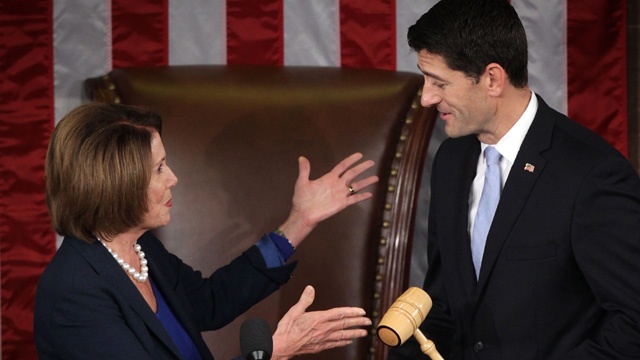
Newly elected House Speaker Paul Ryan, R-Wis., invited House Minority Leader Nancy Pelosi, D-Calif., to his Capitol Hill office for a two-hour get-together. They had a meal in the office and talked a little shop and got to know each other a little better.

What does this mean?

It might be a precursor to some actual progress in Congress between political leaders who’ve been fighting each other — often using some intemperate language to describe the other sides’ motives and intentions.

Democrats and Republicans are battling at the moment over a new budget. They did manage to cobble together a five-day stopgap measure that keeps the government running … but only for a short time. More bargaining is due in the next few days for everyone to agree on a $1.1 trillion federal budget that funds the government through most of next year.

Oh yeah. It’s also an election year.

Ryan and Pelosi reportedly don’t know each other well. This meal in Ryan’s office was billed as sort of an ice-breaker.

Where do we go from here? That remains anyone’s guess.

Congress, though, needs to figure out a way to assert its constitutional responsibility to actually govern. There’s been too much fighting between the parties, not to mention between the majority party — that would be the Republicans — and the White House.

The president must share responsibility in this ongoing inability to find common ground. However, just as members of Congress want to take credit for the good things that happen, they also need to take responsibility for the negative occurrences.

Ryan and Pelosi likely aren’t going to become best friends forever — aka BFFs. A dinner, though, well might set the stage for a new working relationship that restores the concept of good government to Capitol Hill.

Let’s slam door on immigrants? Uh … let’s not

First bricks of new house. Brick wall foundation isolated 3l illustration

Larry Kudlow used to believe in immigration reform.

Then he swilled the Kool-Aid being served up by the likes of Donald Trump.

Kudlow, in a National Review column, has posited a profoundly preposterous notion. He wants a nation built by immigrants to slam the door shut — temporarily, he says — on all future immigrants. Anyone coming here in search of a better life need to look elsewhere, he says.

Kudlow believes the nation needs to enact what he called a “wartime lockdown” while we fight the Islamic State and other terrorists.

The term “un-American” only begins to define, in my view, the outrageousness of such a proposal.

“There may be some unfairness to this. But I don’t care,” wrote Kudlow. “Wars breed unfairness, just as they breed collateral damage. We may set back tourism. We may anger Saudi princes whose kids are in American schools. But so be it. We need a wartime footing if we are going to protect the American homeland.”

Saudi princes aren’t the only folks we’d offend. How about offshore business tycoons who want to send their young executives here to set up shop, to do business with American clients? How about folks from all corners of the planet seeking to come here because they read somewhere that America is “the land of opportunity”?

While we’re at it, Mr. Kudlow, let’s be sure to sandblast the inscription off the Statue of Liberty, the one that welcomes the “tired and the poor” to our shores. Hey, if not sandblast it — given that he says his idea is just temporary — we can hang a black shroud over it.

Kudlow has changed his mind on immigration reform because we’re now at war. I agree that we are at war. We’ve been at war since 9/11. Truth be told, we likely should have declared war on terrorists even before that. We’ve known for decades about the existence of terrorists willing to commit unspeakable acts.

The 9/11 attacks acted as the proverbial two-by-four between our eyes. The bad guys got our attention.

Do we shut down our borders, though, to become a nation none of us recognizes while we fight this international scourge? No.

If we are going to continue to be the world’s exceptional nation, then we keep our border open, welcome those who want to come here — while remaining hyper-vigilant in our quest to prevent terrorists from infiltrating us — and we keep taking the fight to the enemy.


Scalia recuse himself from race cases? Not a chance

pelosi

U.S. House Minority Leader Nancy Pelosi is angry at Supreme Court Justice Antonin Scalia.

She’s mad at remarks that Scalia made during oral arguments involving an affirmative case involving the University of Texas. Scalia contended that African-American students might not do as well academically at UT as they would in “slower-track schools.” The statement has drawn much criticism against the outspoken justice.

Pelosi thinks Scalia now must recuse himself from future discrimination cases because of his bias.

Let’s hold on, Mme. Minority Leader.

Don’t misunderstand me. I dislike Scalia’s world view as much as the next progressive. But calling for him to recuse himself from these cases goes way too far. According to Politico: “It’s so disappointing to hear that statement coming from a justice of the Supreme Court. It clearly shows a bias,” Pelosi said. “I think that the justice should recuse himself from any case that relates to discrimination in education, in voting, and I’m sorry that he made that comment.”

Consider something from our recent past.

The highest court in the land once included two justices who were philosophically opposed to capital punishment. The late Justices Thurgood Marshall and William Brennan voted automatically in favor of capital defendants’ death sentence appeals. If a death row inmate’s case made it to the Supreme Court, he or she could depend on at least two votes in favor of the appeal.

In fact, Justice Marshall was particularly blunt about it. He said repeatedly that he opposed capital punishment, yet he took part in those appeals.

Did he ever recuse himself? Did pro-death penalty forces make the case that he should? No to the first; and unlikely to the second.

Federal judges — and includes the nine individuals who sit on the highest court — all have lifetime jobs. That’s how the Constitution set it up. Presidents appoint then; the Senate confirms them and then they are free to vote their conscience.

Scalia need not recuse himself. He is free — as he has been since President Reagan appointed him to the court in 1986 — to speak his mind. He has done so with remarkable candor — and even occasionally with some callousness — ever since.


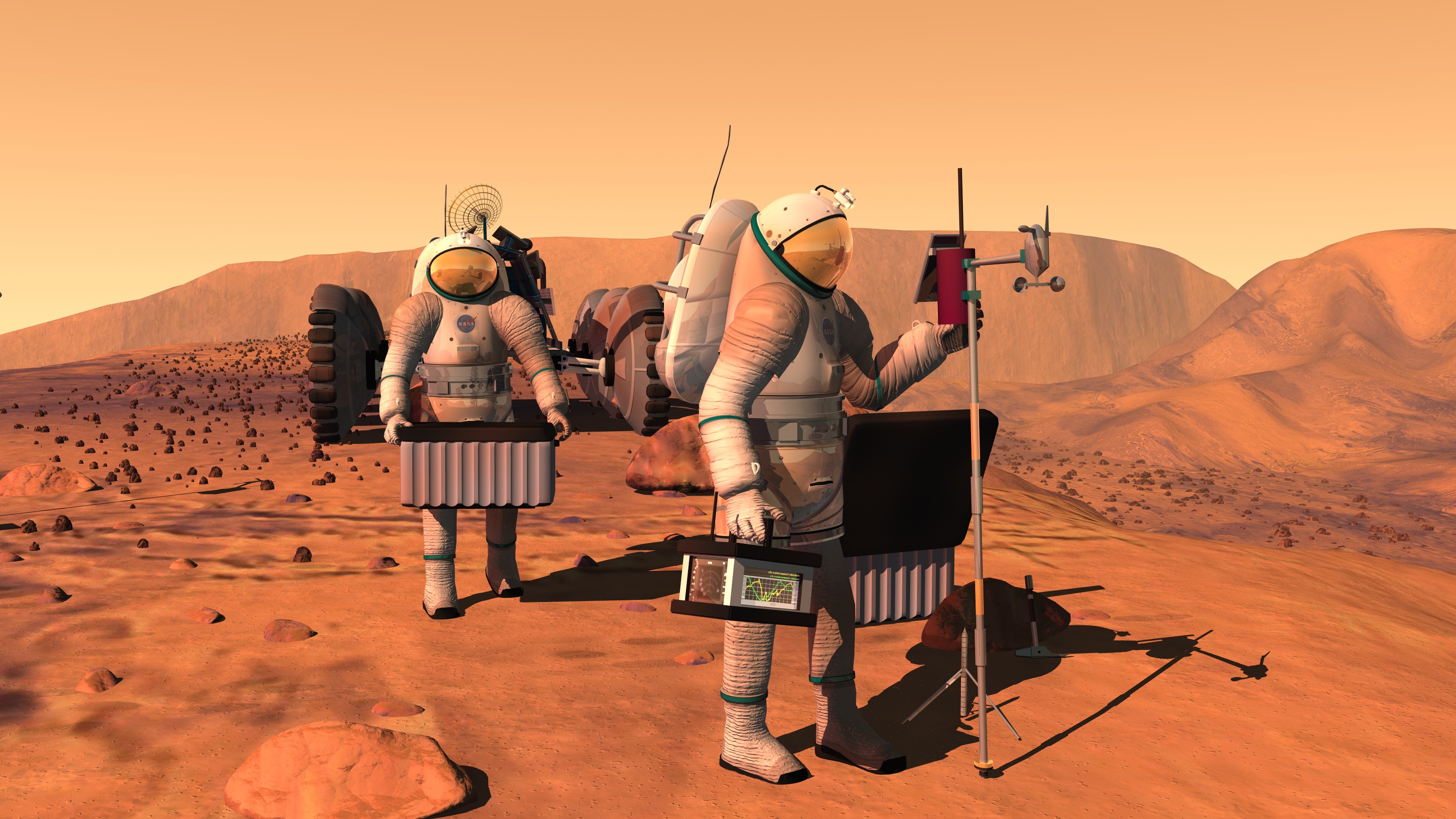
How do you prepare for a trip … to Mars?

Manned_mission_to_Mars_(artist's_concept)

Space travel always has intrigued me.

I wanted to fly into space. Indeed, I applied once for NASA’s “journalist in space” program, hoping the space agency would pick me to be the first working journalist to report from Earth orbit.

The program ended on Jan. 28, 1986, when the shuttle Challenger blew up, killing all seven crew members — including the first teacher ever chosen for a space mission.

Well, we’ve been to the moon. Twelve men walked on its surface, making them quite an exclusive club of adventurers; there should have been 14 of them, except that Apollo 13 didn’t make it to the moon’s surface.

One of those men was interviewed by the AARP magazine and was asked about a possible — if not probable — flight to Mars.

Edwin “Buzz” Aldrin, the second man to set foot on the moon during the Apollo 11 mission, said the greatest danger facing those who land on Mars will be “mental status. It is the growing isolation, the irritation, the realization that this is the way it’s going to be.”

Think about Aldrin, by the way, for just a moment. Does anyone know off the top of their head the name of the second person to fly solo across the Atlantic Ocean? Or the second person to break the sound barrier in a jet? Most of us, though, do know the name of the second man to walk on the moon. Hey, I’m just thinking out loud for a moment.

I’ve tried to ponder over the years as a Mars mission became more of a probability: How does NASA find the right person to participate in a mission that will take years to complete?

What in the world does the space agency ask the prospective candidate?

How will you cope with knowing you’re going to be many millions of miles from Earth? How willing are you to accept the possibility that you might not return home? The moon missions were a relatively simple mission compared to this one; do you have what it takes to spend years in a space suit?

I guess I am intrigued by the psychological makeup of the individuals chosen to make this journey.

Aldrin has written that we could land on Mars by 2040. Let me see: I’ll be 91 by then. That’s too old to make the trip.

However, if my luck holds out, I’ll be around to see it and if my luck is even better, I’ll have enough of my marbles still intact to know and appreciate what’s happening in real time.

Aldrin thinks the commitment to land on Mars will come during the next president’s administration. “The next president,” he told AARP, “will use the 50th anniversary of the Apollo missions to say the U.S. will lead international efforts to land on Mars within two decades.”

I pray that he’s right.
 

Executive orders go with the job

Law-Concept-300x270

Presidents serve as the nation’s “chief executive” and, therefore, have the constitutional authority that goes with the title.

An interesting graph came across my radar this afternoon. It comes with a year-old story, but it’s still rather fascinating.

Republicans have been pummeling President Obama by alleging that he’s too quick to issue executive orders, that he circumvents Congress too willingly.

The graph tells a fascinating tale of just how the 44th president has under-utilized the executive authority granted to him by the U.S. Constitution.

Take a look at the graph. You’ll see a number of interesting things.

One is an obvious point. President Franklin Roosevelt is the all-time champ at issuing presidential executive orders. No surprise there: He served three full terms and was elected to a fourth term before dying in office in April 1945.

It’s interesting, though, to look at who’s No. 2 in the executive authority rating. It’s FDR’s immediate predecessor, President Hoover, who served just one term.

A Democrat is No. 1, a Republican is No. 2, while Democratic President Woodrow Wilson is a close third.

That power-hungry and allegedly “lawless” 44th president, Barack H. Obama? He’s issued the fewest executive orders since President Grover Cleveland. (I’ll add here that the numbers of presidential executive orders are as of Oct. 20, 2014.)

So, I guess my question is this: What’s the beef with the current president’s use of the executive authority?

‘Tis the season … of the polls

Polls%20and%20Surveys%20pic

Donald Trump loves polls, especially when they show him leading the still-large pack of Republican presidential candidates.

Barack Obama isn’t so much in love with them.

However, the great underreported story has to be Congress’s continued miserable standing among American voters, according to those pesky polls.

I follow RealClearPolitics summary of polls. I like tracking the president’s poll standing, not to mention the candidates seeking to succeed him a year from January.

But look at how poorly Congress is faring.

The RCP polls are a compilation of leading public opinion surveys. The last one, which I have attached to this blog post, puts Congress’s rating at 12 percent.

Twelve percent!

Nearly nine out of 10 Americans surveyed think Congress is doing a crappy job of governing.

President Obama’s latest poll standing, while not great, is at around 43 percent. There’s an 8-point difference between those who approve of the job he’s doing and those who disapprove. The congressional approval/disapproval spread? How about 63.8 percent?

I’m not usually one to rely too heavily on polls. I understand their nature, that they serve merely as snapshots that capture a political moment. Polls go up and down like Yo-Yos.

However, while Obama’s critics keep lambasting his lackluster poll numbers, they don’t seem to take into account that Congress’s poll standing is far worse — and it, too, hasn’t moved much at all for, oh, about the past three years.

Obama is a member of one party; Congress is controlled by the other party.

The president’s polling isn’t great. Congress’s standing is downright miserable.


Obama fails to channel LBJ

claire

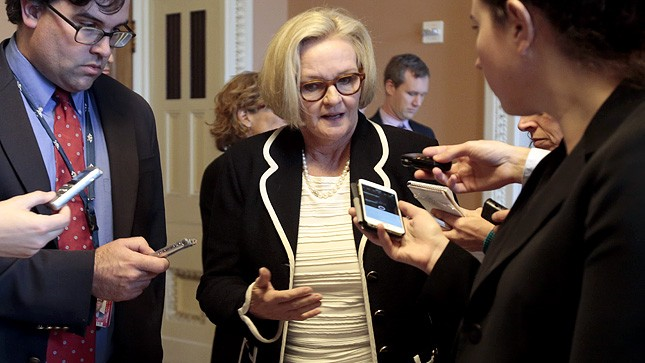
Claire McCaskill calls herself a “friend and supporter” of Barack Obama.

But the Democratic U.S. senator from Missouri has issued a candid assessment of the job her fellow Democrat has done as president of the United States.

The president’s major failing, according to McCaskill? He did not learn how to work with Congress.

The Hill reports on McCaskill’s remarks about Obama: “But one of the president’s shortcomings is that sometimes he sees the world through his eyes and doesn’t do, I think, enough work on being empathetic about how other people view things.”

McCaskill blisters president

In truth, McCaskill might be a bit behind the curve when critiquing the job the president has done.

I don’t think he’d mind my saying this, but a now-retired college administrator told me much the same thing during the president’s first term in office.

Former Amarillo College President Paul Matney and I were having lunch one day when Matney lamented the president’s testy relationship with congressional leaders. Matney wished that the president would employ the skill that the late President Lyndon Johnson used to great effect.

Johnson, of course, rose from the Senate to the executive branch of government, as Obama has done. LBJ served as vice president from 1961 until Nov. 22, 1963. Then he became president in the wake of tragedy.

When LBJ moved into the Oval Office, he harnessed all his legislative skill to shepherd landmark legislation through Congress. He was a master of working not just with fellow Democrats, but with Republicans.

Matney bemoaned that President Obama had not developed that kind of bipartisan rapport and it cost him dearly.

McCaskill now — near the end of Barack Obama’s presidency — echoes much of what Paul Matney said years ago. LBJ’s legacy, which was tainted for many years after he left office in 1969 by the Vietnam War, is beginning to look better all the time.

He understood that he needed the legislative branch to make government work, that he couldn’t do it all alone.

As Sen. McCaskill has noted, Barack Obama hasn’t seemed to have learned that lesson.


What’s this about ‘drizzle’?

portland rain

I hail from one of America’s most beautiful and livable cities.

Portland, Ore., is my hometown. I was born there, came of age there, was educated there, got married there, brought my two sons into this world there. It was home until 1984.

I get asked all the time, “Where are you from?” I tell them, “Portland, the one in Oregon.” Almost with fail, the other person will say something like, “Oh yeah. Don’t they get a lot of rain?”

I’ll say yes, but then remind them that the rain falls in dribs and drabs. “It usually rains three or four days before you really notice it,” I usually say. Haw, haw, haw!

Well, yesterday it rained in my hometown. It rain a lot during the course of a 24-hour day. The old 24-hour record was .86 of an inch; yesterday it rained 3.3 inches!

OK, for those of you from, say, the Gulf Coast, that’s not all that much. I recall a rainstorm in Beaumont — where we lived for 11 years before moving to Amarillo in January 1995 — that dumped 8 inches of rain in something like three hours.

Three inches of rain during a 24-hour span? In Beaumont? Pfffttt!

It’s a big deal, though, for my family and our many friends in Portland.

I might have to revise my stock answer, though, about my old hometown.