Category Archives: national news

Still waiting for answers from Bernie

berniesanders-61515-1434466786

Some of us might recall a quip made famous by former Vice President Walter Mondale as he competed for the Democratic presidential nomination in 1984.

His chief foe that year was U.S. Sen. Gary Hart of Colorado. The two of them squared off in a debate and Mondale turned to Hart and asked him: Where’s the beef?

The question has become something of a punch line.

I think it’s fair ask another challenger for the Democratic nomination essentially the same question. It ought to go to Sen. Bernie Sanders of Vermont.

Where is the beef, Bernie? Where are your constructive solutions to what you say ails the country?

I’m not hearing them.

Sanders captured two Democratic caucuses today, in Washington and Alaska. The frontrunner for the party’s nomination remains Hillary Clinton.

I listened last night to quite a bit of Sanders’s rally in Seattle. He stood at a lecturn in the middle of Safeco Field and kept saying what he’s been saying all along.

The campaign system is corrupt and he wants to bring public financing to presidential elections; the top 1 percent are getting richer while the rest of America is suffering; he wants to provide free college education for every student in America; he says every American is entitled to “universal health care.”

OK. Fair enough. I get the message.

The question: How are you going to make any — let alone all of it — a reality?

It occurred to me this afternoon while visiting with a friend: Sanders sounds a little like Donald J. Trump. Yes, he’s tapping into voters’ anxiety, anger, fear and frustration, just like Trump.

The difference, though, lies in the tone and tenor of his remarks … not to mention the tone and tenor of his response to criticism.

As I listen to Sanders, though, I keep hearing the same refrain.

Wall Street is bad. The political system is corrupt. Wages are unequal.

What is the candidate going to do — precisely, I must ask — to fix it?

Where, Sen. Sanders, is the beef?


Who’s to know who gets our vote?

curbelo

Someone must have asked U.S. Rep. Carlos Curbelo a direct question, such as: Do you plan to vote for Donald J. Trump if he’s the Republican nominee for president of the United States?

Curbelo, a GOP congressman from Florida, then must have felt compelled to answer, which is that he cannot rule out possibly voting for presumed Democratic nominee Hillary Clinton this fall.

It begs this question, in my mind at least: Who cares how he votes?

Here’s another question: Is it anyone’s business how one votes, given that we vote in secret?

Rep. Curbelo has placed himself on the hot seat.

By my reckoning, he didn’t need to answer the question at all.

They cast secret ballots in Florida, just as we do in Texas and — I am going to presume — they do all the other 48 states and the U.S. territories.

How we vote is the individual’s business exclusively.

The Trump factor, though, has thrown Republicans officeholders and candidates into a tailspin as they talk to the public — and among themselves — about whether they would support Trump if he becomes the party’s presidential nominee.

Do they need to say how they would vote? No. I guess, though, it becomes a matter of “public interest,” given that members of Congress, governors and elected officials at all levels of government take an oath to represent our interests.

Who gets his vote?

So the question of how they vote in the privacy of their voting booth becomes the public’s business. Is that correct?

I tend to think not.

Sure, I’ve declared in my blog that I’ve voted for Democratic presidential candidates in every election dating back to 1972. I guess, therefore, I’ve made one element of my voting record other people’s business.

But I’ve never divulged that information publicly in advance by declaring right up front who is getting my vote.  Readers of this blog are free to draw whatever conclusions they wish.

As for members of Congress, such as Rep. Curbelo, for whom you vote in private is no one’s concern. Heck, they can even fib about it if they want … and no one will be the wiser.


Hoping it’s true that we’re beating ISIS

carter

Oh, how I want to believe this assertion.

Defense Secretary Ash Carter says we’re turning the corner in the fight against the Islamic State.

He is pushing back against criticism — chiefly from the remaining Republican candidates for president and their allies in Congress — that we are “losing” the fight.

Carter and Joint Chiefs Chairman Joseph Dunford today told the media that the death this week of the Islamic State’s chief financial officer — the No. 2 man in the ISIS high command — illustrates the progress U.S. and allied forces are making in the fight against ISIS.

“The momentum of this campaign is now clearly on our side,” Carter declared.

Carter: We’re turning the tide

OK. Maybe it is. I have long endorsed the air campaign that we’ve launched against ISIS, believing that a concentrated aerial barrage of military targets could eventually destroy the monstrous terrorist cult.

Indeed, we keep killing ISIS leaders, not to mention the fighters who follow them.

Our allies in Iraq and resistance forces in Syria reportedly are taking back ISIS-held territory.

We keep getting news of “setbacks” and defeats of ISIS on the battlefield.

Is it true? Are these victories real?

Part of me wants to believe they are. Another part of me remembers a day when military leaders and their civilian bosses in government said the same thing about another war, the one in Vietnam. Americans were assured that more ground troops and greater concentrations of military power would demoralize the enemy and force them to give up the fight against a superior military machine.

It didn’t quite work out that way.

I know this fight is different. I also know that a victory declaration will be harder to come by.

We’ve all known when this war commenced that it required maximum patience among Americans.

My own patience is still pretty stout. It does, however, have its limits.

I just hope Secretary Carter and Gen. Dunford are telling us the actual truth this time.


Cruz affairs? Probably not, but then again …

Cruz_Detroit2_jpg_800x1000_q100

Oh, brother. Here we go.

The National Enquirer reports that U.S. Sen. Ted Cruz has had at least five extramarital affairs.

Bombshell news, right? Maybe. Or, maybe not.

The fiery Texas Republican is in the middle of a heated fight with fellow GOP presidential candidate Donald J. Trump. Cruz says Trump’s allies have planted that rumor at the Enquirer.

I need to stipulate something. I do not read the National Enquirer, which I do not consider to be a legitimate news-gathering organization.

However …

Before we dismiss the National Enquirer reporting as hogwash — which it usually is — we need to remember something.

The National Enquirer broke the story of 2004 Democratic vice-presidential nominee John Edwards’ affair with Rielle Hunter while his late wife, Elizabeth, was battling cancer. The affair produced a child. The former senator, meanwhile, was proclaiming publicly his love for his wife and holding himself up as a courageous and dedicated family man.

Remember how Edwards called the story trash? Untrue? Full of lies?

Uh, the story turned out to be quite true.


Sen. Moran stands up for integrity

jerrymoran

I’m now going to salute a Republican member of used to be considered — maybe some folks still think it is — the World’s Greatest Deliberative Body.

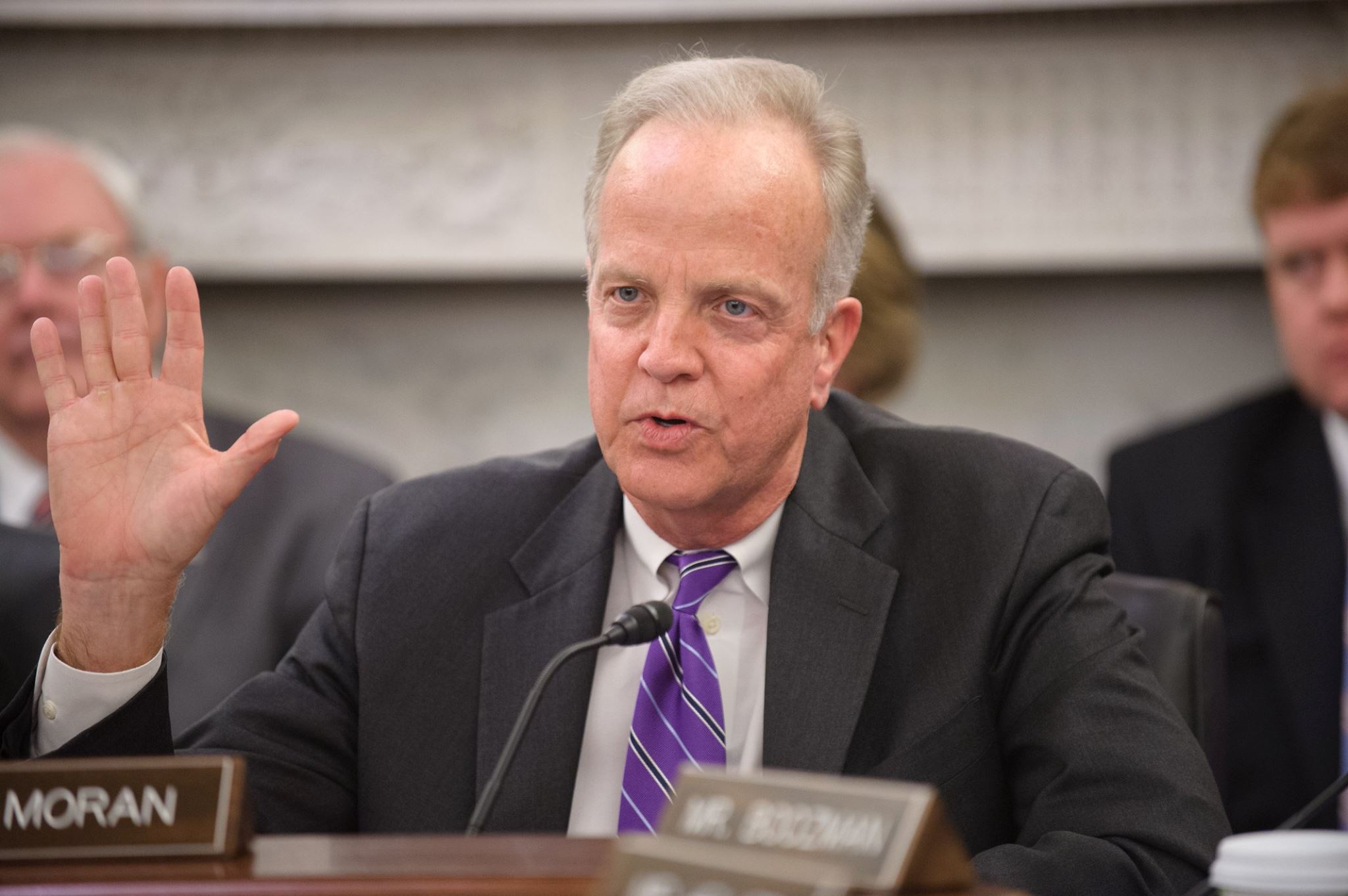
Stand up, U.S. Sen. Jerry Moran of Kansas. Take a bow.

You, sir, are standing on a critical principle, which is that Kansans sent you to the Senate to do your job and you are insisting that your senatorial leadership follows your lead.

Good luck with that.

Moran told a town hall gathering earlier this week that he wants the Senate to consider the nomination of Merrick Garland to the U.S. Supreme Court. He is bucking the edict handed down by Majority Leader Mitch McConnell, who says the Senate should wait until after the election this November to consider an appointment made by the next president of the United States.

Moran, a conservative Republican representing a blood-red Republican state, is in no serious danger of losing his Senate seat this fall. Still, to hear him say that his party’s Senate leader is wrong is, well, uplifting.

Moran isn’t endorsing Garland’s nomination. He told the town hall group that he cannot imagine President Obama ever nominating someone to his liking.

But he said he is obligated to do his job as a U.S. senator.  “I think the process ought to go forward,” he said.

He said it’s better for his constituents to tell him he “voted wrong on nominating  somebody than saying I’m not doing my job.”

Moran joins two other GOP senators

It’s one thing for a senator such as Kelly Ayotte of New Hampshire or Mark Kirk of Illinois — who also have called for hearings and a confirmation vote — to say they’ll meet with Garland and want to consider his nomination.

It’s quite another for someone representing a safe Republican state — whose re-election this fall is a virtual certainty — to weigh in on the side of senatorial responsibility.

If only the obstructionist who leads the Senate would follow suit.

Ryan: We’re heading for ‘divisiveness’ as a nation

90

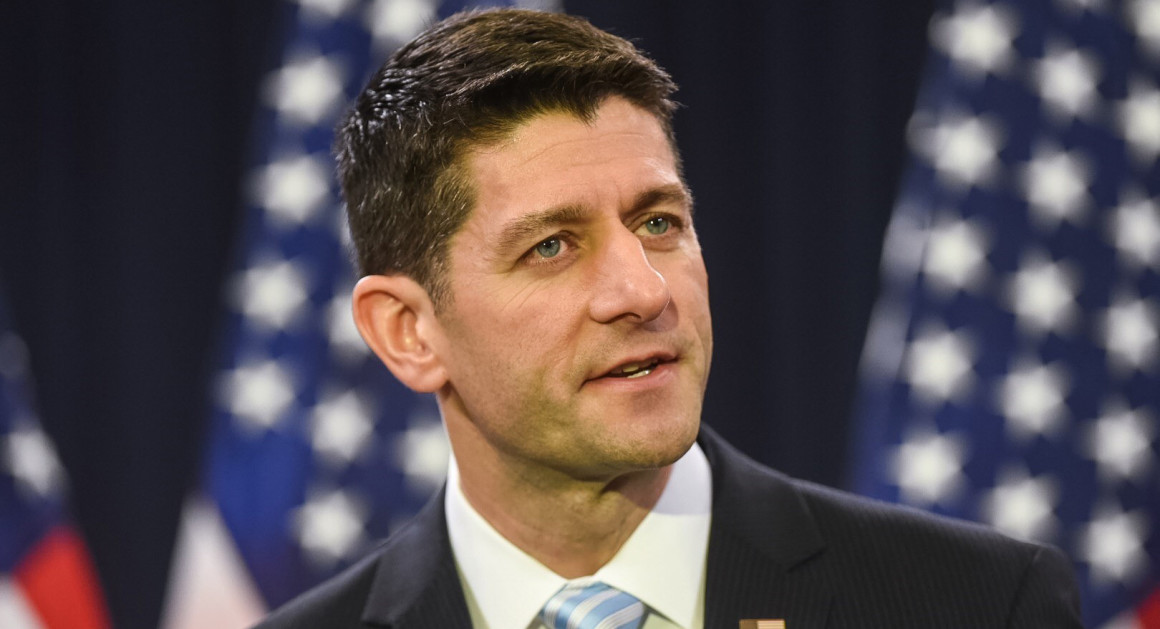
Speaker of the U.S. House of Representatives Paul Ryan is partially correct when he says the nation “is becoming divisive.”

I believe we’re already there, Mr. Speaker.

It’s not a condition that has just developed overnight, or certainly during the current election cycle.

It seems to my reckoning to have its roots in the 2000 election season, when a candidate for president was elected by the narrowest margin imaginable — and under circumstances that to this day hasn’t been accepted by many millions of Americans.

George W. Bush won the presidency after the Supreme Court stopped the recounting of ballots in Florida. The Texas governor had 537 more votes than Al Gore in that state. He won that state’s electoral votes, giving him the election — even though Gore had amassed more popular votes nationally than Bush.

For the record, I’ve never doubted the legitimacy of Bush’s election as president. The constitutional system worked.

But …

The spillover through the next several elections has seen a palpable division among Americans.

The current campaign has delivered an intense ratcheting up of the division that’s been there for some time now.

I’m not a fan of the speaker, but I do applaud him for speaking to our national idealism. He clearly was taking dead aim at the tone being delivered on the campaign trail by Donald J. Trump, who he didn’t mention by name. Everyone in the congressional conference room who heard Ryan knew of whom he was speaking.

As Politico described Ryan’s remarks: “He decried identity politics, criticizing those who pit groups of Americans against each other. He said the nation’s political system doesn’t need to be this bad. He accused both parties of staying comfortably in their corners, only talking to those who agree with them.”

Ain’t that the truth?

There once was a time when members of Congress — from both parties — talked openly with each other about how to legislate for the good of their states or the country. The Texas congressional delegation was known to have bipartisan breakfasts weekly, with House members breaking bread with each other and talking about issues that needed attention.

It doesn’t happen these days.

Instead, we’re seeing and hearing candidates and their rhetoric demonizing “the other side.” The No. 1 instigator of this campaign-trail anger is the GOP’s leading presidential candidate — Trump.

Ryan’s message will not resonate with the segment of the population that has bought into the Us vs. Them mantra that Trump and others are promoting. Ryan is now seen as a member of the hated “establishment.”

Ryan said: “What really bothers me the most about politics these days is this notion of identity politics. That we’re going to win election by dividing people. That we’re going to win by talking to people in ways that divide them and separate them from other people. Rather than inspiring people on our common humanity, on our common ideals, on our common culture, on things that should unify us.”

Is his message too sunny, too optimistic, too idealistic?

For the sake of our political future, I hope not.

If only the VP hadn’t said what he said …

Supreme-Court-blue-sky

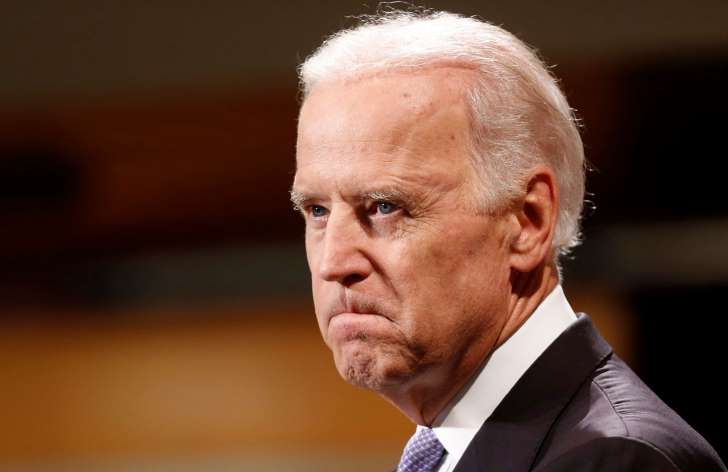
Vice President Joe Biden delivered a stern message today to some university students and faculty members

about the obstruction occurring in the U.S. Senate.

It’s threatening the core of our republic, he said. Senate Republicans must not obstruct President Obama’s effort to fill a Supreme Court vacancy; they must allow nominee Merrick Garland to have a hearing, then they must debate the merits of his nomination and they must then vote on it.

True enough, Mr. Vice President.

But what about those remarks you made in 1992 about whether President George H.W. Bush should be able to nominate someone to the high court in an election year? Today’s Republicans are seeking to block Obama’s pick because this, too, is an election year and they want the next president to make the selection.

The GOP has beaten the vice president over his remarks then.

What they don’t say is that Biden also declared that he would support a “consensus candidate” in an election if one were to be presented to the Senate Judiciary Committee, which Biden chaired at the time.

Biden told the Georgetown law students and faculty members: “Dysfunction and partisanship are bad enough on Capitol Hill. But we can’t let the Senate spread that dysfunction to another branch of government, to the Supreme Court of the United States.”

It’s fascinating to me that then-Sen. Biden’s remarks now have become known as the “Biden Rule,” which has never existed.

I won’t defend Biden for making his remarks in 1992. He was wrong to suggest that a sitting president shouldn’t be allowed to perform his job if he had been given the chance to do so. President Bush did select a Supreme Court justice in 1991, when he nominated Clarence Thomas to take the seat vacated by the death of Thurgood Marshall.

However, I won’t condemn Biden for holding that view. He did, after all, add the caveat that he would support a consensus candidate for the Supreme Court.

The here and now stands on its own.

The vice president is correct to insist that today’s Senate should stop its obstruction and allow the president to fulfill his constitutional duty — and do its own duty to give an eminently qualified nominee the fair hearing he deserves.


Social media have become a campaign curse

[ File # csp7860124, License # 1321135 ] Licensed through http://www.canstockphoto.com in accordance with the End User License Agreement (http://www.canstockphoto.com/legal.php) (c) Can Stock Photo Inc. / Blotty

I think I’ve discovered an undeniable truth.

Social media are to blame for the ghastly decline of intelligent political discourse in this great country of ours.

It’s not a big-time flash. Others likely have drawn similar conclusions and written about it.

I am now going to refer to the Twitter War that’s going on between Donald J. Trump and Rafael Edward Cruz. Donald vs. Ted. It’s getting childish in the extreme and it’s lending nothing whatsoever to any kind of intelligent discussion among Republicans over which of these men should be their party’s nominee for president of the United States.

The crux of the Twitter fight centers on their wives. Melania Trump and Heidi Cruz are now being kicked around like the proverbial footballs that they are not.

It’s sickening me.

A pro-Trump super-PAC put something out there about Mrs. Trump appearing in the nude. Trump tweeted some threats to Cruz about it, threatening to say something mean about Mrs. Cruz.

Ted Cruz denied having anything to do with the ad. Trump ain’t buying it. Now it’s Cruz calling Trump a “coward.”

Back and forth they go.

And voters are supposed to make intelligent decisions — based on this petulant patter — on which of them should carry the GOP banner forward against the Democratic nominee this fall?

Give me a break!

Maybe the mainstream media — and I don’t mean as the conservative epithet the term has come to mean — is responsible. By “mainstream,” I refer to the major broadcast and cable news networks and the print media who keep reporting this stuff.

Heck, bloggers all along the political spectrum have weighed in on it — as this blog is doing at this moment.

So … I’ll accept my share of the blame for this social media craze and its alleged “contribution” to the quality of our national political debate.

I’m not proud of myself.

My only recourse is to ignore this social media sniping.

Therefore, I will.


Listen to the VP, senators, about doing your job

biden

Vice President Joe Biden is going to lecture the U.S. Senate on something about which knows a thing or two.

He wants his former colleagues to do the job they took an oath to do, which is vote on whether to approve a nominee to the U.S. Supreme Court.

Biden will deliver his message in remarks at Georgetown University.

At issue is the nomination of Merrick Garland to fill the seat vacated by the death of Antonin Scalia. Senate Republicans — many of them, anyway — are digging in on the nomination. They don’t want to consider a Barack Obama appointment, contending that it’s too late in the president’s second term. He’s a “lame duck,” therefore, the task of appointing a justice should fall on the next president.

That, of course, is pure malarkey.

Barack Obama is president until Jan. 20, 2017. He wants to fulfill his constitutional duty and he’s urging the Senate to do so as well.

Oh sure. The balance of the court is hanging here. Scalia was a devout conservative ideologue — and a brilliant legal scholar. Garland is a judicial moderate; he’s also a scholar; a man viewed widely as supremely qualified.

How does Biden — who served in the Senate for 36 years before being elected vice president — figure in this?

As vice president, he’s the presiding officer of the Senate. Of course, he votes only to break ties. He doesn’t actually run the place. That task falls on the majority leader, who happens to be a Republican, Mitch McConnell of Kentucky.

It’s been McConnell’s call to obstruct this nomination.

Biden, though, does have a number of friends in both parties who serve in the Senate. Is there any hope that he can get through to them? Probably not, but when you’re vice president of the United States, you have the bully pulpit from which to preach an important message to those who need to hear it.


It wasn’t just a ‘war on drugs’

d4b7e386cc6a496090a245c74d94bd6c

I’m still trying to process this bit of news from our nation’s past.

John Ehrlichmann, one of President Nixon’s chief aides, reportedly told an author that the president’s “war on drugs” had a more insidious meaning within the walls of the West Wing.

Erhlichmann supposedly said the drug war was meant as a way to shore up Nixon’s “southern strategy” that curried favor with white voters while targeting African-Americans and hippies who were opposed to the Vietnam War in particular and to Richard Nixon’s presidency in general.

A lot of Americans remember Ehrlichmann. He was the president’s chief domestic adviser and a leading figure in the cover-up of the Watergate scandal that eventually brought down the Nixon presidency.

He died in 1999, so he isn’t around to defend himself against the remarks that are just now being published in Harper’s magazine.

A part of me believes that President Nixon was quite capable of concocting such a nefarious strategy. Another part of me wishes and hopes it isn’t true.

Ehrlichmann’s five children have said the statements attributed to their father are false. They stand behind his character and say they weren’t raised that way.

According to reporter Dan Baum, writing in Harper’s, Erhlichmann said: “You understand what I’m saying? We knew we couldn’t make it illegal to be either against the war or black, but by getting the public to associate the hippies with marijuana and blacks with heroin. And then criminalizing both heavily, we could disrupt those communities. We could arrest their leaders. raid their homes, break up their meetings, and vilify them night after night on the evening news. Did we know we were lying about the drugs? Of course we did.”

The war on drugs is still being waged. It produced mandatory sentencing policies that federal judges have to follow. It was supposed to get tough on those who produce, buy, sell and consume the hard drugs such as heroin and various hallucinogens.

Has it worked? Well, drug use hasn’t abated in the nearly 50 years since the feds declared war on it. Moreover, I’ve seen the studies that suggest that African-Americans have been imprisoned at far greater rates than the rest of the U.S. population.

As for the motives behind the declaration in the first place, it saddens me beyond belief — if they are true.

The late president’s views on minorities, anti-war protesters and anyone who didn’t support his foreign and domestic policies are well-known to historians. They have been revealed in those infamous recordings of the president speaking to his top aides.

And what about John Erhlichmann’s personal motives? Did he buy into a hideous effort to fight back against the president’s enemies?

My own hunch is that he was loyal to the boss — Richard Nixon. When the boss told him to do something, then he followed orders. Does that make Erhlicmann a racist? We can’t ask him directly, so we’re left to speculate.

This isn’t the first time Americans have heard from officials seeking to atone for their mistakes. The late secretary of defense, Robert McNamara, revealed in the mid-1990s that he thought the Vietnam War was doomed to failure, even as he counseled two presidents to keep escalating the fight.

If only Ehrlichmann was around to clear the air about these revelations …

Many of us who are, sadly, are left to think the worst.