Category Archives: military news

Privatize the VA? Never!

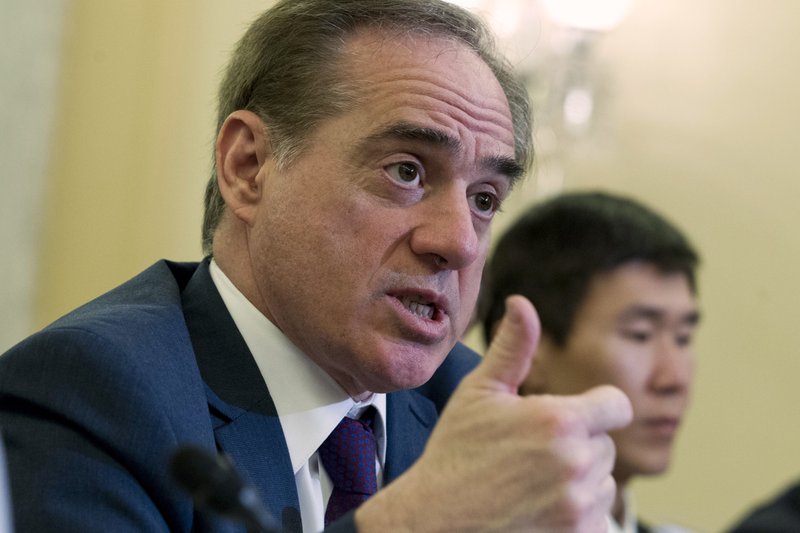
David Shulkin isn’t going quietly away from his job as secretary of veterans affairs. Indeed, he is firing back, claiming it “shouldn’t be this hard to serve your country.”

What’s more, he is telling the world that one of the reasons Donald Trump fired him is because he resisted efforts to privatize the nation’s second-largest federal agency.

Oh, my! How many ways can I implore the government to avoid privatization of the Department of Veterans Affairs? Let me start with this: Don’t even think about it!

There are roughly 20 million American veterans alive today. Many of them rely on the VA for services for which they are owed. By the government!

I get that many vets who live in rural communities have difficulty at times obtaining medical care from the VA; they live long distances from the nearest VA clinic. Thus, comes some of the impetus to privatize medical care and other services currently provided by the VA.

As Shulkin wrote in the New York Times: The private sector, already struggling to provide adequate access to care in many communities, is ill-prepared to handle the number and complexity of patients that would come from closing or downsizing V.A. hospitals and clinics, particularly when it involves the mental health needs of people scarred by the horrors of war. 

I now will say this another way: The government that sent young men and women to potentially die in service to their country owes them the best care possible. Period! A government that accepted these Americans’ voluntary enlistment or drafted them for service must remain responsible for their health care.

I happen to be one of those Americans who once wore the uniform in service to the country. I am enrolled in the Department of Veterans Affairs health care program administered in Amarillo, Texas. I visit the Thomas E. Creek VA Medical Center for routine medical checkups.

What’s more, I do not consider it a “free” medical service; I consider it a “pre-paid” service that I earned by giving my country two years of my life. My country sent me into a war zone in the spring of 1969. I returned home and finished my tour of duty.

I will not accept the idea that the government that sent me to war now can hand over medical care to a private provider. I disagree with this form of privatization the way I disagree with private prison management. A government that spends money to arrest, charge, try and convict a criminal should also be responsible for housing that criminal — for the rest of his or her life if necessary.

The VA serves men and women who gave plenty in service to their government. It now falls on the government to repay that service by caring for these individuals — and to provide care in the most competent manner possible.
The door keeps revolving in Trump World

Here’s the latest big shakeup inside the Donald J. Trump administration. David Shulkin is out as secretary of veterans affairs. Admiral Ronny Jackson, the White House physician, is the new boss at the VA.

Trump pushed out Shulkin, a holdover from the Obama administration. Admiral Jackson will inherit a department in relatively good shape, if we are to accept the president’s tweet announcing the latest big personnel change. He thanked Shulkin for his service to the country and for the work he did on behalf of our “great veterans.”

I do expect the president to have an unkind word or two to tweet, however, regarding Shulkin’s Obama connection, given that’s Trump’s modus operandi: anything to do with his immediate predecessor is a bad thing.

Shulkin got caught up in a controversy over excessive spending on personal and department travel. I would caution the president to avoid blasting Shulkin just because Barack Obama appointed him; Trump, remember, did keep him on board.

As one of those who receives care from the Department of Veterans Affairs, I do appreciate that the agency has recovered a good bit from the shameful episode it went through with reports of veterans dying while awaiting health care in some hospitals. The shameful chapter cost retired Army Gen. Eric Shinseki his job as veterans secretary. Indeed, he needed to go.

Is this the end of the Trump shakeup? Well, I am not holding my breath. I expect some more “bodies” to be thrown over the wall. Then again, that’s almost becoming normal in the world of Trump, who actually has acknowledged how he thrives on chaos.

I do hope Admiral Jackson can keep the VA ship moving forward while continuing to provide care for our nation’s “great veterans.”

‘Mad Dog’ can’t work with Bolton? Who knew?

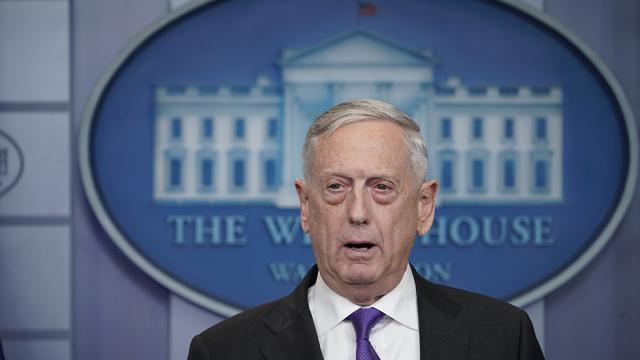
Imagine my non-surprise to hear this tidbit on a drizzly Texas Panhandle day. It is that Defense Secretary James “Mad Dog” Mattis told associates he isn’t sure he can work with John Bolton were he to be named national security adviser to the Donald J. Trump administration.

Who knew? Yes?

You see, Mattis is a grownup. He’s a retired Marine Corps general with combat experience. He knows war. He’s seen it up close. He’s been to hell and lived to talk about it … were he so inclined.

Bolton is more of a “chicken hawk.” He doesn’t have the kind of real-world experience that Mattis has piled up. Yet he stands ready to recommend war at almost any turn. The Hill reports that White House chief of staff John Kelly, another retired Marine general, also is unhappy with Bolton’s selection as national security adviser.

Well, now the president has appointed Bolton to be the national security adviser. The decision appears to have isolated Mattis, who had a kindred spirit in the national security adviser’s chair for about a year. Army Lt. Gen. H.R. McMaster is stepping down as national security adviser and reportedly is retiring from the Army.

He and Mattis double-teamed as a reasonable tandem of advisers who were willing to advise Trump against acting rashly — even though they weren’t always able to persuade the president to follow their advice.

Gen. McMaster is now gone. Is “Mad Dog” Mattis the next grownup to be shown the door?

Chaos is king in the Trump White House.

If only POTUS had served

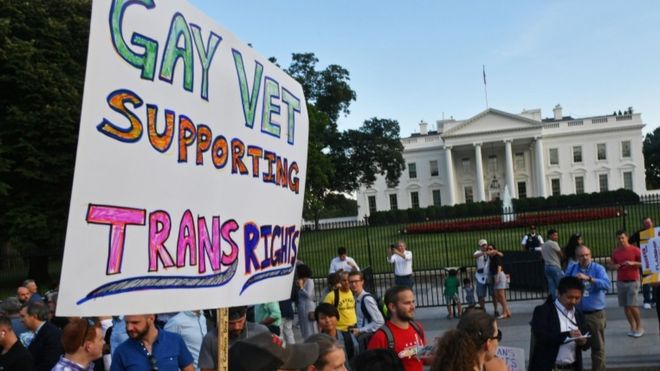
Donald J. Trump’s decision to implement a ban on transgender Americans from serving in the military is wrong on at least two levels.

Yes, he has made some exceptions to the ban, allowing certain individuals to continue their service.

However, he is promulgating the bias against transgendered individuals, allowing a form of discrimination against them because they have decided to change their sexual identity. The discriminatory nature of the decision is offensive on its face, just as it was in Texas when the Legislature sought to enact the “Bathroom Bill” that would have required individuals to use public restrooms that aligned with the sex stated on their birth certificate; that bill didn’t see the light of day.

Here is another factor that rankles many critics of the president, such as yours truly.

This man seeks to deny Americans the privilege of serving their country in uniform, of going to battle for their nation and denying them the right to do the very thing that young Donald Trump sought to avoid doing back when he was of age during another time of war.

Trump obtained at least five medical deferments to keep him out of serving during the Vietnam War. He cited “bone spurs,” or some ailment that hasn’t been independently confirmed so many decades later.

The very idea that a commander in chief who avoided service in the military would deny others the right to serve their country — and to go to war on our behalf if they got the order — is even more offensive on its face.

Many millions of Americans answered the call during that earlier time. Say what you will about citizens’ rights that they employed during that time of tumult. I understand that young men of privilege are entitled to avoid military service if they have the chance.

However, that history does tend to stick in our craw.

Get ready for Mattis vs. Bolton

Donald Trump’s national security team just cannot get its legs under it. It cannot function as a cohesive team that imparts advice to a president who is willing to (a) listen to it and (b) follow it.

With that we now have a new national security adviser, uber-super hawk John Bolton who quite likely will clash openly with Defense Secretary James “Mad Dog” Mattis.

I’m going to pull for Mad Dog to win this fight, although Bolton now is the man of the hour, the guy who’s got the president’s ear.

Heaven help us if Bolton’s world view carries the day in the West Wing of the White House.

Bolton is known around the world as one with an itchy trigger finger. He favors pre-emptive military action against North Korea. Indeed, he has favored “putting boots on the ground” in places like Syria, Iraq, Afghanistan … you name it, Bolton wants to flex U.S. military muscle.

He despises the nuclear arms deal worked out by the Obama administration that seeks to de-nuclearize Iran.

There’s Bolton’s profile in brief.

How about Mattis? He favors the Iran nuclear deal. He believes it is working and is worth retaining. And North Korea? Well, the retired Marine Corps general, a decorated combat veteran to boot, believes diplomacy should remain as Option No. 1 in our efforts to talk the reclusive Marxist regime out of striking at South Korea, or Japan — or the United States of America!

Mattis’s world view is forged by a career that has seen him serve up close in harm’s way. Bolton’s world view comes from a different perspective. He doesn’t have the kind of front-line military experience that Mattis does; Bolton served six years in the Maryland Army National Guard.

I want to bring this to your attention only to suggest that there might be yet another ideological storm brewing within the Trump White House.

As I have noted before, “Mad Dog” Mattis is one of the few grownups who have signed on to serve this president.

I do not believe John Bolton falls into that category of public servant.

The pilot deserved higher honor than he got

Flash back 50 years ago and you find yourself recalling one of the most tumultuous years in U.S. history: 1968.

We’ll soon mark a couple of assassinations that tore the nation’s heart apart. We’ve already noted the 50 years since a one-time enemy launched an offensive against our troops in Vietnam, changing the nation’s fundamental attitude about whether the war could be won on the battlefield. At the end of this year we will mark a mission to the moon that gave us a glimmer of hope after all that heartache.

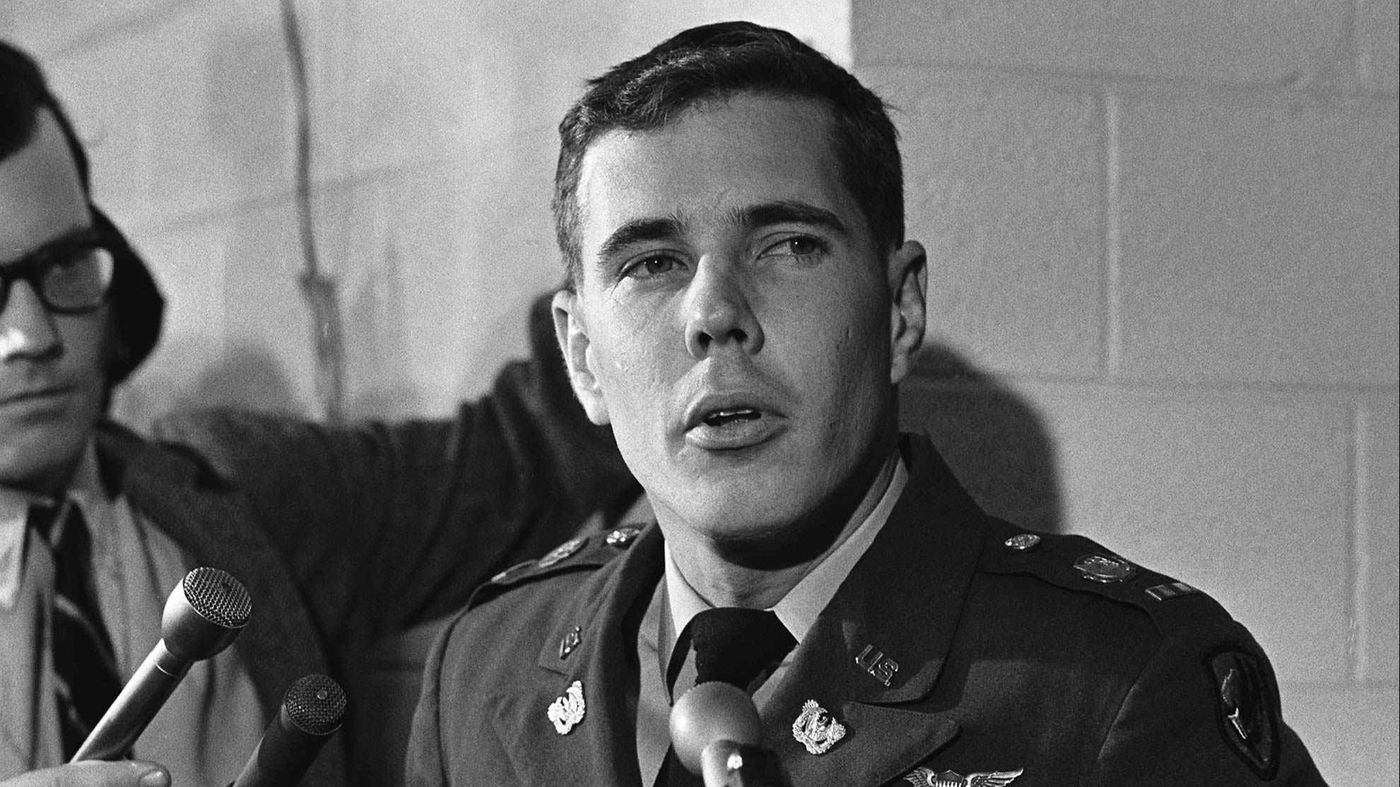
Fifty years ago today, a U.S. Army pilot — the late Hugh Thompson — landed his helicopter at My Lai, South Vietnam, and told fellow soldiers that he would kill them all if they continued to massacre innocent men, women and children. His crew chief and door gunner were standing by to carry out the order — if Thompson were to deliver it. The soldiers backed off and spared the nation from even more tragedy.

The My Lai massacre became one of the flashpoints of the Vietnam War. Army Lt. William Calley, who commanded the men who took part in the massacre, stood trial and served prison time for his role in that horrific event.

What has gone largely unremembered is the heroism that Thompson exhibited when he confronted the men who had gunned down hundreds of Vietnamese victims.

As Thompson told the Los Angeles Times before his death in 2006: “I thank God to this day that everybody did stay cool and nobody opened up. … It was time to stop it, and I figured, at that point, that was the only way the madness, or whatever you want to call it, could be stopped.”

The Army sought to hide the massacre. It sought to keep it out of public view. Then the famed journalist Seymour Hersh uncovered it and reported it worldwide.

Thompson eventually received the Soldier’s Medal for “heroism not involving actual conflict with an enemy.”

He also deserved a nation’s thanks and gratitude for stopping evil when he spotted it from on high.

Russia remains off Trump’s danger-zone radar

I want to join the chorus of Donald J. Trump’s critics who cannot fathom why the president of the United States cannot bring himself to say anything critical about Vladimir Putin, the strongman who runs Russia.

Putin this past week announced the unveiling of weapons systems he said would neutralize the U.S. missile defense systems. His aim seems to be able to strike the United States of America whenever he felt like it.

The response from Trump? Nothing. Not a frigging sound! He isn’t challenging Putin’s assertion of military superiority the way he has done, say, with North Korean dictator Kim Jong Un.

What the hell is the matter with this guy, the president of the United States?

I endorse the view put forward late this past week from a retired U.S. Army general, Barry McCaffrey, who contends that Russia in reality is nothing more than a developing Third World country. It economy is smaller than California’s economy, McCaffrey said; Russia’s standing army is inferior; it has a population that is less than half of that of the United States; its submarine and surface-missile weapons systems essentially are a joke, he said.

In no way, according to McCaffrey — a Vietnam War combat veteran who had a major command during the Persian Gulf War — would Russia dare launch a first strike against the United States.

Where is the “Little Rocket Man” epithet that the president could use against Putin? Why doesn’t he tweet some idiotic rejoinder about how his “button is bigger” than the one at Putin’s fingertips?

Good grief, man! Has the Russian strongman cast some sort of spell over the president of the United States?

Or … is there validity to reports of something fishy involving Trump’s business dealings in Russia?

Oh, I forgot. Trump said he has “no business activity” in Russia. No deals have been struck.

And we are supposed to believe him? Sure thing.

As long as we’re talking about guns …

I understand people’s fascination with firearms. I get that many Americans get a form of “enjoyment” out of shooting them.

What I do not get — nor will I ever understand, more than likely — is the fascination with assault rifles, killing machines that shoot large amounts of ordnance in very little time.

I now will explain why I get the fascination part.

I’ll begin by boasting — just a little — that I have a certain proficiency with firearms. I discovered my rifle proficiency while serving in the U.S. Army. I completed my basic training at Fort Lewis, Wash., in 1968 while toting an M-14 semi-automatic rifle. It used a 20-round magazine full of 7.62-mm rounds and I earned a “sharpshooter” rating with the rifle.

I flew from Fort Lewis to Fort Eustis, Va., for my AIT (advanced individual training). Even though I trained as an OV-1 Mohawk aircraft mechanic, we were issued M-16 rifles, on which we had to qualify. The M-16 was much lighter than the M-14, but it, too, used a 20-round magazine, firing a much smaller caliber round: a .223, barely bigger than the .22-caliber bullet my rifle at home shot. The M-16 is a deadly weapon of war, however. I qualified well on that weapon, too.

I was issued an M-16 when I reported for duty in Vietnam in the spring of 1969 and, thank goodness, I never had to fire it in combat.

But my exposure to those weapons never brought discomfort to me. I felt quite comfortable firing them during training exercises.

Fast-forward to 2003. I was working as editorial page editor of the Amarillo Globe-News in Texas. I received an invitation to take part in the Amarillo Police Department Citizens Academy. Its aim is to acquaint civilians to myriad aspects of police work. It’s an educational tool that APD uses to give citizens — such as yours truly — a better understanding of the complexities associated with law enforcement.

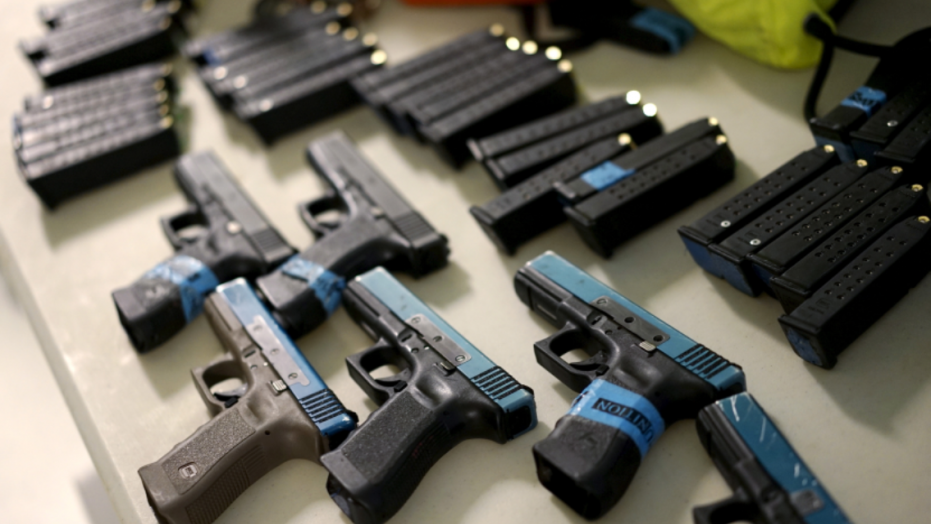
One aspect of the academy was to spend some time at the firing range. We got to shoot a .38-caliber revolver — a six-shooter; a 9-mm Glock pistol; and an AR-15 rifle (yes, the weapon used in the Parkland, Fla., school massacre on Valentine’s Day).

I am not as familiar with handguns as I am with rifles. But I made a rather startling discovery about myself that day: I’m a pretty good shot with a handgun. I was able to shoot the six-gun well; I was able to handle the more powerful Glock with proficiency; and the AR-15 felt much like the M-16 I was issued in Vietnam.

I came away from the APD Citizens Academy shooting range understanding fully the fascination with shooting weapons at targets.

However, and this interesting, as well, as much “fun” as I had shooting those weapons at the APD range, I didn’t get bitten by the shooting “bug.” I haven’t fired a handgun since that day 15 years ago.

As we continue this national discussion about guns, though, I remain opposed to the idea of allowing the relatively easy purchase of weapons such as the AR-15 that can be used to kill lots of people in no time at all.

They, in effect, are weapons of war, where they and other such weaponry do what they are designed to do. On the streets — or in school classrooms, for crying out loud! — they have no place.

‘Mad Dog’ making sense on transgender troops?

James “Mad Dog” Mattis has been considered one of the grownups of the Trump administration.

The defense secretary now reportedly is preparing to recommend that transgendered Americans be allowed to serve in the U.S. military.

Is the president listening? Is he prepared to heed the advice of this retired Marine Corps general he named to lead the Pentagon?

Let us hope so.

Trump tweeted a policy change in 2017 in which he declared his intention to ban transgendered troops from serving or transgendered Americans from seeking to serve in the military.

Imagine that. The commander in chief would deny patriotic Americans who want to defend their country the chance to fulfill their duty as citizens of the greatest nation on Earth. The president offered some lame rationale about the huge medical costs associated with transgendered troops.

What critics pointed out was that the Pentagon spends many times more for drugs to cure troops of erectile dysfunction than it spends on transgendered troops.

Now it’s up to the defense secretary, a man with considerable combat experience, to remind the president that transgendered Americans are serving with pride and professionalism alongside other patriots.

Let’s hope the president hears him.

Isn’t it just amazing that a Cabinet secretary with the nickname “Mad Dog” could be so, um, rational?

Enjoying a front-row seat of progress

Our new “home” across the way from Rick Husband Amarillo International Airport and the Bell Helicopter aircraft assembly plant has given me a front-row seat to an amazing display of engineering and economic progress.

My wife and I have been living at an RV park within spittin’ distance of AMA and Bell. From our living room we are able to watch jets fly in and out of the airport while also witnessing test flights of a state-of-the-art combat aircraft that is put together right here on the High Plains.

I refer, of course, to the V-22 Osprey, the notable tilt-rotor aircraft that’s seen plenty of duty in Iraq and Afghanistan over the years. The Marine Corps has been using the bird to ferry troops and supplies on and off battlefields in both countries for, oh, about the past decade.

The Osprey hasn’t been without controversy. Many of us recall the terrible crash in Arizona that killed nearly 20 Marines on a test flight.

The Osprey, though, has been re-engineered since that crash. It has been improved. It has been modified to some degree. Today, from what I have heard, it has performed its mission well. The aircraft gives American fighting personnel quicker entrance and exit from the battlefield.

Amarillo used an interesting — and occasionally mocked — economic tool to lure Bell/Textron to the High Plains in the late 1990s. The Amarillo Economic Development Corporation offered a lot of money that it collects from sales tax revenue to Bell/Textron, which ended up receiving about $45 million in various inducements, including tax abatements and free land next to AMA.

Bell returned to Amarillo, where it once repaired and maintained Huey helicopters during the Vietnam War.

AEDC hit a home run when it lured Bell/Textron to the region. We have seen it grow over the years, expanding its mission.

I think of all this on occasion as I watch the Osprey take off and land. I recall the ridicule we heard from the Fort Worth area that lost the Bell operation, thanks to Amarillo’s aggressive and creative marketing campaign.

I also look with some pride at what this community has been able to accomplish for its local economic health as well as contributing to the nation’s vaunted military establishment.

I spoke once with a Marine pilot who was stationed in Amarillo to test-fly the Osprey earlier in its development. He mentioned to me how this aircraft was so hard to learn to fly, but once he got the hang of it, the Osprey has turned out to be a lot of fun to fly.

On occasion I think of that Marine as I watch the Osprey glide through its paces above us, and I wonder how much fun they’re having overhead.