Category Archives: medical news

Is a vet school coming to the Panhandle?

Texas Tech University officials want to put a school of veterinary medicine in Amarillo. That’s the word from the chancellor’s office and from others within the sprawling university system.

The notion has a couple of big obstacles. One of them involves money; the other involves politics.

First, the money obstacle.

The Texas Legislature has appropriated about $4 million to Texas Tech to start researching how it can install a large-animal veterinary school that would serve the Texas Panhandle and, indeed, the rest of the state and perhaps the tri-state region.

The hope would be for Panhandle residents to get their DVM degrees and then stay home to serve the community.

But Tech needs about $90 million more, according to Amarillo Matters, a political action group formed to speak on behalf of issues and officials who want to improve Amarillo and the surrounding region. Time isn’t on the side of Texas Tech. They don’t have much time to raise the money and they’re searching for the deepest pockets possible to help finance construction and development of the school.

I happen to believe a veterinary medical school makes perfect sense for Amarillo and the surrounding region. Texas Tech, based in Lubbock, is the ideal school to establish it, given that it already has medical school and pharmacy school campuses in the city. Indeed, the Tech School of Pharmacy came to being after the community ponied up a lot of money to show Tech that it had sufficient interest in the project. It has been a successful venture.

Now for the politics of it.

Texas A&M University doesn’t want Tech to proceed with a veterinary medicine school. Aggieland is totally opposed to Tech impinging on the monopoly that A&M has on veterinary education in Texas.

This interference doesn’t make sense.

There surely must be ample opportunity for a second top-tier university system to develop a veterinary medical school. Last time I looked, I noticed that Texas is a mighty big state, comprising more than 250,000 square miles and stretching more than 800 miles east-west and north-south.

Tech and A&M apparently haven’t yet worked out their differences. My hope is that Texas Tech wins out in this battle of university system wills.

Then the Tech System needs to find the rest of the money.

Quitting smoking? No sweat! Really!

We’ve entered the Season of Resolutions.

Many of us resolve to do certain things, or not do certain things, depending on the nature of the resolutions we make.

I want to tell you about something I did 38 years ago and how it might play in today’s climate of medical disclaimers and equivocations.

I keep hearing commercials for quit-smoking aids. One of them, Chantix, is particularly interesting to me. The voice-over tells the viewer that the prescription drug carries many potential side effects. Those who use this drug to quit smoking may suffer from withdrawal symptoms that include “change of mood” or “thoughts of suicide” or “actions” relating to suicide.

I hear these disclaimers and think: Do I want to take a drug that might make me want to kill myself?

Thirty-eight years ago — it was on Feb. 2, 1980, to be precise — I quit smoking.

Cold turkey! Just like that! I took a drag on a cigarette, damn near choked on it and then tossed it and the pack from where it came into the garbage. I was done. Over. Finished.

The truth is I was a heavy smoker: about two packs daily. Remember, that was an era when cigarettes cost a whole less than they do today. I recently saw a guy spend more than $70 on a carton of smokes. Sheesh, dude! I’m trying to figure the logic in spending something you light with a match and burn to ashes.

I had developed a nagging cough. My wife was imploring me to quit. So … I did what I normally do: I followed my wife’s instructions.

I got through the withdrawal pangs immediately after tossing the weeds into the trash. I don’t recall any suicidal thoughts, let alone taking any action in that regard.

Over the years I have told others who say they “intend” to quit smoking after they finish the pack they’ve just opened that such intent won’t get the job done. I, too, intended many times to quit before I finally did.

I realized that one’s intention to quit smoking means as much as the sign that at the bar that declares “Drinks are on the house … tomorrow.”

For several years after quitting the nasty habit I was inclined to describe myself as a “former smoker.” No longer. For many years I have been a dedicated non-smoker.

I did it without quit-smoking aids that might lead to suicide. I guess I realized the habit I was quitting would kill me just as dead.

Mend, don’t end the Affordable Care Act

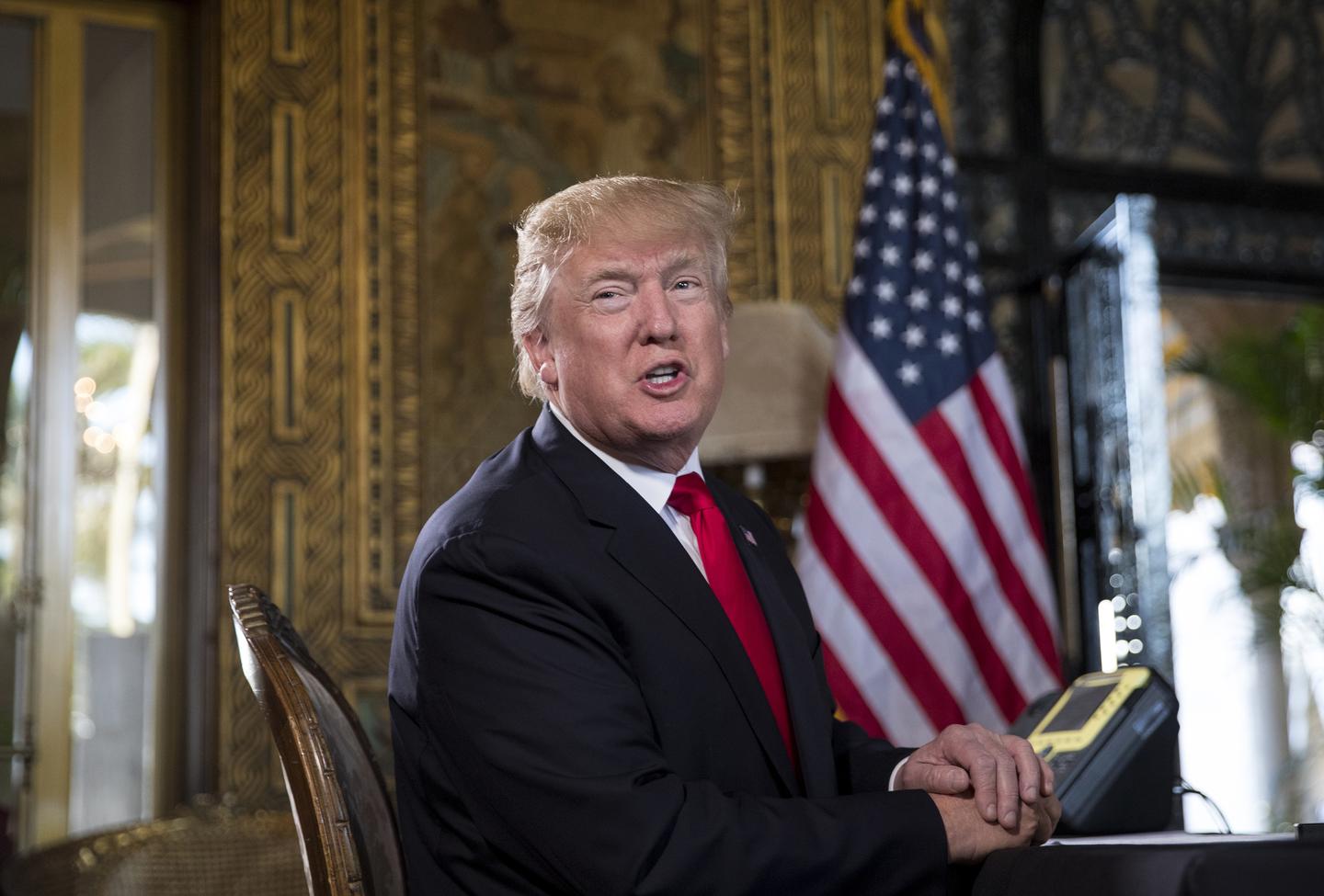
Donald Trump believes congressional Republicans and Democrats are going to find a way to craft a new national health care insurance plan.

That’s a bold prediction, Mr. President, given the record so far.

GOP and Democratic lawmakers couldn’t agree on the time of day, let alone a fix to the Affordable Care Act. The president didn’t help any search for common ground, mainly because he couldn’t articulate any reasonable alternatives to the ACA. Congress tried twice to “repeal and replace” the ACA, but face-planted over arguments over the cost — and the impact any replacement would have on Americans’ future health insurance availability.

I continue to believe that a total repeal of the ACA is unnecessary and draconian. Millions of Americans now have health insurance who couldn’t afford it before. Every alleged alternative to the ACA has been deemed too harsh and too punitive.

I share the thoughts of many analysts who say that if Medicare and Social Security — to other landmark legislative achievements — can be tinkered and tweaked to make them necessary to Americans’ way of life, so can the ACA.

Whether the president’s prediction comes true will depend on whether Republicans — who want desperately to remove Barack Obama’s name from this achievement — are willing to improve the ACA, rather than destroy it.

Mend it. Don’t end the Affordable Care Act.

Trump slaps another group squarely in the face

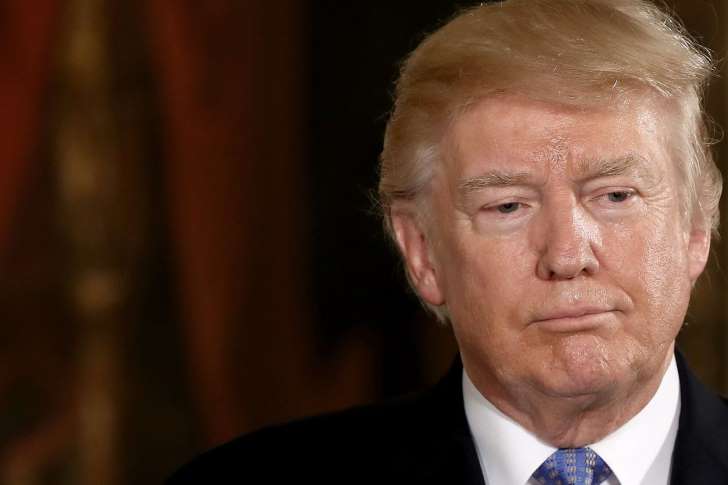
Donald John Trump made a proclamation to commemorate World AIDS Day.

Do you think he would call attention to specific groups of Americans who have been disproportionately affected by this disease? Gay people? Or people of color? Oh, no! He didn’t go there.

The president broke with decades of tradition by failing to mention the LGBT community, or racial minorities, or poor people in declaring his intention rid the world of this terrible disease.

“Today, on World AIDS Day, we honor those who have lost their lives to AIDS, we celebrate the remarkable progress we have made in combatting this disease, and we reaffirm our ongoing commitment to end AIDS as a public health threat,” Trump said.

I learned a hard truth while attending the International Conference on AIDS in 2004 in Bangkok, Thailand. It is that the disease has spread far beyond where it began in the early 1980s, when it was killing primarily gay men. It now affects sex workers and the spouses of men who become affected with HIV/AIDS through unprotected sex with women who are infected with the virus.

The president made no mention of those groups while making his declaration.

As The Hill reported: Scott Schoettes, a project director at the legal advocacy group Lambda Legal criticized the proclamation in a statement to BuzzFeed.

“Not only did the White House statement on World AIDS Day fail to mention the population in which two-thirds of HIV cases in the US occur — gay and bisexual men — it also failed to point out the disproportionate impact in communities of color, for gay and bisexual men of color, particularly young men of color, or for transgender women,” he said.

Here again, I am saddened to say, is another example of the president feeling queasy about talking to — or about — constituency groups that opposed his election and who continue to oppose his policies.

A politician who pledges to be a president for “all Americans” should be able to summon the rhetoric that speaks to everyone’s particular concerns. Once again, the president has failed to speak to the entire country.

Sad.

Film creates a guilty conscience

Have you ever seen a film that leaves you with a guilty conscience?

I just saw such a film. Today. I sat between my wife and son for a couple of hours watching “Wonder.” The parents in the film are portrayed by a couple of well-known actors: Julia Roberts and Owen Wilson.

But then there’s this boy, the “wonder” in the eyes of his mother. Jacob Tremblay portrays a youngster named August Pullman, who was born with a serious facial deformity.

Auggie is home schooled by his mother. Then his parents decide to send him to a prep school in New York City. He gets the expected harsh reaction from fellow fifth-graders when he enters the school. Auggie powers through the ridicule, the taunts, the hideous give-and-take that middle schoolers are so capable of delivering.

I won’t give any more of the plot away. It is, simply put, just about the sweetest film I have seen since, oh, I can’t remember when.

The film is based on a novel, which by definition is a fictional story. Auggie’s story, though, does mirror the real-life story of a young man named Nathaniel Newman, who was born with Treacher Collins syndrome. Nathaniel’s story was detailed on a recent edition of “20/20” on ABC-TV.

In the film and in real life, the boys who are affected by this syndrome are just as normal as any children with whom they interact. Auggie happens to be a science genius who loves the space program and wants to walk someday on the surface of the moon.

My guilt comes from the gripes I level at seemingly trivial matters. I get stopped by traffic? I complain about it. Someone cuts in front of me at the grocery store? I grumble under my breath. My favorite football team loses a close game? I curse the television set.

Then I witness on film the portrayal of a little boy who has to go through life with a struggle that too few of us can understand and appreciate. I read about another little boy with precisely the same condition and wonder: Could I be so noble and gracious in light of such struggle as he faces each day in the real world?

It makes me ask myself: Why in this world should I ever complain about anything ever again?

Senate GOP makes yet another run at the ACA

Here we go … again!

U.S. Senate Republicans have come up with a scheme to pay for the big tax cut they’re trying to enact that involves the Affordable Care Act. They want to repeal the individual mandate portion of the ACA, which they say will save more than $300 billion over the next decade.

The savings would be used to pay for the tax cuts being pitched for many wealthy Americans.

This is so very maddening, in my ever-so-humble view.

Congress trying again to repeal ACA

Congress has been unable to repeal the ACA and replace it. The president has been unable push his Republican pals across the finish line. They have tried and failed since long before Donald Trump took office as president of the United States.

Now comes this bit of Senate trickery: attach the individual mandate repeal to a tax cut they say would jumpstart the economy. Moreover, is anyone on Capitol Hill or the White House worried any longer about the national debt and our annual budget deficit, which economists say are going to explode under the GOP tax cut?

I want to make a couple of points.

One is that the economy is rocking along just fine. The U.S. Labor Department announced earlier this month that non-farm payrolls jumped by 260,000 jobs in October; the unemployment rate is at its lowest rate in 17 years. Not bad, man!

Two, enrollment for the ACA is moving along at a brisk pace. Hundreds of thousands more Americans signed up for insurance when open enrollment began at the beginning of the month, despite the president’s efforts to undermine the ACA.

I remain totally opposed to any wholesale repeal of the ACA. I continue to insist that it can be improved. It can be made more affordable. 

Removing the individual mandate — which requires Americans to purchase health insurance or face a penalty — is certain to do one thing: It will toss millions of Americans off the rolls of the insured.

How is that supposed to help?

Bill Gates takes on Alzheimer’s disease

I want to take a break from commenting on people for whom I have zero respect and toss a bouquet at someone who has earned tons of gratitude and appreciation.

Bill Gates is the world’s richest human being. He has announced he is going to kick in $50 million — which in reality is essentially walking-around money for someone worth roughly a hundred times that amount — for Alzheimer’s research.

Hey, I am not going to give the Microsoft founder the short shrift on this gift. It’s valuable and it well could lead to a cure for an incredibly cruel and heartless disease.

Gates is giving the money to the Dementia Discovery Fund, based in London. It is the sixth-leading cause of death in the United States. Its impact affects not just those it robs cognitive skill, but also the loved ones of those who afflicted by this terrible killer.

Disease hits close to the heart

I know of what I speak.

My own dear mother died at the age of 61 in 1984 of Alzheimer’s-related complications. A neurologist delivered the formal diagnosis in the spring of 1980, which she was just 56. In truth, she had been exhibiting signs of behavior change for years prior to the doctor’s grim news.

Believe me when I say this: Watching someone you love lose his or her very being is as painful an experience as one can endure. That’s what happened to Mom. She forgot how to sign her name; she couldn’t dress herself; she couldn’t bathe herself; eventually, she lost her ability to speak.

It’s not pretty.

Bill Gates wants to contribute tens of millions of dollars to help finance research that can lead to a cure for his monstrous killer. It’s the first such contribution that Gates has made to a non-communicable disease; he has been giving money for years for HIV/AIDS research.

I know my and family and are far from alone in this struggle against Alzheimer’s disease. Others have gone through the misery we have suffered. I am quite certain they, too, are grateful for Gates’ contribution to this noble effort.

This man is a champion. I appreciate beyond measure his huge gift.

Trump doing all he can to destroy ACA

The Affordable Care Act isn’t dying on its own. Donald J. Trump just cannot stand the thought of the ACA surviving, so he’s taking measures to kill it.

Congress has failed to repeal the ACA and replace it with an abomination called Trumpcare. So what does the president decide to do? He plans now to eliminate the cost-sharing reduction subsidies that have helped low-income Americans afford the health care the ACA is intended to provide them.

That’s right. The CSR is slated to be toast. The president is intent on wiping the ACA off the books. No matter what it takes or who it hurts. He’s going to hurt a lot of Americans by eliminating the CSR provision.

Vox.com reports: The White House announced late Thursday that the administration would stop the payments. The move comes as the Trump administration is also cutting funding for Obamacare outreach and pursuing new regulations to blow holes in the law, changes that collectively threaten a program through which millions of Americans purchase insurance.

I get what’s happening. The president is taking some executive action to do what couldn’t be done legislatively. The irony is that Trump and other Republicans were so damn critical of President Barack Obama for exercising his constitutional authority time and again on issues of the day.

CSR helps provide insurance

The subsidy is intended to provide a cushion for Americans seeking insurance under the ACA. I have some knowledge of this, as my wife applied for health insurance under the health care law, and was able to purchase it with the CSR allowance. She’s now on Medicare — as am I.

The president is now intent on denying that benefit to millions of Americans. He said the ACA was “dying.” Medical analysts have disagreed with that assessment. So the president has decided to pull the trigger himself.

Shameful.

GOP needs to learn how to govern

It’s over. For now. Maybe it’ll be back. Maybe not.

Senate Republicans — along with their colleagues in the U.S. House of Representatives — had signed in blood (proverbially) their vow to repeal the Affordable Care Act, which they referred to colloquially and derisively as Obamacare.

They failed. Again. For the umpteenth time. The ACA remains the law of the land for the foreseeable future if not longer.

This begs the question for me: Can the Republicans ever govern?

The GOP face-planted on ACA repeal when three senators said “no” to the bill called Graham-Cassidy, named after GOP Sens. Lindsey Graham and Bill Cassidy. The senators who stuck the shiv into this effort were John McCain, Rand Paul and Susan Collins. They’ve all been in the Senate for a while and were part of the Republican pledge to rid the nation of President Barack Obama’s signature domestic legislation.

This cluster-fudge reminds me a bit of how an earlier Republican insurgency, led by former House Speaker Newt Gingrich, stormed Capitol Hill in 1994. They took command of Congress and then had to learn quickly how to govern. They stumbled, bumbled and fumbled their way while battling a Democrat in the White House, President Bill Clinton.

But they managed, eventually, to find their way out of the darkness. The difference between then and now is that the the earlier GOP congressional leadership team worked with a president who knew how to govern, how to compromise, how to cajole the opposition when he needed to do it.

The Republican Party now controls Congress and the White House. Therein we have the difference between then and now.

Republicans fought tooth-and-nail with President Barack Obama over repealing the ACA. They never crafted an acceptable alternative. Obama and his Democratic allies in Congress fought them off. Obama then left office in January. Donald Trump said he wanted a bill on his desk when he stepped into the Oval Office. He didn’t find one.

How come? The GOP was too fixated on the “repeal” part of the strategy and not nearly enough on the “replace” part of it. As for the president, he was clueless during the campaign about what it took to assemble a legislative alternative to the ACA — and is just as clueless at this very moment about how to negotiate with disparate members of his party’s congressional caucus to find a solution.

I keep circling back to the notion that the presidency requires knowledge of the complex and sometimes arcane system of governing the United States of America.

Donald Trump doesn’t know it and his ignorance of the details of his office has revealed that the political party to which he ostensibly is a member has yet to find its governing legs.

Buh-bye, latest GOP effort to kill the ACA

Well, here’s where we stand with the persistent Republican effort to repeal the Affordable Care Act.

It’s a goner. Kaput. Finished. Party’s over, man.

U.S. Sen. Susan Collins, R-Maine, today announced she won’t vote for the latest Senate GOP-engineered effort to repeal the ACA and replace it with an abomination that we’ll call Trumpcare.

You know what interests me about this latest death knell being run over the GOP’s ACA repeal effort: The three senators who’ve announced their opposition to it have done so for wildly varying reasons.

Collins opposes the bill because it cuts too much money from state Medicaid assistance programs for Americans who cannot afford health insurance. Sen. John McCain of Arizona hates the partisan process that brought this bill forward; he wants Democrats to be involved in this effort. Sen. Rand Paul of Kentucky doesn’t like the block grant provision, which he says simply renders the replacement as an “Obamacare light” version of the ACA.

There might be more Republicans who’ll abandon this effort. Sen. Lisa Murkowski of Alaska has strong reservations. So does Sen. Ted Cruz of Texas, who contends that his buddy Sen. Mike Lee of Utah also might vote “no.”

That all might be a moot point. Sen. Orrin Hatch, R-Utah, said today he doubts the bill will get to a vote. Senate Republican leaders have conceded likely defeat.

The Senate GOP has until Saturday to repeal the ACA with a mere 50-vote (plus one) majority; after that the rule shifts back to the Senate’s 60-vote supermajority rule.

What now?

Hey, here’s an idea: How about sitting down with congressional Democrats to work out ways to repair the ACA? Are congressional Republicans so hell bent on removing President Barack Obama’s signature legislative achievement from the books that they simply won’t look for common ground with their Democratic “friends”?

Premiums are too high. Health insurance isn’t as “affordable” as it was advertised. Surely there are ways to tinker, tweak and fine-tune the legislation to make it better. Aren’t there?

We aren’t re-inventing the wheel here, folks. Members of Congress did that very thing more than 50 years when they approved Medicare legislation. It wasn’t perfect, either, but they sought — and found — common ground to improve it to older Americans’ satisfaction.

That, I submit, is a sure-fire formula for furthering the cause of good-government legislation.