Category Archives: media news

Trump stiffs the media; good luck with your message

aakamyn

I guess I’m just an old-fashioned guy.

The president of the United States needs to talk to the media to deliver a message to the people he governs. Not so, apparently, with the man who’s set to become the next president.

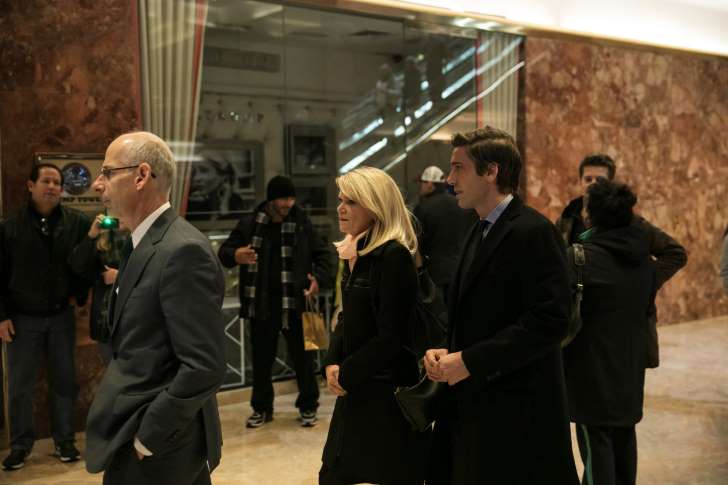
No, siree. Donald J. Trump today asked several network news anchors to meet with him at his New York City office. Then he blasted them to smithereens, to their face. He told them they’re dishonest; they got the election outcome wrong; he doesn’t need them; he’s going to talk “directly” to the people.

This tirade really got the Trumpkins out here all fired up. You go, Donald!

I, though, wish the president-elect would rethink this attitude he has toward the media.

The media in truth were quite good toward this guy as his campaign launched in the summer of 2015. Pundits and pols thought his presidential campaign couldn’t be taken seriously. The media, though, provided Trump with thousands of minutes of free air time and thousands of inches of newsprint space reporting on his comings and goings, his boasts and threats.

The media didn’t challenge his endless string of false assertions. They didn’t call them what they were: lies.

The cable and broadcast news networks got caught up in the GOP-fed hysteria over Hillary Rodham Clinton’s e-mail controversy, the Clinton Global Initiative and the Clinton Foundation.

All of it benefited Trump. He should thank the media, not condemn them.

Today the meeting with the TV news anchors became what one observer called a “f****** firing squad.” The guy with all the bullets, quite interestingly, was the president-elect.

So, perhaps Trump gored my own ox when declaring he has no desire to “work with” the media. I do believe he is making a mistake.

We haven’t heard him speak to the country via a time-honored tradition called a “press conference.” The media do their job, perhaps not to the president-elect’s liking. Too bad.

He ought to suck it up, face the media’s tough questions that every one of his predecessors have faced.
How about ignoring these ‘alt-right’ groups?

lead_960

I have a suggestion for those in the so-called “mainstream liberal media.”

It is to ignore the idiots who gather to cheer the election of someone they believe has endorsed their “alt-right” political world view.

I refer to the white nationalists. These are the bald-faced racists of the world. They comprise a small, but vocal minority of Americans who are cheering Donald J. Trump’s election as president of the United States.

I get that you want to keep the evil elements of society in plain view. You want to keep your eyes on them. You want them exposed for the moronic evil ideas they espouse.

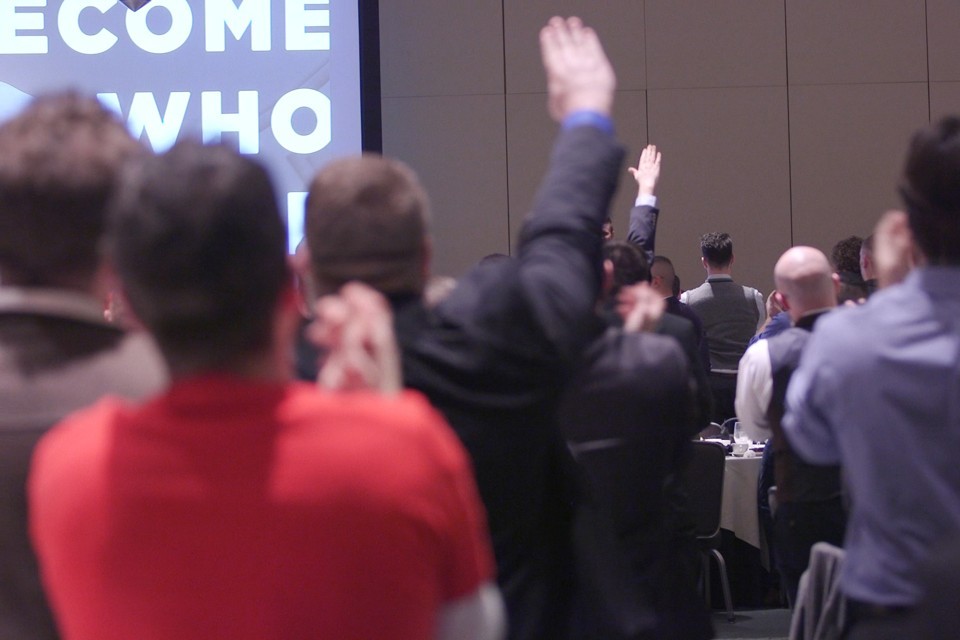
But I struggle with this idea of giving them more media coverage than they deserve. A group gathered this weekend in Washington to cheer Trump’s election. They numbered a couple hundred individuals. The founder of a group called the National Policy Institute spoke to his followers, some of whom stood and cheered his remarks.

Oh, and then a few of them hoisted their arms in Nazi-style salutes.

http://www.theatlantic.com/politics/archive/2016/11/richard-spencer-speech-npi/508379/?utm_source=fbb

They love the coverage. They lust for the attention they’re getting.

The founder of this group, Richard Spencer, said this, according to The Atlantic: “America was until this past generation a white country designed for ourselves and our posterity. It is our creation, it is our inheritance, and it belongs to us.”

A white country? Really?

The term “alt-right” has become a euphemism for the hate groups forming on the fringes of the American political spectrum.

I guess I am left to ask: Do those on the “fringe” deserve the kind of media coverage reserved normally for those in the mainstream?

More and more from President-elect Tweet

trump-twitter

Tempting as it is, I believe I will refrain from engaging one of my baser instincts.

I won’t mess with the name of the next president of the United States.

His name is Trump … Donald J. Trump.

He relies heavily — perhaps too much so — on one social media platform, Twitter, to put out pithy and often inaccurate messages.

The temptation is this: Do I refer to him henceforth as President Tweet?

I am leaning against doing such a thing. President Obama’s name has been turned into unrecognizable versions of his given moniker. Truth be told, I have been subjected to a kind of bastardization of my own last name. When I was a kid, my runnin’ buddies would twist my name into, oh, “Cantaloupe,” or “Ka-knuckles.”

Trump himself has attached pejorative descriptions to his foes’ names: Lyin’ Ted, Crooked Hillary, Little Marco, Low Energy Jeb. They’re all real knee-slappers, yes? Does the president-elect, therefore, deserve a healthy dose of his own medicine?

Nah!

Then again, if he continues to rely on Twitter as a primary source of communication with the nation he is about to lead, the president-elect just might tempt me beyond my strength.

You have unprofessional, petulant, petty … and then you have this

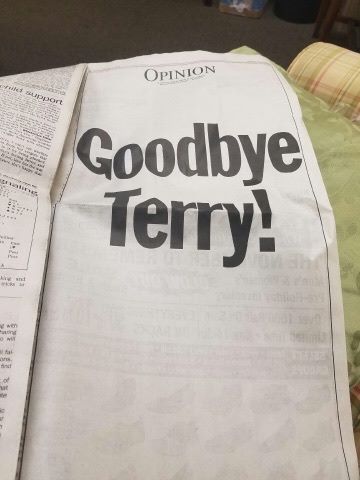
Take a look at this page. It’s today’s Opinion page from the Amarillo Globe-News, the newspaper where I worked for nearly 18 years.

What you see here is the product of a personal feud between the newspaper’s publisher, Lester Simpson and Amarillo’s now-former interim city manager, Terry Childers.

goodbye-terry

Words damn near fail me as I ponder what the publisher has done under the name of the organization he has overseen since the summer of 2002.

Childers quit his municipal post this week after muttering a profane epithet at a constituent during an Amarillo City Council meeting.

This is the response today from the newspaper of record. Did the city manager deserve criticism for his own brand of  unprofessional behavior? Of course he did. The newspaper should have delivered it in the form of an editorial explaining why the manager was out of line. But no-o-o-o. The paper delivered this instead.

A few words come to mind: petulant, unprofessional, bullying, petty, shameful, reprehensible, disgusting. Pick one. Pick more if you like. Pick ’em all. Add some more if you choose.

Rarely during the nearly four decades I worked in daily print journalism have I seen such a display from an organization that is charged with being the voice of reason in a community.

Some longtime Amarillo and Texas Panhandle residents will have looked at this page this morning and have been reminded of another such display.

It occurred in the late 1980s when the former Amarillo resident and oil/natural gas tycoon T. Boone Pickens got into a beef with the newspaper over its coverage of local issues and — namely — Pickens himself. Pickens launched a boycott against the Globe-News. He then persuaded the paper’s corporate ownership, Morris Communications, to “reassign” the then-publisher, Jerry Huff.

On Huff’s last day as publisher, one could see a banner hanging from the side of what was known as the Mesa Building. It read: “Goodbye Jerry.”

That, ladies and gents, is the model of decorum that the current publisher of the newspaper demonstrated today with that ridiculous and childish message.

Simpson and Childers have been feuding for nearly the entire time that Childers took over as interim manager. I am not privy to the root of their mutual displeasure. Simpson reportedly disliked the way Childers handled downtown redevelopment. The disagreement likely turned into something much more heated with the forced resignation of Melissa Dailey, former head of Downtown Amarillo Inc., with whom Simpson had worked on downtown issues.

Suffice to say, though, that this example demonstrates how low one can go when disputing matters of public policy.

There’s intelligent, reasoned disagreement. Then there is this.

Good grief!

This thought comes to mind. Given that the Globe-News endorsed Donald J. Trump for president, perhaps the publisher of the paper can seek a job in the Trump administration.

He’d fit right in with the bully in chief.

Total strangers become foes, even enemies

social-media-icon-signs-ss-1920

One of the downsides — and there aren’t many of them — of writing a blog is that I might be guilty of turning total strangers into enemies.

I post these musings on my High Plains Blogger website. I then transmit them via several social media outlets: Twitter, Facebook, Google and LinkedIn. My aim, of course, it to maximize exposure for this blog with the hope of getting those with whom I’m connected on all those sites to share these messages with their friends and social media acquaintances.

That’s straightforward enough, don’t you think?

But then something happens. My friends/”friends” on Facebook start tangling with each other. They read what is circulated on that social medium and respond to it. Then someone else reads the response and responds to that; it’s quite often — if not mostly — a negative response. That draws a rebuttal, which then attracts another reply.

On and on it goes, too often to no good end.

I do not like getting ensnared in this back-and-forth. I prefer to stay — if you’ll pardon the high-minded tone — “above the fray.”

I put the stuff out there, having stated my piece. Then I let others have at it.

Now, if someone asks me a direct question that requires a direct answer, I’m inclined to answer it. But I don’t always respond. I also might respond to an insult, which I do get occasionally.

The upshot of this is that while I (more or less) regret the hard feelings that erupt on occasion from those who respond to my blog spewage, I won’t back off from sending this stuff out there.

It provides great therapy, even if it comes on occasion with a bit of angst over the anger that boils up.

***

I made what some might consider to be a strange reference in this blog post. I describe my Facebook contacts thusly: friends/”friends.”

I do that to delineate between actual friends and those who I know only through Facebook. I have a number of folks out there who I consider to be — if not friends in the classic sense — friendly acquaintances. Truth be told, my actual friends amount to a tiny fraction of those with whom I have a friendly relationship.

There are others I know only because we’ve connected on social media. Those are the “friends” to whom I refer.

So, there you have it. To my many friends/”friends,” I say: Peace be with you.

Punditry produces its share of annoying phrases/words

th

Thank goodness this election season is coming to a close.

The next one is likely to commence the moment we know who the next president will be. Then what? We’ll get a fresh dose of annoying phrases and/or words from the punditry and political class to which we listen on cable and broadcast news programs.

I’ve collected a number of these words and phrases over the years.

My newest member of the annoying phrase pantheon is “baked in.” Pundits are saying that voters’ opinions of the two major-party presidential candidates are baked in, which is a kind of shorthand for saying that their minds won’t change … no matter what we learn about the candidates.

A good friend of mine is annoyed by the word “pivot.” We hear that one when politicians seek either to (a) change the subject of a discussion or (b) change his or her mind on a public policy issue.

Let’s not forget “double down.” Mark Halperin and John Heilmann — two of the best political journalists in the business — wrote two “Double Down” books chronicling the 2008 and 2012 presidential elections. When a politician doubles down, that means he or she is ratcheting up the rhetoric on a policy statement that more than likely has been met with a negative response..

Don’t they ever “triple” or “quadruple” down?

My all-time favorite pundit phrase — which politicians of all stripes have adopted — is “at the end of the day.”

I ought to initiate a new drinking game. Take a swig of hooch every time you hear a politician or pundit say “at the end of the day.” I listen for this phrase whenever I am watching a TV news discussion.

I have a theory about why pols and pundits are so fond of “at the end of the day.” It’s a set-up phrase. It is meant to convey an aura of wisdom for the very next thing that’s coming out of the mouth of the pol or the pundit.

“Well, Chris, here’s my thought on that. At the end of the day, we are going to learn that the sun will set in the west tonight.”

Do you get my drift? When the TV smart guys use “at the end of the day,” they mean to make themselves sound smarter, more urbane, more sophisticated than they really are.

We’ve heard a lot of this kind of rhetoric over many years. It annoys the daylights out of me.

I’m going to settle in the for the night. At the end of the day, I’ll be sure to double down on doing something worthwhile this evening before I pivot from my baked-in routine.

So much for ‘editorial autonomy’

newspapers

I worked for four newspaper “groups” during my nearly 37 years in daily journalism. They were, in order: Newhouse Publications, Scripps League, the Hearst Corp., and Morris Communications.

They all said publicly that they didn’t “dictate” from corporate HQ’s how their individual newspapers formulated their editorial policies.

It was a bit of a challenge to explain all of that to readers and officials, but I managed.

Well, today the Morris Communications company that runs the paper where my career ended has put to rest the quaint notion of editorial “autonomy.” It has declared that all of its editorial pages today have endorsed Donald J. Trump for election to the presidency of the United States.

I haven’t yet read the Amarillo Globe-News’s “endorsement,” given that it hasn’t been posted on its online edition; I just looked this morning and couldn’t find it. Here, though, is the Florida Times-Union’s statement about the campaign. I’m guessing it’s being repeated here in West Texas:

http://jacksonville.com/opinion/2016-11-04/editorial-trump-change-agent-america-needs

The CEO of the Morris company, William Morris IV, has written what he’s called an “explanation” of the endorsement. It really is nothing of the kind. It’s actually a vapid restatement of platitudes and clichés. I don’t know Morris well, but I’ve had enough exposure to him to expect nothing more from this individual. Take a look:

http://jacksonville.com/news/2016-11-04/will-morris-explains-times-union-s-trump-endorsement

My favorite cliché is this one: “While this endorsement reflects our opinion, we want readers to know that this does not influence our news coverage. Newsrooms run independently from our editorial pages.”

Well, no s***!

I won’t delve too deeply into this statement. It’s too shallow, frankly, for any serious examination.

***

But what fascinates me about it is its timing. Today is Sunday. The election occurs on Tuesday. That gives readers of Morris papers today and Monday to comment, to respond.

Hmmm …

One of my former editors — a mentor and a friend to this day — had a name for this kind of timing. He called it a “last-minute dump.” He disallowed letters to the editor that came in too close to the end of a political campaign. His belief was that readers deserved the opportunity to respond — either positively or negatively — to what was published.

That was a policy I sought to follow during my decades practicing that craft.

The advent of early voting usually meant that newspapers would get their editorial endorsements “on the record” at the start of the early voting period. In Texas, that window opened on Oct. 24 and it closed this past Friday. The idea would be to let voters know the paper’s view on campaigns, candidates and issues prior to readers voting on them; it would give readers the chance — if they desired — to use the paper’s perspective to help them make their own decision.

Texas Panhandle — and readers of all the papers served by Morris anywhere in the country — won’t get that chance today. They’ll open their newspaper and read an editorial endorsing Trump and will have virtually no chance to comment. No chance to condemn it or praise it. No opportunity to add some context.

Oh, they’ll get online and put some social media chatter out there. A letter to the editor? Something that would be published on the printed page after being examined by the folks who run the editorial pages? Forget about it!

That, folks, is a last-minute dump.

If only Will Morris would have explained that strategy to his company’s newspaper readers.

Irony clouds Melania’s message

cyberbullying

I hope y’all are sitting down.

I’m about to say something positive about Melania Trump, wife of the Republican presidential nominee who — in my view — is totally unfit and unqualified to occupy the office he is seeking.

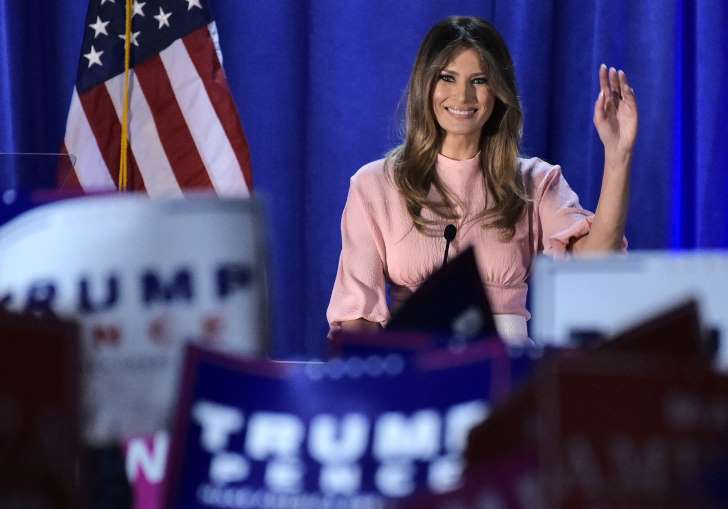
She spoke this week about cyber bullying and said she intends to make that her signature issue if she becomes first lady.

The issue is a noble one. The goal is equally noble. She has articulated a serious problem in contemporary society. Children shouldn’t be bullied in any context, she said, particularly by faceless and nameless abusers who hide their identity in the vast reaches of cyberspace.

The problem, though, is the messenger. Melania Trump is married to a serial cyber bully. Donald Trump has used his Twitter account to bully and insult women, Gold Star parents, Muslims, Hispanics, immigrants … you name ’em, he’s bullied ’em.

The irony of Melania’s first lady theme is too obvious to ignore.

Still, the issue — standing alone and separate from the context in which she delivered it — is a worthy one.

Right-wrong track polls tell only part of story

thbigcx2wm

One of my social media friends thinks I spend too much time blogging about Donald J. Trump.

I heard him. So I think I’ll shift gears for a moment or two.

Those polls that measure whether Americans think we’re heading on the right or wrong track puzzle me. Take a look at the latest RealClearPolitics average of polls on that subject.

http://www.realclearpolitics.com/epolls/other/direction_of_country-902.html

What these averages don’t necessarily say up front is whether Americans want the nation’s directly to veer sharply to the right or sharply to the left.

I generally pay little attention to these polls.

The RCP average says there’s a 30-plus percentage variance, meaning that about one-third more Americans think the country is heading on the “wrong track.”

No one has ever polled me on the subject. If one were to ask me, I’d say we’re doing just fine. I heard the U.S. Labor Department jobs report this morning and learned we added 161,000 non-farm jobs in October; the jobless rate declined to 4.9 percent; wages went up.

Is that a wrong track indicator regarding the economy?

I don’t think so.

Foreign policy issues? Well, we haven’t been hit by a major terror attack since 9/11. We keep killing terrorists around the world. Our alliances seem solid.

Federal budget policy? The deficit has been cut by one-third during the past eight years. Is it still too great? Yes. It’s heading in the “right direction.”

I’m digressing.

Right track-wrong track polls tell only part of the story.

Cyber bullying must stop … no kidding!

melania

Melania Trump said what?

She wants to make cyber bullying the top priority of her potential first ladyship?

Oh, the irony. The lack of spousal awareness. This is amazing!

Trump’s major solo speech today highlighted what she wants to do in case her husband Donald gets elected president next week.

Cyber bullying is her target. It’s got to end, she said.

http://www.msn.com/en-us/news/politics/melania-trump-says-she%e2%80%99ll-fight-cyber-bullying-as-first-lady/ar-AAjREmA?li=BBnbcA1

OK, she can start at home. With her husband.

Donald Trump has used his Twitter account to call broadcast journalist Megyn Kelly a “bimbo.” He has used it also to allege the existence of “sex tapes” involving former Miss Universe Alicia Machado, about whom he has said many other unflattering things … also on social media.

She said this, among other things: “Our culture has gotten too mean and too rough, especially to children and teenagers,” Trump said Thursday afternoon in Pennsylvania.

Melania Trump, quite naturally, made no mention of her husband’s cyber-bullying history.

Trust me on this: The irony cannot possibly be lost on many of us who understand just how much her husband has contributed to the coarsening of political discourse.