Texas landowners may block wall construction

This is funny … almost.

I’m not laughing. However, the irony is too rich to ignore. As the New York Times is reporting, those closest to the nation’s southern border seem to be mounting the sternest challenge to efforts to build that big ol’ wall between the United States and Mexico.

They’re supposed to be terrified of the “flood of illegal immigrants,” right? Not exactly.

Texas appears to be at ground zero of the battle between private landowners and the federal government that seeks to build that wall.

Texas’s vast expanse of real estate is almost exclusively in private hands. Citizens own the land and they are none too willing to surrender it, no matter what the Department of Homeland Security might have to say.

Lawsuits have been filed

According to the Times, landowners have filed dozens of lawsuits against the government that wants to condemn their land to make way for the wall. Some property owners are hoping to tie this matter up so tightly that they’ll outlast the Donald J. Trump administration.

Texans have proven over many years to be not bashful at all about fighting tooth and nail to protect their land from government seizure. That well could be the fight that the president faces as he maneuvers efforts to construct the wall that he and Homeland Security Secretary John Kelly say can be finished in 24 months.

Texas and Mexico share 1,254 miles of border. Most of the land on the Texas side of the Rio Grande River is privately held. The Fifth Amendment to the U.S. Constitution requires the government to pay “just compensation” for property it takes from citizens.

And, yes, there happens to be a lot of land west of El Paso — through New Mexico, Arizona and California — that the feds will have to take from private ownership. It won’t come cheaply.

I understand completely that the Rio Grande Valley region needs careful attention from border security officials. According to the Times: “The Rio Grande Valley is among the busiest smuggling routes on the Mexican border. Last year, Border Patrol agents seized 326,393 pounds of marijuana, second only to the agency’s Tucson sector. It also seized about 1,460 pounds of cocaine, the most of any sector. Nearly 187,000 illegal border crossers were apprehended here in 2016, the most of any Border Patrol sector.”

I see the need for greater security.

But seizing the land and building a wall? This fight is just beginning.

Oh, we can forget about Mexico paying for the wall — if it ever gets built!

GOP now reaping what it has sown

John Boehner was angry, man. He was furious when he took the floor of the U.S. House of Representatives.

The Republican congressman from Ohio was furious that Democrats had pushed a bill that sought to reform health care without even reading the massive piece of legislation.

He bellowed, blustered and berated his “friends” on the Democratic side of the floor for shoving this bill down the throats of their Republican colleagues.

Boehner’s anger was righteous.

The Affordable Care Act became law in 2010. Boehner would eventually become House speaker. He would file a lawsuit to get the law repealed. Speaker Boehner, though, bailed on public service after continuing to fight with the TEA Party wing of his Republican House caucus. He’d had enough.

Then the 2016 election occurred. Donald J. Trump was elected president. He promised to “repeal and replace” the ACA. This past week, the GOP-controlled House approved a bill we’ll call “Trumpcare.” It’s an alternative to the ACA. It passed by just four votes out of 430 cast in the House.

But wait! Did the GOP leadership know what was in the bill? Did they read the legislation? Did their GOP caucus members read it? Do they know all the nuts and bolts of it?

Hah! Hardly.

They’ve repeated the sin of their colleagues. Does it make their effort to “shove it down Democrats’ throats” any more palatable? Not in the least.

Instead, GOP House members are hearing loud and clear from their constituents a ringing message: The folks back home don’t like what they’ve passed and what they have foisted onto the Senate for its consideration.

Meanwhile, the president who has crowed about keeping his campaign pledge now has to persuade the Senate to follow the House’s lead. Trump, the guy with zero government experience or knowledge of how it works on Washington, D.C., is going to recieve yet another lesson in how Congress just doesn’t do the president’s bidding whenever he barks the order.

And those Republican members of the House of Representatives who voted for Trumpcare are going to get a taste of what they sought to deliver to Democrats in 2010.

Payback truly is a bitch … you know?

Happy Trails, Part 17

Retirement life has provided a surprise or two along the way. But we’re coping.

One of them, though, keeps nagging us.

It’s the notion that we no longer have to wait for “the weekend” to do whatever the heck we want.

Every now and then, my wife and I discuss our next excursion, whether it’s just in town, or to a nearby community, or even in the next state. We lapse without thinking into this former working-life mindset about waiting for the weekend.

Then it dawns on us: Hey, we don’t have to wait! We can go whenever we feel like it!

You fellow retirees know of what I am speaking, I’m sure.

I’m reminded of something my sister once told me. She and her husband also are retired. She told me how she chuckles when someone says to them, “Have a nice weekend.” She and her husband exchange knowing glances, she told me.

What do they know? It’s that every day is a weekend.

Now I get it.

French fight back against fear

Is there a lesson to be learned from the French presidential election?

Oui!

It is that terror need not sway an informed electorate.

Moderate centrist Emmanuel Macron today became the youngest person ever elected president of France, defeating far-right extremist Marine Le Pen. It was Le Pen who sought to parlay certain elements of fright into an electoral victory. The source of that fear and loathing was the spasm of terrorist violence that has befallen France since 9/11.

France answers the call

Macron sought a different course for France. He wants to keep his country involved with the rest of Europe and the world, unlike Le Pen, who sought to retreat into a “France-first” dogma that mirrors much of what helped propel Donald J. Trump to victory in the 2016 U.S. presidential election.

Trump called for a ban on Muslims seeking to enter the United States; he wants to build that wall along our southern border; he is seeking to restrict travel of refugees fleeing several majority-Muslim countries. Why? Because he wants Americans to live in fear of further terrorist attacks.

The French know all about the horror of radical Islamic terrorism. Yet they rejected Le Pen’s platform of retreat.

And if you think about it, France’s decision to go with Macron mirrors earlier presidential elections in The Netherlands and Austria, where voters turned back isolationist presidential candidacies in favor of continued engagement.

I wrote in an earlier blog about how the paltry voter turnout in Amarillo shouldn’t be interpreted as a “mandate” for sweeping change at City Hall.

Get a load of this: Seventy-four percent of France’s registered voters turned out to give Macron a 30-percentage-point victory over Le Pen.

I would call that a mandate.

Time to start establishing City Council ‘team’

I listened a bit Saturday night to some of the comments from the Amarillo City Council election victors.

Mayor-elect Ginger Nelson and Councilman-elect Eddy Sauer both talked about being members of a “team.” Sauer called himself a “team player” and vowed to work with his colleagues on the City Council to advance the city’s future — I presume in a positive direction.

Here’s a thought for the new mayor: Assemble your new colleagues right away and start setting some parameters.

As I understand it, Texas open meetings rules don’t prohibit council members- and mayors-elect from meeting as a body. Heck, they aren’t in power yet, so they can all get together and talk about city issues to their heart’s content.

Nelson, Sauer and council colleagues Elaine Hays, Freda Powell and Howard Smith now have a chance to bury the discord that occasionally flared up during the past two years.

The leader of this task ought to be the new mayor.

I’ll stipulate that I get that all five council members represent the same citywide constituency. The mayor’s extra stroke comes in the way he or she uses the office as a bully pulpit, not that I expect Mayor Nelson to become a City Council bully.

All five council members need to face among themselves some of the questions that bubbled up from the community. I refer to the suggestion among some that a high-powered local political action group — Amarillo Matters — “bought and paid for” the council.

They all have spoken about pushing the city’s economic engine forward. They all expressed their concern over some of the misdirection that occurred at times during the past two years. They all vowed in some form or another to correct all of that and to move forward as a single unit.

Do they all have to agree on every detail, on every bit of minutia that comes before them? Of course not. Indeed, I’ve witnessed my share of contrarians on previous city governing bodies; I keep thinking of the late Commissioners Jim Simms and Dianne Bosch, both of whom bucked the majority on occasion, but usually found a way to line up with the body when it made its decision.

The new council also no doubt will sit across a table with City Manager Jared Miller and perhaps lay out its expectation. May they understand that the current council acted in good faith by hiring Miller and gave him the authority to run the city administrative machinery. I am hopeful the new council won’t seek to change that arrangement simply because it can.

Yet another new day is about to dawn at Amarillo City Hall. I like the looks and the sounds of the new City Council.

Sure, take a breath. Get some sleep, y’all. It’s not too early, though, to get to work. Talk among yourselves. You have a lot of ground to cover … in a hurry.

Mandate? There is none in this election result

For those of you who might take offense over a scolding because you didn’t bother to vote in Saturday’s municipal election in Amarillo …

… that’s too damn bad!

You’ve got it coming.

A little more than 15,000 registered cast ballots in the Amarillo City Council election. Roughly half of them voted early. The remainder waited — as I did — to vote on Saturday.

We’re going to hear some bitching and griping from Amarillo residents about the “power” of Amarillo Matters, a political action committee that backed a competent and qualified slate of candidates for the council; they all won by substantial margins.

If Amarillo Matters had all that stroke, packed all that punch, why didn’t more residents take a few minutes of time to cast their ballot? Why didn’t those who took umbrage at Amarillo Matters’ push to back its slate energize their own counter-movement?

Where was the turnout among those who supported Amarillo Matters and those who opposed the PAC?

The city has more than 100,000 residents registered to vote. The turnout for Saturday’s election fit the norm for Amarillo. Call it whatever you wish: abysmal, dismal, pitiful, pathetic, measly … whatever. Any of those descriptions will work. All of them would work, too!

The candidates who won will comprise an entirely new City Council. They will take office soon and embark on a mission to guide the city, to set government policy and then — I’ll presume — let the newly hired city manager, Jared Miller, implement those policies.

I do not want to hear any of them talk publicly about a “mandate.”

The way I see it, they got nothing of the sort based on the turnout. A majority of a tiny minority of registered voters cast their ballots in favor of the individuals who won.

Look at it this way, as well: That percentage of turnout declines even more dramatically when you factor in the residents who live here but who aren’t even registered to vote.

Did this group of business leaders — Amarillo Matters — exercise inordinate influence over the election results? No. If it did, then the city would have had to count a lot more ballots than it did.

If you’re upset at the results of the election — but didn’t bother to vote — I suggest with all due respect that you keep your trap shut.

Voters clean house at Amarillo City Hall

Amarillo voters have made a bit of history at the ballot box.

They have elected a female-majority City Council; that shouldn’t be a big deal, although I do recall there was a good bit of media and community chatter when Debra McCartt became the city’s first female mayor.

They also have booted out two incumbents, meaning that the city will have a brand new five-member governing council take office in a few weeks.

This is potentially a huge step forward for the city.

Mayor-elect Ginger Nelson will take office with a lengthy platform full of promises to do a lot of things. Many of the planks in that platform deal with economic development, wise expenditure of tax money, greater citizen involvement and (this is my favorite) beautification of rights-of-way along Interstates 40 and 27.

Council members-elect Elaine Hays in Place 1, Freda Powell in Place 2, Eddy Sauer in Place 3 and Howard Smith in Place 4 all are newcomers to city government — as is Nelson.

They all come to office with the backing of a political action committee, Amarillo Matters, that raised a good bit of money to get their message out. Yes, there was some blowback expressed on social media about the motives behind Amarillo Matters’ investment in the candidates who won.

I am not going to join that chorus of naysayers. I’m honestly optimistic about what this new City Council will bring to the community.

They all pledged in some form or another to restore a sense of cooperation among its members. Such a pledge doesn’t necessarily mean an absence of dissent or debate among council members, nor should it.

However, for the past two years residents have witnessed the occasional flareup of tempers and of at least one council member occasionally speaking out of turn, getting way ahead of the rest of the governing body. That council member didn’t seek a second term.

The City Council managed to force out a competent city manager, hire an interim manager and then make a mess of the search for a new permanent chief administrator — before settling finally on a solid choice in Jared Miller.

The city is in the midst of a significant downtown makeover. It has a lot of work to do on its streets. It is working with state transportation officials on improvements to our freeway interchange.

I welcome the new folks who’ll take their oaths of office.

I also applaud the city’s voters for deciding to make a bit of history. If only more of them would have voted to make this moment even more meaningful.

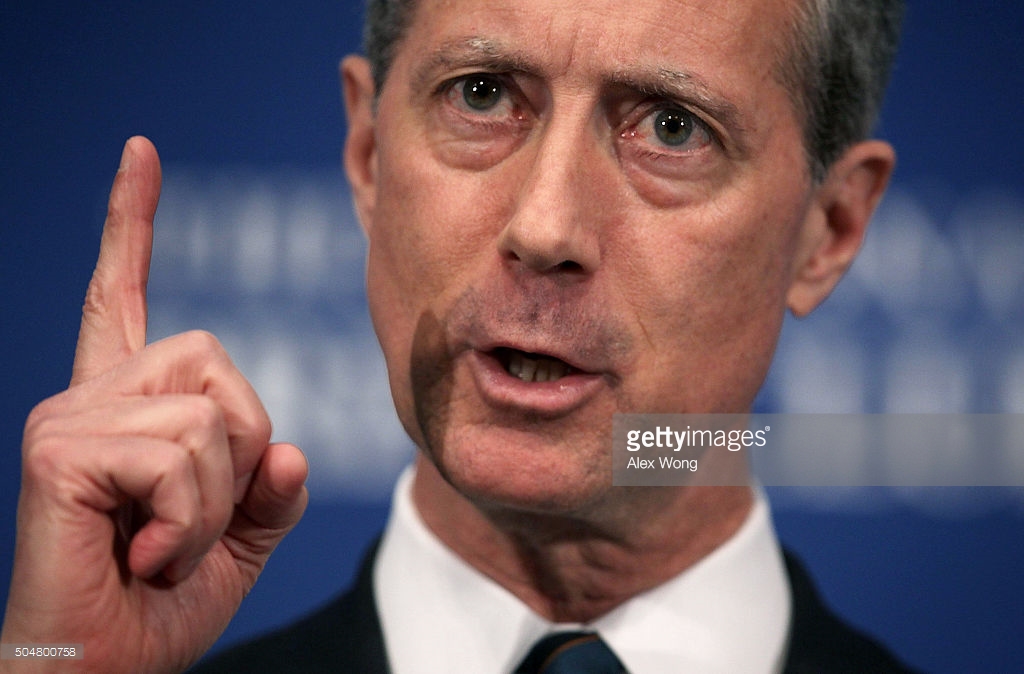
Talk to us, Rep. Thornberry

The fellow who represents me in Congress has made his point pretty clear: He doesn’t intend to conduct “town hall meetings” with constituents during these lengthy congressional breaks.

I beg to differ with Rep. Mac Thornberry’s reluctance to speak to groups of his constituents.

The Clarendon Republican lawmaker has just voted to repeal the Affordable Care Act and to replace it with a Trumpcare version of health care overhaul.

Congress is taking some time off. Its House members and senators have fanned out across the land. Some of them are facing their critics, namely their constituents, who are questioning them about their votes in favor of Trumpcare. Rep. Thornberry, to my knowledge, hasn’t scheduled any such public events.

He ought to rethink his schedule.

Do I expect him to get a dressing down from angry 13th Congressional District constituents? Well, I don’t know. He is considered a lead-pipe cinch for re-election in 2018; his district is as reliably Republican as any in the country. Then again, other GOP House members who are equally safe and secure have been getting pounded by their constituents.

I actually want to applaud those Republicans who have voted for Trumpcare to stand before their “bosses” and explain themselves. I think much less of those who have chosen other pursuits while they are at home, ostensibly tending to “constituent business.”

Thornberry’s been in Congress for a long time now. He took office in 1995. He chairs the House Armed Services Committee. He’s got a big job. He once led a GOP effort to come up with ways to protect us against cyber-crime. I’m hoping whatever he came up with is being employed by our spooks to protect our national security secrets against hackers from, oh, Russia!

However, health care is on people’s minds these days. Even, perhaps, out here in the 13th Congressional District.

We’ve been represented in Congress by someone who has aligned himself with those who want to throw out the Affordable Care Act. The Trumpcare replacement well could cost a lot of Thornberry’s constituents their health insurance.

I believe he owes them a thorough explanation of why he cast one of the House’s “yes” votes.

One-punch vote abolition closer to reality

Could there be an end in sight for something I consider to be a bane on Texas politics?

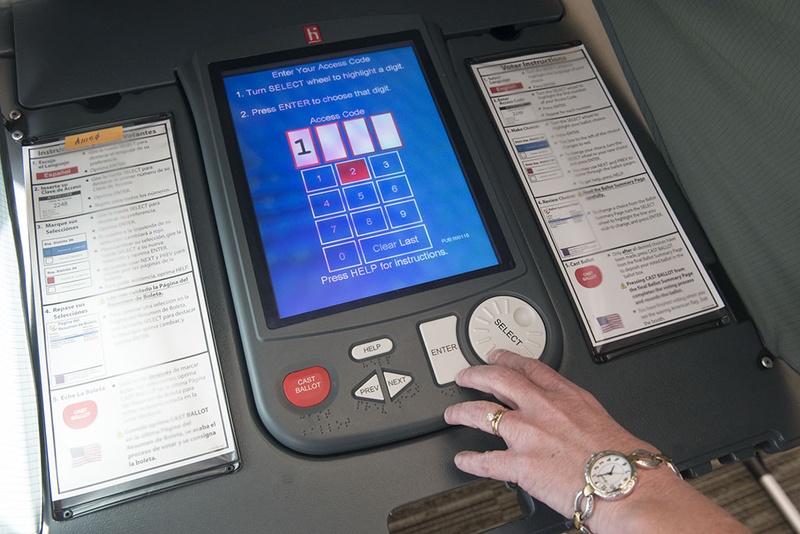
Texas House Bill 25 would abolish “one-punch voting” for those who want to vote for one party. I cannot cheer this piece of legislation loudly enough.

The Texas House of Representatives approved HB 25 with an 88-57 vote. It now goes to the state Senate. I do hope senators approve it and send it to Gov. Greg Abbott’s desk; and then I want the governor to sign it. If it becomes law, it takes effect in time for the 2020 presidential election.

According to the Texas Tribune: “State Rep. Ron Simmons, R-Carrollton, one of the authors of HB 25, said he filed the measure to foster more educated voters since they’d have to go down the ballot and make a decision on every race. ‘I think it’ll give us better candidates and better elected officials. It won’t have people getting voted out just because of their party identity,’ Simmons told The Texas Tribune on the House floor prior to Friday’s preliminary vote.”

I have yammered for some time — including on this blog — about how much I dislike straight-ticket voting, or more to the point, how much I dislike the notion that voters can just hit straight Republican or straight Democrat — and then walk away from the polling place.

Texas is one of just nine states that allows one-punch voting.

Don’t misunderstand me. I don’t mind if voters want to cast ballots for candidates of just one party. In Texas, the predominant party for the past three decades has been the Republican Party. I long have favored the idea of requiring voters to look at their ballots one race at a time before making the decision on who gets their vote.

One-punch voting equates to laziness

Opponents of HB 25 think it could impede voter turnout. One foe is state Rep. Chris Turner, D-Grand Prairie, who said: “There are a lot of races on the ballot in these general elections, and voting individually takes extra time. Instead of one-punch, you’re asking people to individually vote in dozens of races, perhaps even 100 of them. This can be a real impediment.”

I happen to believe that voting for candidates for public office ought to require some thought and, yes, some time.

For too long in Texas, we’ve seen good candidates get swept out of office because they happen to belong to the “wrong party.” Victims of this phenomenon have been Democrats; prior to that, when Democrats controlled politics in Texas, Republicans fell victim to this electoral travesty.

One-punch voting creates the potential for this kind of political purging to continue. I am acutely aware that the one-punch voting option doesn’t require voters to cast their ballots in that manner. It does, though, tempt many of them to do so. I see nothing unreasonable in removing that temptation.

I applaud Texas House members for taking this important first step. My hope is that that the other legislative chamber follows suit and that Gov. Abbott signs it into law.

‘Nobody dies’ because they lack health care?

U.S. Rep. Raul Labrador needs to have his mouth washed out with soap.

The Idaho Republican went home this week, stood before a town hall crowd, and said this in response to a statement from one of his constituents:

“Nobody dies because they don’t have access to health care.”

That was the wrong thing to say, young man.

The Lewiston, Idaho, crowd shouted him down. They hooted, hollered, hissed. Why? The answer is clear: They disagreed with Rep. Labrador’s silly assertion.

Of course people have died because they can’t get health care!

Rep. Labrador had just voted for the Trumpcare proposal that repeals the Affordable Care Act and replaces it with the Republican-crafted alternative. It passed the House by the thinnest of margins, 217-213 and now heads to the Senate, where it’s likely to be torn up, tossed into the trash bin; senators then will write their own version of health care overhaul.

Other lawmakers have gone home and they, too, will get a bellyful of bitching from their constituents over the vote that the House has just cast.

A word to the wise to the rest of them: Don’t repeat Raul Labrador’s silly comment.

Commentary on politics, current events and life experience