Trump and evangelicals: strangest union of all

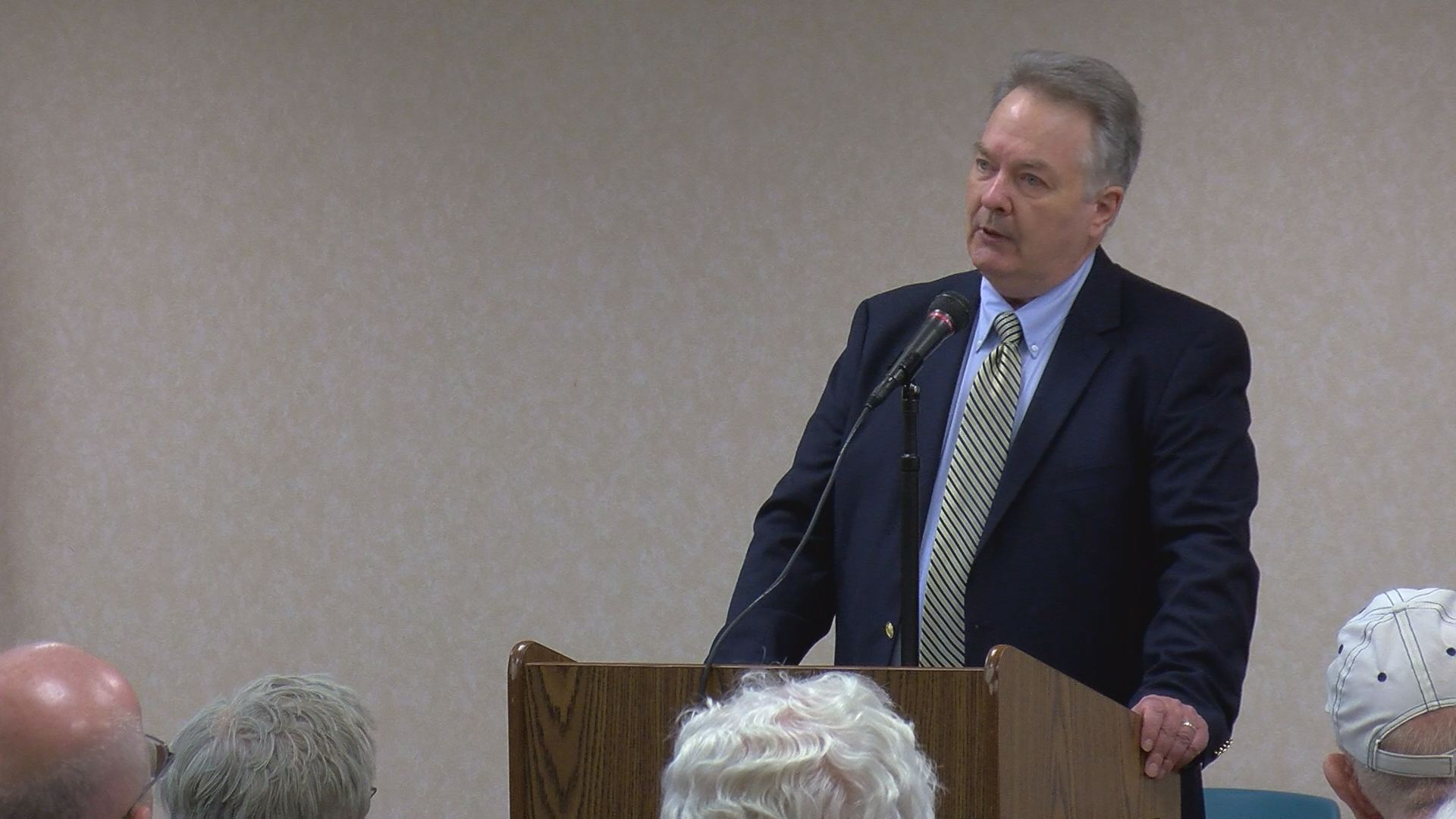
Donald J. Trump has just selected Jerry Falwell Jr. to lead a task force aimed at overhauling public education policy.

The president of the United States has linked arms with the head of a leading faith-based university; Falwell also is the son of the late televangelist who used his pulpit to attack President and Mrs. Bill Clinton throughout the president’s two terms in office.

This appointment brings to mind a curiosity I’ve harbored ever since Trump entered political life, which is when he announced his candidacy for president in June 2015.

Falwell joins Trump team

My question of the moment is this: How does this man, Trump, continue to win the support of many within the Christian evangelical movement?

Falwell Jr. has called Trump a “dream come true” for evangelicals. He just cannot say enough gushy things about the president, who delivered his first commencement speech at Liberty University, the school that Falwell’s father founded.

If you think about it, though, the relationship strains credulity to the max.

Trump has not been known as a major contributor to religious causes; he hasn’t been associated with faith-based charities; his whole life has been filled with glitz and glamor, chiefly through his association with and ownership of beauty pageants; he is married to his third wife and has boasted publicly about his infidelity involving his first two marriages; Trump also has boasted about how he can grab women by the p**** because his celebrity status allows him to do it.

But he’s tough on Muslims, vows to destroy the Islamic State, wants to impose a travel ban on refugees coming here from Muslim-majority nations. Maybe that’s why Falwell and many within the evangelical community are smitten by the president.

I concede that political alliances can take form among groups or individuals one might not imagine banding together. This one, though, baffles me greatly.

The president’s history is full of episodes that would seem to send devoutly religious voters scurrying for someone more, um, to their liking.

Go figure. I cannot fathom it.

‘Hoax’ becomes fodder for blame-shifting?

I need to follow this stuff more carefully, I reckon.

Donald John Trump had been telling us that the Russian-meddling story was a “hoax,” a product of “fake news,” a figment of progressives’ and Democrats’ overactive imagination.

The president has yet to condemn the Russians for doing what intelligence agencies have concluded, which is that they sought to influence the 2016 presidential election through use of cyber activity.

Oh, but then comes this. He now blames the Obama administration for failing to stop the Russians in their tracks when President Obama was in office.

Which is it, Mr. President? Is the Russia story a made-up tale of intrigue meant to discredit your election as commander in chief? Or is it the real thing, something that now enables you to shift responsibility for ending it to your immediate predecessor as president of the United States?

Good grief, Mr. President? Keep it straight for us.

Happy Trails, Part 27

My wife and I have discovered another of the many advantages of aging.

It involves — usually — an alert local resident in a place where one travels.

We have just returned from a two-plus-week journey Back East. Our most easterly destination was Washington, D.C., where we visited our niece and her husband.

We were holed up in an RV park in suburban Dumfries, Va., about 12 miles from a train station where we would board the Metro for a 20-minute ride into “the district.”

On our final full day in the D.C. area, we went to the Metro station realizing we had to put more money on our “Smart Cards” that enabled us to ride the train.

We approached the wall containing the automatic machines where we would replenish our cards. I guess we looked like two old folks who didn’t have a clue about what we were about to do — which was accurate.

Immediately upon arriving at the wall with the machines, a Metro employee swooped in. “Do you need help?” he asked in a heavily accented voice; he clearly was not an American. “Yes,” we both said in unison.

“OK, how much money do you want to put on the cards?” he asked. “Where are you going?” We told him our destination. He barked out rapid-fire orders. When we didn’t respond quickly enough, he started punching the keys himself.

“Does this amount cover a round trip fare?” I asked. “Oh, you want to come back?” he responded. “We have to add more money.” So he did.

Boom! Just like that. We were done.

“Have a great day ,” he said with a broad smile.

Then I asked: “Did we look like two old people who didn’t know what they were doing?”

“Um, yes,” he said without hesitation.

Hey, getting old ain’t so bad.

Hard to keep track of what Trump likes, loathes

If you’re keeping tabs on the president’s tweets and assorted public statements, then you’ve got your hands full.

When the U.S. House of Representatives approved its American Health Care Act by the narrowest of margins, Donald J. Trump called the GOP-authored-and-passed bill “spectacular.”

Then he tweeted that it is “mean.”

Then tweeted about the draft U.S. Senate plan — again crafted solely by Republicans. He says now, with a vote scheduled for later this week, that the Senate plan is far better than the House plan.

OK, Mr. President. We keep hearing how you make decisions based on the last person to have your attention. Which of these plans is the suitable replacement for the Affordable Care Act, which you once said would be “easy” to replace, but now you say is “hard”?

I cannot begin to possibly keep up with this guy’s ever-evolving stance — on anything and everything!

Trump blames Obama for the ‘Russia thing’ … imagine that

Leave it to Kellyanne “Alternative Facts” Conway to set the record (sort of) straight on the Russian interference controversy.

It’s the fault of the Obama administration, said the president’s senior counselor/policy adviser, echoing the sentiments of her boss. Donald John Trump.

President Obama could have stopped any effort by Russian government goons to interfere with the 2016 election, but he choked, she said.

Imagine that, will ya? Blame the predecessor. Who’da thunk that would happen, ever?

That all said, I just slogged through the epic Washington Post story detailing how the terrible options the Obama administration faced when it learned — through credible intelligence — about the efforts by Russian government officials to meddle in our election. The Post called it an “assault on our democracy,” which it was.

Here’s the Post story.

Indeed, the former president and his senior staff look back now and regret not taking more forceful action than it did. Obama eventually kicked out some Russian diplomats and closed two Russian compounds as punishment for the Russians’ meddlesome ways.

He also unloaded verbally on Russian strongman/president Vladimir Putin and the country he governs, calling Russia a “weaker” country than ours and a place with nothing to sell around the world than “oil and gas and arms.” The president said Russia was unable to intimidate the United States because of the two nations’ relative strength.

Conway went on TV this morning to say: “It’s the Obama administration that was responsible for doing absolutely nothing from August to January with the knowledge that Russia was hacking into our election. They did absolutely nothing. They’re responsible for this.”

Absolutely nothing? Is that right, young lady? Not really. The Obama administration sought to weigh its options carefully, given the enormous political consequences at stake. The nation was involved in a heated, and increasingly vitriolic presidential campaign. Trump was ratcheting up the pressure on Hillary Rodham Clinton over e-mails, Benghazi and a host of other issues.

The Obama team believed — as did virtually every political analyst on Planet Earth — that Clinton was going to win the election.

Then she lost.

How should the administration have reacted to circumstances it didn’t see coming? Were they alone in their ignorance? Hardly.

I keep coming back to this point: The president and his administration have yet to issue a full-throated condemnation of what every intelligence expert has said, which is that Russia meddled in our electoral process.

The blame game won’t get to solving the problem … and oh, brother, we have a problem!

This contest could get interesting … maybe, possibly

I get uncomfortable when friends of mine become engaged in politics.

It’s about to happen again. The campaign for the 13th Congressional District has just welcomed a newcomer to politics. His name is Greg Sagan, who told local media that he only recently became a Democrat. What drove him to become a member of a political party? He said it was the election of Donald John Trump this past November as president of the United States.

So now he’s a politician. He is going to run against longtime Republican U.S. Rep. Mac Thornberry for the seat Thornberry has occupied since January 1995.

Pass the Pepto, will ya? This one gives me heartburn.

You see, I happen to be fond of Sagan personally. My wife and I have socialized with him and his wife. We’re also former colleagues of a sort. You see, back when I was editing the Opinion pages of the Amarillo Globe-News, Sagan was a regular contributor to the newspaper. He wrote a weekly column for the G-N. It was then that our relationship took root and then blossomed. His contribution to the newspaper ended when I resigned in August 2012.

I know Sagan to be a patriot. He served in the U.S. Navy and saw duty in Vietnam during the war that defined our generation. He is an unapologetic political progressive. He’s also a hell of a good writer. The boy can turn a phrase.

The campaign for Congress will get pretty damn serious around the first of next year, if not a bit sooner. My quandary centers on a couple of key points. One is that my wife and I most likely will have moved on by the time the campaign kicks into gear. I’ll likely be ineligible to vote in that election.

Of course, this blog will be firing plenty of ammo at this and/or that political target, which won’t take me out of the game completely.

I do not yet know how Greg is going to craft his campaign or what specifically will constitute his platform. Knowing him as I do I am certain he’ll hammer out a theme that makes sense, is cogent and is well-crafted.

He’s got a steep — I dare say nearly impossible — barrier to clear. If he’s the only Democrat to run in the 2018 primary, he’ll have to face a well-funded, well-seasoned and well-established incumbent who represents one of the country’s most reliably Republican congressional districts. GOP and, yes, Democratic partisans in Texas are known to be fiercely loyal to their officeholder.

I’ve known Mac Thornberry even longer than I’ve known Greg Sagan. I like Thornberry personally and over the years we’ve had a solid professional relationship and a cordial personal one. However, he has disappointed me many times over that span of time.

Is this the time for a change in our congressional representation? I don’t yet know. I do sense, though, that local Democrats are coping with the palpitations they get whenever someone emerges who they think can upset the status quo.

You go, Greg!

Political ‘leaders’ too often become ‘tyrants’

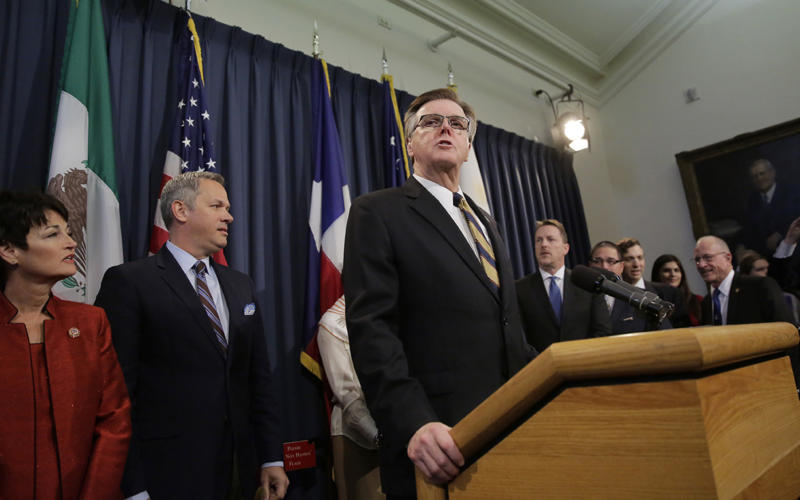
Jay Leeson, writing for Texas Monthly’s Burka Blog, wonders how Texas legislators can stiff their constituents in favor of an agenda being pushed by the state’s second-leading politician, Lt. Gov. Dan Patrick.

He wonders if state senators, for instance, are working for the people who they represent back home or for the lieutenant governor.

Implicit in his essay is the question about whether Lt. Gov. Patrick is running the Texas Senate — a body over which he presides — with too heavy a hand.

Read the essay here.

Indeed, we see this developing all too often. Politicians attain positions of power thanks to the votes of their fellow politicians and then decide that their voice is more important than anyone else’s. It’s a bipartisan affliction that crosses party lines.

A notable Texas politician, Democrat Lyndon Baines Johnson, was famous for corralling fellow senators, getting right into their faces and “persuading” them to vote for a bill of his choosing … or else pay the consequences.

Another brief story involves another Texas pol, former Republican U.S. Rep. Larry Combest of Lubbock, who once refused in the 1990s to support legislation dramatically overhauling the nation’s farm program. House Speaker Newt Gingrich wanted him to support it, and pressured him to do so. Combest refused because he said it would do harm to the West Texas farmers and ranchers who sent him to Congress in the first place.

This dance is occurring now in Washington, D.C. Republican leaders want to overhaul health care laws. They have developed an alternative to the Affordable Care Act that has been getting some seriously angry reviews among voters in congressional districts and states all over the country. Senators and House members are hearing about it, too.

Do they vote for their constituents’ interests or the interests of the party leadership?

Democrats exerted the same pressure on their congressional members when they pushed for passage of the ACA in 2010. The law was unpopular out here in the land, but Democratic congressional leaders insisted on approving it. The ACA’s fortunes have turned; Americans want to keep it and they favor it over the alternative that Republicans are trying to shove down our throats.

But GOP congressional leaders won’t be persuaded by silly notions about public opinion or the principle of representing the desires of the “bosses,” voters who elect them — or who can unelect them if they are given the chance.

Political leadership — whether in Austin or Washington — is vulnerable to those who turn it into tyranny.

Get set to watch further politicization of federal judiciary

Now there are “reports” that Anthony Kennedy is considering an end to his judicial career.

The Supreme Court associate justice’s retirement, if it comes next week as some are thinking it might, is going to produce something I suspect the nation’s founders didn’t anticipate when they wrote the U.S. Constitution.

That would be the extreme politicization of the judicial selection process.

Those silly men. Sure, they were smart. They weren’t clairvoyant.

The present-day reality is that the process has become highly political. When did politics play such a key role in selecting these jurists? It’s hard to pinpoint the start of it all. Some might suggest it began with President Reagan’s appointment in 1987 of Robert Bork to succeed Lewis Powell, who had retired. The Senate would reject Bork largely on the basis of his vast record of ultraconservative writings and legal opinions.

Clarence Thomas’s nomination in 1991 by President George H.W. Bush also produced plenty of fireworks, owing to the testimony of Anita Hill, who accused Thomas of sexual harassment and assorted acts of impropriety.

On and one it has gone, through Democratic and Republican administrations ever since.

The founders wrote a provision into the Constitution that allows federal judges to get lifetime appointments. The idea was to remove politics from their legal writings. Indeed, some judges have taken seats on the U.S. Supreme Court with their presidential benefactors expecting them to toe a philosophical line, only to be disappointed when they veer along uncharted judicial trails.

It’s too early to tell whether Justice Neil Gorsuch will fall into that pattern. He was Donald J. Trump’s initial pick for the high court. The president might get to make another appointment quite soon. Then again, maybe not.

Whenever that moment arrives, you can take this to the bank: The next Supreme Court pick is going to ignite a whopper of a political fight if one side of the Senate sees a dramatic shift in the court’s ideological balance.

Something tells me the founders might not have anticipated these judicial nominations would come to this.

Health care is ‘hard,’ yes, Mr. President?

What once was “easy” has become “hard.”

So said the president of the United States. Yep, Donald J. Trump has told TV interviewers that efforts to overhaul health care legislation is a “hard” task, that it’s going to take time.

Who knew?

Certainly not the man who, while running for president, called it “easy.” He boasted from many campaign podiums that he would repeal the Affordable Care Act almost immediately upon taking office and replace it with … um, something else.

“It’s easy!” he bellowed.

Sure thing, bub.

It’s not so easy. The American Health Care Act barely cleared the House of Representatives. Now it’s the Senate’s turn to discuss and debate this matter. Except that only Republicans are doing the dickering; Democrats aren’t in the game.

And, oh yes. Now we have five Republican senators saying they dislike the current Senate legislation “in its current form.” The Senate, with a 52-48 GOP majority, can afford to lose only two votes; that would result in a tie and Vice President Mike Pence could cast the deciding vote, as he did when the Senate confirmed Education Secretary Betsy DeVos to her Cabinet job.

So, the president bragged and blustered about the ease of overhauling one-sixth of the nation’s economy. Today’s reality is telling him the hard truth, which is that legislating is a complicated job.

It’s hard, man!

Celebrities’ comments have this way of reverberating

Johnny Depp has joined a list of celebrities with big mouths.

Depp, the movie actor, mused out loud the other day about the last time an actor assassinated a president. He seemed to suggest that’s what he wants to do, follow in the footsteps of another actor, John Wilkes Booth, who shot President Lincoln to death in April 1865.

Bad call, Johnny.

I guess what these folks need to grasp is the notion that their celebrity status not only acquires loyal followings for them, it also magnifies their idiotic statements or actions. For the record, I am not a fan of Johnny Depp.

The “comedian” Kathy Griffin? She was video recorded holding up the image of a severed head depicting that of Donald J. Trump.

The over-the-hill rocker/guitarist Ted Nugent has said a multitude of hideous things about Barack Obama and Hillary Rodham Clinton.

Now we have Depp popping off, trying to be clever. Instead he sounds stupid.

Donald Trump’s son, Don Jr., has slammed Depp. You’d expect a son to come to the defense of his father.

Depp has apologized for his idiocy. It doesn’t erase it, sad to say.

These folks are entitled to their political opinions, just as you are entitled to yours and I am to mine. I don’t know about you, but I express my opinions freely on this blog.

The difference, though, between us and those who have some kind of celebrity status is that — in my case, at least — I can sound like a dumba** and relatively few people are going to pay attention. When someone such as Johnny Depp says something stupid, then many others’ ears perk up.

That includes the Secret Service.

A word to wise ought to go to Johnny Depp and other celebs with strongly held political opinions: be circumspect.

Commentary on politics, current events and life experience