Puppy Tales, Part 16

puppy

We’re more than a year now into dog ownership and we’ve learned plenty about the emotional and mental differences between dogs and cats.

My wife and I have been lifelong cat owners/lovers. We’ve understood during our many years together that cats can be at the same time lovable while not caring one little bit about anything or anyone else.

Not so with Toby the Dog.

Our puppy possesses a serious streak of jealousy.

You see, my wife takes care of a couple of little boys; one of them just turned 3, the other one is not quite six months of age. The brothers are sweet little boys but as you can imagine, the younger one requires quite a bit of attention.

So does Toby.

My wife has become expert at multi-tasking as it regards the kids and the puppy.

And with Toby following her around like a little four-legged shadow, she needs to be an expert.

Toby does not snap at the little guy. He doesn’t growl at him. He doesn’t make any gestures toward him that are remotely hostile.

Oh, no. Instead, he just insists — relentlessly! — that his “mother” pay him at least as much attention as she pays the little boy.

He demands she throw his toys around the house. He loves to fetch ’em and bring ’em back. He jumps on her lap whenever she is tending to the little guy’s needs. Toby puts his paws on her leg, demanding that she look at him, talk to him, do something — anything — with him to keep him busy.

Our kitty, Mittens? Oh, she keeps a low profile while the boys are here. She might venture out to grab a bite of food or a drink of water — but only when they’re both napping. She’ll look at us as the tiptoes through a room en route to whatever she intends to do. And the look usually is one of “OK, folks, you do what you’re going to do; I’m just going about my business.”

Toby the Dog is another matter. Completely and entirely.

How does he know we love him? We tell him so. Repeatedly.

Why? Because he demands it.



Iowa set to kick it off . . . but Texas awaits

texas-primary-voters-to-get-more-say-in-2016-than-plannedb093ef659b7986d4659b

OK, so the nation’s political junkies’ eyes are turning this morning to places like Ottumwa, Indianola and Dubuque.

Iowa goes to the polls today, sort of.

The rest of us will know sometime this evening who Iowans prefer to become the Republican and Democratic presidential nominees.

I don’t want to dismiss the importance of these caucuses, which both parties do differently. Republicans actually cast ballots; Democrats go into rooms and argue with each other.

It still just involves a single state. Iowa is a fine place. I’ve been there a couple of times. But it comprises a relatively small population and only a fraction of Iowans are going to take part in these caucuses.

The really, really big show starts on March 1.

New Hampshire next week? South Carolina the week after that? Pffftt!

Texas comes into play on that first day in March when we take part in what amounts to a national primary. We’ll join about 20 other states in selecting delegates to the party conventions.

I do not believe the Republican field will be quite as crowded as it is this morning. Some of the 11 candidates will pull out, perhaps after tonight’s caucuses, or after the New Hampshire primary.

The Democrats might still have a three-person race when the dog-and-pony show comes to Texas.

For those of us who like this process, Texas usually has been a sort of political backwater. We have conducted our primaries relatively late in this nominating process, making our votes meaningless.

Not this year.

There will be some real excitement this year that could rival the 2008 primary.

Eight years ago, the Democrats were engaged in a brass-knuckle fight between Sens. Hillary Clinton and Barack Obama. The primary occurred that year while the two of them were still battling for their party’s nomination.

A fascinating development occurred that year. Democrats drew far more attention in Republican-laden Texas. My wife and I live in Randall County, one of the most GOP-friendly counties in this state. The Democratic Party primary polling place was many times busier that day than the Republican polling station at the Baptist church where we vote.

Why? A lot of Republicans were crossing over to vote in the Democratic primary to cast their votes for who they thought would be the weakest candidate who would run against the GOP nominee.

Clinton won the Texas Democratic primary, but the nomination went eventually, of course, to Obama.

The rest is history.

Will there be a similar display of system-gaming this year? Might there be thousands of Democrats casting Republican primary votes to help nominate the person they think would be the weakest foe this fall? The state’s open primary system allows for that kind of tomfoolery.

If it happens, well, that’s how it goes.

Whatever happens on primary day in Texas will matter — a lot — in determining the next president of the United States.

I look forward to all the attention that will come to places like Marfa, Palestine — and perhaps even Amarillo.


Cruz draws rebuke for mailer

IMG_0631_JPG_312x1000_q100

All righty, one more comment before Iowans head to their caucus locations.

U.S. Sen. Ted Cruz, one of 11 candidates seeking the Republican presidential nomination, has been slapped down by the Iowa secretary of state over a mailer that went out prior to the start of the caucus.

Cruz, the Texas Republican, sent the mailer out warning of a “violation” if Iowans didn’t take part in the caucus.

The mailer has the appearance of a government document. It looks official.

Except that it isn’t.

Read the Texas Tribune account here.

Iowa Secretary of State Paul Pate called Cruz’s campaign down for the mailer, saying it isn’t in keeping with state policy. He called it deceitful. Here’s what Pate said, according to the Texas Tribune: “Today I was shown a piece of literature from the Cruz for President campaign that misrepresents the role of my office, and worse, misrepresents Iowa election law,” Pate said. “Accusing citizens of Iowa of a ‘voting violation’ based on Iowa Caucus participation, or lack thereof, is false representation of an official act.”

Oh, yes. One more thing. Pate isn’t a Democrat. He’s a Republican who took office just this past year.

If Pate was a Democrat, one might be able to suggest that he would be driven by partisan interests in condemning the Cruz mailer.

Then again, given the yuuuuuge chasm within the Republican Party, one might wonder if Pate is supporting one of the other GOP candidates.

Whatever. Sen. Cruz’s campaign has been duly chastised.

Not that it matters to the Cruz Missile. He stands by the document.

There. I’m done with the Iowa caucus . . . until it’s over.


Timing of e-mail classification now becomes key

hillary-emails

Hillary Rodham Clinton’s decision to use her personal e-mail account was problematical, to say the least.

Now we might be finding out why it has caused the secretary of state so many problems.

She’s running for the presidency. The U.S. State Department issued a statement this past week that several e-mails that went out on that account were “top secret” in nature.

Yes, I am concerned about the use of that personal account, just like a lot of folks are concerned. My major concern is whether any of that top secret information ended up in the hands of hackers who might have broken into that account. Those things do happen, you know.

The question of the moment, though, is this: When did State decide to classify the messages as top secret?

Clinton has said all along that she didn’t send classified material on her personal account. She stands by that contention to this day. Moreover, she has said she did what previous secretaries of state have done. It didn’t come up when, say, Colin Powell was running the State Department.

To be sure, this matter has worsened the trust issue that is dogging her campaign in the very late stages of the campaign leading up to Monday night’s Iowa caucuses.

Let us not get ahead of ourselves.

I am willing to give her the benefit of the doubt over whether she sent the material out on her personal account knowing they were top secret.

Clinton said she didn’t jeopardize our national security.

Let’s ask the question: Were these e-mails re-classified just in recent days?


The case against primary endorsements

newspapers

I re-read the New York Times editorial endorsements this morning regarding the Republican and Democratic party presidential primaries.

The Times is backing Democrat Hillary Rodham Clinton (no surprise there) and Republican John Kasich. The Clinton nod is full of kudos for the former U.S. senator from New York; the Kasich endorsement contains a lot of, well, he’s the best of a bad bunch.

The paper’s tandem endorsements brought to mind a policy I used to follow back in the day, before I got “reorganized” out of my 36-year print journalism career in the summer of 2012.

It was that we didn’t make endorsements — which we preferred to call “recommendations” — in contested two-party primaries.

Why not?

Well, for starters, I always was a bit uncomfortable recommending candidates running for a partisan position. We did it for many election cycles here in Amarillo and in Beaumont before that. Then it dawned on me that it was best left to each major party to manage the selection process. The media need not get involved in what essentially was a partisan effort.

We would make recommendations, of course, for those single-party primary contests. In Amarillo, that usually meant the Republicans would have a contested primary, but there wouldn’t be any Democrats on the ballot for a particular office.

In those cases, the primary becomes tantamount to election. So, we’d state our case — knowing full well that whatever we said would mean diddly squat in the minds of most voters, whose minds were made up already.

I have no clue what my former paper here in Amarillo is going to do with this primary election. The Texas primary occurs on March 1 and it’s a good bet there’ll be plenty of Republicans still in the hunt for the GOP presidential nomination, not to mention at least two Democrats seeking their party’s nod for the presidency.

Nor will I offer an opinion of what the newspaper’s editorialist should do.

There no doubt will be push back from those who (a) demand the paper make endorsements in the primary, as it is their duty and (b) those who believe newspaper endorsements no longer are relevant in the current political climate.

Indeed, the Internet has taken away much of people’s reliance on what newspaper editorial boards think anyway.

Good luck, media moguls, as you ponder these things.

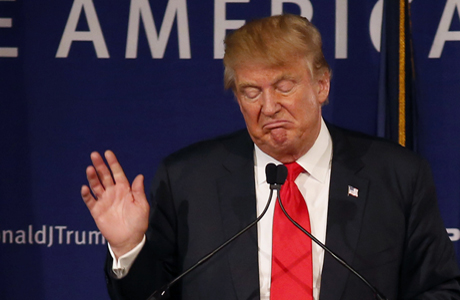
Trump keeps scoring well with evangelical voters

Republican presidential candidate, businessman Donald Trump, speaks during a rally coinciding with Pearl Harbor Day at Patriots Point aboard the aircraft carrier USS Yorktown in Mt. Pleasant, S.C., Monday, Dec. 7, 2015. (AP Photo/Mic Smith)

It might be the most intriguing question coming out of the Iowa caucuses.

How has Donald J. Trump continued to gain the support of Republicans who call themselves “evangelical Christians,” the most conservative members of a generally conservative bloc of Republican Party voters?

He’s done well with them despite the following:

Three marriages — and two divorces — and well-chronicled affairs with married women around the world.

Trump actually has boasted about carrying on with married women and all the while he has declared that he’s never asked God for forgiveness because, he said, “I don’t need it.”

Some of us out here have asked for forgiveness for a whole lot less than what Trump has acknowledged doing.

That doesn’t matter to those who use their deep faith to help guide their votes for public officials.

It’s wacky out there, man.

All of this just might portend an equally wacky result once the Iowa GOP caucus votes are tabulated at the end of the evening Monday.

Yep. I’ll be watching these results with keen interest.


Negativity dominates the GOP primary campaign

John-Kasich-Reuters-e1435699402254

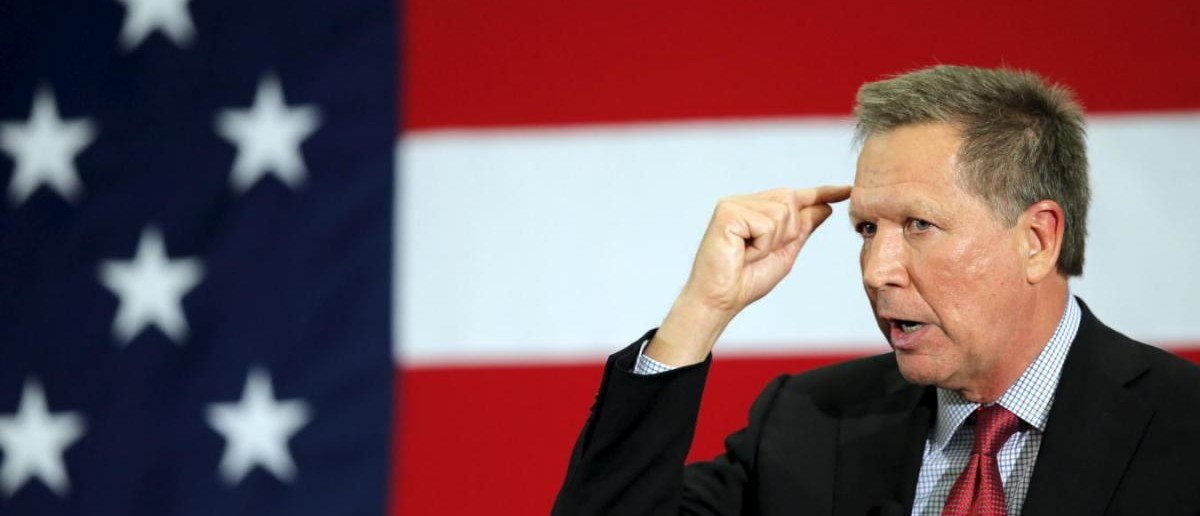
The New York Times’ Sunday editorial endorsement in this year’s Republican Party primary campaign illustrates quite graphically the nature of this election cycle.

It took the Times six paragraphs to mention the candidate the paper prefers to win the Republican nomination this year.

That would be Ohio Gov. John Kasich.

Kasich’s name got mentioned for the first time in the sixth paragraph after the Times spent the first five lengthy paragraphs trashing the frontrunners for the party’s nomination fight.

Donald Trump and Ted Cruz took broadside after (deserved) broadside from the Times editorial board.

When the paper’s editors got down to Kasich, they extolled his virtue as a proven government executive and a legislator with a record of accomplishment.

I happen to agree with the Times’ assessment of Kasich . . . and of Trump and Cruz. The Times did manage a few words of encouragement regarding Kasich, declaring: “Still, as a veteran of partisan fights and bipartisan deals during nearly two decades in the House, he has been capable of compromise and believes in the ability of government to improve lives.”

The Times didn’t mention it, but I have noted before that in my view, Kasich’s main selling point is his work with the Democrats in Congress and with the Democrat in the White House — President Bill Clinton — to balance the federal budget in the late 1990s. It is fair to suggest that Gov. Kasich could bring that good will with him were he to become the next president of the United States.

But the nature of this entire Republican campaign has been one of extreme negativity. The leader of the naysaying chorus, of course, is Donald Trump himself.

And as the tone of the Times’ editorial suggests, he has succeeded in taking the media down that path right along with him.


Predicting the Iowa caucus result is fraught with risk

Close view of a collection of VOTE badges. 3D render with HDRI lighting and raytraced textures.

David Brooks is a brave man.

Or perhaps he’s nuts.

The New York Times columnist said two things on Friday. One is that he has been “consistently wrong” about this year’s presidential campaign. The other is that Donald J. Trump is going to “underperform” at the Iowa caucuses which occur Monday.

I choose not to go there. The campaign to this date has been fraught with peril for those of us who believed — it’s silly, I know — that Trump would have imploded long ago. He hasn’t. Trump has ridden on the backs of voters who are sick of the “status quo,” and want “change, by God.”

Trump is promising it, without a clue as to whether he — as president — even has the power to bring the kind of change he’s promising.

My favorite Trump promise so far is that when he’s president, “department store employees are going to wish customers Merry Christmas.” Yeah, go figure that one out.

Brooks also believes Sen. Bernie Sanders is going to have a “turnout problem” in Iowa, meaning that the strong young-voter support he’s getting in those crowded auditoriums won’t manifest itself in the caucus rooms. Why? Young people don’t vote with the same fervor as their elders.

How, though, in the world does one predict an outcome in either party?

I give Brooks lots of credit for sticking his neck out once again.

I’m keeping my powder dry until after the last caucus polling station reports in.


A ‘cultural district’ for Amarillo? Fascinating

center city

As if Amarillo isn’t going through enough change with its evolving downtown landscape, now comes an interesting concept from Center City.

Let’s create a cultural district designed to promote the arts in this city. So says Center City director Beth Duke, who believes the city is ripe for a grant that could be applied to promoting the arts.

It would run from Western Street to Grant Street. It would include several art venues, such as the Little Theater, the Globe-News performing arts center, Sunset Center Art Galleries and the Civic Center.

I’m still trying to wrap my noggin around the notion.

However, as with most new ideas, this one seems worth a close look.

According to NewsChannel 10: “We can promote it as a unified cultural district for tourism,” said Duke. “We can go out for special grants, and it may lead to some more events and some more partnerships.”

The city could be venturing into some fascinating new territory here.

Duke said the city will apply soon for the grant and will learn fairly quickly after that whether it will receive funds to apply to this concept.

The proverbial light bulb came on recently in my own head about the downtown Tax Increment Reinvestment Zone. TIRZ board chairman Scott Bentley explained it to me in simple enough language for even little ol’ me to understand it.

So it might have to be with the cultural district idea that Center City is pitching.

I’m willing to listen to it.

The payoff seems a bit distant as I consider how the creation of such a district would work.

Then again, isn’t that why God created marketing specialists to figure these things out?


C-SPAN worked miracles with this spot

cspan_bus

I want to share a moment regarding my one direct contact with the Cable-Satellite Public Affairs Network . . . aka C-SPAN.

I’ve already sung the praises of Brian Lamb, the founder of the one national network that covers politics and policy without a hint of bias.

Take another look.

But the folks who put together their video presentations are masters of editing, cutting, pasting and making subjects look a whole lot smarter than they really are. In my case, that’s not all that difficult.

I arrived in the Texas Panhandle in January 1995 to take my post as editorial page editor of the Amarillo Globe-News.

That spring, C-SPAN embarked on a project called the “School Bus Tour.” It was sending a yellow bus to every congressional district in the United States. All 435 of them would get a visit from the C-SPAN school bus. Its intent was to educate viewers on the members of Congress representing their constituents living in each of those districts.

The 1991 Texas Legislature had gerrymandered the congressional map in Texas to give Amarillo two House members. The 13th Congressional District comprised the northern portion of the city; the 19th District comprised the southern portion.

The lines were drawn that way to protect the Democrat — Bill Sarpalius — who represented the 13th District. Democrats controlled the Legislature back then, so they sought to rig the lineup to protect their own. The tactic worked until the 1994 election, when Republican Mac Thornberry upset Sarpalius.

But the 19th District remained strongly Republican and was represented by U.S. Rep. Larry Combest of Lubbock.

C-SPAN called one day and wanted to know if I would be willing to be interviewed by the network about the 19th District. I was to talk about Combest and the district he had represented for the past decade.

Holy crap! I thought. I didn’t know much about the district, or about Combest. I was brand new here. I’d lived for the 11 previous years in the Golden Triangle region of Texas, which was represented in the House by Democrats Jack Brooks of Beaumont and Charlie Wilson of Lufkin.

I accepted the offer, then cracked the books to learn more about the 19th Congressional District and about Rep. Combest.

C-SPAN’s school bus crew met me at the newspaper office one Saturday morning and I talked for about 30 minutes or so with a camera rolling. I stuttered, stammered, paused, stopped-and-started my way through it. Hey, I’m not a TV guy.

I was frightened by the prospect of how it would look on TV. The producer assured me, “Don’t worry. You did just fine. We’ll take good care of you.”

Well, they shot their B-roll video, showing scenes of feed lots, ranch land, wind mills and such from around the sprawling district, which stretched from Amarillo all the way to Lubbock, about 120 miles south of us.

They told me when the segment would air.

I waited for it. Sure enough, they managed to make me sound a whole lot more polished than I really am.

What’s more — and this is the real beauty of this kind of skill — they preserved the essence of every comment I made. There was not a single phrase that was aired during the three-minute segment that was out of context or didn’t convey my intended message.

I would have a similar experience later, during the 2008 presidential campaign, with National Public Radio. NPR wanted to interview two journalists about the state of that campaign between Barack Obama and John McCain. I learned once again about the talent and skill it takes to edit someone’s spoken words while preserving the integrity of what one says.

Believe me, it’s a remarkable skill, indeed.


Commentary on politics, current events and life experience