How can they live with themselves?

151004170102-05-south-carolina-flooding-super-169

Lindsey Graham’s home state of South Carolina is in dire peril in the wake of record-setting floods.

The U.S. senator wants the federal government to assist his constituents in helping them recover from the tragedy … as he should.

Graham, a Republican candidate for president, wasn’t so generous when it came to providing aid to help Hurricane Sandy victims in New Jersey. He voted against that request.

Graham voted no on Sandy

He’s not alone.

Remember that tornado that tore through Joplin, Mo., in 2011? Then-House Majority Leader Eric Cantor, R-Va., said Congress needed to cut money from other agencies to pay for the relief effort.

Tom Cotton was a Republican House member from Arkansas when the Sandy relief package came to a vote. He voted “no,” declaring that Arkansas shouldn’t have to bail out a Northeast state.

This kind of duplicitous thinking is common in Congress.

As for Graham, he’s just the latest in a long and infamous line of politicians who demand help for their own constituents while giving other Americans the back of their hand.

 

President serving role as ‘comforter in chief’

roseburg

Presidents of the United States have a number of unwritten roles in their job description.

The current president, Barack H. Obama, is going to perform one of them Friday when he stops in Roseburg, Ore., to throw his arms around a community shattered by an unspeakable tragedy.

However, at least one of his critics, Republican presidential candidate Dr. Ben Carson, thinks such a task is too political and that Americans are “sick and tired” of politicians who “politicize everything.”

Give me a break.

Dr. Carson is wrong, period.

Roseburg was stunned by the deaths of nine people at Umpqua Community College by a gunman who then took his own life. It was yet another case of gun violence that resulted in the massacre of innocent victims. Is the president enraged by what happened? Of course he is … as I’m sure Dr. Carson is angered as well.

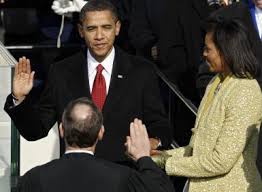
But this task of offering comfort to the stricken is part of the job description that the president inherits whenever he takes the oath of office.

Presidents of both parties have been called upon to perform the task of comforter in chief. However, Carson told “Fox and Friends” today: “When do we get to the point where we have people who actually want to solve our problems rather than just politicize everything? I think that’s what the American people are so sick and tired of.”

Well, as the president said the other day in the wake of the Roseburg massacre, if a tragedy calls out for a political solution, then so be it.


What if the Cubs win the Series?

bos_g_wrigley1x_576

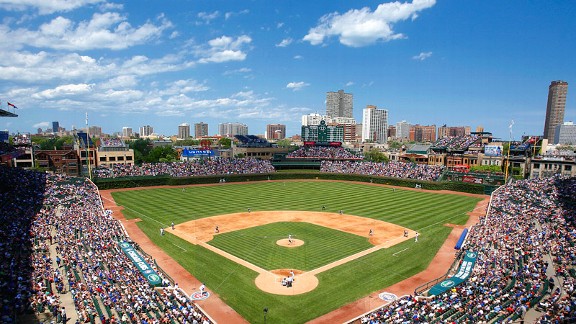
Baseball fans everywhere — and I include myself in that category of Americans — have taken note that the Chicago Cubs are going to participate in Major League Baseball’s playoffs.

Eventually, they’ll get down to two teams — one from the National League and one from the American League.

I guess there’s a fascination with the Cubs’ chances of making it to the Big Show.

I’m not a big Cubs fan. Indeed, it seems that whenever the Cubs get close to taking part in the World Series, their fan base seems to grow by many times. Baseball fans who didn’t care a bit about the Cubs then start rooting for them.

Why is that? Well, it’s been 70 years since the Cubs last played in the World Series; they lost the Series in 1945 to the Detroit Tigers.

Moreover, it’s been 117 since the Cubs won the World Series; they beat those Detroit Tigers in 1908. It’s the longest-lasting frustration streak in the history of professional sports, I reckon.

I believe it was a Cubs follower who coined the phrase “Wait’ll next year” because of the Cubs’ inability to win, let alone win the World Series.

I fear what might happen if the Cubs actually win the 2015 World Series. Hell will freeze over, Earth will spin off its axis, the sun will rise in the West and Martians will actually land at Area 51.

If only Mr. Cub, the great Ernie Banks, could be around to see it.


Wrong direction for U.S.? Check out the numbers

barack

It intrigues me greatly how the naysayers manage to hog all the attention and persuade people to believe things that aren’t true.

Check out the link here: Trend is good

FactCheck.org is a website run by the Annenberg Public Policy Center. It’s known to be a credible source for those who wish to know the facts about the political rhetoric being tossed around.

We’ve heard much over the past, oh, six-plus years about how Barack Obama’s presidency has led the nation into oblivion.

Hmmm. FactCheck.org says something quite different about the trend since Obama took office in January 2009.

Jobs are up; joblessness is down; energy production is up; energy imports are down; the number of uninsured Americans is down; the stock market is way up.

It’s not all peaches and cream. Food stamp recipients have increased; home ownership is down; median household income is down.

Yet, despite the evidence to the contrary, we keep hearing from presidential candidates that America is going straight to hell. One of them wants to “make America great again.” Others label the president’s policies as disastrous, dangerous, lawless.

Are we in the perfect place? Of course not. Far from it. We’re still fighting that war against international terrorists that, in my view, is likely to be ongoing long after many of us have departed for the Great Beyond.

However, as the political season heats up and the rhetoric starts churning, let us look at the big picture and take the stump speech sound bites and laugh lines with the skepticism they deserve.

Win or lose, Cruz may pay steep price

cruz

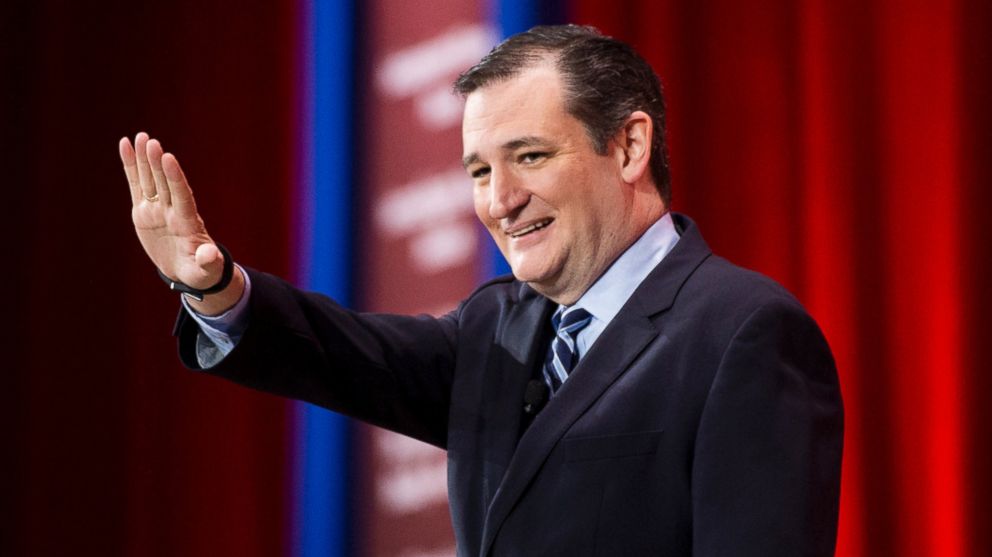
Ted Cruz stormed onto the U.S. Senate floor in January 2013 and began immediately demonstrating his lack of understanding of institutional decorum.

The Texas Republican began making fiery floor speeches. He accused fellow senators — and former senators — of doing things detrimental to national security. He sought to shut down the government over the Affordable Care Act.

Along the way, he decided to run for president of the United States … and while running for the White House, he accused Senate Majority Leader Mitch McConnell of being a liar.

Cruz facing hurdles

The Texas Tribune reports that win or lose in his bid for the presidency, Cruz faces a serious problem with his Senate colleagues. Many of them don’t like him. They don’t like his brash attitude. They dislike his lack of manners. They believe he’s self-serving and egotistical — which, coming from U.S. senators with monstrous egos of their own is really saying something, if you get my drift.

If the Cruz Missile gets elected to the presidency next year — which I do not believe is going to happen — he’ll have to cut deals with the very senators he’s managed to anger. If his campaign falls short, he’ll return to Capitol Hill and, well, he faces the same chilly reception from his colleagues.

The Tribune reports that some political observers doubt Cruz’s ability to legislate. “Texas has been short a senator since the day Cruz was elected,” said Jenifer Sarver, an Austin-based GOP consultant and former staffer for U.S. Sen. Kay Bailey Hutchison, Cruz’s predecessor. Sarver continued: “As someone who worked for Senator Hutchison, who was an absolute and constant champion for Texas, it’s disappointing to see his lack of regard for how his political posturing could impact Texans.”

Sure, Cruz has his fans among conservatives in Texas and around the country. I surely get that many Americans applaud the man’s in-your-face style. Cruz calls his approach merely “anti-establishment.”

But the young man is just one of 100 men and women from both political parties who need to work together on occasion to get something done for the good of the country or for their own states.

To date, as near as I can tell, Sen. Cruz — who is serving in his first-ever elected office — hasn’t yet read the memo that reminds him of how a legislative body is supposed to function.


MPEV fight: Goliath vs. David

amarillo MPEV

Two groups have formed to carry the fight forward on Amarillo’s multipurpose event venue, which will be decided Nov. 3 in a non-binding municipal referendum.

Under normal circumstances, I’d be pulling for the underdog in such a contest, the one with little money, name ID or significant political backing.

Not this time.

In one corner is Vote FOR Amarillo, which is campaigning in favor of the $32 million MPEV, ballpark component and all. In the other corner is Amarillo Citizens for Tomorrow, which opposes the MPEV design.

VFA vs. ACT. There you have it.

As my friend Jon Mark Beilue reported in the Amarillo Globe-News on Sunday, the differences between the organizations go well beyond their respective views on the MPEV.

For example:

  • Paul Matney, a highly respected — and admired — former Amarillo College president and community leader, is leading the VFA effort; ACT doesn’t appear to have anyone leading it.
  • VFA has registered as a political action committee; ACT has not.
  • Matney and Wendi Swope are serving as spokespersons for VFA; ACT hasn’t designated anyone to speak for the group.
  • VFA has secured the backing of dozens of key community leaders, business groups and civic organizations; ACT calls itself a “grassroots organization.”

I am not going to denigrate the grassroots aspect of ACT’s political base. However, it is important — to me, at least — that a political action group is marching forward with critical backing from a diverse base of business and civic interests.

VFA wants the MPEV to proceed as it’s been presented. The ballpark will be more than a ballpark, Matney and others have declared. It could play host to a number of outdoor activities that could attract visitors to a revived downtown district.

One of the more curious arguments being offered by ACT has been its contention that hotel-motel tax revenue that would pay for the MPEV’s maintenance and operation would be “exhausted in a few years,” forcing the city to increase property taxes to pay for future Civic Center improvements and expansion. I’m not quite sure what one has to do with the other.

Even if the city were to expand and dress up the Civic Center first, it would do so with certificates of obligation or perhaps submit the proposal to voters for their decision on whether to approve a bond issue election. Either way, property taxes would come into play.

I continue to support the MPEV as it’s been developed and presented. Moreover, I will continue to put my faith in an effort led by someone with the credibility that Paul Matney has earned through his many years of service to his hometown.


More guns means less mayhem?

guns

The processing of the latest gun-violence massacre is continuing across the nation — perhaps even the world.

Nine people were gunned down in Roseburg, Ore., this past week and we’ve heard the mantra from gun-owner-rights advocates: If only we could eliminate these “gun free zones” and allow more guns out there …

The idea being promoted — and I haven’t yet heard from the National Rifle Association on this — is that more guns in places such as Umpqua Community College, where the Roseburg massacre occurred, could have stopped the madman.

NRA executive vice president Wayne LaPierre said infamously after the Newtown, Conn., bloodbath that killed 20 first graders and six teachers, that the “only way to stop a bad guy with a gun is with a good guy with a gun.”

I’m not in favor of disarming American citizens. I believe in the Constitution and the Second Amendment, although for the life of me I still have trouble deciphering its literal meaning: “A well-regulated Militia, being necessary to the security of a free State, the right of the people to keep and bear Arms, shall not be infringed.”

The question has been posed: When did “well-regulated Militia” get translated to meaning the general population? Still, the courts have ruled time and again that the Constitution guarantees firearm ownership to all citizens. I’m OK with that.

But I am not OK with the idea that more guns means less violence, less mayhem, less bloodshed, fewer deaths and injuries.

Surely there can be a way to tighten regulations gun ownership in a manner that does not water down the Second Amendment, one of the nation’s Bill of Rights.

If only our elected representatives could muster the courage to face down the powerful political interests that simply will won’t allow it.


Terror vs. gun deaths

terrorism12115

Here’s an interesting statistic that today drew some attention on one of the many Sunday morning TV news/talk shows.

In the past decade, 153,144 people have died in this country from gun violence; 3,046 individuals have died at the hands of terrorists during that same period.

This came from Chuck Todd, moderator of “Meet the Press,” citing the stats provided by the Centers for Disease Control and Prevention.

He asked Rich Lowry, editor of the National Review, about whether the country needs to do as much to combat gun violence as it has done to battle terrorism.

Lowry gave a reasonable and intelligent answer, which was that government’s fundamental role is to protect citizens against foreign enemies; he added that any gun-related action “on the margins” won’t do anything and that more comprehensive action runs the risk of infringing on the Constitution’s Second Amendment right to “keep and bear arms.”

Meet the Press tackles gun violence

The discussion was fascinating.

Still, I’m a bit baffled by the fact that with such a huge disparity between gun-violence deaths and terror-related deaths, we still have been unable — or unwilling — to deploy government’s machinery to impose additional restrictions on gun ownership that does not infringe on citizens’ right to own a firearm.

After all, the government created a whole new Cabinet-level agency — the Department of Homeland Security — immediately after the 9/11 terrorist attacks.

Still, madmen take guns into public places and massacre thousands more innocent victims … and we do nothing?


MPEV ballot language becomes an issue

ballpark

Amarillo voters are going to decide a non-binding ballot measure that says the following:

“Should the multipurpose event venue (MPEV) to be constructed in downtown Amarillo include a baseball stadium at the approximate cost of $32 million? A ‘for’ vote would be in favor of including a baseball stadium in the project; a ‘no’ vote would be against having a baseball stadium as part of the MPEV.”

The ballot measure language, as I read it, appears to be quite restrictive.

But if you’ll allow me this tiny bit of nitpicking, the ballot measure’s language also is a bit imprecise. The opposite of a “for” vote would be an “against” vote, not a “no” vote.

But I digress …

The ballpark element has become the focal point of the discussion on the MPEV. Indeed, the MPEV proposal exists because of the ballpark.

MPEV ballot measure

So, if we are to believe that a vote against the MPEV doesn’t doom the project, we are being told that the MPEV has a secret component that someone is going to unveil if the measure goes down in the Nov. 3 election.

I happen to support the MPEV and I will vote “for” the project when Election Day rolls around. I believe in the ballpark aspect of the MPEV and I also believe that the venue can be used for a wide variety of events — not just baseball games.

The language used in the ballot measure quite clearly appears to the work of those on the City Council — comprising a majority of the governing body — who oppose the MPEV. They dislike the ballpark; they oppose the manner in which the project was developed; they want the city to go in another direction than the one it has taken in its effort to rebuild, revive and renew its downtown district.

That’s their call.

The ballot measure as it is written, though, must be seen for what it is: an effort to torpedo a project cobbled together over a period of several years by elected and appointed city officials and residents of this community.

If there is a Plan B, then let’s see it … now.


VP teeters on brink of huge decision

biden

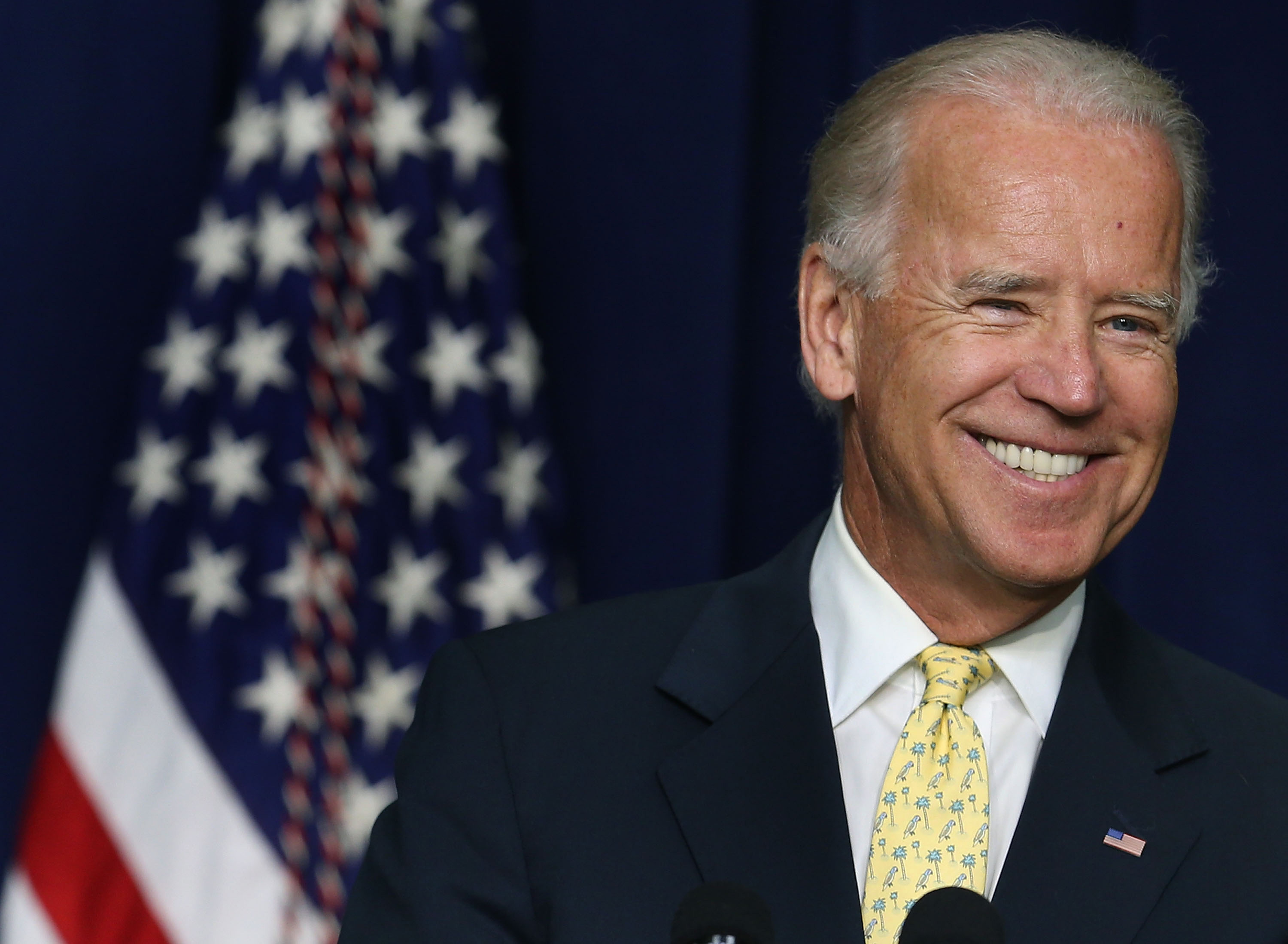
Vice President Joe Biden is giving me heartburn.

Will he run for president in 2016 … or not?

I’ll stipulate up front that I’m not going to predict what he’ll do. I didn’t think Democrat Hillary Clinton would run for the U.S. Senate in 2000 after she and her husband left the White House; she did. I thought Republican Colin Powell might run for president in 1996; he didn’t.

I’ve waffled on the vice president’s immediate political future so much I’m giving myself motion sickness.

Biden ponders run

Part of me wants him to run. I happen to like the vice president and admire his long record of public service — gaffes and all.

He’s experienced immense personal tragedy, with the deaths in 1972 of his wife and daughter in a car crash that injured his two sons; then came the death of his older son, Beau, of brain cancer just a few months ago.

Biden has shown courage and grace in the face of these tragic events.

Another part of me, though, wants him to avoid being labeled for the rest of his life as a “loser” if he fails to win the Democratic nomination. Clinton is the frontrunner, although she’s been damaged by controversy involving e-mails and Benghazi. Biden has run twice already, in 1988 and again in 2008.

Joe Biden isn’t the perfect alternative to Clinton, but he’ more perfect than, say, socialist U.S. Sen. Bernie Sanders, who’s polling quite well these days head to head against Clinton.

Only the vice president and his family know what he’ll decide. He’s expected to announce his plans within the next 10 days or so.

As tempting as it is in this forum to try to guess out loud what he’ll do, I’ll remain quiet. It’s Joe Biden’s call to make all by himself.

It’s clear that Biden wants to be president. It’s not at all clear whether he believes he’s got what it takes to derail the frontrunner.

I’m trying to imagine the immense pressure that accompanies a decision like the one facing the vice president. I can’t comprehend it.

You do what your heart tells you to do, Mr. Vice President.


Commentary on politics, current events and life experience