Tag Archives: Rick Perry

What took so long to go after Trump?

Cruz_Detroit2_jpg_800x1000_q100

The 11th version of the Republican Party presidential debate circus provided one more frontal assault tonight by the three remaining viable challengers to frontrunner Donald J. Trump.

I’m going to join others around the country in asking: What took these guys so long to muster up the guts to go after this guy?

Mitt Romney this morning unleashed a blistering critique of Trump. He challenged his temperament, judgment, his business acumen, his ethics, his morals, his shallowness … have I left anything out?

Then tonight Ted Cruz, Marco Rubio and John Kasich continued their assault on Trump.

This comes after months of seeking to “stay on the high road.” They were cowed by Trump’s lambasting of others who dared criticize him. Trump pointed gleefully at how others who would take shots at him would see their own campaigns evaporate.

Rick Perry, Bobby Jindal, Lindsey Graham? All gone.

Jeb Bush? Toast.

The rest of them? See you later.

Cruz wants to be the last man standing in the anti-Trump brigade, according to the Texas Tribune. But another strategy is beginning to develop: It is to keep the field crowded and denying Trump the ability to gather enough delegates to win the GOP nomination outright on the first ballot at the party convention this summer in Cleveland.

Trump’s incredible crassness has been ripe for criticism all along.

His foes, such as they’ve been to date, have chickened out.

I’ll give former Texas Gov. Perry credit, though, for sticking it to Trump early — only to see his own presidential campaign fizzle out.

Were the other guys afraid that would happen to them as well?


Politics keeps coming around

perry

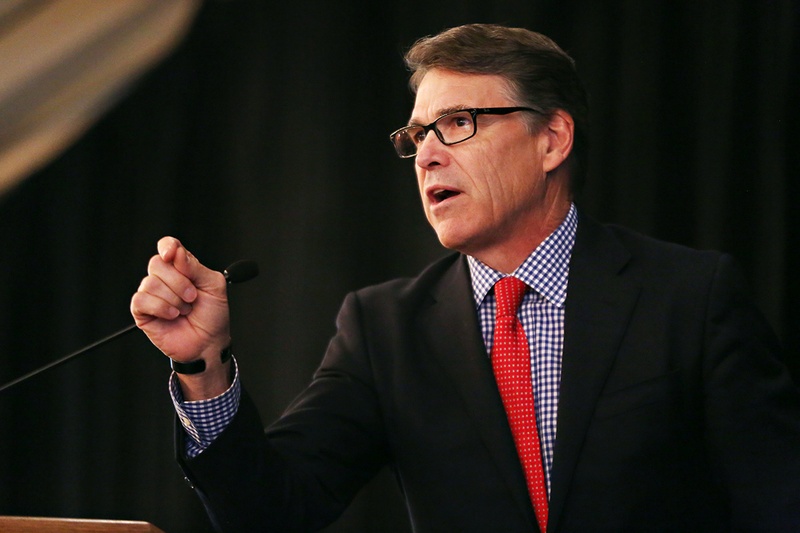
Rick Perry quite famously — at least was in Texas — declared that a Travis County grand jury indicted him only for political reasons.

The former governor faced charges of abuse of power and coercion of a public official after a Travis County jury charged him with those two felonies.

Perry would have none of it. He blamed it on Travis County Democrats who comprise the bulk of the voting population in the county where the state’s capital city of Austin is located.

Hey, he had demanded that the district attorney, also a Democrat, resign after she got caught driving drunk. Rosemary Lehmberg didn’t quit. So Perry vetoed money appropriated for her office to run the Public Integrity Unit.

Politics, politics, politics.

So, Perry played the politics game while condemning the indictments that came down.

What happened next might deserve a bit of scrutiny.

The Texas Court of Criminal Appeals today dismissed the remaining indictment against Perry, the one accusing him of abuse of power. He acted within the law when he vetoed the money for the DA’s office, the court said.

Did politics determine that decision? Well, I don’t know.

The state’s highest criminal appellate court comprises all Republicans. The same party to which Perry belongs.

Was the CCA decision to dismiss the indictment as politically motivated as the grand jury’s decision to indict the governor?

Perry said so when the grand jury returned the indictment. He’s not going to say the same thing about his political brethren on the state’s top criminal court.

Still, isn’t it a question worth pondering?


Respect this opinion … while disagreeing with it

IMG_8989_jpg_800x1000_q100

Rick Perry is free at last!

Free of the indictment that he said was politically motivated. Free of the cloud that threatened to rain buckets of trouble all over him. Free of the snickering from his foes.

The Texas Court of Criminal Appeals, the state’s highest criminal appellate court, has dismissed the indictment that charged the former governor with abuse of power. A lower court had tossed out another indictment that charged Perry with coercion of a public official.

This is one of the decisions that one can respect while disagreeing with the findings.

Texas Tribune story.

The system did its job.

A Travis County grand jury indicted Perry on charges of abuse of power over his veto of money for the Public Integrity Unit run out of the Travis County district attorney’s office. The DA, Rosemary Lehmberg, had pleaded guilty to drunken driving and served some time in jail. Perry said she should resign and if she didn’t he would veto money for the Public Integrity Unit, which is charged with investigating wrongdoing among public officials.

Lehmberg should have quit. But she didn’t. So Perry followed through on his threat and vetoed the money. I must add here that Lehmberg is a Democrat, while Perry is a Republican.

So, the grand jury indicted him — while Perry was finishing up his stint as governor and preparing to run for president of the United States. Perry accused the grand jury of playing politics. Travis County is a Democratic bastion; Perry, of course, is a Republican. I’ll point out, too, that the special prosecutor who presented the case to the grand jury also is a Republican.

I actually thought the lesser of the charges — the coercion part — had more staying power. Silly me. I didn’t expect a lower court to toss that one first.

I never liked the idea of a governor telling an elected county official to quit. That wasn’t his call to make, given that the district attorney is answerable only to the people who elected her. Gov. Perry tried to bully Lehmberg into doing his bidding and that — to my way of thinking — is fundamentally wrong.

As for the veto itself, the governor could have — should have — simply vetoed the money appropriated for the integrity unit without the fanfare he attached to it. That’s not the Perry modus operandi, however. He sought to make a show of it, which also is wrong — but not illegal, according to the Court of Criminal Appeals.

As for the politics of this case … if the governor alleged that the grand jury indictment was motivated by politics because Travis County comprises mostly Democrats, is it fair to wonder whether the top appellate court dismissal occurred because all its members are Republicans?

Hey, I’m just thinking out loud.

So, the case is over.

Now we can all turn our attention to the Greatest Show on Earth, which would be the Republican Party presidential primary campaign. Let’s bring out the clowns!

Perry to Texas: don’t panic over oil prices

IMG_8989_jpg_800x1000_q100

Rick Perry is mighty proud of the economic record he takes credit for building in the state he governed longer than anyone else in Texas history.

The former governor says Texans shouldn’t panic over the plummeting price of oil. West Texas crude now sits at about $32 per barrel.

The state’s diversification will help the state weather this economic storm, Perry said, citing what he called the “Texas miracle.”

I get that Perry wants to assure Texans that we’re going to be all right, unlike an earlier oil price crash that all but killed the state in the late 1980s.

Let’s get real here. The state still relies heavily on oil and natural gas to help fund state government at many levels.

Comptroller Glenn Hegar has been accused of offering what used to be called a “rosy scenario” with regard to the revenue the next Legislature will have when it convenes in January 2017. Perry is on the comptroller’s side.

Yes, the state has diversified significantly over the past 30 years. Amarillo and the Panhandle suffered grievously back then when the bottom fell out of the oil market. I was in Beaumont when it happened and witnessed the wholesale shutdown of petrochemical plants. That crash hurt. A lot.

Will this crash bring as much pain as the previous one? Probably not.

Amarillo’s burgeoning medical community will head off some of the misery. So will its growing service-sector economy. Pantex remains a top job provider.

Let’s not dismiss the pain and suffering that will befall public school systems — as well as public colleges and universities — that rely on funds generated by oil and natural gas royalties.

Gov. Perry says he knows what an economic downturn looks like.

The one that might be coming to Texas won’t look exactly like the previous one, but it’ll bring its share of hurt to Texans.


Speaking of endorsements . . .

1453708367667

Rick Perry has weighed in.

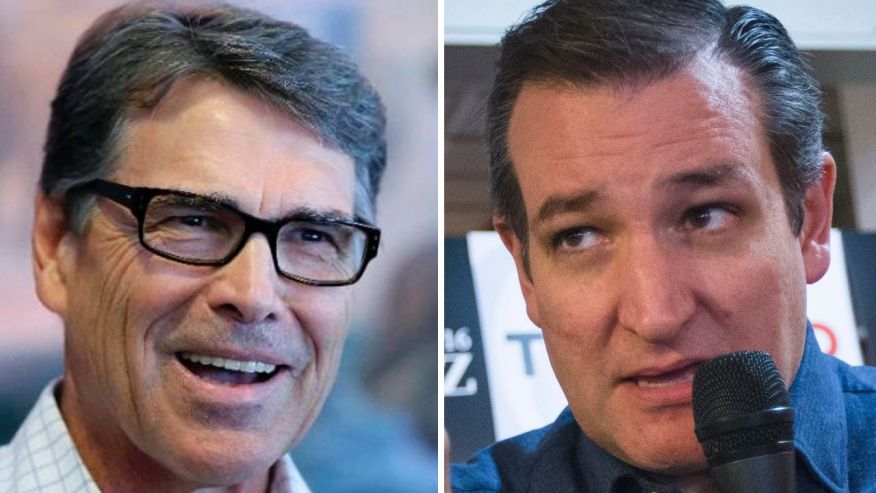
The former Texas governor believes his fellow Texan, U.S. Sen. Ted Cruz, is the most “consistent conservative” running for president and, by golly, he wins the endorsement of the Pride of Paint Creek.

Is it a surprise?

Not even close.

You’ll recall, perhaps, when Perry — when he was still seeking the 2016 GOP presidential nomination — called Donald J. Trump a “cancer” on the conservative movement.

Not long after that, Perry dropped out, saying he was “suspending” his campaign. Trump laughed it off, as he does any time someone speaks ill of him.

I have no clue what kind of impact the Perry endorsement will have on this race. Indeed, whenever some former big hitter weighs in on this campaign, I keep hearing snarky comments from others — mainly on the right and far right — dismissing them as “has beens” or “losers.” Come to think of it, that’s what Trump calls them, too.

But ponder this for a moment.

Quite soon, the Republican presidential primary caravan will find its way to Texas, which has its primary on March 1.

Texas is where Perry’s views matter the most.

He was elected to several political offices: state legislator, agriculture commissioner, lieutenant governor and governor. He never lost an election. Why, he even was elected to the Legislature as a Democrat, for crying out loud.

It might not matter much in places such as New Hampshire or Iowa what Rick Perry thinks of the GOP contest.

It matters here, though. And the last time I checked, Texas still sends a lot of delegates to each party’s respective political convention.


Newspaper endorsements: do they matter?

newspapers

Near the end of my career in daily print journalism, I began to question the value of newspaper “endorsements.”

We didn’t really even like to refer to them out loud as endorsements. We preferred the term “recommendations.” We’d recommend a candidate of our choice while understanding that voters are independent thinkers — or so they say — and wouldn’t take whatever the newspaper said as gospel.

These days I’m beginning to wonder about voters’ independence. The plethora of social media and big-money advertising are having the kind of influence on voters’ thought process that, well, newspaper endorsements might have had a half-century or longer ago.

Former Texas Gov. Rick Perry perhaps demonstrated better than anyone in recent times how newspaper editorial endorsements’ value has diminished.

When he ran for re-election in 2010, Perry announced he wouldn’t even talk to newspaper editorial boards. He’d go straight to the voters. He didn’t need no stinkin’ newspaper editors’ approval.

How did Gov. Perry do at the ballot box that year? He thumped Republican primary opponent Kay Bailey Hutchison — no slouch as a Texas politician herself — and then clobbered Democratic nominee Bill White that fall. White, by the way, garnered virtually every newspaper endorsement there was to get in Texas — including from the Amarillo Globe-News, where I worked as editorial page editor; it did him virtually no good at all.

So now, in this presidential election cycle, newspapers are weighing in. The “influential” Des Moines Register endorsed Republican Marco Rubio and Democrat Hillary Clinton in advance of the Iowa caucuses. Over the weekend, the Boston Globe endorsed Clinton as the neighboring New Hampshire primary approaches.

There will be others coming along as the campaigns proceed along the long and winding road toward the parties’ conventions. Newspaper editors and publishers will extend the invitation for the candidates to make their cases. Some of them will accept; others will follow the Perry model.

In the end, however, none of these endorsements — or recommendations — likely will be decisive.

Voters are getting their heads filled by ideologues on both sides of the divide. Their minds are made up.

What’s more, during the more than three decades I practiced my craft in daily journalism, I never heard first-hand any voter say they changed their mind on an election based on a newspaper endorsement.

Maybe they’re out there.

Back to my initial question: Do these endorsements really matter?


Rubio makes sense on immigration

Senator Marco Rubio of Florida speaks at the Conservative Political Action Conference (CPAC) at National Harbor, Maryland March 14, 2013. Two senators seen as possible candidates for the 2016 presidential election will address a conservative conference where Republicans will try to regroup on Thursday after their bruising election loss last year. REUTERS/Kevin Lamarque (UNITED STATES - Tags: POLITICS) - RTR3EZQO

Lo and behold . . . I heard Republican presidential candidate Marco Rubio make sense on one element of immigration policy.

When the young U.S. senator was serving in the Florida legislature, he backed a provision that would allow the children of illegal immigrants to be granted in-state tuition privileges.

Rubio today reaffirmed that view in an interview with ABC News’s George Stephanopoulos.

You go, Marco!

He was careful — naturally, given the nature of the GOP voter base — to say he doesn’t favor “amnesty” for those who are here illegally. He did say, though, that children who were brought here when they were young, say 5 years of age, and who grew up speaking English and whose only outward loyalty is to the United States of America deserve to be pay in-state tuition at public colleges and universities.

Does that sound familiar? It should. Two former Texas governors — Republicans George W. Bush and Rick Perry — stood tall on the same principle. Perry, though, was pilloried during the 2012 GOP primary campaign for standing on that notion; the TEA Party wing of the Republican Party would have none of it.

I’m no fan of young Marco. However, I was heartened this morning to hear him speak with a sense of humanity and compassion that has been lacking among many in the still-large field of GOP presidential candidates.

Donald J. Trump gets high-fives and hosannas from the base over his plan to round up all 11 million illegal immigrants and toss ’em out of the country.

Meanwhile, at least one of his Republican presidential candidate colleagues demonstrates that the Grand Old Party isn’t speaking with one voice on a critical national issue.


Did prayer bring the water back to the Panhandle?

lake levels

Let’s flash back to a time just before the 2012 presidential campaign.

Texas Gov. Rick Perry was thinking about seeking the Republican nomination. His state was being throttled by a killer drought.

What did he do? He called for Texans to pray. The reaction by the media and many others outside of Texas was quite predictable. Perry drew criticism, even outright scorn. It was a simplistic tactic he sought to employ, critics said.

Four years later, consider this: Texas is no longer in a drought.

Hmmm. How could that’ve happened? Was it, um, prayer — maybe — that did it? Who can say “no” categorically?

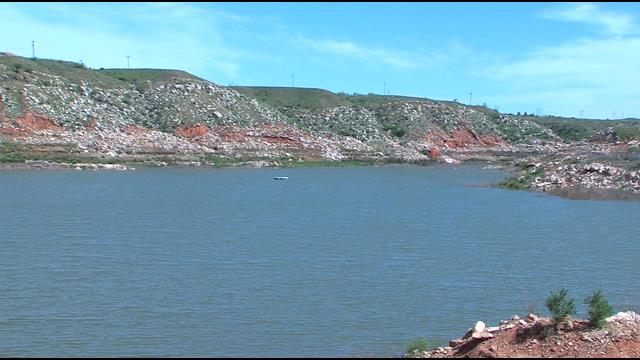
Consider the levels at Lake Meredith. The Panhandle’s largest manmade reservoir is filling back up. Last time I noticed, I saw that the lake was at 64 feet. What was it about the time Gov. Perry called for prayer? I believe it was around 26 feet.

There’s more to report. Kent Satterwhite, head of the Canadian River Municipal Water Authority, says the quality of Lake Meredith water has improved while the lake levels have increased. Indeed, the levels have improved so dramatically that CRMWA has resumed pumping water to its 11 member communities, including Amarillo.

Look, I’m not going to discount actual scientific factors that have contributed to the increase in moisture in this part of the world. Pacific Ocean currents are helping spur more storms. It’s that El Nino effect, right?

However, neither am I going to discount a more spiritual cause for the turn of events.

I’ve never been able to prove or disprove the impact of a simple act of prayer. I am left to rely on faith, which doesn’t require anyone to prove anything.

Whatever the cause of the return of Lake Meredith’s priceless resource, I’m good with it.

Politics getting even more fickle

TT-mugs_leadart_jpg_800x1000_q100

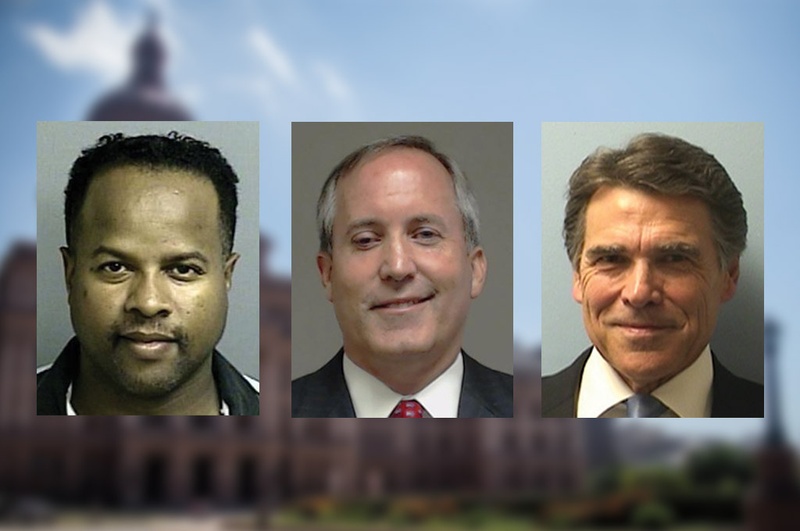
The Texas Tribune has published an interesting analysis of three Texas politicians who’ve gotten themselves into a bit of a legal jam.

They face different political fates.

Former Republican Gov. Rick Perry was indicted in Travis County on charges of abuse of power and coercion of a public official. He says it damaged his second presidential campaign, according to the Tribune’s Ross Ramsey.

Now we come to Republican Texas Attorney General Ken Paxton, whom a Collin County grand jury — his home county, by the way — indicted on charges of securities fraud. Paxton is fighting those charges. Indeed, Texas voters elected him to the AG’s post after Paxton actually acknowledged he had done what the grand jury accused him of doing. Wow …

Then we have the case of Democratic state Rep. Ron Reynolds, who has been convicted of misdemeanor barratry — aka ambulance chasing — and faces a jail term of as long as a year.

What’s weird, according to Ramsey, is that Reynolds is facing less political flak than the other two. Good grief! He’s been convicted of a misdemeanor, but might still be able to serve if he avoids any jail time.

This isn’t his first brush with ethical lapses, according to Ramsey, who writes: “His voters have been through this before. Last year, he was convicted on similar charges related to the same set of circumstances. Reynolds and seven other lawyers were accused of paying Robert Valdez Sr. for client referrals, and since he was finding them clients by scrounging through fresh accident reports, prosecutors said the lawyers were in effect illegally soliciting business.”

Furthermore, Reynolds likely will seek re-election next year.

Ugh!

I think there ought to be a campaign mounted in the Missouri City area that Reynolds represents to find a credible challenger. They can start by looking for someone who doesn’t possess a criminal record.

Check out Ramsey’s story here:

I hope you find it as interesting as I did.


When did we devalue ‘executive experience’?

bobby jindal

The third Republican candidate for president has dropped out of the 2016 race.

Bobby Jindal of Louisiana joins Rick Perry of next-door Texas and Scott Walker of Wisconsin as GOP hopefuls who didn’t make the grade with an increasingly angry primary voter base.

What do these men have in common? They’re all either active governors or former governors. Which prompts the question: Whatever happened the notion that governors bring more “executive experience” to these campaigns than, say, senators or members of the House of Representatives?

A wise man — I can’t remember who — said that governors usually are better positioned than legislators to take the reins of government.

As RealClearPolitics reported: “Experience and expertise seems to be a non-factor this year, which is kind of mind-boggling,” Jindal supporter and Iowa GOP activist Shane Vander Hart told RCP.

Read the whole story here.

Indeed, one can look back into recent political history to see how voters have responded to presidential candidates with gubernatorial experience: Democrat Jimmy Carter of Georgia, elected in 1976; Republican Ronald Reagan of California, elected in 1980 and re-elected in 1984; Democrat Bill Clinton of Arkansas, elected in 1992 and re-elected in 1996; and Republican George W. Bush of Texas, elected in 2000 and re-elected in 2004.

Gov. Perry made the case when he announced his candidacy that governors are better prepared for the presidency than legislators.  I wrote about it in my blog. See it here.

This year? Republican primary voters are going for a real estate mogul/reality TV star and a retired brain surgeon. Governors and former governors? They’re being ignored, tossed aside and relegated to virtual asterisks.

Democratic voters have one remaining former governor in the race: Martin O’Malley of Maryland. And of the three Democrats running for the White House, he’s polling a distant third behind a former first lady, U.S. senator and secretary of state, and a sitting U.S. senator.

Governors used to be the main men and women in these contests. They would tout their experience actually running state governments and how that experience prepared them for the Big Job.

Not any longer.

You want a measure of just how weird the upcoming presidential campaign is going to get? Take a look at what’s happening to those candidates with “executive experience.”