Tag Archives: Golden Triangle

Happy Trails, Part 94: Home is where you park it

It’s not often at all that I adopt a bumper sticker slogan as a mantra for living.

But I have done that very thing. We now live according a slogan we saw on an RV: Home is where you park it.

We just returned from a two-week sojourn — all in Texas — through the South Plains, the Hill Country, the Piney Woods, the Golden Triangle and the Metroplex.

Along the way, I adopted a new manner of referring to “home.” You see, now that my wife and I are no longer tethered to property attached to the ground, we now refer to our fifth wheel as home.

So, instead of saying I’m “going home,” I find myself referring to some geographical location. Home is attached to the back of our pickup, or it’s anchored to an RV campsite temporarily — until we head for the next place.

Our return to Amarillo reminded us of one of the “charms” of living on the High Plains of Texas.

It’s the wind, man!

Holy moly, it was howling when we departed in early April. It was howling today when we pulled into our RV park/temporary residence. We had read about the wildfires that scorched lots of ranch land; this afternoon, we saw evidence of them along U.S. 287 just west of Clarendon, where we understand the fire caused closure of the highway for several hours while heroic firefighters battled the blaze.

This arrangement — an RV serving as our “home” — won’t last forever. I don’t want to give away too much, but we might have located a precise location to resettle once we depart Amarillo on a (more or less) permanent basis. I’ll have more on that later.

In the meantime, our life now is a reflection of a slogan made popular by other RVers.

It’s cool.

This place is for the birds

HIGH ISLAND, Texas — I’m officially mad at myself.

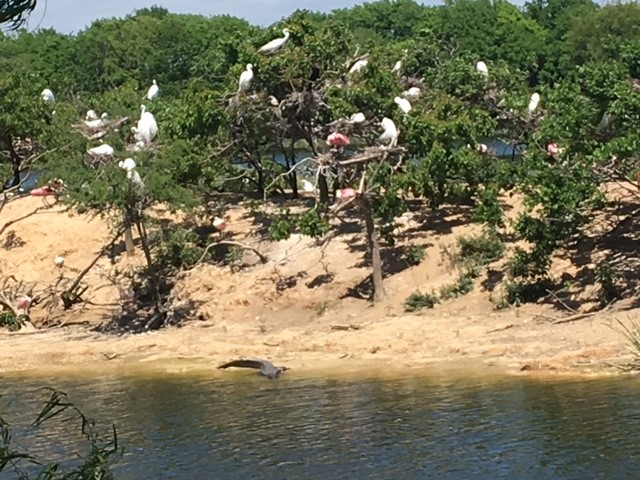
My wife, sons and I lived on the Texas Gulf Coast for nearly 11 years and we never visited this place. It’s the Smith Oaks Rookery on High Island, about 40 or so miles from Beaumont.

It also is one of the premier “birding” sites on Earth. That’s right. One of the best in the world! People come from all across the world to see this place.

My wife and I visited this oasis with friends; a couple of our friends visited briefly with a visitor from Maine, who happened the know the species of a particular bird that caught our eye. She’d never been to Smith Oaks, but knew the bird’s identity.

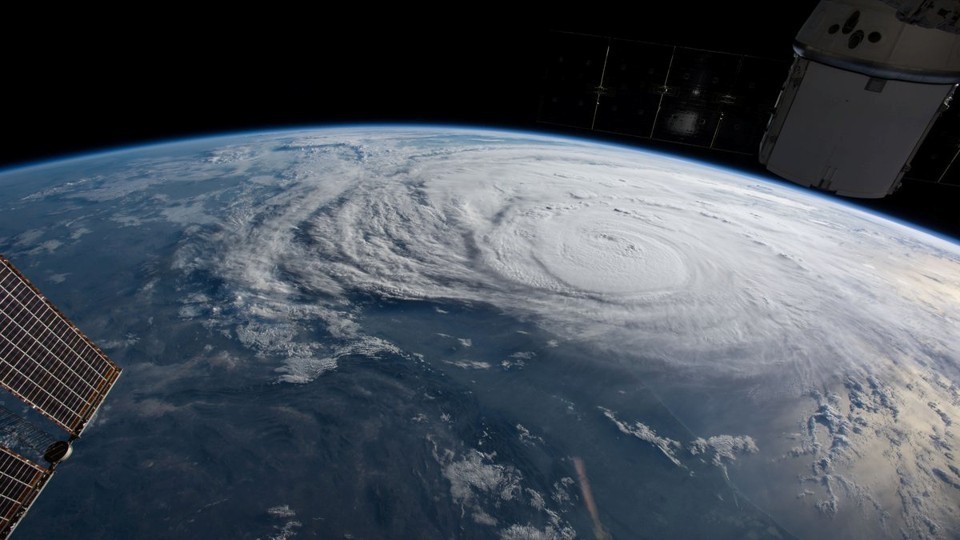
The rookery stood in the path of Hurricane Harvey this past summer. It suffered some damage. The fresh water turned brackish because of the storm surge that swept ashore from the Gulf of Mexico.

On this day, though, it was full of birds. Herons, spoonbills, cormorants, egrets. They were everywhere. This happens to be the nesting period. Birds were building nests. Some were tending to and feeding young birds.

What a wonderful sight to see!

If you look at the picture I posted with this brief item, you’ll notice an alligator at the water’s edge. The beast looked to be about a 10-footer. He was one of two prehistoric creatures we saw lounging in the 70-degree sunshine.

The rookery is sponsored by the Houston Audoban Society. You pay a small fee to enter it. I’ll just say this right here: It is money well spent.

I need to ask myself now: Why in the world did we never visit this place when we lived just down the road?

I suppose it isn’t that uncommon to take for granted nature’s treasures that sit just beyond our doorstep. So, we had to drive here all the way from the other corner of this huge state to take in a natural wonder.

Harvey’s impact will be felt for a long time

BEAUMONT, Texas — Here’s the buzz my wife and I are getting while visiting friends in the Golden Triangle: Hurricane Harvey left a lasting — but not indelible — impact on this region.

We’re hearing that many neighborhoods remain under repair. The Northwest Forest neighborhood west of the city is “like a Third World country.” Streets are under repair. We noticed huge slash piles of brush stacked up under tall timber along Interstate 10 as we entered the city.

But the city will fight its way back.

Hurricane Harvey stormed ashore for a second blast in the late summer of 2017, dumping a record-setting 50 inches of rain in a 24-hour span of time. It deluged the city water system. Two of our friends told us of being without water for more than a week, while the electricity was restored in short order.

“Riverfront Park is destroyed,” we were told. The park used to be a site of outdoor activities next to the Civic Center along the Neches River. It’s now gone.

We all have read about huge fundraising efforts ongoing to assist the folks in Houston, about 80 miles west of the Golden Triangle on Interstate 10. Houston Texas all-pro defensive end J.J. Watt has become an iconic figure in the Bayou City for his work raising more than a quarter-billion dollars to assist in the repair of Texas’s largest city.

Yes, Houston needs help. The state and the federal government have stepped up to lend disaster assistance.

The pain stretches a good bit beyond the big city. Beaumont is feeling the pain brought by the storm’s rage.

I have no doubt that our friends in the Golden Triangle will recover. They will triumph. They will get on with their lives.

I’m betting, though, they’ll never listen again to the sound of rain with the same serenity it used to bring.

Harvey’s footprint remains huge

VILLAGE CREEK STATE PARK, Texas –– I knew it before we got here. But to see it up close still reminds me of just how powerful nature’s wrath can be.

Hurricane Harvey stormed ashore for a second time along the upper Gulf Coast in the summer of 2017. It had blown in earlier over the Coastal Bend, wiping out neighborhoods with high wind and storm surge.

The storm backed away over the Gulf of Mexico and then returned over Houston and the Golden Triangle with — shall we say — a record-setting deluge. It totaled 50 inches in a 24-hour span of time, which is the greatest single-day downpour in continental U.S. history.

Harvey’s footprint remains all over the Golden Triangle. We arrived at Village Creek State Park — just north of Beaumont — hoping to hike the trails and enjoy the sights and smells of the Big Thicket. No can do, we were told by the park staff. All the trails remained closed.

The storm inundated the park. It damaged the trails. It made them impossible to trek.

The Big Thicket National Preserve just a few miles north of us are OK, the state park staff told us.

It’s good to be back where we once lived for nearly 11 years before moving to the Texas Panhandle in early 1995.

My heart broke during Harvey’s assault on the Golden Triangle. Many of our friends suffered from the storm’s wrath, if not from actual flooding and the damage it brought to their property, but from the terror they clearly must have felt during that terrible time.

We’ll get to catch up with some of them. We might even hear their tales of struggle and triumph.

Happy Trails, Part 92

LOCKHART STATE PARK, Texas — We are glass half-full types of people. My wife and I have tried to live that way for our entire life together, which totals more than 46 years.

Thus, it is with that optimistic outlook that we ponder what could have been a catastrophe, but which turned out to be only a minor hiccup on our retirement journey.

We ventured to San Angelo State Park a few days ago. As we approached the park, about 30 miles from our first night’s destination, we made a sharp left turn across the median on U.S. 87.

The steering wheel locked up. The brakes weren’t nearly as responsive as they should have been. We limped across the highway and onto the parking lot of a state rest area.

I noticed at that moment the water temperature gauge on the dashboard was registering “very hot.” We managed to get the truck — with our fifth wheel in tow — to a spot out of the way, next to a curb.

We spent the night in the rest area. We got the truck repaired the next day and proceeded to the state park.

Why is this good news? Because what happened to us about 30 miles from our destination could have happened in the middle of nowhere. It could have happened, say, in the middle of the Eisenhower Tunnel just west of Denver; it could have occurred on the bridge crossing Lake Pontchartrain west of New Orleans; it could have happened in the middle of the Nevada desert, or in some remote area of southern California.

That it happened at a well-lit rest area in West Texas just a few miles northwest of a significant city — San Angelo — sent us a clear message that we should count our blessings.

We do that. Every day. We are blessed with sons who make us proud; our health is good; we sold our house in a timely fashion; we are enjoying our freedom and mobility.

Our pickup difficulty only slowed us part of a single day. We have proceeded to Central Texas. We will head soon to the Golden Triangle to catch up with friends who were bedeviled by nature’s fury, which came to them this past summer in the form of Hurricane Harvey. Then we’ll head for the Metroplex to visit with our granddaughter, her brothers and her parents.

It could have gone a lot worse than it did on that first day of our latest sojourn.

We must be living right.

Are helmet laws a ‘nanny state’ rule? No!

Whenever I mention the subject of requiring motorcyclists to wear helmets, I often get a response that refers to the “nanny state.”

I brought the subject up a message the other day in which I wondered whether the Texas Legislature could reconsider its decision to rescind the requirement back in 1995.

I’m going to stand by my view that the Legislature ought to rethink that decision, which I said at the time was ill-considered — and which I still believe it to be today.

Let’s explore the “nanny state” canard.

If the state is seeking to impose intrusive rules on motorists, rules that violate a certain “choice” factor, then why does government impose speed limits? Why does the state make it illegal to drive with an open container of alcohol? And here’s my favorite: Why does the state require drivers — and passengers — to wear safety restraints in a moving vehicle?

You see, requiring motorcyclists to wear helmets is no more intrusive and invasive than any of those other rules.

Let’s understand that the state already mandates headgear for minors riding on motorcycles. Indeed, any parent who would operate a “crotch rocket” with one of his or her helmetless children on board should be arrested and thrown in the slammer … for a long time!

I once got into an argument with someone in the Golden Triangle who tried to talk me out of a column I wrote about helmet laws; and this was before the Legislature decided to rescind the statewide requirement.

This clown, whose name escapes me at the moment, actually argued that he shouldn’t have to wear a helmet because he wanted “to feel the wind blow through my hair.” I damn near flipped!

I have argued that motorcyclists who refuse to wear head protection cost us all a lot of money when they are debilitated by the injuries they suffer. Helmets can prevent such grievous injury.

And you may spare me the notion that the $10,000 insurance policy suffices as protection. Why? Because a patient can eat up that 10 grand policy the moment he or she checks into an acute-care hospital.

Am I pushing a “nanny state” agenda? Not in the least.

I merely am wishing for sanity to return to our Legislature. I’m realistic enough to understand that it likely won’t happen.

***

Here is an item I posted eight years ago, just to remind you that I am steadfast in my opposition to this notion of “individual liberty.”

https://highplainsblogger.com/2010/03/we-all-pay-for-helmet-less-riders/

Planning for an education on Texas history

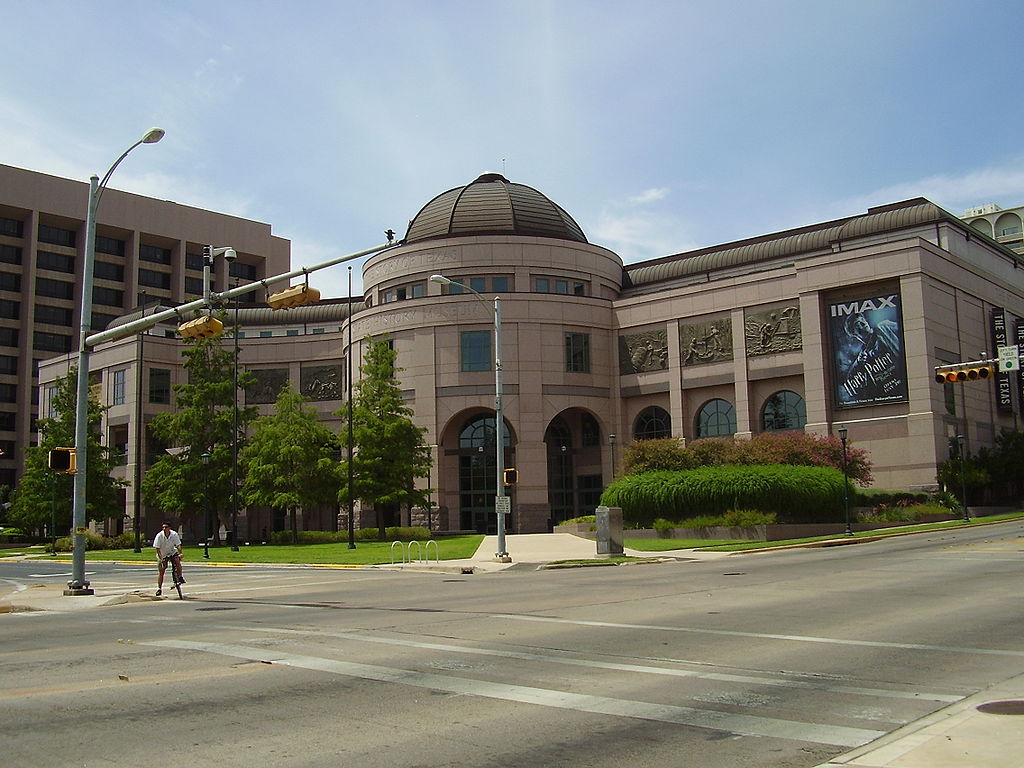
We’re heading downstate soon for a two-week tour and we’ve made a tentative decision on one of the sights we intend to take in: the Bullock Texas State History Museum in Austin.

I regret I have not yet toured this place.

It’s not far from the State Capitol and it carries the name of one of the state’s more legendary political figures: former lieutenant governor and Texas comptroller Bob Bullock.

Bullock died some years ago of cancer. He was an irascible, often grouchy politician. He was a crusty, traditional Texas Democrat; by that I mean he wasn’t what you’d call a squishy liberal. I met him once while I was working in print journalism; it was near the end of his life and, to be candid, he looked like death warmed over. Lt. Gov. Bullock did not take good care of himself.

But, oh man, this man — who died in June 1999 — loved Texas. He was fond of finishing his public speeches with that gravely “God bless Texas” salutation. His political descendants from both parties have adopted that blessing as their own.

The museum in his memory opened in 2001 and it tells the story of Texas history like no other such display.

Now, I offer that view with no disrespect at all to the Panhandle-Plains Historical Museum on the campus at West Texas A&M University in Canyon, just down the highway a bit from Amarillo. I’ve been to the PPHM many times and have seen the flyers proclaiming it to be the “finest historical museum” in Texas. It’s a wonderful exhibit and I see something new every time I visit it.

Our RV travels are going to take us downstate for a tour of the Hill Country and later to the Golden Triangle, where we lived for nearly 11 years before moving in early 1995 to the Texas Panhandle. We’ll finish our jaunt in the Metroplex before heading back to Amarillo.

I am so looking forward to touring what I have heard for many years is a beautiful exhibit in Texas’s capital city.

State prison unit to get A/C … more to come?

Texas’s massive prison system is no stranger to lawsuits.

An inmate, David Ruiz, once sued the Texas Department of Criminal Justice on grounds that the crowded prison conditions violated the constitutional ban on cruel and unusual punishment.

The federal courts took over the prison system and a massive prison unit construction boom ensued to relieve crowding.

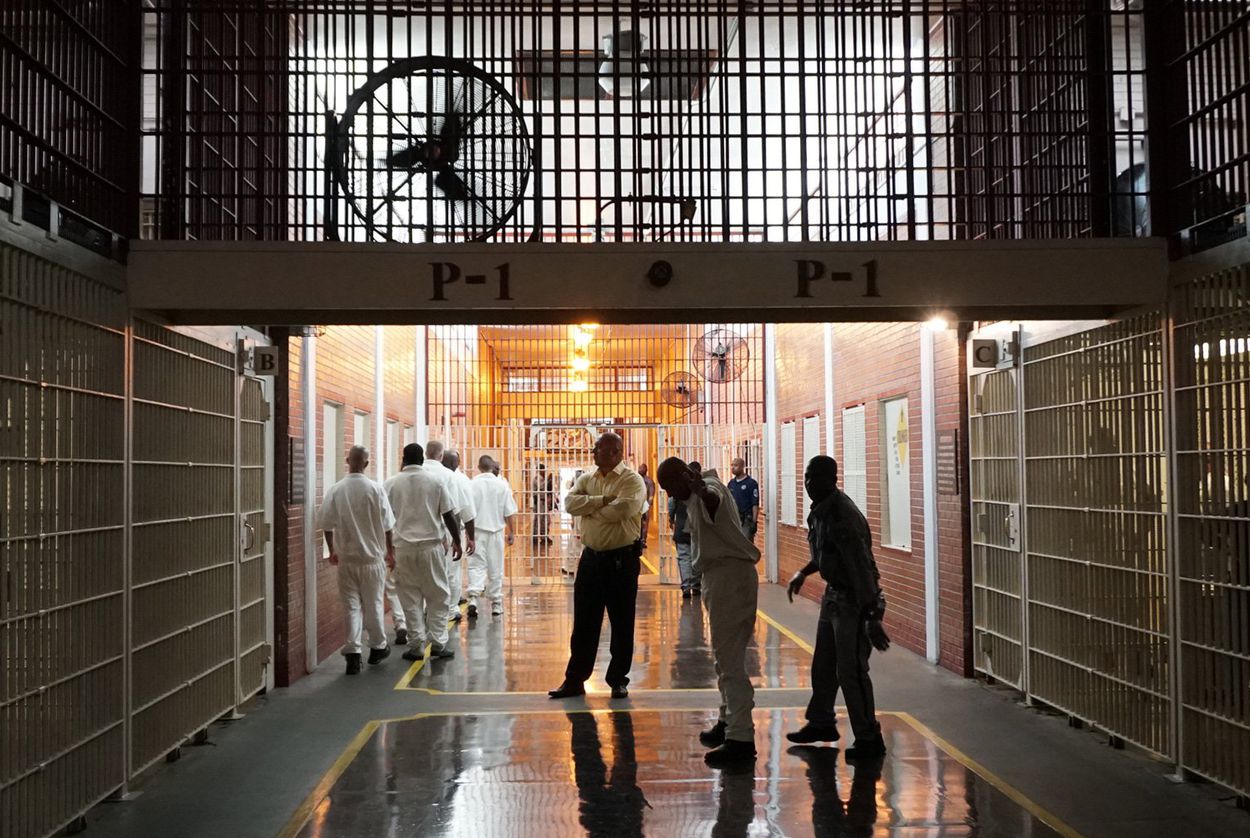
Now it appears that another lawsuit has forced the TDCJ to install air conditioning units at its Pack Unit southeast of College Station. It’s too damn hot there and inmates deserve air conditioning in their living quarters. I support the state’s decision to cool off this unit.

As the Texas Tribune reports: “It’s a big day for the inmates who suffered through those summers at the Pack Unit,” said Jeff Edwards, attorney for the prisoners. “They’re not going to be in fear of dying from heat stroke anymore.”

Edwards said the agreement details that the department will install temporary air conditioning for the coming summer, with permanent units in place by May 2020. A spokesman for the Texas Department of Criminal Justice confirmed an agreement, adding that the department and plaintiffs would be working to finalize details in the coming weeks.

The agreement is awaiting federal court approval.

This brings to mind something I learned not long after I arrived in Amarillo in 1995. I received a tour of the William P. Clements Unit northeast of the city. The assistant warden at the time walked me through the unit and made quite a point of telling me that Clements did not have air conditioning. To cool the place off during the summer, it had large fans to blow the air around and provide some semblance of relief from the heat.

Amarillo, though, is a different kind of place from the region near College Station. It not only gets damn hot in Aggieland, but the humidity can stifle even the stoutest of individuals.

I moved to the Panhandle from the Golden Triangle, where the humidity is overpowering. I don’t know if the Mark Stiles Unit in Jefferson County has air conditioning; if it doesn’t, I believe it should.

I do not buy the notion that our prison units are “country clubs,” which some critics have contended for too many years. They’re tough places to exist.

Air conditioned prison units do not turn them into posh resorts. They merely create a semblance of livable conditions for individuals who would rather not be there in the first place.

Happy Trails, Part 82

I have to credit a fellow recreational vehicle camper for this term, but I have come down with a case of the “hitch itch.”

It strikes me whenever we’ve been parked for a length of time, yet the open road beckons us. It is beckoning my wife and me. Thus, I get the “hitch itch,” or the “itch” to hook our fifth wheel RV to the bed of our pickup and hit the road.

The cure for the itch will come quite soon as we head out on another road trip. It will be an intrastate journey, keeping us inside Texas for its length.

It will be a lengthy trip.

Our plans are to make ample use of three state parks, which is our RV campsite of choice. We have a Texas Parks & Wildlife park pass, which waives our entrance fees into any state-run park in Texas. There happens to be a lot of ’em. They’re everywhere! They’re all well-run, well-maintained and well-groomed.

They’re also inexpensive!

We’ll be heading to San Angelo State Park to start off. A couple of days later we’ll shove off for Lockhart State Park south of Austin for several days. Then we drive to Village Creek State Park just north of Beaumont for a brief visit before winding our way back to Amarillo — with a stop in the Metroplex to visit our precious granddaughter and her parents.

This “hitch itch” strikes periodically. Frankly, we suffer from it more than we don’t. We have enjoyed this lifestyle so much that we want keep enjoying it for as long as humanly possible — health permitting.

To date, we both enjoy good health. We both have our wits. We enjoy the open road. Toby the Puppy is a serious road warrior as well.

The only nagging “health problem” we cannot eradicate — nor do we want to get rid of it — is that hitch itch.

It will disappear the moment we hook it all up and hit the road.

Trump needed reminder to show compassion?

Check out the picture. It shows you Donald Trump’s hands clutching some notes he held while he listened to the pleas of those who survived the Parkland, Fla., high school massacre.

I was truly ready to give the president unvarnished props for his listening to those who survived the shooting along with the loved ones of those who perished in the carnage.

Then this picture showed up.

I am struck by the last notation: “I hear you.” Yep. It seems the president needed crib notes to remind him to offer a word of compassion to the grieving survivors and family members.

I almost don’t know how to respond to this.

OK, I won’t beat up the president too savagely over this. I have a reason. He is far from the only politician to rely on notes.

Do you remember how President Reagan would carry 3-by-5 note cards into Cabinet meetings? How he would glance at them to remind him of the talking points he wanted to address?

Get this, too: A man who represented me in Congress used the same technique when he came to visit our editorial board at the Beaumont Enterprise in Southeast Texas.

The late Rep. Jack Brooks was a ferocious Democrat who pretty much detested almost any Republican he encountered. Brooks was not the least bit bashful about denigrating Ronald Reagan’s intelligence. He actually would chide the president over the way he depended on those note cards.

Brooks, though, did precisely the same thing when he sat down with us to talk about the issues of the day. Actually, Brooks often would launch lengthy soliloquies using the notes he held in front of him.

That all said, I get that Donald Trump is employing a tactic that others have done.

I’ll just add a final thought. The only reason I mention this at all is because the president has insisted many times since running for office that he is “like, a really smart person” who knows “the best words” and who attended “the best schools.”

Does an intelligent, well-spoken, well-educated man really need note cards to remind himself to say “I hear you”?

I guess this one does.