Tag Archives: Texas Legislature

How would Beto work with GOP?

Let’s suppose for a moment that lightning strikes and Beto O’Rourke is elected Texas governor in the midterm election.

O’Rourke is a Democrat who would have to work with the Republican-controlled Legislature. I have been rolling that notion around and have come up with a conclusion.

Given the obstructionist nature of the current GOP, I only can conclude that O’Rourke would have a huge hurdle to clear. That would be a vast difference from the previous time the state had a governor of one party and the Legislature controlled by the other party.

In January 1995, Republican George W. Bush took over as Texas governor. The Legislature that year was controlled by Democrats. The Senate’s lieutenant governor was the irascible Bob Bullock. The speaker of the House was the more amiable, but still fiercely partisan Democrat Pete Laney.

The two legislative leaders developed a tremendous working relationship with the newly minted, freshly scrubbed GOP governor. They became friends. Partners. Allies at times.

Legislative Democrats in 1995 seemed to have little appetite for fighting, fussing and feuding with Republicans, especially the one who moved into the governor’s office.

I am trying to imagine a Democrat such as Beto O’Rourke developing that kind of relationship with Lt. Gov. Dan Patrick and Speaker Dade Phelan. Both of those legislative leaders are wedded to the MAGA world view.

Oh, how I would love to be proven wrong. I fear, though, that a Gov. O’Rourke would not get anything resembling the kind of feel-good introduction to governing that greeted Gov. George W. Bush all those years ago.

Do I believe that will happen? I am afraid not. Then again, there’s always hope.

johnkanelis_92@hotmail.com

Recalling an astonishing first meeting

(By Michael Schumacher)

Readers of High Plains Blogger might recall a statement made on it that I am writing a memoir for members of my family.

The memoir is about two-thirds finished. It contains personal reminiscences of people I met during my career as a print journalist and recalls the more fascinating sights I saw and experiences that came my way.

I want to reveal one of the people I cite in this memoir. I won’t spill all the beans, but I do want to share one element of this individual’s character that I found most appealing.

***

The late Teel Bivins served as a Republican state senator from the Texas Panhandle from 1989 until 2004. I arrived at the Amarillo Globe-News in January 1995 to stand post as editorial page editor of the daily newspapers we published in Amarillo.

I knew a little bit about Bivins when I arrived, given that I had spent nearly 11 years at the Beaumont Enterprise. I had been watching the Legislature during my decade on the Gulf Coast.

My phone rang a few days after I arrived in Amarillo. It was Bivins’ office in downtown Amarillo. He wanted to meet with me. Good deal, I said. I’ll be right over.

I walked into Bivins’ office. Then he welcomed me to his desk. We shook hands, I sat down, exchanged a bit of small talk about this and that politician we both knew. He asked me about my family. I told him of my marital bliss and the pride we share in our sons who at the time were just completing their college studies.

Then it came.

Bivins at that point proceeded to tell me a tale of woe and a bit of horror at the condition of his wife. She suffered from alcohol and drug abuse, he said. He didn’t know what to do. He didn’t know whether he could stay married to her. Bivins said he was at the end of his tolerance with her. “I don’t think I can keep this up,” he said.

I mention this because in that moment, a politician I had known for, oh, about 30 minutes took the time to expose a part of his life that obviously caused him great pain.

I shall admit that in that moment, I didn’t realize what became clear to me a few days later. A legislative aide to Bivins informed that the reason Bivins wanted to tell that story about his wife was that he wanted to get ahead of a story I likely would hear … from someone else.

Do you get it? The man wanted to tell me his version of events before I heard someone else’s version.

It truly was an astonishing thing to reveal to a total stranger, let alone to someone — such as me — who was in a position to offer commentary on politicians’ personal lives.

I have retained a vivid memory of that first meeting with a prominent Texas politician. I do so on purpose, as it reminds me that politicians — of all people — indeed, can achieve a form of nobility.

johnkanelis_92@hotmail.com

City needs to wipe away annexation myth

Whoever leads the Princeton, Texas, citizens campaign to approve a home-rule charter will have to destroy a myth that doomed the city’s latest effort at winning voter approval of this proposal.

It’s the myth of annexation. More specifically, it is the myth that a home-rule charter gives a city carte blanche to seize property at will.

It does not.

The 2017 Texas Legislature enacted a law that requires property owners to grant approval of any annexation effort by a city. That includes, quite naturally, Princeton. Yet the city’s most recent election, which occurred after the law took effect, went down because property owners outside the city limits put the scare into residents over the annexation matter.

Well, the city has exploded in size since then. Thousands more people live in the city, which saw its population effectively triple from the 2010 census to the 2020 census.

Princeton long ago grew into a city that needs to govern its own future, rather than running as a “general law” city subject to laws enacted by the Legislature.

City Hall, of course, cannot campaign on behalf of this project. State law prohibits local governments from spending public money on political campaigns. That leaves the campaigning for this project up to a citizens panel.

My best advice is for the campaign committee to zero in on the annexation myth that — according to some City Hall observers — simply refuses to die.

johnkanelis_92@hotmail.com

No more red-light cams

This bit of news saddens me, even though I no longer live in the city I once called home for more than two decades.

Amarillo is shutting down its devices installed to protect motorists and pedestrians from those who disobey street signals that order them to stop. The city’s traffic department is dismantling its red-light cameras in accordance with a Texas Legislature mandate that prohibits cities from deploying them.

The Legislature had allowed cities that had the cameras in operation to keep using them until their current contracts expired. Amarillo’s contract has run out. The cameras are coming down.

It’s not that I want Big Brother involved in regulating our lives. It is only that in this instance, the cameras helped deter dipsh** drivers from breaking the law.

The most ridiculous argument against the cameras came from a lawyer friend of mine who argued that the cameras are an “invasion of privacy.” To which I reminded him that when you operate a vehicle in an unsafe manner on public streets, you surrender whatever “privacy” you thought you had.

I am reminded of what a former city council member, Ellen Green, once admonished critics of the cameras. “If you don’t want to pay the fine, then don’t disobey the light,” she said … or words to that effect.

I understand that the cameras did reduce the instances of red-light running in Amarillo. The city once thought they were important enough to install. I just wish the Legislature would have allowed cities to make these decisions for themselves.

johnkanelis_92@hotmail.com

Lucio deserves new trial

I cannot overstate the significance of the support that a woman condemned to die in Texas prison execution chamber is receiving from both sides of the great political divide in this state.

Melissa Lucio has received a stay of execution from the Texas Court of Criminal Appeals. She was slated to die on Thursday for the death of her 2-year-old daughter 15 years ago.

I believe she deserves a new trial, given all the doubt about her conviction and the allegation that the state withheld evidence from her defense team.

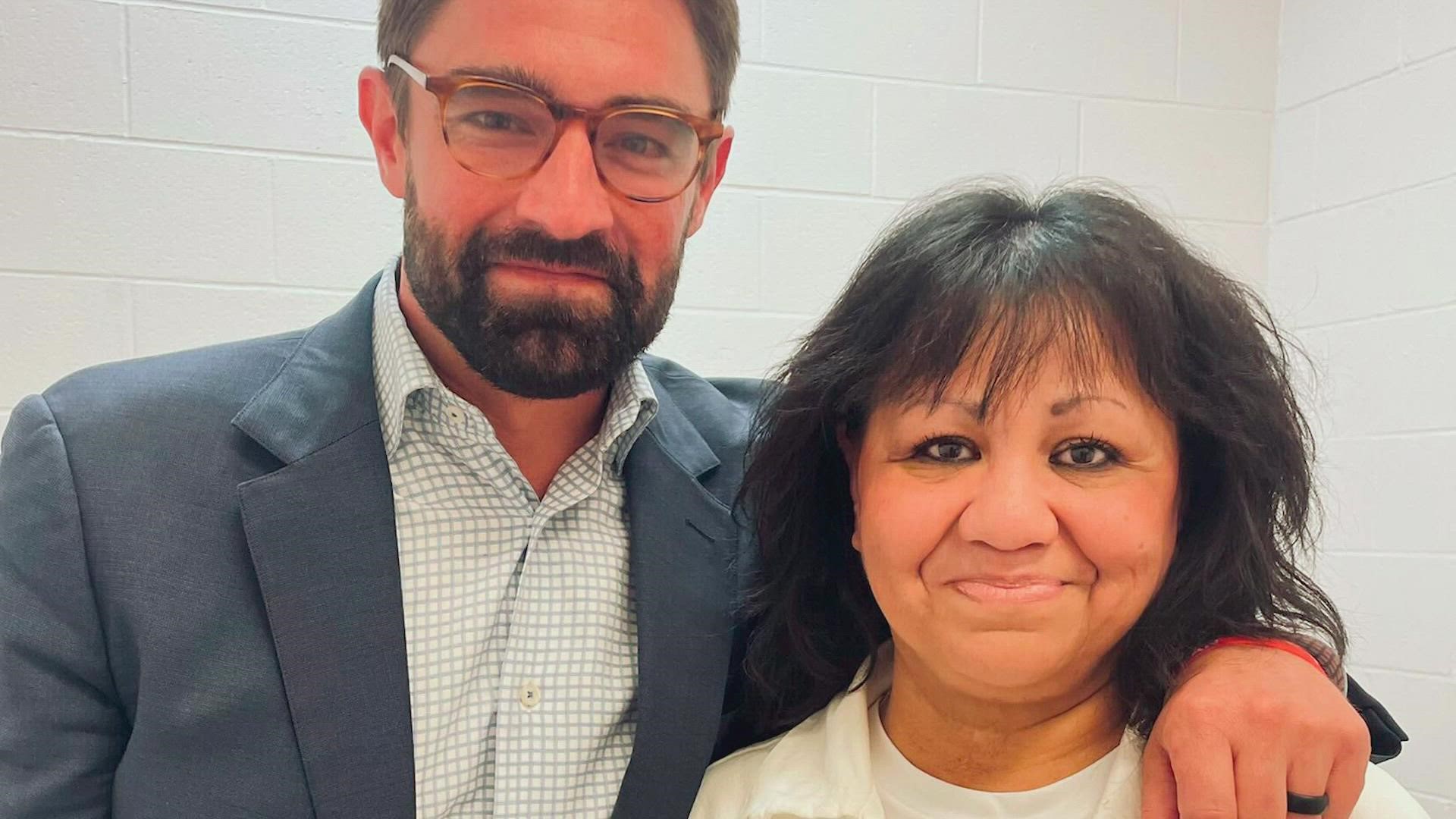
What continues to amaze me is the support she is getting from tough-on-crime conservatives in the Legislature, led by Plano Republican state Rep. Jeff Leach, who had the honor of telling Lucio this week about the CCA decision to forestall her execution. Lucio’s reaction was to sob uncontrollably.

Leach is a former member of the ultra-conservative Texas Freedom Caucus; he resigned from the caucus a while ago, citing some issues with the hardline positions it was taking. He still is a conservative, but he appears to be a man with an actual heart.

I applaud the leadership he is taking in fighting for Melissa Lucio.

I happen to oppose capital punishment, but you likely know that already. I also oppose the partisan divide that too often splits politicians along party lines even when the issue compels them to seek common ground.

One of those issues is seeking justice for a prison inmate who might have been convicted wrongly.

johnkanelis_92@hotmail.com

Panhandle to get new Senate face

Get ready, my old friends in the Texas Panhandle. You are about to get a new brand of legislative representation in the Texas Senate. It will come in the form of a state senator who represents your interests but who lives way down yonder in Midland, more than 200 miles away.

Kevin Sparks will be the new state senator from District 31. He won the Republican Party primary election this past week.

I don’t much at all about Sparks, other than I believe he was recruited by Empower Texans — a far right political action organization out of Midland — to run for the seat vacated by longtime Republican Sen. Kel Seliger of Amarillo. Empower Texans is a toxic organization and I detest what it stands for and what it has done to try to undermine the political leadership in the Panhandle, where my wife and I lived for 23 years before moving away in 2019.

They have their guy now slated to take his seat in District 31.

My hope is that Sparks does as much to represent the entire district, which runs from the Permian Basin all the way to the Panhandle’s border with Oklahoma. Seliger was as fluent in Permian Basin-speak as he was in Panhandle-speak when he served in the Senate. So was his Republican predecessor, the late Teel Bivins, also of Amarillo, who served the region from 1989 until 2004, when he left to become U.S. ambassador to Sweden. The same can be said of Bivins’s predecessor, Amarillo Democrat Bill Sarpalius.

The Panhandle has essentially owned that Senate seat since the proverbial Flood. Thanks to the GOP’s efforts to reconfigure the state’s legislative boundaries, the district lost several Panhandle counties and added some more down south, thus shoring up the strength of whoever wanted to run for the seat from the Permian Basin region.

There was a time when we could call our state senator or run into him at a local restaurant. I lost count of the times I would be sharing a meal with Kel Seliger in Amarillo and his attention was diverted to whomever walked by and wanted to chat. I doubt that will be the case with Sen. Sparks dining anywhere in Amarillo or Canyon.

That makes it imperative that he elevate his presence in the “other end” of the sprawling Senate district, which now happens to be the Panhandle, which until January 2023 had one of its own representing its interests in the Texas Senate. That task now will fall to an outsider.

Don’t let ’em down up north, Sen.-to-be Sparks.

johnkanelis_92@hotmail.com

City fighting past failures

Princeton (Texas) Mayor Brianna Chacon has said that her belief in the city’s “changing demographics” will help the city forge a new governing path when it presents a home-rule charter to voters later this year.

I hope she is correct. A citizens’ panel formed to craft a home-rule document might be fighting the specter of past failures as it cobbles the draft charter together over the coming weeks.

The specter lies in the belief among some foes of home rule that the city can annex property at will. Wrong! It cannot do anything of the sort without the expressed approval of the property owners of the property being considered for annexation.

The 2017 Texas Legislature took the annexation matter off the table when it enacted a law requiring property owners’ permission. Thus, the issue that doomed previous efforts to approve a home-rule charter in Princeton has been shoved aside. Previous efforts (and there have been four of them) to oppose home rule rested on the objections of residents living in the “extraterritorial jurisdiction” just outside the city limits. They won the argument and the measure failed in previous elections.

The political action committee that will take shape when the document is approved and sent to the ballot will need to ensure that annexation is a non-starter.

Princeton currently is governed as a “general law” city, requiring it to follow rules set by state statute. Home rule gives cities greater latitude and freedom to make decisions affecting their communities. Make no mistake that the city’s “demographics” are changing dramatically, as it is one of Texas’s fast-growing cities. Its population virtually tripled from 2010 to 2020; Princeton is now home to more than 17,000 residents … and that number is being eclipsed almost daily as more residents set up homes.

Yes, I happen to favor home rule for Princeton and my hope is that voters approve it when they get the chance to vote on the matter. I also am hoping the PAC that will emerge to campaign for its approval makes the case in the clearest language possible that the city cannot annex property at will.

Pay attention … are we clear?

johnkanelis_92@hotmail.com

You tell ’em, Kel

Kel Seliger’s status as a lame-duck Texas state senator appears to have given the veteran Republican legislator some gumption as he has delivered a harsh reality to the state’s efforts at redrawing its legislative districts.

Seliger, who hails from Amarillo, said in a court deposition that the GOP-controlled Legislature broke the law in redrawing the boundaries in Senate District 10. “Having participated in the 2011 and 2013 Senate Select Redistricting Committee proceedings and having read the prior federal court decision regarding SD10, it was obvious to me that the renewed effort to dismantle SD 10 violated the Voting Rights Act and the U.S. Constitution,” Seliger said in his remarks to the court.

According to the Texas Tribune: Under the map passed by the Republican-controlled Legislature, some Black and Hispanic populations previously in District 10 were split into two other districts with majority-white electorates. The Black and Hispanic voters who remain in the newly drawn District 10, in urban areas of south Fort Worth, were lumped in with several rural, mostly white counties to the south and west that drive up the district’s population of white eligible voters while diminishing the number of voters of color.

GOP Sen. Kel Seliger says Texas violated federal voting rights law | The Texas Tribune

Well … isn’t that what many critics of the Legislature have alleged against Republicans who control the body?

Now we have one of the Legislature’s top GOP senators saying that he agrees with the critics. Is that what I am reading? I believe that’s the case.

To which I say only that it would have been good to hear such candor coming when Sen. Seliger was still in the thick of the fight. As it stands now, he is on the sidelines and is heading for the exit at the end of the year.

I say this as a friend of the senator. I consider him to have been an effective representative for the Texas Panhandle, where I lived for more than two decades. Seliger and I go back a while and I have long admired him for his independent streak and his pluck while serving in the Senate.

I mean, any guy who can piss off fellow Republican Lt. Gov. Dan Patrick, as Seliger has done, is OK in my book.

johnkanelis_92@hotmail.com

Legislative turnover on tap

Personnel turnover either freshens governing bodies or it poisons them, depending on who succeeds the members who are exiting the stage.

The Texas Legislature is on the cusp of seeing an astonishing turnover of veteran senators and House members. At last count, 28 House members are either retiring from public life or are surrendering their seats to seek another public office. Five Texas senators aren’t seeking re-election. As the story by Gromer Jeffers Jr. points out in the Tuesday Dallas Morning News, several “moderate Republicans” are among those who are leaving the Senate. They include, Jeffers wrote, my old pal Kel Seliger of Amarillo and Larry Taylor of Friendswood, as well as Jane Nelson of Flower Mound, who was described in the Dallas Morning News story as the “fifth-most centrist Republican in the Senate.”

Who will replace these individuals? Given the huge partisan divide in both legislative chambers and the radical elements in both major parties, it doesn’t necessarily bode well for the future of good government.

Retiring state Rep. John Turner, a moderate Dallas Democrat, said the significant turnover in the Legislature “just heightens the polarization.” He talked about Republicans becoming more conservative and Democrats “losing some of their moderates” and how the vacancies could be filled by those with more radical agendas.

Will there be a bipartisan battle between culture warriors as a result? Time will tell. Suffice to say that we remain concerned that the 2023 Texas Legislature is going to become an even more divided and divisive body than its 2021 version. That version was quite divided, indeed. Let us recall how House Democrats fled the state to prevent House Republicans from enacting a controversial bill that sought to restrict voter access for many Texans. Democrats called it “voter suppression,” but Republicans called it “voter protection” against possible future fraud.

Redistricting has played a part in the turnover. Some legislators are leaving because their colleagues created legislative districts that favored candidates from the other party. Some lawmakers are seeking higher office. Democratic state Rep. Michelle Beckley of Carrollton, for example, is now running for her party’s nomination for lieutenant governor; her House district now favors the Republican candidate. State Rep. Scott Sanford of McKinney is retiring for the same reason, as his newly redrawn Collin County district favors the Democratic Party candidate.

Legislative turnover isn’t necessarily a good or bad thing by itself. If the newly constituted Legislature takes over in 2023 with the state’s best interests in mind, then we well might benefit from an electoral cleansing. If we welcome more rigid ideologues into the Legislature, then we are in for a rough ride.

johnkanelis_92@hotmail.com

Why can’t they fix this electrical grid?

The Texas Tribune has written a story with a frightening lead paragraph, which states …

Electricity outages in Texas could occur this winter if the state experiences a cold snap that forces many power plants offline at the same time as demand for power is high, according to an analysis by the Electric Reliability Council of Texas. The outages could occur despite better preparations by power plants to operate in cold weather.

What the hell? I thought the Texas Legislature was going to repair those problems, that it was going to “invest” lots of money to ensure that ERCOT’s electrical system was winterized sufficiently to protect us against the misery that befell us this past February.

I am one Texas resident — who I am sure speaks for millions of others — who does not want to endure what we went through early this year. Our homes went dark. Many of our water pipes froze. Our water supply went down for a time.

ERCOT estimates show Texas grid vulnerable this winter, despite preparations | The Texas Tribune

I am not going to predict we’ll have sub-zero temperatures again this winter. I saw a forecast that suggested the La Nina current is going to create a warmer, drier winter for Texas in 2021-22. I hope it’s true.

If it isn’t, then that Legislature of ours ought to have hell to pay if ERCOT’s grid shuts down.

johnkanelis_92@hotmail.com