Tag Archives: US Constitution

Democrats conspiring to nominate Trump?

ted-cruz-sexy-eyes

U.S. Sen. Ted Cruz might be on to something.

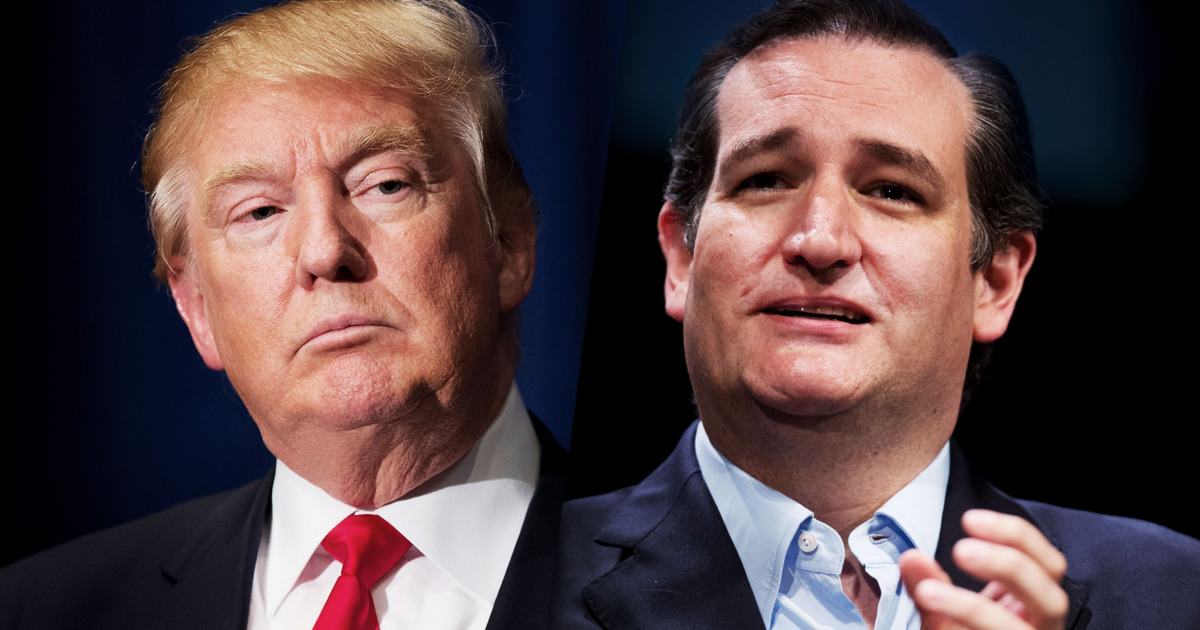
He seems to believe that Democrats are conspiring to ensure that Donald J. Trump is the Republican presidential nominee. Thus, it’s the Democrats who are floating the Cruz-ain’t-eligible-to-run notion . . . allegedly.

Trump’s been making hay of late over the fact that Cruz, R-Texas, was born in Canada. Therefore, the idea goes, he isn’t eligible to run for the presidency, let alone actually occupy the office.

I happen to think Trump’s argument is more basic than that. He’s delusional and, I believe, he’s so much of an entertainer that he’d say anything to get Americans to talk about him.

My own belief is that Cruz’s citizenship was settled the moment he was born to an American mother. End of argument, as far as I’m concerned.

However, pundits keep raising the Cruz citizenship issue simply because it comes from Trump, who for the moment is the GOP frontrunner. Trump’s standing at the top of the polls gives his words a certain gravitas.

As for whether Democrats are working in cahoots with Trump, though, seems to suggest a certain fear of running against, say, Ted Cruz.

I tend to think Democrats would relish the idea of running against Cruz.

Having declared my disbelief in a Democrat-Trump co-conspiracy, absolutely nothing — not a damn thing — would surprise me at this point.

This campaign has taken so many twists and turns I’m getting motion sickness watching it unfold.


Conservatives dig in against Obama appointments

90

U.S. Senate Republicans had better hope that the nine men and women who comprise the U.S. Supreme Court are still on the job when President Obama checks out of the White House.

Politico is reporting that conservative lawmakers are set to all but block future presidential appointments for the remainder of Obama’s term.

Why am I not surprised?

They’ve been holding up presidential appointments all along, so it doesn’t come as any shock that they’d lay down that marker.

I keep coming back to the highest court in the land.

The president already has selected two members of that court — Justices Sonya Sotomayor and Elena Kagan. It still has a narrow conservative majority, but some of the conservatives on the court — as well as some of the liberals — are getting a bit long in the tooth. Don’t misunderstand me here. I do not wish ill on any of them.

But suppose the president must make an appointment . . .

That’s just a single example of how the legislative branch can gum up the process that allows the president to make these critical selections.

I totally understand that the Constitution gives the Senate the power to “consent” to such appointments. I honor that provision. However, as one who long has stood behind the principle of presidential prerogative, I believe the “advise and consent” constitutional clause can be abused.

If Senate conservatives are merely intending to stick it in the president’s ear just because they can, well, that’s not in keeping with the concept of good government . . .  in my humble view.

Irony abounds in Cruz citizenship debate

ted-cruz-sexy-eyes

There’s no denying the irony in this growing discussion over whether U.S. Sen. Ted Cruz is constitutionally qualified to run for president of the United States.

To my mind — and to many others who know a whole lot more about constitutional law than I do — there should be no question about the Republican presidential candidate’s eligibility.

He is eligible to run. Period. End of discussion. The Constitution spells it out. He is a “natural-born citizen” whose mother is an American; thus, he is granted U.S. citizenship by birthright, even though he was born in Canada.

The irony?

Well, this issue came up regarding Barack Obama, except that some individuals didn’t believe what Obama had said, which is that he was born in Hawaii. They kept harping on his alleged birth in Kenya. So, what’s the big deal? The president’s mother also was an American citizen; his father was Kenyan.

If either Obama or Cruz — or both of them, for that matter — had been born on Mars, their citizenship shouldn’t be an issue.

The other irony is that Cruz is relying on the opinion of courts comprising unelected federal judges. He calls this matter a case of “settled law.” Strange, actually, that he would say such a thing, given the disdain he expressed for the federal judiciary after the Supreme Court ruled in 2015 that gay marriage is now legal throughout the country, that the Constitution’s equal protection clause in the 14th Amendment applied to gay citizens seeking to marry people of the same gender.

I happen to believe that Cruz is right about the citizenship issue.

It won’t go away as long as Donald J. Trump continues to raise it along the GOP presidential campaign trail. Other Republicans now are beginning to echo Trump’s questioning of Cruz’s eligibility — although this concern seems born more out of Cruz’s rising poll numbers than of actual doubt over whether he’s a qualified U.S. citizen seeking the highest office in the land.

The volume is rising among those who are seeking to stall the Texas Republican’s campaign momentum.

It’s entertaining, to be sure, to watch the irony build on itself as this (non)-issue continues to fester.

I’m wondering: How does President Obama feel about it?

‘Five unelected lawyers’ have lots of power

Supreme_Court_US_2010

I saw a news clip last night that, frankly, stunned me.

I’d seen it before, but had forgotten how ill-informed the person featured in it seemed to be when he made a particular statement.

Sen. Ted Cruz is a smart guy. Harvard Law grad. Former law clerk to the current Supreme Court chief justice. Solicitor general for Texas.

He’s running for the Republican nomination of president of the United States.

But when the Supreme Court voted 5-4 this past year to legalize gay marriage throughout the country, Cruz said it was wrong for “five unelected lawyers” make such profound decisions. He sought to make the case, it appears to me, that the federal judicial system — as established by the founders of this country — was fatally flawed.

See Cruz’s statement.

I do not intend to lecture this bright young lawyer about the Constitution, but I do want to make this point.

The nation’s government framework gives the Supreme Court enormous power. That’s why making appointments to that court is arguably the most important decision a president ever makes during his time in office. Cruz knows that . . . I’m sure.

When the court rules on the constitutionality of issues, its word is final. That’s how the framers set it up. They entrusted the highest court in the land to make these decisions without qualification. Yes, some of these decisions have been reversed over time. By and large they’ve been overturned with good reason.

However, one shouldn’t trivialize these court rulings as being the mere opinions of “five unelected lawyers.” They’ve been given a huge responsibility by the very government for which Sen. Cruz, himself, works as a legislator.

The court has made decisions over the years with which I disagree. However, I honor and accept those decisions as part of the constitutional process.

At least, though, the nation’s Supreme Court comprises nine lawyers, individuals who’ve studied the law and know it pretty well. The founders didn’t require justices on that court to be lawyers in the first place.

I trust Sen. Cruz knows that to be the case as well.


Gay marriage . . . it’s back

moore

Let’s see if we can clarify something.

The U.S. Supreme Court comprises nine individuals who are charged with interpreting the constitutionality of laws. They decide whether certain laws are in keeping with the nation’s founding governing document. The justices are diverse in their thinking. Their judicial philosophies cover the entire length of the judicial/political spectrum.

The highest court in the land ruled not long ago that people are entitled under the equal protection clause of the Constitution to marry others of the same sex. The court, therefore, legalized gay marriage in all 50 states.

That settles it, right? The nation’s highest court ruled that gay people are entitled to marry whoever they love with no regard to sexual orientation.

Not so fast. An Alabama state supreme court chief justice — Roy Moore — has told probate judges in his state that they shouldn’t issue marriage licenses to gay couples. Why? Chief Justice Moore said the nation’s highest court’s ruling is inconsistent with Alabama court rulings on the subject.

OK, then. Which court’s rulings carry more weight? The U.S. Supreme Court, which is where the judicial buck stops? That court’s rulings are supposed to be final, definitive. Or does a state court have the authority to overrule the nation’s highest court?

Chief Justice Moore is not new to notoriety. He once thrust himself into the limelight over whether to display the Ten Commandments on public property.

This time, he has spoken out of turn . . . in my humble view.

The U.S. Supreme Court has settled the issue about gay marriage. The Constitution, a majority of justices ruled, grants all Americans the same protection under the law. It doesn’t single out heterosexual people, granting protections to them and not to homosexuals.

Can we simply just allow the nation’s highest judicial body’s ruling stand?


Law-abiding gun owners can relax; your guns are safe

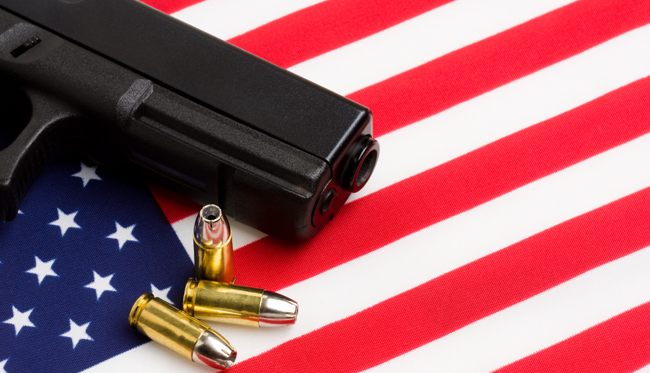
gun over american flag

I’m trying to wrap my mind around this notion.

The Second Amendment guarantees the right of Americans to “keep and bear arms.” It doesn’t say so explicitly, but my strong hunch is that the men who wrote that amendment intended for it to apply to law-abiding Americans.

Now we hear the president of the United States suggesting that we need to tighten laws in an effort to ensure greater gun safety.

He said clearly and unequivocally: We aren’t going to confiscate the guns of law-abiding citizens who have guns for the right reasons . . . to hunt or to shoot at targets.

The target — if you’ll pardon the intentional pun — are the criminals who are able to purchase guns through loopholes in current state and federal law.

Thus, President Obama has acted.

Measures outlined.

I’m certain I heard him say he believes in the Second Amendment. He noted that it’s written “on paper.” It’s on the record. His support of the amendment will stand forever.

He noted quite correctly that we register our cars. Why can’t we register our guns? he asked. If the law-abiding folks want to own guns, they are able to do so. No problem. No issue here.

Obama said he wants those who sell guns to go through extended background checks. He wants to hire more agents for the Bureau of Alcohol, Tobacco and Firearms. He wants Congress to authorize more money for mental health care.

Does any of that suggest that the president is going to dispatch storm troopers across the land to take away the guns of those who own them, who use them properly, who want to defend themselves against those who would do them harm?

I do not believe that will happen.

Ever.


Yes, Mr. Justice, ‘religious neutrality’ is in the Constitution

No-religious-test-of-office-320x1241

I am about to do something that gives me the heebie-jeebies. I am going to challenge a premise by one of the nine people who serve on the U.S. Supreme Court.

Justice Antonin Scalia told a group of high school students this weekend in New Orleans that the U.S. Constitution does not compel “religious neutrality.”

Well, Mr. Justice, I believe it does.

Scalia, a deeply religious Roman Catholic, told the students that the Constitution prohibits government from adhering to a specific religion, but it does not compel government to ban references to religion in general.

He said it’s all right for government officials to invoke God in public.

Sure it is. Presidents of both parties have been ending public speeches for as long as I can remember — and that goes back a ways — with the words ” . . .  and may God bless the United States of America.”

But I have been reading the Constitution since I was old enough to read anything and I can find precisely two uses of the word “religion” or “religious” in that document. It’s in Article VI, where it says there shall be “no religious test” required of any individual seeking any public office at any level in the United States of America; and it’s also in the very First Amendment, where it says Congress “shall make no law respecting an establishment of religion or prohibiting the free exercise thereof . . . ”

The rest of it is secular by design.

I agree with Justice Scalia that “God has been good to us” as a nation. But he seems to be getting a bit ahead of himself when he implies that “religious neutrality” seems intended to deprive Americans the right — or the desire — to worship as they see fit.

The individuals who founded this nation knew exactly what they were doing when they created the Constitution. They meant for it to be free of religious dogma. Yes, some have taken that intent too far by suggesting that we should remove “In God We Trust” from courtroom walls or from our currency.

However, I happen to quite comfortable with “religious neutrality” as it relates to our government.

I’m still free to go to church and pray to God. I will do so again today.


Hey, didn’t JFK settle this religious thing already?

deadstate-Ben-Carson

I’ve always thought — or hoped, at least — that John F. Kennedy’s 1960 speech in Houston settled the notion that a candidate’s religion should have no bearing on whether he could serve as president of the United States.

He told some Protestant clergy that the Vatican would not dictate to the Catholic candidate how he should govern, that he would swear to be faithful only to the U.S. Constitution.

Well, silly me. The issue is coming up again. The target this time is Dr. Ben Carson, the famed neurosurgeon whose faith is of the Seventh-day Adventist variety.

Donald Trump raised the issue the other day in typical tactless Trump fashion. Now comes a well-known lefty commentator, David Corn, editor of Mother Jones, to wonder aloud whether Carson’s faith would inform the way he would govern should he “take control of the government.”

This is a ridiculous debate.

First of all, presidents don’t control the government. We have this notion that power is spread among two other governmental branches — the courts and the Congress.

The Constitution says there should be “no religious test” for candidates seeking any public office. That includes the presidency.

Yes, Carson has brought up his own faith. He’s talked about how his faith would guide him. He hasn’t said he would toss the Constitution aside any more than then-Sen. Kennedy said he would more than five decades ago.

Corn is playing to voters’ fears when he says of Carson: “Now, he is running on the basis that he has faith. And I think it’s going to open, you know, a big can here. Because, you know, he does come from a church that believes in end times, prophesies, and he’s said he believes in the church’s teachings.”

A simple declarative question is in order: Dr. Carson, do you vow to uphold the law under the Constitution of the United States?

I believe he’s already pledged to do so.


More guns means less mayhem?

guns

The processing of the latest gun-violence massacre is continuing across the nation — perhaps even the world.

Nine people were gunned down in Roseburg, Ore., this past week and we’ve heard the mantra from gun-owner-rights advocates: If only we could eliminate these “gun free zones” and allow more guns out there …

The idea being promoted — and I haven’t yet heard from the National Rifle Association on this — is that more guns in places such as Umpqua Community College, where the Roseburg massacre occurred, could have stopped the madman.

NRA executive vice president Wayne LaPierre said infamously after the Newtown, Conn., bloodbath that killed 20 first graders and six teachers, that the “only way to stop a bad guy with a gun is with a good guy with a gun.”

I’m not in favor of disarming American citizens. I believe in the Constitution and the Second Amendment, although for the life of me I still have trouble deciphering its literal meaning: “A well-regulated Militia, being necessary to the security of a free State, the right of the people to keep and bear Arms, shall not be infringed.”

The question has been posed: When did “well-regulated Militia” get translated to meaning the general population? Still, the courts have ruled time and again that the Constitution guarantees firearm ownership to all citizens. I’m OK with that.

But I am not OK with the idea that more guns means less violence, less mayhem, less bloodshed, fewer deaths and injuries.

Surely there can be a way to tighten regulations gun ownership in a manner that does not water down the Second Amendment, one of the nation’s Bill of Rights.

If only our elected representatives could muster the courage to face down the powerful political interests that simply will won’t allow it.


Terror vs. gun deaths

terrorism12115

Here’s an interesting statistic that today drew some attention on one of the many Sunday morning TV news/talk shows.

In the past decade, 153,144 people have died in this country from gun violence; 3,046 individuals have died at the hands of terrorists during that same period.

This came from Chuck Todd, moderator of “Meet the Press,” citing the stats provided by the Centers for Disease Control and Prevention.

He asked Rich Lowry, editor of the National Review, about whether the country needs to do as much to combat gun violence as it has done to battle terrorism.

Lowry gave a reasonable and intelligent answer, which was that government’s fundamental role is to protect citizens against foreign enemies; he added that any gun-related action “on the margins” won’t do anything and that more comprehensive action runs the risk of infringing on the Constitution’s Second Amendment right to “keep and bear arms.”

Meet the Press tackles gun violence

The discussion was fascinating.

Still, I’m a bit baffled by the fact that with such a huge disparity between gun-violence deaths and terror-related deaths, we still have been unable — or unwilling — to deploy government’s machinery to impose additional restrictions on gun ownership that does not infringe on citizens’ right to own a firearm.

After all, the government created a whole new Cabinet-level agency — the Department of Homeland Security — immediately after the 9/11 terrorist attacks.

Still, madmen take guns into public places and massacre thousands more innocent victims … and we do nothing?