Tag Archives: Donald Trump

Arpaio pardon no ‘profile in courage’

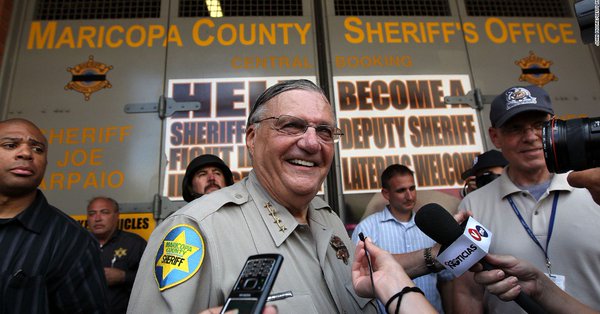
Donald John Trump Sr.’s pardon of former “Sheriff Joe” Arpaio is likely to haunt the president well beyond the foreseeable future.

Trump this week pardoned the bad-ass former Maricopa County (Ariz.) sheriff who had been convicted of contempt of court; Arpaio refused to obey a federal court order to cease rounding up people he suspected of being illegal immigrants.

Arpaio disobeyed a lawful federal order, from a duly sworn federal judge. For that, the president pardoned him. His pardon speaks to Trump’s penchant for appealing to the nation’s divisiveness.

I doubt seriously that this president is going to be honored — ever! — for this callous decision.

With that … I want to look back briefly at another presidential pardon that at the time drew enormous political push back. In the four-plus decades since, though, it has been seen as a courageous act by a president seeking to bind the wounds of a nation.

President Richard Nixon resigned his office on Aug. 9, 1974. His successor, Gerald Ford, took the oath and declared that “our long national nightmare is over.”

President Ford wasn’t quite right. A month later, the new president issued the pardon that most assuredly cost him election as president in 1976.

Many years passed and President Ford’s stature grew slowly over time. Americans who were critical of the decision to pardon President Nixon began to think differently about it. I was among those who went through a change of heart.

In 2001, the John F. Kennedy Library did something quite extraordinary. It gave President Ford its annual Profile in Courage Award, honoring the president for the courage he showed in issuing the pardon, knowing the consequences it would have, but looking out only for the national good.

As the New York Times reported at the time: “Senator Edward M. Kennedy of Massachusetts told the audience at the John F. Kennedy Library: ‘I was one of those who spoke out against his action then. But time has a way of clarifying past events, and now we see that President Ford was right. His courage and dedication to our country made it possible for us to begin the process of healing and put the tragedy of Watergate behind us.”’

And this, also from the Times: “Mr. Ford said: ‘President Kennedy understood that courage is not something to be gauged in a poll or located in a focus group. No adviser can spin it. No historian can backdate it. For, in the age-old contest between popularity and principle, only those willing to lose for their convictions are deserving of posterity’s approval.”’

Time has allowed us to re-examine why President Ford acted as he did. Time also might provide us the same opportunity to take a fresh look at what Donald Trump has just done.

Then again, I doubt it. Seriously.

GOP taken over by ‘this hateful man’

We haven’t heard much from John Danforth since he left the U.S. Senate.

The highly respected former lawmaker — who also happens to be an Episcopal minister — has weighed in heavily against the president of the United States.

Sen. Danforth is urging the Republican Party — to which he is a member — to toss aside the principles espoused by Donald John Trump Sr., who he described as “this hateful man” who promotes division and disunity in the nation he governs.

One must accept that political figures from opposing parties are going to criticize those in high office. Danforth’s critique, which he offered in an essay published in the Washington Post, is another of a stunning array of criticism coming from politicians within the president’s own party.

It makes me ponder whether Trump actually is seen by Republicans as one of their own. Or is he a major-league anomaly, a political freak who elected president by a series of flukes that no one saw coming?

Danforth has laid down an important marker for his fellow Republicans. He writes of Trump: “He stands in opposition to the founding principle of our party — that of a united country.”

Read Danforth’s essay here.

Look back just a few days to the rhetoric he has spouted. He talked of “many sides” being responsible for the violence in Charlottesville. He doubled down a few days later by declaring that “both sides” were at fault and that “both sides” had “good people” clashing in the Virginia community, which brings to mind the question: What kind of “good person” marches with Klansmen, Nazis and white supremacists?

Such language from the president drives huge wedges between groups of Americans, which is what I believe Sen. Danforth seeks to underscore in his essay.

“For the sake of our party and our nation, we Republicans must disassociate ourselves from Trump by expressing our opposition to his divisive tactics and by clearly and strongly insisting that he does not represent what it means to be a Republican,” Danforth writes.
Nor does he “represent” anything about the presidency of the greatest nation on Earth.

Gen. Kelly leaves giant footprint

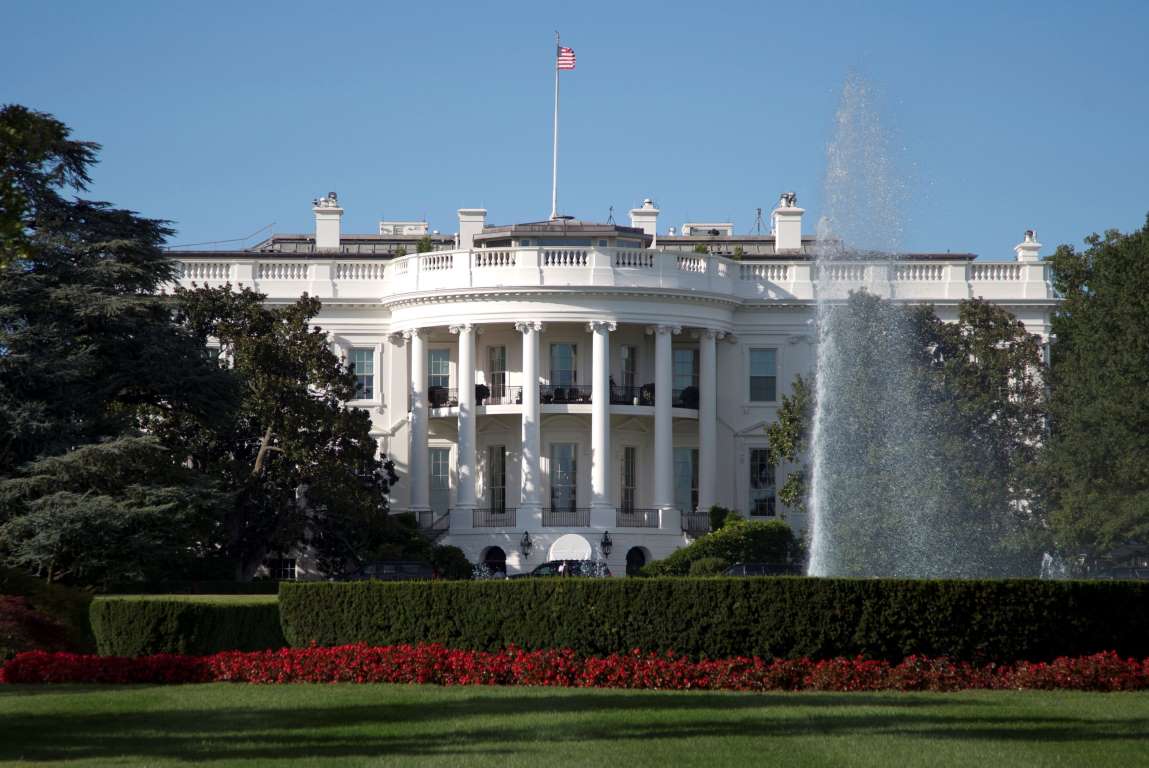
Sebastian Gorka has been shown the White House door.

Who is this clown, ‘er , West Wing aide? He is, or was, one of Donald Trump’s anti-globalist whisperers. He’s a Hungarian-born guy who was hired by the president to be an “expert” on terrorism.

It turns out Gorka’s academic and foreign policy credentials aren’t nearly as sparkling as he let on. It also turns out that the guy didn’t actually have any duties. He just sort of … was just there.

White House chief of staff John Kelly, thus, apparently decided he’d darkened the White House door enough. So he kicked Gorka to the curb. Good deal.

Let’s see. Since Kelly took over as chief of staff from Reince Priebus he’s managed to:

Kick communications director Anthony “Mooch” Scaramucci out of the White House; usher uber-anti globalist Stephen K. Bannon out of the West Wing; and now it’s Gorka who’s gone.

All that’s left is to finish cleaning the White House of the some of the other radicals who are perched throughout the inner circle; policy adviser/speechwriter Stephen Miller comes to mind immediately.

Gen. Kelly, of course, cannot control the president’s impulses, which run wild every morning when he awakes and grabs his cell phone to start firing off those tweets.

Sebastian Gorka’s departure, though, is a welcome step as the retired Marine Corps general seeks to establish some semblance of sanity within the White House.

Unity? This is how Trump defines the term?

It’s been semi-official for some time, but I feel the need to perhaps restate the obvious.

Donald John Trump Sr. views the world from a parallel universe.

He keeps yapping about seeking “unity.” The president keeps telling us he’ll serve all the people. He keeps making promises to bind the wounds that have divided us.

Then he pardons one of U.S. law enforcement’s most controversial, polarizing and divisive figures. Yep, that would be former “Sheriff Joe” Arpaio, the ex-sheriff of Maricopa County, Ariz.

Arpaio was convicted of a contempt of court charge. A federal judge ordered Arpaio to cease his roundup of illegal immigrants. The sheriff ignored the lawful order. Trump today issued the pardon while saluting Arpaio’s years as a lawman.

Arpaio’s conduct has been a graphic demonstration of racial profiling. He has sought out Latinos, arrested them and detained them simply because they look as though they’re here illegally.

The presidential pardon is just about as divisive a decision as the president could have made. He’s got his “base” of support on one side and the rest of us on the other. The “base” applauds the pardon; the rest of us are jeering it.

Unity, anyone?

Oh, and then he issued the formal order banning transgender troops from enlisting in — or serving in — the armed forces of this country. The men and women who call themselves “transgender” have served with honor, and some with distinction and heroism. To see the president order them tossed out is repugnant on its face.

How’s that for unity?

Donald Trump’s pledge to bring the nation together is now looking more like the empty gesture many of us have believed it was when first heard it in real time. He doesn’t understand how to do such a thing. Trump is not wired emotionally to carry out that serious promise.

His idiotic rant at that Phoenix rally earlier this week seemed to set the table nicely for what we are witnessing.

To think that he has done all this against the backdrop of what occurred two weekends ago in Charlottesville, Va. Go … figure.

Is any of that surprising in a man with zero public service experience — or interest — prior to his being elected to the nation’s highest office? It might be to some Americans. Not to me — or to millions of other Americans.

Oh, and then the transgender ban takes hold

The president is still looking for a problem to apply in need of a solution.

Donald Trump’s “solution” is to ban transgender individuals from serving in the U.S. military. The problem? Someone will have to explain that one to me, because I don’t believe a problem exists.

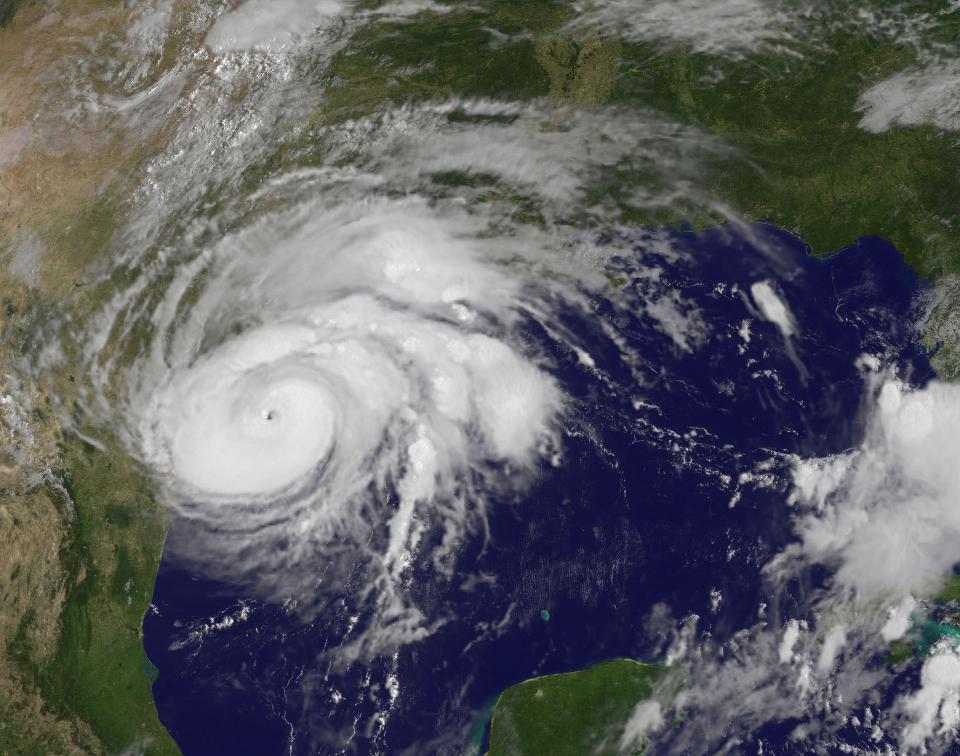
On a day when Texas is facing a catastrophic hurricane, the president pardons a highly controversial former Arizona sheriff, Joe Arpaio, who was convicted of disobeying a federal judge’s lawful order.

He also issued a directive to institute a transgender ban for the armed forces.

Holy moly, Mr. President!

The transgender ban — along with the Arpaio pardon — are initiatives aimed at appealing to the 35 percent of Americans who still think Trump is doing a good job as president. The rest of us? Trump doesn’t care what we think. Nor does he care that the transgender ban effectively removes a patriotic cadre of Americans who are dedicated to serving in the nation’s armed forces — something, I feel compelled to note with emphasis, that Trump never did.

When the president first announced his intention to issue the ban on transgender Americans serving in the military, he said something about the supposedly large medical costs associated with transgender Americans. It was noted at the time that the military spends many times more on Viagra prescriptions than it does on the transgender issue.

The president once more has disgraced himself and his high office.

Trump ratchets up his disrespect for federal judiciary

Just when you thought Donald Trump couldn’t disrespect a branch of government with any more emphasis … he does exactly that very thing.

The president today has pardoned former Maricopa County (Ariz.) Sheriff Joe Arpaio, who was convicted of disobeying a direct order from a federal judge.

The judge had ordered Arpaio to stop rounding up illegal immigrants en masse, citing potential civil rights violations. Arpaio then decided he would ignore the judge’s lawful order.

Arpaio went on trial and he was convicted.

The president today intervened, issuing a presidential pardon — which is the president’s constitutional right. The pardon is irrevocable.

It’s also a gigantic mistake.

Arpaio, who was defeated for re-election in 2016, is an enormously polarizing figure. He’s long been seen by those on the right and the far right as a champion for their cause against illegal immigration. He has acted roughly and brusquely with those he has caught trying to sneak into the country. He has made no apology for the way he has handled that part of his job.

So he stuck it in the eye of the federal judiciary by refusing to abide by a court order. No worries, according to Trump — who has himself disrespected federal judges who have ruled against him on assorted judicial matters.

Trump vowed to be a “law and order president.” What the president has done with this pardon, though, is reaffirm his belief that judges’ orders don’t matter.

If I might borrow a quote from one of the president’s many tweets.

Sad.

How will Trump respond to this latest disaster?

Donald John Trump made a serious mess of the presidential response to a manmade tragedy, the one that occurred Charlottesville, Va.

He now faces another task: responding to Mother Nature’s disaster that is going to take a dramatic toll on residents of the Texas Gulf Coast.

The president has yet to visit Charlottesville. In the interest of offering constructive advice to a man I’ve been bashing repeatedly since he declared his presidential candidacy, I want to offer this piece of advice. None of this is terribly original, but I offer it to provide some evidence that I’m not just a naysaying critic.

***

Mr. President, be sure you take time to visit the places that are certain to be devastated by the storm’s rage. Don’t wait too long. Don’t dawdle. Don’t let too much time pass before the pain subsides.

Hurricane Harvey is going to blast the living daylights out of the Gulf Coast, most likely near Corpus Christi. It’ll move inland and pour a lot of water on places such as San Antonio and Austin. Flood warnings are out. Texas emergency response officials are doing what they can to get people out of harm’s way.

But this, sir, is the moment for which you must be prepared.

Once the storm clears out of the coastal area, there will be plenty of pain. You’re going to see a lot of Americans picking up the pieces of their shattered lives. They want to know their president cares enough about them to venture into the rubble, to stand with them, to embrace them, to listen to their concerns and to share in their heartache.

You need to bring the entire weight of the federal government to bear in helping these communities repair themselves, That’s what presidents do in times of peril. And take my word for it, Mr. President, this hurricane is going to bring a lot of misery to many thousands of your fellow Americans.

You have to respond to this disaster, sir, in a demonstrable way.

Go to the storm site and tell Hurricane Harvey’s victims that you are with them — all the way!

Stand by, NOAA and FEMA … oh, wait!

Texas is about to get pummeled by the worst Gulf Coast hurricane in a dozen years. The state is mobilizing its substantial emergency management force now to prepare for the worst. Gov. Greg Abbott is firing off advisories left and right to warn residents to move as rapidly as possible out of Hurricane Harvey’s destructive path.

Meanwhile, at the federal level, we learn that two key agencies charged with coordinating the national response to these disasters are without administrative heads.

The Federal Emergency Management Administration and the National Oceanic and Atmospheric Administration do not have people sitting at the top of their respective chains of command.

Why the delay in finding FEMA and NOAA bosses? Oh, wait! It must be that the president of the United States has become fixated, consumed and swallowed up by the “Russia thing.” Or it might be that Donald John Trump Sr. has been too worried about planning for his campaign stops where he takes plenty of time to rail against his foes. Or perhaps it’s because the personnel management office that helps the president fill these spots has gotten zero guidance on who to place in these key emergency response posts.

I have no clue, quite obviously.

However, I do have plenty of worry to spread to our many friends who live along the huge swath of the Texas coast from Beaumont to Corpus Christi, where Hurricane Harvey is projected to make landfall early Saturday.

I will do so with this blog. I’ll express my worry for them. I also am going to send as many good wishes, good karma and positive thoughts their way as they prepare for the worst.

The good news, if you want to call it that, is that Texas emergency management officials have these response routines down pat. They’ve all been through hurricane preparedness and have had to enact their best-laid plans for previous events.

Let’s hope and pray they get this right — and that our fellow Texans along the coast heed the warnings they are receiving. Hurricane Harvey figures to bring a lot of destruction as it levels its Category 3-force wind and rain onto the Gulf Coast.

Let’s also hope — and pray — that any possible lack of federal coordination doesn’t impede the state’s emergency response.

Promises made often are promises broken

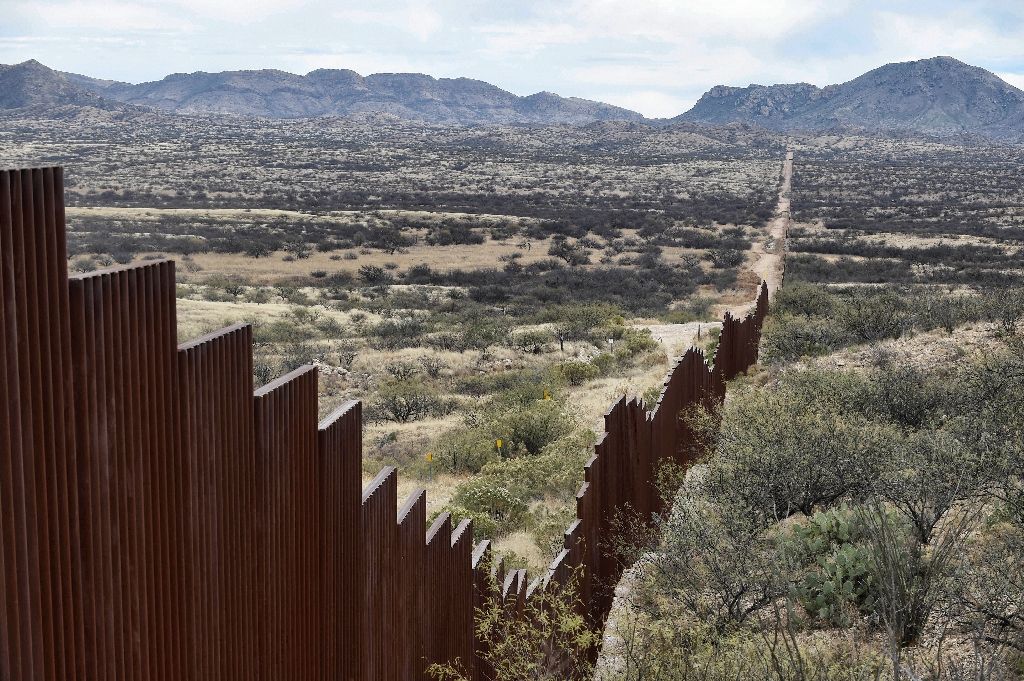
“I’ll build a big, beautiful wall … and Mexico is going to pay for it!”

I’m sure you remember when Donald John Trump Sr. made that proclamation. If you missed it the first, or even the second or third times, well, he kept saying all along the trail he followed right into the White House.

Mexico will foot the bill for a wall that the president of the United States wants to build. Check. Got it. Done deal.

Except that Mexico will do no such thing. Just ask them. Mexican President Enrique Pena Nieto has made as clear as he possibly can make it: In no way, in no fashion, is Mexico going to spend a single peso to pay for the wall.

What does Trump do now? Why, he turns to us — to you and me. We’re going to pay for it, he declares with a bravado equal to what he displayed while making that foolish campaign-trail pledge.

White House Press Secretary Sarah Huckabee Sanders keeps muttering that tiresome — and mostly false — contention that Trump “got elected” on the promise to build the wall. Wrong, young lady! He got elected by declaring that Mexico was going to pay for it.

The wall now is being used as a piece of political bait. The president is threatening to shut down the government if Congress refuses his demand for money — coming from our pockets, remember — to erect that 2,000-mile wall. Congressional leaders, though, have been burned before by attempts to shut down the government. They’ve done so in the past and have paid a price politically for it.

Trump has no direct knowledge of the political pain that comes with making stupid promises that he cannot keep.

I am all for increased border security. If we’re going to do more to deter illegal immigrants, then invest in better surveillance monitoring techniques; hire more Border Patrol officers and put them on duty along our southern frontier. I get that those who enter the country illegally are, by definition, lawbreakers.

Here’s another notion: How about enacting some comprehensive immigration reform legislation that makes it easier for those who want to come here in search of opportunity to do so legally?

But to build a wall? And then force a neighboring sovereign state to pony up the cash to pay for it? That was never in play. To now force U.S. taxpayers to carry that burden has become just another broken campaign promise.

McCain’s ‘no’ vote on ACA repeal appears to be personal

This is a brief tale of two politicians.

One of them is Donald J. Trump; the other is John S. McCain III. They have an intense dislike for each other. They’re both of the same political party; they’re Republicans.

Trump entered politics in June 2015 when he decided to run for president of the United States. It was his first political campaign. He’d never sought any other public office. He touted his wealth and his business acumen. He promised to “make America great again.”

He got elected president.

McCain has been in politics for a long time. He retired from the Navy and then was elected to the U.S. House from Arizona. Then he went on to the Senate. He’s been in public office for more than three decades. Oh, and he was a fighter pilot who in 1967 got shot down over Hanoi, North Vietnam. He was captured and held as a prisoner for the rest of the Vietnam War.

While running for president, Trump was asked about McCain’s service and whether he considered the former POW a “war hero.” Trump’s answer is still echoing. “He’s a war hero because he got captured,” Trump said. “I like people who aren’t captured.”

McCain heard that. I’m wondering: Do you suppose he took serious offense at that snarky response? Do you believe he felt disrespected, that the candidate denigrated his service? And how do you suppose McCain felt knowing that Trump avoided service in the war that took such a savage toll on his own body? McCain was injured badly when his plane was shot down. He suffered broken limbs that never were set properly by his captors. He endured torture, isolation, and intense verbal and emotional abuse.

The public service stories of these two men cannot be more different. One of them had zero public service experience until he assumed his high office; the other man spent years in the military before becoming a politician. He paid dearly for his military service.

The men’s political journeys crossed not long ago when McCain ended up voting “no” on a repeal of the Affordable Care Act, something that Trump wanted. He had banked on McCain to be on his side. McCain would have none of it.

McCain, by the way, had just been diagnosed as having a malignant brain tumor. He came back to the Capitol Building to cast his “no” vote.

I am left to ponder now — weeks after Sen. McCain cast that fateful vote against ACA repeal — whether Donald Trump doomed the ACA vote with that idiotic, disrespectful and utterly gratuitous dig at a war hero’s service to his country.

In a perfect world, public policy shouldn’t hinge on personal slights. I think it did this time. I’m glad it did. John McCain deserved better than he got from the man who would become president. But he delivered his response with perfection.

Donald Trump had it coming.