Tag Archives: Tea party

GOP fluffs chance to make good on promise

All the commentary in the wake of the monumental failure of the president and his Republican congressional colleagues on health care overhaul has produced many fascinating observations.

Two of them stand out to me.

House Speaker Paul Ryan said Friday that “doing big things is hard.” No kidding, Mr. Speaker. He then added that Republicans have been the opposition party for so long that they’ve forgotten how to govern.

Donald Trump and Ryan failed to get enough conservative Republican House members to sign on to a health care plan they said would replace the Affordable Care Act. Rather than suffer the greater embarrassment of having their new health care plan fail in a floor vote, Ryan pulled the measure. Done! No vote!

Then he went about trying to explain how the GOP needs to know how to actually govern rather than be a political party that gripes continually about a president from the other party.

Which brings me to another point I’ve heard.

It came from Jeffrey Lord, a CNN contributor and a strong supporter of Trump and his agenda.

Lord said today that congressional Republicans had nearly eight years to come up with a plan to replace the ACA. Eight years!

Instead, they focused on repealing a plan they detested. They had no plan to replace the ACA.

Lord noted that on Inauguration Day, GOP leaders should have been standing on the steps of the Capitol Building waiting for the new president with a draft replacement plan in hand. After all, Lord said, they had all that time to come up with something. They could have hammered all their differences out with various party caucuses within the GOP: TEA Party, Freedom Caucus, more moderate elements.

They squandered their opportunity to deliver on that promise they made during the 2016 election campaign, which was to deliver an ACA replacement plan to the president on “Day One.”

What’s the message? Quit your yapping!

AHCA may be DOA in U.S. Senate

Hey! Wait a second!

Didn’t the Republican majority in Congress promise to “repeal and replace” the Affordable Care Act? Didn’t they assure us they would produce a plan that would provide health insurance for Americans at a cost they can afford?

Wasn’t that their solemn pledge? Didn’t they all but guarantee it once they won the presidency and retained control of both chambers of Congress?

Hah! Guess again. It seems that the American Health Care Act that the GOP rolled out this week doesn’t go far enough, according to the TEA Party wing of the Republican Party. They might launch a big intraparty fight to derail the AHCA.

These right-wingers are making GOP moderates look better all the time.

House Speaker Paul Ryan assures us that he’ll get 218 votes to approve the AHCA. The problem appears to be in the Senate, which has a very small margin for error among GOP senators. Only three of them need to bolt to drive the whole health care overhaul into the ditch.

There appears to be a rebellion building.

As I look at the proposed legislation, it seems to resemble the Affordable Care Act at some level. It does do away with the “mandate” provision that would penalize Americans who fail to have health insurance. It emphasizes tax credits for Americans seeking to buy insurance.

Some Senate GOP moderates don’t like it, either. There also are the conservatives who want the ACA to be repealed fully and that the AHCA doesn’t wipe the ACA off the face of the planet.

I am one who won’t be disappointed if this GOP overhaul doesn’t work. While I understand that the ACA needs tinkering, some fine-tuning, I would say only that we should simply tinker and fine-tune what we have on the books.

Oh, man … the great Winston Churchill had it right when he declared that democracy was the “worst form of government” ever devised — but was better than anything else.

If only he were around today to watch the U.S. Congress tie itself in knots over this health care insurance matter.

OMB boss-designate highlights Trump’s ideological conflict

ap_16265784494729

Do you need an example of the non-ideology that drives Donald J. Trump?

Here’s one. Take a look at who he has chosen to become director of the Office of Management and Budget … and then square that — if you can — with what Trump has proposed doing as president of the United States.

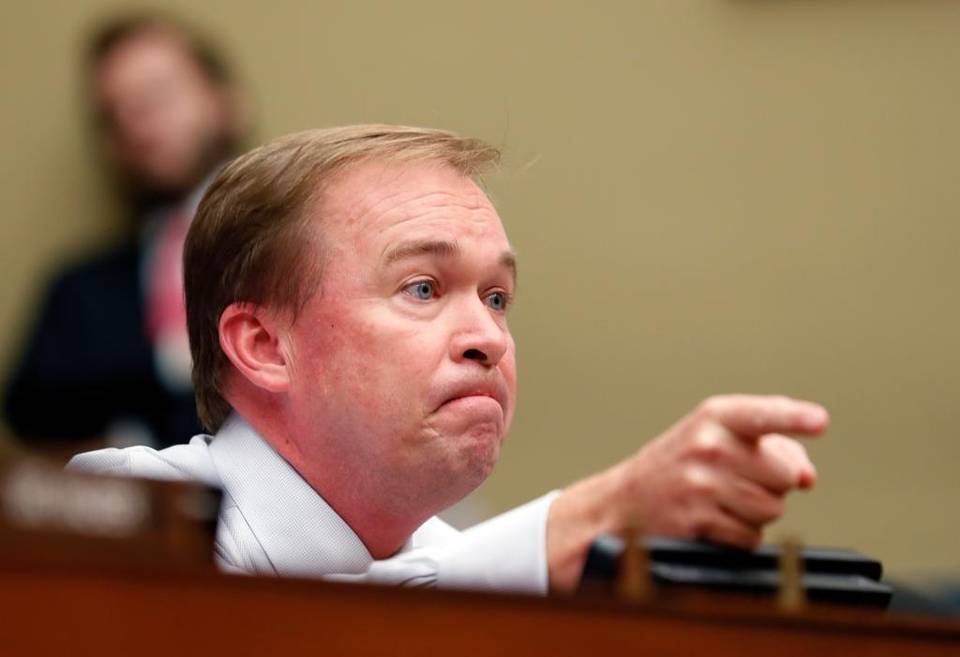
The OMB director-designate is Mick Mulvaney, a South Carolina member of the U.S. House of Representatives. Mulvaney is a fierce budget hawk, a founding member of the House Freedom Caucus, a TEA Party golden boy.

Mulvaney fights spending measures whenever he can. He says Congress spends too much money. Government is too big, too hungry for taxpayers’ money.

He’s a conservative’s conservative.

What does Trump want to do? He wants to spend a trillion dollars to improve the nation’s highway, bridge and rail infrastructure.

How in the world is he going to do that? Where is he going to get the money? How will he get this past his budget director, the guy who hates government spending with a purple passion?

Well, Trump is going to be the president. Mulvaney will answer to him, not the other way around.

Still, this appointment speaks to the puzzle that is Donald Trump. He ran as a populist, then has named a large number of billionaires to his inner circle. He said he knows “more about ISIS than the generals,” then picks three general-grade officers to his national security team. He spoke of his desire to improve public education, then selects a known foe of public education as the nation’s education secretary.

Now we have Mick Mulvaney being nominated to run the White House budget office. Mulvaney is a fiscal skinflint who’s going to work for a president intent on spending lots of money while hoping to enact tax cuts that will favor the wealthiest of Americans.

Oh, wait! He’s a populist, too!

Go figure. Any of it!

Bush, Perry are right about in-state tuition issue

dream

Two former Texas governors, both Republicans, have become targets of the righter-than-right wing of their own party.

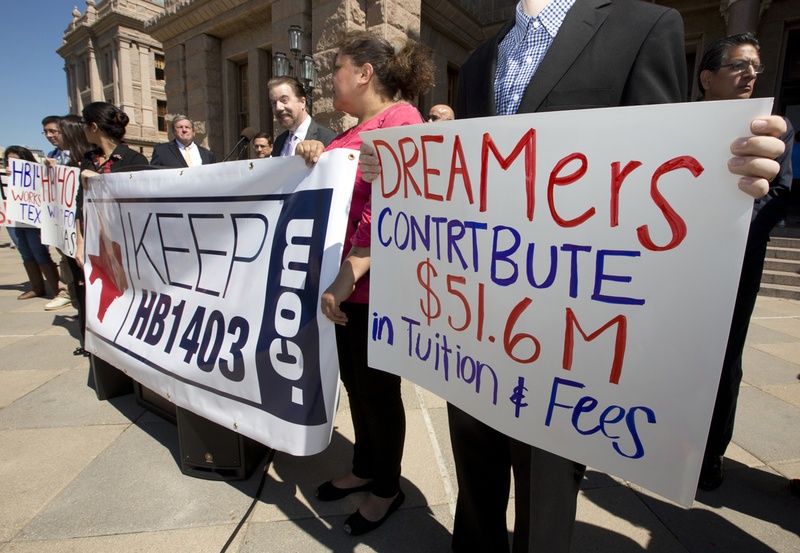
First it was George W. Bush, then it was Rick Perry who said that children who were raised in Texas by undocumented immigrants deserves to be allowed to public colleges and universities by paying in-state tuition.

No can do, says the state’s lieutenant governor, Dan Patrick, who now plans to seek to remove that perk when the Texas Legislature convenes in January.

Bush and Perry were right. Patrick is wrong.

https://www.texastribune.org/2016/09/09/dan-patrick-will-try-again-end-state-tuition-undoc/

These students are Texans. They have been raised as Texans — and Americans. They came here as children when their parents fled their home countries south of us. They grew up to become fine citizens, good students and are able to achieve great things for their adopted home country.

Why deprive them of the chance to further their education by removing the in-state tuition opportunity?

Perry was pilloried by the TEA Party wing of the GOP when he ran for president in 2012 and again this year simply because he supports the long-standing tradition of granting in-state tuition privileges to these young Texans.

As the Texas Tribune reports: “Passed with near-unanimous consent in 2001, the policy allows non-citizens, including some undocumented immigrants, to pay in-state tuition rates at public colleges if they can prove they’ve been Texas residents for at least three years and graduated from a high school or received a GED. They must also sign an affidavit promising to pursue a path to permanent legal status if one becomes available.”

Regular readers of this blog know I’m no fan of Gov. Perry or of Gov. Bush.

On this matter, though, they showed a humane side to their conservatism that has gone missing in action.

Trump’s ‘softening’ stance on immigration carries huge risk

trump-campaign-signals-possible-shift-on-immigration-stance-1471865686-3208

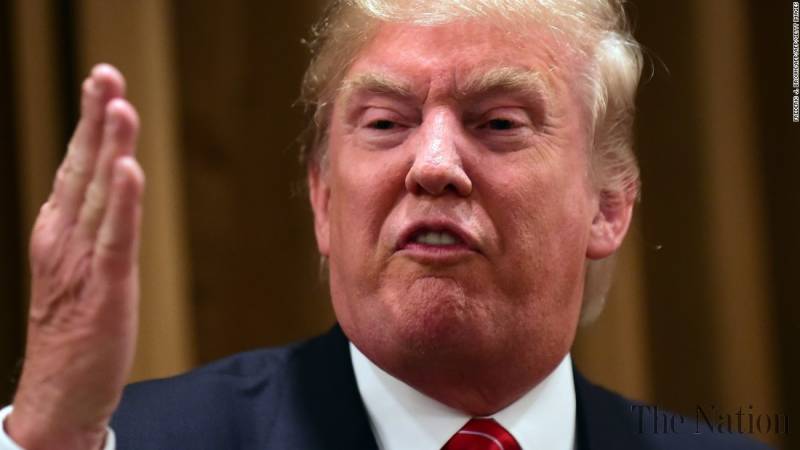
Donald J. Trump’s apparent — and it’s not quite clear — decision to pull back from his signature issue while running for the Republican presidential nomination is, to borrow a word, y-u-u-u-g-e!

But not in the way the GOP nominee perhaps is expecting.

Trump rode down that escalator at Trump Tower in the summer of 2015 to announce his presidential campaign and declared right out of the chute that he plans to “build a wall” across our southern border with Mexico. He said the Mexican government is sending “rapists, murderers, drug dealers” into the United States, adding “and I’m sure there are some good ones, too.”

He also announced his plan to deport every single one of the 11-12 million people who reportedly are here illegally. He was going to send them back.

What about the children who were born in this country? Family unity? Forget about it! “The illegals” are going back!

The response from the Republican Party base voters was, well, astonishing. They loved it. They adored and embraced their guy for “telling it like is.” No more political correctness, they said; we won’t tolerate it.

It got him the GOP nomination fair and square. Now, though, he’s struggling with the rest of the electorate. His cure to end the struggle is to sound as if he’s taking back the single issue that marked him as the “future of the Republican Party.”

How’s that going to play among the GOP base bloc that is standing by its man. I know a few of them here in the Texas Panhandle. I’m waiting to hear their response.

Will they continue to support the guy, the man with zero government experience, zero public service record, zero idea of what the U.S. Constitution allows the president to do, zero demonstrated interest in a single thing except personal enrichment?

The TEA Party wing of the GOP has wrapped its arms around Trump to date because of his rejection of what they call the “status quo.” What say those folks now?

As for the rest of the voters whose support he is seeking, they likely understand what is transpiring. Donald Trump has no clue about how to develop a cogent, coherent immigration policy. They are witnessing a desperate attempt to make sense out of nonsense.

‘Espirit’ is missing on Capitol Hill

la-1471894528-snap-photo

U.S. Marines talk with pride about the espirit de corps that exists within their ranks.

Roughly translated, it means “spirit of the group.”

The U.S. Congress used to operate under that mantra when natural disaster struck. If one part of the country falls victim to Mother Nature’s wrath, the entire legislative body rallies to the aid of their fellow Americans.

Those days are gone. I hope not forever, though.

The Louisiana floods show us this latest phenomenon at work.

The Los Angeles Times reports that three Louisiana congressmen, all Republicans, now are pleading for federal assistance to help their fellow Louisianans. What makes the story interesting is that they opposed similar requests for New Jersey after that state was clobbered in the fall of 2012 by Superstorm Sandy.

http://www.latimes.com/business/hiltzik/la-fi-hiltzik-louisiana-floods-20160822-snap-story.html

Do you remember when Joplin, Mo., got flattened by the tornado in 2011? Calls went out to help that city, too. Then-House Majority Leader Eric Cantor, Republican of Virginia, though, dug in his heels and insisted that Congress find a way to offset the expense by cutting money in other areas.

There once was a time in this country when Americans pulled together. We rooted for each other, prayed for each other — all while supporting efforts to lend tangible assistance. We didn’t put provisos on these requests. We just stepped up and offered a hand up to those in dire distress.

I know money is tight. I also know that the political climate in Washington has become toxic in the extreme.

That toxicity too often reveals itself when politicians argue over which congressional district deserves money in times of tragedy — and which of them do not.

It makes me ask: Are we truly an exceptional nation that rises to the needs of all its citizens, or are we governed by a group of petty politicians who look out only for those who elect them to public office?

I feel the need to remind the politicians who work on Capitol Hill: You signed on to serve the federal government and that means you serve all Americans.

Trump’s big pile of cash … isn’t there

trumpdonald_061516getty2

Donald J. Trump keeps boasting about all the money he has earned.

He keeps saying he will “self-finance” his campaign for the presidency.

Well, this is just in: Trump’s presidential campaign has $1.3 million in the bank.

Sure, that’s a lot of money to folks like me. For a presidential campaign in June? It’s pauper territory, dude.

http://thehill.com/blogs/ballot-box/presidential-races/284214-trump-ends-may-with-just-13-million-in-bank

The presumptive Republican nominee is now facing the possibility of running out of money for a campaign that it plans to wage against a heavily financed, thoroughly staffed and profoundly professional effort on behalf of Hillary Rodham Clinton, the Democrats’ presumed nominee.

Trump keeps telling adoring audiences that he is worth billions of dollars. He says he won’t ask for money from donors because, well, he doesn’t need it!

Actually, he does.

It is quite true that Trump won many of the primary races while being outspent by his opponents. But that was then. The here and now is quite different.

Trump waged his primary campaign by appealing to the GOP base that comprises primarily the TEA Party wing of the Republican Party. He’s now being forced to appeal to a broader audience. To reach those folks, the man needs money … that he does not have.

It’s time to start pouring some of that vast wealth of his into his bid to become president.

If he has it.

Senator wanted simply to say he is sorry

bobbennett_606af7bda32915fc21b748ce42baedc2.nbcnews-ux-2880-1000

The media today are reporting an extraordinary event involving a dying former U.S. senator.

Robert Bennett was diagnosed with pancreatic cancer. As he lay in his hospital bed, knowing he was going to die, the former Utah Republican senator wanted to issue an apology.

To whom did he want to apologize?

He wanted to say how sorry was to any Muslim hospital staffer who was working in the facility where he was a patient. Bennett’s son, Jim, has talked today on MSNBC about how his father had asked him if there were any Muslims employed there.

Sen. Bennett — who died on May 4 — said he wanted to apologize on behalf of the Republican Party because of the hateful anti-Muslim views expressed by presumptive GOP presidential nominee Donald J. Trump.

Bennett was among the first senators targeted by the TEA Party wing of the GOP. He was defeated in the 2010 Utah Republican Party primary by Mike Lee, who would go on to win election to the U.S. Senate.

It’s not that Sen. Bennett wasn’t a conservative politician. His record as a senator from one of the most conservative states in the nation is certifiably conservative. According to TEA Party activists, though, he wasn’t conservative enough.

So now the media are reporting that Bennett felt compelled to apologize to a group of fellow Americans who happen to worship as devoted Muslims.

It was an amazing deathbed gesture in response to an equally amazing — and disgraceful — public posture against people of a certain religious faith.

Seliger faces challenges from within the GOP

kel

I just read a generally friendly article about Texas state Sen. Kel Seliger.

The Odessa American piece profiles Seliger, who represents one of the most sprawling Senate districts in Texas.

The very size of the district helps illustrate one of the critical issues facing any West Texas lawmaker as he or she seeks to represent the varied interests of the region.

I have known Seliger for as long as I’ve lived in the Texas Panhandle. That totals 21 years. He was Amarillo’s mayor when my wife and I arrived here and I’ve watched him operate up close for that entire time, first at City Hall and for the past dozen years as a state legislator.

I consider him a friend as well.

That all said, I believe he has done a good job representing Senate District 31 since he was first elected in 2004.

He’s got a couple of potential issues with which he must contend, though, as he seeks to continue that service to the district and the state.

One of them is geography. The other is ideology.

First, the geographical issue.

Texas legislators keep redrawing legislative and congressional districts after every census. The 2011 Legislature produced a District 31 that runs from the top of the Panhandle all the way to the Permian Basin. It takes about six hours to drive from one end of the district to another — and that’s at 75 mph most of the way!

Seliger hails from the Panhandle, but he must be dialed in to the concerns of the other end of the district. As the Odessa American article suggests, Seliger does a good job tending to the needs of the southern end of District 31.

Former House Speaker Tom Craddick of Midland credits Seliger with keeping his radar fixed to the needs of the entire district.

http://www.com/news/government/state_government/article_4b20d618-19f4-11e6-8023-43690aa58ae1.html#.VziY-jWRXfc.facebook

Seliger has his share of friends and political allies throughout Senate District 31. Those who know Seliger understand the ease with which he is able to engage his constituents.

The Republican lawmaker, though, faces another potential problem. It’s the widening ideological gap within the Republican Party. Consider his 2014 re-election campaign.

His primary opponent that year was former Midland Mayor Mike Canon, who was recruited by arch-conservative political operatives to challenge Seliger because, they contended, the incumbent wasn’t “conservative enough.”

Canon is a nice fellow and actually quite smart. But I witnessed something about him during a Panhandle PBS-sponsored candidate forum in the spring of 2014. He answered direct questions with sound bites, clichĂ©s and talking points. Seliger’s answers to the same questions were full of nuance, detail and a keen understanding of the complicated process of legislating.

Seliger’s knowledge of the Texas Senate and how it works was barely enough to enable him to win the GOP primary that year. He squeaked by a patently inferior candidate. Why is that? Because the West Texas Republican TEA Party “base” got mobilized by the idea of knocking off someone who, in their view, didn’t comport with their notion of a “true conservative.”

He spoke to the Odessa newspaper about that campaign, saying that “Most Republicans are pretty darn conservative.” He calls himself a conservative.

Of the two potential pitfalls awaiting Seliger, I consider ideology to be the greater threat.

He’s managed to spend a lot of time traveling from one end of Senate District 31 to the other and back again, learning the myriad issues that concern its residents.

However, it remains to be seen whether that will be enough to satisfy the intense ideological fervor of those on the extreme right fringe of the Grand Old Party.


Cruz turns insult into a compliment

ted

Didn’t you just know that Ted Cruz was going to turn the former speaker of the House’s comments about him into a compliment?

Sure you did.

The junior U.S. senator from Texas is “Lucifer in the flesh,” according to former Speaker John Boehner, who also called Cruz the “most miserable son of a b****” he’s ever worked with.

http://www.politico.com/story/2016/05/cruz-boehner-trump-lucifer-222677

Cruz’s reaction. It just proves he’s a real “outsider.”

The Republican presidential candidate is proud of running as an outsider, even though he’s worked on the inside for all of three-plus years. He was elected to the Senate in 2012 in his first race for elective office ever.

He has taken pride in his ability to get under people’s skin. He’s called the Senate majority leader a liar; he’s questioned the commitment to the military of genuine war heroes; he sought to shut down the government in a failed attempt to overturn the Affordable Care Act.

What a guy.

Boehner quit the House because he had grown fed up with legislators like Cruz.

Hey, it’s a badge of honor, according to the Cruz Missile.

Let’s try to set this into some perspective.

The federal government is a complicated piece of machinery. It requires knowledge, skill, nuance, diplomacy, tact and, oh yes, the ability to compromise on occasion.

Cruz keeps harping along the GOP primary campaign trail that he isn’t going to compromise on anything. He sounds for all the world like one of those lawmakers who sees the folks on the other side of the aisle as enemies, not just adversaries.

Sure, the other side has its share of haters. Florida U.S. Rep. Alan Grayson, a Democrat, comes to mind immediately. He’s got about as much actual experience in the federal government as Cruz, but he manages to shoot off his mouth whenever the cameras are rolling.

He’s the clown who said he’d file suit against Cruz to challenge whether the Canadian-born senator is constitutionally qualified to run for president.

Memo to Grayson: He’s qualified.

Back to Cruz.

He’s a self-proclaimed hotshot with little legislative accomplishment to show for all his fiery rhetoric.

He can proclaim his outsider street cred all he wants. However, if he intends to work with the very people he condemns — namely his colleagues in the legislative branch of government — then he’s got to build some relationships that so far simply do not exist.