
Tag Archives: budget deficit

What’s happened to the budget deficit?

BudgetDeficit

Remember the federal budget deficit?

Do you also remember how Republicans used to rail against it and how Democrats used to ignore it? Republicans said the deficit would keep growing and would bankrupt the nation. Democrats insisted that the government needed to “invest” public money on public projects.

Flash back to the 1980 presidential campaign.

  • GOP nominee Ronald Reagan’s campaign ran TV ads that parodied House Speaker Tip O’Neill and the Democrats in Congress as wasteful spenders. President Carter oversaw a deficit that “ballooned” to about $40 billion.

Reagan won the election in a landslide.

What happened then? President Reagan fought for tax cuts and exploded defense spending. The result: the federal deficit effectively tripled.

Let’s move ahead to the 1992 election.

  • Democratic nominee Bill Clinton ran against President George H.W. Bush, proclaiming “It’s the economy, stupid.” The nation was struggling through a recession. Clinton won the election. Then the Republicans took control of Congress after the 1994 mid-term election.

What happened after that? The Democratic president, working with the Republican-led Congress, balanced the budget. Clinton left the White House in 2001 and the budget was running a hefty surplus.

  • Republican George W. Bush was elected in 2000. Then came the 9/11 terrorist attacks. President Bush pushed through more tax cuts, but then took the nation to war against terror groups overseas. The result of that effort? The deficit returned and exceeded $1 trillion annually.

But the argument evolved into something else. It didn’t matter that the deficit was exploding, the president and his allies contended, because it constituted a minuscule portion of the Gross Domestic Product. Didn’t the vice president at the time say, “Deficits don’t matter”?

Well, I guess they did.

  • OK, now we come to the 2008 election. The economy has tanked. Financial institutions are going under. The housing market has crashed. So has the auto industry. The deficit was exploding.

Democrat Barack Obama won the election. He got Congress to kick in billions of dollars to jump-start the economy and bail out some of the leading industries.

What happened then? The economy began to recover. The jobless rate, which zoomed to 10 percent, began inching its way back down. Today it stands at 5.1 percent.

Oh, the deficit? It’s been cut by two-thirds.

It’s still too great. It’s a long way from the surplus delivered by President Clinton and his friends in the GOP-controlled Congress.

However, the traditional argument delivered by Republicans that deficits are bad and that Democrats are to blame for spending us into oblivion no longer is relevant.

Just think: The presidential campaign that’s unfolding before us has been called one that defies all conventional wisdom.

I believe the history of the federal budget deficit suggests conventional wisdom got tossed aside long ago.
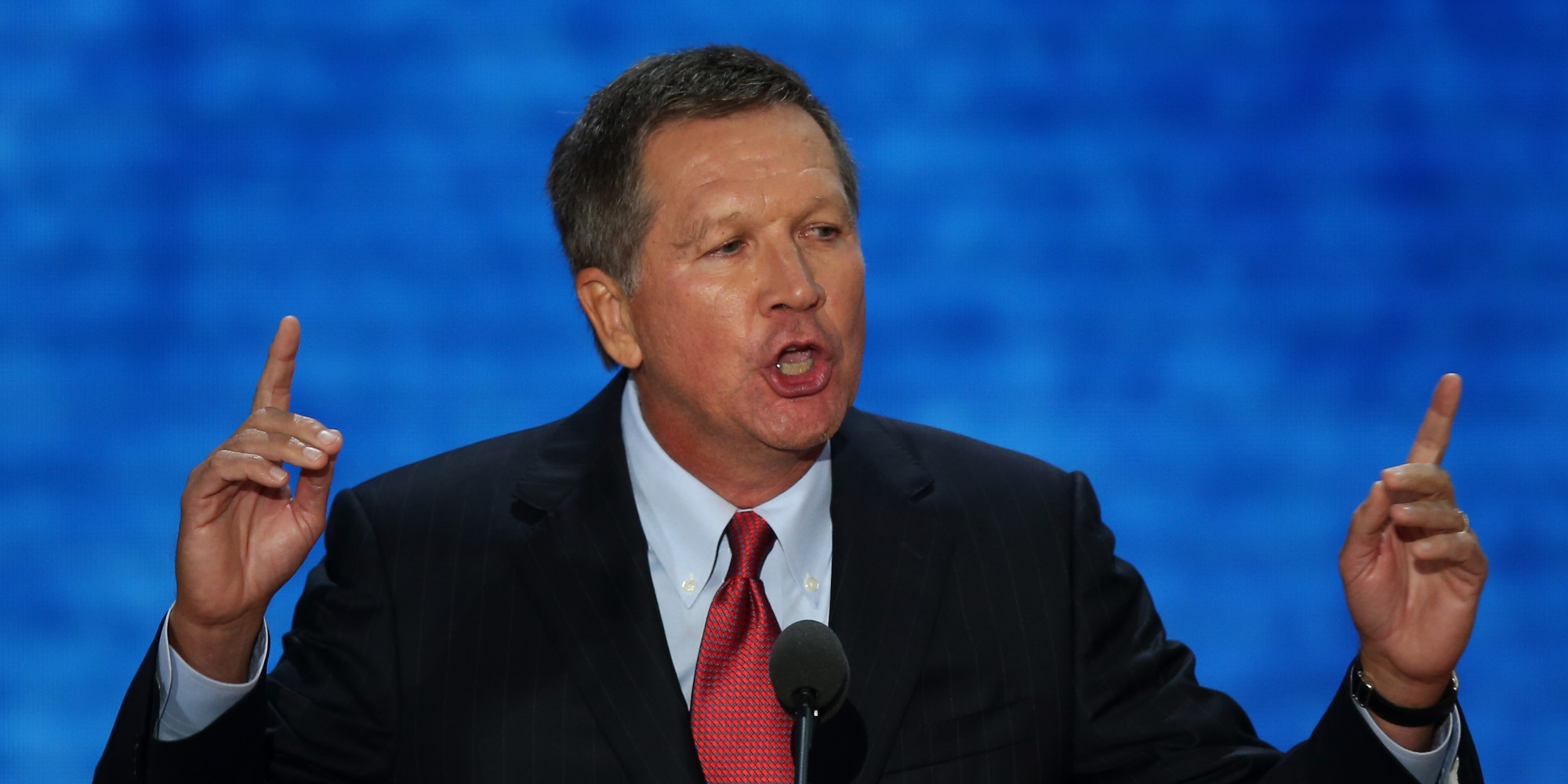
 

Here’s what Gov. Kasich didn’t say

TAMPA, FL - AUGUST 28:  Ohio Gov. John Kasich speaks during the Republican National Convention at the Tampa Bay Times Forum on August 28, 2012 in Tampa, Florida. Today is the first full session of the RNC after the start was delayed due to Tropical Storm Isaac.  (Photo by Mark Wilson/Getty Images)

Ohio Gov. John Kasich deserves the credit he sought during the Republican presidential debate for helping bring about a balanced federal budget back in the 1990s.

He spoke about his work — as chairman of the U.S. House Budget Committee — in helping erase the chronic deficits that plagued the budget for previous decades.

However, Kasich left out an important element in that good work. It was that he was able — along with House Speaker (and fellow Republican) Newt Gingrich — to work with a Democratic president, Bill Clinton in crafting a budget that balanced and, in fact, produced surpluses. (Full disclosure: One of my sons brought this tidbit to my attention. So, I’m running with it in this blog.)

Oh yeah! I almost forgot. The former president is married to the Democrats’ current frontrunner for the 2016 Democratic nomination, someone against whom Kasich would face were he to win the GOP nod next summer.

Of course, any mention of bipartisanship — which is one of Kasich’s many strengths — doesn’t play well to a primary crowd starving for the red-meat rhetoric the candidates in both political parties are serving up to their respective bases.

Accordingly, Gov. Kasich wasn’t about to mention that those budget surpluses disappeared almost immediately after another Republican, George W. Bush, took office in 2001; we suffered the horrendous attack on 9/11, went to war with the terrorists — and then the government cut taxes at the same time.

I just thought it was important to add some context to what we heard on that debate stage in Cleveland.

Big jobs numbers, but still no GOP applause

Critics of President Obama have been beating the drum for years about the economic recovery.

Yeah, nice jobs numbers, but those wages just aren’t increasing, they say, while lampooning the economic recovery as a sort of mirage.

Today’s news brought some serious good cheer to some of us, but not all.

The economy added 321,000 jobs in November. Wages increased 0.4 percent as well. The bottom line? The economy is finally beginning to be felt in people’s homes.

Will there be cheering among congressional critics of the president? Don’t hold your breath.

My hunch is that they’ll find a way to spread the joy among themselves without giving credit to a federal economic policy that’s been working for, oh, about the past five-plus years.

The stock market is heading into record territory — again. The trade deficit is down. The budget deficit is down. The national debt is slowing. Unemployment remains less than 6 percent. Investments are up. Spending is up. Real estate prices are up. Auto sales are up. Domestic energy production is up. Gasoline prices are plummeting.

Holy cow! I can’t stand all this good news!

I’ll just have to proclaim it from this forum yet again.


Tax cuts pushed off GOP table

Tax cuts used to be the mantra of the Republican Party.

No more, or so it seems. Cutting taxes now appears to be the bane of the Grand Old Party. Why? Some states that have cut taxes too much now face the dreaded “d” word, budget deficits that are blowing apart any effort to do something constructive for constituents.

http://www.politico.com/story/2014/09/republicans-shift-away-from-tax-cutting-mania-111359.html?hp=t1

Meanwhile, at the federal level we’re seeing the deficit shrinking as the federal government has reduced spending while holding the line — for now — on tax revenue.

“We have to stop being one-trick ponies,” said California Rep. John Campbell, a member of the arch-conservative Republican Study Committee and the No. 4 Republican on the House Budget Committee.

Kansas Gov. Sam Brownback, a Republican who once served in the U.S. Senate, might be in serious trouble this election year because he’s pushed too hard for tax cuts that have cost the state too much revenue to pay for certain things — such as, oh, road maintenance and public education.

As Politico reports, the tax cuts that once were the mainstay of a party dominated by Ronald Reagan are MIA in the current political discussion. GOP candidates are talking about the Affordable Care Act and terrorism. Tax cuts? Forget about it.

Well, rest assured that Democrats will remind voters of the danger of cutting too much. They’ll be talking enough for both political parties right up until Election Day.

Meanwhile … the budget deficit keeps shrinking

Bad news tends to run laps around good news.

People are drawn to negativity in a curious way. Positive developments? Oh, forget about it. We’ll get to the good stuff later — if we remember to think about it.

I hereby want to present a bit of cheer amid all the tumult over child refugees, Israel vs. Hamas, Iraqi insurgents, impeachment, congressional lawsuit and anything else of late.

http://www.politico.com/story/2014/07/wh-budget-deficit-will-drop-to-583-billion-108822.html?hp=l9

The federal ran a surplus of $71 billion in June. There’s more. The annual budget deficit is going to hit — at most by some estimates — $583 billion for the current fiscal year that ends Sept. 30; indeed, the non-partisan Congressional Budget Office projects a deficit of $492 billion.

It’s that surplus business that has me most intrigued.

Could it be the spurt of new jobs, which reached 288,000 in June, producing more tax revenue for the Treasury? Might it be accompanied by a burst of new business activity, which generates even more revenue?

Why, you would think we’d hear cheers from both sides of the political aisle.

Didn’t happen. Nope. We’ve been fixated by that negativity thing. We respond to the bad news and shrug at the good news.

I’m no Pollyanna. I know we’ve got problems at home. We damn sure have them around the world. Our government is coping as best as it can, or one should hope.

The budget deficit, which once was the Bogeyman of the Right, is being slain. It’s not gone yet. It’s still too great. It’s less than half of what it was when the current administration took over.

I think I’ll hoist a cold one in honor of the good news.

President preaches success

Barack Obama was preaching to the choir the other day.

He declared during a Democratic Party fundraiser that Americans “are better off now than when I came into office.”

Do you think?

http://thehill.com/blogs/ballot-box/fundraising/206591-obama-americans-better-off-under-his-presidency

That the president would say such a thing is no surprise. Incumbents make these proclamations when they’re out raising money for their party in an election year.

But … wait for it.

The other side is going to level the equally non-surprising broadsides at the president for dredging up that bad old recession he inherited when he took office on Jan. 20, 2009.

You remember that time, right? The job market was hemorrhaging jobs by 700,000 — give or take — a month. Unemployment was heading toward a peak of around 10 percent. Banks were failing. Auto dealerships were tanking. Oh, and we were fighting two wars and were losing American lives on Iraq and Afghanistan battlefields daily.

Have we returned to some Nirvana after that terrible experience? No. We’re still on the road back.

Joblessness is down. The private sector is adding jobs instead of losing them. The auto industry has returned to fighting trim. Bank failures have ceased. The budget deficit — which accelerated as the government sought to jump-start the economy — is receding. Congress has enacted a health care overhaul that is working.

I believe the president has reason to crow about the state of things in the country, despite the continuing rhetoric from the opposition that is scouring the landscape for anything on which to stain Barack Obama’s record.

Hey, that’s politics. Republicans want to control the Senate as well as the House of Reps; Democrats want to keep control of the Senate. Both sides seek to exploit advantage where they find it.

Not quite two years after a bruising re-election campaign in which Republicans sought to focus on the economy, the president now can turn to that very issue as a signal that we’re on the right track.

To paraphrase GOP presidential nominee Ronald Reagan’s famous query during the 1980 campaign: Are we better off now than we were six years ago?

I’d have to say “yes.”

What if feds had done nothing in ’09?

Many of my friends on the right — and the far right — have taken great pains to blast the smithereens out of President Obama’s economic policies.

Namely, their target has been the increase in the national debt, which now stands at $17 trillion. What has run up the debt? It’s been that federal stimulus package the Obama administration pushed forward while the nation’s economy was in free fall.

You remember those days, right? The economy was shedding 700,000 jobs a month; banks were failing; the real estate market was collapsing; the stock market was flushing itself down the toilet.

Barack Obama’s response was a costly one. The Federal Reserve Board reduced interest rates to near zero, making it easier for borrowers to pay back loans, while making it tough on lenders who are in the business of making money on what they loan.

My pals on the right and their Republican pals in Congress keep harping on the difficulties the Obama administration has endured trying to restore the economy.

I keep circling back to this question, which Sen. John McCain in 2008 and former Gov. Mitt Romney in 2012 both ignored as they ran for president against Barack Obama: What would have happened had the feds done nothing, had the government not instituted its stimulus package to shore up an economy that was on the verge of collapse?

I’ll add this follow-up: Why do they dismiss the clear evidence that the economy is in recovery at this moment? Is it back completely? Probably not.

* The job losses have stopped and have been replaced by job gains. Yes, the December job growth was disappointing. But we’ve gained back all the jobs lost during the final years of the Bush administration and the first year of the Obama administration.

* The annual budget deficit, which once topped $1.1 trillion has been cut in half — and is declining. Will we balance the budget by the time Obama leaves office? Probably not but it’s trending in the right direction.

* The jobless rate is at 6.7 percent, down from nearly 10 percent. Has it declined because every unemployed American has found work? No. Many of them have quit looking for jobs but the signs are indicating that opportunities are opening up on the job market.

* The stock market is setting records, which ought to please Wall Street investors — not to mention those of us with retirement accounts that depend on a healthy market.

I’m not naïve. I know there are myriad problems out there. The world is a restive place. Conflicts are erupting all over the planet. The United States is involved actively in a war that it is trying to wind down; we’ve already ended our involvement in another war. We’re killing terrorists almost daily, but the dead ones are being replaced almost immediately by recruits dedicated to waging war against the Great Satan. This war on terror won’t end anytime soon, folks.

Economically, though, I am feeling better about my future than I was, oh, about six years ago.

What’s more, I hate to think how I’d view our future if the government had kept its hands off the economic rudder.

Deficit plummets; cheers pending, yes?

Take a look at this report on the state of the current federal budget deficit.

Deficit was $680 billion in 2013

It’s fallen to “only” $680 billion. I know that’s still a lot of money to be in the red. The government should be balanced. It’s not and it doesn’t look as though it’ll reach balance any time soon.

But the link also shows the trend the deficit has taken the past five years. It’s gone down — a lot.

It peaked at $1.4 trillion in 2009, when President Bush handed the keys to the White House to President Obama. It has done down a little each year since. However, at $680 billion, the deficit is down about 51 percent from its high-water mark, which suggests a significant improvement in the nation’s economic performance.

Of course, the cheering has been muted. The political climate in D.C. and in the nation won’t allow the Loyal Opposition to offer a good word on that. They still bemoan the sluggish job growth, the still-too-high unemployment rate (7.2 percent, also down from 10 percent four years ago) and other factors.

Indeed, some folks perhaps are going to suggest the federal budget sequestration — which kicked in automatic budget cuts — deserves some of the credit for the narrowing of the deficit. Maybe so.

I’m inclined to think the government’s stimulus packages had a hand in it as well, putting more people to work, generating more tax revenue for the Treasury and helping the nation inch back toward the balance it achieved in the second term of President Clinton’s administration.

I’m a deficit hawk. I don’t like spending money we don’t have in the bank. As the Treasury Department report notes, though, the deficit also comprises a shrinking percentage of the Gross Domestic Product — which is more good news.

I’m still waiting to hear the applause.

President takes wing

This speech is about a month old, but I just caught up with it … and am astounded by its ignorance.

U.S. Rep. Howard Coble, R-N.C., went on the floor of the House in mid-July to gripe about all the trips President Obama has taken aboard the jet called Air Force One.

http://thehill.com/video/house/311969-gop-lawmaker-obamas-using-air-force-one-as-personal-toy

Coble yapped about the cost per each flight and accused the first family of using the Boeing 747 Jumbo Jet as its “personal toy.” He was warned against using improper references to the president by the presiding officer.

If the president of the United States feels a need to fly Air Force One somewhere on behalf of the country he governs, then why is that such a huge deal to a back-bench member of Congress whose name few Americans even recognize? Coble’s complaints center on the cost of using the aircraft during difficult economic times. He says its use runs up the deficit and the debt, which the nation cannot afford.

The aircraft also supplies the president with all the communications he needs while he’s en route to his destination. The way I see it, those amenities are quite necessary for him to do his job. You know, things like telecommunications he can use while speaking with military and domestic policy advisers, phone hookups so he can be briefed on crises as they erupt. These are fairly essential items, don’t you think?

I’m not going to begrudge any president the right to use an airplane that enables him to be on call every minute of every day he occupies the most powerful office on the planet.

Hey y’all, the deficit is shrinking

I consider myself a deficit hawk. I dislike as much as anyone the idea that the government spends more money than it receives.

It is with that stipulation that I hail news that the federal budget deficit is shrinking. Dramatically, I should add.

http://www.mailtribune.com/apps/pbcs.dll/article?AID=/20130813/BIZ/308130307

The Congressional Budget Office — which is about as nonpartisan and unbiased as it gets — pegs the 2013 federal deficit to be at $670 billion. That’s still a lot of money to be in the hole. It’s also about half of what the annual deficit totaled when President Obama took office in January 2009.

The cause for the shrinkage? More revenue created by more taxes being paid by more Americans getting back to work.

Interesting, don’t you think?

Yet the critics keeping yammering about the president’s “failed economic policies.”

Another report out this week shows that immigration reform would help grow the economy significantly over the next two decades, thus putting downward pressure on the deficit. How does that happen? By allowing undocumented immigrants to come out of the shadows and work in the open while they set out on that vaunted “path to citizenship.”

Another “failure”? I think not.