Tag Archives: impeachment

Democrats to grass roots: Cool it with the ‘I-word’ talk

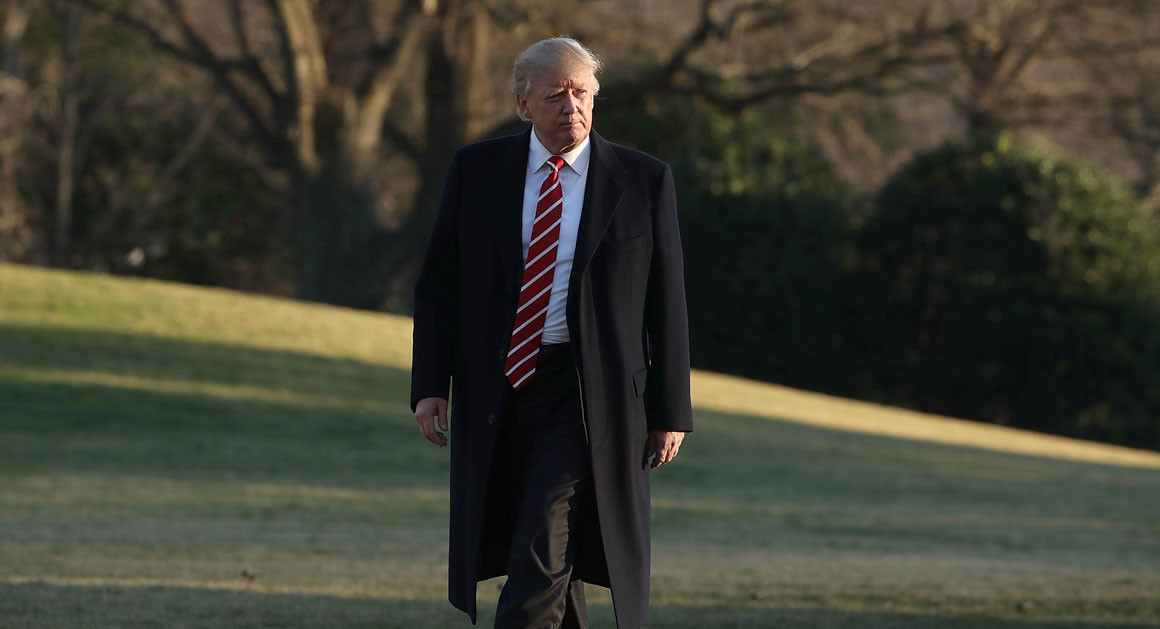
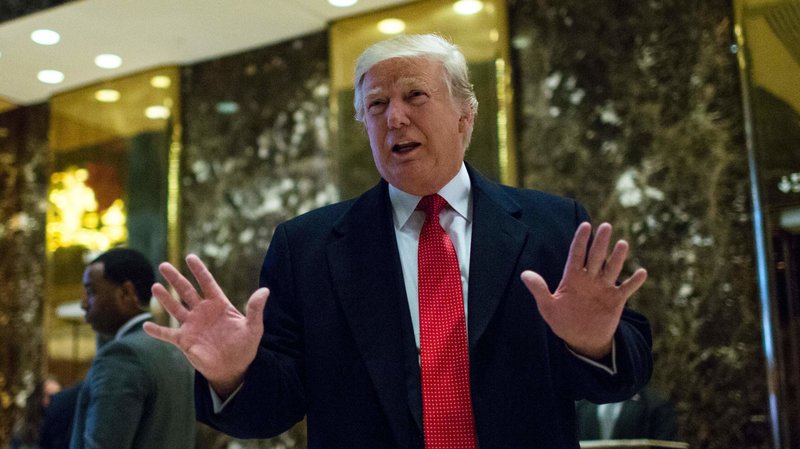
The “I-word” might be gaining some traction among rank-and-file Americans who profess worry — even fear — of Donald J. Trump.

Democratic Party officials are issuing a wise word of caution. Avoid the rush toward an impeachment of the president of the United States.

I happen to agree with the Democratic Party elders/wise folks.

Impeachment is a serious matter. It’s only occurred twice in the 228-year history of the Republic. The 17th president, Andrew Johnson, came within a single vote in the Senate of being tossed out; the 42nd president, Bill Clinton, was acquitted by healthier margins on all three counts heard during his Senate trial. A third president, Richard Nixon, was on the verge of being impeached before he resigned in disgrace in 1974.

Trump has stirred plenty of enmity during his single month in office. To suggest that he ought to be impeached is at best far too premature an act to even consider; at worst, well, it might be a fool’s errand.

As Politico reports: “’We need to assemble all of the facts, and right now there are a lot of questions about the president’s personal, financial and political ties with the Russian government before the election, but also whether there were any assurances made,’ said California Rep. Eric Swalwell, a member of the House Permanent Select Committee on Intelligence. ‘Before you can use the ‘I’ word, you really need to collect all the facts.’

“’The ‘I’ word we should be focused on,’ added Pennsylvania Rep. Brendan Boyle, ‘is ‘investigations.'”

I happen to share the concerns of many of my fellow Americans about the questions that are looming large over the Trump administration. So soon after the president’s inauguration, Americans would be wise to give the guy some time to clear out some of the wreckage he has brought upon himself and his administration.

I want to offer a slightly conciliatory word here. Trump became president with zero experience in government. He hadn’t spent a single moment of his life in public service until he placed his hand on the Bible and took the oath of office of the presidency.

It might be too much to ask that a zillionaire businessman/TV celebrity could know all the nuance and complexity of forming a government as massive as the one he now commands.

He has made some remarkable missteps in just a few weeks on the job. He has said some amazingly stupid things and made some ridiculous gestures. Are any of them impeachable? No.

But he’s got this personal enrichment matter he must clear up. That “emoluments clause” that bars presidents from profiting from relationships with foreign governments is pretty clear. The president hasn’t done nearly enough to clear himself of that mess.

He had better get busy.

The fired-up grass roots Americans who are hell bent on impeaching the president had best listen to the political elders who know about these matters.

Their advice? Cool it.

Chaos need not be the new White House norm

As I watch Donald J. Trump’s chaotic first few weeks as president of the United States, I have to keep reminding myself: Does it really need to be this way?

Of course it doesn’t. We’re watching Trump stumble-bum his way through controversy after controversy and his ridiculous rants and riffs with foreign leaders.

Now we’re watching an potentially unfolding major-league scandal involving the president’s former national security adviser, who quit this week in the wake of reports that he had inappropriate — and possibly illegal — discussions with Russian government officials prior to Trump taking office.

Two presidents in my lifetime have taken office amid terrible tragedy and tumult. In both cases, these men grabbed the reins of power and assumed the role of president as if they’d been there all along.

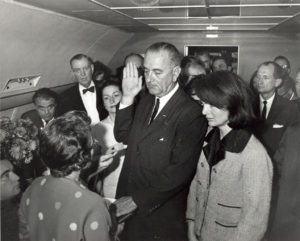
Example one: Lyndon Baines Johnson took the oath of office on a jetliner sitting on a tarmac at Love Field in Dallas on Nov. 22, 1963. His predecessor’s body was in a casket in the back of the plane and the nation was in utter shock over what had happened earlier that day when a gunman murdered President John F. Kennedy.

LBJ flew back to Washington and asked the nation to pray for him. We did. He convened his team and got to work immediately.

The nation buried JFK a few days later, President Johnson went to Congress and declared “all that I have I would surrender” to avoid standing before the nation in that moment.

The nation marched forward.

Example two: Gerald Rudolph Ford became president on Aug. 9, 1974 as his predecessor resigned in disgrace. The House of Representatives stood poised to impeach Richard Nixon for high crimes and misdemeanors relating to the Watergate scandal. It took a stalwart Republican U.S. senator, Barry Goldwater, to tell the president his time was up. He had no support in the Senate, where he would stand trial after the House impeached him.

President Nixon quit. President Ford took the oath and then told us, “Our long national nightmare is over.” He told us he was “acutely aware” he hadn’t been elected vice president or president. But he was the right man for the job.

He, too, called his team together and instructed them to get back to work.

President Ford would lose his election battle in 1976 to Jimmy Carter. It was Carter who, upon taking the oath of office in January 1977, would turn to his predecessor and begin his inaugural speech by thanking the former president for “all he had done to heal our country.”

Presidents Johnson and Ford had something in common: they both had extensive government experience prior to assuming their high office. They knew how the government worked. LBJ had served as Senate majority leader before becoming vice president in 1961 and had many friends on both sides of the partisan divide. Ford had served as minority leader in the House of Representatives before Nixon tapped him to be vice president in 1973 after Spiro Agnew quit after pleading no contest to a corruption charge. Ford also had many friends on both sides of the aisle.

These men assumed the presidency under far more trying circumstances than Trump did, yet they made the transition with relative ease … compared to the madness we’re witnessing these days with the 45th president.

We are witnessing in real time, I submit, the consequences of electing someone who brought zero public service experience to the most difficult and complicated job on Planet Earth.
Will the new president violate the Constitution right away?

An argument making the rounds for the past several months goes something like this: Donald J. Trump is going to be in direct violation of the U.S. Constitution at the moment he takes the oath of office as president of the United States of America.

The source of the violation? His myriad business interests.

This isn’t just a Democratic Party point of view. Republicans also are buying into a notion that Trump’s refusal to separate himself completely from his business dealings is creating a monstrous potential for conflict of interest.

http://www.npr.org/2017/01/19/510574687/ethics-lawyers-call-trumps-business-conflicts-nakedly-unconstitutional

According to National Public Radio: “A president is not permitted to receive cash and other benefits from foreign governments,” Norm Eisen tells Fresh Air‘s Terry Gross. “And yet, Donald Trump is getting a steady flow of them around the world and right here in the United States.”

The “emoluments clause” is front and center in this debate. It’s written into the U.S. Constitution. It should be called the “anti-bribery clause.” Trump has refused to divest his myriad business interests; he has refused to put them into a blind trust.

NPR, quoting Richard Painter, former ethics lawyer for President George W. Bush, reports: “The president needs to focus on protecting the United States and American interests in a very dangerous world,” Painter says. “I really hope that President Trump takes the steps he needs to, to be free of conflict of interest in that endeavor.”

There are questions about whether Trump’s business dealings abroad could interfere with U.S. policy. Trump refuses to release his tax returns. He declines to provide detailed financial reports. He keeps saying this discussion is a media creation.

Holy cow, dude! You’ve got some serious experts on this stuff suggesting you’re going to violate the Constitution you will swear to “defend and protect.”

Does a direct violation of that sacred oath create a reason for, um, impeachment?

Let’s all wait for this to play out.

Pundit class weighs in on VP debate

kaine-pence

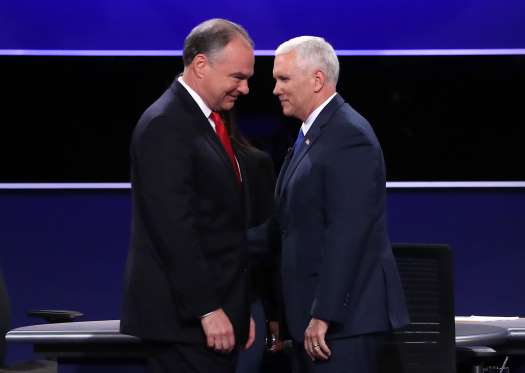
Some of the nation’s more well-known political pundits have weighed in on last night’s vice-presidential “debate.”

They’ve determined, I guess, that Republican nominee Mike Pence did himself more good than harm and that Democratic nominee Tim Kaine did more harm than good for his own future. Many of them seem to think Pence is a shoo-in to run for president in 2020.

I gleaned from most of the comments that the presidential candidates still must make their own way as they slog on through to Election Day.

http://www.msn.com/en-us/news/politics/who-won-the-vp-debate-pundits-weigh-in/ar-BBx2cfz?li=BBmkt5R&ocid=spartandhp

I’ll offer this slightly different take, though, on what I heard Tuesday night.

Gov. Pence might have helped Donald Trump — if only slightly — by coming off as the more mature, reasonable, rational, nuanced, intelligent member of the GOP ticket.

Thus, he might have given Trump’s base of supporters hope that in the event of a Trump election — a thought that gives me the heebie-jeebies — that there will be a viable individual who’s able to step in once Congress impeaches and convicts the president of crimes that haven’t yet been defined.

Has the governor wooed any independent voters, or undecided Americans to the Trump-Pence ticket? I doubt it. These VP encounters generally don’t prove to be decisive. We still focus on the candidates at the top of their parties’ tickets.

However, given what we know about Trump’s utter lack of anything involving government or the limits of the office he seeks, I remain quite convinced that a President Trump would do something — maybe early in his administration — that would so anger legislators that he could become the target of a serious impeachment effort.

What might he do? Oh, let’s see. He could fire all the flag officers who would assist him in crafting a war strategy against the Islamic State; Trump could issue an unlawful order to his military, which then would be able to refuse to carry it out; he could impose that unconstitutional ban on Muslims entering the United States; he could forget about a business deal that profited from a government subsidy; he could issue any number of illegal executive orders.

The man is a walking, talking, breathing example of an ignoramus who doesn’t understand anything about government — and he intends to learn about it all while serving as head of state of the world’s most powerful nation.

Mike Pence has given a glimmer of hope to Trump’s followers that they would have a grownup ready to take command once the president is tossed out.

It doubt, though, it’s enough to win an election.

I mean, c’mon. Pence still has to find a way to defend Trump’s horrifying stump-speech pronouncements.

VP choice becomes a problem for GOP

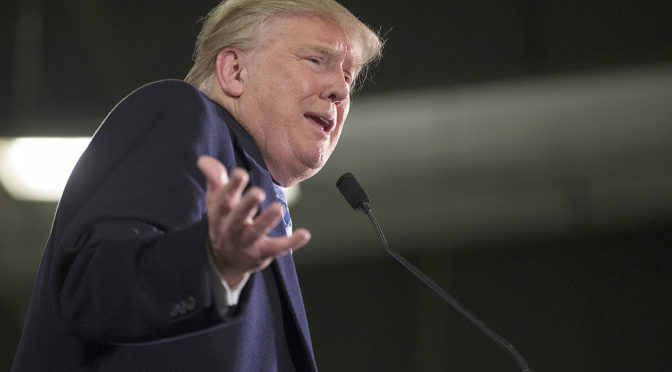
Donald J. Trump stands poised to become the Republican Party’s next nominee for president of the United States.

Is there anyone out there who believes Trump’s nomination will be welcomed with a warm GOP embrace, that the party brass that’s now condemning the candidate will back him without objection?

This brings to mind the question that Politico is asking: Who is willing to become the vice-presidential nominee along with Trump? Who is going to hoist the candidate’s hand in the air from the convention podium in Cleveland? Who’s going to be willing to sing the praises of the candidate who’s insulted just about every voting bloc he’s going to need to defeat Hillary Rodham Clinton?

http://www.politico.com/story/2016/06/donald-trump-vice-president-224488

Prominent GOP officeholders have drawn the barbs from Trump.

What about the women of the party? New Mexico Gov. Susana Martinez? She’s out. South Carolina Gov. Nikki Haley? No can do. U.S. Sen. Joni Ernst of Iowa? Forget about it.

Hispanics? U.S. Sen. Marco Rubio of Florida? Hardly. U.S. Sen. Ted Cruz of Texas? Pfftt!

Anglo males? Trump might have some takers among that group. Gov. Chris Christie of New Jersey comes to mind. Former Texas Gov. Rick Perry says he’s interested. Some buzz is mentioning former House Speaker Newt Gingrich of Georgia.

This is a half-serious suggestion for why someone might accept a veep nomination from Trump. It has to do with what might occur on the remotest of remote chances that Trump gets elected president in November.

Perhaps the No. 2 man/woman could see a clear path to the presidency in the hope — or perhaps the expectation — that Trump commits an impeachable offense.

Look at it this way: Trump would have few friends and allies in the House of Representatives, which could actually impeach him. He also would have few friends in the Senate, which would actually try him. And the Senate, given the responsibility to consider whatever charges would be brought against Trump, might be inclined to convict him on the promise of getting someone better able to govern.

What might a “President Trump” do to compel an impeachment?

He’s spoken freely and loosely about all the things he would do as president, ignoring the fact that the president shares power with Congress and the federal judiciary. He doesn’t understand how government works.

Might he then to try some kind of end-around on a policy that requires congressional approval?

As we saw during the 1990s, members of Congress need little provocation to file charges and to deliver an impeachment.

I’d be inclined to say the selection would be difficult to make. Then I read this in the Politico piece:

“Ironically, the presumptive nominee’s own toxicity is making the job of finding a vice presidential nominee that much easier, because the short list is so short.”

Lawless? Unconstitutional? Why no impeachment?

impeach

The Republican field of candidates — even when it comprised 17 members — has been using some highly charged language to describe the twice-elected administration of President Barack Obama.

They call his actions “lawless.” They say his executive orders are “unconstitutional.”

Thus, they are accusing the president of two things: of breaking the law and of failing to uphold the oath he took twice when he was sworn in by the chief justice of the Supreme Court.

That makes me ask out loud, right here: Why haven’t the Republicans in the House of Representatives impeached the president?

If you really and truly think he’s broken the law or signed unconstitutional executive orders, then you have political recourse. Isn’t that correct?

It’s impeachment.

Two U.S. presidents have been impeached over the course of the nation’s history.

President Andrew Johnson fired his secretary of war without notifying the Senate and got impeached; he came within a single vote of conviction during a Senate trial. President Bill Clinton got impeached for lying to a grand jury about a tawdry relationship he had with a White House intern; the Senate acquitted him on three counts. A third president, Richard Nixon came within a whisker of being impeached because he blocked an investigation into the Watergate scandal; the House Judiciary Committee approved articles of impeachment, but the president quit his office.

These days, candidates for president keep tossing out verbiage that would suggest — if you are to believe it — that the current president has committed a whole array of impeachable offenses. Indeed, when you accuse a president of doing something “unconstitutional,” that by itself implies malfeasance.

Me? I don’t believe it.

I get that it’s campaign rhetoric. Therefore, perhaps they don’t really mean what they’re saying out there — on the stump or on those debate stages.

So, how about saying what you mean, fellas?

Is Bill Clinton on the ’16 ballot?

hillary clinton

Hillary Rodham Clinton says Donald Trump reveals a sexist attitude toward women.

Trump responds by saying that Clinton’s husband, the 42nd president of the United States, has demonstrated an equally horrible attitude toward women.

So …

Hillary Clinton and Donald Trump might be facing each other in the 2016 general election, which makes Trump’s view of women relevant.

Trump’s retort about Bill Clinton? Well, is that relevant? It would be if the former president was on the ballot. He’s not.

And that begs the question. Why is Trump bringing up the former president’s well-chronicled, heavily reported, much-discussed and debated inappropriate relationship with that young White House intern?

In my view, it’s an attempt at political diversion from the issue at hand, which is whether the current leading Republican presidential candidate really holds sexist views.

I am fully aware of former President Clinton’s history. Yes, I also know of the allegations of other extramarital relationships.

However, the man ain’t on the ballot.

His wife wants to be the next president.

Furthermore, his wife has raised the issue of a potential opponent’s fitness for the job they both want.


Sex takes center stage in Hastert drama

Margaret Carlson of Bloomberg News — no fan of conservatives, to be sure — has identified, I think, the reason that sex has become the No. 1 media issue in the Dennis Hastert controversy/scandal.

Hastert, the former speaker of the U.S. House, has been indicted on a felony charge of making illegal hush money payments to someone.

It’s the reason for the hush money that’s become the focus here, not the charges spelled out in the indictment, according to Carlson.

http://www.bloombergview.com/articles/2015-06-04/hastert-joins-crowded-ranks-of-fallen-moralists

Hastert allegedly sexually abused at least one young man when he was a teacher and coach in Yorkville, Ill. There could be more, the late victim’s sister alleges.

Why the keen interest?

It’s the context of how Hastert became speaker of the House.

He succeeded a serial adulterer, Newt Gingrich, who had to quit his position after admitting to an affair with a staffer — all while he was ranting, raving and railing against President Clinton’s indiscretions with a White House intern.

Then came Bob Livingston, another Republican from Louisiana. Livingston was supposed to succeed Gingrich as speaker. Oops! He, too, fooled around with women other than his wife. Multiple times. One of his paramours was a lobbyist. He was out.

The House then looked for a Boy Scout, a man whose reputation was beyond reproach. Poof! There was Hastert. Hey, he’s as clean as they get.

Except that he wasn’t.

Hastert didn’t make a big show of his reputedly upstanding past. He didn’t prance around proclaiming himself to be without sin. He allowed others to say it.

Carlson, though, does say that Hastert proved to be as duplicitous about morality as Gingrich and others in Congress: (H)e followed in the hypocritical footsteps of his predecessors, devoting much energy to shaming others about their sexual behavior. He advanced the anti-gay Defense of Marriage Act through the House and proposed a constitutional amendment to annul same-sex unions in states that allowed them.”

Therein, throughout all of this, likely lies the reason for the fixation on the sex and not the money.


Hastert scandal drips with irony

If you think for a moment about the scandal involving former House Speaker Dennis Hastert, you come away scratching your head at the incredible irony.

A grand jury has indicted Hastert on charges that he spent money illegally to keep someone quiet about an alleged sexual encounter between Hastert and the then-student at the high school where Hastert was a teacher and a coach.

That part of it is weird enough.

But consider the context of the time he was selected to become speaker of the House of Representatives.

* The House had impeached President Clinton for lying to a federal grand jury about an extramarital dalliance he was having with a White House intern.

* The then-speaker, Newt Gingrich, who railed incessantly against the president for his moral failings, resigned from public office after it was revealed that he, too, was fooling around with a woman who wasn’t his wife.

* Up stepped Rep. Bob Livingston, who was set to become speaker. But oops! He dropped the effort because he also was involved in an extramarital affair.

Man, sex was in the air.

Then came the Boy Scout, Denny Hastert. He was chosen to become speaker — and the first person, after the vice president, in line of succession to the presidency of the United States of America.

I guess they didn’t vet him at all, let alone thoroughly.

Thus, the irony.

Fibs = lies? Sometimes

Someone asked me the other day if I could explain the difference between a “fib” and a “lie.”

My quick answer to him was that I “like the word ‘fib’ better.”

“Fib” has a less-damaging ring to it than “lie.”

I’ve given some further thought to the question, which actually is a pretty good one.

Here’s my more thoughtful answer: A fib is meant to describe a false statement that doesn’t carry as much consequence as a lie.

I used the term “fib” to describe, in this latest instance, what NBC reporter/news anchor Brian Williams had said about being shot down in Iraq. He fibbed about it. He wasn’t shot down. He was riding in a helicopter that accompanied the ship that actually was shot down.

Why is that a “fib” and not a “lie”? Because all it means is that one man’s career is likely ruined. The rest of us will carry on.

What, then, constitutes a lie?

Let’s try this one: “I did not have sexual relations with that woman, Ms. Lewinsky.” That came from President Bill Clinton as he wagged his finger at the American public and told a lie about what he did with the White House intern. All by itself, that shouldn’t constitute a lie. Except that the result of that untrue statement — which he also made to a federal grand jury — resulted in his impeachment by the U.S. House of Representatives.

I suppose I could go on with more actual lies, such as when the Bush administration kept telling us about Saddam Hussein’s alleged complicity in the 9/11 attacks. We all know where those lies led us.

It’s one thing to fib about a personal experience and another thing to lie when it involves the future of the country.

Awww, what the heck. I still like the sound of the word “fib” better.