Tag Archives: Texas Legislature

Severance pay for state employees?

Golden-Parachutes

No doubt you’ve heard it said that “we ought to run government like a business.”

Most of the time, that’s merely a cliché that doesn’t deserve to be taken seriously.

Then again, you get an exception to the rule. Take the case of state agencies paying what amounts to “severance pay” to public employees who resign their public jobs.

As the Texas Tribune reports, the practice in Texas is likely to vanish during the next legislative session … as it should.

https://www.texastribune.org/2016/05/27/analysis-expense-texas-taxpayers-carries-no-explan/

Texas Attorney General Ken Paxton’s office has paid such severance to several former staffers. Paxton doesn’t call it “severance.” He calls it “emergency leave” pay.

What the bleep is the difference?

This is outrageous. It ought to stop. It’s a waste of valuable public money that the state keeps harping about that it doesn’t have.

I happen to know a bit about how private business handles these issues. It’s a whole lot less generous — in a case with which I am intimately familiar — than it is in the public sector.

In August 2012 I received some shattering news from a hired gun brought in to manage the “reorganization” of the newspaper where I was working at the time. We were told we could apply for any job we wanted. I chose to apply for the job I’d been doing at the Amarillo Globe-News for nearly 18 years; I thought I was doing a pretty good job.

Not long after being interviewed twice by the management team at the newspaper, the hired gun called me into his office and said:  “There’s no easy way to say this, but we’ve decided to give your job to someone else.” The “someone else” also had applied for the same position, so my employer went with him. I was out.

I chose to resign on the spot rather than apply for another position and face the remote possibility of getting hired for that. I was qualified to do one thing at the newspaper, but I didn’t do it well enough to suit my employer.

During what amounted to an exit interview the next morning with my soon-to-be former boss, I asked about a severance. He all but laughed in my face.

I walked out.

That’s how it’s done in private business. You resign, you don’t get a severance, man. Ross Ramsey, writing for the Texas Tribune, says private businesses do offer such severance deals, but they come with a price. Ramsey writes:

“In the business world, departing employees are sometimes given a golden parachute in exchange for their silence — a ‘thanks for all you’ve done’ along with a ‘keep your trap shut about what happened here.’” I didn’t get that, so I’m free to blab.

But, when someone leaves a government job in Texas, they qualify for “severance” or “emergency leave.”

Give me a break.

End the practice … as soon as possible.

Politicians muck up public education

texas-education-hat

I’ve lived in Texas for more than 32 years and have gotten quite accustomed the state’s penchant for electing people to so many public offices.

The Texas Constitution was set up as a document designed to decentralize power. I get it. Honest, I do.

But one elected body doesn’t need to be an elected body. I refer to the State Board of Education.

Fifteen individuals sit on that board, representing districts carved out of the state. They’re Texas residents who have varying degrees of expertise in public education, in curriculum, in all the issues affecting students and teachers.

But the upcoming Republican Party runoff election set to occur next week in East Texas reveals one of the hazards of this system of having politicians setting public education policy.

Mary Lou Bruner is running for a seat representing District 9. Her opponent is Keven Ellis, who by all rights should win. Bruner, though, is the favorite. She’s also an individual who has made some absolutely astounding public statements that make many of us question her fitness for the job.

She says the president of the Unites States once was a male prostitute; she says dinosaurs became extinct because the baby lizards couldn’t fend for themselves once Noah’s ark made land in Turkey. There’ve been other equally weird statements.

In reality, Bruner exemplifies just part of the problem with the SBOE. The other politicians on the board keep fighting among themselves over curriculum. Some folks want public schools to emphasize texts that rely on religious faith. Others disagree with that. The board once got into a serious battle over school fund investment policy.

What’s a credible alternative to electing these individuals?

Perhaps we could have the governor appoint them, selecting people from academia and/or from business. The state is full of qualified academic champions and business titans.

Have these folks stand for confirmation by the Texas Senate. Have them serve, say, six-year terms.

The state at one time used to appoint its state education board. The Legislature, though, returned the issue to the voters, asking them to decide on a constitutional amendment returning to an elected board. Texans voted “yes” and aren’t likely to give up that right.

But the state’s political structure seems to have flown off the rails, as we’re quite possibly going to see in East Texas if SBOE District 9 voters elect Mary Lou Bruner.

She shouldn’t be in a position to be taken seriously. However, the state’s extreme rightward lurch speaks — in my view — to the need to reform the Texas State Board of Education.


No real surprise; Texas high court endorses do-nothing school policy

SCHOOL_FINANCE_TRIAL_TEXAS_50498503

At one level — had I been following this case more closely — I wouldn’t be surprised to learn that the Texas Supreme Court had ruled the state’s public school funding system to be “constitutional.”

I’ll admit that I haven’t been as avid a follower of this issue as I should have been.

The court ruled this week that the state is doing all it should be doing to finance public education. Never mind that previous courts, previous judges and educators across the state have said the state does far too little to support public education.

Not so, said the state’s highest civil appellate court.

http://www.dallasnews.com/opinion/editorials/20160513-editorial-school-finance-decision-could-spell-disaster-for-texas-education.ece

The Dallas Morning News editorial I’ve attached to this blog post lays it out pretty well. The Texas Supremes have set an amazingly low bar for state public education.

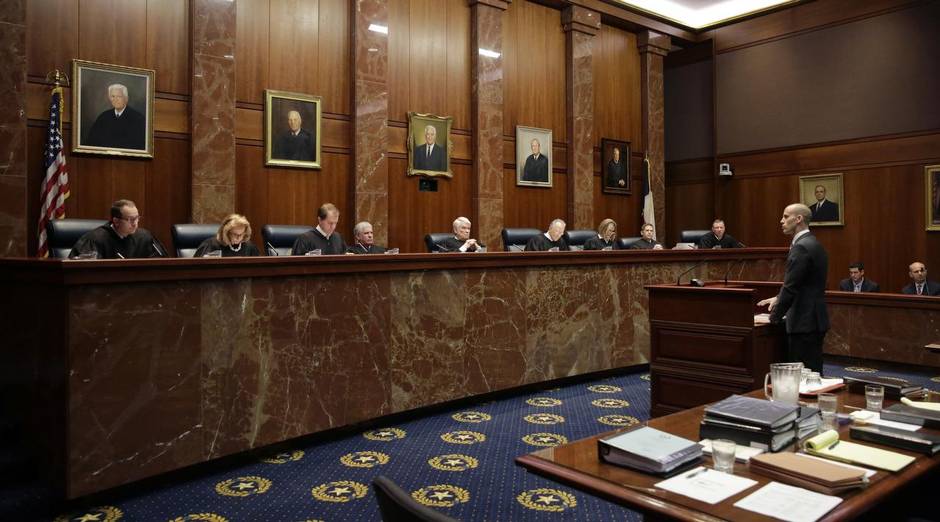
The court has declared in its unanimous ruling that taking care of public schools rests exclusively with the Texas Legislature.

Here is what I do know about the state of public school financing in Texas.

The Legislature has dramatically cut state spending on public schools over the past several sessions. Do the Supreme Court justices now believe the Legislature is going to reverse itself, that it’s going to find more money to distribute equitably among the more than 1,000 independent school districts around the state?

Of course, the political ramifications must be factored in.

Republicans control — by wide margins — both legislative chambers. They also occupy every statewide office in Texas. That includes the nine individuals who comprise the Texas Supreme Court.

Who out there really thinks the justices ever were going to buck the policies set by their GOP brethren in the other two branches of state government?

Here’s part of what the Morning News said: “In refusing to intervene, they’ve placed an enormous responsibility to fix our system of school finance on the shoulders of state lawmakers, the same lawmakers who have refused for decades to do what is needed. As a result, Texas’ 5 million public school children will be the ones who most directly bear the costs of the high court’s refusal to fix a system that it concedes requires ‘transformational, top-to-bottom reforms.'”

The justices have recognized the state’s public education system is broken but they won’t do anything to fix it.

The ball’s back in the Legislature’s court. Again.

Do something, lawmakers, to repair the system you’ve broken.

Local control? Who needs it in Fort Worth?

dan patrick

What am I missing here?

Don’t statewide elected officials in Texas — all of whom are Republicans — tell us they prefer to let locals control their affairs? Get a load of this tidbit.

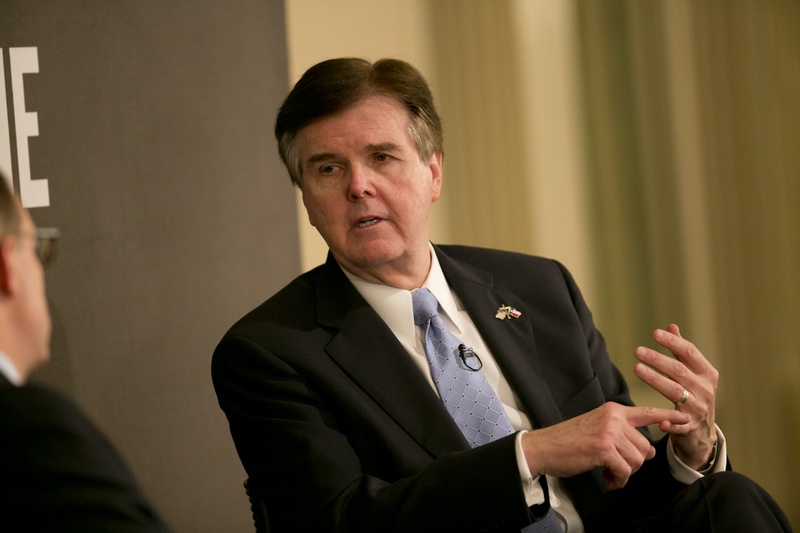
Lt. Gov. Dan Patrick wants Fort Worth Independent School District Superintendent Kent Scribner to resign. He’s demanding it, by golly.

Why? Scribner has drafted guidelines regarding transgender students in the district.

https://www.texastribune.org/2016/05/09/patrick-wants-fort-worth-superintendent-resign/

According to Patrick, Scribner has gone off the rails with this transgender matter.

I believe I’ll set aside the correctness or wrongness of Scribner’s view on dealing with transgender students. My issue here is whether the state’s lieutenant governor should pressure a local school superintendent chosen by a duly elected local school board to quit his job.

Lt. Gov. Patrick should butt out. How a major Texas school district decides to run its affairs is solely the province of its elected trustees.

The Texas Tribune reports: “‘After less than a year as superintendent, Dr. Scribner has lost his focus and thereby his ability to lead the Fort Worth ISD,’ Patrick said in a statement. ‘He has placed his own personal political agenda ahead of the more than 86,000 students attending 146 schools in the district by unilaterally adopting ‘Transgender Student Guidelines.'”

Interesting, don’t you think?

Patrick said the superintendent has “placed his own personal political agenda ahead” of the needs of students. Isn’t that what Patrick is doing now, by demanding that a local school superintendent step down?

This issue should be decided by the constituents in Fort Worth who elect the school board, which in turn appoints the district’s chief executive officer.

Lt. Gov. Patrick’s primary job is to preside over the Texas Senate and to guide legislation through the Legislature’s upper chamber. It should not include telling local officials how to conduct their own business.


Texas AG getting ahead of himself

paxton

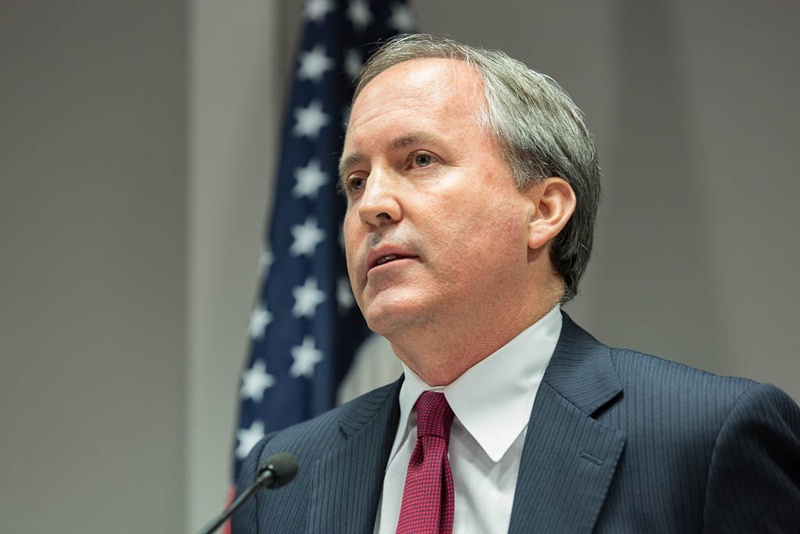
Ken Paxton plans to run for re-election in 2018 for a second term as Texas attorney general.

Big deal? Sure it is. The Republican officeholder is facing criminal charges on a couple of fronts, which suggests to me that he’s getting way ahead of himself.

https://www.texastribune.org/2016/04/21/despite-indictments-ken-paxton-plans-run-again/

I get what he’s saying. He’s proclaiming his innocence of charges of securities fraud brought by a Collin County grand jury. What’s more, the Securities and Exchange Commission has filed a complaint against Paxton alleging the same thing.

The man could go to jail if he’s convicted.

What’s getting too little attention here is the context of the indictment that brought the charges against the attorney general.

The panel indicted Paxton for failing to report properly the compensation he received for providing investment advice for friends.

As for the context, let’s remember a couple of critical points. Paxton represented Collin County in the Texas Legislature before running for AG in 2014. The grand jury quite likely included individuals who voted for Paxton when he ran for statewide office. Collin County is a reliably Republican area just north of Dallas. It’s no bastion of liberals out to “get” GOP politicians.

Thus, it’s quite possible that the prosecutors who brought the complaint to the grand jury had the goods on Paxton and the grand jury agreed.

Now, though, the attorney general’s flack has announced he plans to declare officially his intention to seek re-election.

The man’s got some work to do before he even thinks about his political future.

Teaching to the test, 2.0

Standardized-Test-0201

I never cease being amazed how some issues and concerns never seem to go away.

They hang around so long that you’d think they would get moldy, would wither and just disappear like so much dust.

Back to the Earth.

But they don’t. They linger. Forever and ever.

Standardized tests and the concerns about how Texas educators administer them remains a hot topic.

Seven years ago, on April 13, 2009 to be exact, I wrote a blog about Texas’s standardized testing regimen that went by a different name.

Here’s what I wrote then:

https://highplainsblogger.com/2009/04/teaching-to-the-test/

Another school year is drawing to its conclusion. The Texas Legislature will convene next January for its biennial 140-day bloodletting.

Teachers are still complaining about the current form of standardized tests they must give to their students. Parents gripe about them, too. I’m betting students — particularly those who don’t test well — also are complaining.

You’ll recall that three decades ago, a fiery Dallas billionaire named H. Ross Perot led a blue-ribbon commission to reform the Texas public school system. He’d bitched out loud about how Texas was more interested in developing blue-chip athletes than in developing blue-chip academic scholars. Then-Gov. Mark White called him out and challenged him to come up with a method to improve Texas students’ academic achievement.

That’s when the Perot Commission came to life.

A special legislative session in 1984 produced a new set of standards that included testing for students.

Few folks liked it then. Few folks like it now.

Why can’t we craft a system that makes more people happier about it than angry about it?

My kids are graduated long ago from Texas’s public school system. They got by just fine dealing with the tests they had to take. Were my wife and I happy about the requirement that they take the tests? Not really. Still, we persevered as a family.

Our sons have done well for themselves in the 20-plus years since they graduated from high school.

Now, though, we have a granddaughter who’ll be entering school soon. We don’t know what her parents have in mind for her education. If it involves public schools, well, she’ll have to pass her tests.

The Texas Legislature comprises 181 individuals who serve in the House of Representatives and the Senate. Surely some of them have a creative idea in their skulls to come up with a testing procedure that doesn’t cause heartburn among teachers, parents and students.

Or …

They can find a committed “civilian” out there to lead another effort to overhaul the public education system that’s been overhauled already.

Unless, of course, these legislators actually like hearing their constituents gripe at them about how teachers have to keep “teaching to the test.”


GOP cannibalism now under way

trump

Somehow, you just knew this would happen.

Back when there were many more Republican Party candidates for president, they all signed a “pledge” to back whoever the party nominates.

That was then. Now that we’re down to just three men standing, they all now are going back on their pledge. As noted Republican analyst Matthew Dowd said this morning on “Good Morning America,” he never considered the pledge to be “the Magna Carta,” meaning he’s not surprised that the candidates are walking back their pledge of support for the other guy.

Well, this is a byproduct of what has been the least dignified presidential campaign in memory — if not in history.

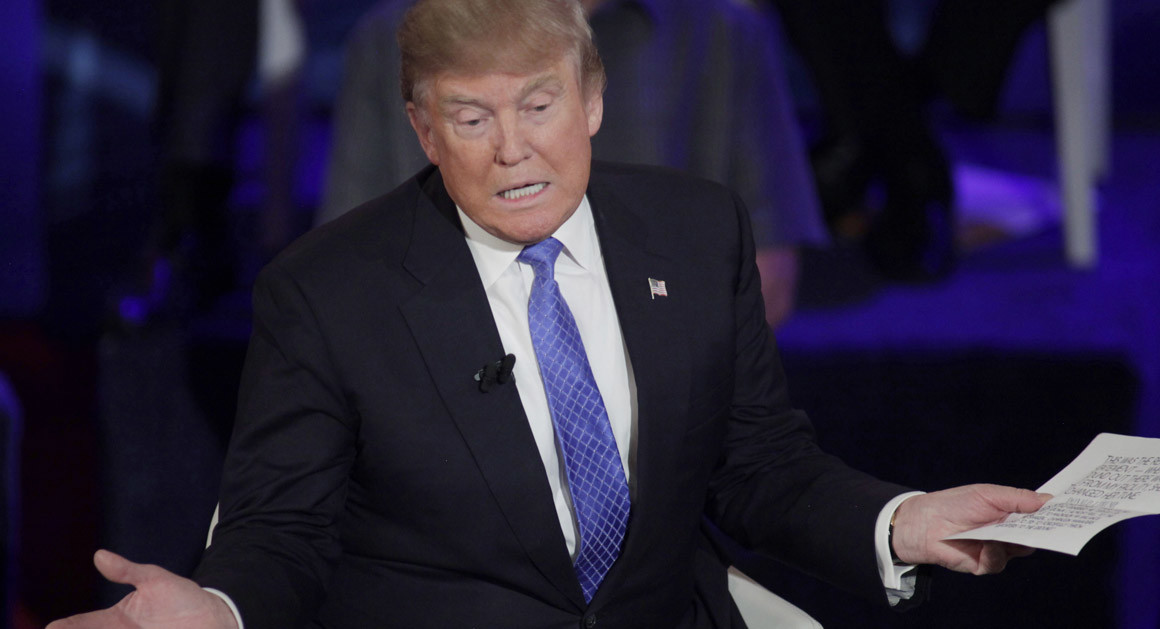
Donald J. Trump said the Republican Party has “treated me very unfairly.” The frontrunner is mad because the GOP brass doesn’t want him to be the nominee and is staying up into the wee hours concocting a scenario that would deny him the nomination at the party convention this summer in Cleveland.

Rafael Edward Cruz has said he is “not in the habit” of supporting candidates who attack his family, which the frontrunner — Trump — has done.

John Kasich is no fan of either of the other guys. He especially appears to detest Trump and has said — almost categorically — that the frontrunner won’t get his support if he’s the nominee. As for Cruz, should he be the nominee, a Kasich endorsement also sounds a bit iffy.

Trump, to no one’s surprise, said he never “pledged” anything. I guess that picture of him holding up that document in which he signed his name was a mirage.

A friend of mine reminded me this morning of something a prominent Texas Panhandle politician used to say about how Republicans treat each other. They resort to a form of cannibalism.

The comment came from the late state Sen. Teel Bivins of Amarillo, who used to joke that redistricting, which the Texas Legislature performs every decade after the census is taken, is when “Republicans eat their young.”

He said he hated the redistricting process. “Sure you do, Teel,” I would tell him. He just couldn’t stop doing it.

Are we seeing the three remaining GOP presidential candidates “eat” each other? They just might take this intense dislike with them to that convention in Ohio late this year.

Bon apetit, gentlemen.

Baylor joins universities to ban guns on campus

gunviolence

Another private institution of higher learning has made the correct call.

No guns will be allowed on our campus, according to the folks who run Baylor University.

Baylor President Ken Starr has announced that the school he leads won’t allow students or faculty to pack heat on the Waco campus.

It’s interesting to me that so many private schools have opted out of allowing open-carry of firearms. The law — which takes effect Aug. 1 — pertains to public colleges and universities, although the chancellor of the University of Texas System isn’t exactly a fan of open-carry legislation.

Baylor acts wisely

The private schools are lining up clearly against the law.

I understood the prevailing attitude among Texas legislators who voted to allow firearms to be carried openly in this state. I don’t have serious objection to the open carry law. I’m only a little bit queasy about it.

The college campus provision, though, does give me more serious pause.

The law allows Texans who are certified to carry concealed weapons to pack them in the open. Some foes of campus carry, though, have raised fair concerns: What about the student who gets a grade with which he or she disagrees — vehemently? Would that student react so badly as to do serious harm to the professor while carrying a firearm?

Baylor University has joined the list of private schools that have opted out of allowing guns to be carried openly on campus.

Good.


Get ready for open carry

open carry

SAN MARCOS, Texas — I’m sitting inside our fifth wheel listening to year-end celebratory fireworks that for the life of me sound like rifle shots.

Consider that my segue into commenting on a big day in state history that dawns in about three hours.

It’s the day that Texans can carry firearms in the open. We’ll be allowed to strap the shootin’ irons into holsters and wear ’em the way we used to wear ’em in the old days.

The Texas Legislature this year approved open carry legislation, which Gov. Greg Abbott signed into law.

There have been some interesting provisions about the law that deserve some mention.

One is that privately run colleges and universities have decided to opt out of the law; they won’t allow students or faculty members to carry them on campus.

Another is that some businesses also are disallowing customers from walking through their doors while packing heat in their holsters. One of the more interesting businesses to ban the activity is Whataburger, the Texas-based fast-food restaurant chain.

Those who are allowed to carry guns openly will be those who are registered to carry concealed guns in the first place. I suppose that means if customers want to buy a burger at Whataburger, they will need to keep the guns hidden under their jacket or tucked away in their purse.

I’ve already expressed my reservations about open-carry. I won’t predict that bad things will happen involving those who are packing heat openly. I had expressed concerns when the 1995 Legislature enacted the state’s concealed-carry law, but I’m happy to acknowledge — as I’ve done already in public — that my fears have not been realized.

It’s going to be a new day in Texas. I’ll accept the new law and hope for the best.

Oh, and one more thing. I’ve always advised people, “Don’t ever argue with someone carrying a gun.” In Texas, for the past two decades, that could be just about anyone.

With the new open-carry law taking effect in just a little bit, at least we’ll be able to spot the firearm on someone’s hip before we think about mouthing off.

Texas faces new oil bust, but might fare better this time

boom

Texas is heading for a bad-news, good-news economic cycle.

The bad? The price of oil is going to continue falling, making it difficult for producers to keep drilling for the crude.

The good? Texas is better positioned this time to handle this bust compared to its history with these crazy economic cycles.

CNBC.com reports: “In some ways, the Texas oil industry today is a victim of its own success. After a steady output decline in the 1980s and ’90s, U.S. oil producers staged a remarkable and widely unexpected revival over the past decade by deploying new seismic and drilling technologies. By coaxing drill bits to move horizontally, and breaking up ‘tight’ oil formations with fracking, millions of barrels of oil have been produced from decades-old fields once left for dead.”

So, the world now has a glut of oil, thanks to tremendous increases in production here at home.

Texas is going bust, sort of.

I arrived in Texas in the spring of 1984 to begin work at a newspaper in the Golden Triangle, one of the world’s premier petrochemical producing regions. Life was good in Beaumont, Port Arthur and Orange.

Then the bottom fell out. Two years later, the price of oil had collapsed. Refineries and petrochemical plants laid off thousands of employees. Some operations shut down. The jobless rate zoomed to nearly 20 percent in that part of the state.

Life, quite suddenly, became not so good.

The mantra then became “economic diversification.” Texas had to branch out, seek other economic revenue streams to take the pressure off the oil and petrochemical industry.

So, the state did that. It invested in high-tech, medical research, automobile manufacturing and a lot of other smaller initiatives.

That 1980s oil bust hammered the Texas Panhandle, too, where I would move in early 1995.

And, yes, in this part of the state we’re faring relatively well. We, too, have diversified. We aren’t nearly as dependent on oil and natural gas as we’d been since, oh, the Spindletop gusher came in at the turn of the 20th century.

Has the state been hit hard by the steep drop in oil prices? Yes. CNBC reports that the gross state product has been reduced to near zero as the year draws to a close. State government is looking at a serious revenue shortfall that the Legislature will have to deal with when it convenes in January 2017.

There isn’t the sense of panic, though, that we felt in the 1980s.

Why? Much of the state has heeded the diversification warnings our leaders sounded the last time the bottom fell out.