Tag Archives: US Constitution

Feds have no say in marriage? Um, yes, they do!

The issue of marriage came up as a side issue in an editorial published by a Texas newspaper. I feel the need to set the record straight about what rights the federal government has in determining marriage.

The Amarillo Globe-News said this, among other things, in discussing states’ rights on sports betting and a recent Supreme Court ruling on that subject: The federal government has no right to define marriage in any way, shape or form. Yet the U.S. Supreme Court sees fit to define marriage for the entire nation. Again – no state’s rights here.

The AGN is seeking to ascertain where states’ rights are relevant and where federal authority supersedes them.

Read the editorial here.

Back to the point: The Supreme Court ruled in 2015 that the U.S. Constitution — the document that governs the entire nation — has a clause that requires all citizens to have “equal protection under the law.” That was the basis of its ruling that legalized same-sex marriage in all 50 our states.

This isn’t a deeply held secret ruling concocted in some star chamber by a majority of the Supreme Court justices. The law is clear. Marriage becomes a federal issue if someone chooses to seek a legal remedy that they believe violates one of the key provisions of the Constitution.

Equal protection is such a key provision. Thus, when a segment of our population is denied the right to marry whoever they love, then the federal judiciary has an obligation to set the record straight.

States have no right, therefore, under the federal Constitution, to deny any American their guarantee of equal protection under the law.

Are we clear now? Good!

Oklahoma governor going out with ‘a bang’ … so to speak

Oklahoma Gov. Mary Fallin is a lame duck chief exec who appears to have discovered the joy of not having to face special interest groups as she tries to get re-elected.

Gov. Fallin, a Republican, vetoed a bill that came to her desk that would have allowed Oklahomans to carry a concealed weapon without a permit, meaning they needed no training of any sort to pack heat amongst the rest of us.

Good … for … her!

The only stipulation in the bill she vetoed that was worth a damn was that the heat packers couldn’t have been convicted felons.

To no one’s surprise, the National Rifle Association is mad as hell at Fallin, who is term-limited from seeking another term as governor. The NRA pledges to help elect the next governor who, the organization hopes, will allow this ridiculous piece of legislation to become law.

But do you know who’s happy about it, aside from rank-and-file citizens who opposed this monstrosity? Law enforcement officers! The cops didn’t want Fallin to sign the bill. State and local police associations urged Fallin to keep her signature off the legislation. She listened to them.

Their fears were well-founded. They just believe that concealed carry opportunities must come with some reasonable restrictions. Passing a rudimentary test after taking a basic course on firearms safety hardly constitutes a ham-fisted limitation on the rights of folks to “keep and bear arms.”

And to think the Legislature wanted to remove event that rule. Good grief.

Again … you go, Gov. Fallin!

Federal courts aren’t ‘political’? Guess again

The nation’s founders had the right idea when they created a Constitution that called for lifetime appointments of federal judges.

Part of their intent was to take politics out of the judicial system. Sadly, that intent has been lost. It’s gone. The federal bench is, um, highly political.

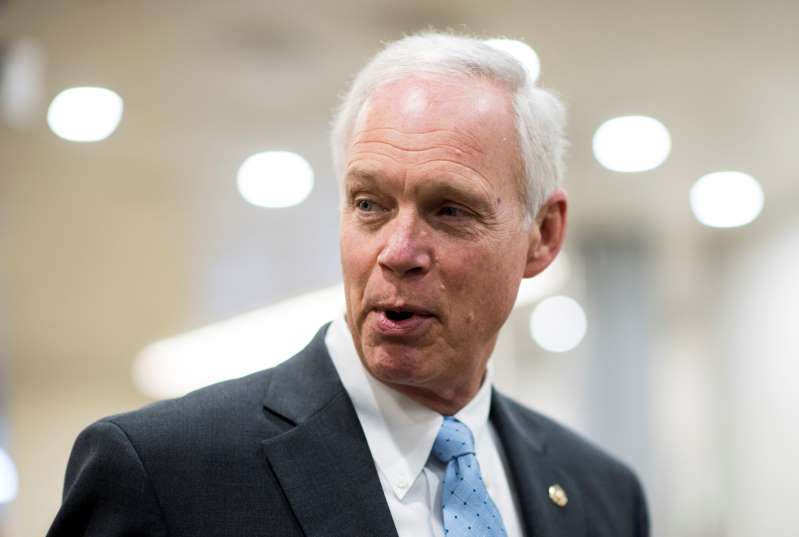
Case in point: U.S. Senate Republicans today filled a federal judgeship they kept empty for the past six years during the Obama administration. They voted 49-46 — along party lines — to seat Michael Brennan on the Seventh U.S. Court of Appeals. President Obama had nominated Victoria Nourse to that bench in 2010, but it was held up by Wisconsin U.S. Sen. Ron Johnson (pictured above), who exercised a Senate rule that allows a home-state senator to block anyone he or she chooses; Nourse pulled her nomination in 2012.

Indeed, one of the consequences of our federal elections is the federal judiciary and who gets seated. Presidential elections are particularly consequential in that regard. Presidents have the power to set judicial courses for generations through their appointment powers. You’d better believe, too, that politics matters when the Senate considers who to confirm or reject when they exercise their “advise and consent” authority.

Are the federal courts more political than, say, state courts? Hardly. In Texas, we elect judges on partisan ballots. Judicial philosophy or legal credentials take a back seat to which party under which the candidate is running, or so it appears at times in Texas.

The founders sought when they were creating a new nation to deliver a system of justice that would be free of political pressure. I only wish their dream would have come true. More than two centuries later, we hear laypeople/politicians second-guessing judicial rulings — especially when they lack any base of knowledge of the law upon judges make their decision.

It wasn’t supposed to be this way when the nation’s founders were building a nation “of laws, not of men.”

How do more guns make us safer?

I have been thinking for the past few days about my friend Martin, a journalist in Germany. He’s a family man with three young children.

Martin and I have had some stimulating talks over the years about U.S. politics and government. He knows this country far better than I know his native Germany.

I mention Martin today as the National Rifle Association is having its annual meeting in Dallas, which when you think about it is the perfect venue for the NRA, given that most Texans are flat-out, all-in supportive of the NRA’s political agenda.

Martin cannot grasp the notion that the NRA keeps pitching, which is — essentially — that more guns make us safer. He and I have talked about the U.S. Constitution and the Second Amendment. I have sought to explain the difficulty in amending an amendment in this country.

Germany has much stricter rules on gun ownership than we do. Martin buys into the German government’s view that the best way to prevent gun violence is to take guns away. It’s a simple proposition, as he sees it … although do not refer to my friend as “simplistic.” He is serious, intelligent and well-educated, as is his wife.

Although my friend and I disagree on the value on the Second Amendment to our national fabric — he thinks we ought to repeal it, while I do not — I do support his notion that more guns do not make us safer. More guns only exacerbate the crisis that has produced this plague of gun violence.

Accordingly, I continue to believe — the NRA’s view on the subject notwithstanding — that we can find a way to legislate tougher controls on gun purchases without emasculating the Second Amendment’s guarantee that the right to “keep and bear shall not be infringed.”

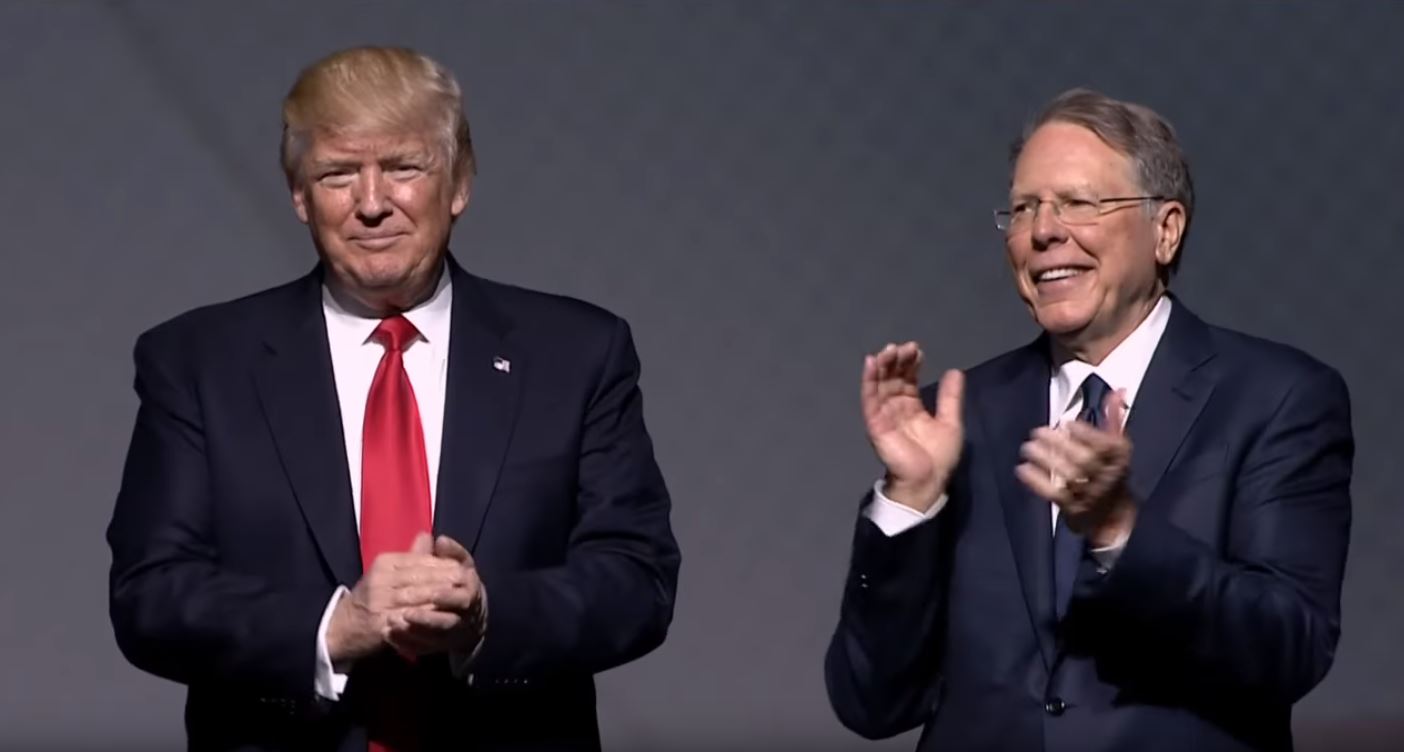
As for the NRA meeting in Dallas, I am quite certain that Donald J. Trump — who’s going to speak at the event — will warn the gun enthusiasts that if Democrats take control of Congress this year, “they’re going to take your guns away.”

Earth to The Donald: Democrats have controlled Congress and the presidency before. The guns haven’t gone anywhere.

Wolf controversy overshadows media’s good work

It’s a shame that a foul-mouthed comedian’s performance at the White House Correspondents Dinner has overshadowed much of what the crowd was there to do.

They came to honor those who work in the media, who cover the news and report to the public the happenings of the federal government, its elected officials and appointed staff.

The media are not, in the words of Donald J. Trump — who skipped the dinner for the second consecutive year — the “enemy of the American people.” Far from it. They are the protectors of transparency, accountability and government integrity.

Many media outlets were honored. CNN, for example, received a high honor for its work reporting on the dossier that emerged revealing potential connections between the Trump presidential campaign and Russian government operatives seeking to meddle in our 2016 presidential election.

The correspondents dinner focus should be on those individuals and organizations. Instead, we’re arguing from coast to coast over whether comedian Michelle Wolf crossed the line of decency in her scathing criticism of the president and his senior staff members.

For the record … she did.

The media, though, are doing the job the U.S. Constitution empowers them to do — without government interference, bullying, intimidation or threats.

I hope to be done with the Michelle Wolf travesty.

The media that are reporting on the presidency and the rest of the government will continue to earn my undying pride and praise when they do well.

Federal courts: not really politics free

The federal judiciary is supposed to be free of political pressure.

But is it? Really? Oh, I tend to think not.

I find myself looking at federal court rulings a bit differently these days. For instance, the D.C. federal judge who ruled that the Trump administration must keep honoring the Deferred Action on Childhood Arrivals program is an interesting fellow.

Judge John Bates is a President George W. Bush appointee. Thus, I tend to take his decision a bit more seriously than I would if he were appointed by President Barack Obama. Why? Because he upheld an Obama administration decision to create DACA in the first place. DACA, by the way, is the rule that protects U.S. residents who were brought here illegally by their parents; they’re called “Dreamers” because they are pursuing the “American Dream.” Get it?

The founders set up a federal judiciary that was supposed to be free of political pressure. It really isn’t. The judges who get these lifetime appointments are nonetheless examined carefully by people such as me and others who look for political reasons to endorse or condemn whatever ruling they hand down.

That is not to say that they base their decisions according to what others might say about them. Indeed, several Supreme Court justices over the years have veered sharply away from the course the presidents who nominated them hoped they would travel. And they get their share of condemnation from those who want them to adhere to the presidents’ political leanings.

But … they are political appointees. Make no mistake about it.

Presidency fattens POTUS’s wallet

I am acutely aware that I am not the first person to wonder aloud about this, but the president of the United States shouldn’t be fattening his personal finances because he happens to be the head of state.

The Emoluments Clause of the U.S. Constitution prohibits presidents from using their high office to take money from foreign governments. It remains to be seen whether Donald J. Trump has violated that provision.

This business of continuing to enrich himself here at home is equally galling … to me, at least.

Politico reports: Political groups supporting President Donald Trump are doubling as big-spending customers for the business empire he has not divested from.

Trump’s reelection campaign has spent $670,000 at Trump properties since he was elected president, and $125,000 during the first three months of this year alone, recent disclosures show.

Trump didn’t do what previous presidents customarily do when they assume their office. He retained ownership of his business empire, but placed his holdings in a trust run by sons Don Jr. and Eric. The last businessman-turned-president, Jimmy Carter, turned his peanut business over to a “blind trust” when he was elected in 1976.

Trump does it differently. He is profiting nicely at his myriad hotels, resorts and assorted business sites because of the job he holds.

I have said for a long time, before Trump even was elected president, that he built his career with one goal in mind: to enrich himself. He has done that quite well.

What is most galling is that Donald Trump is continuing to fatten his wallet even while ostensibly “serving the public” as president of the United States.

It’s all about Trump. Sickening.

Founders got this one precisely correct

I posted an item on High Plains Blogger that sought to explain that the U.S. Constitution need not state matters in black and white for issues to remain relevant.

My particular target dealt with a statement in a column published in the Amarillo Globe-News that the words “separation of church and state” are not in the Constitution, as if to suggest that there really is no “separation.” Well, there is.

Here is what I wrote:

https://highplainsblogger.com/2018/04/separation-of-church-state-need-not-be-written/

I want to reiterate a point I’ve made a time or three already.

It is that the founding fathers did not create a perfect governing document, but on the issue of church/state separation, they got that part perfectly.

They didn’t liberate the slaves when they drafted the Constitution. They didn’t give women the right to vote.

However, on the issue of whether to establish a secular state, they hit it out of the park. They sought to form a government that did not dictate how people should worship. They gave us the right to worship as we please, or not worship at all.

The First Amendment contains four elements: a free press, the freedom of speech, the ability to seek redress of grievances against the government and of religion.

Of those four elements, the founders listed the religion part first.

Does that suggest to you that the founders’ stipulation in the First Amendment that “Congress shall make no law respecting an establishment of religion, or prohibiting the free exercise thereof … ” was the most important civil liberty they wanted to protect?

That’s how I interpret it.

The founders’ direct ancestors fled religious persecution in Europe and they damn sure insisted that it must not happen in the United States of America.

Impeachment remains huge obstacle

I am believing now that Donald J. Trump isn’t likely to be kicked out of office before his term expires.

The nation’s founders set a high bar for removal of a president.

The U.S. House of Representatives can bring articles of impeachment. It can essentially indict a president on a complaint that he has committed “high crimes and misdemeanors.” It takes a simple majority of House members to impeach a president.

It’s happened twice. President Andrew Johnson got impeached in 1868. Then in 1998, the House impeached President Bill Clinton. The House impeached Johnson on 11 counts, the principal count being a violation of the Tenure of Office Act after he had fired Secretary of War Edwin Stanton. The House impeached Clinton on a charge that he perjured himself in testimony before a federal grand jury.

Both men were spared being kicked out. Johnson made it by a single vote in the U.S. Senate. Clinton survived much more easily in his Senate trial.

The Constitution lays out a two-thirds rule for conviction and removal from office of the president.

What makes a Trump removal so difficult lies in the numbers. Republicans control the Senate by a single seat. If they lose the Senate majority after the midterm election, it is projected that several GOP senators would need to join Democrats who likely would vote to convict the president on whatever charge is brought before the body.

I’m not certain that an impeachable offense will emerge from the investigation being conducted by special counsel Robert Mueller. If one does emerge, though, it remains a tremendously tenuous view that there would be enough political support in the Senate to actually convict the president — no matter how egregious the charge that might come forth.

Impeachment is a political process, even though members of the House and Senate state piously that they are conducting a quasi-judicial process. It really relies on the partisan leaning of both legislative bodies.

I want to offer this look at what might lie ahead for the president and for Congress.

First things first. We have an election to complete that will determine the partisan makeup of the legislative chambers that will decide what to do about this president.

Hey, you know he could just quit once he realizes his agenda — whatever it is — is going nowhere.

‘Separation of church, state’ need not be written

I cannot let this one pass without offering a brief rejoinder.

Dave Henry, the director of commentary for the Amarillo Globe-News, offered this tidbit in a column Sunday about what is written in the U.S. Constitution.

His column dealt with myths and other untruths that show up on social media. He writes: The fake “City of Amarillo” Facebook page reminded AGN that, “The free press is a cornerstone of democracy.”

Is the free press a “cornerstone” of a republic? I hope so, because the word “democracy” is nowhere to be found in the U.S. Constitution or the Declaration of Independence. Unfortunately, what is actually written in the U.S. Constitution – and what is not – does not matter anymore. For example, “separation of church and state.”

He quibbles correctly about whether the founders created a “democracy” or a “republic.” It was the latter, for certain.

But then …

Henry repeats a canard that needs some further explanation. He says the Constitution does not contain the words “separation of church and state.” True. But only as far as it goes.

What that remark — cited often by conservatives who keep arguing that it’s OK to teach religion in public schools — ignores is that the Constitution implies such a separation in its First Amendment. The founders didn’t need to write “separation of church and state” when they declared that Congress shall make no law that establishes a state religion. The prohibition against writing such a law translates quite nicely, in my humble view, to a church-and-state separation.

What’s more, the federal courts have upheld that standard repeatedly through countless court challenges over the course of, oh, 200 years.

I just have grown weary of the tired refrain that the Constitution needs to say something specifically in order to make an issue relevant. Church/state separation is covered by the nation’s governing document — even if it doesn’t say it in so many words.