Tag Archives: Congress

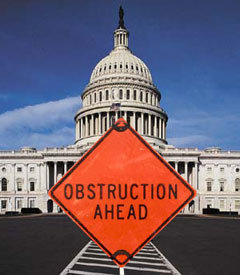
Hey Dems, don’t be obstructionists, too!

I’ve spent a lot of emotional energy with this blog bashing congressional Republicans for what I believe has been their obstructionist habits as they dealt with a Democratic president, Barack H. Obama.

My sense of fairness compels me to instruct congressional Democrats to avoid following their GOP colleagues’ lead as they now must deal with a Republican in the White House, Donald J. Trump.

I understand that the roles aren’t entirely parallel.

For much of Obama’s time as president, Republicans controlled at least one congressional chamber. They took control of the entire Capitol Building after the 2014 elections. I remember, too, when Sen. Mitch McConnell, then the minority leader, declared his No. 1 priority was to make Obama a “one-term president.”

The GOP fought the president along every step. Republicans opposed the president’s economic stimulus package right out of the chute in 2009; they opposed the Affordable Care Act; they — along with a handful of Democrats — resisted calls for new laws on guns even after the Sandy Hook Elementary School massacre of 20 first- and second-graders.

The GOP now controls Congress and the White House.

What’s left for Democrats? They’re angry (a) over the way Republicans treated Barack Obama and (b) that they lost the 2016 election that every pundit in the country seemed to think was in the bag for them.

Is obstructionism the way to go? No. For one thing, Democrats are operating from a much weaker position this time than Republicans had when Barack Obama took office.

Still, some congressional Democrats are insisting that they intend to block the president and his fellow Republicans in Congress. They don’t intend to work with their “friends” on the other side. Some Democratic lawmakers have declared their intention is to ensure that Trump gets impeached.

Government isn’t supposed to be an ideological battleground. It’s supposed to serve the people whose votes put politicians in office. There surely ought to be ways for Democrats can look for common ground with Republicans. Need they surrender their principles? Not any more than Republicans should surrender theirs.

I feel as though I should remind Democrats — just as I reminded Republicans during the Obama years — that many of us out here want government to be a functioning body. We want government to enact smart legislation. We insist that members of the House and Senate hue to the principle of good government.

And good government, by definition, means that it works on behalf of those of us who pay for it.

What has the president learned in 100 days?

Let’s turn away for a moment from what Donald Trump might have accomplished during his first 100 days as president to what he might have learned during that time.

The president’s list of accomplishments is pretty damn skimpy.

His learning curve, though, has been steep. I hope it’s beginning to flatten out.

What’s the most glaring eye-opener for the president? It’s that you cannot run the federal government the way you run a business.

At virtually every turn along the way since taking office, the president has been forced to swallow that bitter pill. A man who became used to getting his way because he demands it has learned that the federal government is structured — on purpose — to function on an entirely different set of dynamics.

The nation’s founders crafted a brilliant governing document. When you think about it, while the U.S. Constitution grants the president significant executive authority, it does not imbue the office with ultimate governing authority. The founders divvied up power among three branches of government: executive, legislative and judicial.

It’s that darn legislative branch — the U.S. Congress — that has a say in what becomes law. Donald Trump’s business experience doesn’t mean squat to many of the 535 men and women who comprise both chambers of Congress. They, too, have their constituencies to which they must answer. Yes, the president represents the nation, but Congress — as a body — also represents the very same nation.

Can you govern the nation like a business? No. Never. Not a zillion years.

Trump needs to understand that governance is a team sport. He cannot threaten members of Congress if they resist his legislative proposals. He cannot exclude members of the “other” party from key negotiations. He must abandon the “I, alone” mantra — which he bellowed at the Republican National Convention this past summer — that threatens to haunt him for as long as he is president.

And then there’s the judicial branch. The federal judiciary comprises individuals who hold lifetime appointed jobs. Their mission is to ensure that laws do not violate the Constitution. The founders granted them independence from the executive and legislative government branches.

Those judges have the constitutional authority to knock down executive orders, or to put the brakes on laws enacted by Congress. They aren’t “so-called judges” whose status as “unelected” jurists doesn’t diminish their authority.

I hope the president has learned at least some elements of all this during his first 100 days. If he doesn’t, then we’re all going to be in for an extremely rough ride.

However, we’re all just spectators. The president will need to hold on with both hands if he has any chance of getting anything done during his time in office.

We are witnessing the consequence of electing someone with zero public service experience. Mr. President, the federal government bears no resemblance — none! — to the businesses you built.

How did The Wall become our responsibility?

Hey, didn’t Donald John Trump vow, declare it a lead-pipe cinch that Mexico would pay for a “big, beautiful wall” along the border between that country and the United States of America?

Didn’t he say he would force Mexico to foot the bill because, after all, those criminals and terrorists were “flooding” the country through our southern neighbor?

He got into an immediate war of words with Mexican President Enrique Pena Nieto after taking office this past January. Why? Pena Nieto said “no way” would his country spend a nickel to pay for the wall.

Here we are, nearly 100 days into the Trump administration’s existence. The wall is now central to a domestic political dispute — in the United States. The federal government might shut down if Congress cannot come up with a plan to stick American taxpayers with the bill to build a wall that (a) won’t work and (b) will blow up the annual budget deficit.

What’s the cost of this boondoggle? $20 billion to $25 billion? For starters?

Congress and the president are squabbling over whether to approve one of those “continuing resolutions” that would fund the government for the short term. Meanwhile, that damn wall is still being negotiated between Republican congressional leaders and the Republican who now sits (once in a while) in the Oval Office.

If there is a more impractical, illogical and ill-conceived idea than building such a barrier between two ostensibly “friendly” nations, then someone will have tell me.

A huge portion of the U.S.-Mexico border happens to be along a mighty river — the Rio Grande — that separates Texas from Mexico. How in the name of civil engineering does the president build the wall along that border? How does the president propose to seize all that private land without adding to the already-enormous cost? The U.S. Constitution’s Fifth Amendment requires “just compensation” for any “private land taken for public use.”

Well, why quibble over the small stuff?

The very notion of this wall becoming central to this political dispute simply illustrates yet another blind and thoughtless campaign promise the president cannot keep.

And if he made that promise knowing that he couldn’t fulfill it, isn’t that just another flat-out, bald-faced lie?

So long, Chairman Chaffetz

Jason Chaffetz stunned his U.S. House of Representatives colleagues today by announcing his intention to step away from Congress next year.

The Utah Republican won’t seek re-election.

Scuttlebutt is going in a couple of directions: Chaffetz might run for Utah governor in 2020 or he might seek a U.S. Senate seat after that.

The young lawmaker has made a bit of name for himself during his time in Congress. He chairs the House Oversight Committee and spent a lot of time — and taxpayer money — looking for dirt to throw onto Hillary Rodham Clinton while she was running for president this past year. He came up empty, as did his predecessor as chairman, Rep. Darrell Issa, R-Calif.

My own thoughts of Chairman Chaffetz, though, go back to when he was first elected to Congress. He became one of those grandstanders who slept each night on a couch in his office. He didn’t bother with renting an apartment, or buying a home in Washington, D.C.

I recall him making some noise about wanting to connect with his constituents back home. He flew home regularly to be with his wife and children. I admire his dedication to his family.

However, I always have wondered about politicians who call attention to themselves ostensibly to make some sort of statement about staying in touch with the home folks. I am left to ask: How many folks back home sleep on office furniture?

Spinning losses into moral victories

Politics has this way of producing victories where none is apparent.

Democrats around the country, for instance, are seeking to turn electoral defeats into a form of winning. It’s a fascinating thing to watch — and it has me shaking my head.

A Kansas congressional district special election produced a Republican victory recently. The Fourth Congressional District seat once was held by CIA Director Mike Pompeo, whom Donald Trump appointed to become the nation’s top spook. Trump won that district over Hillary Clinton in the 2016 election and it has been in GOP hands seemingly since The Flood.

The Republican who won the seat in the special election did so narrowly. Thus, Democrats are claiming some sort of victory.

Today, voters in Georgia’s Sixth Congressional District are going to the polls. They’re going to choose a successor to Tom Price, who represented the GOP-friendly district before becoming secretary of health and human services; the Sixth District once was represented by none other than the inimitable Newt Gingrich.

A large field is running. It includes five Democrats and 11 Republicans. The top vote-getter needs to win with 50 percent plus one vote to win the election outright. The leader is a Democrat, a young man named Jon Ossoff. Polling indicates he is likely to fall short — barely — of the majority he needs to win. If he doesn’t make it, he needs to face the No. 2 finisher, likely one of the Republicans. The GOP hopes the party will rally behind their guy and elect him over Ossoff in the runoff election.

Still, Democrats — even if they lose this election — are likely to crow about how they damn near flipped that district.

Please.

As a progressive-leaning voter myself, I am pulling for an upset in Georgia. I would be glad to see Ossoff score an outright victory by day’s end. A win by the young Democrat clearly would send a message to the president and his Republican friends that they’re likely to have a serious fight on their hands in next year’s mid-term congressional elections.

However, elections determine winners and losers. Candidates need to get more votes than their opponent to actually win. Falling short of the total they need today in Georgia will not stop Democrats from spinning a loss into some sort of moral victory.

As the old saying goes, “Close counts only in horseshoes and hand grenades.”

Yes, congressman, the public pays your salary

Markwayne Mullin has a curious way of honoring this tax-filing season.

All the Republican congressman from eastern Oklahoma did was tell a fired-up town hall audience the other day that they don’t pay his congressional salary. No sir. He has essentially “prepaid” his own $174,000 annual salary by forking over all that tax revenue from his multiple businesses, or so he said.

So help me, if there was a prize for creative (non)thinking, I am quite certain Rep. Mullin would be a finalist for the Mother of All Booby Prizes.

It ain’t ‘bullcrap’

Here is part of how the Washington Times reported Mullin’s, um, strange rationale: “You said you pay for me to do this. Bullcrap. I pay for myself. I paid enough taxes before I got there and continue to through my company to pay my own salary. This is a service. No one here pays me to go,” Mr. Mullin said in a video of the exchange. “I do it as an honor and a service.”

An honor and a service? Is that what you call it, young man?

Even though I am not one of your constituents, I applaud this fellow for calling his congressional service an “honor.” However, he isn’t doing it on his own dime. He’s doing it with money paid by taxpayers all across the nation. That includes those of us who live way over yonder in the Texas Panhandle, which is a good distance from the district Mullin serves.

To be candid, such reasoning about his own tax burden paying for his congressional service insults the intelligence of those who heard him say it at the town hall gathering. It also insults the rest of us who know better than to believe the nonsense this guy sputtered.

The only “bullcrap” mentioned by this young member of Congress was the notion that taxpayers aren’t footing the bill for his service on Capitol Hill.

This is just me thinking out loud at the moment, but I venture to guess that Rep. Mullin has just “bullcrapped” his way out of office after the next congressional election.

Time for a town hall meeting, Rep. Thornberry? Hmmm?

Welcome home, Mac Thornberry.

I know you’re a big shot in the U.S. House of Representatives, chairing the House Armed Services Committee and all of that.

You and I have some shared history here in the Texas Panhandle. You took office the same week I reported for duty at the Amarillo Globe-News in January 1995. In a way, we kind of “grew up together.”

But you’ve disappointed me at times. We differ on public policy matters. That’s OK with me. We have maintained a friendly relationship, which I sincerely appreciate.

What I cannot yet fathom is why you are forgoing town hall meetings with your constituents during this Easter/Passover break Congress is taking. Surely you know about the unease among many Americans about what Congress might do with the Affordable Care Act, the law you GOP lawmakers and other critics blithely call “Obamacare.”

Y’all tried to scrap it and replace it with something else. It didn’t work. The effort failed.

But you aren’t planning any town hall meetings. You met with business leaders in Amarillo and, I presume, in Wichita Falls. I understand you talked about the government’s rules and regulations that affect business operations; I also am quite certain you heard a lot of agreement from those constituents over your own belief that the feds are too hard on private enterprise.

Others out there aren’t entirely in sync with what you want to do. They dislike efforts to repeal and replace the ACA. Indeed, many of your colleagues — including your fellow Republicans — have gotten a gutful of gripes from constituents. I applaud them for taking the heat.

I do not applaud members of Congress who decline to face their constituents and to answer their questions and deal with their anxiety.

You need not to be reminded, Mac, that you work for us. We are your bosses. Not the speaker. Not the House majority leader. Not the president. It’s us, sir.

Talk to us. Listen to us.

Beware of declaring the end of Trump Era

It might be easy for some observers to declare the virtual end of the Trump Era in the wake of the spectacular flameout of the effort to repeal the Affordable Care Act.

I wish to offer a word of caution.

* The principal character in this drama, Donald John Trump, is a guy who wasn’t supposed to win the Republican presidential nomination this past summer. But he did.

* Then he was supposed to be trampled by the Democratic Party juggernaut led by that party’s presidential nominee, Hillary Rodham Clinton. He defeated Hillary in the general election.

* Trump was thought to be a goner after an endless litany of verbal gaffes, insults, revelations of hideous behavior. He not only survived all those incidents, the legions of Trumpkins rallied behind him.

Trump shouldn’t be president. However, he is president. He doesn’t know the political system works. He has surrounded himself with sycophants who have little knowledge of the system as well.

He got his head handed to him by conservative congressional Republicans.

Is this the end of Trump’s tenure as president?

Sure, except that he survived some hideous mistakes on his way to the presidency.

There might be circumstances that develop along the way that derail this guy. One political miscalculation — admittedly it’s a big one, indeed — likely isn’t enough to do him in.

Trump takes defeat … and then offers another lie

Donald Trump said repeatedly — countless times, in fact — that his Day One priority would be to repeal and replace the Affordable Care Act.

Over and over again on the stump while campaigning for president, the Republican Party nominee said it. It would be his top priority.

From … Day … One!

What, then, did the president say from his desk today in the Oval Office? He said he “never” mentioned repealing and replacing the ACA within the first 64 days of his presidency.

The Liar in Chief cannot tell the truth … about anything!

Good ever-lovin’ grief, man! It’s on the record, Mr. President. You said it. Out loud. In front of your adoring fans and in front of the “enemy of the people” media representatives who were covering your campaign.

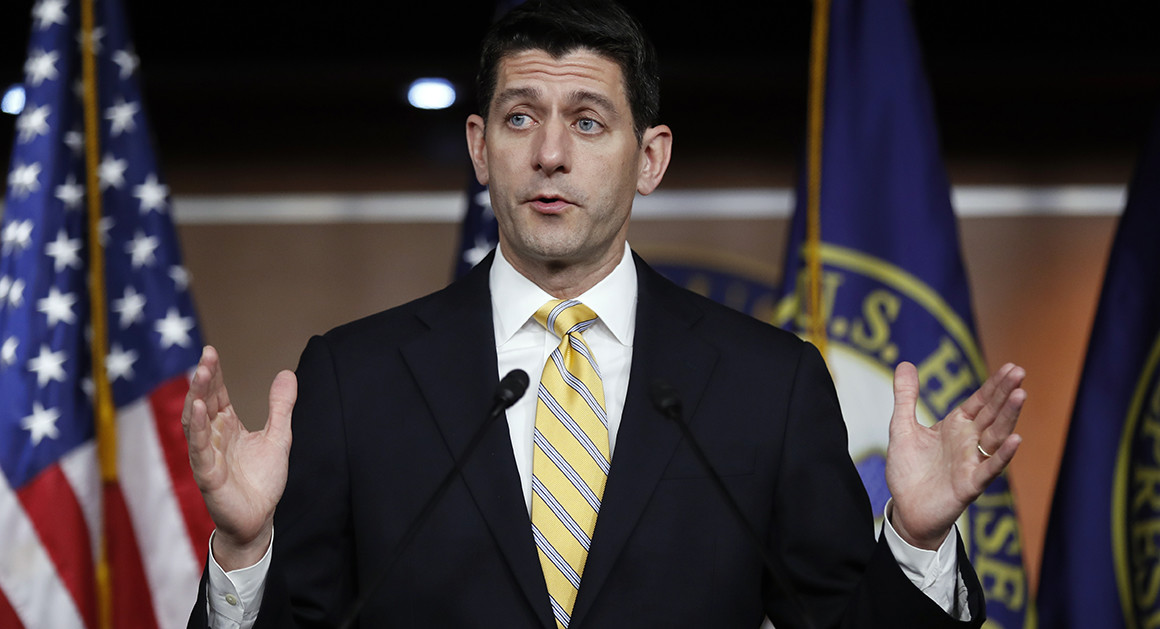
The president lost a big fight today. House Speaker Paul Ryan — the president’s wing man in this fight — pulled the repeal-and-replace legislation. The Republican majority in Congress didn’t have the votes to enact it.

Thus, the president’s top priority became toast.

At the very least he ought to be able to recognize and acknowledge what he said while campaigning for the first political office he ever has sought.

Who works for whom in Washington?

Donald Trump thought he could strong-arm congressional Republicans into doing his bidding.

He wanted them to enact a repeal of the Affordable Care Act. GOP lawmakers — namely the more conservative members of their caucus — weren’t budging. Why? I believe it’s because they knew something that the president doesn’t understand: They work for their constituents; they do not work for the president.

When I heard today that Trumpcare went down in flames, I flashed back to another time, in an another era, when another lawmaker decided to stick it in the ear of his congressional leadership.

I recalled former U.S. Rep. Larry Combest, a Republican from Lubbock, who once defied the speaker of the House of Representatives who wanted Combest to back some legislation that he just couldn’t support.

It occurred in the late 1990s. Combest represented a largely rural West Texas congressional district that ran from southern Amarillo all the way to the Permian Basin.

GOP House Speaker Newt Gingrich was pushing something called Freedom to Farm, a dramatic overhaul of national farm policy. If memory serves, Freedom to Farm would have drastically reduced the amount of subsidies the government gave to farmers and ranchers to help them through difficult years. We get those kinds of seasons in West Texas, as you might know. Drought has this way of inhibiting dryland farmers’ ability to harvest crops; such a lack of moisture also restricts the amount of grain that ranchers use to feed their livestock.

Gingrich pushed Combest hard to back Freedom to Farm. Combest resisted. He finally voted against Freedom to Farm.

Combest was left to remind the speaker that he didn’t work for congressional leaders. He answered to the farmers and ranchers who elected him to Congress. These folks back home would suffer from Freedom to Farm and Combest wasn’t about to let them down.

I applauded Combest at the time, remarking in an editorial — and also in a couple of signed columns — that he showed guts by defying his congressional leadership and standing up for his constituents.

Congressional Republicans today don’t work for the president. They answer to their constituents at home, the folks whose votes upon which these lawmakers depend. They hate the GOP alternative to the ACA and let their congressmen and women know it in no uncertain terms. Democrats hate it, too.

That is how representative democracy works, Mr. President.

Just ask Larry Combest.