Tag Archives: Texas Legislature

Tech chancellor pushes another ‘big idea’

Bob Duncan is on a mission. It’s simple and complicated at the same time.

The Texas Tech University System chancellor believes Texas is too big a state to have just a single college of veterinary medicine. He wants to establish a second vet school and he wants it to be in Amarillo.

So, here’s the simplicity and complexity of the notion he is proposing.

The Texas Panhandle is at the epicenter of large animal care, given the region’s plethora of livestock in the form of cattle and horses. “The feedlots and dairies are clustered in West Texas, not on the Brazos (River),” he said, alluding to Texas A&M University’s dominance of veterinary medicine education. A&M has the sole such college in Texas, and Duncan wants to rid the Aggies of their vet school monopoly.

In a presentation today to the Rotary Club of Amarillo, Duncan made several key points. He pointed out that Texas Tech was created in 1923 as the result of a “big idea.” He believes the school of veterinary medicine is the university’s next major step forward.

Duncan said Texas has a shortage of veterinarians, 40 percent of whom are educated out of state.

The chancellor said Texas Tech has been consulting with veterinary medicine programs at Kansas State, Oklahoma State, Colorado State and University of California-Davis. He also noted that Amarillo is closer to the vet school campuses in Kansas, Oklahoma and Colorado than it is to College Station, home of Texas A&M University’s flagship campus.

But it gets complicated.

Duncan and his Tech team have been getting serious resistance from A&M, which is led by Chancellor John Sharp, who Duncan describes as a “fine chancellor” who’s also a friend. “We just disagree on this issue,” Duncan said of Sharp.

Sharp has been resisting Tech’s push for a school of veterinary medicine because he apparently believes there’s no need for a second such school in Texas, a state comprising 268,000 square miles and 28 million inhabitants. Indeed, Texas is the second-largest state geographically and second-most populous state in the nation. And we have just a single school of veterinary medicine?

I believe Chancellor Sharp has been bitten by the protectionist bug.

Duncan said he has no desire or intention to denigrate Texas A&M or its school of veterinary medicine. “A&M is considered one of the top 10 vet schools in the nation,” Duncan said, “but A&M cannot accept all the qualified applicants who want to be veterinarians.” He noted that most of the qualified Texas vet school applicants have to go out of state to obtain their doctorate in veterinary medicine.

Texas Tech has received $4.1 million from the Texas Legislature to develop a plan for a vet school in Amarillo, Duncan said, adding that Tech plans to present that plan to the 2019 Legislature, which convenes next January.

Tech plans to locate the campus next to it existing Texas Tech Health Sciences Center and School of Pharmacy campuses in west Amarillo.

But there’s a lot more money to raise, Duncan said, citing a $90 million goal from private, public and foundation sources. He said the Amarillo Economic Development Corporation has set aside $15 million in grant funds to assist in that fundraising effort.

“It’s a natural fit,” Duncan said of the vet school plan for the Texas Panhandle.

How confident is the chancellor of success? He didn’t specify.

I’ll just add that Duncan moved into the chancellor’s chair after a highly successful career in the Texas Senate. Many of his former Senate colleagues are still serving there, along with a smattering of those with whom he served in the Texas House. Moreover, Duncan also believes the Panhandle delegation — Sen. Kel Seliger, and Reps. John Smithee, Four Price and Ken King — all are lending their considerable influence to push the vet school over the finish line.

Duncan developed a high degree of respect as a legislator. I believe that respect transfers to the Texas Tech chancellor as he seeks legislative support for what he calls Tech’s next “big idea.”

Insurgents vs. Establishment … in Senate District 31?

West Texas might turn out to be something of a battleground during this spring’s Republican Party primary season.

The party is engaging in a battle among its members: Establishment Wing vs. the Insurgent Wing.

The Insurgents are being led in a fashion by the president of the United States, Donald J. Trump. The Establishment is being called into battle by members of the congressional leadership.

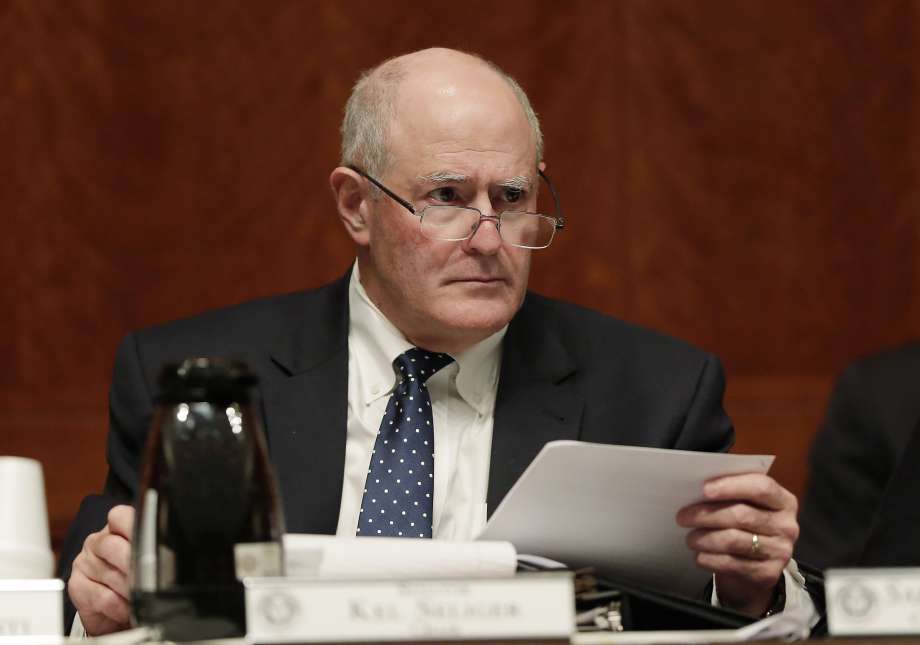
The implications for West Texas’s sprawling Texas Senate District 31 contest? They might lie in the challenge awaiting incumbent state Sen. Kel Seliger, the Amarillo Republican and a stalwart of the Texas Establishment Wing. He chairs the Senate Higher Education Committee and serves as well on the Education Committee.

He is facing two challengers in the GOP primary. He knows them both well. One is former Midland Mayor Mike Canon, a TEA Party favorite who challenged Seliger four years ago; Canon lost the GOP primary by about 5 percentage points. The other is Victor Leal, an Amarillo restaurant owner who touts his Muleshoe mayorship as giving him the requisite government administrative experience.

It gets a bit complicated, however.

Seliger isn’t exactly a fan of the Senate’s presiding officer, Lt. Gov. Dan Patrick. Seliger declined to join the rest of the Senate Republican caucus in signing a letter of endorsement for Patrick’s own re-election bid. I don’t know this as fact, but my strong hunch is that Lt. Gov. Patrick is unhappy with Seliger over this snub.

Who, then, is he backing for the Senate District 31 seat? It’s likely not going to be Sen. Seliger. It might be Canon or Leal … or maybe both!

There’s some political chatter in the Panhandle that suggests that Leal, who ran unsuccessfully for the Texas House District 87 seat in 2010 that former GOP Rep. David Swinford vacated, is running as a spoiler. He intends to peel off enough Panhandle votes that normally would go to Seliger with the hope of forcing a runoff. Leal would say he’s in it to win it and would deny playing the spoiler role. I also can presume that Leal hopes to be one of the two men squaring off in a possible GOP runoff.

Seliger is intent on avoiding a runoff. He plans to pull out all the stops to ensure that his Panhandle base turns out in March to carry him to victory. Meanwhile, he vows to ratchet up his visibility in the southern reaches of the geographically huge Senate district. He maintains a district office in Midland and over the 13 years representing District 31 has become as fluent in Permian Basin-speak as he is in Panhandle-speak. The regions are part of the same district, but their issues are unique.

Canon, meanwhile, likely intends to seek to outflank Seliger on the right, which he sought to do in 2014. Seliger’s campaign material speaks openly, though, about how he is able to deliver “conservative values” to his Senate district constituents.

Will it be enough to stave off this two-headed challenge on his right, one from the Permian Basin and the other from within his own Panhandle base?

Readers of this blog know my own preference. It is that I want Seliger to win outright.

However, I am not going to predict any such outcome. I’ll just wait right along with the rest of the state to see how this internal partisan conflict plays out.

High court to settle redistricting dilemma?

I don’t expect the current U.S. Supreme Court to decide that Texas’s legislative and congressional boundaries were drawn in a manner that discriminates against people of color.

Why not? Because its ideological composition would tilt toward those who dismiss such concerns.

The court will decide Abbott v. Perez sometime this year. It involves the manner in which several districts were drawn. Critics say that Hispanics were denied the right to choose a candidate of their own because of the way a San Antonio-area district was gerrymandered.

I’ll set aside the merits of the case that justices will hear. I want to concentrate briefly on the method the states use to draw these districts.

They are done by legislatures. The Texas Legislature is dominated by Republican super-majorities. The custom has been that the Legislature draws these boundaries to benefit the party in power.

Legislators don’t like being handed this task at the end of every census, which is taken at the beginning of each decade. The late state Sen. Teel Bivins of Amarillo once told me that redistricting provides “Republicans a chance to eat their young.” I’ve never quite understood Bivins’s logic. To my mind, the process allows the party in power to “eat the young” of the other party.

The 1991 Texas Legislature redrew the state’s congressional boundaries in a way that sought to shield Democrats, who controlled the Legislature at the time. The Legislature divided Amarillo into two congressional districts, peeling Republicans from the 13th Congressional District to protect then-U.S. Rep. Bill Sarpalius, a Democrat. Sarpalius was re-elected in 1992, but then lost in 1994 to Republican upstart Mac Thornberry.

https://highplainsblogger.com/2014/04/gerrymandering-not-always-a-bad-thing/

My own preference would be to hand this process over to a bipartisan commission appointed by the governor and both legislative chambers. I favor taking this process out of politicians’ hands. Their aim is to protect their own and stick it to the politicians — and to voters — from their other party.

Perhaps the Supreme Court’s decision might include a dissent that spells out potential remedies to what I consider to be a political travesty.

One can hope.

A new trio forms a ‘Three Amigos’ team

I was fond years ago of referring to three Republican Texas state representatives as the “Three Amigos.”

They were Reps. John Smithee of Amarillo, David Swinford of Dumas and Warren Chisum of Pampa. Two of them — Swinford and Chisum — have retired from the Texas Legislature; only Smithee remains in public life. Indeed, Smithee is one of the longest-tenured members of the Texas House of Representatives, having served there since 1985; that’s 33 years.

Well, here’s the thing: Smithee has two new members of a trio of legislators with whom he has teamed up.

Sen. Kel Seliger and Rep. Four Price, both Amarillo Republicans, have joined their pal Smithee in creating a formidable team of “amigos” to represent the Panhandle’s interests.

I suppose I could include state Rep. Ken King, a Canadian Republican — but that would create a sort of “Fearsome Foursome” for the Panhandle. I cannot speak with any authority on the job he’s doing; King was elected after I left the working world.

So, for the purposes of this blog, I’ll stick with the newly constituted Three Amigos, all of whom I know quite well.

They’re all dedicated to their public service.

Smithee has been setting his legal practice aside for more than three decades during legislative sessions. He serves as chair of the House Insurance Committee and my experience with him has been always on the up-and-up. What I always appreciated about Smithee is his willingness to provide direct answers to direct questions. There’s no flim-flam or obtuseness where Smithee is concerned.

Price has emerged as star in the House and is now being discussed openly as a possible candidate for speaker of that body when the 2019 Legislature convenes. He has championed mental health reform and has learned quickly the unique language of legislators.

Seliger, too, emerged as a quick study in legislative-speak after he took office in 2004, succeeding the late Republican Teel Bivins, who had received an ambassadorial appointment from President George W. Bush.

And just this past week, Seliger and Price sent out mailers that were paid for by the Associated Republicans of Texas Campaign Fund. Both men’s flyers say they are “getting conservative results for Texans.” They both said, “John … we know it isn’t easy to stand up to special interest groups. Tell (them) to stand strong and keep up the good work.”

Tag-team campaigning? Sure looks like it to me.

All three men have been endorsed by Amarillo Matters, a local political action group with a mission to help shape the community’s agenda for the future.

The Three Amigos have opponents this year. Seliger and Price are facing primary challengers; Smithee has a Democratic foe awaiting him this fall.

The Three Amigos aren’t the same trio that I once knew. They are just as effective, though, in fighting for the region they represent.

Guns in church: strange scenario

Texas Attorney General Ken Paxton says it’s OK for licensed gun owners can carry their weapons into church.

Is it me or does that seem like the strangest of juxtapositions: guns and houses of worship?

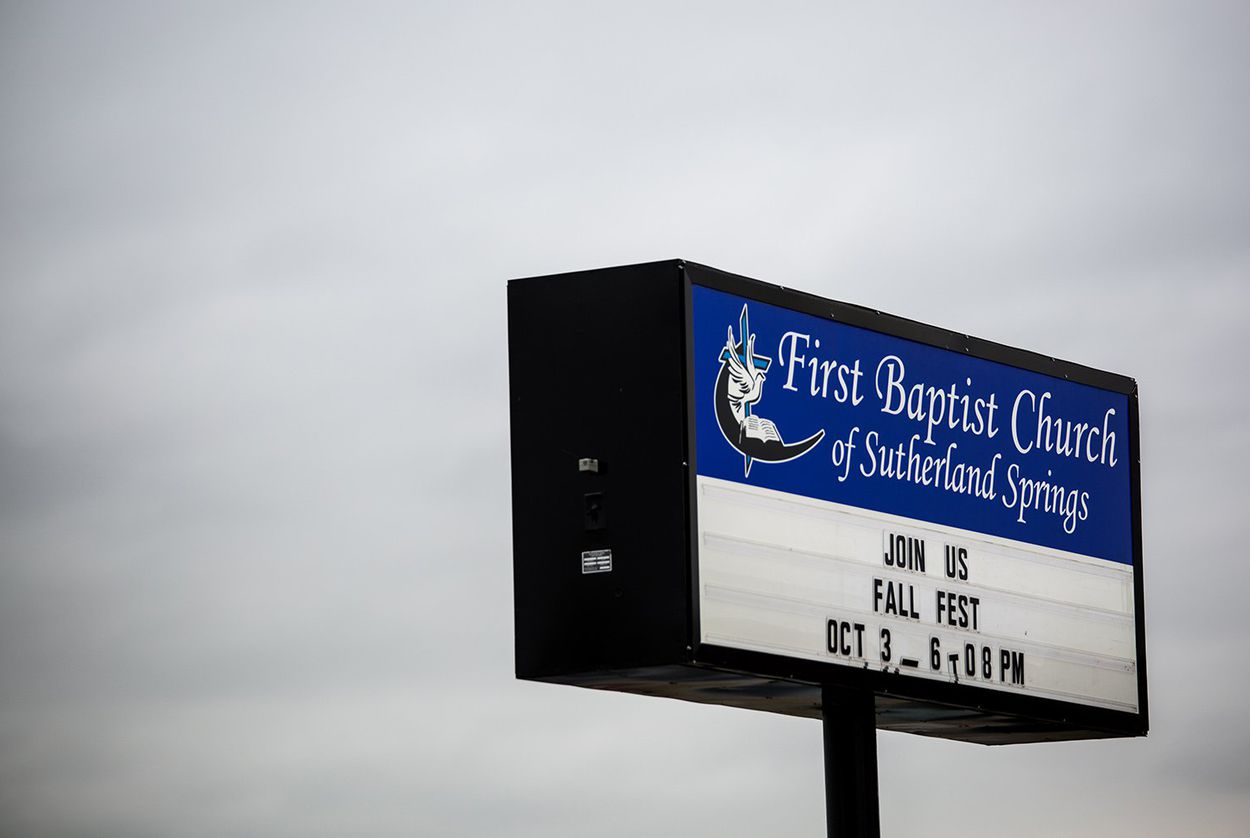
Paxton issued his ruling in the wake of the Sutherland Springs church massacre that left 26 people dead in the worst mass murder in modern Texas history.

I don’t know about you but I am uncomfortable with the idea of guns anywhere near a church sanctuary.

Churches have option to say ‘no’

Paxton says churches, of course, have the option of banning guns on their property. I am going to check with the church my wife, son and I attend to see if it allows firearms into its sanctuary. I am going to pray to Almighty God in heaven that it does not.

Texas legislators loosened prohibitions on concealed-carry laws by allowing guns in churches. I am not as opposed to concealed carry legislation as I used to be. I feared shootouts would occur as road rage erupted into gun violence. Silly me. That hasn’t happened.

I just have this aversion to guns in holy places where people worship in the name of the Prince of Peace.

I’ve touched on this before. Here is an earlier post:

https://highplainsblogger.com/2016/01/god-wouldnt-allow-guns-in-church/

Texas Senate 31 race might portend national GOP fight

Incumbents don’t often get challenges from within their own party.

But with Republicans fighting with each other in virtually every state in the Union, we’re seeing an intraparty battle royale shaping up — even in Texas, where Republicans are so firmly entrenched in power that Democrats have difficulty getting any media attention.

Let’s look briefly at Texas Senate District 31.

The sprawling West Texas district — which stretches from the Permian Basin to the Oklahoma border — has been represented ably by former Amarillo Mayor Kel Seliger. He was elected to the seat in 2004 after President Bush appointed the late Sen. Teel Bivins to be ambassador to Sweden.

To my mind, Seliger has acquainted himself quite thoroughly with the needs of the entire district. He speaks Permian Basin-ese to his constituents down south, just as he speaks our language when he comes back to Amarillo and points north.

But he’s not “conservative enough” to suit some Republicans. Two GOP challengers have lined up against him. One is former Midland Mayor Mike Canon; the other is Amarillo businessman Victor Leal. Canon ran unsuccessfully against Seliger four years ago. He’s a TEA Party favorite who does well speaking in TEA Party talking points and slogans. I’m not yet sure how Leal is going to frame his campaign, other than he’s going to say he favors low taxes, family values and accountability.

As if Seliger or any other Texas politician doesn’t endorse those things?

Seliger has inserted himself into an odd place. He’s no fan or friend of Lt. Gov. Dan Patrick. He declined to join his other Senate Republicans in endorsing Patrick’s re-election bid, which I guess factored into Leal’s decision to run against Seliger.

The question of the moment deals with whether Seliger is being “primaried” by GOP rebels. He’s been in the Texas Senate for more than a decade. He has achieved leadership roles in the Senate, serving as chairman of the Higher Education Committee and as a key member of the Education Committee.

I can’t shake the feeling that this internecine GOP “warfare” has found its way to West Texas.

I’ve already staked out my preference on this blog: I want Seliger to be re-elected. Getting through the GOP primary all but assures it. If he has been targeted by those who seek change just for change’s sake, he’d better be ready for a major fight.

Amarillo is hardly a Texas ‘outpost’

I hereby declare that never, ever again should Amarillo consider itself to be some sort of remote outpost in the great state of Texas.

My example? Take a look at all the money, manpower and machinery at work repairing, renovating and rebuilding the highways that course through this city.

Interstate 40, between roughly Quarter Horse Drive and Soncy? Serious rebuilding is underway. Interstate 27 from the I-40 interchange south to 34th Avenue? More reconstruction. I-27 northbound from 26th Avenue? More of the same. Loop 335 on the southern edge of the city? Ditto, man!

I am unaware of the total dollar cost the Texas Department of Transportation is spending on all this work. I’m pretty sure it’s in the high tens of millions.

Let’s flash back for a moment.

I was working in Beaumont in 1991 when I heard about a freshman legislator from the Texas Panhandle who suggested openly that the state needed to partition itself into several parts. This fellow didn’t like the way state government allegedly “ignored” the Panhandle. My initial reaction was, shall we say, not terribly flattering toward this gentleman.

Four years later, I moved to Amarillo and became acquainted with state Rep. David Swinford, a Dumas Republican. I asked him about his desire to carve up the state. He smiled and didn’t deny that was his intent, although it seemed to me at the time that he was only half-serious — or maybe he was half-joking … whatever.

We developed a good professional relationship over the years. I became convinced that Swinford’s desire in 1991 might have taken off had it earned any support from legislators downstate.

Suffice to say today, though, that Amarillo hardly sits at the edge of some desolate frontier. The state ended up building two prison units here about the time Swinford took office; Texas Tech University installed a pharmacy school near the city’s complex of hospitals and medical clinics.

I surely have heard how Amarillo is closer to the capitals of neighboring states than it is to Austin. And, yes, I’ve heard multiple tales of how President Johnson allegedly closed the Air Force base  here because he was mad that so many Panhandle counties for voted for Barry Goldwater in the 1964 presidential election.

But … that was then.

On this very day — and for the foreseeable future — Texas highway construction is telling us that the state is acutely aware of Amarillo’s importance to the rest of Texas.

Once more: Get rid of constables office

Now that we’re talking about law enforcers in Texas today, I want to turn attention briefly to an issue I have raised before — and likely will raise again until the Texas Legislature does what it should do.

When have you ever read about a Texas constable playing any kind of significant role in any case, or made a significant arrest?

I continue to be utterly astounded that Texas allows this office to remain on the books throughout the state. It’s an elected office. Yep, we elect these law enforcement officials. We charge them with delivering summonses and other civil papers to residents; they also are empowered to provide court security in justice of the peace courts.

Their powers go beyond just the humdrum of paper serving and bailiff duties.

In actuality, any of those duties could be done by municipal police and sheriff’s departments.

I have written about this before. The Legislature isn’t taking the hint, which I’ve said out loud is to get rid of the office.

https://highplainsblogger.com/2014/03/constables-who-needs-em/

The 2019 Legislature isn’t likely to budge on this matter. I wish it would. The problem lies in the power of the constables and judges lobby, which is significant in Austin.

The performance of the office as it has been handled in Texas Panhandle counties has been spotty at best. I’ve been observing this office for more than three decades at opposite corners of the state. I have watched it function badly in the Golden Triangle and again in Potter and Randall counties.

I realize that other counties put constables to more effective use than what I have witnessed up close.

Absent a total abolition of this waste of taxpayer money, my hope remains that counties are given the authority to toss aside constable offices where they don’t serve the public good.

I’m still waiting to read or hear about a constable making a tangible difference in local law enforcement.

Speaker Price? Sure, why not? But only if …

Four Price is a friend of mine who I’ve known for about two decades.

Having gotten that disclosure out of the way, you may take my endorsement of the Amarillo Republican lawmaker’s potential candidacy for speaker of the Texas House of Representatives for what it’s worth.

I believe he would make a smashing speaker.

But here’s the important caveat I want to attach to it: I want him to follow the lead set by his good buddy, the current speaker who’s leaving the Legislature after the 2018 election.

Joe Straus, a San Antonio Republican, is quitting politics. He calls the atmosphere too “divisive” and too “partisan.” He sought to run the House of Representatives with a bipartisan touch. He worked with Democrats as well as Republicans.

That sense of political comity cost Straus support among the hard-core Republicans who believe he had become a Republican In Name Only, a dreaded RINO.

I don’t sense that Price, also a Republican, believes that of his friend and colleague. I believe it would be pure folly for Price to buckle under the pressure that some of the right-wingnuts are going to exert.

One of them happens to run the Texas Senate. Lt. Gov. Dan Patrick locked horns with Speaker Straus over that damn Bathroom Bill that died a well-deserved death in this summer’s special legislative session. The bill would have required transgender people to use public restrooms in accordance to their birth certificate gender. Patrick wanted the bill passed into law; Straus resisted, earning him the scorn of county GOP organizations, including the Randall County Republican Party, which resolved to support someone else for speaker in the 2019 session.

So, to my friend Four Price, I ask only this: If you’re going to run for speaker, please resist the temptation to tilt too far to the right. Do not forsake the millions of Texans — such as yours truly — who believe that moderation is critical to effective governing.

All hell is about to break loose in Austin

You want to hear the rumble of thunder under your feet?

Put your ear to the ground and get a load of the racket emanating from a Texas legislator’s announcement that he won’t seek re-election in 2018.

That would be House Speaker Joe Straus, a San Antonio Republican, who stood firm, tall and steady against the onslaught of the far right within his party. Straus is calling it quits.

The Texas Tribune is reporting that a political earthquake is under way in Austin. A Rice University political scientist says the “political center in Texas” has just collapsed.

That might be the truth.

Straus fought against the TEA Party and other fringe elements within the Republican Party. Texas Lt. Gov. Dan Patrick sought to shove the Bathroom Bill down our throats. Straus was having none of it; a bill that would require people to use public restrooms according to the gender noted on their birth certificate. The Bathroom Bill discriminates against transgendered individuals and Straus wouldn’t stand for it.

His stubborn refusal to let the bill get a vote in the House has drawn the outrage from those on the right. So the speaker is out of there.

And the successors are starting the line up. One of them might be a friend of mine, Rep. Four Price, an Amarillo Republican first elected to the House in 2010. I asked Price about the speaker’s future a few weeks ago, but he said he was standing behind his guy, Straus.

Now that the speaker is on his way out, there exists an opportunity for one of Straus’s key lieutenants — that would be Price — to step in and maintain the moderate tone that the House ought to keep.

As the Texas Tribune reports: More than any other Texas Republican with real power, Straus was seen as a voice of moderation. On issue after issue, he and his team alone stood in the way of the kind of runaway populism that Donald Trump championed and major statewide Republicans endorsed.

Here’s the Tribune article

Will another moderate step up? Might it be Four Price? And would a Speaker Price resist the pressure that’s sure to come hard from the far right?

Meanwhile, the ground continues to rumble.