Tag Archives: Amarillo City Hall

Walk produces interest in those bike trails

park

My wife and I enjoy walking through the neighborhood, something we’ve done for many years and something we’ve renewed with increasing vigor recently.

On a walk the other day through our southwest Amarillo ‘hood, I noticed the “Bike Trail” sign just as I watched a guy on a bicycle turn the corner and peddle his way along the trail.

The thought then occurred to me: Where does the trail go?

Then I remembered. The city has started a comprehensive bicycle and walking network, but hasn’t finished it.

I spoke with the city parks and recreation director, Rod Tweet, a few months ago for a story I wrote for NewsChannel 10.com. The story dealt with the hike-and-bike network that I knew the city had started.

He couldn’t get too specific in answering questions about when the project would be completed. My sense at the time was that the city had a lot of other projects that greater priorities than the hike/bike network.

Hmmm, I thought. Oh yeah. The city hasĀ that downtown thing going on. I hope they get around to completing the network.

Tweet explained that the goal is to connect all the neighborhoods covering more than 110 square miles with trails that people can travel on their bicycles or on foot. I don’t believe the intent is to enable someone to walk from, say, the Colonies to Lakeside Drive. But I guess they could if they wanted to do so … eventually.

The city fathers and mothers have talked for longer than I can remember about enhancing the quality of life for residents.

I continue to believe that a comprehensive citywide network of hiking and biking trails does precisely that for Amarillo.

The Parks and Rec Department did a good job fixing up the oldĀ railroad right of way along Plains Boulevard. I see people using it all the time — as IĀ zip by in my automobile.

There’s more to do. My hope is that the city gets moving soon on finishing a worthwhile project.

Waiting for the big ‘change’ at Amarillo City Hall

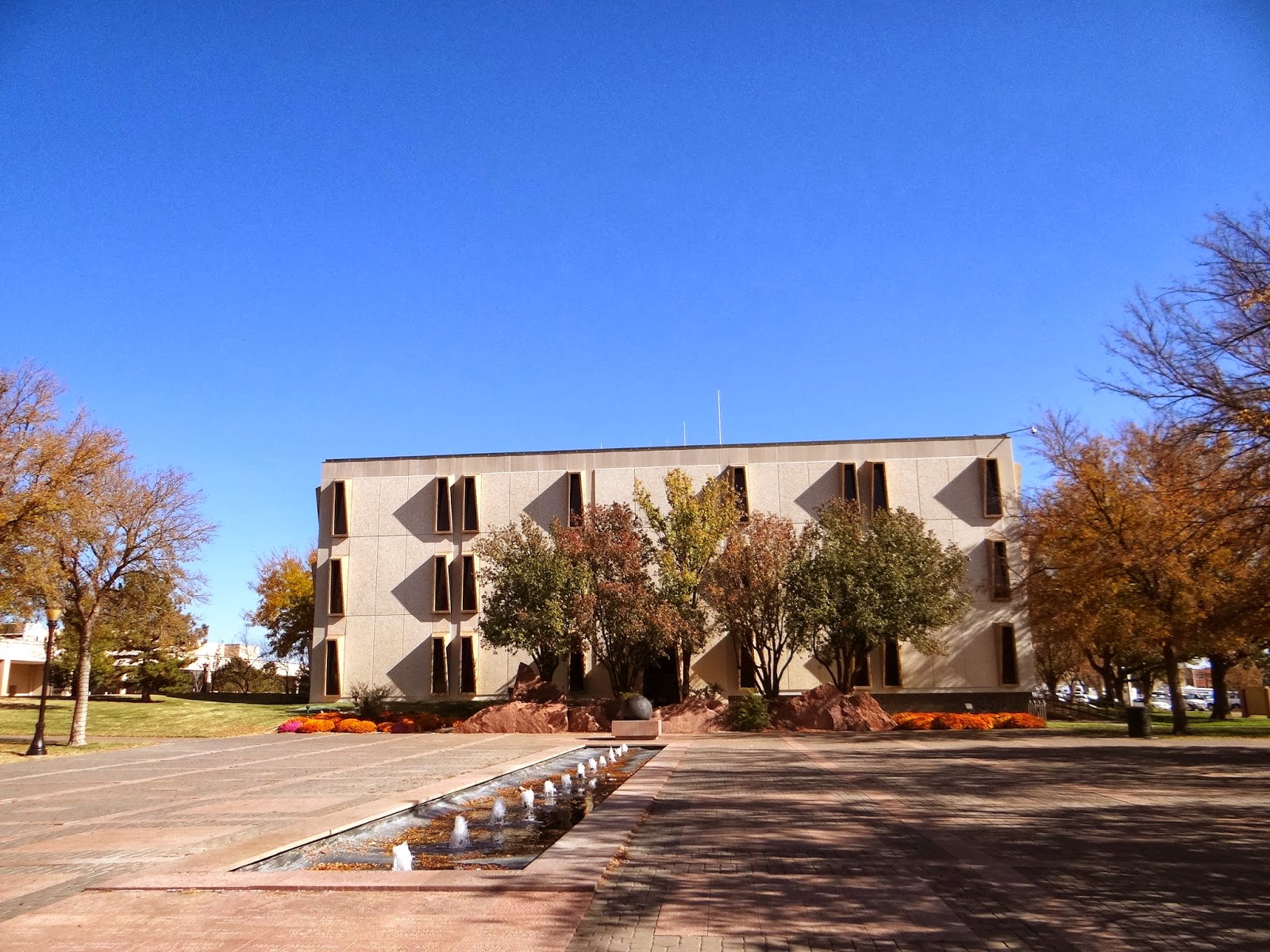
tx amar city hall

The agents of change on the Amarillo City Council have made their mark.

Some of it’s been good. Some of it’s been, well, not so good.

I’m waiting for the proposal that will tell me these individuals really meant it when they campaigned for election to the council in 2015.

It involves the city’s at-large voting plan.

Perhaps you know how it goes these days. All five City Council members stand for election every other year. The next election date occurs in May 2017. They’ll all get to run for re-election — or “election” in the case of new Councilwoman Lisa Blake, who was just appointed to the spot vacated by Dr. Brian Eades.

What might the change involve?

Let’s try this: Expanding the council to seven members. Then let’s try electing four of them from voter precincts, dividing the city intoĀ equally apportionedĀ quadrants. Then we can elect two council members at-large, along with the mayor.

The debate in Amarillo over single-member districts has been an all-or-nothing proposition. Those who favor changing the system seem fixated on the notion of electing all four council members from districts, having them represent their own neighborhoods. They’ve never seriously discussed the idea of expanding the body and developing a hybrid system that blends the at-large system with their preferred method of electing council members at-large.

Back in the old days, when I was working for The Man, I argued that the current at-large system works well for the city. My view on that has, shall we say, “evolved” since I’m now writing for myself. It’s not that it doesn’t work well; my view now is that some tinkering could make it work better.

Each quadrant could be divided among equal numbers of residents. It would require some finely tuned research to ensure two things: that each section has roughly the same number of voters and that they all represent a “community of common interest.”

They need not be gerrymandered beyond all that is reasonable, the way the Texas Legislature rigs the apportioning of legislative and congressional districts.

A hybrid voting plan has another consequence. It gives the mayor and the two at-large council members additional power by virtue that they would represent the entire city while their colleagues would represent roughly a fourth of Amarillo.

I saw it work in Beaumont, where IĀ worked before moving to the Panhandle in early 1995. Yes, there were occasional disputes among ward representatives over whether a city policy would benefit their particular section of the city. The at-large representatives, though, acted as a bit of a leavening agent to the debate; they could seek to soothe hurt feelings.

I do not want to reveal any names, but one of the new Amarillo council members has told me he intends to propose a change to the city charter that would call for changing the manner in which we elect our governing City Council.

The city is continuing to grow. It is continuing to diversify along ethnic, racial and socio-economic lines. It is continuing to require a little more nuance in the way it is governed.

So far, this council member has been silent.

Let’s have this discussion. Now. Shall we?

Civic symbolism can have positive impact

CanyonTX1908RandallCountyCourthouse812TJnsn3

I noted recently that Amarillo’s Center City lit up a sign in front of the Paramount Building a decade ago.

Moreover, I noted that there might be some linkage between that singular act and the progress that’s occurred throughout the city’s downtown district since that moment.

There might have been some chuckles around the city over that observation.

But let me take this argument a bit farther.

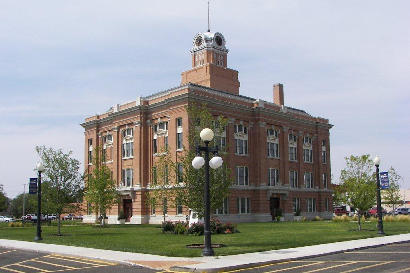
Randall County performed something similar years ago when it renovated the exterior of its 1909 Courthouse building in the Canyon Square.

The county asked voters to approve a referendum to spend public money on refurbishing the outside of the building. The voters said “yes” to the request. The county then finished the job … and the exterior of that building looks spiffy, shiny and sits in the middle of a well-manicured lawn in the middle of the Square.

The building is still unoccupied. There’s no public business being done inside the building. It’s still rotting. Canyon city officials were considering renovating the interior of the building to move some City Hall functions into it — until they got the price tag for it. No can do.

But what’s happened on the Square since the courthouse building’s restoration? It’s blossoming. Businesses have moved into formerly vacant store fronts.

Randall County has moved some of its functions into the old jail and district attorney’s office building across the street. The bulk of the county’s business, though, is done at the Justice Center across the street from West Texas A&M University.

Did the act of restoring the exterior of a once-dilapidated building spur economic growth in the middle of the Randall County seat? County Judge Ernie Houdashell thinks so, as do Canyon city officials … not to mention many of the business owners who have watched the Square’s rebirth.

Does the lighting of a prominent marquee sign on Polk Street have the same impact on downtown Amarillo’s forward progress?

It could be. WhoĀ canĀ doubt it with anything other their own bias?

Could a single sign be the catalyst?

downtown ama

A friend of mine made a social media observation this morning I want to share here.

Wes Reeves of Amarillo is a big-time preservationist. He loves to save old buildings and to see old structures brought back to life. He’s a former colleague and we’ve been friends during the 21-plus years I’ve lived in Amarillo.

He notes that 10 years ago, Amarillo’s Center City flipped the switch on a sign in front of the Paramount Building on Polk Street in downtown Amarillo. The sign lit up, the crowd gathered in the street cheered mightily; I was one of them doing the cheering.

Reeves writes: “We hoped it would become a symbol for downtown rebirth, and it has. Since that time, tens of millions of dollars have been invested in downtown. And this sign has been photographed thousands of times by locals and visitors alike.”

He’s a happy young man. I’m happy, too.

He poses an interesting theory as to whether a singular symbolic act could have such a tangible economic impact. It might be pure coincidence that the lighting of the sign — which formerly lit up the entrance to a downtown movie theater — could have played a direct role in the progress that has occurred downtown.

The city did have a Strategic Action Plan in the works when Center City lit the sign. Movement was beginning.

Potter County had renovated the Santa Fe Building one block over and installed government offices into the beautiful structure.

As Reeves noted, too, “tens of millions of dollars” in private investment has been spent downtown since the sign started blazing brightly on Polk Street.

Coincidence? Strategic planning? Divine providence?

Whatever.

The sign was lit. The city has come a long way in the decade since in its effort to revive its downtown district. It stillĀ has a ways to go.

I’m believing that all those cheers were worth it that night when they flipped the switch on the Paramount sign.

Welcome back, APD bike patrols

drain

Amarillo’s interim leadership command includes a policeman with a keen working knowledge of the city’s needs.

Accordingly, interim Police Chief Ed Drain has revealed a plan to bring back an element in the city ‘s policing strategy that I’m quite sure will be welcomed in the neighborhoods that need it.

Bicycle patrols are returning, Drain recently told the Rotary Club of Amarillo.

To which I say, “You go, chief!”

Drain is on loan from the Plano Police Department. He was brought in by interim City Manager Terry Childers to lead the Amarillo Police Department temporarily while the city looks for a permanent chief to succeed Robert Taylor, who recently retired and hit the road on his Harley.

Taylor suspended the bike patrols some years back, apparently believing the city could do just as good a job with cops in cars as they could with them on bikes.

The city, though, apparently had received numerous requests from constituents to return the bike patrols. They had been a staple in many neighborhoods, such as San Jacinto and North Heights.

They are part of the city’s community policing outreach, putting the officers in more direct contact with residents who get to know the officers more as men and women, rather than just simply as people carrying guns, cuffs and clubs.

Community police strategy seeks to build trust between police officers and residents, which — if you’re aware of what’s been in the news a good bit lately — has been lacking in many communities across the nation.

I am heartened to hear that Amarillo PD isĀ seeking to stay ahead of that potentially dangerous curve.

City takes an astonishing turn

downtown

Maybe I’m easily amazed.

Whatever.

My amazement is focused on what I have perceived to be a remarkable about-face at Amarillo City Hall. It involves the city’s focus on its downtown business and entertainment district. It has gone from a hands-off public policy to a definite hands-on approach.

I am utterly convinced the entire city will reap the benefit.

My wife and I arrived in Amarillo in early 1995 to start a new life — and to continue a life we started when we arrived in Texas 11 years earlier.

We saw a downtown district that was, to put it charitably, in a state of suspended animation. Downtown was in shabby condition.Ā In addition to the Barfield Building and Herring Hotel — two significant structures that have been rotting ever since — the city had the vacant Santa Fe Building with which to contend.

Then the light bulb flickered on at the Potter County Courthouse. County Judge Arthur Ware finagled a deal to purchase the Santa Fe Building for $400,000. He then secured a state historic preservation grant to pay for a renovation of the magnificent 12-story structure. The project was completed — and the county moved some of its offices into the Santa Fe Building.

That might be considered the start of downtown Amarillo’s revival.

City Hall’s outlook, though, remained standoffish. Mayors Kel Seliger and Trent Sisemore seemed uninterested in getting involved directly with downtown revival. They preferred to let private business take the lead. The city might lend support — if it felt a project merited it.

Little happened over nearly a decade.

The pace has accelerated tremendously in the past decade. How did it come about? I believe it has been the result of a more activist City Hall approach.

The city launched a Strategic Action Plan, which produced a vision for the downtown district. It created Downtown Amarillo Inc. Center City became even more of a player. The city created the Tax Increment Reinvestment Zone. The Amarillo Economic Development Corp. invested sale tax funds to help some of these projects along.

Meanwhile, private businesses — apparently sensing the energy coming from City Hall — began a series of tangible improvement projects. New bank branches went up. A convenience store was built. The old Fisk Building was turned into a business hotel.

The momentum was building.

Then came the Embassy Suites hotel project. Plans took root to build a parking garage. And, oh yes, we have that multipurpose event venue/ballpark.

Along the way, some folks started expressing anger. They didn’t like the way the city was proceeding with some of these projects. They alleged “secrecy,” which I believe was a dubious accusation.

Sure, we had some serious misfires. Wallace Bajjali — the master development firmĀ hired to oversee downtown’s resurrection — went kaput overnight. That, too, fueled the anger. Well, WB is long gone.

But the movement is continuing.

The City Council has gone through a serious makeover. There have been some more hiccups, mostly created by tensions among some of the council members.

Is all this amazing? Yes it is.

I do not want the city to turn away from its new course.

The city is going to ask voters to approve more than $300 million in infrastructure improvements, just as it asked voters to approve a referendum to build that MPEV downtown.

There are times when local government can step in — and step up — when it perceives a need.

Amarillo saw the need to boost its downtown district. Believe this: When this project is done — as every U.S. community that has taken this kind of proactive approach has learned —Ā the entire city will reap the reward.

Let’s get busy, Amarillo City Council

MPEV

The author of a letter to the Amarillo Globe-News has sounded an alarm for Amarillo.

He suggests that Lubbock is up to no good in its effort to lure a Double A baseball franchise that is planning to vacate San Antonio. He likens the move to someone who is stealing a kiss.

You see, Amarillo is also trying to bring that same franchise, which is currently called the San Antonio Missions, to the Panhandle. Lubbock has just now joined in the hunt for the same prize.

The headline on the letter to the editor calls Lubbock a “wicked stepsister.”

Interesting description, although it does seem a bit harsh.

But make no mistake, there exists a civic rivalry between the communities.

Lubbock is home to more residents; it has Texas Tech University; it has a first-cabin sports and entertainment venue at the Tech campus. There is this perception that Lubbock is able to land the first-line entertainment acts while Amarillo — as often as not — gets stuck withĀ knock-off “tribute”Ā bands and truck pulls.

Lubbock now it seeks to land a baseball franchise that first came into Amarillo’s sights several months ago.

Amarillo wants the Missions to move here and to take up residence in that downtown ballpark that is set to be built — eventually! — on property across the street from City Hall. The multipurpose event venue is part of the city’s downtown revival effort. The key to the MPEV’s success, though, seems to lie in whether the city can persuade the Missions to come here.

Will the Lubbock initiative get in the way?

I do believe that the time has officially arrived for Amarillo’s City Council to pull together, in unison, for the same goal.

There’s been some signs of fracture among council members since the latest municipal election, which occurred in May 2015. It’s more imperative than before, though, for the governing board to set aside personal differences.

A new MPEV tenant does not want to wade into an environment that — in the words of interim City Manager Terry Childers — has produced a “caustic political environment.”

I don’t yet know what Lubbock has up its municipal sleeve.

However, I do believe it is time for Amarillo to show itsĀ chops and ensure this potential suitor that it intends to do all it can to make the MPEV/ballpark a success and that whoever takes up residence in the new venue will enjoy the fruits that success will bring.

Some unity of purpose is in order.

Enough with the highway weeds … already!

2868819905_b94eb61851_z

I have just traveled through much of southern and western Amarillo along the city’s two interstate highways.

I want to scream at the top of my lungs.

The rights-of-way in both directions — north-south and east-west — are in hideous condition!

It’s the weeds, man! They’re everywhere!

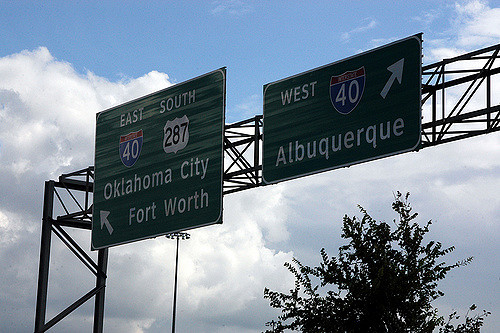
Along the shoulder of the Canyon E-Way. Throughout the interchange with Intestate 40. Head west along I-40, you see more of them. Weeds are standing tall along the expanse of supposedly “landscaped” areas adjacent to the highway.

I keep hearing rumors and whispers about Amarillo working out arrangements with the Texas Department of Transportation to clean up, dress up and improve the appearance of the interstate highways that course through the city.

That’s all they are. Rumors and whispers. Nothing gets done. Ever!

TxDOT sends mowing crews out now and then. They whack the weeds down, but then they’re left to grow back. Which they’ve done quite nicely, thank you very much.

The issue is money. TxDOT doesn’t have it to spend on aesthetics. Neither, apparently, does the city — which long has passed the buck on highway upkeep to the state, given that it’s within the state’s purview to do that job.

I know I need not remind y’all that thousands of people travel through Amarillo every day. Many thousands of those travelers are seeing the city for the first — and likely only — time.

Many of their impressions are drawn by what they see while zipping along the highway at 60 mph. I understand fully you cannot judge a community completely by the appearance of its public rights-of-way.

But holy crap! Can’t we get the powers that be even moderately interested in getting off their duffs to do something about the appearance of our highways?

Hoping for actual minor-league baseball

baseball

My curiosity got the better of me this morning.

I decided to look up the home page for the AirHogs, the team that passes for a minor-league baseball organization that plays some of its home games in Amarillo.

I discovered a serious travesty.

The AirHogs are known as the Texas AirHogs, given thatĀ the teamĀ splits its “home schedule” between Amarillo and Grand Prairie, a community in the Metroplex.

The home page lists its “home” game schedule by referring to the split between Amarillo and Grand Prairie.

http://airhogsbaseball.com/home/

Which brings me, I suppose, to the purpose of this blog post: the possibility of Amarillo getting an actual minor-league baseball franchise.

City officials have announced a schedule for the knock-down of a vacated Coca-Cola distribution plant across the street from City Hall. It’s coming soon. The lot will be cleared off, scraped clean and then the city will await construction of a $45 million ballpark — once known as the multipurpose event venue.

All the while, the city — or more specifically, the Local Government Corporation — is negotiating with a baseball franchise that currently plays ball in San Antonio. The hope here is that the San Antonio Missions, a Double A team affiliated with the National League San Diego Padres, will relocate to Amarillo once San Antonio lands a Triple A franchise.

The LGC has a huge task before it. Indeed, the negotiation likely is a key reason that interim City Manager Terry Childers agreed to stay on the job a while longer as the City Council continues its search for a permanent chief city administrator.

During the campaign prior to the November 2015 municipal referendum on the MPEV, retired Amarillo College President Paul Matney talked about Amarillo’s history as a “baseball town.” The voters agreed narrowly with Matney’s assessment and approved the referendum that gave the city the green light to proceed with the MPEV.

That history, though, is not being honored by the ridiculous half-and-half home schedule the AirHogs are playing. Heck, they aren’t even playing all their Amarillo home games at that dump called Potter County Memorial Stadium; they are playing some of those games at West Texas A&M University’s home field.

I am trying mightily to retain confidence that the LGC can pull this deal together and that Amarillo can get the kind of minor-league baseball that will make the city proud.

City manager speaks to ‘caustic’ political environment

10057352_G

Terry Childers speaks like a man with no burdens to bear regarding the city government he is administering.

Karen Welch of Panhandle PBS askedĀ him whether Amarllo is having difficulty finding a permanent city manager to succeed Childers — the interim manager. He provided a spot-on answer during the “Live Here” segment.

The city needs to get past its next City Council election next May, when all five members of the council seats will be contested. It’s a quirk in the city charter, I suppose, that puts all five council members on the ballot at the same time. Who would want to take the city manager’s job knowing that after the next election, the city could have a new council — which then might want to replace the city manager? Childers asked.

Ba-da-boom!

Then he launched into what he called the “caustic” environment that has pervaded City Hall since the latest election, in May 2015.

City Council members have attacked each other’s motives, their political outlook, their integrity, Childers said. Those who run City Hall need to “put Amarillo first,” he said,Ā  and dispense with the pettiness and petulance that has too often guided the public discussion.

He also took a clear-and-present shot at the Amarillo Globe-News, which he accused of “assassinating people’s character.” He asked, who would want to be subjected to that?

What he didn’t say in the interview, but which is surely implied, is that city manager candidates do not want to walk into that sausage grinder.

Childers is going to stay on the job for another few months. He told Welch he has “no interest” in becoming the permanent manager. I believe him. He wants to go back home and get on with the rest of his life.

He talks about that environment at about the 20-minute mark of the attached video link.

http://video.kacvtv.org/video/2365817588/

City government has been a significantly less harmonious organization for the past 15 months than it has been for, oh, the past several decades. The interim manager, though, was careful to tell Welch that he works with five “wonderful” council members who disagree with each other and with him. He said he’s fine with that.

If the environment is as “caustic” as the city manager believes it is, well, it’s time for the governing council to look inward and decide whether it really is intent on putting the city’s interestsĀ ahead of its members’ own political agendas.

Thanks for your honesty, Mr. Manager.