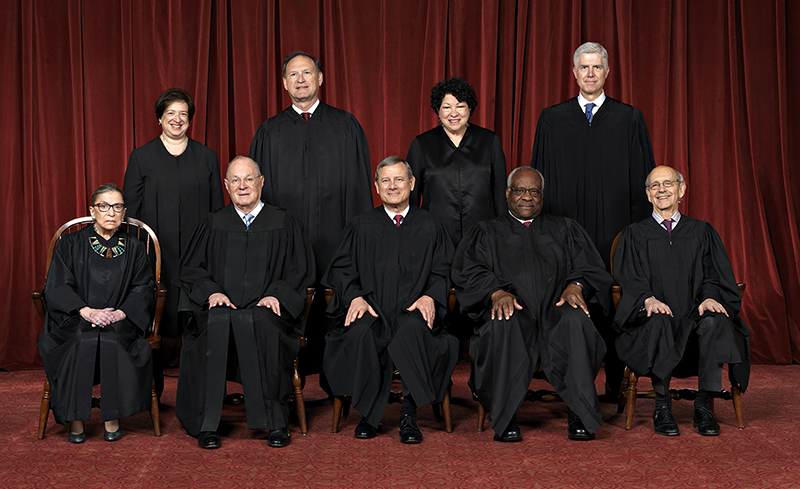
Justice Anthony Kennedy’s decision to leave the U.S. Supreme Court has launched arguably the greatest court confirmation battle we’ll see in the next 50 years.
Kennedy is seen as a “swing vote” on key decisions, siding at times with the liberals on the court, but mostly with the conservatives. He was, after all, nominated by President Reagan.
The fight will be fierce. It will get ugly. It will show us just how creative Senate Democrats can get in their vow to fight this nomination to the hilt — if they decide to take it all the way.
I’ll make this prediction, though: If this fight gets as bloody as many of us believe it will, do not expect any of the liberals on the court to leave the bench for as long as Donald Trump is president of the United States.
And let us put down forever any notion that politics doesn’t drive the (a) nomination of a justice or (b) his or her confirmation by the U.S. Senate.
I long have believed in the concept of presidential prerogative, meaning that presidents have the right to appoint people to high office assuming those people are qualified to do the job to which they have been appointed.
U.S. Senate Majority Leader Mitch McConnell, however, has disabused me just a little bit from that long held belief.
McConnell ignored presidential prerogative in 2016 when he blocked President Obama’s nomination of Merrick Garland to the U.S. Supreme Court. There was a year left in Obama’s tenure as president; Antonin Scalia had died and Obama selected a true-blue moderate to the highest court in America.
McConnell blocked it. He said the Senate shouldn’t consider a Supreme Court nomination during an election year.
His obstructionism infuriated many Americans. Me included. I believed the president had the right to select whoever he wanted, given that he had been re-elected in 2012. I also have said the very same thing about presidents regardless of party over many years. You can look it up. Honest. I have.
Now, though, we have another president getting ready to select someone to succeed Justice Anthony Kennedy, who is retiring at the end of July. I normally would give Donald Trump the green light on this one. Except that McConnell laid down a rule that he forced the Senate to obey in 2016.
Two years later, doesn’t that rule still apply? Hey, what’s good enough then should be good enough now.
I am struck by the media’s continuing infatuation with Sen. Bernie Sanders, the independent from Vermont.
They keep asking him how Democrats can win elections, how Democrats can topple Republican opponents, how Democrats can do this or do that to benefit their party.
Hold on! Sanders isn’t a Democrat. He caucuses with Democrats in the U.S. Senate. However, he doesn’t belong to a political party.
Is this guy the right man to speak for a party of which he is not a member?
Oh, brother. Is there any more proof needed about the impact of presidential elections than the decision today handed down by the U.S. Supreme Court?
The high court ruled 5-4 today to uphold Donald J. Trump’s travel ban involving countries from a handful of mostly Muslim countries.
The conservative majority voted with the president; the liberal minority voted against him.
There you have it. Trump’s travel ban will stand. He will crow about it. He’ll proclaim that the court is a body comprising men of wisdom; bear in mind that the three women who sit on the court today voted against the travel ban. Had the decision gone the other way, he would declare the court to be “too political,” he would chastise the justices’ knowledge of the U.S. Constitution (if you can believe it).
The court decision today has reaffirmed the president’s decision to discriminate against people based on their religious faith. Nice.
The partisan vote on the court today also has brought a smile to another leading politician: U.S. Senate Majority Leader Mitch McConnell, whose obstructionism in the final year of the Barack Obama presidency denied Trump’s predecessor the right to fill a seat created by the sudden death of Justice Antonin Scalia. The Constitution gives the president the right to nominate judges; it also grants the Senate the right to “advise and consent” on those nominations. The Senate majority leader decided to obstruct the president’s ability to do his job.
President Obama nominated a solid moderate, Merrick Garland, to succeed Scalia. McConnell put the kibosh on it, declaring almost immediately after Scalia’s death that the president would not be able to fill the seat. McConnell would block it. And he did.
A new president was elected and it turned out to be Donald Trump, who then nominated Neil Gorsuch, who was approved narrowly by the Senate. Gorsuch proved to be the deciding vote in today’s ruling that upholds the Trump travel ban.
Do elections have consequences? You bet they do.
Frightening, yes? In my humble view — given the stakes involved at the Supreme Court — most assuredly.
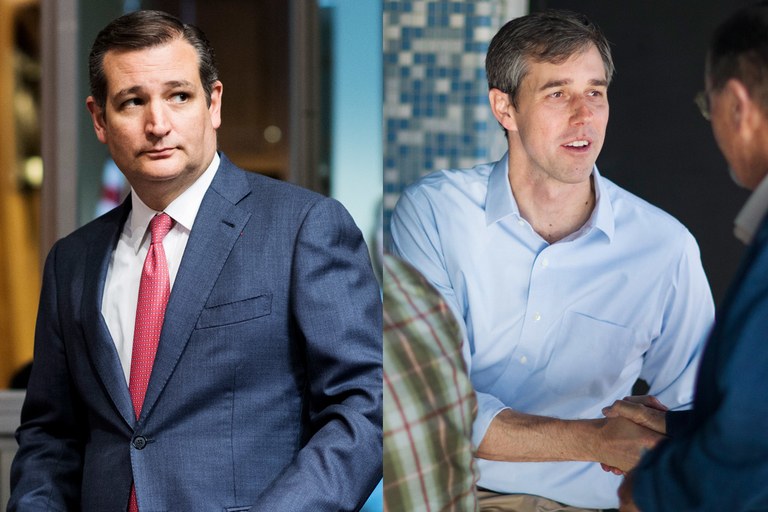
It looks as though my Golden Triangle friend has it right regarding Democratic U.S. Senate candidate Beto O’Rourke’s strategy he hopes will produce a victory over Republican U.S. Sen. Ted Cruz.
My friend believes O’Rourke’s 254-county strategy is going to shore up his Democratic-leaning urban base in the big cities and will cut into Cruz’s expected victory margin in the rural counties.
There you have it. I mean, O’Rourke keeps showing up for town hall meetings in the Texas Panhandle, which arguably is “ground zero” of the Texas Republican political movement.
The Texas Tribune’s analysis of the O’Rourke strategy suggests the El Paso congressman is thinking that way, too.
As the Texas Tribune reports: Over the last 15 months, O’Rourke’s county-by-county driving tour has taken him all over the state, from his hometown of El Paso on the Mexican border to Cooke County in the north, where he held a town hall on Saturday afternoon.
“Here we are in Gainesville, which, as the crow flies, might be the farthest point you can get from El Paso,” he said to laughter from a packed house in the historic Santa Fe train depot.
The tour represents more than just an expansive retail campaign across the largest state in mainland America. It also marks a dramatic deviation from the political playbook employed by the majority of Texas Democrats over the last two decades.
Do I want O’Rourke’s strategy to work? Yes, I do. You know what already.
The Cruz Missile has done damn little for the state since he was elected in 2012, except show Texans how he is able to have his voice heard above the partisan din that erupts on Capitol Hill.
My question of the moment deals with whether O’Rourke will be able to become more of an advocate for the state and less of an advocate for himself.
I have given up on Cruz. O’Rourke at least presents the potential of a different approach to legislating.
This video is among my all-time favorite public television news broadcasts. It features a PBS NewsHour discussion with the late U.S. Sens. George McGovern and Barry Goldwater.
A liberal (McGovern) and a conservative (Goldwater) talked political differences between them and sought to put the 1988 presidential campaign into some sort of civil and proper perspective.
The moderator was Jim Lehrer, a fellow whose acquaintance I made while I was working in Beaumont many years ago. More on that perhaps at another time.
What Sens. McGovern and Goldwater sought to do in this discussion is delineate the differences between their respective philosophies. What is so remarkable is how much common ground these two old men had found and how they believed they found it when they served together in the U.S. Senate.
How did they manage such commonality? Well, they didn’t talk about it in their PBS interview, but I have a theory.
Their common respect was forged in their common history and their shared sacrifice during a time of dire peril for the United States.
McGovern and Goldwater served in the U.S. Army Air Corps during World War II. They both served heroically during that conflict. They brought their commonality together when they ended up in the Senate together. McGovern represented South Dakota, Goldwater represented Arizona.
They were far from the only two men of disparate philosophies to forge friendships in the Congress during their time together. I think often of how Sen. Bob Dole developed a unbreakable bond with Sen. Daniel Inouye; Dole is a Kansas conservative, Inouye was a Hawaii liberal. They, too, became brothers in arms in World War II, both suffering grievous battlefield injuries and going through rehab together. Their common suffering became their bond and it overrode whatever political differences they had while serving in the Senate.
Vietnam produced similar friendships that transcended partisan politics. I’ll cite two examples: Sens. John McCain and John Kerry both served with valor and distinction during the Vietnam War. McCain is a Republican; Kerry is a Democrat. They both worked in tandem to allow the United States and Vietnam to establish diplomatic ties long after the end of that terrible and divisive conflict.
These men all knew the meaning of sacrifice for the sake of the country they all loved.
As George McGovern told Barry Goldwater during that 15-minute PBS discussion, they have much more in common now than they did in the old days. Yes, but the common experience they brought with them to their shared public service taught them to respect the other’s point of view, that the “enemy” didn’t sit in the same legislative chamber.
The nation’s founders had the right idea when they created a Constitution that called for lifetime appointments of federal judges.
Part of their intent was to take politics out of the judicial system. Sadly, that intent has been lost. It’s gone. The federal bench is, um, highly political.
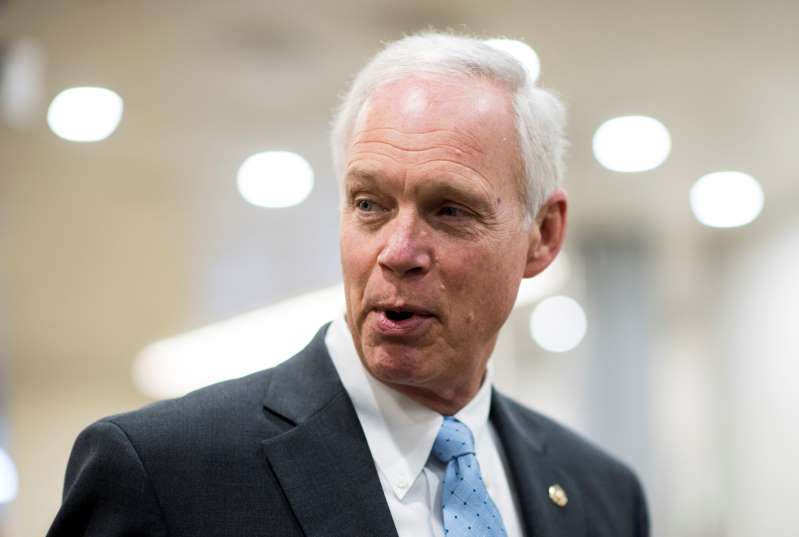
Case in point: U.S. Senate Republicans today filled a federal judgeship they kept empty for the past six years during the Obama administration. They voted 49-46 — along party lines — to seat Michael Brennan on the Seventh U.S. Court of Appeals. President Obama had nominated Victoria Nourse to that bench in 2010, but it was held up by Wisconsin U.S. Sen. Ron Johnson (pictured above), who exercised a Senate rule that allows a home-state senator to block anyone he or she chooses; Nourse pulled her nomination in 2012.
Indeed, one of the consequences of our federal elections is the federal judiciary and who gets seated. Presidential elections are particularly consequential in that regard. Presidents have the power to set judicial courses for generations through their appointment powers. You’d better believe, too, that politics matters when the Senate considers who to confirm or reject when they exercise their “advise and consent” authority.
Are the federal courts more political than, say, state courts? Hardly. In Texas, we elect judges on partisan ballots. Judicial philosophy or legal credentials take a back seat to which party under which the candidate is running, or so it appears at times in Texas.
The founders sought when they were creating a new nation to deliver a system of justice that would be free of political pressure. I only wish their dream would have come true. More than two centuries later, we hear laypeople/politicians second-guessing judicial rulings — especially when they lack any base of knowledge of the law upon judges make their decision.
It wasn’t supposed to be this way when the nation’s founders were building a nation “of laws, not of men.”
Six debates? Really? Does Beto O’Rourke really think Ted Cruz is going to agree to that?
Well, the Democratic challenger has pitched a serious offer to the Republican incumbent as the race for Cruz’s U.S. Senate seat starts to heat up.
The most fascinating aspect of O’Rourke’s challenge is that he wants two of those debates to be in Spanish, a language in which O’Rourke is fluent, but which Cruz reportedly is not.
O’Rourke wants to succeed Cruz in the Senate. He wants to take his case across Texas. My hope would be that one of those six debates would occur in the Texas Panhandle. Hey, Amarillo has plenty of suitable venues for such an event: Amarillo Little Theater; Amarillo College; Globe-News Center for the Performing Arts; Civic Center Grand Plaza Ballroom.
The reality is that the Cruz Missile isn’t likely to agree to six debates, even though he is known as a master debater. He once served as Texas solicitor general, which enabled him to argue before the U.S. Supreme Court; I consider that a pretty impressive venue.
O’Rourke’s challenge seems to indicate the seriousness of his effort to unseat Cruz, who is ready for the fight that lies ahead, according to the Texas Tribune: “Sen. Cruz has said he’s looking forward to debates,” Cruz spokeswoman Catherine Frazier said in a statement. “We are considering all possibilities in front of us and will be working with potential hosts and the O’Rourke campaign to determine the best platforms available so that Texans from all corners of the state can hear from the candidates directly about their views for Texas’ future.”
The Tribune also reports that a Spanish-language debate is unlikely: Regardless of what the campaigns ultimately agree to, debates in Spanish between the candidates seem unlikely. While O’Rourke is fluent in the language, Cruz is not known as a proficient speaker.
Recent political polling puts the race as being too close to call. O’Rourke has spent a great deal of time stumping in rural Texas, far from the state’s pockets of progressive voter blocs. Cruz no doubt is gathering up his own war chest of campaign cash and will take the challenger on, face to face.
That all said, I am pulling for O’Rourke to win. I want him to represent this state in the U.S. Senate. He appears at first blush to be far more interested in our needs than in his own ambition.
Six debates between O’Rourke and Cruz? I hope they all occur. I will not bet the mortgage that they will.
I’ve stated already my admiration for U.S. Sen. John McCain, who’s battling a life-threatening illness while continuing to serve the Arizona voters who have elected him.
That said, I want to offer a word of caution to Sen. McCain and other public servants who might want to follow his lead.
He says that his illness allows him to “vote my conscience” rather than adhere to the wishes of the president or even other fellow Republican Party congressional leaders.
Fine. I get it. Let’s remember that Sen. McCain serves in a “representative form of government,” which means he works at the behest of his constituents. Thus, he is not entirely free to vote his “conscience” if his conscience is at odds with what his constituents want from him.
There is plenty of talk these days about whether Sen. McCain is free to pursue a voting track that enables him to come down with a purer vote of conscience. He has written a book in which he trashes Donald J. Trump’s leadership as president. He says in his book that the brain cancer that ravages him gives him a stronger voice to oppose the president’s policies.
Is that what his constituents want?
I ask that question knowing that McCain is far from the first politician who occasionally ignores the cadence that’s being called among the voter bloc that elected him. Is that a prudent course? Is that keeping faith with the oath he took to represent the wishes of the people who have a vested interest in all decisions he makes as one who writes federal laws?
McCain’s declaration causes me great conflict. I want him to oppose the president, to vote his “conscience” where it’s appropriate. Then again, I do not live in Arizona, the state he represents in the U.S. Senate. I have the luxury of cheering his decision to vote his conscience.
Is it in the interests of his bosses, the voters who sent him to the high office he occupies?
Tread carefully, Sen. McCain. By all means, I am praying for your return to good health.
The Montana Democrat spoke out against Donald Trump’s choice to lead the Department of Veterans Affairs. As the ranking member of the Senate Veterans Affairs Committee, Tester said Dr. Ronny Jackson — the White House physician — was unfit to lead the VA.
Sen. Tester based his judgment on allegations leveled by at least 20 members of the military, who accused Jackson of a number of misdeeds: over prescribing of medication; instigating a hostile work environment; drinking on the job.
Jackson pulled his name out of consideration for the VA job.
What, then, does the president do? He calls for Tester’s resignation from the Senate.
Let’s be clear. Sen. Tester did not conduct himself improperly. There isn’t a hint of malfeasance. No fraud. No scandal. No funny business, hanky-panky, or scandalous conduct.
All the man has done is his job as a United States senator, which he takes seriously enough to incur the unbridled — and unhinged — wrath of a president who takes himself far more seriously than the high office to which he was elected.
Trump’s tirade via Twitter against Tester provides yet another example of how the president behaves, how his mind works and how this man doesn’t respect the dignity of his office.
If anyone should consider resigning, to my mind it’s Donald Trump!