Tag Archives: AGN Media

Once-flourishing craft is in serious peril

I am saddened by what I see happening to the craft I pursued for 37 years.

It’s in trouble. Print journalism as I pursued it is being eaten alive by technology it never saw coming back in the 1970s when I entered that line of work.

I won’t buy into the nutty notion that newspapers are no longer viable purveyors of information. They continue to do great work covering the news of the day. They continue to keep the public informed on policy matters that have direct impact on citizens of this country.

Nor will I accept the “fake news” mantra that keeps pouring out of the pie holes of conservative politicians who seek to discredit the media that are merely doing their job.

What is happening to newspaper saddens me because it need not happen in the manner that is occurring.

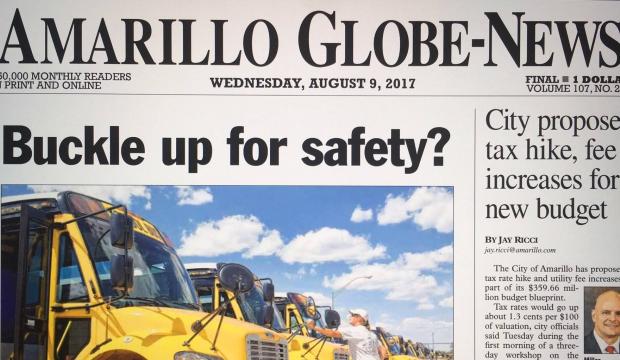
I want to point to the last stop on my career, the Amarillo Globe-News, as an example of what I see transpiring. The newspaper that once won print journalism’s greatest honor is now a mere shadow of its former self.

In 1960, the Globe-News actually comprised two newspapers: The Daily News and the Globe-Times. The Globe-Times captured the Pulitzer Prize for Meritorious Public Service by exposing county government corruption. The paper was led by the legendary editor Tommy Thompson. If you look at the G-N’s building on Van Buren Street, you’ll see a plaque commemorating that honor.

But …

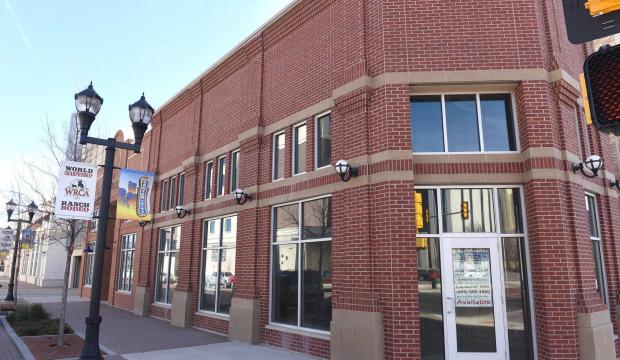
The Van Buren Street building is vacant. The paper’s new corporate owners, GateHouse Media, decided to move what is left of the newsroom across the parking lot to the company’s other office building facing Harrison Street. That structure has an inscription over its front door: “A newspaper can forgiven for lack of wisdom, but never for lack of courage.” That quote came from another legendary figure, Globe-Times publisher Gene Howe.

I was proud to work for the Globe-News for nearly 18 years. My career ended on Aug. 31, 2012. I resigned after being phased out of my job in a corporate reorganization.

The paper has continued to wither since then. It’s not because of my absence, but rather because — as I have viewed it — the paper has not kept pace with the changing information trends sweeping the world.

It sells far fewer copies each day than it did a decade ago. It publishes its daily editions with far fewer employees than it did even five years ago. The Globe-News no longer operates a printing press in Amarillo; its editions are printed in Lubbock and then shipped back to Amarillo for delivery to what remains of its subscriber list.

The newsroom used to operate in a different building from where the advertising department works. That was by design. When I arrived in January 1995 I was told that the newspaper wanted to keep the functions separate to protect the integrity of the news-gathering team. There would be no pressure to publish stories that advertisers might want.

Today? The depleted newsroom staff now sits side by side with an equally depleted advertising staff in the first-floor office space on Harrison Street.

My, how times have changed.

I am acutely aware that other media markets are undergoing tremendous pressures as well. Some major metro markets no longer even have newspapers delivered daily to subscribers’ homes.

They face pressure from the Internet, from cable TV news, from the plethora of outlets that provide information that could be legit — or it could be, um, fake.

Meanwhile, newspaper reporters and editors continue to do their jobs the way they were taught to do them. The problem, though, is that much of the public isn’t paying attention.

And a once-flourishing and proud craft is paying a grievous price.

I look at what is left of the place that served as my last stop on a career that gave me so much happiness and satisfaction — and I am saddened.
Perry, not Trump, set the tone for stiffing the media

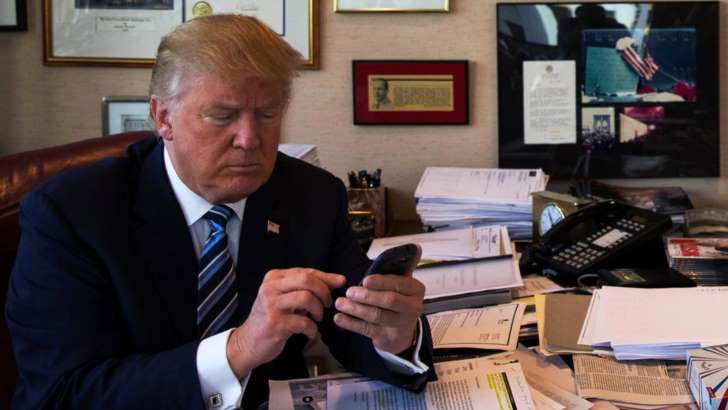
Donald Trump likes to crow about how he uses Twitter to “talk directly” to Americans, avoiding the “filter” of the “fake news” mainstream media.

The president, it appears to me, would have us believe he has been a trendsetter in this regard.

I would beg to differ.

Trump is a bit late to this game of sticking it in the ear of the media. Rick Perry, the energy secretary, blazed that trail in 2010 while running for what turned out to be his final re-election campaign as Texas governor.

I wrote about it then:

https://highplainsblogger.com/2010/01/perry-skips-the-ed-board/

Perry, too, wanted to forgo talking to newspaper editorial boards while campaigning for governor. He stiffed us in the business. He didn’t even come to Amarillo, where I worked at the time as editorial page editor of the Globe-News. He might have earned our newspaper’s editorial endorsement against the man he faced in that year’s general election, former Houston Mayor Bill White; the paper had a policy at the time of declining to make endorsements in contested partisan primaries.

The governor decided to stay away during the primary campaign in which he faced former U.S. Sen. Kay Bailey Hutchison and then later in the general election.

I don’t recall him using Twitter at the time; indeed, I cannot even remember that particular social medium becoming the tool it has become in the past couple of years.

I wrote at the time of Perry’s decision to stiff the media that we didn’t “take it personally.” I might have to walk that back just a bit. In truth, we did take it as a mild insult. “Who does this guy, Perry, think he is?” we thought at the time.

It turned out to be a stroke of genius. The media had become the whipping child for conservative politicians. Perry became the spokesman for the Stiff the Media crowd.

Newspapers all across the state ended up endorsing Mayor White for governor. White talked to the Globe-News and made a strong case for his candidacy. So, the Globe-News — a longtime ally of Republican politicians — endorsed a Democrat for governor; I say “longtime ally” of GOP pols understanding that in 1994, the newspaper endorsed the late Democratic Gov. Ann Richards in her bid for re-election, which she lost to George W. Bush.

So … sit down, Donald Trump and stop implying that you’re hacking your way through some sort of political wilderness with your continual Twitter tirades. You aren’t the first to stick it to the media.

Happy Trails, Part 64

A friend of mine writes that he is fearful of watching the film “The Post.” He doesn’t want to sob out loud over what he describes as the demise of a noble craft and the state of play in the nation today.

“The Post” tells the story of the Washington Post’s decision to publish the Pentagon Papers, which documented the deceit and deception that guided U.S. policy in fighting the Vietnam War. It stars Meryl Streep as Post publisher Katherine Graham and Tom Hanks as the paper’s editor, Ben Bradlee.

I admire my friend greatly and he knows of my great personal affection and professional respect for him.

I want to differ just a bit with his analysis of the film and what it might to do to his state of mind. I want to see the film, because I want to remember the excitement I felt reporting on communities where I lived and worked; I want to remember how much satisfaction I received while chronicling the communities’ progress.

Yes, there were times when I was working as a reporter and later, as an editor, when I sweated telling the tough stories about officials’ conduct. I never felt comfortable doing it, but I usually found a way to suck it up, take a deep breath and plod ahead in pursuit of the mission.

One story stands out. It involved a young businessman in Amarillo who, shortly after leaving the City Commission, secured a grant from the city’s Economic Development Corporation, which offered taxpayer funds for start-up businesses. We perceived that the former city commissioner might have used his influence improperly to secure the grant. We decided to call him on it with an editorial that called for a change in the way the EDC vetted those grant applications.

I told the ex-commissioner that we would comment on the grant and that he might not like what we had to say. “When am I going to become just a private citizen?” he asked with more than a touch of anger in his voice. I responded, “When you stop taking public money.”

Oh, and the EDC did rework its grant application and approval process. Mission accomplished!

Yes, the media have taken a vastly different turn since those days. Newspapers, as many old-school journalists knew them, are fading faster than yesterday’s news.

However, I wouldn’t surrender a single day for the career I chose to pursue after I returned home in 1970 from my stint in the U.S. Army. It was a hell of a great ride. It was full of adventure, a bit of chaos. It exposed me to the most interesting people imaginable. It allowed me to travel to exotic places. I made many lasting friendships and I learned from many mentors along the way.

Will watching “The Post” sadden me? Not for an instant. It will make me proud to have been a small part of a grand craft.

Boone Pickens: a complicated man

T. Boone Pickens is one of the most complicated human beings I’ve ever had the pleasure of knowing.

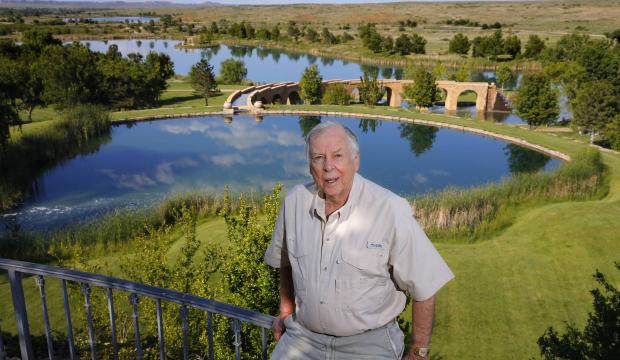
Let me be clear about something. To say I “know” Boone can be construed as a bit of an overstatement. I do not know him well. I’ve had precisely three meetings with the legendary Texas Panhandle oil and natural gas wildcatter: two of them in Amarillo and one at his magnificent ranch in Roberts County, which he calls Mesa Vista.

Take my word for it, the view at Mesa Vista is a sight to behold.

Pickens announced recently that he is putting his ranch on the market. He’s asking a cool $250 million for the place that sprawls across 80,000 acres — give or take.

Pickens is having some health problems relating to a series of strokes he reportedly has suffered. Thus, I am sad to hear the news of his effort to sell Mesa Vista. I want nothing but the best for this individual, who has had — and this is a charitable description — something of a checkered history with Amarillo.

***

It was around 1987 when I picked up a copy of the Wall Street Journal and began reading this front-page story about a flamboyant billionaire oilman launching a boycott against the Amarillo Globe-News. I was living and working in Beaumont. My first reaction when I saw the article: Who in the hell does this guy Pickens think he is? 

Pickens didn’t like the way the Globe-News covered the news, namely as it related to him. He sought to get advertisers to quit buying ad space in the paper; he urged subscribers to quit buying and reading the paper. He became enmeshed in a serious feud with the newspaper’s publisher at the time.

The feud with the publisher escalated. Finally, Morris Communications, which owned the Globe-News at the time, reassigned the publisher, Jerry Huff, and sent him packing.

That’s when Pickens did something that remains stuck in the craw of many folks in Amarillo. He hung a banner on the side of the building he once owned in the downtown district. The banner screamed “Goodbye, Jerry.”

Pickens himself would depart Amarillo not long after that. He relocated to Dallas.

That was the Bad Boone I had heard about. He was prone to vengefulness. He could be mean. He held grudges.

When I arrived in Amarillo in January 1995, the Pickens era in Amarillo had long since passed. But not long after my arrival in the Panhandle, I made an effort to meet this man I knew only by what I had read about him.

The effort took years. I talked many times with his press aide, trying to figure out a way to sit down with Pickens, to pick his substantial brain about energy policy, about his plans to sell Panhandle water downstate, or his efforts to build massive wind farms throughout the High Plains.

Pickens’s press suggested I could go to Dallas. I would have liked to do that, but my employer — the Globe-News — wouldn’t pay my way. I then offered to meet with Pickens at a diner in Pampa. I’d even buy his lunch! No go on that offer.

Then came the opportunity to meet. I had heard that Pickens was coming to Amarillo. I called his press guy. I asked if there was a chance to meet. Two days later, I got the go ahead. Pickens would come to the Globe-News.

He came and we met for a couple of hours.

What kind of man did I encounter? He was charming, talkative, and so very friendly. He admitted it was hard for him to darken the Globe-News door, given the history he had with the paper. But we had a wonderful and quite productive first meeting.

I would meet with him a second time not long after that at the Amarillo Civic Center. That meeting was much shorter, but he was no less charming.

The third meeting would be at Mesa Vista. I had left the Globe-News in August 2012 and was working as a part-time stringer for KFDA NewsChannel 10, writing news features for the station’s website. An on-air reporter, a cameraman and I drove to the ranch and had a fantastic view of this magnificent spread.

Pickens shared with me how he was slowing down because of his age; he was in his mid-80s when we met the final time.

I wanted to share this here because of the news of his effort to sell Mesa Vista. I don’t know who is going to come up with the kind of dough Pickens is asking for his spread.

Yes, news of his selling Mesa Vista seems to signal the end of an era in the Texas Panhandle, where Pickens earned the first part of his vast fortune. He has been through many peaks and valleys with this part of the world.

I am glad — and proud — to have been able to meet and visit with  the Good Boone.

Amarillo goes smoke-free … without a city ordinance

I feel like revisiting an issue that some years ago got a lot of Amarillo, Texas, residents all fired up.

I am referring to smoking indoors.

Over the years I have discovered something curious — and quite welcome — about the city where my wife and I live. It’s damn near impossible to find an eating establishment that still allows indoor smoking.

I haven’t been to every single such establishment in the city, so this isn’t a declaration of fact. It is a perception that has dawned on me.

City residents twice in recent years rejected municipal referendums calling for a citywide ban on indoor smoking. The calls for a city ordinance came from the medical community that sought to mandate that business owners order customers to keep their smokes unlit while they ate and drank indoors.

I worked during at least one of those elections for the Amarillo Globe-News. Our newspaper’s editorial policy opposed the mandate. We stated our preference for business owners to do the right thing without being forced to do so by the government.

I gritted my teeth while writing editorials taking that position. My personal preference — and it remains so to this day — was that the city should put residents’ health first. Second-hand smoke is dangerous to those who inhale it. What’s more, a former city councilman — a physician — once admitted to me that his personal preference was to enact a smoke-free ordinance, but that he didn’t want to be the sole vote on the five-member governing panel.

But now, years later, my wife and I are still eating out on occasion. We have discovered that none of the establishments we frequent allow indoor smoking. Indeed, some of these businesses — which formerly allowed it — have gone smoke-free on their own. Imagine that! It turns out that the newspaper’s opposition to was on the mark.

A couple of well-known places along Historic Route 66 have gone smoke-free. I interviewed one business owner while working part-time for KFDA NewsChannel 10 and learned that although she opposed the ordinance she was adamantly opposed to smoking inside her restaurant.

This is all my way of paying tribute to those business owners who have stayed true to their conscience while improving the health climate for their customers.

I am pretty certain some readers of this blog are going to remind me that there remain some joints around the city that still allow smoke to billow from stogies and cigarettes.

Fine. I just can’t find them. I prefer it that way.

Build the ballpark, the stores will come

I got a glimpse of a headline on Amarillo.com that reveals how the retail space in the newly built parking garage on Buchanan Street in downtown Amarillo likely will remain empty for the foreseeable future.

I couldn’t read the whole story because the pay wall popped up; since I don’t subscribe to the Amarillo Globe-News, I couldn’t read it.

The retail spots are going to remain empty until the ballpark gets closer to completion, which is about all I could see of the story.

I am reminded of the line from “A Field of Dreams,” where the Kevin Costner character is told, “If you build it, they will come.”

So it well could be when they break ground on the multipurpose event venue, aka The Ballpark. The MPEV is taking shape as a sort of “field of dreams” for city, business and civic leaders who consider the project to be the gateway to a brighter future for Amarillo.

I happen to agree with that view.

Thus, it doesn’t worry me in the least that the garage’s ground floor row of retail space will remain empty for the time being. It makes sense.

Why install an establishment that won’t reap the reward until after the MPEV is open for business and attracting crowds into the downtown business/entertainment district?

If that’s the prevailing theory, then it makes perfect sense to yours truly.

I remain optimistic — and you can remove the “cautiously” qualifier from that description — about the future of the MPEV and its impact on Amarillo.

The Local Government Corp. has negotiated a deal to bring a AA minor-league baseball franchise to the city. They’ll break ground soon on the MPEV. It will open no later than April 2019, just in time for some hardball to be played.

The MPEV will be built. I remain quite confident that the retailers will come.

Happy Trails, Part 58

Here it comes.

My wife and I are about to enter a critical new phase in our post-retirement journey.

This is big, man! Huge! There’s no turning back from this one!

Very soon, movers are coming to our house and are going to haul our possessions off to a storage unit in downtown Amarillo, Texas.

Why is this so huge? Well, it means we have nowhere other than our recreational vehicle to sleep at night. It means we’re officially living in our RV. It becomes officially a full-time gig.

We are parked at an RV park just off of Interstate 40.

Once we clear this next big hurdle, which will be … uh … very soon, then we commence the next big challenge. That will involve getting a real estate agent to the house to give us a candid assessment of what we should ask for the place we used to call “home.”

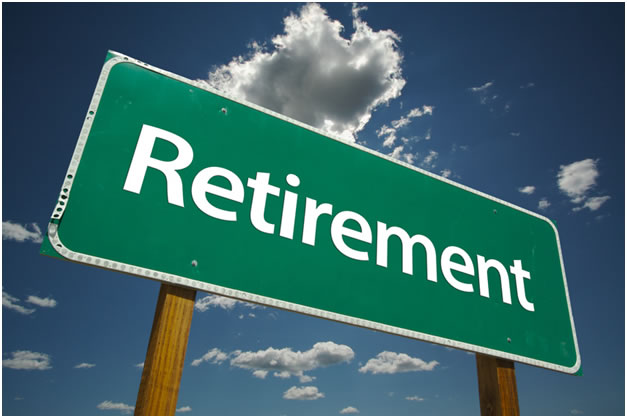
Retirement came in an unexpected fashion to me. It arrived five years ago in a moment I was only half-expecting. I smelled a rat when my employer announced a “reorganization” effort was underway. When I learned that the “new direction” my employer was going wouldn’t include me, I resigned immediately. Then I worked a few part-time gigs, even as I applied for Social Security retirement income commencing when I turned 66.

As I look back on that moment in my life, I realize now how simple it was to transition from full-time to part-time work. There were plenty of opportunities for me to pursue elements of the career I had enjoyed for nearly four decades.

None of it matched the challenge that is about to come our way as we prepare to vacate permanently the house where we lived for 21 years.

Here, though, is the really good news: I am ready for it.

‘Living the dream,’ really and truly

We’ve all either said it or heard it said by someone else.

“How’s it going for you?”

“I’m living the dream, man.”

We know that the “living the dream” quip is meant usually as a bit of self-deprecation. When I say it, though, I mean it. I am not making fun of myself. I truly am living the dream.

The dream includes coming and going (more or less) as I please; my wife of 46-plus years has a bit to say about that, but she’s not terribly demanding of my time.

Today I got a chance to speak to an Amarillo, Texas service organization. Someone from that group was familiar with this blog; he said he reads it “fairly regularly” and likes a lot of what I write. He admitted he’s not too keen on the political stuff that spews from High Plains Blogger. I get that. I live in the middle of Republican-Red Trump Country and this blog is decidedly not cast from that mold.

He likes to read the retirement posts, entries about my precious granddaughter, about Toby the Puppy and the other “life experience” matters that grab my attention from time to time.

So he asked me to speak to his service club. I did so. I got to boast — if you want to call it that — about the indisputable fact that there truly is life after journalism.

I pursued print journalism singularly for nearly 37 years, I told these good folks. I gave them the extremely short version of how that fruitful and moderately successful career came to an end at the Amarillo Globe-News on Aug. 31, 2012. I told them about how Mom and Dad suggested journalism to me at the dinner table one night in 1970 shortly after I returned home from the Army and was getting ready to go back to college.

I then told them a bit about my career and how I enjoyed it so greatly for almost its entire length of time.

But that was then. The here and now allows me to write this blog and to express myself beholden only to my own conscience. I no longer work for The Man.

Thus, I am living the dream. It’s no put-down, either.

‘W’ takes off the muzzle

I don’t know Amarillo resident James Whitaker, the author of a brief letter to the editor of the Amarillo Globe-News.

The letter included this passage:

What disturbs me is that during eight years of President Barack Obama’s administration, and the reversal of many of President Bush’s actions, Bush said nothing. But now he comes out and attacks this current president?

I think I might have an answer for this gentleman.

President Bush was quiet because President Obama conducted himself with grace and dignity during his two terms in office. Yes, he was critical of Bush administration policies and, yes, he sought to reverse some of his immediate predecessor’s policies.

Obama also was quite gracious toward Bush as the men conducted a relatively seamless transition from one administration to another. He thanked Bush publicly on multiple occasions for the cooperation he delivered during that transition after the 2008 election.

President Obama also made a point of telling the world that the first phone call he made after U.S. special ops forces were out of harm’s way after the mission that killed Osama bin Laden was to President Bush.

George W. Bush’s recent criticism of Donald J. Trump was aimed at the sheer coarseness of the political debate that has been generated ever since Trump entered the political arena back in June 2015.

President Bush was the first leading politician to declare after 9/11 that “we are not at war against Islam.” Donald Trump has all but turned aside that notion with his continual attacks on Islam and those who practice it.

What’s more, Trump’s insults against the former president’s brother, one-time GOP primary campaign opponent Jeb Bush, surely has weighed on W’s mind.

I am one who found the former president’s remarks recently about the current president to be on the mark. They were cogent and they accurately portrayed the divisive nature of Donald Trump’s effort to govern the United States.

Here’s the former president’s recent remarks that provide a barely veiled reference to the current president.

https://www.youtube.com/watch?v=Wz6SaVTquuY

I believe President Bush makes his case with precision.

DQs to close? How will these communities cope?

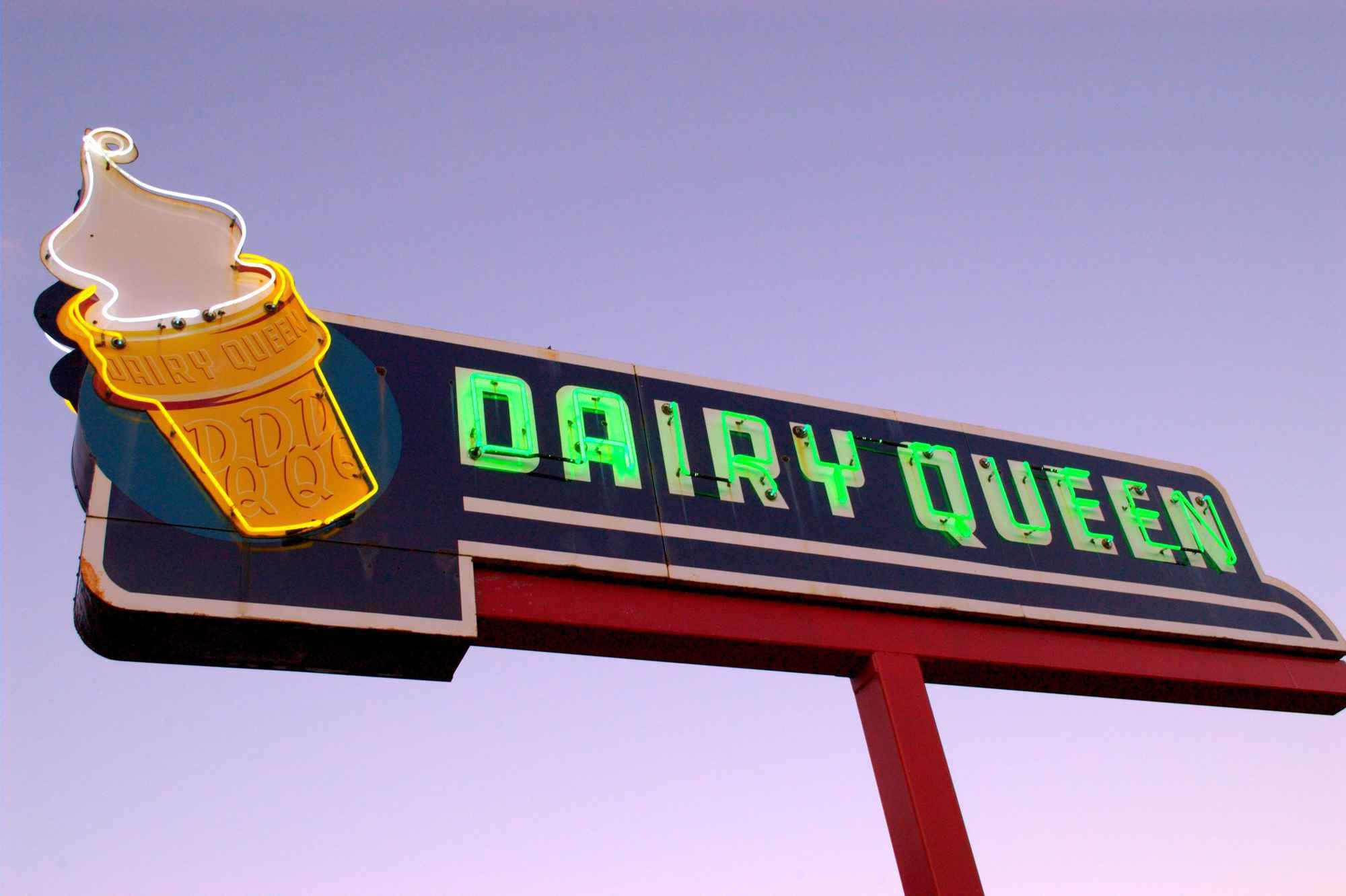
Diary Queen is a staple of the first order in towns all across the Texas Panhandle.

The fast-food drive-in serves as a community gathering place. Its standing rivals that of local high schools on Friday night during fall football season … if you get my drift.

The company has announced, though, plans to close a large number of its restaurants. I heard today that nine possible closures include those that are scattered in small towns across the Panhandle.

I’m actually wondering if the corporate moguls who run the DQ chain understand what they’re about to do to many of these communities. They’re going to cut the heart and guts out of many of them.

Dairy Queen has made such a huge imprint in these towns that the Amarillo Globe-News sports department — when compiling information for its seasonal football supplement — would conduct what it called its annual “DQ Tour” across the Panhandle. Reporters and photographers would fan out across the region to interview coaches and student-athletes for the publication.

I’ll concede that I actually never lived in communities such as Clarendon, Perryton, Dumas or Dalhart — towns that are included on the potential DQ hit list. However, 22 years living in the Panhandle has given me a pretty good understanding of life outside of Amarillo.

In many towns across our sprawling landscape, that life includes gathering at Dairy Queen.

***

I now want to share a brief anecdote I heard from a former Amarillo resident; it involves the DQ in Tulia. I don’t think the person who told this story to me will mind my sharing it here.

George and Judy Sell used to reside in Amarillo; they moved away some years ago. George Sell once told me that he and his wife were married on the same day as their good friends, Pete and the late Nelda Laney of Hale Center; Pete Laney, you might recall is the former speaker of the Texas House of Representatives.

The Sells and the Laneys, George Sell told me, would meet annually on their shared wedding anniversary at the Dairy Queen in Tulia, which is roughly equidistant between Amarillo and Hale Center.

Right there is how you measure DQ’s importance to a community.

I saw the list of potential Panhandle sites to close. I didn’t see Tulia on it. Still, I see potential emotional crises on the horizon in many other Texas Panhandle communities.

Be strong, y’all.