Tag Archives: US Senate

A word of caution to Beto’s supporters

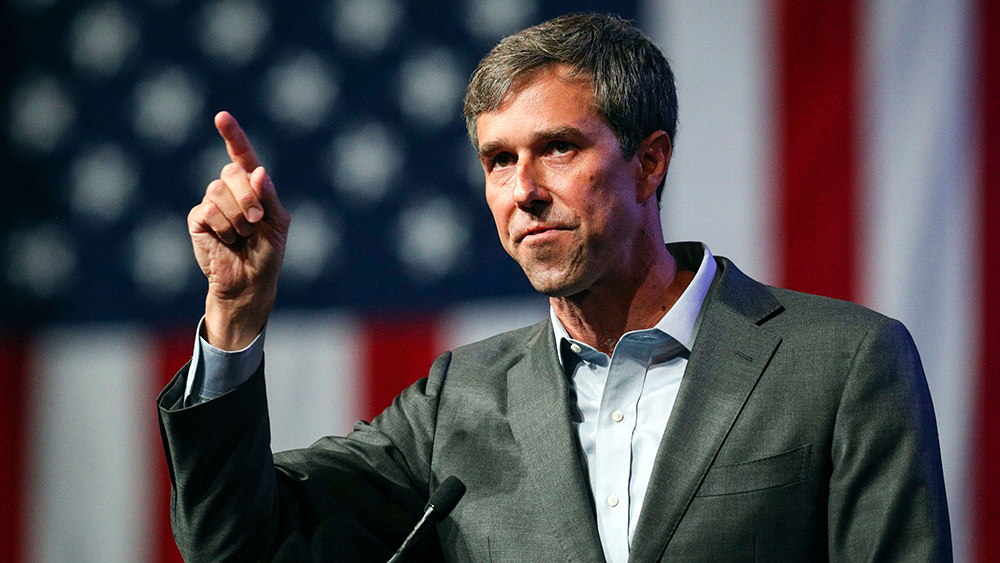
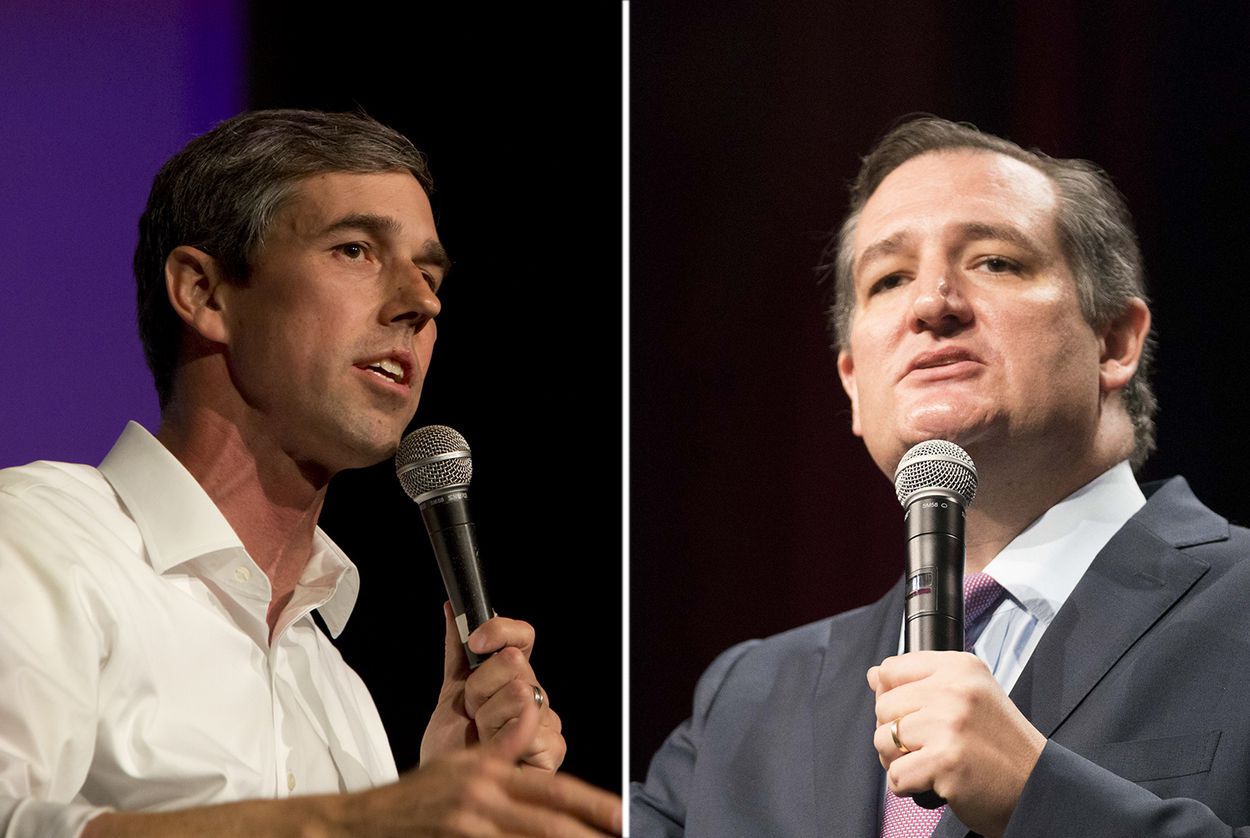
Beto O’Rourke has raised more money than Ted Cruz in the race for Cruz’s U.S. Senate seat.

I am cheered by that news. I want the Democratic congressman from El Paso to defeat the Cruz Missile.

That said, I want to offer a brief word of caution. More money doesn’t necessarily translate to more votes.

Here is what the Texas Tribune is reporting:

Beto O’Rourke, the Democratic nominee for U.S. Senate in Texas, raised more than $10.4 million over the past three months, he announced Wednesday, revealing a sum that takes his already massive fundraising to new heights.

And the El Paso congressman again vastly outraised the Republican incumbent, Ted Cruz, who took in less than half of his challenger’s haul — $4.6 million — in the same time, according to his campaign. O’Rourke also took a decisive lead in cash on hand over Cruz with four months to Election Day, $14 million to $10.4 million.

O’Rourke’s latest haul is easily his biggest yet — topping the $6.7 million he raked in during the first quarter, which was far more than Cruz raised for the same period. Cruz’s second-quarter fundraising also was his largest yet, though not nearly enough to keep up with O’Rourke’s torrid pace.

O’Rourke has now outraised Cruz for every period but one since O’Rourke launched his Senate bid in March 2017.

I’ll conclude simply by reminding Beto’s Brigade that longtime Democratic U.S. Rep. Joe Crowley outspent his primary challenger Alexandria Ocasio-Cortez by 18-to-1 this past month … and he still lost the primary.

Sen. Collins: Your vote will matter more

I just heard a Republican U.S. senator from Maine make a preposterous declaration.

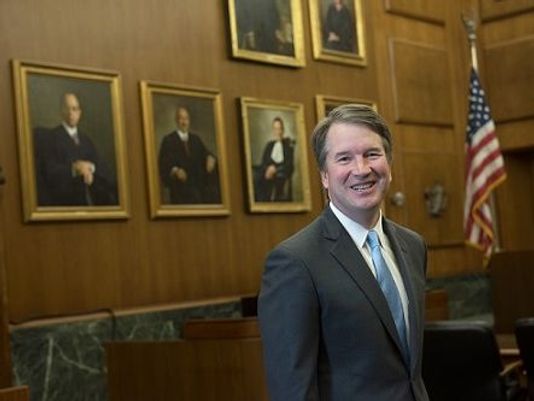
Susan Collins is going to be at Ground Zero in the debate over whether to confirm Brett Kavanaugh to the U.S. Supreme Court. The battle lines are being drawn.

It’s along abortion and whether Kavanaugh would uphold the Roe v. Wade decision that in 1973 made abortion legal in the United States.

Collins already has said that she cannot support a SCOTUS nominee who doesn’t believe Roe v. Wade is “settled law.”

Then today she said that her vote “doesn’t count any more than my 99 colleagues” in the Senate.

Wrong, senator! Given the stakes and the apparent lineup that’s taking shape in the Senate, your vote counts more.

It counts a lot more!

Time to praise SCOTUS selection

I am feeling so good over the rescue of the Thai boys and their soccer coach from that flooded cave in northern Thailand that I want to offer a good word for Donald John Trump’s selection to the U.S. Supreme Court.

I’ll stipulate up front that you’ll deem this to be faint praise, but it’s praise nonetheless.

Appeals Court Judge Brett Kavanaugh’s nomination to the Supreme Court has angered the crackpot Trump “base.” They’re none too happy with Kavanaugh, fearing that he doesn’t appear to be as firmly opposed to Roe v. Wade as the base continues to be. Former U.S. Sen. Rick Santorum of Pennsylvania chided the president for surrendering to what he called the “Washington elite” by selecting Kavanaugh.

To be sure, the justice nominee is a conservative. He appears to be what one could call a “mainstream conservative,” not a goofball/wack-job conservative.

He has pledged to be independent and to study the law as it is written, not as one wishes it were written.

Is this the kind of judge I would have selected? Of course not! However, Trump is the president of the United States.

By anyone’s measure, Kavanaugh is supremely qualified to serve on the high court. He’s a Yale Law School grad, meaning that the entire Supreme Court would comprise Ivy League legal eagles if Kavanaugh is confirmed by the U.S. Senate.

The Senate will nitpick the daylights out of Kavanaugh’s lengthy written record. Senators will need to examine Kavanaugh’s views on health care, as well as on whether sitting presidents can be indicted for criminal offenses. His record suggests he might tilt the “wrong way” on both of those issues.

I continue to believe that while Kavanaugh’s conservative credentials might solidify the court’s right-leaning bias, it doesn’t guarantee it necessarily on every single key ruling that would come before the Supreme Court.

That seeming uncertainty, I submit, is what might be driving the Trump bloc of “base” voters nuts.

Self-awareness, Mr. Majority Leader?

I could barely contain myself. I wanted to toss a shoe at the TV set as I listened to U.S. Senate Majority Leader Mitch McConnell condemn what he called “far left” resistance to whomever Donald J. Trump would appoint to the Supreme Court.

Why, he just cannot fathom how these groups could make such judgments without even knowing who the president plans to select.

Wow! Does the majority leader — who made his remarks in a Senate floor speech — not remember what he said immediately after Antonin Scalia died in early 2016, creating a vacancy on the high court?

Let me remind him. About an hour after Justice Scalia died, McConnell declared that no one whom President Obama would appoint would get a hearing and a confirmation vote. He declared the president’s pick dead and buried. Obama had nearly a year left in office when McConnell mounted his successful obstruction campaign.

So now he is accusing lefties of pre-judging any appointment that would come from Donald Trump.

Does anyone else see the irony of this idiocy? He is leveling an accusation against a political opponent that he could have leveled against himself when the previous president sought to fulfill his constitutional responsibility.

This is rich.

Will the SCOTUS pick adhere to the RBG Rule?

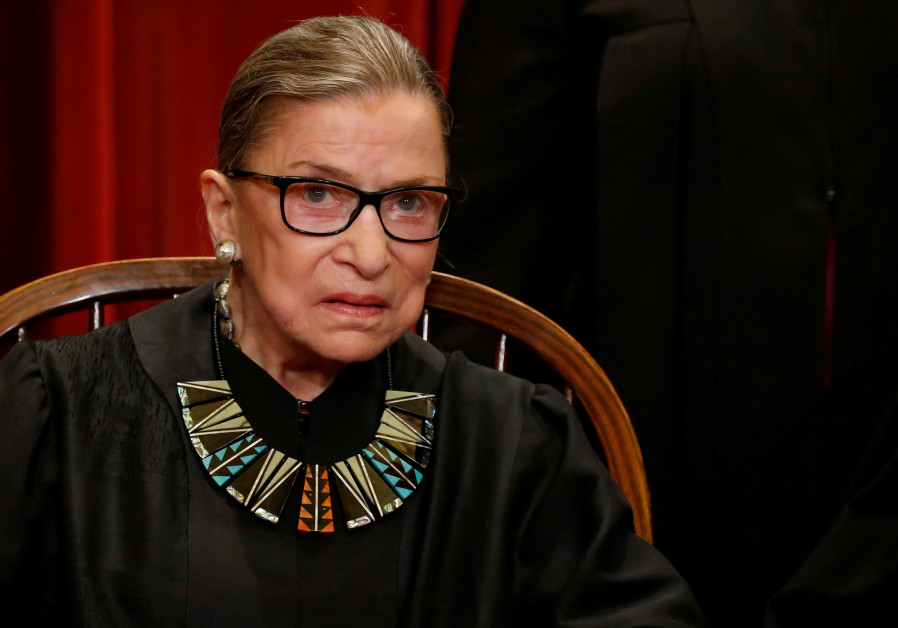
I’ve been hearing some chatter in recent days about the RBG Rule, named after Supreme Court Justice Ruth Bader Ginsburg.

President Clinton nominated Justice Ginsburg to the high court in 1993 and she promptly made one thing clear: She would not comment on any question that she believed could compromise the integrity of a decision she might make in a future court hearing.

Her intention was to avoid revealing how she might rule.

The RBG Rule has stood the test of time over the past 25 years.

Donald J. Trump is set to select someone to succeed Justice Anthony Kennedy, who is retiring at the end of this month after 30 years on the Supreme Court.

Here’s my hope for the next pick: He or she should make the same pledge that RBG made in 1993. What’s more, liberal members of the U.S. Senate Judiciary Committee, which will consider the merits of this nomination, should honor that nominee’s pledge … if the nominee makes it.

There likely will be plenty of grist to pore through once the president reveals the identity of his nominee. I keep hearing that all the finalists the president is considering have considerable judicial experience and have developed lengthy and clearly defined paper trails that reveal much about their judicial philosophy.

Should whoever gets nominated be forced to answer how he or she would vote on, say, Roe v. Wade, or on the president’s travel ban, or on affirmative action, or campaign finance?

This nomination is likely to proceed to a relatively swift up/down vote on confirmation, despite the concerns of many that we ought to wait for the midterm election to determine the Senate composition. The Senate majority leader insisted on the completion of an election prior to considering someone to replace the late Antonin Scalia, right?

If the Senate is going to plow ahead with a confirmation process to determine who succeeds Justice Kennedy, then the RBG Rule needs to stand.

Schumer to Trump: Why not select Merrick Garland?

It won’t happen in this universe, but it’s worth calling attention to this strange idea.

U.S. Senate Minority Leader Chuck Schumer — the Senate’s top Democrat — has urged Donald Trump to select Merrick Garland to succeed Anthony Kennedy on the U.S. Supreme Court.

Hell would freeze over, Earth would spin off its axis and the sun would rise in the west for that to happen.

However …

Schumer is making the request in the name of national unity. Garland, a centrist appeals court judge, was nominated by President Barack Obama in 2016. Senate Majority Leader Mitch McConnell — within hours of the death of Justice Antonin Scalia — declared any high court nominee Obama would put forward would go nowhere. McConnell announced his intention to obstruct the nomination and confirmation process.

Garland got nominated. His nomination languished. Trump got elected president. The new president nominated Neil Gorsuch, who then was confirmed.

We’re still divided, significantly because of the theft of the Supreme Court seat by McConnell.

Unification could occur if Trump were to follow Schumer’s advice. I mean, Trump has promised unity. Hasn’t he?

It won’t happen. The idea of nominating Merrick Garland does cause a tingle or two among many of us out here. I’m one of them.

Senate panel takes command of the obvious

The U.S. Senate Intelligence Committee has weighed in with what the rest of the country — except for perhaps one man — already knows.

The Russians meddled in our 2016 presidential election and worked to elect Donald J. Trump as president of the United States.

Senators have concurred with what every intelligence expert in this country — and some around the world — have concluded. The Russians attacked our electoral process.

According to The Hill: “The Committee has spent the last 16 months reviewing the sources, tradecraft and analytic work underpinning the Intelligence Community Assessment and sees no reason to dispute the conclusions,” said Chairman Richard Burr (R-N.C.) said in a statement.

Did you note that Burr is a Republican? That he’s the chairman of the panel? That he has done what his GOP colleagues on the House Intelligence Committee failed to do, which is issued a bipartisan conclusion?

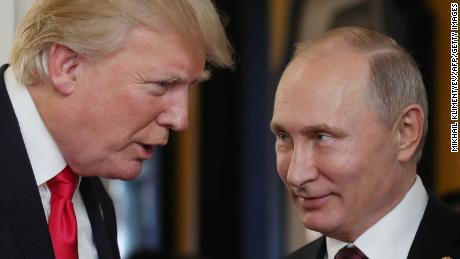
Trump, meanwhile, continues to give the Russians a pass. He won’t condemn their actions as a virtual act of war on our electoral system. He won’t scorch Russian President Vladimir Putin the way he has, say, the U.S. intelligence and law enforcement communities. Justice Department and FBI leaders have been vilified by the president, who cannot bring himself to say publicly what intelligence experts have said for months, that the Russians meddled in our election.

The Hill reports: All in all, the Senate panel’s report was a unflinching contradiction of many of the core claims made by Trump allies in the House. 

Read The Hill story here.

Will the president take this latest confirmation any more seriously than he has the previous reports? Absolutely not!

Indeed, he’s getting ready to meet with Putin in a few days in Helsinki, Finland. Don’t expect the president to criticize the Russian strongman over his attack on our election.

O’Rourke vs. Cruz: gap closing, maybe?

U.S. Rep. Beto O’Rourke is expressing optimism in a new University of Texas/Texas Tribune poll that shows his race with U.S. Sen. Ted Cruz narrowing to just a five-point margin for the Cruz Missile.

Hmm. That’s fine, Beto. Let’s dive just a little bit deeper, though, shall we?

The poll puts the Republican Cruz at 41 percent; the Democratic challenger, O’Rourke, is at 36 percent. When I examine these polls, I tend to look at the 50-percent threshold. Neither of these fellows is close to it. That renders these poll numbers virtually useless.

O’Rourke, though, said this via Twitter: A brand-new poll has us down by just 5 points. We’re closing the gap in this race for Senate — and we rely 100% on grassroots donations from people like you to power our campaign. Let’s keep the momentum going and get Beto in the Senate!

Hey, I want O’Rourke to represent me in the U.S. Senate at the start of 2019. The young man needs to stop getting ahead of himself.

Wishing a Sen. Romney stays true

Mitt Romney doesn’t likely give a rip what a blogger in Texas thinks about his pending new role as a U.S. senator.

He should. He is going to be elected to the Senate from Utah, one of the nation’s most Republican of states. He wiped out his GOP primary foe Tuesday night and will campaign this fall for a seat in the Senate, where he will vote on laws that affect all Americans, including this blogger from Texas.

I have only a single wish for Sen.-to-be Romney. It is that he stays true to his belief that Donald John Trump is a “phony” and a “fraud.” And that he holds the president accountable for the lies he keeps blurting. And … that he makes sure that he won’t roll over for the president because of some fear of political retribution.

Mitt didn’t get my vote for president in 2012 when he ran against Barack H. Obama. That doesn’t mean I dishonor him. He had an uphill climb against an incumbent president and he lost the popular vote by roughly 5 million ballots and the Electoral College vote 332-206.

However, Romney was spot on in his critique of Trump during the 2016 election. He told the truth about the GOP nominee.

I know he’s a good party man. I also know that as a newly minted resident of Utah, he has to be sure to protect his new constituents’ interests. Nothing he says about the president should endanger any federal program that benefits Utahns.

But I do not want him to play dead in front of a president who — in my mind — is exactly how Mitt Romney has described him … as a “phony” and a “fraud.”

Politics is part of the judiciary

It’s important to disabuse ourselves of a myth regarding the selection of federal judges.

That myth suggests that the federal judiciary — at every level — is somehow insulated from politics. It isn’t. If we’re honest with ourselves, we’ll acknowledge that politics has played a huge role in the selecting of these men and women.

The nation is about to witness the nomination and pending confirmation fight over the next justice to the U.S. Supreme Court. Justice Anthony Kennedy has announced his retirement after 30 years on the nation’s highest court.

The fight already has begun. Democratic senators are pledging to wage all-out political war against a Republican president who’ll nominate Kennedy’s successor.

Let us not be coy, either, about the benchmarks that Donald John Trump is going to lay out in front of the person he nominates. That individual will have to oppose a woman’s right to choose an abortion; he or she will have to stand with the president on many other issues, such as immigration and civil rights, campaign finance and environmental protection.

Will the president ask this individual in so many words how he or she would decide an issue that comes before the court? I would hope not, although given Trump’s ignorance of government and decorum, it wouldn’t surprise me in the least that he would pose the question.

These nominations are driven by politics seemingly as much as they are driven by judicial philosophy, credentials and legal standing.

The founders created a system that grants lifetime appointments for federal judges with the notion that they would immune from political pressure. They were only partly correct. The immunity kicks in after they are confirmed. The confirmation battles become all about the politics of the moment, of the individuals being considered and of the president who nominates them.

So, the fight begins. It’s a political battle of the first order. Just as it’s always been.