Tag Archives: downtown Amarillo

A glimpse into my city’s future?

ST. PAUL, Minn. — It might be that I have caught a glimpse of Amarillo, Texas’s future.

It presented itself more than 1,000 miles north of the Texas Panhandle in Minnesota’s capital city.

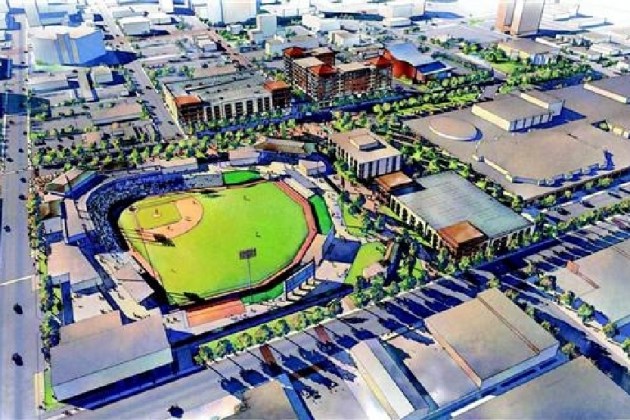
Amarillo is in the midst of a downtown renovation/revival/redevelopment. It includes a first-class hotel that’s about to open next to a first-class performance center, across the street from the Civic Center.

St. Paul happens to have — and perhaps this is just a coincidence — a world-class entertainment venue across the street from a historic hotel. I didn’t see the municipal complex, but it cannot be too far from the hotel and the performing arts center, given that this city’s downtown is fairly compact.

We came here to visit my cousin and her husband, who took us to see a world-class performance of “Jesus Christ, Superstar” at the Ordway Entertainment Center. Before we went to the play, we enjoyed a light dinner at the St. Paul Hotel, which was built in 1910.

The hotel was packed. So was the Ordway center.

Oh, did I mention that down the street in St. Paul there’s a ballpark where they play minor-league baseball? There. I just did.

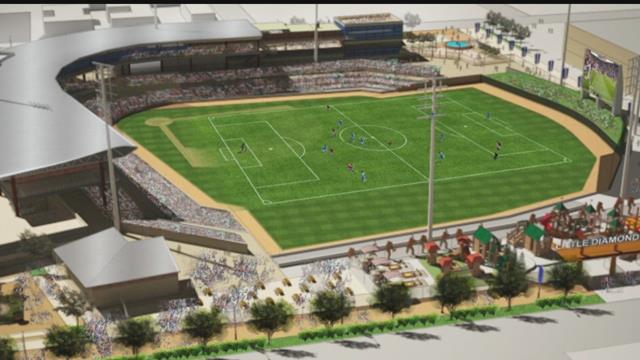
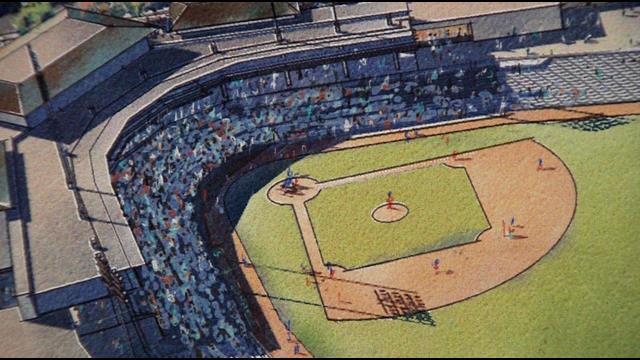
Which brings me to another point: Amarillo is about to break ground on construction of a multipurpose event venue/ballpark which — another coincidence! — will be the home field for a AA minor-league baseball team that will relocate to Amarillo from San Antonio.

They played a ballgame at the St. Paul ballpark. After it ended, they shot off fireworks that entertained a huge crowd of folks gathered in an outdoor park.

I now shall put some of this into a bit of perspective.

St. Paul’s population is about 304,000; Amarillo’s is at 200,000. St. Paul is next to Minneapolis; its metro-area population is about 3.5 million residents, while Amarillo’s metro population is about 280,000. St. Paul is separated from Minneapolis by the Big Muddy, aka the Mississippi River; Amarillo doesn’t have that kind of waterway coursing through it.

So, I realize I’m not making an apples-to-apples comparison.

I do, though, intend to suggest that economies of scale can produce success for Amarillo’s effort to remake its downtown district. Our city’s economic development gurus keep looking toward places such as Fort Worth and Oklahoma City as benchmarks for Amarillo’s potential future. They, too, have done well to revive their downtown districts.

I continue to harbor enormous optimism that Amarillo’s effort is going to produce success. Will it reap the pound-for-pound harvest that other communities have hauled in? Not necessarily. If Amarillo is smart, aggressive and creative in its marketing of what lies ahead, then it surely can enjoy the fruits of it all.

We came up way up north and saw what looks to me like a potential glimpse of what lies ahead for Amarillo, Texas.
WT making the turn in downtown Amarillo

I surely understand that much of the attention focusing on downtown Amarillo’s revival centers on that new ballpark/multipurpose event venue.

It’s a big deal, to be clear. They’re going to start busting up concrete in a few months and by April 2018, the MPEV will be open for business as the city welcomes the AA minor-league baseball franchise set to play hardball at the venue.

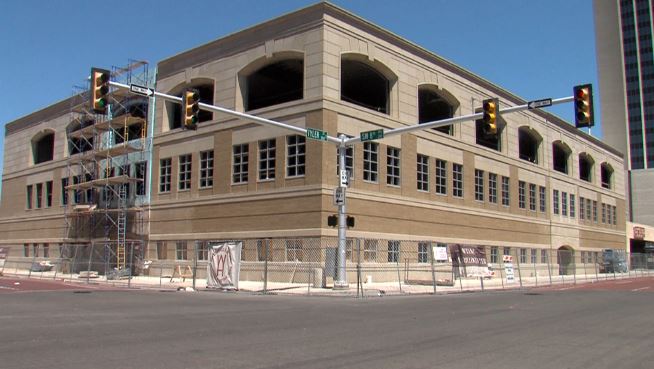
Oh, but wait! Something else really big is coming along in the city’s downtown district. It’s at the corner of Eight Avenue and Tyler Street. West Texas A&M University is finishing up Phase One of its new Amarillo Center.

WT purchased the old Commerce Building a couple years ago. Then Texas A&M University System regents allocated money to gut the old structure and turn it into a downtown campus.

I’ll be honest: When I first heard about WT moving its Amarillo classrooms from the Chase Tower to the Commerce Building, I envisioned a fairly quick and simple turnaround. WT would tear the guts out of the building, add some new rooms, reconfigure the floor plan a bit, hook up the electronics and then open the doors for college students.

Oh, no. It’s a lot more complicated than that.

WT has essentially rebuilt the structure. Yes, it’s the same framework. The exterior, shall we say, bears zero resemblance to the Commerce Building. Phase Two construction is going to commence soon.

Read about it here.

It’s a beautiful addition to the downtown district’s physical appearance.

Is it a totally positive development that lacks any downside? Not exactly.

You see, WT is going to vacate several floors at the 31-story Chase Tower, which already has seen a large portion of its building go dark with Excel Energy’s relocation into a new office structure on Buchanan Street. Roughly half of the Chase Tower will be vacant when WT starts classes at its Amarillo Center.

That ain’t good, man.

I did receive assurances, though, from Aaron Emerson, a partner in Gaut Whittenberg Emerson commercial real estate agents that they are shopping the Chase Tower aggressively for new tenants; moreover, Emerson told me he has great confidence that the building will be reoccupied.

I’ll hope for the best on that matter.

As for the new WT downtown Amarillo campus, I welcome the university’s increased profile in the city’s central business district.

Too many people? Nice problem to have for downtown

I hear they had a nice time in downtown Amarillo this weekend.

There was that annual Route 66 festival; they had a community market near the Chamber of Commerce building; and they had the annual Fourth of July fireworks show that was moved from John Stiff Memorial Park into the downtown district.

Lots of people. Lots of traffic. Presumably a headache or two.

What a nice problem to have for the downtown business and entertainment district.

Does this portend a brighter, livelier and more bustling future for the city’s central district? One can hope.

I’ve been to downtown events before. The annual Chamber of Commerce barbecue always has been a load of fun. The Center City block party has provided a good share of music as well.

I thought a little this weekend about how downtown can continue to prosper and, as a result, how the rest of the city can glean benefit from the kinds of activity that took place this weekend.

My wife and I just returned from a three-week road trip that took us through Memphis and Nashville, Tenn., on to Washington, D.C. It was in Nashville and then the nation’s capital where we saw just how choked it can get, where cities can perhaps overbook events in a restricted area.

I’m thinking of what we saw in Nashville, where we spent some time encamped at an RV park just north of the city.

Nashville played host to two big events simultaneously the week we were there. One was a country music awards festival downtown, along the banks of the Cumberland River. We ventured into the city with some friends with whom we rendezvoused in Nashville. Understand, it was a weekday afternoon, middle of the week. The downtown district was packed to the hilt.

The second big event would occur that weekend; my wife and I departed Nashville beforehand. The sixth game of the Stanley Cup hockey finals series was played at the Nashville Predators arena — also downtown! I’m trying to imagine how the city was able to accommodate those two events simultaneously. Local news broadcasts wondered aloud how the city would manage as well.

Last I heard, Nashville was still standing.

I know that Amarillo is no Nashville. However, I continue to wish the best for Amarillo as it embarks on a new downtown-centered journey. They’re going to start work in early 2018 on that downtown ballpark/multipurpose event venue; they opened that long-awaited parking garage this weekend; that new downtown hotel is going to open soon; the Civic Center is booking conventions like crazy, according to one of my pals at the Convention and Visitors Council.

Where will the city put everyone when they have multiple events occurring at the same time? I have no idea. I’m quite sure the city will figure it out. Hey, they can call their colleagues in Nashville for plenty of advice.

Let’s still call it an ‘MPEV’

I get scolded from time to time by readers of this blog. One of them scolded me mildly because I keep referring to the still-to-be-built sports and entertainment facility as a “multipurpose event venue.”

He wants the upcoming downtown Amarillo site called a “ballpark.”

I believe I’ll take his suggestion/edict under advisement, but for now I’ll continue to use the MPEV reference.

The MPEV is going to be home to a AA minor-league baseball franchise. The city recently announced the relocation of that franchise from San Antonio to Amarillo. The San Antonio Missions — as the team is now called — plan to play ball in Amarillo beginning in April 2019, which means the planners here need to get cracking. They need design plans approved and construction to begin immediately … if not sooner.

The strategy, though, puts many other events in the MPEV. Plans call for the venue to play host to myriad other activities that have nothing to do with balls and strikes, home runs, hot dogs and beer. Yes, the baseball team will be the primary tenant of the MPEV, but not the only one — if the grand plan is developed fully.

Thus, MPEV remains to my way of thinking a suitable term of art to refer to this upcoming venue.

I always appreciate constructive criticism.

For now I’ll pass on the latest suggestion on how we ought to refer to the MPEV.

Amarillo mayor is talkin’ baseball

Amarillo Mayor Ginger Nelson is sounding mighty pleased these days, with good reason.

The city scored a big win this past week with an announcement that a minor league baseball franchise is pulling up stakes and relocating to the city she has helped govern for the past few weeks.

The San Antonio Missions will play ball at the new ballpark/multipurpose event venue to be built in downtown Amarillo. They’ll start their 2019 season in April of that year and the plan is for them to stay possibly for decades, depending on the number of contract extensions they sign.

OK, we don’t yet know the name of the new team, but a couple of things jumped out at me as I watched Nelson’s TV interview this past weekend.

* She credits the weather as being a big selling point for the Elmore Group deciding to move the Missions to Amarillo. That’s a bit of a surprise. Nelson said the weather from “April to September” is ideal for evening baseball. Low humidity, “downtown wind,” placid temperatures after the sun goes down all worked in Amarillo’s favor to luring the team here.

But … but … but what about those infamous spring winds, Mme. Mayor? Isn’t there a standing joke here about how, if you don’t like the weather, “just wait 10 minutes”? Let’s hope for the best on that one.

* Nelson also answered a valid question about the cost of the multipurpose event venue and how it’s going to cost more than that what the non-binding referendum in November 2015 called for. That measure pegged the price at $32 million; the current price tag is $45.5 million. “That’s an apples and oranges” comparison, Nelson told KAMR’s Jackie Kingston.

The referendum presumed an “independent baseball team” would be playing at the MPEV. The Missions are a major league-affiliated minor league AA team, which she said will provide a much better entertainment product for fans to enjoy.

See the interview here.

I am in the mayor’s corner in celebrating the pending arrival of this new entertainment feature to Amarillo. I’ve noted before, but I believe it bears repeating: I see no downside in the city’s effort to its downtown district.

What became of this Amarillo ‘movement’?

When you see the word “movement” attached to a political activity, you ought to get the feeling of a groundswell, an initiative with staying power.

I thought recently of a “movement” that surfaced in Amarillo in 2015. It was called the Amarillo Millennial Movement. Do you recall it, too? Good on ya if you do.

The AMM is gone. It vanished into thin air seemingly the moment that city voters in November 2015 approved a non-binding referendum calling for construction of the multipurpose event venue in downtown Amarillo.

Its co-founder was a young woman named Meghan Riddlespurger, who followed her friend and mentor Melissa Dailey to Fort Worth; Dailey was forced out as director of Downtown Amarillo Inc. When Dailey hit the road, the AMM’s co-founder hit the road with her.

The ostensible idea behind the AMM was to energize the city’s younger residents, to encourage them to stay in Amarillo rather than bolt for greener pastures, more opportunity, greater career choices. AMM got excited about the MPEV and a few of those young folks — their numbers aren’t exactly clear to me — became involved in the pro-MPEV campaign.

It’s troubling to me that AMM isn’t around today to relish the news that came out about the pending start of the 2019 Texas League baseball season, which will include an Amarillo-based team affiliated with the San Diego Padres of the National League.

The Local Government Corporation managed to finish the deal. The LGC persuaded the San Antonio Missions to come here in time for the 2019 season. The ballpark where they’ll play must be done on time for them to throw out the first pitch.

We’re focusing on the baseball element. The team that will play at the ballpark will be its primary tenant. There will be other events at the MPEV/ballpark. That’s what I always understood was the focus behind AMM’s mission, to generate youthful exuberance to attend the various other entertainment-related events at the venue.

Riddlespurger has spoken publicly about the negativity she experienced while leading this AMM effort. That was one major reason why she decided to leave Amarillo. Interesting, yes? She helps found an organization that urges young residents to stay home, then she bails on the city to pursue a career opportunity.

Hey, I don’t blame her for seeking to advance her own future.

The Amarillo Millennial Movement, though, is a “movement” in name only. AMM is no longer around to witness the culmination of its greatest political triumph.

My hope springs eternal. Perhaps another group can rise up and join the marketing effort that will be required to ensure that the MPEV/ballpark attracts the activity it must to make it worth the effort to build it

No time for delay on MPEV

I remain a strong supporter of Amarillo’s efforts to reshape its downtown district.

That strategy took a giant leap forward this week with the announcement that organized minor-league baseball is returning to Amarillo. The San Antonio Missions are moving their AA franchise to Amarillo and they intend to play their Texas League hardball schedule in the brand new multipurpose event venue.

The return of organized/affiliated minor-league baseball fills a 37-year void. I’ve heard a lot of cheers around the city since the announcement was made. I share the enthusiasm not only for the baseball team’s pending arrival, but for what it bodes for downtown’s future as the community keeps moving its revival forward.

Here’s the thing, though, that gives me a minor case of heartburn: The team will play ball beginning in April 2019, when the season starts.

I ventured downtown today for a noon meeting and drove past the still-vacant lot across Seventh Avenue where the MPEV will be built. There’s nothing going on there.

The ballpark will have to be built, polished up and ready to go in less than two years.

What that means to me is that there is no time to fiddle around here. No time for dawdling. No time for delay.

We’ve all witnessed major construction projects get hung up along the way. Contractors have trouble with certain subcontractors; the weather can play havoc on construction schedules; shipments of material get hung up along the way.

The MPEV is set to cost around $45.5 million. Hotel occupancy tax revenue is supposed to fund most of it. I have faith that the funding mechanism has been well-considered. I also have faith that the Panhandle’s baseball-loving community is going to fill the estimated 4,500 ballpark seats to watch their new team play hardball.

I will be waiting with bated breath for the design to be finalized and for work to begin. Don’t make us wait too long, though.

The clock is ticking.

When it’s built, MPEV will benefit entire city

I’m still trying to process the news today of the arrival of a AA baseball franchise in Amarillo.

The meter is now running. The San Antonio Missions are moving their franchise here in time for the start of the 2019 Texas League season. That means the multipurpose event venue — aka the ballpark — will need to be completed in time for the first pitch.

The MPEV is the reason the Missions are coming here. They want to play in a shiny new venue. They want to play hardball in the downtown district.

It’s going to cost about $45.5 million. Yes, it’s more than the $32 million price tag attached to the November 2015 citywide referendum that voters approved. It doesn’t bother me that the cost escalated. Why? Because the plan is for the MPEV to be funded through hotel occupancy tax revenue.

The grumbling has begun. Some folks might not want the ballpark to be built. They believe the city has too many other needs that attention. Roads and streets; parks, police and fire protection … those kinds of things.

I’ll concede that I am not an urban planning expert. I have gotten around the country a good bit over the years and I’ve noticed that vibrant cities have one thing in common: a bustling, busy and active downtown business/entertainment district.

My wife and I just returned from a nearly 3,800-mile road trip. We witnessed plenty of pizzazz in places like Nashville and Memphis, Tenn. We saw more of it in Roanoke, Va., a city that’s quite a bit smaller than Amarillo, but which boasts a highly attractive downtown district. I do not know all the particulars of those communities, so my perception is based on first impressions.

I do know a bit about Amarillo’s personality and my sense is that the city’s population — which is on the cusp of 200,000 people — is going to respond positively to the development that will follow once the ballpark is built.

Moreover, the word will get out. The city’s marketing gurus need to find creative ways to send the message well beyond Amarillo’s corporate borders that this city is a happening place.

What, then, might happen? Those hotels that have sprung up all along Interstate 40 are going to fill up. Revenue will pour in. The city will be able to invest that revenue in the kinds of projects that will improve the city’s image and lure even more activity into this community.

The announcement today completes just the first phase of the city’s redevelopment and revival. The City Council, the senior city administration and the Local Government Corporation have received the commitment they wanted from a professional sports franchise to relocate here.

The ballpark is the critical element that lured that franchise to this city. There’s little time for dawdling and delay. Work needs to begin soon.

And when it’s finished, I am willing and ready to suggest that the entire city will reap the reward.

Now we get to wait for the first pitch

I likely won’t be around when they throw out the first pitch, but I’ll be cheering the event nevertheless.

Amarillo’s Local Government Corporation has secured a deal that brings organized baseball back to the city. It comes in the form of the San Antonio Missions, which will depart the Alamo City and relocate in the Panhandle in time for the start of the 2019 season.

This is a good deal. It’s a huuuge deal. It revives the hope of those of us who want to see the city build that multipurpose event venue downtown and want to see the city’s central district restored in a new fashion.

The Elmore Sports Group, owner of the Missions, wants to move to Amarillo because of the promise of the downtown ballpark that will be erected across the street from City Hall. It will cost $45.5 million — give or take — and it will be funded primarily with hotel occupancy tax revenue.

According to the Amarillo Globe-News: “We are very excited,” said D.G. Elmore, group chairman. “We have moved teams at various times in our 36-year history of owning ballclubs, and as I reflect, I don’t think there is a time we have seen the level of business support like this.”

“In many ways, it’s unprecedented,” Elmore said. “This type of support is fantastic.”

Is this project criticism-free? Hardly. We are going to hear from those who do not believe the city should invest so heavily in its downtown district. They want the city to spend money on other areas, on other neighborhoods, on other projects.

What I see happening is a revival that is going to ripple across the city. The MPEV/ballpark will generate considerable interest for the city’s downtown district. That interest translated directly into revenue for the city. That revenue can be spent — wisely, of course — on myriad projects and improvements all across Amarillo.

Now that the LGC has received the commitment it wanted from the Missions, work can begin in earnest on specific design plans for the MPEV. Crews have cleared out the lot. The Coca-Cola distribution center that once occupied that downtown property has relocated to a business park on the east side of the city.

The sounds of baseball being played downtown will be new to those who have lived here for any length of time. My wife and I have called Amarillo home for more than two decades. Our life is set to change in due course as we continue to prepare for our relocation.

The city’s life is about to change, too. Also for the better.

Affiliated minor-league baseball is returning to Amarillo, which used to be home to the Gold Sox, a team affiliated with the San Diego Padres of the National League. And that makes the Missions’ relocation somewhat poetic and symmetrical, as that team also is part of the Padres organization.

There’s much to do. But with the announcement today that the Missions have signed on the dotted line, the LGC can claim much work has been done already.

Let’s get busy.

How about that MPEV? Any news … at all?

Amarillo’s new City Council will take office very soon with a heaping plate of unfinished business.

Downtown revival is proceeding nicely. But the city has this big ol’ vacant lot across Seventh Avenue from City Hall that it’s got to fill with something. They knocked down the old Coca Cola distribution plant and relocated it to a business park near Rick Husband Amarillo International Airport.

That something happens to be a ballpark/multipurpose event venue. You remember it, right?

Amarillo voters in November 2015 approved a “non-binding referendum” that authorized the city to spend $32 million on the MPEV. The cost of the structure has escalated a bit since then, to around $45 million.

But the city has assured residents it will be built. Some things must happen before we start busting up pavement. First and foremost is that the city needs a commitment from a minor-league baseball franchise to come to Amarillo. The council formed a Local Government Corporation to lead the negotiation with owners of the San Antonio Missions, which is looking — one still hopes — for a new place to play some hardball. San Antonio wants a AAA franchise; the Missions are a AA outfit.

Meanwhile, Amarillo is without baseball of any kind since that joke of a team vacated the city to relocate in Grand Prairie. Why did the team bolt? They didn’t have an adequate place to play ball.

The MPEV is supposed to solve that issue. It will be a shiny new venue that will serve many purposes in addition to being the home field for an affiliated minor-league baseball team; the Missions are part of the National League San Diego Padres organization.

City Hall has been quiet about the MPEV negotiations, which might be a good thing. Lame-duck Councilman Randy Burkett popped off a few months ago about a deal he said was on the verge of being struck, but LGC chairman (and former mayor) Jerry Hodge quashed any hope of an imminent deal; he said the LGC was still working on it and said he was “ashamed” of Burkett’s big mouth.

We’ve got five newbies coming aboard at City Hall. Let us hope they can nudge the negotiation along, with the help of City Manager Jared Miller. My faith in the LGC’s ability to finalize a deal remains fairly strong.

The MPEV issue, though, has tested many residents’ confidence that the city can deliver on its promise to bring minor-league baseball back to Amarillo — and to put it downtown.

Welcome to the thick of the fray, City Council.