Tag Archives: AGN Media

Gerrymandering: sometimes it works!

A blog item I just posted reminded me of one of the few regrets I collected while serving as a journalist for nearly four decades.

I remembered a C-SPAN segment I was honored to do regarding the former 19th Congressional District representative, Republican Larry Combest and the sprawling district he was elected to represent in 1984.

My regret? I didn’t resist my boss’s dogged insistence that Amarillo be “made whole” by the Texas Legislature. You see, the Democrats who controlled the 1991 Legislature split Amarillo into two congressional districts during its once-a-decade redistricting ritual. The idea was to peel off Democratic voters in Potter County to protect the Democratic incumbent, Rep. Bill Sarpalius.

The Amarillo Globe-News went ballistic over that arrangement. It hated the notion of the city being split into two districts, represented by a Democrat, the other by a Republican.

Sarpalius got re-elected in 1992. Then something happened in 1994 that no one foresaw when the Legislature gerrymandered the city’s representation: Sarpalius lost to Republican Mac Thornberry, who happened to be Combest’s former chief of staff.

Do you know what that meant? It meant Amarillo would have two members of Congress from the same political party — which now controlled Congress — representing its interests.

I arrived at my post at the Globe-News in January 1995, the same week Thornberry took office.

But still the newspaper insisted on redrawing the lines and putting Amarillo into a single congressional district. I went along with the publisher’s insistence on that change. For the life me as I look back on that time, I must’ve had rocks in my head for not arguing against it.

Thornberry and Combest comprised a sort of one-two punch for Amarillo. Thornberry’s district covered Potter County, Combest’s included Randall County. I get the difficulty when two House members from opposing parties were representing the city. But after the 1994 election that all changed.

Did the two GOP House members always vote the way I preferred? No. That’s not the point. My point is that our city could depend on two elected members of Congress doing our community’s bidding when the moments presented themselves.

Eventually, the Legislature did as we kept insisting they do. They redrew the boundaries and put the 19th District much farther south and put all of Amarillo into the 13th.

Combest resigned from the House in 2002. Thornberry is still in office. I’m trying to assess what actual, tangible benefit Thornberry has brought to the city all these years later.

Well, you know what they say about hindsight. It all looks clearer looking back than it does in the moment.

What will become of ‘newspapers’?

I feel the need to put the word “newspapers” in quote marks because of a trend I am sensing.

It is that “newspapers” as we have known them — and some of us have revered them — are on their last legs. At least that is my sense.

Friends ask me all the time, even though I’ve been out of the full-time newspaper game for nearly six years, what I project for the craft I pursued for nearly four decades.

The term “newspaper” will become obsolete. Media organizations are going to have to come up with a new name for their method of distributing information and reporting on the news of the day. As a matter of fact, many newspapers no longer refer to the place where reporters and editors work as “newsrooms”; they call them “information centers,” or terms such as that. News “copy” is now called “content,” and newspapers themselves are now referred to as “the product.”

When will this occur? I don’t know. I fear the pace of that day’s arrival might be accelerating. The Salt Lake Tribune recently announced widespread layoffs; it is just the latest major metropolitan daily newspaper to scale back its work force in the face of plummeting circulation and advertising revenue.

So many others have gone through it.

The Amarillo Globe-News is one of them. I worked there for nearly 18 years. Then I quit in August 2012 in the midst of a company “reorganization.” Just this past year, the paper quit printing its daily editions in Amarillo; it’s being done in Lubbock, at the presses of another newspaper under the same corporate ownership.

Then in October of this past year, Morris Communications sold its entire chain of newspapers to GateHouse Media. The consolidation has continued, with the Lubbock and Amarillo newspapers operating under a single senior management team: a regional publisher and editor, both of who split their time between Amarillo and Lubbock.

Do you see a trend here? I don’t know where this will all end. I probably shouldn’t even care — but I do, having devoted my entire professional career to newspapers as we all knew them, grew up with them, loved them and hated them.

I will mourn the day they disappear.

Pain continues in newspaper industry

My heart sank again this week when I learned of the huge layoffs at the Salt Lake Tribune, once known as one of the nation’s better newspapers.

The paper released roughly a third of its newsroom staff. Many of those who were let go are among the best journalists in Utah.

Is any of this new? Sadly, no. It is happening across the country. Major metro papers are feeling the pain, along with mid-size papers and the mom/pop shops.

The culprit? The Internet!

The solution? It’s harder to identify.

Media outlets, namely newspapers, are continuing to struggle to find a business model that fits in this new Information Age … or maybe I should call it the “Disinformation Age.”

The Salt Lake Tribune is suffering from plummeting revenue as readers no longer subscribe the printed paper and advertisers look for other outlets to hawk their wares.

This sickens me.

I came of age professionally at a time when newspapers attracted young Americans who wanted to do good things. They wanted to make a difference in their communities. I admit to being smitten in the early 1970s by the reporting performed in Washington, D.C., although I had begun my college studies before Watergate and the fallout it produced.

There’s no intent to disparage the quality of the reporting being done now, today, as it regards what is happening in D.C. Newspapers are continuing to report and they’re continuing to fulfill their mission.

Since newspapers and other media are for-profit organizations, they need to make money to survive. If readers stop reading, and advertisers stop advertising, then it follows naturally that newspapers are going to struggle.

That story is unfolding in Salt Lake City and in communities across the land. It’s happening in Portland, where I grew up reading a newspaper that achieved the greatness to which its publisher and editors aspired. It’s damn sure happening in Beaumont and Amarillo, Texas, where I toiled for three decades; both cities’ newspapers are decimated shells of their former selves.

Newspaper owners, I am saddened to say, have yet to adapt to the changing business climate that has stripped them of their livelihood.

There will be more sad stories to tell.

Feds have no say in marriage? Um, yes, they do!

The issue of marriage came up as a side issue in an editorial published by a Texas newspaper. I feel the need to set the record straight about what rights the federal government has in determining marriage.

The Amarillo Globe-News said this, among other things, in discussing states’ rights on sports betting and a recent Supreme Court ruling on that subject: The federal government has no right to define marriage in any way, shape or form. Yet the U.S. Supreme Court sees fit to define marriage for the entire nation. Again – no state’s rights here.

The AGN is seeking to ascertain where states’ rights are relevant and where federal authority supersedes them.

Read the editorial here.

Back to the point: The Supreme Court ruled in 2015 that the U.S. Constitution — the document that governs the entire nation — has a clause that requires all citizens to have “equal protection under the law.” That was the basis of its ruling that legalized same-sex marriage in all 50 our states.

This isn’t a deeply held secret ruling concocted in some star chamber by a majority of the Supreme Court justices. The law is clear. Marriage becomes a federal issue if someone chooses to seek a legal remedy that they believe violates one of the key provisions of the Constitution.

Equal protection is such a key provision. Thus, when a segment of our population is denied the right to marry whoever they love, then the federal judiciary has an obligation to set the record straight.

States have no right, therefore, under the federal Constitution, to deny any American their guarantee of equal protection under the law.

Are we clear now? Good!

Texas Tech vet school? Call it a ‘done deal’

You now may say that Texas Tech University’s plans to build a school of veterinary medicine in Amarillo is a done deal.

The Amarillo City Council’s decision Tuesday to sign off on a $69 million pledge to Tech puts the city’s seal of approval on a plan that the university says will generate tens of millions of dollars annually to the Panhandle economy.

It also will educate hundreds of veterinarians who will care for animals vital to the region’s lifeblood.

Amarillo Economic Development Corporation, along with a charitable trust, stepped up to donate land and to guarantee as much as $69 million for the $90 million project.

This, I submit, is a big day for Amarillo’s future growth and prosperity.

Do you remember the push back that Tech got from a competitor, Texas A&M University, which at this moment operates the only veterinary medical school in Texas? It appears that A&M, led by Chancellor John Sharp, has relented. Sharp had expressed opposition to Tech’s desire to build a vet school.

To my reckoning, Sharp and the A&M hierarchy never made the case that Texas couldn’t possibly play host to two schools of veterinary medicine. This is a big state, full of aspiring students who want to work for their communities. Texas Tech has now given a segment of them a chance to do exactly that.

Tech had plenty of help, from AEDC and from the family of Amarillo philanthropist Mary Emeny, which donated the land where Tech will build the school.

As the Amarillo Globe-News has reported: “This investment by the EDC ensures the vet school will happen and also challenges industry and community partners to join in the success of making this vet school happen,” Amarillo Mayor Ginger Nelson said. “The timing of Amarillo’s investment before the legislative appropriations request will increase the momentum of private fundraising and hopefully assist the legislative funding request. Funding for the project will come from annual tax revenues, which is sales tax, recognized by the EDC. The estimated annual economic impact for the veterinary school of medicine will be $76 million annually to Amarillo.”

I am willing to bet real American money that “industry and community partners” will welcome Tech’s expanded presence in the Texas Panhandle.

Packin’ heat becomes more fashionable, eh?

Oklahoma Gov. Mary Fallin has received a bill on her desk that she is likely to sign. I wish she wouldn’t. But that’s just me. She doesn’t care what a Texas resident thinks of the mistake her state’s legislature has just made.

The Oklahoma Legislature has approved a bill that allows Oklahomans to carry a gun without obtaining a permit or a license to do so. That’s right. If you’re able to strap a gun to your hip or tuck it into an ankle holster, just go right ahead.

No worries about whether you’re qualified to pack the heat.

Good grief, man! What’s going on here? The Amarillo Globe-News notes that Oklahoma would join several other states that allow folks to carry a weapon without a required license or permit. Texas isn’t one of them, as the Globe-News notes correctly.

But I prefer the Texas way of giving people permission to pack heat. They need to take a rudimentary class on firearm safety and then pass a simple test. Then they can obtain a permit from the state. The G-N seems to think that government shouldn’t be involved … to which I say, “Bull dookey!”

Read the G-N editorial here.

I have accepted the Texas system of allowing concealed carry permits, although I don’t endorse it. Yes, I know what the Second Amendment says about the “right to keep and bear arms.” The 1995 Texas Legislature approved the concealed-carry law and, yes, I was one of those who was concerned about a potential spike in gun violence.

A state, though, is not imposing an unreasonable or dictatorial restriction on gun ownership by requiring residents to pass a simple test after taking a simple course before they can pack heat; Texas also has an open-carry provision that allows folks to carry guns in full view — but only if they have a concealed carry permit.

I hope Gov. Fallin vetoes the gun bill that has arrived on her desk. I do not expect her to do so.

Sigh.

Yep, Amarillo is ready to welcome a vet school

Mary Emeny is a friend of mine with a particular interest in a plot of land that she hopes will become home to a new school of veterinary medicine.

She chairs a trust that donated the property to Texas Tech University, which is considering whether to build a vet school in Amarillo.

I, of course, have no such vested interest. I merely want to endorse my friend’s column that appeared in the Amarillo Globe-News that pitches hard for the vet school.

Read the full column here.

Texas Tech University regents have declared their intention to build a vet school. Tech is getting a lot of push back from Texas A&M University, which at the moment has the only veterinary medicine school in Texas. A&M Chancellor John Sharp wants to keep it that way, or so it appears.

My own view is that Texas is a large enough state to accommodate more than one university’s desire to educate veterinarians. We comprise 28 million residents, spread across nearly 270,000 square miles. Tech regents — and Chancellor Bob Duncan — want to establish a veterinary medicine campus in Amarillo that could help train and retain vets who come from the Texas Panhandle and who might want to stay here after they earn their DVM degrees.

As Emeny writes in the Globe-News: Even as we urbanize, our base is still ranching, and more recently dairy and hogs, with farming that supports them all. The veterinary school will bring much needed assistance to overworked veterinarians, especially those that tend to large animals in the region. Moreover, it will do so in a wonderfully elegant way. By assigning students to practicing veterinarians in the area, the vets become the mentors and the students assist the vets. Such a model bypasses the need for a separate teaching hospital, significantly reducing student tuition while giving local vets a platform for interaction and ready access to the latest knowledge and technologies.

Does any of this diminish A&M’s role in training veterinarians? Of course not! It does add to the pool of aspiring veterinarians to a community — such as the Panhandle — that can serve a region with a compelling need for them.

Well stated, Mary.

Tear it down! Tear it down!

I feel like revisiting an issue that has been discussed before on this blog. It’s the fate of Potter County Memorial Stadium.

The Amarillo Globe-News has put forward a notion that the stadium’s demolition ought to be an option. I’ll take it a step beyond.

Take the damn thing down!

Let me count the reasons for the venue known formerly as the Dilla Villa to be reduced to rubble.

  • It is in terrible physical condition. Drive by the dump/rathole and you see what I mean. The exterior grounds outside the fence look hideous. Potter County, which owns the place, is doing next to nothing to fix it up.
  • There is no practical use for it beyond it being the home field for San Jacinto Christian Academy’s baseball team. SJCA has a deal to use the ballpark for its home games.
  • Amarillo is going to welcome a shiny new sports and entertainment venue downtown in April 2019, thus removing Potter County’s ballpark from any consideration for future use. The MPEV will be home to a AA minor-league baseball franchise. They’ll play hardball next to City Hall, signaling the continued revival of the downtown district.
  • Potter County Memorial Stadium is the property of Potter County. As the AGN noted in its editorial, the county doesn’t have the money to fix it up. But even if it did, what would be the reason to throw money for a useless cause?

I usually get in trouble with some readers of this blog with these comments. They tell me about the “history” and the “tradition” associated with Potter County Memorial Stadium.

But … as the Globe-News noted in its editorial, they tore Yankee Stadium down to build a new ballpark with the same name. I’m quite sure that The Babe, The Iron Horse, Joltin’ Joe and The Mick all would have objected greatly. But the New York Yankees are still playing ball — and the city got over the demolition of The House That Ruth Built.

Potter County’s ballpark has outlived its usefulness. It’s time for it to go. Sooner, rather than later.

Celebrate Earth Day every day

Why do we choose just a single day to honor Planet Earth, to call attention to the need to provide tender loving care to the only planet upon which human beings can survive — and thrive?

But … that’s what we do. Today is Earth Day, dear reader.

It was founded on this day 48 years ago to protest the damage that massive industrialization had done to our cherished planet. So, the recognition continues.

But this Earth Day is a bit worrisome to many of us.

Why? Well, we have a government agency — the Environmental Protection Agency — that is run by someone who doesn’t seem to place as much value on the protection part of his agency’s mission as many millions of us would prefer.

EPA Administrator Scott Pruitt seems hell bent on wiping environmental protection regulations off the books. He has the support of the president who nominated him to this job. Frankly, Pruitt’s management so far of the EPA has been nothing short of shameful.

But I prefer instead to look beyond the bumbling bureaucrat who runs the EPA.

Each of us has a role to play in caring for the Good Earth. Therefore, I won’t waste time criticizing the government — beyond what I’ve just stated in this blog post.

Our planet’s climate is changing. Coastal lowland is at risk of being inundated. We keep cutting down millions of acres of trees to make room for more cement and steel, which depletes the atmosphere of oxygen that living creatures consume to survive. We’re burning more fossil fuels, putting even more pressure on our fragile atmosphere.

Yes, there are alternatives to pursue. How do we look for them as individuals or families? We can drive fuel-efficient motor vehicles. We can perhaps invest more in alternative forms of energy. It’s windy out there and last I heard, the wind is as clean and infinite an energy supply as I can imagine.

Then there’s water. If you thought oil and natural gas were the lifeblood of a community, try building a town or a city without water. Those who live on the High Plains of Texas, Oklahoma and New Mexico know the value of water. That aquifer that flows under us is receding. What are we going to do about it?

Protecting Mother Earth isn’t just a one-day-per-year event. It ought to be at the top of our minds every day.

Check this out from the Amarillo Globe-News: “Where I work we have a program called Stewardship 365, and it’s an oil and gas company” said Amarillo Environmental Task Force member Cole Camp as he conducted a recent tour of one of the City’s recycling venues at 27th and Hayes. “So we’re working to make sure people take that mindset of being cognizant of the environment home with them. It’s not just at work. It doesn’t have to be difficult. I find it really easy to do these things. It’s just as easy for me to put my cans in my recycling bin in my garage, as it is to throw it away in the trash can. It’s just a couple of more feet. So, with a little effort, we can make a lot of progress. By using the recycling facilities here in the City and keeping the waste from going to landfill, the landfill doesn’t expand nearly as fast and the City doesn’t have to pay for methane systems. By recycling we’re reducing waste and saving money.”

Excellent advice. Happy Earth Day … today and always!

‘Separation of church, state’ need not be written

I cannot let this one pass without offering a brief rejoinder.

Dave Henry, the director of commentary for the Amarillo Globe-News, offered this tidbit in a column Sunday about what is written in the U.S. Constitution.

His column dealt with myths and other untruths that show up on social media. He writes: The fake “City of Amarillo” Facebook page reminded AGN that, “The free press is a cornerstone of democracy.”

Is the free press a “cornerstone” of a republic? I hope so, because the word “democracy” is nowhere to be found in the U.S. Constitution or the Declaration of Independence. Unfortunately, what is actually written in the U.S. Constitution – and what is not – does not matter anymore. For example, “separation of church and state.”

He quibbles correctly about whether the founders created a “democracy” or a “republic.” It was the latter, for certain.

But then …

Henry repeats a canard that needs some further explanation. He says the Constitution does not contain the words “separation of church and state.” True. But only as far as it goes.

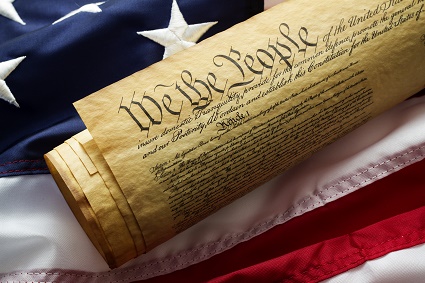
What that remark — cited often by conservatives who keep arguing that it’s OK to teach religion in public schools — ignores is that the Constitution implies such a separation in its First Amendment. The founders didn’t need to write “separation of church and state” when they declared that Congress shall make no law that establishes a state religion. The prohibition against writing such a law translates quite nicely, in my humble view, to a church-and-state separation.

What’s more, the federal courts have upheld that standard repeatedly through countless court challenges over the course of, oh, 200 years.

I just have grown weary of the tired refrain that the Constitution needs to say something specifically in order to make an issue relevant. Church/state separation is covered by the nation’s governing document — even if it doesn’t say it in so many words.