Tag Archives: MPEV

Now, that is going to be some ballpark

baseball

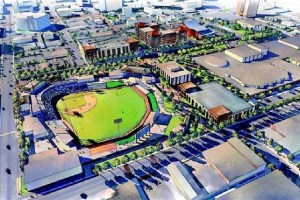
Amarillo is getting ready — soon, I hope — to unveil plans for construction of a baseball park downtown.

Its price tag has inflated a bit, from $32 million to around $50 million — give or take. The plan is to lure a Class Double-A baseball team that’s affiliated with the San Diego Padres of the National League. The team would relocate here from San Antonio, which is seeking to bring a Class Triple-A team from Colorado Springs.

Musical chairs, anyone?

Get a load, though, of what they’re planning for Arlington, Texas, where the Texas Rangers play hardball in the American League.

The city leaders want to replace a 22-year-old ballpark with a $900 million structure. Good deal, yes? I guess so. These ballparks cost a lot of dough these days.

I only wish the Arlington folks would drop the idea of putting a roof on the new stadium, presuming it will be approved by voters who will be asked for their blessing.

Read about it here:

http://www.star-telegram.com/news/local/community/arlington/article78764147.html

I happen to be a baseball traditionalist. I dislike playing an outdoor game under a roof. You play basketball in gymnasiums, not baseball. For that matter, you also play baseball on grass, not something called “artificial turf.”

Don’t get me started on the designated hitter, pine tar and all the body armor that batters wear when they’re facing a fastball-throwing pitcher.

When the Amarillo ballpark gets rolled out, my sincere hope is that the architects that the Local Government Corporation will hire will keep it simple.

I am not thrilled at the escalated cost of the ballpark — aka the multipurpose event venue — but it can be kept somewhat in check if we dispense a measure of the glitz and glamor that’s likely to be built into that showcase down yonder in Arlington.

‘Catalysts’ doing their job for Amarillo

ballpark

They are called “catalyst projects” for a reason.

You build certain structures, provide certain amenities in the downtown district, then other positive events would follow. That’s the plan, right?

OK, then. So now we hear that Amarillo’s catalyst projects — namely the construction of the downtown convention hotel and a parking garage — seem to have enticed the owners of a minor-league baseball franchise into talking actively with the city about moving here.

Oh, yes. We also have that ballpark that’s on the drawing board.

Amarillo’s Local Government Corporation has confirmed that it is negotiating with the San Antonio Missions to move that franchise from South Texas to right here, in ol’ Amarillo.

It’s far from a done deal.

http://www.newschannel10.com/story/32009762/amarillo-negotiating-with-san-antonio-missions

The San Antonio Missions have made their intentions clear down yonder. The Class Double-A Missions are hoping to clear out for San Antonio to welcome a Class Triple-A club. The Missions — which are affiliated with the San Diego Padres of the National League — say they want to relocate to Amarillo.

The LGC has laid down its marker: It wants the Missions to come here.

“Amarillo is in a position in terms of having our project already under way, of having the MPEV or the baseball stadium already in progress,” said John Lutz, a member of the LGC. “The way that I think it’s working with the hotel and the parking garage, retail, obviously the Xcel building, have really built a strong package that I think was very, very attractive [to the Missions].”

Isn’t that the definition of “catalyst”?

Work on the MPEV hasn’t yet begun. The LGC has been tasked with coming up with designs and financing feasibility plans. The City Council has given the LGC a deadline to finish the job and so far the LGC has been faithful to the task it has been given.

If the rest of it comes together, we’ll get the MPEV/ballpark, we’ll get a serious minor-league baseball franchise here, the convention hotel will be open for business, the parking garage will be storing vehicles and doing business in the retail shops planned for the structure.

I am among those who is hopeful that a letter of intent from the San Antonio Missions will be in hand … maybe soon.

That, too, is a catalyst of its own.


City takes huge step in hunt for baseball franchise

baseball-pic

Terry Childers likely will be retired and resettled somewhere else by the time it all happens.

But Amarillo’s interim city manager seems to be quite excited about the prospect of the city landing an affiliated minor-league baseball franchise.

He spoke today to the Rotary Club of Amarillo about some of the progress that’s occurring in the city. The City Council’s unanimous vote this week to look aggressively for a AA baseball franchise is one of those positive signs.

The multipurpose event venue will be built. City officials hope to break ground later this year on the MPEV/ballpark that will be home to whichever franchise decides to relocate to Amarillo.

The Local Government Corporation has been given the task of developing a design for the ballpark. Childers thinks the time is ripe and the city is ready to play host to a franchise that is tied directly to a big-league organization.

Frankly, his enthusiasm is quite fetching.

I happen to share his outlook for the possibilities that exist for the city if it reels in a franchise. He said today the ballpark — and its multipurpose element — is likely to change the personality of downtown Amarillo. Does anyone really yet know what it will become? I’m not sure that’s known.

As I listened to the city manager’s brief remarks, one of my table mates leaned over and said, “Why not get Nolan Ryan to bring something here?”

Hmmm. Why not?

The baseball Hall of Fame pitcher has baseball organization experience. One of his sons runs a AA franchise in Round Rock. And, hey, Ryan has Amarillo ties, as his daughter is married to a member of a notable Amarillo family: the Bivins clan.

Well, whatever.

The task is at hand. The LGC has its marching orders and I remain hopeful that this city is going to reap the reward of a reconfigured downtown business and entertainment district.

Amarillo inches closer to a bigger league

baseball

It’s not big-league baseball.

But what the Amarillo City Council has endorsed has taken the city closer to a bigger league-brand of hardball.

The council today voted 4-0 to proceed with the pursuit of a Class AA baseball franchise that would play in the yet-to-be-built ballpark in the city’s downtown district.

http://www.newschannel10.com/story/31882848/aa-baseball-vote-passes-lgc-to-move-forward

Will it be the San Antonio Missions, a franchise that would vacate the Alamo City as it seeks to welcome a AAA franchise?

Possibly.

The council has decided to accept the more expensive price tag attached to the multipurpose event venue, which city voters endorsed with a citywide referendum this past November. The MPEV price tag was listed at $32 million on the ballot measure, but the price has increased to more than $40 million as the AA franchise became part of the community discussion.

The council’s decision instructs the Local Government Corporation to proceed with the design and construction of the ballpark. City Councilman Randy Burkett said construction won’t begin until the city has a signed contract with a franchise.

I happen to be quite pleased with this development.

The city has been jerked around by the owners of the independent franchise that is still playing its home games at the Potter County Memorial Stadium. This season, though, the Amarillo Thunderheads are going to play half of their “home” games in Grand Prairie.

That’s some commitment to Amarillo, yes? Well, no.

The AA franchise being considered most actively is affiliated with the San Diego Padres of the National League. The Padres could bring some serious professionalism to the baseball climate here.

I am gratified that the council has decided to move forward with seeking to lure a serious baseball franchise to this city.

There remains much work to do and many commitments to be collected. The LGC has been handed a huge task.

My hope is that the organization is up to the challenge that’s been delivered.

Amarillo to make bid for AA baseball

baseball

I love it when public officials seek to remove doubt about their commitment.

A bit of doubt removal has taken place at Amarillo City Hall, where the City Council and its appointed Local Government Corporation appear headed toward building a better future for the city’s downtown business district.

http://www.newschannel10.com/story/31825077/amarillo-to-move-forward-with-bigger-costlier-mpev

The LGC has come up with a formula to build a baseball park downtown that won’t cost property taxpayers any more than what they’re paying now for municipal services.

The multipurpose event venue cost has been revised downward a bit, from $48 million to $44 million. Yes, it’s more than the $32 million stated on the city referendum ballot measure that voters approved this past November.

The payoff, though, well could be a AA minor league baseball team that would play in the shiny new MPEV set to be built across the street from City Hall at the site of the old Coca-Cola distribution center.

LGC officials are going to pitch the idea of hotel occupancy tax footing the bill, along with money There will be those who do not believe the city can support a AA baseball team.

I remain hopeful that the city is able to move this project forward and bring an Major League Baseball-affiliated minor league team to a city that has supported such an activity in the past.

As Mayor Paul Harpole has noted, there remains a lot of work ahead to make this deal come to fruition.

Some of us had concerns about the council’s commitment to continuing all the work that had been done to this point. Voters elected three new council members a year ago, all of whom had expressed some reservations about the MPEV and whether the downtown redevelopment proposals were worth the effort.

The LGC board, which bears the stamp of the new council, appears to be looking hard for ways to keep the momentum going.

As Harpole said: “When we look at the economic impact of this in our city and what it could bring,  it’s really an important way for us to move forward. I think we are looking at a bit of an historic day this day and next week when this is ratified.”

Let’s keep moving this project along.


Movement founder makes her exit

MPEV

A young woman with whom I am acquainted deserves a word of praise.

So I’ll give it to her in this blog post.

Meghan Riddlespurger has moved to Fort Worth to become a Court Appointed Special Advocate volunteer coordinator.

Riddlespburger made a name for herself in Amarillo over the past year. She became leader of a political action organization called the Amarillo Millennial Movement. She became as well a leading advocate for some big plans for the city’s downtown district.

AMM took the lead in promoting the multipurpose event venue, aka the MPEV or The Ballpark, which Amarillo voters endorsed in a referendum this past November.

I became a supporter of the young woman. I said so in this blog. Some comments responding to a few musings were quite critical of Meghan — and I’m quite sure some of the regular readers of this blog are going to toss a few more brickbats at her.

http://m.amarillo.com/news/latest-news/2016-04-22/millenial-movement-co-founder-leaves-fort-worth?v#gsc.tab=0

The only negative element I want to point out is that Riddlespurger chose to leave Amarillo after campaigning aggressively for a downtown revival concept she said ought to be aimed at keeping young residents here.

Her departure for Fort Worth would seem to take away some of the sincerity of her comments promoting the MPEV, the downtown convention hotel and all the other improvements being undertaken downtown.

I’m happy that Riddlespurger has answered a new calling by going to work for CASA. The organization does important work on behalf of children who need love, support and the protection offered by the state’s judicial system.

I also am delighted that, if only for a brief time, she rose to the challenge here and sought to get other young Amarillo residents involved in the political process.

I’m not entirely confident the push forward among some younger residents will retain its vitality.

For a time at least, Amarillo’s millennials had a spokeswoman who put herself front and center — and, yes, in the line of political fire — for a worthy and noble effort.


Beam signing signals huge step forward

embassy suites

They had a beam signing this weekend in downtown Amarillo.

The beam is set to become part of the superstructure that’s going to hold up a new hotel currently under construction.

The Embassy Suites Hotel eventually will open its doors to business clientele coming to Amarillo for conventions touting this and/or that product, or provide professional development for the attendees.

It’s part of what has been called a “catalyst project” aimed at reconfiguring downtown Amarillo. There’s more to come.

I happen to be one of those Amarillo residents who’s quite excited about the prospects for the city’s downtown district.

It’s been a sometimes-rocky ride. The downtown district hasn’t yet reached a smooth road or calm waters. There well could be more tumult to come.

The beam signing, though, suggests — to me, at least — that the city is moving forward.

The Embassy Suites is being financed by a private developer, Chuck Patel, who seems to see a big future in this city. He rounded up some investors to buy in, made his pitch and has broken ground. The hotel is rising up as I write this brief post.

It’s worthwhile to remember the last time anyone saw three construction cranes moving heavy pieces on sites downtown. The Southwestern Public Service building construction is well under way; a parking garage is going up, too.

The Big Enchilada, of course, is The Ballpark, or MPEV, or whatever you choose to call it. It, too, is planned for downtown’s district. There could be a major tenant taking up residence there once it’s built: a AA minor-league baseball franchise.

Today, though, we have a beam signing to symbolize some major strides forward for the city’s future.

Not bad at all.


No one likes tax increases, but eventually …

property-taxes1

Amarillo’s municipal leadership wears the minimal tax burden it imposes on property owners proudly.

I totally understand their reason for it. No one wants to impose tax increases on those who pay the bills. I don’t like paying more in property taxes any more than my neighbors.

The city tax rate is likely to become a talking point as city leaders talk among themselves — and to the public — about how to pay for the escalating cost of the proposed downtown multipurpose event venue.

The MPEV price tag has gone up since the November referendum in which residents agreed to proceed with the downtown ballpark at a cost of $32 million. Well, now it’s more than $50 million.

How does the city pay for it? Will it ask more from property owners who right now pay a little more than 30 cents per $100 assessed valuation for city services?

It could happen. Then again, it might not.

I’ve been a property owner in Amarillo for nearly two decades. We built our home and have paid our taxes gladly every year. We think we’re getting a pretty good deal for what we’ve paid since 1996.

But to be candid, I’m not wedded to that dirt cheap price. Since I consider myself a “good government liberal,” I am willing to dig a little deeper when the need arises — and if it is going to help my community grow.

That’s how I am viewing the MPEV as part of the comprehensive and wide-ranging effort to improve our city’s central business district.

At the time I took my post as editorial page editor of the Amarillo Globe-News, a new commissioners court took office in Randall County, led by newly elected County Judge Ted Wood. I remember the commissioners’ insistence that the county not raise taxes. They were intent on keeping the county rate low.

Then the demand for more service — caused by population growth — overcame commissioners’ ironclad commitment to fiscal restraint.

The commissioners then approved a tax increase that went far beyond the rollback rate mandated by state law. A petition came forward to roll those taxes back. It passed and the county had to reduce services as a result.

The pain was temporary, but it still hurt.

Amarillo shouldn’t be wedded forever to its famously low municipal tax rate. It’s something like the second-lowest municipal rate in Texas.

Stand tall, Amarillo!

When the time comes, though, for an increase — even a small one — to pay needed enhancements and improvements to the city we all cherish, then we should be ready to take ownership.

MPEV remains worth the city’s investment

MPEV

This is a bit of a non-surprise to many Amarillo residents.

The price of the proposed downtown multipurpose event venue/ballpark has come in a bit greater than originally thought.

Is it cause to toss the idea into the crapper? Not even close.

I’ll admit that I didn’t quite buy into the notion that the MPEV would cost more than the $32 million price tag attached to the non-binding referendum that voters approved in November 2015. I had some faith that the cost would hold up. It hasn’t, according to consultants who have delivered a $48.4 million price tag to the City Council to consider.

What’s the city going to do to cover the cost?

That is the $48.4 million question that the council has asked the Local Government Corp. to figure out. The LGC has received the directive and plans to deliver a report in April to the council.

The increased cost presumes that the city will hook up with a Double-A minor-league baseball team affiliated with a major league franchise.

Suppose the city does land an affiliated minor-league team for the city. Suppose as well that the city builds the MPEV for $48.4 million. Then let’s suppose what might occur if the baseball team fills up the MPEV with thousands of baseball fans every day or night.

Mayor Paul Harpole believes — and I think he’s correct — that the boost in sales tax revenue likely could more than offset any potential property tax increase that residents would have to bear.

“That regional money that comes into our city through sales tax has helped us keep property tax down,” said Harpole. “It’s important that we keep that growth as long as we can, but it has to make economic sense. It has to be something where it doesn’t put the city in too much debt. So we’ll look at that and see what it is and get an answer back and see what we’re going to do.”

Let’s not look askance at the job growth and economic impact created by the MPEV. The consultant that made the report to the City Council, Brailsford and Dunleavy, projects an estimated 341 permanent jobs associated with the MPEV and about $25 million pumped annually into the Amarillo economy.

Does the city issue certificates of obligation? Does it submit a bond issue to the voters, asking residents to approve it? Are there economic development grant funds available for the city to seek?

LGC officials and City Council members have committed to proceeding with exploring this issue thoroughly.

Count me as one Amarillo resident who maintains an abiding faith that the MPEV — even with its inflated cost — can bring a much greater economic return to the community than what it is likely to spend.


A reminder: City Council doesn’t meet in secret

imagesM3AI6GFF

I happened to be scrolling through some of my earliest blog entries this evening when I came upon this item from April 2009.

It discusses the Amarillo municipal government’s work sessions, those public meetings that occur prior to the start of the “regular” meetings.

Here’s what I wrote then.

I think it’s worth mentioning once again that the City Council — which used to be called a City Commission — does a good job of ensuring that it doesn’t violate the Texas Open Meetings Act.

The state law spells out in careful language those issues that elected bodies can discuss outside of public earshot: personnel matters, pending litigation, sale or purchase of real estate.

That’s it, man.

The City Council has revamped its regular meeting procedure in recent months. It now meets in the early evenings every Tuesday, enabling working residents to attend after they get off their jobs during the day.

There have been calls to get rid of the work sessions, or at least to move them into the council chambers, where there’s plenty of seating to enable large crowds to attend. I even joined that call a year ago in an earlier blog post. However, it’s not because I feared the council was violating open meetings laws.

Even in the old days, when the council met in that tiny meeting room away from the regular meeting chambers, the elected body took pains to avoid breaking state law.

Yes, the mayor would declare an executive session was about to occur, sending media representatives and other members of the public scurrying from the room. The only serious loophole in the state law had been the lack of recordings of those secret meetings to ensure that the body wasn’t talking about things it should be discussing.

Still, the complainers keep carping on what they allege is some sort of secret cabal doing business illegally. They found their voice during the campaign in 2015 for the multipurpose event venue, suggesting that the MPEV was crafted and cobbled together in secret … illegally!

It turned out to be a red herring and voters saw through it by approving the MPEV.

It reminds of the many conspiracy theories throughout history that simply never die.