Tag Archives: Bernie Sanders

It’s just about the ‘worst case’ regarding those e-mails

hillary-emails

The worst case hasn’t yet arrived with regard to the Hillary Clinton e-mail controversy.

However, it’s a lot closer than the presumed Democratic Party presidential frontrunner would like.

I won’t yet call this matter a “scandal.” It would elevate to that level if we found out that the classified e-mails that went out on the former secretary of state’s personal server got into the wrong hands.

The Obama administration today revealed that 22 e-mail messages that went through Clinton’s server have been labeled “top secret.” Clinton had said she didn’t knowingly send out sensitive material on the server.

The administration now says it won’t release the e-mails to the public because — that’s right — they are top secret!

We won’t be allowed to see what’s in them, which is just fine by me.

Most troubling, though, is that the e-mail messages very well could have gotten into the hands of those seeking to do serious harm to this nation.

We’ll need to know the truth about how those messages traveled through cyberspace containing the highly sensitive national security information.

Of course, the political ramifications of this revelation ramp up the stakes for Monday’s Iowa caucuses, where Clinton is locked in a tight battle with Sen. Bernie Sanders; former Maryland Gov. Martin O’Malley is running a distant third, but suddenly he emerges as a potential spoiler.

Clinton is beginning to suffer from some trust issues with voters. The administration’s acknowledgment that the e-mails carried top secret information into potentially unsecured locations out there into the Internet universe could do serious harm to a candidacy once seen as unstoppable.
 

Bloomberg giving Democrats the jitters

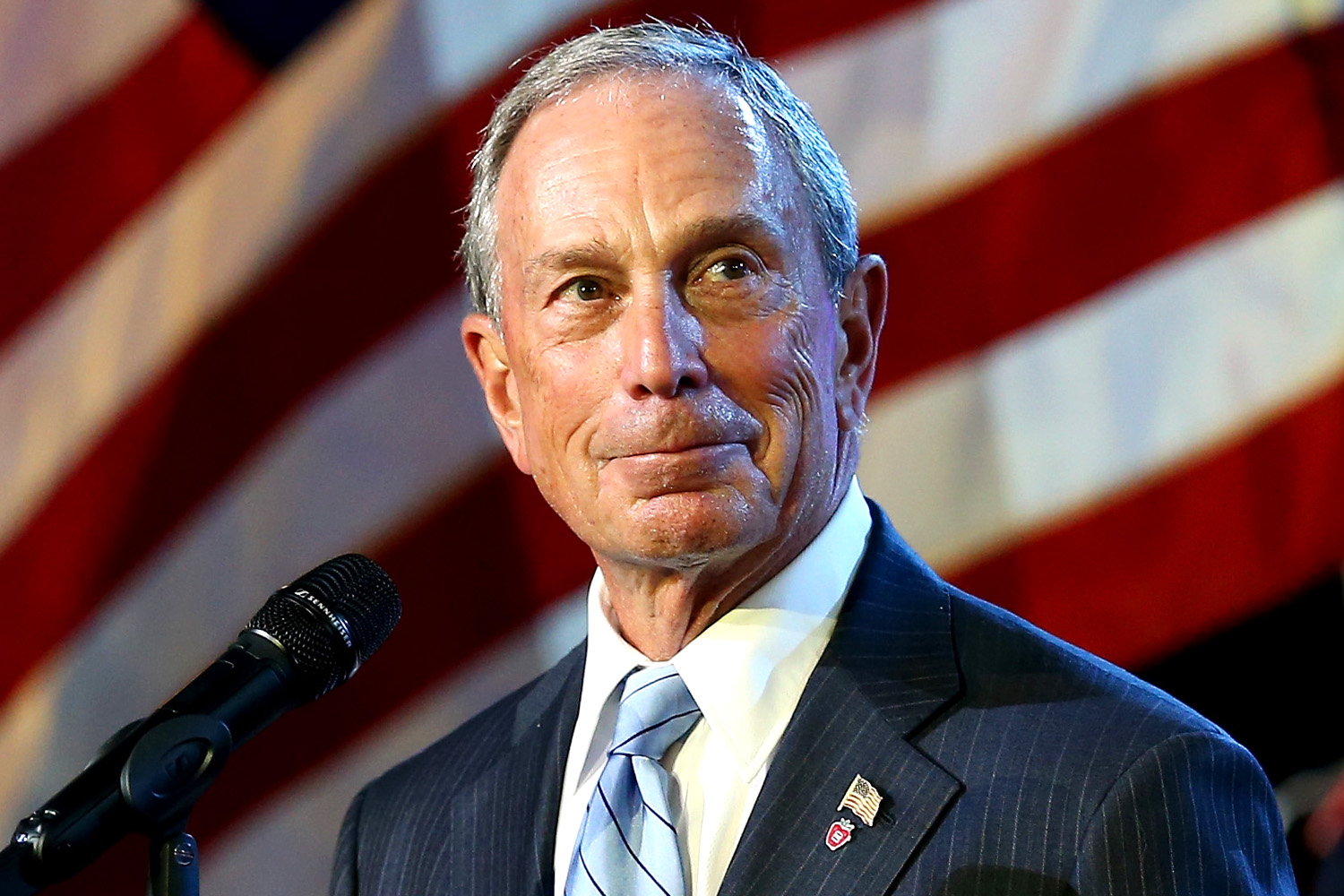
NEW YORK, NY - AUGUST 26:  Mayor of New York City Michael Bloomberg speaks on stage during the opening ceremony during Day One of the 2013 US Open at USTA Billie Jean King National Tennis Center on August 26, 2013 in the Flushing neighborhood of the Queens borough of New York City.  (Photo by Matthew Stockman/Getty Images)

Michael Bloomberg is creating a certain buzz as the presidential campaign starts to gear up.

The former New York mayor is pondering whether to run for president as an independent.

Not surprisingly, Democrats are trying to talk him out of it. Why? They consider him a potential spoiler in the party’s bid to retain control of the White House.

My own hunch is that Bloomberg won’t run if the Democrats appear set to nominate Hillary Rodham Clinton for president.

If it’s Sen. Bernie Sanders? And if the Republicans nominate Donald Trump? Well, then it becomes dicier for everyone involved in the election . . . in both parties.

This brings back memories of Ross Perot. Perot, the Dallas billionaire, ran twice for the presidency, in 1992 and 1996. Republicans keep saying that Perot’s strength decimated GOP President George H.W. Bush’s chances for re-election, handing the election to Arkansas Democratic Gov. Bill Clinton.

The jury, though, really is still out on that. I’ve seen plenty of evidence that suggests that Clinton would have defeated Bush that year without Perot on the ballot, that Perot attracted nominally more Republicans than Democrats, but that his candidacy wasn’t necessarily decisive.

See analysis here.

Bloomberg’s entry into this race as an independent is hard to gauge.

He’s a friend of Hillary Clinton. He once was a friend of Trump . . . before the two men got tangled up in some business deal.

Given the utter madness that has enveloped the 2016 campaign to date, I am not willing to assume a single thing about what Bloomberg might do and what effect it will have.

Let’s just chalk this up to one more nod to the craziness that’s brought us to this point.


Sanders support may be elusive

90M1ER0H26

A word of caution is due for those who believe U.S. Sen. Bernie Sanders has some serious momentum building as he seeks the Democratic presidential nomination.

I’ve seen the polls that show Sanders’ huge base of support among young people. He leads Hillary Clinton by wide margins among voters who are 25 years of age and younger.

That’s the good news — from Sanders’ standpoint.

The bad news? Young people don’t vote with nearly the same intensity as their elders.

I’ve seen the data locally. Potter and Randall County elections officials sent out data that suggest that younger voters didn’t turn out as many folks hoped they would in the November municipal election. Older folks turned out — as they usually do.

It’s a pattern we’ve seen over many decades at many political levels. Whether voting for president or mayor or sheriff, young Americans aren’t dedicated to voting.

This is why I remain dubious about the support Sanders and his campaign brass keep hyping as he seeks to peel away the presidential nomination from the one-time prohibitive Democratic Party favorite.

The Iowa caucus is coming up. Sanders said a large turnout will bode well for his chances. True enough. A large turnout can be made more possible by the participation of young voters.

History, though, isn’t on Sanders’ side.


Bernie channels Fritz Mondale

102694294-472283274.530x298

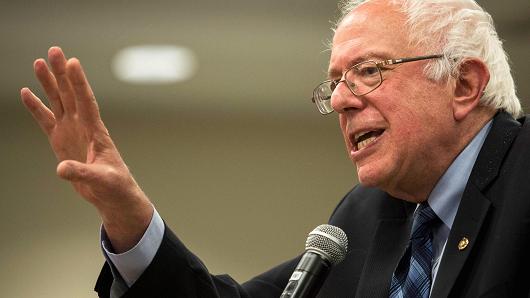
U.S. Sen. Bernie Sanders made a pledge last night at the CNN-sponsored Democratic Presidential Candidate Town Hall Forum.

The self-proclaimed “democratic socialist” said he will “raise taxes” to pay for his universal health insurance plan if he’s elected president of the United States.

Interesting, you know?

Here’s why.

The last national politician I can remember who made such a promise was the 1984 Democratic nominee for president, former Vice President Walter F. Mondale.

He stood before the party convention, accepted his party’s nomination and then said that President Ronald Reagan (against whom he ran that year) also will raise taxes. “He won’t tell you; I just did.”

I recall liking Mondale’s honesty at the time. It struck me that it was a bold statement to make.

But how well did it play with American voters that fall?

Not well . . . at all.

The president pulled in 59 percent of the popular vote; he beat Mondale by about 17 million ballots; President Reagan won 525 electoral votes; what’s more, he came within about 2,000 votes of winning all 50 states, losing only Mondale’s home state of Minnesota.

Promising to raise taxes never is a good idea, Sen. Sanders.


Clinton ‘inevitability’ has vanished

Former Secretary of State Hillary Rodham Clinton reacts as she is introduced to speak at the Massachusetts Conference for Women in Boston, Thursday, Dec. 4, 2014. (AP Photo/Elise Amendola)

There once was a time when Hillary Rodham Clinton was considered a shoo-in to become the second consecutive history-making president in U.S. history.

You’ll recall the narrative.

She would succeed the first African-American president, Barack Obama, by becoming the first female president. She would win in a historic landslide. No one since, say, 1952, when Republican Dwight Eisenhower — who commanded our troops to victory over Hitler during World War II — was considered as destined to become president.

Then a funny thing happened.

Her critics began making points that stuck. They drew blood. The email tempest. Benghazi. Her occasional waffling. Is she trustworthy?

Then along came Bernie Sanders, the independent U.S. senator from Vermont running as a Democrat. He started drawing those huge crowds. He’s blasting the daylights out of big banks, Wall Street and demanding wage equality. He’s a socialist — and let’s cut the crap about “democratic socialist,” which is meant to soften the “s-word.”

Now the once-inevitable president is less so.

Fellow Democrats are now flocking to New Hampshire to say things like “a loss here won’t doom” the candidate. Former Texas Democratic gubernatorial nominee Wendy Davis is among the latest to recite that mantra.

Maybe it won’t. Then gain, maybe it’ll signal a dramatic replay of 2008, when the then-U.S. senator from New York, Clinton, was supposed to be the nominee — only she ran into that young upstart from Illinois, U.S. Sen. Barack Obama, the self-proclaimed “skinny guy with the funny name.”

Does history repeat itself? Are we witnessing a sort of 2.0 version of what occurred eight years ago?

A lot of political analysts still believe Hillary Clinton is the candidate to beat. She has the so-called “ground game” in Iowa, New Hampshire and South Carolina. She’s got the party machine lubed and ready to roll for her in other key primary states.

Let’s remember, though, this truth about the 2016 campaign. All the “conventional wisdom” has been tossed into the Dumpster. I’m one of those who believed Clinton was marching straight to the Oval Office. I didn’t foresee what would transpire . . . any more than I foresaw would be happening on the Republican Party side of this contest.

You want unpredictability in a presidential campaign?

I believe we’ve gotten it.


No one ‘likes’ negative ads . . . but they work!

untitled

Negative political ads are like the proverbial car wreck.

No one wants to look, but they can’t help taking a peek.

Ted Cruz and Donald Trump have gone negative in their head-to-head campaign for the Republican presidential nomination.

Hillary Clinton and Bernie Sanders are doing the same in the Democratic presidential primary campaign.

The candidates say they don’t want to go negative. They do it anyway.

You might ask: Why? They do it because the voting public remembers negative ads with far more regularity than they remember positive ads.

Indeed, when media folks talk about political ads, they harken back almost instinctively to the negative messages they’ve heard over the years. Lyndon Johnson’s “Daisy” ad of 1964? George H.W. Bush’s “Willie Horton” ads of 1988? George W. Bush’s “Swift Boat” ads of 2004?

The only positive ad campaign I can recall is the “Morning in America” ads that President Reagan’s re-election campaign ran in 1984.

We have a latent desire to see these negative ads. It’s in our taste buds, our DNA, our psyche.

So it’s no surprise that Trump vs. Cruz and Clinton vs. Sanders would go negative. The polls are tightening prior to those Iowa caucuses.

I guess perhaps it’s time the candidates stop fooling themselves while they try to fool the rest of us. No matter what they say about their loathing of negative ads, they do “approve this message” when they hit their airwaves.

As for those of us out here in Voter Land who also complain about negative political advertising, let’s all confess, too, that we can’t get enough of them.


What if . . . Clinton loses first two contests?

biden

All right, ladies and gentlemen, it’s time once again for a little game of “What If?”

The Iowa caucuses are coming up. They’ll be followed immediately by the New Hampshire primary.

Forget about the Republicans for a moment. Let’s ponder the Democratic contest.

What if Hillary Rodham Clinton gets thumped in Iowa? She’s leading in that state — supposedly — but the margin is diminishing. Bernie Sanders might be within the statistical margin of error.

If she loses Iowa, then what if she gets pummeled in New Hampshire? Polls in the Granite State show Sanders with a huge — and growing — lead.

OK, then comes South Carolina. What if by some chance Clinton loses there, too? Momentum has a way of dictating how these things go. The e-mail controversy is beginning to swirl once again.

Clinton once was seen as the probable next president. Now? Well, she’s less probable by a good bit than before.

Are the Democrats going to nominate a “democratic socialist” who’ll turn 75 by the time of the next inaugural? Do they really want to fritter away a chance at keeping the White House in an election when the GOP is likely to nominate either a bombastic real estate mogul/reality TV star or a junior U.S. senator from Texas who no one who works with him seems to respect, let alone like?

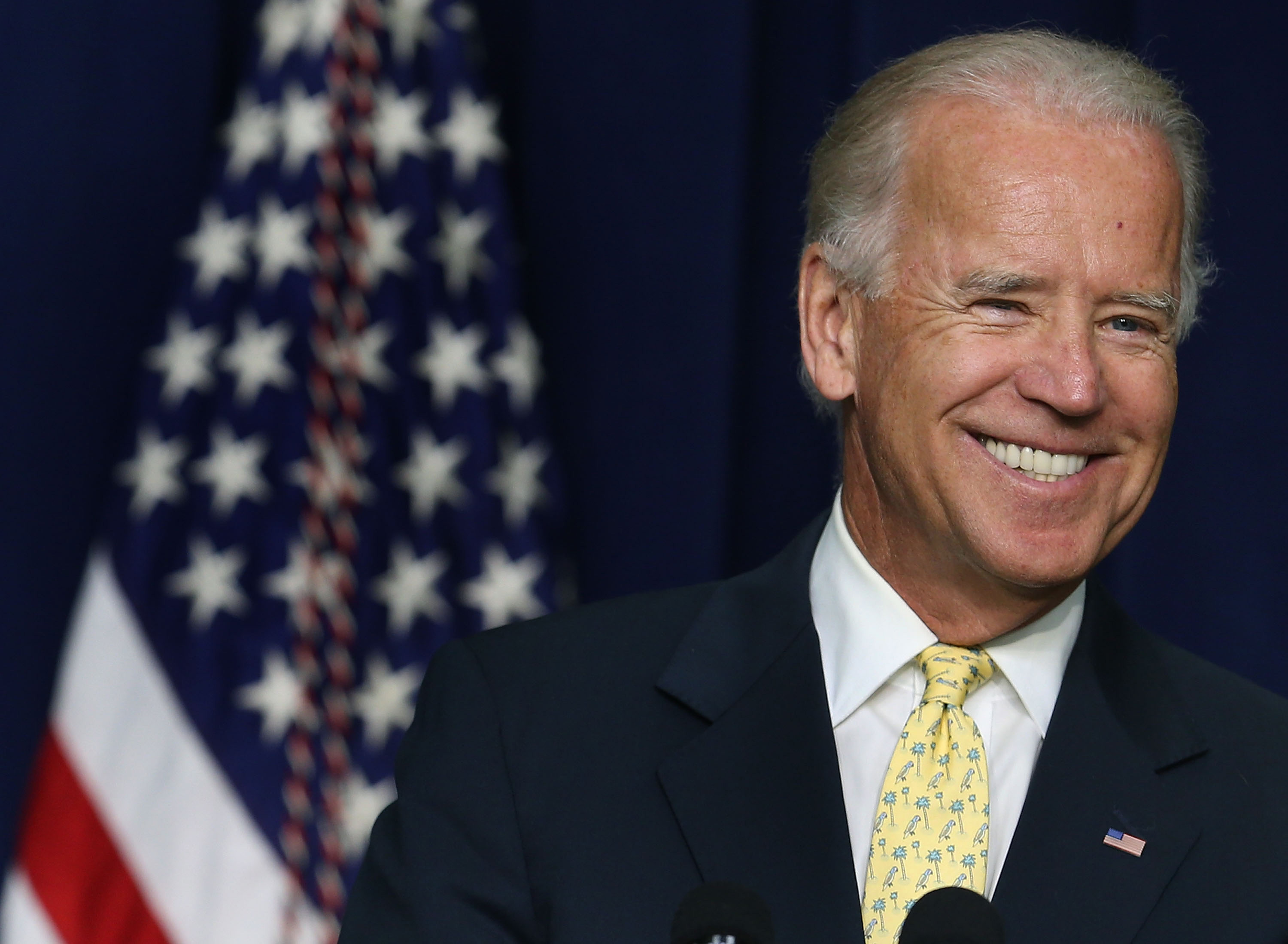
Oh, yes. There’s another guy. The vice president of the United States, took himself out of the running. Joe Biden said he had “run out of time,” only to declare just a few days ago that he “regrets” not running, even though he said the decision was the “right one.”

Regret making the right decision?

Hmmm. Sounds to me as though regret might override right, if the once-presumed frontrunner keeps stumbling.

This election season has been full of craziness. Who’s the say there isn’t room for a little more of it?


What’s with this ‘national poll’?

polls

More often than not I’m going to look carefully at public opinion poll results.

In this election season, we’re being inundated with them. Republican-leaning polls say one thing; Democratic-leaning polls say another. I prefer to look most closely at polls unaffiliated with either party, or certain ideological think tanks, or media outlets I know to have bias in either direction.

But one recent poll has me wondering: Is this one even relevant to anything?

Hillary Clinton leads Bernie Sanders by 25 percentage points nationally, according to a poll released by NBC News and the Wall Street Journal.

The relevancy issue?

Well, consider a couple of things.

They’re both running for the Democratic Party presidential nomination, which means that they’re not going to face each other in a national election. Therefore, they are battling state by state: Iowa, then New Hampshire, then South Carolina . . . and on it goes.

They’ll get to Texas in early March.

Therefore, whether Clinton beats Sanders by a single percent or a million percent in a national poll doesn’t matter one bit.

How are they faring in each state?

The poll does compare the candidates’ chances against a potential Republican nominee and it shows Clinton faring better against the GOP foe than Sanders.

That’s relevant, I guess.

However, these polls pitting one candidate against the other running in the same party primary simply doesn’t register with me.


Anger: It’s strewn all along the campaign trail

articleLarge

I guess you can sum up the tone of the 2016 presidential campaign with a single word.

Anger.

I might live in a dream world, although I doubt it. Donald J. Trump, the leading Republican presidential candidate, and Bernie Sanders, the surprising Democratic candidate, apparently have tapped a vein that neither of them would be able to find on my body.

Voters are angry with the status quo. They hate politics and politicians. So, many of them are turning to so-called “outsiders” for relief from what they say ails the nation.

Isn’t that interesting? Ironic, too, if you want my take on it.

Trump and Sanders by the very definition of the word are politicians. Never mind that Trump made his fortune selling real estate, developing ritzy hotels and appearing on reality TV. Or disregard that Sanders has been a small-town mayor, member of the U.S. House of Representatives and now is a U.S. senator. They’re not “politicians” the way we’ve understood the word.

To quote the great fictional TV character U.S. Army Col. Sherman T. Potter: buffalo bagels!

They both are pursuing the granddaddy of American political offices, the presidency. Thus, they are politicians. Let’s stop pretending they aren’t, OK?

I don’t know what’s fueling the anger. From my vantage point, I remain the eternal optimist. Our national economy has recovered; we remain the strongest nation on the planet — by a mile, maybe two; we have avoided another 9/11-style terror attack since that hideous event more than 14 years ago; the price of gasoline is falling; we’re making strides in protecting our environment; our budget deficit has been cut by three-quarters.

And people are angry?

I believe the gloom-and-doomers have won the national shouting match. They’ve out-yelled the rest of us who, by our very nature, are not inclined to rouse rabbles and raise hell.

So, people are sick and tired of politicians.

Well, all right then.

The nation will be hearing a lot more from those purporting to be outsiders and those who have some actual experience running a massive government.

You may choose to believe — or disbelieve — this final point. I am willing to listen to the outsiders. I want to hear their solutions. I also am willing to consider all they have to offer.

The late House Speaker Tip O’Neill used to say “all politics is local.”

I believe, though, that for me politics is personal. I am happy with my lot in life, with the direction my life is taking. I believe I have it within my power to guide my own destiny.

Government is not in the way. It does not threaten me or those I love.

I also know that there will be those who read this blog who will call me “naïve,” “Pollyanna,” “ignorant,” “bleeding-heart” . . . whatever. Fine. Go ahead.

I’ll let the shouters keep trying to drown out the rest of us. I also am awaiting to hear some semblance of a solution from any of them.

First, they need to persuade me that we need one in the first place.

I’m all ears.

Just suppose the Democrats turn on Hillary, Bernie . . .

Dewey-convention-photo

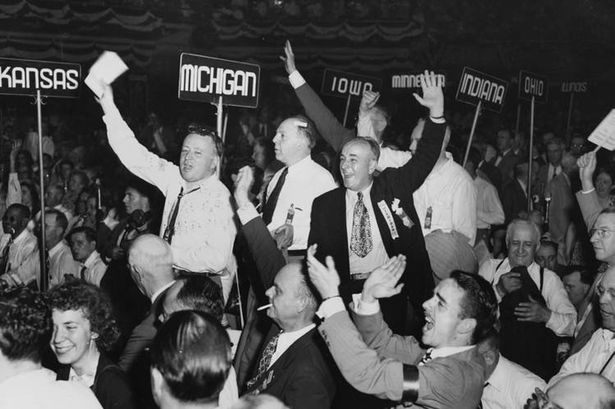
Whenever the subject of “brokered convention” comes up in political circles, it always refers to Republicans.

The idea goes something like this: Several GOP candidates will remain in the race, dividing up the delegates among themselves, denying the frontrunner — whoever it is — the majority needed to sew up the nomination.

The delegates gather in Cleveland and then bicker among themselves, nominating someone on the umpteenth ballot.

It’s not likely to happen. But it could.

However, let’s play take this game a bit further.

What if the Democratic candidates do the same thing?

Two of them, Hillary Clinton and Bernie Sanders, are fighting for supremacy; a third candidate, Martin O’Malley, lags far, far behind.

But what if Sanders upsets Hillary Clinton in Iowa and then beats her in New Hampshire, which is next door to his home state of Vermont. He builds momentum heading into South Carolina. Perhaps he wins there, too. Then the fight is on.

Meanwhile, you’ve got O’Malley out there picking up stray delegates here and there in those primaries where winners do not take all.

Clinton and Sanders carve each other up to deny both of them enough delegates to get a majority at their convention.

Democrats gather in Philadelphia and commence a floor fight. No one emerges as the consensus. To whom do they turn?

Oh yeah. The vice president of the United States, Joseph Biden.

Will that happen? It’s far less likely to occur than a Republican donnybrook.

Then again . . .