Tag Archives: Texas Legislature

Summer might be as nasty as winter

By John Kanelis / johnkanelis_92@hotmail.com

Goodness, I wasn’t ready to hear about this predicament from the folks who manage our electric grid.

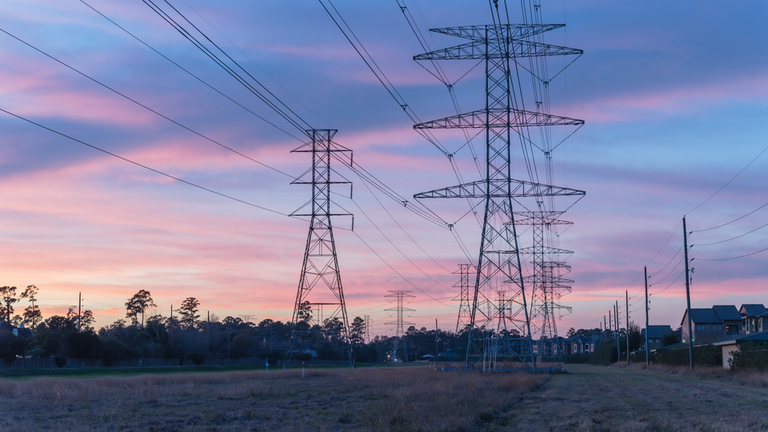
Our summer might be as miserable as the winter we endured in North Texas and throughout the rest of the state. That is, the Electric Reliability Council of Texas — our electrical grid managers — might suffer more power outages on the scale of what occurred when the snow and ice ravaged us.

Hmm. How “reliable” is that? Not very.

The Texas Tribune reports: “This summer, I am as worried right now [about the grid] as I was coming into this winter,” said Curt Morgan, CEO of Vistra Corp., an Irving-based power company. “Sounds like I’m the boy that cries wolf, but I’m not. I’ve seen this stuff repeat itself. We can have the same event happen if we don’t fix this.”

More from the Tribune: As state lawmakers continue debating how to improve the grid after February’s storm nearly caused its collapse, on Tuesday Texans were asked to conserve electricity because the supply of power could barely keep up with demand. A significant chunk of the grid’s power plants were offline due to maintenance this week, some a result of damage from the winter storm.

ERCOT messed up royally in February with the way it shut down power supply while temperatures hovered at zero or below. Millions of us lost power and water. It’s not as though Texas is a total stranger to this kind of winter savagery. Still, power plants froze; they weren’t properly winterized. Natural gas lines were rendered inoperable.

Texas could face ERCOT power crisis, blackouts during extreme summer heat | The Texas Tribune

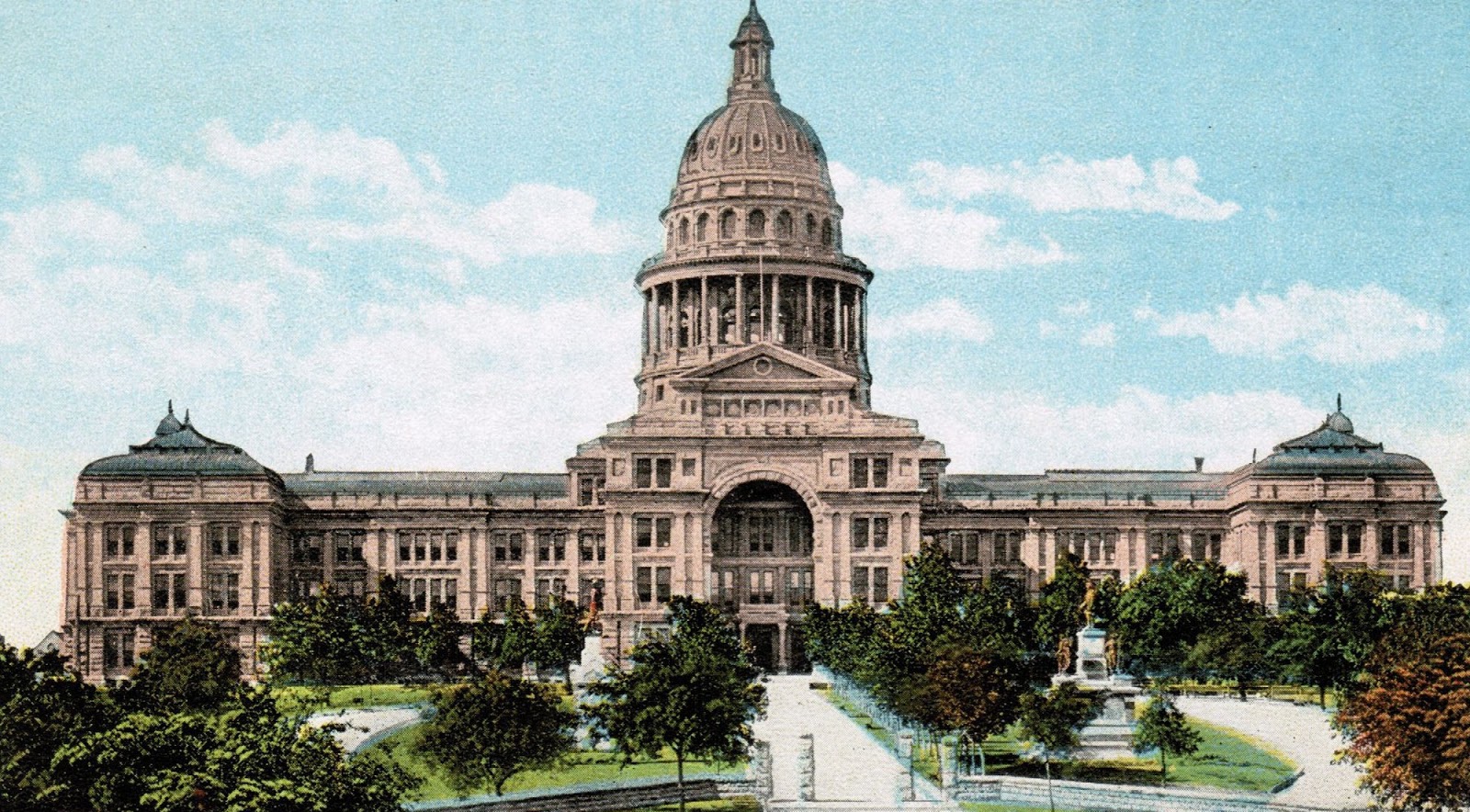
The Texas Legislature is meeting at this moment seeking to strengthen the grid. Its regular session ends on May 31. Legislators will need to return in special session if they don’t have a grid repair strategy on the books. They had better prepare for a long and tiring summer of work on our behalf if they can’t get it done when they gavel the regular session adjourned.

It looks as though whatever the Legislature comes with must include a plan to deal with our long, hot summer.

ERCOT’s warning about potential power outages brought about expressions of anger across the state, the Tribune reported: The warning triggered a torrent of outrage from residents and political leaders across the state who questioned why the Electric Reliability Council of Texas, which manages the grid, allowed it to come so close to emergency conditions on a relatively mild spring day. “I appreciate the increased effort toward transparency, but wow this is nervewracking to see in April,” state Rep. Erin Zwiener, D-Driftwood, tweeted Tuesday.

C’mon, ERCOT. None of us wants to see a repeat while we are sweltering of what happened when we were freezing.

Rep. Slaton makes early impact

By JOHN KANELIS / johnkanelis_92@hotmail.com

Oh, brother.

I commented earlier on this blog about my respect for Texas state Sen. Kel Seliger, the Amarillo Republican whom Texas Monthly has identified as one of seven legislators to watch during the current Texas Legislature.

Well, TM also has ID’d a bold, brash and bodacious freshman lawmaker, a young man I know only casually, but who is — shall we say — also worth watching for an entirely different set of reasons.

State Rep. Bryan Slaton is another Republican. He hails from Royse City, just a bit east-southeast of where I now live. TM calls him The Fearless Freshman. Why? He is unafraid to make a name for himself for reasons that run quite counter to my own political world view.

Slaton got elected this past year, defeating longtime fellow conservative state Rep. Dan Flynn. I was aghast that he would run “to the right” of Flynn, but he did.

What does the young man do when he arrives in Austin for the start of the Legislature? He pitches a bill that would criminalize the act of a woman obtaining an abortion; she would, in Flynn’s eyes, be guilty of “murder” and would be subject to the state’s death penalty if she is tried and convicted of murder.

Texas Monthly wrote this about Slaton: A principled hard-right conservative and Gen Xer, Slaton is stepping into the void left by former representative Jonathan Stickland, a Bedford Republican who made his reputation as a troublemaker and thorn in the side of his party’s establishment. Slaton says he is focused on advancing social-conservative priorities, including eliminating abortion (by passing a law declaring the Roe v. Wade unconstitutional) and protecting historical monuments (by requiring a two-thirds vote to remove one of, say, a Confederate general, from a state university). 

Seven Texas Lawmakers to Watch – Texas Monthly

He also seems to believe that Texas can secede — again! — from the United States of America. Hasn’t anyone told him (a) that secession is illegal and (b) that the first time Texas did it in 1861, it didn’t work out well for Texas — or for the rest of the Confederate States of America?

My only visit with Slaton was over the phone. We had a cordial conversation. I was working on a story I wrote for KETR-FM, the public radio station affiliated with Texas A&M University-Commerce. I hope to be able to talk to him in the future as needs arise.

However, I must be candid. If he flies off the rails and starts yapping about secession, or protecting monuments honoring Confederate traitors or sentencing women in trouble to the death chamber, well … it could get ugly. In a big hurry.

Seliger makes a key TM list

By JOHN KANELIS / johnkanelis_92@hotmail.com

Ya gotta hand it to Andrea Zelinski, a writer for Texas Monthly.

She does her homework. Texas Monthly has published a story listing seven Texas legislators to watch in the current session that is set to adjourn at the end of May. One of them is a senator I happen to know pretty well: Republican Kel Seliger of Amarillo.

Zelinski has labeled Seliger “The Swing Vote,” a guy who could tip the balance in either direction on key legislation. And why is that the case? Seliger is a “maverick” in the Senate because, according to Zelinski, he adheres to traditional conservative Republican values. You know, things like local government control at the expense of overreaching state interference.

Amazing, yes? I believe it is.

Seliger served as Amarillo mayor for a decade before being elected to the Senate in 2004. He learned Legislature-speak quickly and became fluent in the jargon that lawmakers use when talking to each other. He also developed plenty of alliances across the aisle, you know, making friends with Democrats. He once told he one of his best friends in the Senate was McAllen Democrat Juan “Chuy” Hinojosa, with whom he has worked closely.

Seliger also has crossed swords with Lt. Gov. Dan Patrick, a darling of the TEA Party/Freedom Caucus movement. Seliger spouted off during the 2019 Legislature about one of Patrick’s key aides. So what did Patrick do? He stripped Seliger of his Higher Education Committee chairmanship and removed him from the Education Committee.

Seven Texas Lawmakers to Watch – Texas Monthly

That hasn’t stopped Seliger from exerting his influence among his Senate peers, who I gathered over the years have developed a firm respect for his legislative integrity.

Zelinski writes in TM: Seliger once again might be a crucial swing vote, particularly on policing issues. The 31-member Senate has 18 Republicans, and new Senate rules require bills to receive 18 votes to reach the floor. Both Patrick and Abbott are bent on punishing Austin for reducing funding for its police department, with the governor suggesting that the state freeze property tax revenues of cities that shrink their police budgets. Though Seliger says Austin’s budget reduction in 2020 was “absolutely terrible,” the former mayor adamantly opposes Abbott’s bid to have the state dictate policy in areas traditionally considered the province of city and county governments, calling it “almost Soviet.” “If Greg Abbott wants to be the mayor of Austin, he can do it in a heartbeat and he’d be a very good one,” Seliger told me. “Do we [the Lege] need to go set the speed limit on Austin’s streets? And do we need to determine where stop signs go on Austin’s streets? No, we don’t. That’s what they elect [city officials] for.” 

My goodness, Sen. Seliger is out of control!

That’s OK with me.

Texas joins Jim Crow cabal of states … sad

By JOHN KANELIS / johnkanelis_92@hotmail.com

Texas aims to join a cabal of states aiming to roll back voting opportunities under the guise of protecting the electoral system against the phony allegation of widespread voter fraud.

President Biden has labeled the effort signed into law in Georgia as “Jim Crow in the 21st century.” He could hurl the same epithet over this way in Texas.

Senate Bill 7 seeks to prohibit drive-through voting, seeks to limit the number of polling places, seeks to prohibit officials from asking voters fill out applications to vote by mail — even if they qualify.

What is going on here? I think I know. We have a Republican-led legislative effort aimed at retaining GOP power in state government for as long as they can despite the seemingly inexorable shift in the demographic makeup in Texas, which is becoming what has been called a “majority minority” state.

Quite soon, ethnic and racial minorities will comprise a majority of the state’s voting population. Those voters — big surprise! — tend to vote more Democratic than Republican. Thus, we are witnessing this effort to head off the shift in power.

The Texas Tribune reports:

SB 7, which was offered under the banner of “election integrity,” sailed out of the Republican-dominated Senate State Affairs Committee on a party-line vote and now heads to the full Senate. The bill is a significant piece in a broader legislative effort by Texas Republicans this year to enact sweeping changes to elections in the state that would scale up already restrictive election rules.

In presenting the bill to the committee on Friday, Republican state Sen. Bryan Hughes described the legislation as an effort to strike a balance between “maintaining fair and honest elections with the opportunity to exercise one’s right to vote.”

But the bill was met with a chorus of opposition. Advocates for people with disabilities and voting rights tagged the proof of disability requirement as harmful and potentially unlawful. The bill was also widely panned as detrimental to local efforts that would widen access to voting, particularly extended early voting hours and drive-thru voting offered in Harris County in November.

Texas Republicans’ bill to tighten voting rules gets Senate committee OK | The Texas Tribune

This is an insidious trend that bodes grim news for the future of the state if it is allowed to continue.

Reapportionment: Here we go again

(By Michael Schumacher)

By JOHN KANELIS / johnkanelis_92@hotmail.com

The late Teel Bivins was a Republican state senator from Amarillo, Texas, who served in the Legislature from 1989 until 2004, when he got a job as U.S. ambassador to Sweden.

Bivins told me once that he hated the task of redrawing congressional and legislative district lines. He then offered a quip that I never thought to ask what he meant by it. Reapportionment, he said, was a way to “give Republicans a chance to eat their young.”

I scratched me noggin at the time, not quite understanding what Bivins meant by that. He did say he detested the task that fell to legislators to do the job, although he never offered an alternative. Indeed, the Texas Legislature has balked repeatedly on any effort to amend the way it redraws those boundaries.

I happen to like the idea of letting non-politicians do it. The governor, the lieutenant governor and the House speaker could select a non-partisan commission to do the task every 10 years after they take the census.

The Legislature, though, is going to start the task once more soon. The census will be finalized in about a month and the Legislature will have divide the state into roughly  38 congressional districts; Texas is expected to gain two seats, given its population growth. They all have to be of roughly the same population, which I figure will be about 700,000 people. The Legislature also will redraw its 31 Senate and 150 House seats. That’s where it gets tricky, because the state doesn’t expand the number of legislators, but must spread the population more or less equally among them.

Republicans control the Legislature. I am dead certain that the GOP pols who run the show in Austin are going to be driven to achieve one goal: to keep their power.

The state is changing before our eyes. Yes, it’s still Republican red, but its redness isn’t nearly as vivid as it has been in recent election cycles. Donald Trump won the state in 2020 by less than 6 percent; he defeated Hillary Clinton by 9 points in 2016; Mitt Romney won by a margin of 16  points in 2012; John McCain won it by roughly 11 percent in 2008.

Texas is turning slowly but inexorably into a more “purple” state.

All of this tells me that Teel Bivins’s quip about Republicans “eating their young” makes even less sense now than when he uttered it. However, the changing political demographics of this state tells me the need for reapportionment reform is more critical than ever.

Foolishness too often dominates Legislature

By JOHN KANELIS / johnkanelis_92@hotmail.com

A proposal to make abortion a capital crime in Texas — allowing the state to administer a potential death sentence for a woman who terminates a pregnancy — brings to mind some of the idiocy that too often permeates the state’s legislative process.

State Rep. Bryan Slaton, a Royse City Republican, has pitched the legislative “remedy” to abortion. It shouldn’t, if reason holds up, have a chance in hell of being enacted and then signed into law.

Abortion happens to be legal in this country and for the Legislature to waste a moment of valuable time on this bill is, well, a disgrace.

So is this horrendous talk of secession, which once again has entered the public debate. Texas cannot legally secede from the Union. Period. End of discussion. Yet some Texas Republicans — starting with the party chairman, Allen West — think it’s OK to give Texans a vote on that matter.

Ridiculous.

Texas needs to devote its energy to issues that matter. We need to maintain our roads and highways. And, oh yes, we also have that energy issue to discuss and repair.

Texans went without power in February during that ice and snow storm. Some of us are still without potable water. The state has to fix the way it manages its electrical grid to avoid a repeat of what transpired during the Storm of 2021.

Still, the Legislature every other year spends too much valuable time dawdling and discussing matters that have no prayer of becoming law. I get that we don’t pay our legislators much money when they meet in Austin every odd-numbered year, but for crying out loud, I just wish they would take all the time they have available working for the general public good.

Welcome back, DST

By JOHN KANELIS / johnkanelis_92@hotmail.com

The grumbling has begun.

About what? Oh, the annual switch from Standard Time to Daylight Saving Time. We’re going to make the change on Sunday, “springing forward” to DST just as we do every year. We “fall back” to Standard Time in the autumn of the year.

If only the complaining would stop.

I might be the only American around who has no particular problem with this time-change deal. It doesn’t bother me.

Folks gripe about it every year, right? They bitch about losing that hour of sleep at night. Then they moan that their bodies cannot adjust to the time change. Please, man.

If the Texas Legislature can get through its more important matters, such as finding solutions to our state’s power grid problem, perhaps it will try once again to decide how to repair this time-change thing … as if it needs repair.

The 2019 Legislature came within a whisker of putting a time-change issue on the ballot. It ran out of time. The thought was to let Texas voters decide (a) whether to go to Standard Time all year long, (b) go to Daylight Saving Time all year or (c) keep it as it is.

My choice, if I had been given the chance to vote, would be to switch to a year-long DST regimen. Why? I like the extended daylight in the evening. I cannot explain precisely why that is the case. It just is … you know?

Absent that choice, I generally do not complain out loud about the time change. I won’t do it this spring. I don’t plan on doing so when we switch back again in the fall to Standard Time.

Legislature’s storm response agenda takes shape

By JOHN KANELIS / johnkanelis_92@hotmail.com

The 181 men and women who serve in the Texas Legislature are talking at least about how they intend to repair the state’s electrical infrastructure.

One hundred fifty of them serve in the House of Representatives; 31 serve in the Senate. I wish them all the best, not because I care about their political standing. I want them to take measures that keep our lights on and the heat flowing the next time our temperatures plunge to zero or below.

House Speaker Dade Phelan, R-Beaumont, has unveiled the House’s legislative agenda that deals with the infrastructure. It’s not long on specifics just yet, given that many of the measures haven’t been filed as legislative proposals.

One of them, House Bill 10, seeks to overhaul the structure of the Electric Reliability Council of Texas, like requiring that all of ERCOT’s board members live in the state. You’ll recall what happened to us a month ago, with the state freezing and ERCOT decision makers living far away.

House Bill 11, according to the Texas Tribune, is a bit more complicated. The Tribune reports: Some other ideas could prove challenging. House Bill 11, for instance, would order the PUC to require power generators to implement measures to avoid service outages during extreme weather events, including winter storms and heat waves. But retroactively equipping power plants and the state’s energy system to withstand cold temperatures is likely to be difficult and costly, energy experts have said. Building energy infrastructure that from the start is designed to perform in winter conditions is easier and cheaper, they have said.

Texas House Speaker Dade Phelan lays out seven bills after power outage | The Texas Tribune

Ah, yes. Winterization could be “difficult and costly.” Do ya think?

I want the Legislature to do what it must do to avoid the near calamity that could have befallen our energy grid. ERCOT said it was just minutes away from the grid imploding on itself during the coldest portion of the winter storm.

Many communities throughout the state were left to deal with the power outages and the failure of water systems. It hasn’t been pretty. Princeton, where my wife and I live, managed to get through the mess and mayhem in fairly short order. But … we did not appreciate living in a frigid house even for the short period of time our city was dark.

The Legislature needs to spend no time considering, for instance, foolishness such as requiring the playing the “Star Spangled Banner” at public events. Not while we have valuable heating and cooling infrastructure that needs the state’s immediate attention.

Legislature feels the heat from the storm

By JOHN KANELIS / johnkanelis_92@hotmail.com

What do you suppose is on the minds of the 181 men and women meeting in the State Capitol for the next few weeks? I think I know.

One of those things has to do with electricity, and whether Texas can avoid the problems it encountered when a monstrous winter storm blew in over the state in the middle of February. Millions of Texans lost their electricity, the ability to heat their homes. What’s more, the water went out in millions of other homes and businesses.

Legislators convened their session in early January and Gov. Greg Abbott tasked them during the storm to get busy looking for solutions to the crisis, which he deemed “unacceptable.”

I have set out trying to learn what Northeast Texas legislators are thinking about how to solve the problem. One possible – albeit preliminary – idea comes from freshman state Sen. Drew Springer, who has filed a Senate bill requiring that all members of the Electric Reliability Council of Texas actually live in the state where ERCOT manages the electrical grid.

Springer, a Republican from Muenster, moved to the state Senate from the state House of Representatives after winning a special election in Senate District 30 to replace former state Sen. Pat Fallon, who was elected to the U.S. House.

Seven members of the ERCOT board have quit; six of them live outside the state. Springer wants to invoke a residency requirement, a notion endorsed enthusiastically by state Rep. Scott Sanford, a Republican from McKinney.

At issue are ways to prevent catastrophic failure, which ERCOT said could have happened, that the state electrical grid was literally minutes away from complete collapse.

Solutions will cost money. They might involve investment of huge sums of money to winterize the power generating system. Sanford is open to dipping into the state’s Rainy Day Fund. “Whatever we decide,” Sanford said, “Texans are going to pay, either through taxes or utility costs.” The Rainy Day Fund, though, could be available to help defray some of that cost. “It didn’t rain, but we had an emergency on a large scale,” Sanford said.

State Rep. Bryan Slaton, a Royse City Republican, said he isn’t terribly concerned about the price tag associated with the repair of the grid, declaring that the state simply has to get the job done.

Slaton, serving in his first legislative session, said he lost power at his Royse City home “for just a little while,” but added that the apartment where he lives during the session with his wife and children lost power and water for several days. “I wasn’t in Austin when the power went out,” Slaton said, adding that “it took me six hours to drive from Austin to home,” noting that it usually takes a lot less time.

Slaton said he is willing to work “as long as it takes” to find a solution to the electrical grid problems.

He said the failures were across the board and all the energy sources need attention. As for whether “green energy” was a major culprit, as suggested by Gov. Greg Abbott, Slaton said “green energy has proven to be unreliable.” He said wind and solar plants froze up, as did natural gas stations. Slaton believes nuclear energy, which provides even less power to the grid than solar or wind energy, is “the most reliable source” that Texans can use.

“A lot of things went wrong with the grid,” Slaton said. He said that in 2019, state Sen. Bob Hall of Van Zandt County and state Rep. Tony Tinderholt – both Republicans – commissioned a study to look at ways to “harden the grid.” Slaton said he is unclear on the status of the report they submitted but suggested it might provide a good starting point for the 2021 Legislature to consider.

He also said that he has filed a bill to require that the Public Utility Commission of Texas become an elected rather than an appointed body. “That way, when things go wrong, we can hold the PUC board accountable at the ballot box,” Slaton said.

Sanford, who is executive pastor (which he said is akin to being business manager) of Cottonwood Creek Church in Allen, is serving in his fifth legislative session after winning election in 2012. He said, “The first thing we have to do is understand what happened and examine the policies that contributed to the crisis.” He said the state hasn’t yet “reached that point” of determining which policies to change.

Indeed, Sanford experienced some personal misery at his home in McKinney, which he said suffered from a burst water pipe. So, it is safe to presume that the lawmaker also has some skin in this legislative game of looking for solutions to the state’s electrical grid.

Sanford did say that ERCOT and the PUC need to develop greater ability to “send up red flags” and then communicate to Texans in advance of these weather events how to deal with them. “The warning system needs to be transformed,” Sanford said.

Slaton and Sanford seem to disagree – if only a little a bit – on whether Gov. Abbott was correct to blame the Green New Deal for the failure of the electrical system, although Sanford is reluctant to get into a partisan battle. “The last thing we need to do is get into a Democrat vs. Republican deal,” Sanford said, imploring the Legislature to “put Texans first.” Sanford did say that he prefers “reliable” energy over “renewable” energy, which he suggested has proven so far to be an unreliable source for Texans.

Sanford said he is “intrigued” by the idea that Slaton has pitched, making the PUC an elected body, and he “absolutely” believes the state should require ERCOT board members to live in Texas.

Slaton said he is willing to work “for as long as it takes” to find solutions to the disaster that the state came within minutes of experiencing.

It seems a safe bet to presume that Rep. Slaton’s legislative colleagues are willing as well to stay on the job until they fix the problem. Millions of Texas residents will demand it.

Rest assured I will be among them.

BLOGGER’S NOTE: A version of this blog was published initially on KETR-FM’s website.

Special legislative session awaits

By JOHN KANELIS / johnkanelis_92@hotmail.com

I am not a huge fan of special legislative sessions in Texas.

We send our legislators to Austin for 140 days every other year to take care of legislative business. We don’t pay ’em very much money; I mean, they’re “citizen legislators” and we pay them a pittance to do our work.

The 2021 Legislature has a huge task ahead of it that it might be able to finish in time for the regular session to adjourn sine die.

Gov. Greg Abbott needs to ensure they finish the one major task: That would be finding money to pay for a major overhaul/reform/strengthening of our state’s electrical grid.

The grid came within about four minutes of collapsing a couple of weeks ago. It damn near failed the entire state, throwing us into prolonged darkness and cold. How did that happen? Well, the jury is still pondering that one, but one element seems clear: The state has not “winterized” its generating system to cope with the zero-degree temperature that blanketed much of the state.

Special legislative sessions too often are the product of lawmakers running out of time because they spend so much time dawdling at the beginning of these regular sessions. The 2021 Legislature doesn’t have time to waste. It has begun some key hearings peppering utility officials with questions about what went so damn wrong this past month.

Texas has a Rainy Day Fund that it can use to help pay for the cost of weatherizing its energy plants. There needs to be some serious priority-setting as well.

The Electric Reliability Council of Texas, which manages the electrical grid, is under intense fire from critics who wonder about some of the bone-headed decisions that reduce energy output at critical times during the deep freeze.

We have lots of energy in this state. We also have some pretty good minds in key places that can figure out what went so terribly wrong and find solutions to fix it.

If it takes a special session to finish the job, I would hope — and I expect — Gov. Abbott will be quick to summon legislators back to get it done.