Tag Archives: Golden Triangle

Happy Trails, Part 61

Now, wait just a doggone minute!

My wife, Toby and Puppy and I are holed up at an RV park on what I have described as the Texas Tundra, where it’s plenty cold.

Wait! I awoke this morning to learn that snow is falling down yonder in that so-called “warm climate” area of Texas. Corpus Christi? Snow. The Golden Triangle (where my wife and I raised our sons)? Same thing.

One of our dear friends in Beaumont has referred to it all as the meteorological “weirdometer.” It’s snowing where it ain’t supposed to snow, but it’s still dry where it does snow, she says.

Yeah, that’s weird, kid.

Climate change? Is it really and truly changing? Aww, I won’t go there … this time.

Our retirement journey has taken a strange turn. Our intention is to spend much of the winter pulling our fifth-wheel RV to “sunny and warm” climes relatively close to home while we try to sell the house where we lived for 21 years.

Maybe we’ll make it happen. Eventually. It’s just a good thing we have no immediate plans to hit the road for points south.

We have to wait for the snow to clear out.

Good grief! Weird!

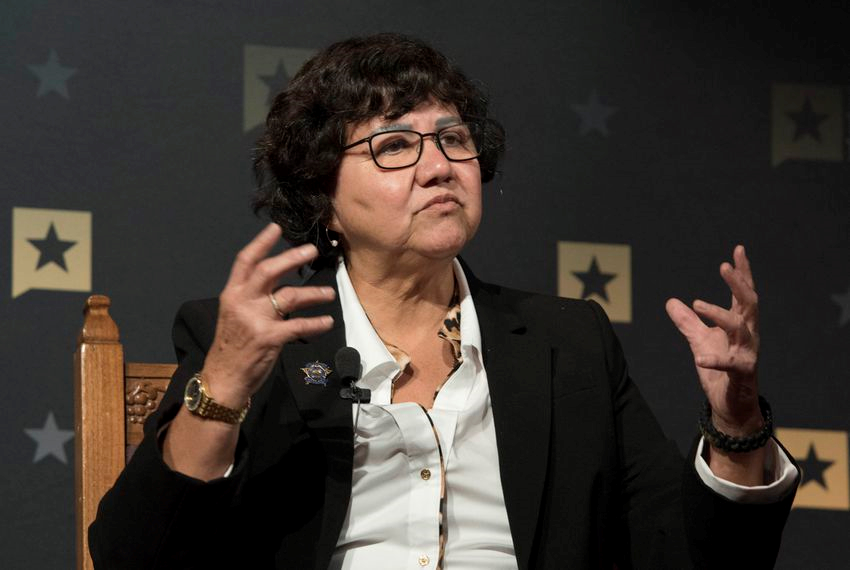
Is she — or is she not — the Dallas County sheriff?

Lupe Valdez says she’s still the top cop in Dallas County, Texas.

She denies reports of her resignation. But she still is thinking about running for Texas governor, as a Democrat. She might challenge Gov. Greg Abbott, the Republican who recently announced his re-election campaign.

I am not going to comment on Sheriff Valdez’s work as Dallas County sheriff, given that I live way up yonder in Amarillo. I would like to offer a brief comment on the reasons she has posited for considering a run for governor.

She has grown weary of Republican dominance of Texas politics.

To be candid, so have I. So have other Texans. Democrats have been yearning for a serious challenger to Abbott in 2018. None has emerged. Valdez might be the one.

Now … before you get on my case for being one of those partisan Democrats who wants to see Republicans toppled at every turn, I want to make an important stipulation.

It is that one-party political dominance — no matter which party is in command — too often produces an arrogance that diminishes the cause of what I like to call “good government.”

I moved to Texas in the spring of 1984. I took up my post as an editorial write — and later editorial page editor — of the Beaumont Enterprise. The Golden Triangle in the early 1980s was still a heavily Democratic bastion. Every elected office belonged to Democrats. And I noted at the time that I believed that good government would do well to see greater Republican challenges of Democratic officeholders.

Sheriff Valdez and I are on the same page. According to the Texas Tribune: “Last month, Valdez told the Tribune she believes it’s “time for a change” in GOP-dominated state government. “Too much of one thing corrupts, and I’m a strong believer in a two-party system,” she said. “I’m hoping that enough people are seeing that too much one-sided is not healthy for Texas.”

Read the Tribune article here.

Healthy challenges force incumbents to defend their record. They must make the case for their re-election. Texas, which once was dominated by Democrats, has totally shifted its political tilt. Republicans have commanded every statewide elective office for more than two decades; the one exception occurred four years ago when Texas Court of Criminal Appeals Judge Larry Meyers switched from Republican to Democrat while he was still in office, only to lose his bid for re-election in 2016.

I hope Valdez runs for governor. I might even vote for her if she wins the Democratic primary and challenges Abbott in the fall of 2018.

If it comes to pass, then let the debate commence.

Climate change portends more ‘Harveys’

Hurricane Harvey once would be considered the storm of a lifetime.

Not any longer, according to a new study published by the Massachusetts Institute of Technology. The MIT report suggests that by the end of this century, storms of the magnitude of Harvey could occur once every five-and-a-half years.

The study was put together by Kerry Emmanuel, a professor of atmospheric sciences at MIT. According to Texas Monthly:

“It’s very, very easy for people—even scientists—to get confused by this. You have to be very careful with what you mean by the event,” Emanuel says. The study looks at both Harvey-like storms hitting the greater Houston metro area (which he forecasts will go from a 2,000-year-storm to a 100-year-storm), as well as storms of that size making landfall anywhere in Texas, which is how we get to the 5 1/2 year number.

What do you suppose is the cause for this increasing frequency? Let me think about that for a moment. There. Time’s up. I am pretty certain we’re talking about climate change.

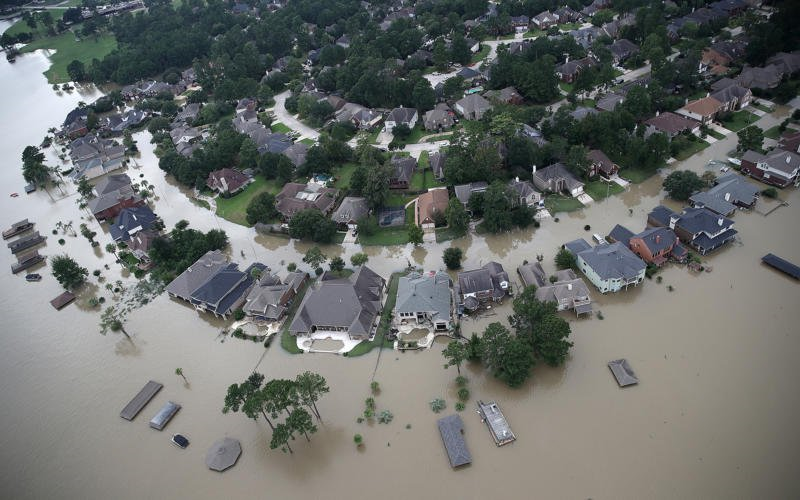
The deluge brought by Harvey dumped 50 inches of rain in a 24-hour period on Houston and the Golden Triangle this past summer. And that event came after Harvey roared ashore at Rockport with killer winds and immense tidal surge.

It will take years for the Texas Gulf Coast to recover fully from the storm. Texas officials have enlisted Texas A&M University System Chancellor John Sharp to oversee the rebuilding of the coastal region from the Coastal Bend to the Golden Triangle. Think of what might await such an effort years from now. No sooner would the work be done than it might occur again.

Read the TM story here

The Texas Monthly piece I’ve posted with this blog entry doesn’t mention climate change/global warming explicitly. I have mentioned it here. I only can surmise as much to explain why the level of storms thought to occur once in a century might take place with such frightening frequency.

This is a terribly ominous trend for the coastal regions of our state.

The question now presents itself: What in the world are we going to do to either protect our coastal region from such destruction?

There’s also this: What are we going to do to reduce the number and ferocity of these storms?

Meanwhile, Texas still cleans up after its own tragedy

The nation is rightfully horrified and increasingly concerned about the humanitarian crisis that is unfolding in Puerto Rico.

It is, though, the latest in a savage series of events that have thrown millions of Americans into varying states of misery.

The Texas Tribune has published a gallery of photographs from a region which I have some intimate familiarity. The Golden Triangle also is recovering, albeit slowly, from its own battle with Mother Nature’s unspeakable force and fury.

Here are the photos from the Texas Tribune.

The picture above was taken in Port Arthur, one of the cities comprising the Golden Triangle; the other two are Orange and Beaumont, where my family and I lived for nearly 11 years.

All three cities, along with Houston, were pummeled by the deluge that poured out of the sky from Harvey, which made its initial landfall at Rockport along the Coastal Bend.

Texas has rallied behind the many thousands of Golden Triangle residents who today are still seeking to reassemble their shattered lives. Some of them are friends of my wife and me and former colleagues of mine. Our hearts break for them.

We intend to visit our former haunts. We hope it is sooner rather than later. Our time today is occupied by our effort to prepare to relocate eventually from our home in Amarillo.

Still, I think daily of my friends who are still struggling to regain their equilibrium in the wake of the monstrous storm.

My hope is that the rest of Texas — and the nation — will keep them in their thoughts and prayers, too. I know we’ve got a lot on our minds these days. Puerto Rico is in desperate straits. Florida also is recovering from its own tragedy, the one named Hurricane Irma.

We all possess big enough hearts to wish well for all of our stricken fellow Americans.

Events give media chance to shine brightly

I never got the chance to serve on a Pulitzer Prize jury, to select winners in print journalism’s top prizes.

This year is going to produce a Pulitzer juror’s “nightmare,” if you want to call it such. The media, namely the folks who work in the print end of it, have distinguished themselves grandly while covering compelling issues of the day.

Were it not for the media, we wouldn’t know about the various crises threatening to swallow the Donald J. Trump administration whole. Many of print journalism’s top guns — at the Wall Street Journal, The New York Times, and Washington Post — have been distinguishing themselves with top-drawer reporting that would give Pulitzer jurors fits. It’s interesting in the extreme to me that so many of the cable news outlets keep referencing stories that have been broken first by print organizations.

Then something else happened this summer.

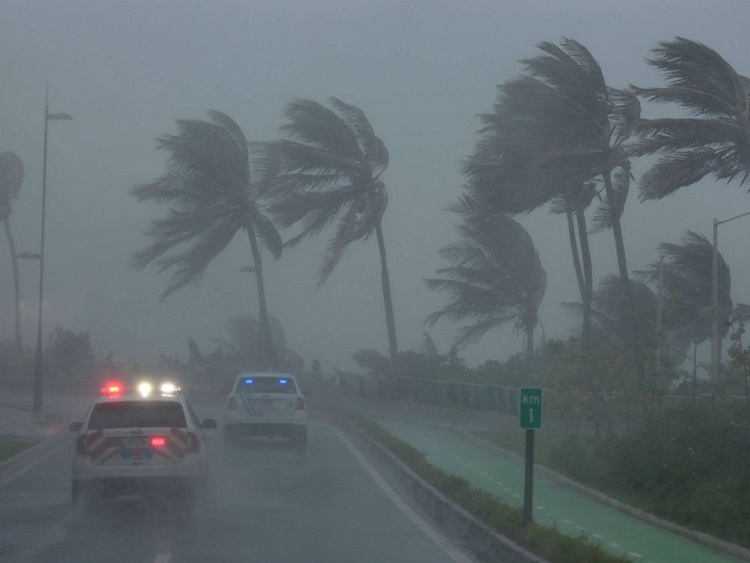
Two killer hurricanes boiled up out of the warm water offshore and delivered death and destruction, first to the Texas Gulf Coast and then to the Caribbean and to all of Florida.

Reporters, photographers and their editors all have worked very long days and nights trying to cover the story of human misery. Newspapers from the Coastal Bend, Houston and then to the Golden Triangle have answered the call. Indeed, one of my former employers — the Beaumont Enterprise — has called at least one of its veteran former reporters out of retirement to assist in telling the community’s story as it seeks to recover from Hurricane Harvey’s savage wrath.

The story of media intrepidity is being repeated now in Florida as that state struggles to regain its footing in the wake of Hurricane Irma’s own brand of immense savagery.

There you have it: severe political tumult and potential constitutional crises and Mother Nature’s unimaginable power have combined to create circumstances that make the media answer the call to duty.

To think, as well, that the president of the United States refers to these dedicated men and women as “the enemy of the American people.” Donald Trump knows nothing about the dedication to their craft — and in many instances the heroism — they exhibit in trying to report important issues to a public that wants to know what’s happening in their world.

Good luck, Pulitzer jury, as you seek to find winners in this most eventual period in history.

To my former colleagues, I am immensely proud of you.

Nature’s wrath eclipses political controversy

I created this blog some years ago as a forum for “politics, policy and life experience.”

To be candid, events of the past few days have ripped my mind away from the worldly political concerns that have dominated High Plains Blogger since its inception.

Hurricane Harvey stormed ashore on the Texas Coastal Bend. Then it backed out over the Gulf of Mexico and returned to the Golden Triangle as a tropical storm and inundated Houston and the Beaumont-Port Arthur-Orange areas under 50 inches of rain.

Meanwhile, way out west, my hometown of Portland, Ore., had been choking in the midst of a cloud of smoke and ash blown in by that forest fire along Eagle Creek. The Columbia River Gorge has been scorched. The fire jumped the mighty Columbia River and has burned many more acres of tall timber in Washington.

Now it’s Hurricane Irma that’s devastating Florida after tearing through the Caribbean Islands region.

My wife and I worry greatly about our friends along the Texas coast from the Coastal Bend to the Golden Triangle; we worry more about family and friends affected by the Eagle Creek fire; now we worry about the handful of friends who live in Florida.

And, of course, we are praying for the safety of all those millions of Americans who have been stricken by all the savagery that has attacked them.

Somehow, in this context, Donald J. Trump’s ongoing troubles — ranging from his big mouth, his Twitter tirades, un-presidential conduct and “The Russia Thing” seem strangely inconsequential.

Hey, this moment will pass in due course. I know that. I am ready for it. For now, though, I intend to concentrate on the human suffering we’re all witnessing, along with a touch of “life experience” commentary thrown in for good measure.

Meanwhile, more prayers are on the way.

Here comes another ‘czar’

John Sharp is taking on the role of “czar.”

The Texas A&M University System chancellor has been picked by Texas Gov. Greg Abbott to lead and coordinate the long-term recovery effort along the Gulf Coast.

Hurricane Harvey stormed ashore twice and devastated the coast from the Coastal Bend to the Golden Triangle. Sharp’s task is to make sure the recovery proceeds efficiently, as quickly as possible and with a minimum amount of angst and anxiety.

Sharp has crafted a list of guidelines he plans to follow in this Rebuild Texas effort that will be based in College Station.

Here are the guidelines.

Two points stand out.

One is to “let the experts do their job.” My understanding of the term “czar” normally would compel such a person to have his or her hands on every decision made. Sharp won’t do that. He’ll stand back and let the experts in their specific discipline commence with their tasks.

The other is to “be available all day, every day.” That’s more like a czar. It’s also good advice for the chancellor to follow for himself, not to mention for the experts who’ll be assigned to put the shattered and soggy Gulf Coast back together.

I am a fan of Sharp. I covered him at many levels during my time as an opinion editor at two newspapers in Texas; one was in Beaumont, the other was in Amarillo. I’ve known him for some time, dating back to when he first ran for the Railroad Commission.

He’s affable and has a self-deprecating streak. He’s also a knowledgeable public servant who has many friends and allies on both ends of the political spectrum.

I have trouble attaching the word “czar” to John Sharp.

We’ll see soon enough if it fits.

It’s just time to get busy.

Climate change is real, NW fires notwithstanding

I’m seeing a bit of social media chatter that needs to be put in perspective.

Some of it is conflating a couple of key issues: climate change and those horrific fires that have scarred many thousands of forestland in Oregon and Washington.

Critics of climate change deniers are pointing to the Oregon and Washington fires as evidence that climate change is real.

I agree with the notion that Earth’s climate is changing, that its temperatures are warming. The fires that began along Eagle Creek just east of Portland, though, were the result of a dumbass who allegedly was playing with fireworks in tinder-dry woodlands above the Columbia River.

Oregon State Police have a suspect. He’s a teenager. He is a minor, so we won’t know his name, which I guess gives me license to refer to him as a dumbass.

Back to the issue of climate change/global warming. It’s playing out far from the Pacific Northwest.

The Texas Gulf Coast just got hit with a Category 3 hurricane/tropical storm. It dumped 50-plus inches of rain on Houston and the Golden Triangle; it brought killer winds to the Coastal Bend. It has created unspeakable grief, agony and misery along the coast.

But wait! Now there’s a Category 5 storm blasting its way toward South Florida. It has winds of 185 mph; gusts are reaching 225 mph.

Meteorologists and other scientists are speaking in unison — more or less — on this subject: We’re going to see more catastrophic storms in quick succession in the future because of climate change.

The debate, though, centers on the cause of this change. The scientific consensus appears to suggest that human activity has exacerbated the change, through carbon emissions and immense deforestation.

The fire will be extinguished. I remain supremely confident that the forest will be restored over a lengthy period of time. Humankind can repair the damage done by a single thoughtless idiot.

The frequency of those storms? The rising sea levels? The intensity of the savagery that boils up out of the ocean?

That problem requires our immediate attention, if only we’d stop bickering over whether the climate is changing. It is. Let’s get busy finding solutions to this worldwide crisis.

Happy Trails, Part 38

I think I’ve just made a command retirement decision.

My wife, Toby the Puppy and I are not going anywhere near the Gulf or Atlantic coasts in August or September.

Hurricane Harvey crashed ashore twice along the Texas coast as a Category 3 monster. First it hit Corpus Christi and Rockport. Then it backed up over the Gulf of  Mexico, downgraded a bit to a tropical storm, then wiped out Houston and the Golden Triangle under 50-something inches of rainfall.

OK, then. The Gulf Coast is out.

Now the nation is awaiting Hurricane Irma, a Category 5 hurricane that is reportedly the most dangerous Atlantic storm ever formed!

Miami and Miami Beach are in Irma’s bulls-eye. Sustained winds are at 185 mph. Residents are starting to flee.

You know what that means? It means we aren’t going that way, either in late summer … not ever!

Climate change is making these monster storms a more frequent occurrence. Do not bitch at me about climate change! I won’t be dissuaded from what I believe, which is that Earth’s climate is changing. I won’t argue with you today about whether it’s manmade or whether it’s part of Earth’s “normal cycle.” The cause doesn’t matter in the context of this decision.

Earth’s climate is changing and that means — for those of us in our household — our happy trails are going to lead us elsewhere at this time of the year.

Feeling cursed by Nature’s wrath

Forgive me if I sound as if I’m feeling cursed these days.

Mother Nature is drawing a bead on communities I know well. Beaumont and the rest of the Golden Triangle along the Texas Gulf coast is bailing out from the deluge dumped on the region by a storm named Harvey.

Most of our friends are OK. Not all, though. There’s a lot of heartbreak and agony to go around as the Triangle struggles to recover from the Harvey’s savagery. Our hearts go out to them … along with our prayers.

Now as we look in the other direction, toward the Pacific Northwest, I see that my hometown is under siege from an entirely different foe.

Fire!

I see pictures on social media from the Columbia River Gorge, one of the world’s greatest natural splendors, and my heart breaks all over again. Flames are consuming many acres of virgin timber. Historical structures are in jeopardy.

Portland, the city of my birth, is now being showered with ash, reminding residents there of when Mount St. Helens exploded in the spring and summer of 1980, blanketing the city with a fine coat of volcanic ash.

The picture above is of downtown Portland. That ain’t fog, man! It’s smoke billowing over the city from the fires that are burning not far away.

We’re getting ready to head that way for a little R&R. Our trip isn’t coming up in the next few days, but we’ll be hauling our RV in that direction fairly soon. My hope is that the fires are quenched soon. I have considerable faith in the firefighting crews that are on the job. They’re pretty damn good at fighting those forest fires.

Their expertise comes from experience, just as the Gulf Coast rescue crews and other first responders have plenty of experience dealing with the aftermath of killer hurricanes and tropical storms.

But these monstrous events make me nervous in the extreme and they break my heart for tangible reasons.