Pandemic pushes ‘most important election’ coverage to the back shelf

What in the world happened to the “most important election in our lifetime,” the one that is supposed to energize a nation, jacking up our interest in deciding whether to stay the course or to, shall we say, set a new course?

I know the answer to that question. It’s been pushed aside while the world comes to grips with how to handle a pandemic that has killed thousands of people already and is threatening to change everyone’s life … maybe forever.

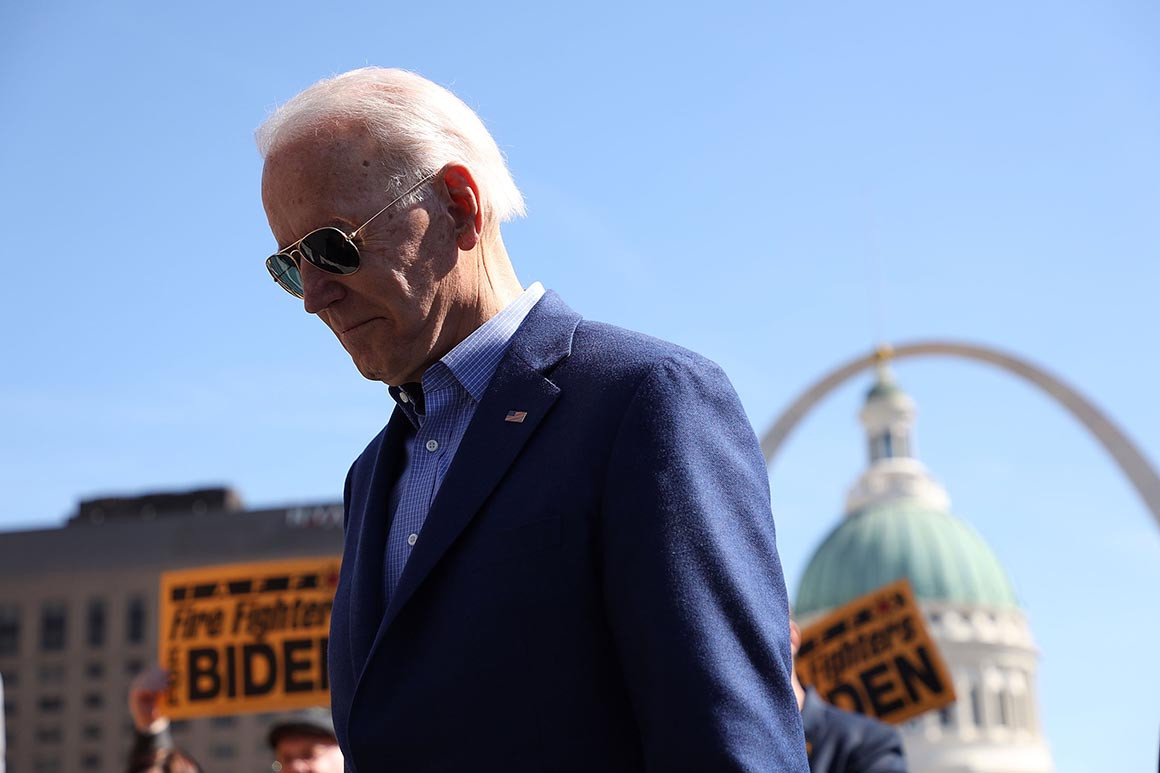
Joe Biden has turned the Democratic Party presidential nomination fight into a runaway. He has routed what’s left of a once-huge field of contenders. U.S. Rep. Tulsi Gabbard today dropped out of the race; I know, you had forgotten all about her, as did I. The only challenger still standing is U.S. Sen. Bernie Sanders, who I reckon is going to bow out any day now.

No one is talking about it. The media have gone silent. News programming has erupted in a barrage of coverage of the coronavirus pandemic — as it should! We’re worried. We’re unsettled. Cities, counties and states are mandating crowd-size limitations. Mayors, county executives and governors are in front of us constantly, providing updates on what they’re all doing to stem the outbreak of new illness.

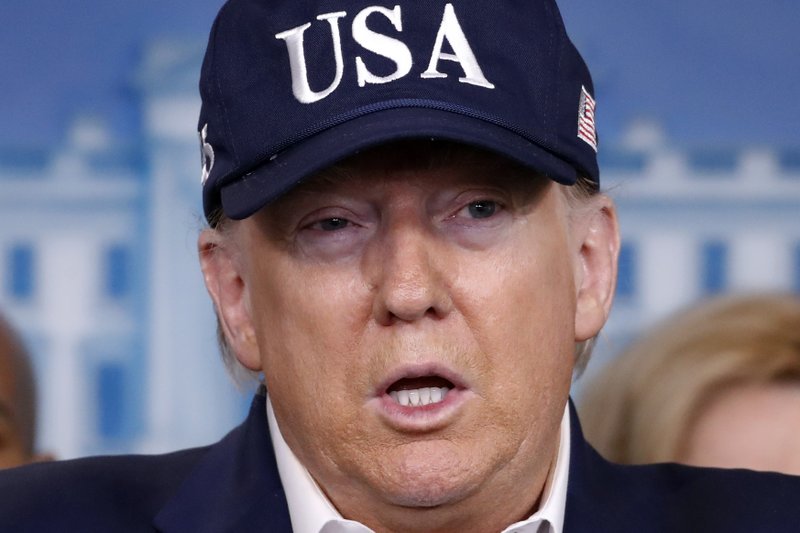
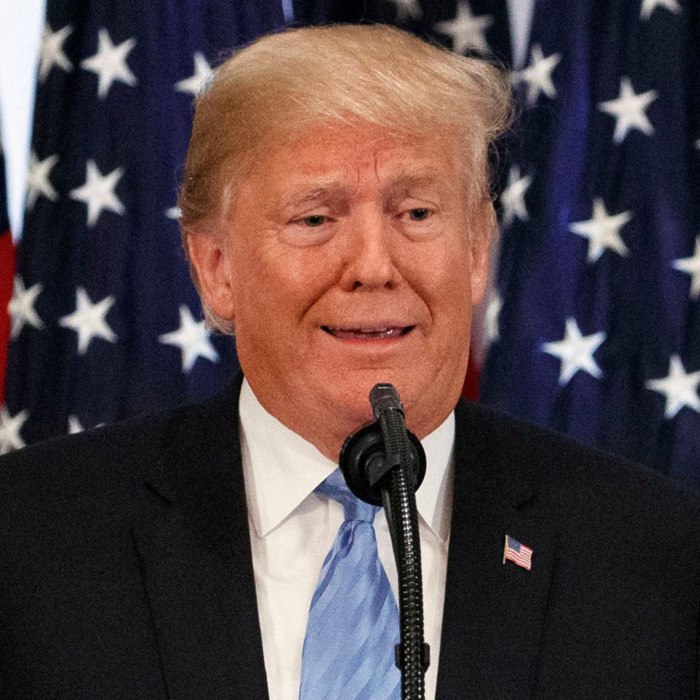
Oh, and the president of the United States, Donald John Trump? He’s, um, seeking to repair the rhetorical wreckage he has created by his idiotic pronouncements about the pandemic being a “Democrat hoax” and downplaying the severity of the crisis that is killing people daily.

Enough about him. For the time being.

The pandemic is Topic No. 1, and No. 2 and maybe No. 3 at the moment. That “most important election in our lifetime” will take place in November. The road between here and there, though, is going to take some very weird turns.

We had all better hold on with both hands.
Taking a measure of comfort from PSAs

Time for an admission: This coronavirus crisis/pandemic has me seriously out of sorts.

I don’t like facing the prospect of such dramatic life changes. The idea that the United States of America might shut down completely, to be honest, is damn frightening. So are the warnings from health and science experts that the “worst is yet to come” and that we could face many millions of stricken Americans, and a vast number of fatalities.

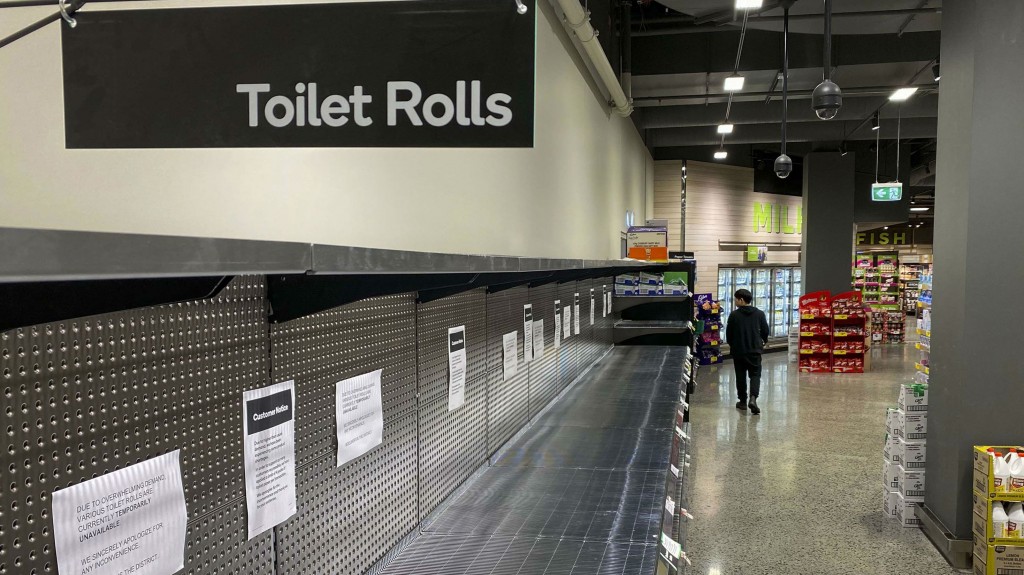
The rush on basic groceries has emptied our neighborhood supermarket here in Princeton, Texas. We went to the store this morning looking to buy a few items. We aren’t hoarders. Row after row of empty shelves greeted us.

I don’t like what I am seeing and what I am feeling.

Now for the good news.

I am drawing a measure of comfort from some of the public service announcements I am seeing on TV. CBS-TV, for one, is broadcasting a PSA showing stars from several of its prime-time programming that reminds us that “we’re in this together.”

No one is alone. No one should feel abandoned. No one should give up hope, that we’ll get through this mess.

By all means I want the end to arrive sooner rather than later. I don’t know if the PSAs are going to snap me out of my funk in the immediate term. Maybe eventually I will snap out of it once I get used to the many changes in our lives that this pandemic is forcing on all of us.

I guess the trick is to look at the longer term rather than worry about what is happening to us in the moment.

I’ll admit it’s hard to do. However, I will cling to the good word and to the encouragement that we’re all in this together.

‘No’ on tuition-free college

That ol’ trick knee of mine is telling me something I hope is true, but something I cannot predict will happen.

It’s telling me that Joe Biden and Bernie Sanders are negotiating an exit from the 2020 Democratic Party primary campaign for Sen. Sanders.

The way this deal might play out is that Sanders might seek to demand certain elements of his campaign end up as part of the Biden campaign going forward. I want to express my extreme displeasure with one element of the Sanders Mantra: the one that seeks to make public college and university education free for every American student.

No can do! Nor should it happen. It’s a budget-buster for the national treasury not to mention for colleges and universities that depend on students’ tuition and assorted lab and book fees to stay afloat.

Former Vice President Biden has broken the Democratic primary for the presidency wide open. The nomination is now his to lose, to borrow the clichĂ©. Sanders, though, isn’t likely to bow out quietly without making some demands on the nominee-to-be.

Sanders isn’t even an actual Democrat; he represents Vermont in the Senate as an independent. He is a “democratic socialist.” To be honest, I don’t quite grasp the “democratic” element in that label as it applies to granting free college education.

The free college plank has been critical to the support Sanders has enjoyed among young voters. How does Biden mine that support for himself? He could call for dramatic restructuring of student loans, making them easier to pay off. I didn’t accrue a lot of student debt while I attended college in the 1970s; I had the GI Bill to help me out. As a parent of college students, though, we were saddled with “parent loans” that took a long time to retire. There must be a better way to structure those loans.

Making public colleges and universities free, though, is a non-starter. Is it a deal-breaker if Joe Biden adopts it as part of his platform? Would that compel me to vote — gulp, snort, gasp! — for Donald Trump? Not a bleeping chance.

The former VP must not be bullied into embracing the free college idea as his own.

Nix the ‘Chinese virus’ talk, Mr. POTUS

The Bigot in Chief just can’t resist tripping all over himself.

The Dallas Morning News noted correctly in an editorial today that Donald J. Trump finally began to sound like a leader when dealing with the coronavirus pandemic.

Then he stumbled again. He took to Twitter to refer to the pandemic as the “Chinese virus.” Yep. It’s China’s “fault.” Or so the president would have us believe with his idiotic Twitter rant.

The Morning News took note of how President Bush managed to soothe much of the nation’s grief after 9/11. He stood with Muslim-Americans and said they are as proud of the nation “as I am.” He said categorically that we are a nation of people of all faiths who share the same sense of common decency and kindness.

Trump just cannot get that notion through his thick skull. Oh, no. Instead he chooses to inflame mistrust toward Asian-Americans with that ridiculous “Chinese virus” reference.

As the Morning News commented: As many public health experts across the country have taken pains to explain, viruses don’t have nationalities, and they don’t discriminate when it comes to who can spread disease or become infected. Labeling coronavirus as a “Chinese” virus only contributes to the confusion and divisiveness in an uncertain time.

The president needs to step up and stop this moronic chiding of Asian-Americans who are in this fight along with the entire country.

Trump base’s appetite for lies is infinite

I have reached an inescapable and tragic conclusion about the base of fanatic support that Donald John Trump continues to rely on as he seeks re-election to the presidency.

The Trump base has an infinite, bottomless appetite for the lies that flow out of his pie hole. One of his latest lies simply takes the proverbial cake.

Trump said he called the coronavirus pandemic what it is before the rest of the world knew it was a pandemic. To whom in the name of gullibility does this clown think he’s talking?

We all heard the president say, in no particular order:

  • That the coronavirus is a “Democrat hoax.”
  • That the victims stood at five and that it soon would be zero.
  •  That the outbreak would subside once warm weather arrives.
  •  That doctors are amazed at the knowledge of medical issues he demonstrates.
  •  That anyone who wants to be tested can be tested.

I know I’ve missed a few, but you get the point.

The Liar in Chief cannot tell the truth. Now he says — with apparently not a single ounce of self-awareness — that he knew all along that the pandemic was a serious matter.

Does this clown think he’s talking to a nation full of rubes who are as ignorant as he is? OK, some of us, indeed, are rubes. You know to whom I refer. The rest of us know better.

This guy is flat-out dangerous, man!

National crisis needs to produce national sacrifice

National crises have this way of producing national unity and a call for national sacrifice to deal forthrightly with the challenges that arrive at our doorstep.

It is being argued that tens of thousands, maybe hundreds of thousands, of Americans might lose their jobs as the coronavirus pandemic strikes at us.

The nation has a shortage of testing equipment, of surgical masks, hospital beds, medicine, various household supplies essential to people’s daily lives.

Cities, counties and states are doing what they can to wage war against what Donald Trump has called “an invisible enemy.”

There must be a national response. One is developing, or so it seems, but it is being cobbled together on a piecemeal approach. The president went from dismissing the pandemic as a short-term matter to something vastly different.

National sacrifice? How does that manifest itself?

They’re talking about paying out sums of money to every American household. How do we afford that when our budget has acquired a debt of $22 trillion and when the annual federal budget deficit has zoomed past the trillion-dollar mark?

Here’s a thought: an increase in taxes.

If the nation is going to respond completely to battle this pandemic, then it must be able to pay for it. No one wants to pay more in taxes, but given the alternatives facing us at this moment, there might not be any way for our federal government — for which we already are footing the bill — to avoid leveling a greater tax burden on us all.

Someone has to pay for all that we need. If not us … then who?

The ‘new normal’ might become just plain ‘normal’

I now want to share a bit of good news, given that we’ve been bombarded with a torrent of bad news of late.

The good news as I see it is that the “new normal” we are likely experiencing could become simply “normal” once the crisis subsides and ultimately drifts into history.

And it will. I am confident that the coronavirus pandemic will dissipate. It will take some time, which brings me to my point.

Which is that we are going to spend a lot of time and energy changing the way we do things.

There might be so much hand-washing, using sanitized wipes, extra precaution taken with “social distancing” that it will become second-nature even after we no longer need to do all these things.

My wife and I are wiping down fuel pumps, shopping carts, door handles … you name it, we’re wiping it down. “You never know who touches these things,” my wife says with her considerable wisdom. Indeed, we’re taking precautions we didn’t use to take.

We were walking through the ‘hood the other morning when we met a gentleman who works as a construction foreman on the houses being built in our Princeton, Texas, subdivision. He has an Oregon Ducks decal on the rear window of his pickup. I asked him, “Are you a Ducks fan?” He said he is. He then told us he grew up in Portland, attended Sunset High School, Portland State University — and attended the Pac-12 football championship game in the Bay Area this past season when the Ducks “destroyed Utah.” We told him we moved to Texas from Oregon in 1984. He’s a home boy!

I started to shake his hand, then pulled my hand back. “Hey, no sweat,” he said. “I get it.”

Handshakes with strangers well might become a thing of the past, too.

Yep, the new normal is upon us. It’ll take time to get used to this new way of living. I suspect if the crisis lasts long enough, what’s new will become, well, just plain “normal.”

Confused over logic of all these closings

It seems almost counterintuitive.

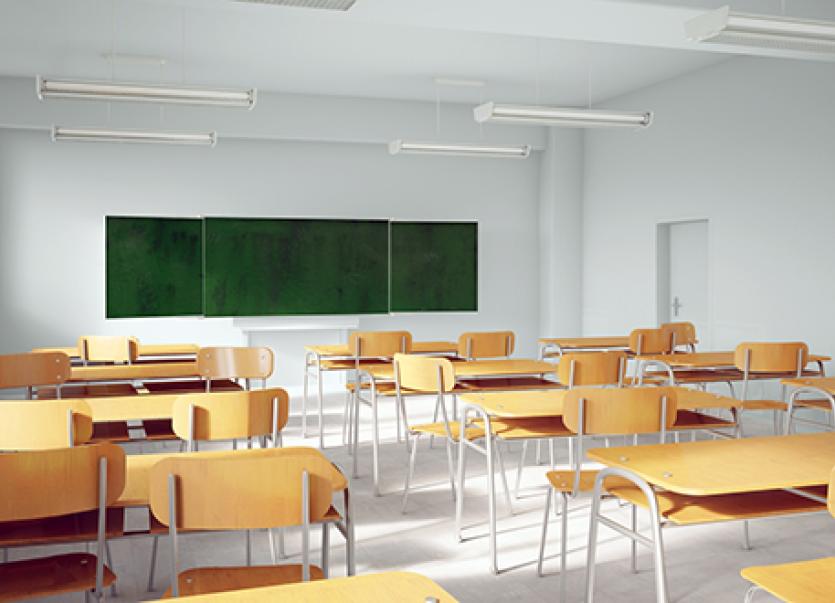
Public schools are delaying the resumption of classes for weeks. Here in Princeton, Texas, the public school system will be closed to students, teachers and staff until May 4. It might last even longer. The end of the academic year comes normally at the end of May.

Why is it counterintuitive? The closures are coming as the world deals with the pandemic caused by the coronavirus outbreak. There’s a massive increase in “community spread” of the potentially deadly disease, meaning that individuals can get exposed merely by being in the presence of those who carry the virus. How does sending children, teachers and staffers home when they can expose themselves to the disease outside of a classroom?

I support what our public institutions are doing to mitigate the disease spread. Our sons are grown men; one of them is the father of a little girl who’s also staying home rather than going to school. She isn’t playing with her friends during this emergency situation; her parents are keeping their watchful eyes on her at all times. This is just one family. Are all of them as responsible? Obviously … no!

There will be more of this to occur.

As a retired American, I am trying to wrap my arms around this story as it develops. It is mind-boggling in the extreme. In all my years walking this good Earth, I don’t recall a crisis that measures up to this still-developing story. We’ve had crises with swine flu, with Ebola, various other influenza outbreaks, measles. We once had a polio crisis in this country. Have we faced the threat of a total shutdown? Have we faced quite the economic impact that this crisis is delivering?

It’s a scary time. Keep an eye on the children and those who might be at risk. In the meantime, I am seeking to make sense of it.

This GOP contest is a mind-boggler

BLOGGER’S NOTE — This item was published originally on KETR-FM’s website, www.ketr.org

It’s fair to wonder about the upcoming runoff election for a Northeast Texas legislative district seat: How does someone as conservative as state Rep. Dan Flynn face a primary challenge from the right?

Flynn, a Van Republican, is running against Bryan Slaton, a businessman from Royse City. The two are running for the House District 2 seat that Flynn has occupied since 2003.

Let’s be clear about this point: Flynn is about as conservative a legislator as there is among the 150 men and women who serve in the Texas House of Representatives. He touts his conservative credentials with pride. That hasn’t dissuaded Slaton from challenging Flynn twice already. He lost narrowly to Flynn in the 2016 and 2018 Republican primaries. He’s back at it again, having forced a runoff with Flynn, by denying the incumbent – along with a third GOP contender – the outright majority he needed to win the GOP nomination outright on Super Tuesday.

The word is that Flynn, despite his conservative voting record in the Texas House, allegedly has compromised himself by being too close to the Austin political “establishment.” Well, to those of us who’ve been watching state politics for some time, the Austin “establishment” usually comprises those on the left and far-left end of the political spectrum. I mean, they don’t call it “The People’s Republic of Austin” for no reason, if you get my drift.

How conservative is Rep. Flynn? Consider that he once proposed legislation that would have required that all public documents be published in English only as a way to get all Texans to speak English. He aimed the legislation at non-English-speaking Texas residents, who comprise an ever-increasing percentage of the state’s total population.

Then came a bit of controversy surrounding a bill he proposed during the 2017 Legislature. Flynn wanted to allow members of the Texas State Guard – which is not a military organization – access to veteran benefits. Flynn, by the way, happens to belong to the State Guard. Legislators who are veterans rose up to defeat the bill by the largest margin of any bill defeated during the 2017 session.

After defeating Slaton in the 2018 GOP primary, Flynn promoted the idea of allowing public school teachers to display the Ten Commandments in their classrooms. Progressives argue that such displays violate the U.S. Constitution’s First Amendment ban on mixing government institutions with religion. Flynn doesn’t see it that way, arguing that teachers should be allowed to espouse the “values” contained in the Ten Commandments.

This is a bit of a curious runoff contest, given that intraparty challenges usually pit challengers against incumbents who tilt in opposite directions. Flynn and Slaton look to me as if they’re far more alike than otherwise.

The runoff is set for May 28.

However … and this is another factor worth considering, but the coronavirus pandemic might forestall the runoff from occurring if the Texas secretary of state determines there is too heavy a risk to voters and election judges who will be mingling at polling places.

I guess we’ll just have to stay tuned to see how this medical emergency plays out. It might give us all more time to make sense of a curious Republican Party contest.

Thousand bucks to Americans? Thank you, Andrew Yang!

I truly cannot believe what I have been hearing today, that Donald Trump appears to be channeling a failed Democratic presidential candidate.

Businessman Andrew Yang campaigned for president promising to send all Americans a monthly stipend of $1,000; Republicans and even some Democrats blasted the idea as foolish. Yang ended his presidential campaign a few weeks ago.

Now comes the president of the United States pledging to send Americans a $1,000 payment to help deal with the economic disruption caused by the coronavirus pandemic that has thrown many citizens out of work.

My head is spinning!

The handout will cost about $1 trillion. Where does the president get the money? Well, I guess the Treasury Department just prints it.

I do not understand where this is coming from.

The first order of the federal government’s business is to protect us from disease and other threats. Donald Trump was a bit slow to come around, but he is starting to sound like someone who finally gets it. I hope he stays the course on that matter.

Hospitals are understaffed and underequipped, though, in advance of what most experts say will be a serious surge in coronavirus illness. What are the feds doing in that regard? How are they going to assist state and local governments shore up the health care provisions that will be required to deal with that surge?

A thousand bucks in our pockets won’t do the job.

Don’t get me wrong. Americans should welcome the dough … but the long game still needs definition.