Trying to imagine a school system that can now move on

I am trying to put myself into the skulls of the remaining members of the Amarillo Independent School District board of trustees.

The board welcomed three new members after the May 4 election. Then a longtime board trustee resigned. Then, just like that, another trustee quit.

It’s the second trustee’s resignation that well might cause some relief among the trustees who are remaining. Renee McCown quit the board after being caught up in the swirl of a controversy involving the resignation of a popular high school girls volleyball coach.

The coach quit the Amarillo High program after a single season, then blamed the board and administrator for failing to support her against a meddlesome parent who griped about the coach’s playing-time decisions; the parent wanted her daughters to get more time.

Oh, the offending parent allegedly was Renee McCown, the aforementioned now former AISD board trustee.

What now? What should the district seek as it moves forward?

I want there to be a return to an undivided effort to providing the best possible quality education for the district’s 33,000 students.

I am now living some distance away. I have watched this coaching controversy from afar. I have been dismayed at how this matter played out. I wanted the school district board to clear the air about what the former coach alleged. It remained silent. Now that the implicated trustee has walked away I don’t believe the board will answer the questions that have swirled.

But I cannot do anything about any of it.

My hope is that with the final resignation occurring in the wake of the tempest that bubbled forth that the board can put this particular issue aside and concentrate solely on matters related to why they sought the public offices they now occupy.

Civility likely to require long-term rehab

If we look ahead for a moment to the November 2020 presidential election, then we need to ponder what I consider to be the worst possible outcome: the re-election of Donald John Trump.

The president might win a second term. What in the world is going to occur then? How will the next Congress deal with a president who labels Democrats to be everything short of spawns of Satan? He won’t work with Democrats because they are continuing to insist on searching for answers to that still-nagging Russia electoral interference issue.

For their part, Democrats won’t be pleased, either, with the prospect of working while Trump is still in office. How in the world will they react? Will they keep saying and doing things that sets Trump off on endless Twitter tirades?

Imagine the president traveling overseas after the 2020 election and behaving as he did at Normandy during the commemoration of the D-Day landings of June 1944. He sat in front of those 9,000 headstones where U.S. servicemen are buried and called House Speaker Nancy Pelosi a “disaster.”

Just suppose, too, that Pelosi keeps her speakership after the 2020 election. How is she going to react to more verbal trashing from the president?

Oh, and then there’s the Senate, which might flip from Republican control to Democratic control.

Imagine that scenario, with Democrats possibly controlling both legislative chambers while Republicans keep possession of the keys to the White House.

Civility? It’s a goner. I continue to hope we can find it. Somewhere. Somehow.

It’s gone for as long as Donald Trump remains in an office for which he is totally unqualified … and I’ll say it again: for which he is unfit.

Pelosi masks her apparent frustration … but the mask is slipping

Nancy Pelosi must be the most frustrated politician in Washington, D.C. She is the speaker of the House of Representatives that likely has the votes to impeach the president of the United States.

But she doesn’t want the House to walk down that path. Why? Because she is taking the long view.

That brings me to the frustration she must be feeling.

Democrats control the House, but Republicans control the Senate. The House can impeach Trump with a simple majority vote. The Senate, which would put Trump on trial for “high crimes and misdemeanors,” must clear a much higher bar; it needs a two-thirds vote to convict the president on all charges. That’s 67 out of 100 senators; Republicans comprise 53 members, which means more than a dozen GOP senators need to believe that Trump is guilty of those crimes.

Frustration? Yeah! Do ya think?

Pelosi is trying to stiff-arm members of her Democratic House caucus, those who want at the very least to launch what they’re calling an “impeachment inquiry,” which is code for actually impeaching the president.

Pelosi’s frustration surely rests in the comparative rhetoric that came from Republicans in 1998 when they impeached a Democratic president, Bill Clinton. What did the president do to warrant impeachment? He lied to a grand jury about that seedy relationship he had with what’s-her-name. He, um, obstructed justice, in GOP members’ eyes.

Many of those formerly fervent pro-impeachment Republicans are in office today. They are saying that despite the mountain of evidence compiled by special counsel Robert Mueller, that Donald Trump is “exonerated” of obstruction charges. Mueller and his investigative team found at least 10 instances where the president sought to impede investigations into the Russian attack on our electoral system in 2016. Mueller, though, said he couldn’t indict the president because of a Department of Justice policy prohibiting charging a sitting president with a crime.

He left the issue of determining culpability  up to Congress!

Are we clear on that? He didn’t exonerate, clear, declare the president to be innocent of anything!

Senate Republicans, though, aren’t having any of it. They’re standing behind one of their own, the man who occasionally visits the Oval Office.

I’m tellin’ ya, that is what I believe is the source of Speaker Pelosi’s supreme frustration. I also believe the speaker’s patience is wearing thin. She did say she’d prefer to see Trump “in prison” rather than merely being impeached.

I’m hoping she stands firm for as long as she can. Senate Republicans need to be made to understand what many of us believe already: that the president of the United States has committed criminal acts.

Military service becoming a 2020 issue in POTUS campaign?

Here’s a bet I’m willing to make: If Joe Biden becomes the 2020 Democratic Party presidential nominee, he will not discuss the bone spurs that kept Donald Trump out of military service during the Vietnam War.

Why? It turns out the former vice president has a potentially dubious medical deferment issue of his own. It appears that childhood asthma kept the ex-VP from being drafted into the military during the war. He had a 1-Y deferment, which disqualified him from the draft.

Now, is it more real, more legitimate than the bone spurs that Trump claimed to have while he was getting those multiple deferments back in the old days? I don’t know.

Veterans across the country, though, are looking at the field of Democrats running for their party’s nomination. Of the whole lot of them, we have three vets seeking the presidency: Pete Buttigieg, a Navy reserve officer who served in Afghanistan, Tulsi Gabbard, who served with the Hawaii Army National Guard in Afghanistan as well as in Kuwait and Seth Moulton, a Marine who also saw service in Iraq and Afghanistan.

To be honest, this veteran — as in me — hasn’t made military service a determining factor in deciding for whom to vote for president. Heck, I voted for a draft-dodger twice, in 1992 and 1996. Yes, Bill Clinton’s clumsy explanation about not remembering getting a draft notice didn’t go down well with me, nor with other veterans. I feel confident in disclosing that those who did get a draft notice never “forget” that moment.

However, it didn’t deter me from voting for him for president.

Trump’s deferments do seem phony. He also continues to blather about hypotheticals involving that time. He said recently would have been “honored” to serve. Hmm. And this individual who lies about everything at every opportunity no matter its significance expects me to believe that?

I’ll just stand by my wager that Joe Biden damn sure should steer far away from this military service matter if he intends (a) to be nominated by Democrats and (b) then defeat Donald Trump.

The field is full of issues to raise against the president that have nothing to do with bone spurs, the Vietnam War and medical deferments.

What does John Dean know about all of this?

John Dean was a key player in the previous great constitutional crisis facing the United States of America.

He served as White House counsel during the Nixon administration. He went before the Senate Watergate Committee and declared there was a “cancer growing” on the presidency. The nation got all worked up over that testimony.

Dean eventually would be convicted of crimes and would serve time in prison for his role in covering up the Watergate scandal.

So what does the House Judiciary Committee, which plans this week to open more hearings on the current crisis? It’s going to summon John Dean to testify about what he knows about Robert Mueller’s findings on Donald Trump’s presidential campaign.

That’s it! A former Watergate-related criminal is going to talk to us about an investigation into which he has next to zero personal knowledge.

Robert Mueller concluded his probe into alleged collusion between Trump’s campaign and Russians who hacked into our electoral system. He said Trump didn’t “conspire” to collude; he left the door open on matters relating to obstruction of justice.

Dean has expressed dismay at Mueller’s findings. He has emerged as a Trump critic. So, on that score I’m on his side.

Still, my questions remain: What does John Dean bring to this matter? What unique expertise does he have? What is the Judiciary Committee going to hear from Dean that it hasn’t already heard from other peanut-gallery spectators?

Here’s a thought: Forget about Dean and bring Mueller himself to Capitol Hill.

St. Louis Blues could make history in unusual fashion

I need to stipulate that I am not a hockey fan. I don’t watch hockey matches often. I don’t know most of the teams in the National Hockey League, nor am I even aware of most of the NHL’s top players.

But … I know a little about league history, which brings me to this point: The St. Louis Blues lead the Boston Bruins three games to two in the Stanley Cup finals series and are poised to win the Cup. If they win, they will make history in a most unusual fashion. I now will explain.

The Blues came into the NHL in 1967 when the league expanded from six teams to 12. The NHL then had the horrible sense to put all the new teams into one division and all the original hockey teams into the other.

The newbies then would play their season, along with the oldies. The newbies all had losing regular-season records. The Blues were the best of a bad bunch of teams in that initial 1967-68 season.

They qualified for the Stanley Cup finals in 1968, 1969 and 1970.

The Montreal Canadiens swept the Blues in four straight games in the first two Cup finals; the Bruins scored a 4-0 sweep in 1970, which the latest time the Blues made the finals. That was 49 years ago, man! Three Cup finals and the Blues were zero-for-12 in all of ’em.

The NHL finally woke up to the travesty it created with its goofy alignment after expansion, moving the Chicago Black Hawks into the newbie division for the 1970-71 season. Well, over time the new franchises got up to speed and have been quite competitive.

However, if the Blues win the Stanley Cup over the Bruins they will have erased a 49-year blot on the franchise’s record.

For that reason alone, I am pulling for the Blues to bring home the Stanley Cup and swill the beer that will fill it.

Dallas crime spike prompts needed state response

This is a story that piques my interest a bit more these days, given that I now live at the doorstep of a major American city.

Dallas has seen a huge spike in violent crime. Transgender women in particular have been killed at an alarming rate. The city registered 40 homicides in the past month, the greatest amount since the 1990s.

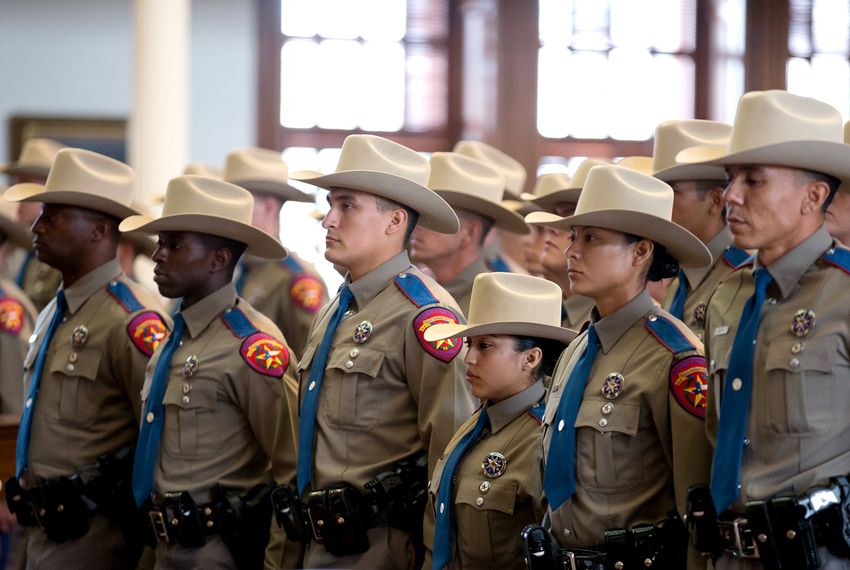
Gov. Greg Abbott has ordered the Department of Public Safety into the fray, sending Texas Rangers — the elite DPS investigative arm — to assist in trying to solve these crimes.

It’s the kind of story we don’t hear too much about, but it’s quite obviously a serious problem that one might say is approaching crisis mode.

I am unaware of any extra precautions my community, Princeton, is taking in the wake of this major uptick in criminal activity. Then, of course, we have our granddaughter living even closer to Big D, with her parents and older brother. Yes, we worry about them, too — which quite obviously goes without saying.

Now, though, stories such as major-city crime spikes such as what is occurring in Dallas make us pay just a little more attention.

By all means, Gov. Abbott, send in the DPS to help the local cops.

Mr. POTUS, your service now isn’t the same as it might have been

I want to visit one more — and I hope final — time the manner in which Donald Trump avoided military service during the Vietnam War.

He received medical deferments related supposedly to bone spurs. Young Donald received several such deferments while young men were dying in Vietnam, a country that was “so far away,” as the president noted recently in an interview with Piers Morgan.

He says that his time now as president is making up for his lack of service when he was of age to wear a military uniform.

I also recall Trump telling us when he was running for president that his military school enrollment passed as more or less the same as serving in the actual military. No … it wasn’t even close to the same as what many of us were enduring in the late 1960s. Really, I know what I went through in the Army and I am quite sure that Donald Trump didn’t experience the things millions of us did during that time.

Trump says now he would have been “honored” to serve. Really? Well, I don’t know how one can refute such a contention, except to remind the president that he could have sucked it up, locked and loaded a weapon and, well, served his country.

He didn’t do it, just as his father didn’t serve during World War II.

Instead, according to congressional committee testimony delivered by his former friend and lawyer Michael Cohen, Trump once said, “Do you think I’m stupid? I wasn’t going to Vietnam!”

Mr. President, I don’t believe my service in Vietnam was a “stupid” act. I also don’t think others of us who did answer our nation’s call believe they were acting stupidly.

We merely did our duty, Mr. President.

OK, on this matter I am out … I hope.

Two Trumps made the trip to Europe

Well, the world got a good look this week at two men who serve in one body as the president of the United States.

What the world cannot shake, though, is the appearance of the “real Donald Trump,” who spoke over the other Donald Trump posing as president.

I will acknowledge the obvious. The “fake” Trump did a good job of articulating our immense national pride over the heroism displayed 75 years ago this week on the Normandy coastline in France. American, British and Canadian men stormed ashore to take back a continent living under the tyranny of the Nazi conquerors.

The Trump who posed as president spoke eloquently about the heroism of that operation and the victory those men achieved.

Yeah, I have heard the criticism of those who said that Trump merely was reading someone else’s words, that he doesn’t actually believe them. I’ll just say that he isn’t the first president who has read a speech penned by speechwriters, nor will he be the final president. Ronald Reagan’s marvelous “Boys of Pointe du Hoc” speech in 1984 was the work largely of Peggy Noonan, although Noonan seeks to give President Reagan much credit for adding his own rhetoric to that address.

However, juxtaposed with the Trump posing as president was the “real Donald Trump,” the man who sat before those thousands of graves marking the final resting place for fallen American heroes.

That version of Trump took the occasion to blast House Speaker Nancy Pelosi as a “disaster,” as a “nasty” politician and someone who cannot be trusted. He then blasted the daylights out of a former Vietnam War combat Marine, former special counsel Robert Mueller, as a “fool.”

If he had any semblance of understanding of the solemnity of the moment, of the place and of the event they were commemorating, that version of Donald Trump would have declined to answer the highly charged political question fired at him by the Fox News commentator.

But … he lacks all of that.

And that version of Donald Trump is the one that millions of Americans are talking about today.

Sad.

‘Litmus test’ must not be a four-letter word

I have long wondered why the term “litmus test” has become a sort of plague to politicians running for offices that hold the power of appointment.

The U.S. Supreme Court, for instance, is going to become a key issue in the 2020 presidential campaign. Namely, the issue will revolve a potential appointment of the next justice on the nine-member court.

The expected Republican presidential nominee, Donald Trump, will insist he would appoint justices with a record of favoring pro-life litigants who would come before his or her court. Indeed, he’s already got two judicial appointments on the SCOTUS and they certainly seem to fit the bill prescribed by what Trump has said.

The large field of Democratic Party candidates will argue to a person that they want judicial candidates who take a more expansive view of a woman’s right to terminate a pregnancy.

But no one says they will apply a “litmus test” to determine who they intend to nominate the highest court in the nation.

They dance all over and around the issue. Litmus tests exist on all sorts of issues. They involve capital punishment, sentencing guidelines, drug policy, firearm ownership and, yes, abortion.

We know the types of individuals that presidents would nominate. They telegraph that punch before they deliver it. However, we refuse to hold them accountable on whether they are applying litmus tests on the individuals they are considering for these appointments.

U.S. senators who have the right to confirm or deny these appointments often make their decisions on single issues. Yet they won’t ever acknowledge they have applied a litmus test to the nominee, indicating whether they pass or fail the exam.

This is a circuitous way of saying, I suppose, that we apply litmus tests at every turn.

Why not, then, just call them what we know them to be?