Moore scandal still lacks presidential comment

Roy Moore is in trouble … politically.

The Alabama Republican candidate for the U.S. Senate has been accused of having an improper sexual relationship with a 14-year-old girl when he was a 32-year-old lawyer.

It hasn’t been proven yet. It’s still an allegation and Moore is now facing troubling questions about his fitness for the Senate seat. He is running against Democratic nominee Doug Jones who, I believe, has remained essentially silent about the accusation.

I’m waiting, though, to hear from the president of the United States.

Moore is a Republican, as is Donald John Trump Sr. The president has been none too bashful about tweeting his view about his fellow GOP pols who suddenly find themselves in serious trouble.

This time? He’s quiet. Sure, the president has been in Asia visiting several countries and involving himself in foreign policy matters.

It’s fair to wonder aloud, though: Is the president going to speak out on a matter involving alleged improper sexual conduct? Dare he speak out? 

Trump, you see, has a load of his own baggage he’s lugging around. Much of it involves questions about his own sexual conduct. Indeed, a good bit of it comes from his own mouth. The “Access Hollywood” recording of him admitting to groping women, grabbing them by their genitals, is Exhibit A. He also has boasted about his own marital infidelity involving his first and second wives.

I also get that there’s a political component that might cause the president some grief. He didn’t endorse Moore in the GOP primary; he backed instead the appointed U.S. Sen. Luther Strange, who lost to Moore in the primary;  Strange occupies the seat once held by Jeff Sessions, whom Trump appointed to become attorney general. Trump did endorse Moore, though, after the balloting was completed.

The question of the moment is this: Does the president come to his ostensible political ally’s defense and risk doing more damage simply because he lacks the moral authority to speak out on anything involving sex and the law?
Moore vs. Jones taking a weird turn

Roy Moore is unfit to serve in the U.S. Senate for a lot of reasons.

He doesn’t respect the Constitution’s provision that declares there is no “religious test” for serving in elective office; he wants to bar Muslims from serving in Congress.

Moore, a former Alabama Supreme Court chief justice, doesn’t respect the oath he took to obey the law of the land and to “protect and defend the Constitution of the United States.” Moore told county clerks they didn’t have to obey a U.S. Supreme Court ruling legalizing gay marriage across the land.

He continues to defame Barack Obama by suggesting he wasn’t constitutionally qualified to serve as president.

And I haven’t even mentioned — until right now — the allegations of sexual assault against a 14-year-old girl in 1979.

Former Republican Party presidential nominee Mitt Romney tweeted today that Moore doesn’t deserve the same presumption of innocence that goes to criminal suspects. I disagree with Mitt — to a point.

I intend to give Moore some presumption of innocence if charges ever are brought against him. Politically, though, I have to wonder just how Alabama voters can possibly support someone who would take office under such a sinister cloud of suspicion.

Moore is running for the U.S. Senate seat from Alabama against Democratic nominee Doug Jones. Polls show the race now a dead heat. Republican congressional leaders say Moore should pull out of the race if the allegations are true.

I can speak only for myself, but I wouldn’t vote for Moore for anything, notwithstanding the new allegations from a woman who’s now 53 years of age. Moore — not surprisingly — denies all the allegations; he calls them “completely false.”

I dare not predict what Alabama voters will do next month when they vote for their next U.S. senator. My hope is that they turn away from a suspected sexual assailant.

Vets are bound together by common experience

I heard an interesting analysis on National Public Radio about the dysfunction that has troubled the U.S. Congress in recent years.

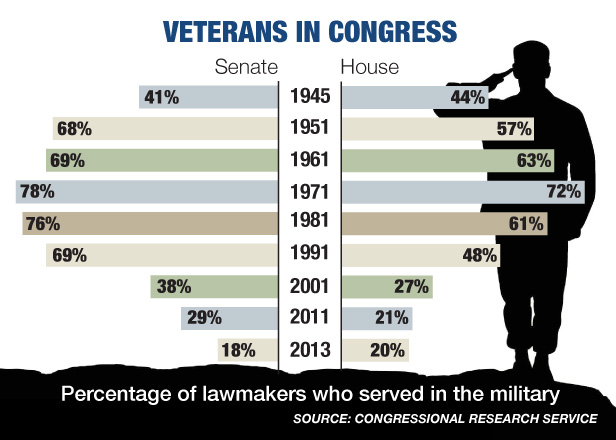
It is that so few members of Congress — House members and senators — are veterans. The analyst noted that today, about 20 percent of congressmen and women are veterans; that total used to be around 70 percent.

Do you see where this is going?

We’re about to celebrate Veterans Day and I thought that observation was worth noting as a way to suggest that military service has contributed to a better-functioning Congress than what we have today.

I think of the World War II veterans who came home from completing their mission to save the world from tyranny. They went about rebuilding their lives. Some of them chose careers in public service. The ran for the U.S. House and the U.S. Senate. They won and were thrown together on Capitol Hill.

They forged partnerships and friendships. They had a common bond. Their friendship crossed the partisan divide. Democrats and Republicans all had been to battle. They all had fought a common enemy.

Congressional lore is full of legendary friendships that bridged that partisan divide: Republican Bob Dole and Democrat Daniel Inouye; Republican Richard Nixon and Democrat John F. Kennedy; Republican Barry Goldwater and Democrat George McGovern. These men were political opponents, but they each respected each other. They had earned their mutual respect because of their service in defense of the nation they all loved.

The Vietnam War produced a similar bond among brothers. Republican John McCain and Democrat John Kerry became good friends during their time in the U.S. Senate. They worked together to craft a normalization of relations between the United States and Vietnam. Republican Chuck Hagel returned from ‘Nam to serve in the Senate, along with Democrat Bob Kerrey.

The Vietnam War generation, along with the World War II and the Korean War generation, contributed mightily to a government that actually worked.

That kind of camaraderie appears to be missing today. Yes, Congress is sprinkled with vets coming home from Iraq and Afghanistan. They, too, belong to both major political parties. I don’t sense that they have yet made their mark on the larger governing body. Perhaps it will come in due course.

The veterans who have served first in the military and then in both chambers of Congress have done demonstrated the value of common experience. It translates into political comity and collegiality … a lot more of which we can use today.

Blog produces yet another snit

I love writing this blog.

People ask me constantly about why I do it. They ask about the reaction to High Plains Blogger’s political tilt. I tell ’em “It’s what I like to do and the negative reaction doesn’t bother me.”

Most of the time, that is.

I got into a snit recently with someone I don’t know. I am not even sure how he glommed onto High Plains Blogger. But he did. Maybe you can call this guy a “troll.”

This fellow lives on the East Coast. He opposes my view of Donald J. Trump. He doesn’t like my constant criticism of the president of the United States.

He recently challenged a commentary I posted about Trump. I’m trying to remember the specifics of the post that got this guy’s dander up.

But he responded via Facebook to something I wrote and included in one of his responses something about banning the Muslim religion in the United States of America. I thought, “Oh man!” Then I replied, “Sure thing. Then let’s just repeal the First Amendment,” the one that guarantees — among other things — the free exercise of religion in this country.

He wrote back that we can outlaw activities that promote terrorism. He believes Islam promotes such activity. I reminded him that we’re at war already with “religious perverts.”

My critic was having none of it.

It went back and forth a bit longer.

Then he called me “stupid” and an “idiot.” Right after that he said that reading the blog was a “waste of my time.” Isn’t that interesting? I think it is.

I mentioned to my wife that this guy doesn’t want to waste his time reading the blog, but that he keeps doing it anyway. Her response? “That’s what trolls do.” Bingo!

I don’t get too many of these kinds of responses. Most critics manage to craft intellectual arguments against whatever I write. I’m fine with that. I’ve chosen over time to avoid engaging them in back-and-forth exchanges. Candidly, I don’t have the patience to spend too much time trying to finish an argument. Some critics of this blog, however, seem to have a limitless amount of (a) time on their hands or (b) intestinal fortitude. Go for it, folks!

The blog will continue for as long as I have enough of my marbles to string cogent sentences together. I welcome the criticism.

As for the guy I don’t know … bless his heart.

Still no sign of national unity under Trump

It has been a year since the nation was stunned by the results of its most recent presidential election.

The candidate who won that bitter contest, Donald J. Trump, made a solemn vow to unify the nation, to bring us all together, to bind the wounds that tore us apart … blah, blah, blah.

That’s what is has been: so much blather.

One year after that historic election, we are as divided as ever. Maybe more so.

Has the president delivered on his pledge? Obviously not. What’s worse is to ask: Has the president really tried to deliver? The answer to that is just as obvious. No!

Trump continues to play strictly and exclusively to his base, the shrinking core of voters who stand with him no matter what. You see it in his immigration stance, his views on environmental protection, his hideous tolerance of bigotry (see his response to the Charlottesville riot), his “America first” rhetoric.

A president who took office with zero political capital to spend has acted as if he had it in spades. Trump continues to ignore the numbers, which tell us that he got nearly 3 million fewer votes than Hillary Clinton. Yes, he won the Electoral College — and was duly elected president.

However, the man who pledged to be the president for all Americans has gone out of his way since his election to be anything but what he promised to be.

This division didn’t start with Trump. Barack Obama also presided over a divided nation, as did George W. Bush before him, and Bill Clinton before that.

Still, when a president takes office promising explicitly to do something, one should expect him to follow suit.

Donald Trump has failed.

Does gun control doom 2nd Amendment? Um, no!

I believe we can start debating gun legislation now in the wake of the Sutherland Springs, Texas massacre. Correct?

It has commenced and there now appears to be some indication of public support for stricter gun laws.

A Gallup Poll reveals that 51 percent of Americans now favor increased regulation on guns purchases. Wow, man! Imagine that. Most Americans, according to Gallup, think the nation needs to legislate some remedy to keep guns out of the hands of madmen, such as the guy who opened fire at the First Baptist Church in Sutherland Springs.

Most want gun control

I am acutely aware that this is a complicated problem that requires a finely nuanced legislative solution. I am a supporter of the Second Amendment to the U.S. Constitution; I also own firearms. I need no lecture on how the Second Amendment has been interpreted by the courts.

The Sutherland Springs tragedy also brings to mind a monumental failure by the U.S. Air Force to report the gunman’s criminal history to the FBI, which could have prevented him from getting the weapon he used to slaughter those people in the church sanctuary.

The complications, of course, become evident when bad actors acquire guns from family members, or friends, or some fly-by-night gun seller looking to make a few bucks. I do not know how you prevent those crackpots from obtaining guns.

Is there a legislative solution that remains faithful to the Second Amendment? I believe one can be found. Somewhere. By someone. Somehow.

If the Gallup Poll is accurate — and I tend to believe it is — then our elected representatives have been given a chance to do what they’ve been unwilling to do in the wake of other horrific tragedies.

Of course, it would be a no-brainer were it not for the existence of that political powerhouse called the National Rifle Association.

Putting our troubles into perspective

Michael Grauer is a well-read student of history, which is a good thing, given his standing at the Panhandle-Plains Historical Museum in Canyon, Texas.

The curator of art at the PPHM came to our Rotary Club today and delivered an enthusiastic talk about World War I, which he calls “the forgotten war.” Grauer has worked at the PPHM since 1987. That’s 30 years chronicling the Panhandle’s history and its contributions to global progress.

WWI was called “The Great War,” or just “The War,” because no one ever thought there would be a second world war, Grauer said. How wrong they all war.

But he added some details about the nature of the conflict that consumed Europe from 1914 until 1918 when, on the 11th hour of the 11th day of the 11th month of 1918, they signed the Treaty of Versailles.

He told us that the Texas Panhandle contributed thousands of horses and mules to the war. The animals were used to haul artillery pieces, supplies and ambulance wagons. The average life span of the animals on the battlefield, Grauer said, was 10 days. They would be shot in the heat of battle and then left to rot on the field. “The stench of death was everywhere,” he said.

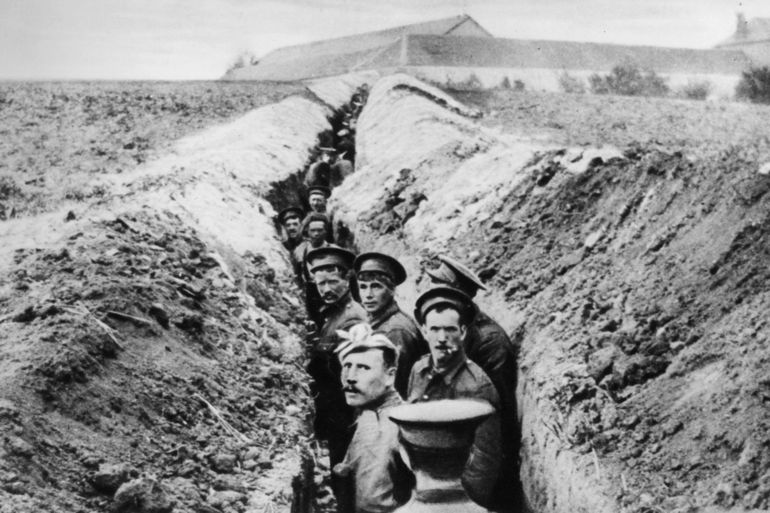
The men who fought in the trenches had their boots rot off their feet as they slogged through mud for weeks and months on end.

The wagons used to carry supplies and evacuate the wounded from the field of battle would break down in the mud.

You want some perspective? “When you drive your car and you’re 20 minutes late to where you want to be,” he said, “think of what those men went through.”

All our WWI vets are gone now. I wish I could tell just one of them how much I appreciate what they did and salute them for the utter hell they endured fighting a 20th-century war with 19th-century technology.

Grauer is right. I don’t think I’m going to grouse any longer about traffic holdups.

Sex enters a key political contest

A Hollywood film mogul has had his career wiped out over allegations of rape. Same for an Academy Award-winning actor. Women are streaming forward to say “Me, too.” The public seems to more or less have accepted the women’s view of what happened with these men.

Many other men in the entertainment industry are facing similar accusations.

OK, then. What about a candidate for the U.S. Senate? A Republican former state supreme court chief justice is facing charges of sexual contact with an underage girl.

Who do we believe here? Roy Moore, the accused candidate, or the woman who was 14 years of age at the time the incident allegedly occurred?

This “Me too” environment has elevated the issue of sexual abuse, sexual assault and sexual harassment to a whole new level of visibility.

I am in no position to assess the value of what the accuser has said Moore supposedly did. Republican leaders are saying that “if it’s true,” Moore has to pull out of his Senate contest against Democratic opponent Doug Jones.

Here is where the matter gets sticky. The election will take place slightly more than a month from now. How does someone prove an allegation of a crime that occurred nearly 40 years ago in such a short span of time? Absent that proof, how do voters respond?

Moore is entitled to the presumption of innocence. Then again, so are the many other men in public life who’ve been accused of sex crimes ranging from making inappropriate remarks to flat-out rape. The public, though, is quick to presume the worst about those others.

Will the voters in Alabama do the same to Roy Moore?

This situation is going to get real sticky … real fast.

Suddenly, the ‘Bama Senate race has gotten quite intense

Well now. I didn’t see this one coming.

A woman has accused Republican U.S. Senate nominee Roy Moore of making a sexual advance toward her when she was just 14 years of age. Moore was 32 years of age at the time … allegedly.

Oh, brother.

Moore is set to face off against Democratic nominee Doug Jones in the December special election to the Senate seat vacated when Jeff Sessions became U.S. attorney general.

As if Moore didn’t have enough baggage already, given his troubled tenure as Alabama Supreme Court chief justice, now he’s got this matter with which to deal.

Republican leaders are asking Moore to quit the race — if the allegations are true. Moore isn’t owning up to anything, of course. The woman, Leigh Corfman, who’s now in her early 50s, is standing by her story.

Who’s telling the truth?

It’s not unheard of for these kinds of sexual encounters to come to light long after they occurred. When I heard of this, my mind turned immediately to the scandal that brought down former Oregon Gov. Neil Goldschmidt, a Democrat who also once served as Portland mayor and was transportation secretary in the Carter administration.

Goldschmidt was accused of messing around with a girl who was babysitting his children back in the 1970s. He eventually acknowledged doing it and then resigned in disgrace from every board on which he was serving when the accusations came forth about a dozen years ago. He has vanished from public view. His picture was removed from the ring of governors at the Oregon Capitol Building in Salem.

If Moore stays in the race, the issue then becomes this: How is his opponent going to handle this one? Does he make it a campaign issue or does he let Moore’s political fortunes simmer in the heat that is sure to build as questions continue to mount?

The late Texas U.S. Sen. Lloyd Bentsen once called politics a “contact sport.” I sense a serious collision might be about to occur down yonder in Alabama.

They’re going to church this Sunday

Tragedy quite often can beget courage.

Such is the case in Sutherland Springs, Texas, a tiny community near San Antonio that is reeling from the monstrous act of evil that killed 26 people and injured 20 others. Some of the victims were children; one was an infant; yet another was an unborn child.

First Baptist Church was rocked to its core. The community is in utter grief.

The gunman walked into the church and methodically murdered about 7 percent of Sutherland Springs’ population.

But here’s the courageous element: They’re going to have church on Sunday. The First Baptist Church family will gather in another location; its sanctuary is uninhabitable and well might have to be destroyed and rebuilt.

This is one measure of how courage in the face of unspeakable tragedy and evil presents itself.

May the congregants feel the love of an entire nation as they gather to worship.