Presidents shouldn’t be in 24/7 campaign mode

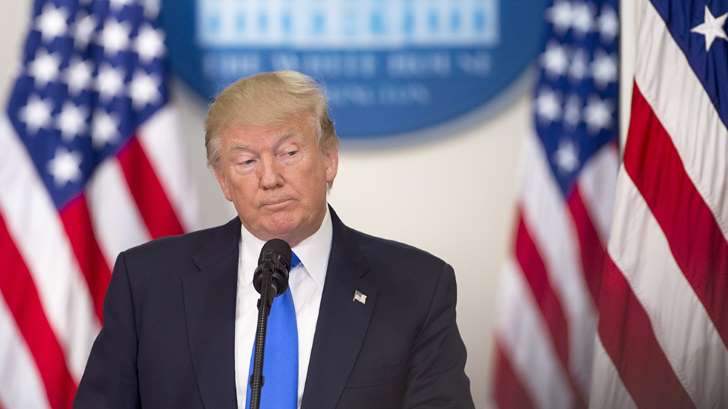
It’s safe to presume that Donald John Trump Sr. is going to seek re-election as president of the United States. The Republican primary season begins in early 2020! That’s nearly three years in the future.

But the president is not waiting to get the party started. He went to Phoenix, Ariz., tonight for a campaign rally. He was recently in Ohio doing the same thing. The night of the White House Correspondents Dinner in Washington, D.C., Trump decided to stage a campaign rally in Pennsylvania.

This is yet another demonstration of Trump’s “unconventional” presidency. He chooses to remain in 24/7 campaign mode. He jets around the country aboard that Boeing 747 dubbed Air Force One; I haven’t heard, by the way, if these campaign rallies are coming at taxpayers’ expense of if his re-election campaign is paying for them. I certainly hope that Team Trump has enough moxie to ensure that the campaign foots the bill for that big jet and the associated expenses related to these campaign rallies.

But here’s the thing …

Real presidents don’t launch into campaign riffs just 200-plus days into their term. They don’t hold rallies and boast about their “accomplishments” while denigrating their political foes. They don’t tell lies about the size of their electoral victory and keep blaming their immediate two predecessors for the myriad troubles that are bedeviling our world.

Real presidents speak in measured tones. They talk about high ideals. They offer high-minded rhetoric that reminds us of our great national aspirations.

They act like presidents. They remind us by their actions and their words that they are the head of state, head of government and commander in chief of the greatest nation on Earth.

We don’t get that with this guy. We get cheap shots, lies, self-aggrandizement. We get campaign rallies.

And to think we have three more years of this ahead of us.

Weird.

Do we call it ‘MPEV,’ or something else?

They’re going to start construction soon on Amarillo’s newest attraction soon.

It’ll be built downtown, across the street from City Hall. It’s going to be home to a AA baseball team that’s moving here from San Antonio. The team intends to open its 2019 season at the place that’s come to be known colloquially as the “MPEV.”

MPEV stands for multipurpose event venue. It’s a descriptive term, given that it also will play host to many other community events other than baseball.

Some residents refer to it as The Ballpark. Critics have attached unflattering names to the structure. “Boondoggle” comes to mind. I don’t consider the construction and opening of the MPEV as a negative occurrence.

It’s going to cost about $40 million. Amarillo’s voters approved a non-binding referendum in November 2015 on the MPEV back when the price was a “mere” $32 million.

Here’s a thought, however, on what kind of name ought to go on this new venue. Why not honor someone by putting his or her name on the building?

I’ll begin the discussion with this name: Tony Gwynn.

Who is this man? He once played baseball in Amarillo, back when the city was home to the Gold Sox. The Gold Sox were a farm team for the San Diego Padres, which interestingly enough, happens to be the Major League Baseball team affiliated with the new outfit that’s coming here. He only played 23 games in Amarillo in 1982.

Gwynn eventually got called up to the Big Leagues. He did quite well. He compiled a .338 lifetime batting average, got more than 3,000 base hits, played in a World Series with the Padres — and comported himself with class, grace, good humor and dedication during his storied MLB career. He was elected to the Baseball Hall of Fame on the first ballot.

Gwynn died in 2014 at the age of 54, which means there is no way he can sully his stellar reputation.

Tony Gwynn Park. It has a nice ring. Don’t you think?

Top Senate Republican drops yet another bomb on Trump

Thank goodness for the media, which are doing their job in ferreting out information pertinent to the future of our national government.

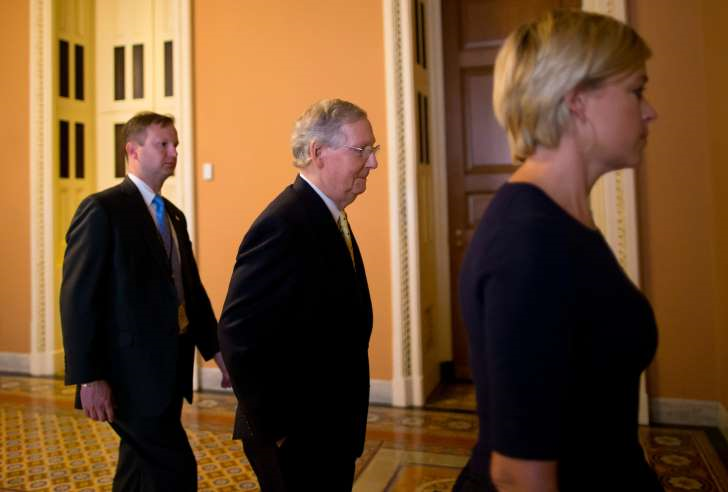
The latest media bomb comes in the form of a New York Times story that reports Senate Majority Leader Mitch McConnell — the Senate’s top Republican — doubts whether Donald John Trump can salvage his presidency.

The president and McConnell haven’t spoken in weeks. They have exchanged angry phone calls. The Times reports that the relationship has gotten even more complicated by the presence of Elaine Chao in Trump’s Cabinet as transportation secretary; Chao is McConnell’s wife.

What we have here is a serious breach reportedly developing between a top-rank legislator and a president with zero experience or understanding of how government works.

They appear to have let their differences fester into a serious boil.

The Senate Republican caucus couldn’t approve a health care overhaul. Trump blamed the Senate, even though he has shown hardly any interest in the nuts and bolts of what he kept saying should be approved.

Right here, dear reader, is yet another example of how the president lacks any kind of political capital. He has no capital to spend to do anything. Why? He has no relationship with anyone on Capitol Hill prior to his taking office as president.

Like it or not, the political world is built on relationships, be they friendly or contentious. Trump had none of that. He assumed public office after working his entire professional life in search of personal aggrandizement and enrichment.

Trump calls the Times part of the “fake media.” He keeps suggesting the newspaper is “failing.” Something tells me the newspaper has this one right.

Will POTUS continue his search for peace and harmony?

The president of the United States sought to lay out a new strategy for fighting the Afghan War.

He began his speech Monday night, though, with what I perceived in the moment to be a curious diversion from the topic at hand. He spoke about peace, harmony, understanding and love. He said he wants our brave warriors fighting overseas to return to a country in which all citizens feel equally loved by their fellow Americans.

I thought it was an interesting — and welcome — appeal in the aftermath of the Charlottesville, Va., riot that was ignited by hate groups marching and counter protesters clashing with them.

So here’s where I’m heading with this: Is the president going to continue that theme tonight when he steps in front of cheering throngs in Phoenix, Ariz.? It’s billed as a campaign rally. You know how those involving Donald Trump usually turnout, yes? They get raucous. The president flies “off script.” He starts hurling insults around. The crowd cheers. The president basks in the adulation he hears in the throaty yells.

Trump is going to a state represented in the U.S. Senate by two Republicans — John McCain and Jeff Flake — who’ve been openly critical of him. Trump has responded with insults he has hurled back at them. Sen. Flake is facing a GOP primary challenge and the president has taken the highly unusual step of appearing to back his opponent.

The nation is in the middle of an intense discussion about race relations in light of what happened in Charlottesville. Will the president respond in a positive way to that discussion, or will he pour fuel onto that wildfire with more of his intemperate rhetoric?

My hope is that he’ll listen to the calmer angels that might be trying to be heard above the din. My fear is that he’ll ignore them and go with the shouters.

How we do know when we have ‘won’?

Donald Trump sought to offer a new strategy for the Afghan War.

The president told us he intends to base our strategy on “conditions” rather than on “time.” We’re going to fight the Afghan War until conditions on the ground tell us we can disengage and that we’re no longer going to give our enemies advance notice of when we intend to stop shooting.

Fine, Mr. President.

I need to ask him, though, a question that has nagged me ever since we entered this war back in 2001: How are we going to know when we have “won” this conflict?

The war against international terrorism has established an entirely new benchmark from which our military strategists must work. They cannot keep beating the enemy on the battlefield and then simply declare victory. Terrorists have this way of receding into the darkness and then striking when we least expect it.

The Afghan War is being waged against Taliban and Islamic State terrorists who continue to resist at every turn. Al-Qaeda has been effectively wiped out in Afghanistan; indeed, it was al-Qaeda’s attack on this country on 9/11 that launched the war. Although that terrorist organization has been decimated in Afghanistan, it has plenty of other locations that will give it “safe haven” from which it can strike back — eventually.

The president has indicated that more troops are heading into Afghanistan. We’re going to send fighting men and women directly onto the battlefield, where they will work closely with Afghan troops.

The president was more correct in his assessment of the fight while he was running for office. He called it a hopeless and futile endeavor. I won’t agree with that entirely. My version of a better outcome would involve stepping up our training capability to ensure that the Afghan armed forces can defend their country effectively — without further on-site help from Americans.

Does this mean we stop fighting? Does it mean we simply give up, surrender and return Afghanistan to the bad guys? No. This fight is as complicated and complex as it gets. I am simply leery of any notion that we’ll ever know for certain when and how we can declare victory.

Get ready … for the ‘other’ Donald Trump

Americans got a good look tonight at a president of the United States who is capable of sounding like one.

Donald Trump’s speech a roomful of soldiers at Fort Myer, Va., was sober, a bit somber and serious. He talked about changes in war strategy in Afghanistan and scolded our allies in Pakistan for not doing enough to fight terror.

I generally don’t agree with Trump’s policy, but I’ll give him credit for looking and sounding like someone who occupies the most powerful and important office on Earth.

Tomorrow, though, is another day. The president will get on Air Force One and fly to Phoenix, Ariz., to deliver a campaign-style rally speech.

I am quite certain we’re going to see another Donald Trump. We’re going to see and hear someone who’s likely to sound like the clown who attached a sort of moral equivalence between the Nazis/Klansmen and those who opposed them in that Charlottesville, Va., riot.

Oh, and then the man who tonight said our troops fighting in Afghanistan need to return home to a nation of love and tolerance well might issue a pardon to one of law enforcement’s most divisive and cantankerous lawmen. I refer to former Maricopa County Sheriff Joe Arpaio, who’ll attend that Phoenix rally alongside the president.

Arpaio has been convicted of violating the civil rights of illegal immigrants and faces a prison term. Unless, of course, the president pardons him, which he has said he is “seriously considering.”

How do you think that’s going to play as the nation is still reeling from the Charlottesville chaos?

Which of these Trumps is the real one? The serious and sober man who spoke tonight? Or is it the one who’ll get his base all worked up with fiery and furious rhetoric?

I’m thinking the real Donald Trump will show up in Phoenix.

Trump throws down on Pakistan

There’s quite a bit to parse about Donald Trump speech tonight about a change of strategy in our nation’s ongoing war in Afghanistan and its military policies regarding South Asia.

Let’s look briefly at Pakistan

The president has declared that Pakistan has to step up and become a significant U.S. ally in the fight against the Taliban, ISIS and al-Qaeda in Afghanistan.

I actually agree with the president’s view on Pakistan, a nation I never have trusted fully to be a valuable partner in that struggle. You’ll recall that in May 2011 our SEAL and CIA commandos killed Osama bin Laden in a compound where he lived for years inside of Pakistan. No one has yet produced evidence that the Pakistanis were totally ignorant of bin Laden’s presence inside their country.

So, yes, the Pakistanis have to demonstrate their commitment to fighting the terrorists in Afghanistan.

Then the president reached across Pakistan and tapped its arch-rival India to play a larger role in this effort. Can there be a more stinging slap in the Pakistanis’ face than that?

The strategy change as delivered tonight lacks detail. Trump’s decision to wage war until circumstances dictate a possible end creates the potential for an open-ended conflict. Are we ready for that?

He also laid down a marker at the feet of the Afghan government. Trump wants to see “real results” in an effort to end corruption. He wants to see the Afghans demonstrate a military capability that prevents the Taliban from return to power.

The president talked for quite a long time before running for office that the Afghan War was a foolish contest. Then he took his seat behind the Oval Office desk, he said tonight, and saw things differently. I’m glad he recognized how perspectives change when you obtain power.

Something is gnawing at my gut that we’ve just heard the president of the United States commit this country to continuing fighting a war that still seems to lack a strategy for winning.

U.S. forces won far more battles in Vietnam than they lost. Conventional wisdom held that we should have actually won that war. We didn’t. The Vietnamese outlasted us. We left and the enemy we “defeated” on the battlefield took control of the government we sought to protect and preserve.

Is there a similar outcome awaiting us in Afghanistan?

GOP silence is getting louder

You can understand that Democrats are angry with Donald J. Trump.

The president won an election he was supposed to lose to the Democratic Party nominee. Congressional Democrats haven’t gotten over it … yet!

Republicans, though, are demonstrating their angst and anger at Trump differently than their colleagues on the other side of the chasm.

They are staying quiet. More or less. A few congressional Republicans are speaking against the president, namely over his stated reaction to the Charlottesville mayhem. However, except for a few on the far right wing of the party, one is hearing damn little comment that even remotely resembles support for the president’s equating of Nazis and Klansmen to those who protested their march in Charlottesville.

If I were Donald Trump — and I am so glad to be far away from this guy — I would be worried to the max about the GOP silence. Trump has demonstrated already he doesn’t give a damn about Democrats; nor do Democrats, to be fair, give a damn about him. Now, though, he is providing evidence that he doesn’t care about Republicans, either; the GOP silence suggests to me the feeling is increasingly mutual.

Trump has gone after the Senate majority leader; he’s attacked GOP Sens. John McCain and Jeff Flake of Arizona; he lashes out at Sen. Lindsey Graham, R-S.C.; he even attacked Attorney General Jeff Sessions, a former senator from Alabama, and a good friend of many in the Senate — on both sides of the aisle.

GOP Sen. Susan Collins of Maine now says she isn’t even sure Trump will be the party’s presidential nominee in 2020.

The Republican Party’s relative silence may deliver more damage to the president than the howling we’re getting from the other side.

Now, a good word for Teleprompters

I stand before you in defense of Teleprompters.

They are a commonly used device. Politicians use them all the time. They’ve been in use for decades. Speechwriters prepare the text that pols deliver and put them on these devices. Then the pol reads the remarks from a screen at eye level, which is meant to give the audience the illusion of extemporaneous speech.

It ain’t.

Donald J. Trump is going to read a speech tonight. He’ll talk about his strategy in Afghanistan and perhaps reveal how he intends to fight the 16-year-long Afghan War. I’ve heard the president’s critics say all day about how he’s going to read a speech written by someone else. These critics intend to diminish the words the president will say.

C’mon, folks.

We heard much of the same sort of criticism leveled at Barack Obama when he was president. His critics would demean his statements that he would read from a Teleprompter. “He gives a good speech,” they say, “but he doesn’t mean it. He’s speaking someone else’s words.”

Every single president dating back to, oh, Dwight Eisenhower have read speeches from Teleprompters; Ike was the first president to use the device to deliver a State of the Union speech. Some are more graceful using the device than others. Donald Trump clearly needs practice using the Teleprompter. When you watch him stand in front of the Teleprompter, you end up anticipating when he’s going to launch into one of those nonsensical, unscripted riffs.

His reading of the text often sounds painful; some folks have described his Teleprompter performances as sounding as if he is being held hostage.

Have you ever watched Dr. Martin Luther King Jr.’s “I Have a Dream” speech? Of course you have. Dr. King started reading the prepared text; I believe he had a Teleprompter. His prepared remarks were fine. Then he veered into the ad-lib portion that has become legendary. “I have a dream,” he would repeat. He tossed out the prepared remarks and finished with “Thank God Almighty, I am free at last!”

So, let’s stop obsessing over whether the president uses a Teleprompter. Of course he does! As he should.

What’s with this new talking-head cliche, ‘full stop’?

I guess I need to brush up more frequently on talking-head jargon.

I’ll admit, for starters, that I do watch a lot of news and commentary during the day. Retirement has freed me up to do these things. Thus, I hear a lot of contemporary jargon flying out of the mouths of pundits/contributors/commentators.

You’ve all heard ’em: Kick the can down the road; at the end of the day; all that being said; boots on the ground; going forward … blah, blah, blah.

Here’s a new one that well might replace “at the end of the day” as my least favorite, most annoying cliché.

“Full stop.”

What the hell?

I think I first heard that term used in a “Star Trek” movie. Capt. Kirk ordered the Starship Enterprise to come to a “full stop.” My response then was to giggle a bit. “Full stop? Does that mean something other than simply ‘stop’?”

Now it’s taking its place in geopolitical discussion. The chattering class in Washington is now using “full stop,” I reckon, to emphasize that their disagreement with a public policy issue.

“That issue just won’t resonate with the American people. Full stop.” Is that how they use it?

I’ll continue to watch the news, absorb what the talking heads are telling me. I just will have to ignore one more annoying cliché as I listen to the “experts” offer their take on the day’s prevailing issue.

Maybe I just am getting more curmudgeonly.

I’ll make a vow never to use any of those clichés in this blog. I’ll refer instead to what the United Press International style guide said about them: Avoid them like the plague.