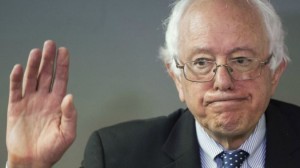
About those elected offices …

1407859219000-Election-3-

Let’s take an earlier blog post briefly to the next level.

I questioned why we elect certain officials in Texas on partisan ballots, why we choose between Democrats and Republicans.

Here’s the blog.

A friend poses an excellent question: Why must we elect some of these officials at all?

He makes the excellent point that tax assessor-collectors, district clerks, county clerks and treasurers — all countywide elected offices — don’t set policy. They follow policy set by state legislators and, to a lesser degree, by county commissioners. They are “functionaries,” he says.

I guess I harken back to an earlier point: Texans love to elect people to public office. It’s in our political DNA, I reckon. Perhaps we like to hold them accountable to us exclusively; we don’t want some intermediary standing between these individuals and the people who elect them.

But my friend’s point remains well-taken.

Then again, that would call for an even more drastic leap of faith were we to recommend such a drastic change to our antiquated Texas Constitution.

I’m willing to take it.


Partisan labels ought to go

democrat_republican

I arrived in Texas in the spring of 1984 with my eyes open about the state’s vigorous political climate.

Perhaps I should have opened my eyes just a little bit wider so that I could see something that got past me as I studied up on the way things would be done in my new home state.

I knew that Texans like to elect people to public office. We have more elected offices than I’d ever seen, for instance, at the county level.

What I didn’t quite grasp, though, were the partisan labels that we attach to all the candidates. Perhaps most fascinating is how we elect judges in this state — as Republicans or Democrats.

My new Texas home would be — for my first 11 years in this state — in Beaumont, where Democrats ruled. Indeed, the entire state was still controlled by Democrats, who held most of the elective office statewide.

What I couldn’t quite grasp, though, is why we elect choose Democrats and Republicans among candidates seeking public office.

I’m left now, 32 years later, to keep asking: Can someone identify for me the difference between a Democratic and a Republican tax assessor-collector, or county clerk, or district clerk, or treasurer? For that matter, does a sheriff or district attorney arrest and prosecute criminal suspects differently if they’re Democrat or Republican?

I posed these questions once in a column I wrote for the Amarillo Globe-News. I got an interesting response from a county elected official — a loyal Republican, naturally — who agreed with me. She couldn’t fathom the difference, either, between how individuals of one party would do the job she took an oath to do any differently from individuals of another party.

Judgeships have proved to be the most troublesome.

In the early to mid-1980s, solid Republican were getting booted out of office or were losing elections simply because they were of the wrong party. It was wrong then, just as it is wrong now to see more qualified Democratic candidates losing to Republicans for precisely the same reason.

I don’t intend — yet — to make this a major issue for this blog. I just feel inclined to suggest that a change to a more reasonable and logical election system would serve the state better than the system we have now.

State legislators, governors and other statewide officeholders — except judges — surely can make the case that partisan differences exist. I’m fine with that.

Judges? That’s another matter.

I’ve all but given up arguing for a retention system in which judges are appointed and then stand for retention at the ballot box. At this point, I’d settle for a change in the way we elect judges, simply by having them run on their judicial philosophy rather than on whether they belong to a certain political party.

How would we change all that? Through a constitutional amendment, which requires a vote of all Texans — and which is equally cumbersome, antiquated and nonsensical.

That, though, is a subject for another day.


Next to zero interest in politics? Perhaps

horse race

Incumbent officeholders hate it when I say this, but that’s too bad. I’ll keep saying it.

Hardly ever do they deserve a free ride to re-election. However, that’s what happens with mind-numbing regularity in many of our local communities.

Let’s look at Randall County, for an example.

I mailer came to my house this week. It’s from Paula Hicks, who’s running for the Precinct 4 constable seat occupied by Chris Johnson. She points out that her race is the only contested one in the county.

Wouldn’t you know it. The only contested race in the county where I live involves the one office I care next to nothing about. We shouldn’t even have constables in Randall County, but we do and this year the office is being contested.

What about the rest of the county offices? They’re all uncontested. Even the tax assessor-collector’s office, which is being vacated by a long-time incumbent, Sharon Hollingsworth, doesn’t have a contested race.

Why don’t candidates jump in? Why don’t incumbents get challenged by those who think they can do a better job?

Are they happy with the job being done? Don’t they want the publicity that goes with seeking public office? Do they fear offending someone?

That isn’t the case north of the county line, in Potter County?

The county attorney, Scott Brumley, has a challenger; the 47th District attorney, Randall Sims, has one too. A county commissioner, Leon Church in Precinct 3, is getting a challenge.

But that’s it. Just three incumbents from the entire slate of candidates have to fight to keep their office.

It’s not that I want all the incumbents to get tossed out on their ears. It’s just that I’ve long thought that incumbents build a public record and they ought to face demands that they defend those records.

The past few Amarillo municipal elections have been lively affairs. This past year saw two incumbent City Council members defeated and a third newcomer elected to a seat that had been vacated. I wasn’t happy with the outcome, but I did enjoy listening to the community debate.

Challengers who rise up from the masses need not be negative. They merely need to say how they intend to perform the duties differently from the individual who’s already in the office. Better? Sure.

I get that incumbents don’t like hearing that from folks like me. They think I sit out here in the peanut gallery just relishing the chance to toss the proverbial rotten tomato at them.

Not true. I just like a robust debate. Especially at the local level, where government — and the people who we choose to run it — make decisions that affect our lives most directly.


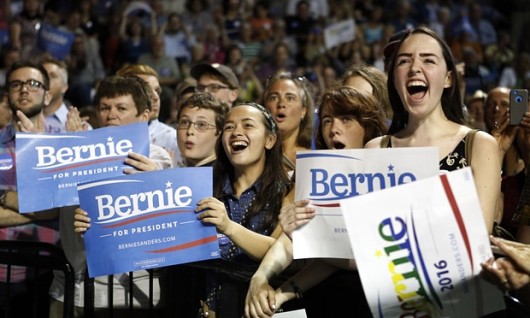
How does Bernie attract young voters?

Young-Voters-For-Sanders-530x318

Many of my friends seem to think I live, eat, drink and breathe politics.

Not true. I actually have a life outside of the political world. Still, I enjoy the give-and-take of political discussion.

This morning a friend of mine and I were talking about the presidential race. The conversation turned to Bernie Sanders, the independent U.S. senator from Vermont who’s running for the Democratic nomination.

“Why do young people like him so much?” my friend asked.

I haven’t given it that much thought as I’ve watched Sanders chip away at Hillary Rodham Clinton’s one-time inevitability as the Democratic nominee.

Then it dawned on me as my friend posed the question: Sanders has a grandfatherly appeal.

Back in the very old days, when I was a twentysomething idealist, I joined an army of young voters who supported the late Sen. George McGovern. His campaign centered on a single issue: ending the Vietnam War.

By 1972, the war was still raging. My own interest in the war was a bit different from many of my peers. They faced the prospect of going there. I had been there and returned. I came back after my Army stint as confused and confounded about our mission in ‘Nam as I was when I went over in the spring of 1969.

Sanders’ appeal to young voters today — more than four decades later — is a bit more elusive. I have trouble understanding his economic appeal, but then again, maybe it’s just me; I might be a bit slower on the uptake than I used to be.

I’ve concluded that perhaps a lot of Sanders’ appeal rests on the fact that he’s a bit longer in the tooth than any of the other candidates running for president this year — although Clinton isn’t that much younger.

Hillary Clinton faces an authenticity challenge. Sanders doesn’t. He seems to be precisely how he presents himself: a loveable curmudgeon.

I’ll admit that I haven’t talked to that many young people about Sanders’ candidacy. Another young friend with whom I’ve recently gotten acquainted asked me this morning about Michael Bloomberg — the former New York mayor who’s pondering an independent/third party candidacy for president.

I haven’t a clue what would drive a Bloomberg candidacy, other than be a spoiler, I said. He, too, is an older gentleman. Would my young friend support Bloomberg because he reminds her of Grandpa? I might ask next time I see her.

Yes, this election season is the most unconventional many of us ever have seen. This fascinating love affair that Old Man Bernie has developed with younger voters just might be yet another result of the unrest that’s gripped so many Americans.


‘Democratic socialist’ sounding more, um, socialist

berniesanders-61515-1434466786

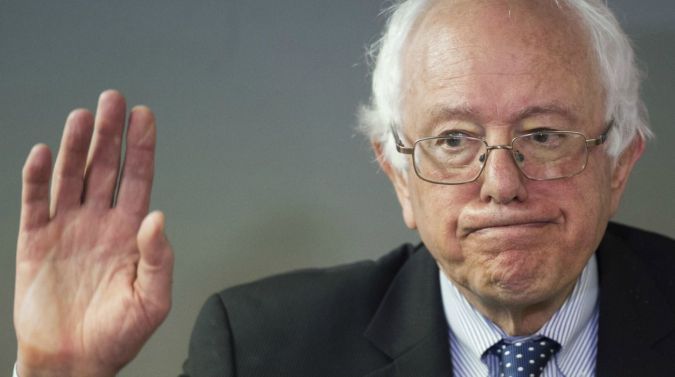
The  more I hear from U.S. Sen. Bernie Sanders, the more convinced I become that it’s time to end the qualifier when describing his economic philosophy.

The presidential candidate calls himself a “democratic socialist.”

I believe I understand the message he’s trying to convey, which is that his brand of socialism isn’t dependent entirely on the government taking care of every American’s needs.

Sanders has been using the democratic socialist label — again, in my view — to take some of the sting out of the s-word that conservatives are fond of using to describe policies such as, oh, the Affordable Care Act.

Then on Thursday night, near the end of the Democratic presidential candidate debate with Hillary Rodham Clinton, Sanders launched into a lengthy riff about the two political leaders he most admired.

He ended with Winston Churchill, but only after he described Franklin Delano Roosevelt’s tenure as president.

He told us how FDR took office in 1933 while 25 percent of Americans were out of work. We were in the throes of the Great Depression.

How did FDR get us moving again? By energizing government to create jobs. The WPA and CCC were government-financed employment programs. The money to pay for them didn’t just materialize. Americans paid for them with taxes.

Social Security became law in 1935.

Gradually, the nation began to work its way out of the Great Depression.

Then came Pearl Harbor in December 1941. Everything changed after that.

But as I listened Thursday night to Sen. Sanders go on and on about FDR’s leadership, I was struck by the belief that he was talking about socialism. Not just a form of it, but the unvarnished version of it.

I happen to share Sanders’ view that 80-plus years ago, President Roosevelt faced a terrible, miserable set of circumstances when he took his seat behind the big desk in the Oval Office. He felt he had to do something dramatic to get the country going.

Sanders also said something else at the end of the debate that I found a bit curious. He seems to believe the nation is ready for another “revolution,” that the income inequality gap of today sets up a need to create some kind of massive government infusion of money to bolster working families who are suffering while the “top 1 percent of Americans” are doing fabulously.

He wants free college education. Sanders vows to bring universal health care to every American. He intends to push for a dramatic increase in the federal minimum wage.

How does he intend to pay for it? He wants to raise taxes on all Americans.

How, then, is he going to do that with Republicans retaining control of the House of Representatives, where all tax legislation must originate?

He sounds like a socialist.

Not a democratic socialist.

He sounds like the real thing.

I believe I heard someone who is overreaching as he pulls the lever on the economic alarm bell.

FDR faced a grave economic crisis the likes of which will not confront the next president.
 

As GOP field thins out, so might Trump’s support

republican-elephant-668x501

An interesting dynamic might be unfolding as the Republican presidential field continues to thin out.

It involves Donald J. Trump and the support he’s been able to get so far.

I believe it’s fair to ask: Who are the voters supporting the dropouts going to endorse?

The GOP field now is down to seven candidates; it started out at 17, if you’ll recall.

Some of the so-called “establishment” candidates have packed it in. The latest significant casualty was New Jersey Gov. Chris Christie. Others have gone by the wayside and none of them appears to be friends of Trump, who’s managed to insult his way to the top of the GOP heap.

I’m wondering if Trump’s support now will dwindle as Republican voters who were loyal, say, to Christie, or Mike Huckabee, or Rick Santorum, or Bobby Jindal start looking around for someone else to support.

Ted Cruz is mining the ultraconservative voters. Marco Rubio, although now severely damaged by the battering he took in the most recent GOP debate, is on the hunt for the same folks. John Kasich, my favorite Republican, also is beginning to gather some steam. Jeb Bush also could find himself thrust into the game.

All of these individuals stand to gain from the remnants of support that rallied around the candidates who’ve departed the campaign trail.

Where does that leave Trump? With his base of support, comprising voters who somehow are infatuated with the candidate’s brashness and don’t seem to care one little bit that he doesn’t seem to possess a political philosophy on which he would govern.

Let’s just watch this thing continue to play out.

I’ve seen the polls that show Trump still leading in South Carolina. However, as we’ve seen in previous election cycles, the Palmetto State is where the GOP campaign has been known to get nasty … as in real nasty.

I’m now wondering how well Trump will hold up when the mud starts flying.


Lee Atwater’s home state: dirty tricks thrive there

maxresdefault

Lee Atwater has been dead for some time, but his legacy lives on.

The late Republican Party operative — a South Carolina native — was known as an aggressive campaigner. He was so aggressive, in fact, that many observers called him “dirty,” “mean-spirited,” “cheap.”

The GOP presidential dog-and-pony show is heading into the Palmetto State, where it appears to be quite likely that the nastiness that has punctuated the party primary campaign just might get whole lot nastier.

Oh, I remember some of the recent history relating to South Carolina.

Dirty tricks await the candidates

Perhaps the most memorable hatchet job occurred in 2000, when U.S. Sen. John McCain, fresh off his Republican primary victory in New Hampshire, ran into a dirty-trick buzzsaw.

Someone floated a bogus rumor that Cindy McCain — wife of the former Vietnam prisoner of war — had a “drug problem.” Then came another falsehood, that Sen. McCain had fathered an African-American child out of wedlock.

McCain blamed the dirty tricks on Texas Gov. George W. Bush’s campaign. It rankled McCain so badly that at one GOP debate that year, McCain told Bush to “take your hand off” the senator’s arm.

Lee Atwater was known as a tough-as-nails operative. He died of cancer in 1991. Wherever he is today, I’m quite certain he’d wish he could return to take part in what is likely to become a bloodbath.

It’s the South Carolina way.

So much for southern gentility.


Texas AG facing serious ethical probe

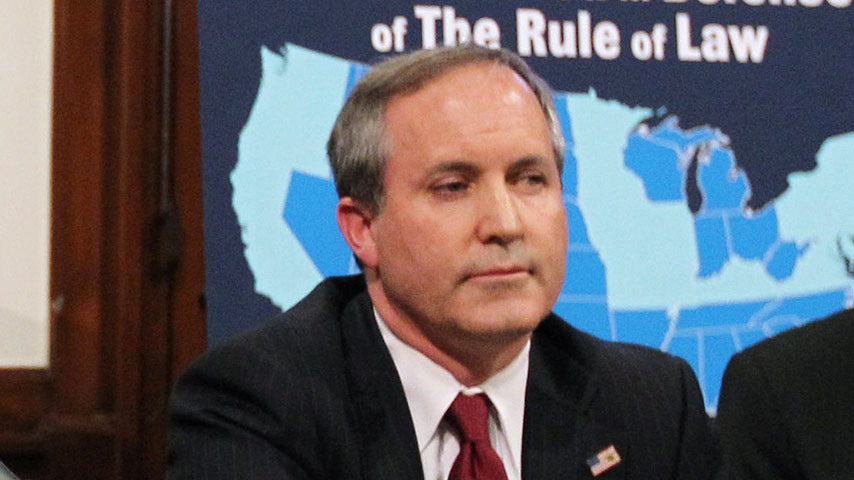
AUSTIN, TX - FEBRUARY 18: Texas Governor Greg Abbott (2nd L) speaks alongside U.S. Sen. Ted Cruz (R-TX) (L), Attorney General Ken Paxton (2nd R), Lieutenant Governor Dan Patrick (R) hold a joint press conference February 18, 2015 in Austin, Texas. The press conference addressed the United States District Court for the Southern District of Texas' decision on the lawsuit filed by a Texas-led coalition of 26 states challenging President Obama's executive action on immigration. (Photo by Erich Schlegel/Getty Images)

Ken Paxton took a serious oath when he became the Texas attorney general.

He put his hand on a Bible and vowed to preserve, protect and defend the Constitution of the United States and of the state.

Then the U.S. Supreme Court did something Paxton — I presume — didn’t expect. It ruled that gay marriage was legal in all 50 states. All of ’em. Including Texas.

How did Paxton react? He said county clerks weren’t bound by the court ruling, that they could refuse to issue marriage licenses to gay couples if the issuance of such documents violated their religious beliefs.

Oops! Can’t do that, said the State Bar of Texas.

It’s now going to launch an ethics investigation to see if Paxton — who’s already been indicted for securities fraud by a Collin County grand jury — violated his oath.

Well, of course he did!

If I were able to make a call on this, I’d declare that the AG broke faith with the oath he took. So did that county clerk in Kentucky, Kim Clark, who refused to issue marriage licenses to gay couples and who spent some time in jail because of that refusal.

What I can’t quite fathom is how these elected public officials feel they can get away with refusing to serve all their constituents. Paxton is a statewide officeholder, representing 26 million Texans. He won election in 2014 and then swore to follow the laws of the land. Not just those with which he agrees.

The Texas bar would seem to have an easy decision on its hands as it regards whether Paxton violated his oath of office. The tougher decision will be in the sanction it should level against him.

I am not going to say he should be removed from office.

Honestly, though, it baffles me constantly that these public officials — who get paid to represent every constituent — think they can select which laws to obey and which laws to flout.

That oath is clear. They cannot make that choice.

At all.


Gov. Christie goes out with a bang

christie-vs-rubio-rivalry-23620

As I ponder the latest round of exits from the Republican Party presidential primary field, I am struck by the nature of one departure in particular.

So long, New Jersey Gov. Chris Christie, but your bowing out is one for the books.

It’s not the statement you made. It was fairly typical.

It was your final act on the stage.

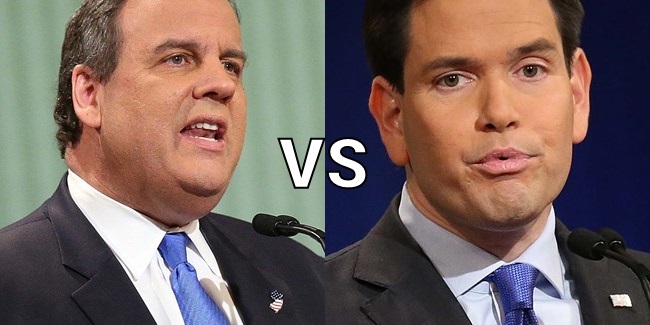
Christie managed to inflict potentially mortal political wounds on Sen. Marco Rubio during a ferocious exchange in advance of the New Hampshire primary. He exposed Rubio’s lack of experience and his robot-like demeanor. Christie questioned whether Rubio had the chops earned during his single term in the Senate to ascend to the highest office in the land.

He did a masterful job of skinning a competitor alive.

What happened then? Rubio finished far back in the field in the primary that was won by Donald J. Trump. As for Christie, he got zero bounce for his effort. He, too, finished in single digits.

I am sorry to see Gov. Christie leave the race. He’s one of the grownups in the GOP field that’s still being dominated by Trump and Sen. Ted Cruz.

At least, though, another man is now making some noise: Ohio Gov. John Kasich, who has emerged as my favorite Republican running for president. Heck, he might even be my favorite candidate … period!

But today, however, I want to doff my cap to the fiery, feisty New Jersey governor who went down swinging.


Amarillo need not replicate other cities’ success

dfwfc_phototour15

When I get a chance to travel to other cities that can boast of robust downtown districts, I often think of the community I’ve called home for more than 21 years.

Amarillo is in the midst of a serious downtown revival. They’ve broken up some pavement, leveled some land, poured some slabs and begun erecting structures downtown.

More of it is on the way.

I just returned from a few days visiting my hometown, Portland, Ore. It’s gone through a decades-long downtown revival that’s still on-going. Heck, it might never end.

That city turned a moribund downtown district into a rousing, sometimes raucous place where people enjoy a robust night life and spend a little time and money shopping in retail establishments.

I’ve written about what I saw on my latest visit to Portland. However, I do not want anyone to presume that I believe what the Rose City has done can be replicated here on the Texas Tundra.

Portland’s municipal population is approaching 625,000 residents, with about 2.2 million folks living in a sprawling metropolitan area that covers several counties — and even reaches across the Columbia River into Washington state.

Amarillo’s population is just a shade less than 200,000, with a metro population nearly double that amount.

Do we have the resources here to replicate what other larger cities have done? No.

My intent in calling attention to what Portland has done, or what Oklahoma City or Fort Worth have done with their downtown districts, is remind us here in little ol’ Amarillo that we must think creatively.

All three of the cities I’ve mentioned — Portland, Fort Worth and OKC — have done so. Oklahoma City used a public investment tax to rebuild warehouse district into Bricktown; Fort Worth used some public/private investment in creating Sundance Square; Portland scrapped a planned highway project and redirected money into creating a robust downtown district.

Amarillo has developed a Strategic Action Plan that took form after years of public hearings and discussion. It, too, involves public and private money. Indeed, the vast majority of downtown Amarillo’s progress has occurred with private money. The city created a downtown Tax Increment Reinvestment Zone that uses money derived from increases in property value within that zone to help finance needed projects.

We’re thinking creatively here. That, I submit, is the first step in a long march toward revival.

Do the city, civic and business brain trusts think we can emulate dollar for dollar what bigger cities have done? I hope not.

They shouldn’t shy away from doing what they can, however,  with what they have.