Making deals = surrender? Hardly

History_Speeches_1123_Lemay_Kennedy_Cuban_Missile_Crisis_still_624x352

Fox News sent this tweet into the Twitterverse just a little while ago: “I don’t think the conservatives in SC want to nominate another dealmaker . . .  someone who’s going to surrender . . . our principles.”

It came about from remarks that U.S. Sen. Ted Cruz made on the network regarding the upcoming South Carolina Republican presidential primary.

I think I’ll try to deconstruct that view.

Cruz, one of the leading candidates for the GOP presidential nomination, seemed to suggest that cutting deals means — necessarily — that one surrenders principles.

I’ll take issue with that premise.

Let’s harken back to the Cuban missile crisis of 1962, about eight years before the young Texas Republican was born. Some of us remember that event.

The Soviet Union began installing strategic missiles in Cuba. Our spy planes discovered them from high above the communist nation. President Kennedy received word of the missiles. He then met with his national security team and — after hearing options that ranged from doing nothing to invading Cuba — settled on a course of action: He ordered a maritime blockade of the island nation; no ships were allowed to dock in Cuba.

Finally, the Soviets “blinked,” according to the parlance of the time. They agreed to remove the missiles. JFK had warned them in a broadcast to the nation that any launch of those missiles from Cuba against any nation in this hemisphere would be seen as an attack on the United States and would result in a “full retaliatory strike” against the Soviet Union.

What did the United States give up in return? We agreed to take down some missiles of our own based in Turkey.

Did the president make a deal? Yes. Did he “surrender” his principles or those of the nation he governed? Not even close.

The tough talk coming from Cruz and others on the right and far right ignore the reality of dealing in a rough-and-tumble world.

There are times when deals provide the only way out of tense confrontations.

And, yes, they can be finalized without compromising one’s principles.


GOP now settling in on (mostly) serious hopefuls

carly and chris

Let’s call it a form of political natural selection.

The presidential primary campaign slogs on from state to state and as each state’s votes are counted, the candidates at or near the pack of the pack, bottom of the heap, end of the line — whatever — find themselves with little to zero support.

Why keep fighting?

Two more Republicans threw in the towel today: Chris Christie and Carly Fiorina called it a campaign. They’re suspended, which is a nicer way of saying they’re kaput.

Now it’s up to the GOP grownups to march on.

Except that the remaining candidates isn’t composed entirely of grownups. Donald J. Trump is the frontrunner. Enough said there.

The Democrats started this race with five hopefuls. Three of them dropped out. Now it’s just Hillary vs. Bernie.

But the Republican field still comprises seven candidates. For the life of me I’m not sure why Jim Gilmore is still in the hunt. Ben Carson also must be assessing his chances of ever attaining the White House. Jeb Bush? I had high hopes for him; silly me. Before he bid adieu to this campaign, Christie did a masterful job of peeling the bark off of Marco Rubio at the most recent GOP debate.

Let’s see, who’s left . . . after Trump?

Don’t get me started on the Cruz Missile, Sen. Cruz of Texas. My disdain for him rivals how I feel toward Trump.

My main man is still John Kasich, the serious-minded Ohio governor who’s now trying to call himself a “staunch conservative,” when in reality he’s demonstrated a nice bipartisan touch that today’s hard-core right-wingers deem to be soft, squishy, RINOish.

There will be more Republican dropouts in the next few days. Then we’ll be down to the real serious contenders.

Just as natural selection works wonders in the wild, it does have its way of creating a race where only the fittest can compete.


Wishing this kind of ‘problem’ for Amarillo

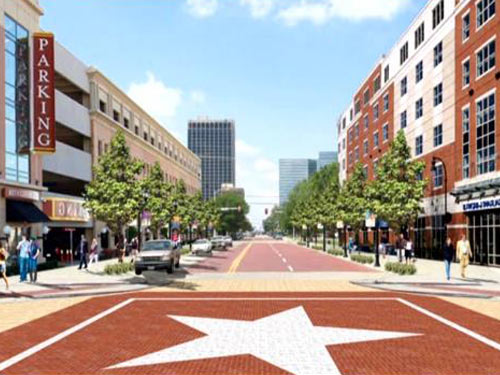
Amarillo downtown

Amarillo’s quest for a new downtown district remains at the top of my awareness whenever I am fortunate enough to travel to other communities that have succeeded in their own journey.

I have just returned from Portland, Ore., a city that is in the midst of constant transition. Its downtown district’s own evolution has been something of a marvel. For my money — and excuse my bias, given that I was born and reared there — every city in America ought to look at downtown Portland’s revival as a blueprint for their effort.

Amarillo has chosen to follow a couple of other closer-to-home examples: Fort Worth and Oklahoma City. Yes, those communities have transformed their own central districts into marvelous attractions.

But I was struck by an interesting dynamic that is driving the latest Portland push. A single developer has announced plans to build several new high-rise offices in the city’s busy, crowded and thriving downtown district.

But there’s a price to pay for it.

Portland has been home to a fairly unique marketing endeavor. It is populated by a number of food carts. Folks set these carts up on street corners and peddle items such as hot dogs, soft pretzels, gourmet coffee and soft drinks.

The downtown construction is going to remove roughly half of the locations for those food carts — and some folks are unhappy with that prospective result.

The food carts have become part of the downtown Portland scene since the 1970s, which is about the time that city’s downtown revival began to draw breath.

Amarillo, of course, is a long, long way from that kind of activity in its downtown district. The recent announcement in Portland brings to mind the interesting possibilities that could become part of Amarillo’s future if its own downtown redevelopment proceeds as many of us hope it does.


Times change, and so do political party dynamics

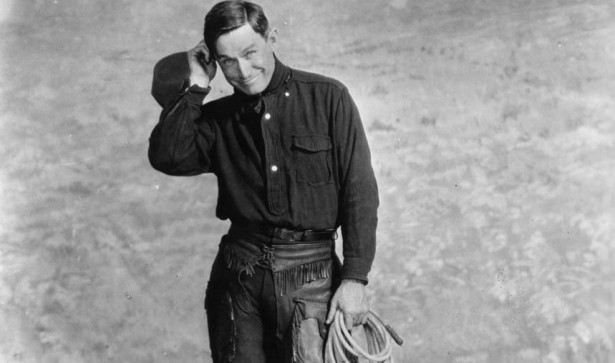
will rogers

Someone once asked the late, legendary humorist Will Rogers about his political affiliation.

“I don’t belong to an organized political party,” Rogers reportedly answered. “I’m a Democrat.”

Ba-da-boom!

My hunch is that the same answer today could be given as it regards the Republican Party.

The GOP is in a state of chaos. It doesn’t know how to handle the emergence of a reality TV star/real estate mogul as a serious candidate for the Republican Party’s presidential nomination.

Donald J. Trump delivered a serious wedgie to the Republican Party “establishment” Tuesday night with his win in the New Hampshire primary. As the story linked to this blog illustrates, the GOP brass is looking for answers to coping with this guy.

He’s insulted his way to the top of the heap. He has demonstrated — by my way of thinking — zero philosophical grounding. If you’re looking for anything resembling a sophisticated answer to the myriad issues facing the candidates for president, do not expect it to come from Trump. Instead, you can expect a sound bite. A laugh line. A stream-of-consciousness rant about this and/or that.

But hey, whatever works.

It’s working for Trump and the Republican Party is grasping for ways to derail this guy.

Forty-plus years ago, the Democrats were the party in chaos. It’s liberal wing was fighting with the establishment — I suppose much like it is today — but the establishment didn’t have an answer for the insurgencies led by the likes of Sens. Eugene McCarthy, Robert F. Kennedy and George McGovern. The issue then was the Vietnam War.

The issue today is much more complex than the cost of young American lives on a foreign battlefield.

There appears to be a lot of anger among voters, which honestly baffles me. Then again, it takes a lot to make me mad.

These things do run in cycles. I don’t know if the Republican Party high command will find the answers it seeks while trying to cope with Trump. Nor do I know if whatever it is that’s driving Trump will win the day and change the party forever.

All I know for certain is that the once-chaotic Democratic Party — which, yes, has its own conflict underway — is looking peaceful in comparison to what’s roiling the Republicans.


Hey, Hillary . . . it’s time for a message

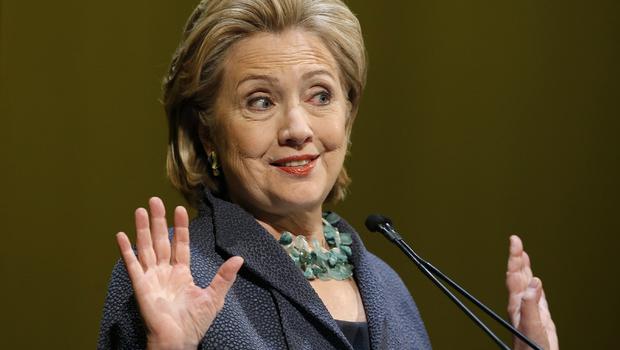
hillary

Chris Hayes is a smart young analyst who works for MSNBC.

Last night he offered a most interesting assessment of Hillary Rodham Clinton’s presidential campaign.

It’s that she lacks a message.

Hayes noted that U.S. Sen. Bernie Sanders’ big win in the New Hampshire primary Tuesday came because of his clear mantra: He intends to break up the big banks and drive relentlessly for income equality.

I’m not endorsing or condemning Sanders’ overarching theme. It’s clear as a bell, however.

Hayes’ assessment of Clinton’s message? It’s that she’ll do a good job and that she’s well-prepared to be president of the United States of America.

“That’s not a message,” Hayes said.

Bingo, young man!

She now finds herself playing catch-up with Sanders, who walloped Clinton among young voters who — I should add — appeared to actually turn out Tuesday to vote for their candidates.

It wasn’t Clinton.

Should Clinton be in panic mode? I’m thinking she has time to pull it together.

South Carolina is the next stop on the presidential primary parade route. The former senator/secretary of state can harvest plenty of votes there from a huge African-American base. Here is where she needs to enlist some serious help from her husband, the 42nd and unofficial “first black president” of the United States.

Clinton can paper over all she wants about the expected outcome in New Hampshire. The truth is she got walloped.

Chris Hayes had it right. She lacks a coherent message that resonates with voters who have a serious gripe about what they perceive is wrong with the political system.

Oh, I know too that she’s got those other issues hanging over her. Those e-mails, Benghazi, a perceived lack of authenticity . . . blah, blah, blah.

This once-invincible candidate is now looking, well, a lot less formidable.

Are you standing by, Vice President Joe Biden?


Both major parties seeing huge transformation?

Horserace

I spent most of my day in airports and on airplanes today, so I was a bit out of the political loop.

Until I got home.

Then I found out that Donald J. Trump won the Republican primary in New Hampshire in a yuuuuge way. I also found out that Bernie Sanders buried Hillary Clinton in the Democratic primary.

What does it mean?

Beats the devil out of me.

I’m not going to suggest just yet that both major political parties are in the midst of a major makeover.

Sanders’ win was expected, given that he is a virtual favorite son, as he represents next-door Vermont in the U.S. Senate. Clinton admitted as much earlier this evening when she conceded the New Hampshire primary to Sanders.

On she and Sanders will march to South Carolina, where a hefty African-American voter base is expected to give Clinton a built-in advantage.

Now, what about them Republicans?

Trump won by a lot. Perhaps the bigger tempest will occur among those who finished behind Trump. John Kasich finished in second place. Now the Ohio governor becomes the latest favorite of the GOP “establishment wing” to challenge Trump. What happened to Marco Rubio? Or Ted Cruz? Or Chris Christie?

As I finish up this post, I am hearing reports on cable TV news that Christie’s bid might be over. He savaged Rubio at the latest GOP debate, which appears to have inflicted near-mortal wounds on the young senator from Florida. Christie, though, didn’t get the bounce he expected. He’s heading for New Jersey, the TV talking heads report, to consider his options.

Look, I’ve noted already that some serious balloting is yet to occur. We’ve got the Super Tuesday event in early March, which includes big, bad Texas taking part in that primary donnybrook.

Will these results determine the future of both major political parties? Perhaps.

However, so help me, this election is impossible to chart with semblance of certainty.


A pub closing early on Super Bowl Sunday? Yep, believe it

American football on field with goal post in background.

PORTLAND, Ore. — The city of my birth is known these days for a lot of things.

Yes, there’s the rain.

It also is known for coffee houses on (seemingly) most street corners, lots of people on bicycles, lush parks, a downtown district that is full of life and vitality . . . and microbreweries, where they serve craft beer that’s brewed in the back room.

I haven’t, until right now, mentioned the volcanic peaks along the Cascade Range that one can see on sunny days.

I’ve laid out the good stuff. Here’s something quite unusual some friends and I discovered this past Sunday.

We found it at one of those breweries — which I was told is a popular pub in northeast Portland. My friends had recommended this place as a pub “where they happen to serve pretty good food.” So we went there expecting to get in ahead of the Super Bowl Sunday crowd that would be piling in to watch The Big Game, swill a few brews and perhaps get a little louder than they otherwise might get.

We arrived at the place at 2:30 p.m., about an hour before kickoff.

Then we saw a sign on the door.

“Closing at 3 p.m. on Sunday, Feb. 7.”

Huh? What? Who does that? What kind of business would close on what arguably might be the busiest, most lucrative, most financially advantageous day of the year?

This place would. And did. Apparently.

My friends and I were stunned at this revelation.

So . . . we turned around, walked out, and went looking for another venue for a late lunch and some adult beverages. We found one not terribly far away.

Upon reflection, though, I have determined that the owner of the pub that closed on Super Bowl Sunday must be wealthy enough to be able to afford to shut the doors on a day when he or she could have made a lot of money.

Or perhaps he or she just doesn’t give a flying  rip about a stinkin’ football game.


‘Size matters’ in this year’s primary campaigns

texas-primary-voters-to-get-more-say-in-2016-than-plannedb093ef659b7986d4659b

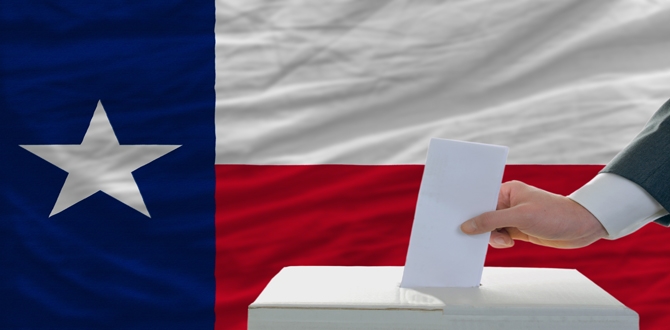
Texas is back in the big leagues of the presidential primary season.

The state goes to the polls on March 1 with both the Republican and Democratic presidential nominations very much in doubt . . . although the GOP nomination is more in doubt than the Democratic contest.

As the Texas Tribune’s Ross Ramsey notes in his excellent analysis of the upcoming Lone Star State primary: Size matters.

Texas is back in the game

It’s not clear yet whether the Texas primary, which occurs with several other states, will be decisive. Let’s just presume for a moment that it will be more decisive than, say, the New Hampshire primary that occurs Tuesday, or the Iowa caucus that took place this past week.

On the Democratic side, Vermont’s U.S. senator, Bernie Sanders, is basically running essentially as a favorite son in neighboring New Hampshire. He figures to win. He might even win big. Hillary Clinton hopes to carve into his lead in the final hours before voting starts and if she can finish anywhere near Sanders, she will look for a reason to declare some form of “victory.”

On the Republican side, Donald J. Trump appears headed to victory — if we are to believe those polls.

But none of it matters — truth be told — as much as the big Texas primary that’s about to take place.

Texans are going to cast many more ballots and will select huge delegations to the parties’ political conventions later this year.

In many prior election cycles, the contests were virtually decided by the time the primary caravans rolled into Texas. This year, by the grace of the state and national parties, we get an early shot at making this most critical political decision.

My own hunch is that the Republican primary will be much busier than the Democrats’ primary. One reason is quite obvious: Texas has many more Republicans than Democrats. The other reason is that the GOP primary will be up for grabs and with candidates like Trump and Texas home boy U.S. Sen. Ted Cruz garnering most of the attention, then the Republican polling stations are bound to get most of the election day business.

Still, as an avid political junkie, I happen to be glad to see Texas back in the thick of the presidential selection fight.


Torture returns to the political debate arena

peva9h1ifqikizuyye9w

It’s back. Torture has made its return as an issue being discussed by presidential candidates.

Donald J. Trump has dredged it from the has-been issue pile, saying something about how he would order the waterboarding of bad guys in order to get information from them.

Don’t do it, says someone who knows a thing or three about torture.

I prefer to stand with the expert on these things. That would be U.S. Sen. John McCain, R-Ariz., who lost the presidency in the 2008 campaign to fellow Sen. Barack Obama.

What’s a bit ironic, of course, is that McCain and Trump would be at loggerheads over this issue. Why the irony? You’ll recall that one of Trump’s initial insults was tossed in McCain’s direction when he said that the senator is a war hero only because he got captured by the North Vietnamese during the Vietnam War and that he (Trump) preferred people “who weren’t captured, OK?”

Here they are again. McCain has long opposed the use of waterboarding as an “enhanced interrogation” technique. He calls it torture, which he believes breaks faith with American principles.

What does McCain now about torture? More than most Americans ever will know, and certainly far more than Donald Trump knows about it.

McCain’s five-plus years as a captive after being shot down during the Vietnam War included many years of torture: beatings, solitary confinement and the communists’ various versions of “enhanced interrogation.”

When the senior senator from Arizona calls a particular act a form of torture, well, I am inclined to believe him.

I am doing so in this particular exchange.

He’s right as well to suggest that the information gleaned from waterboarding has been sketchy at best and has not provided nearly as much actionable intelligence as has been suggested.

Sen. McCain isn’t speaking as some soft-pedaling, squishy, politically correct liberal. He speaks as someone who’s been straight to hell and back.


If Hillary comes close to Sanders, she’ll declare ‘victory’

08CLINTONHISTORY-span-master1050

Politics has this way of giving those who lose tough races a chance to declare victory.

Eugene McCarthy did it in 1968 when he lost the New Hampshire primary to President Lyndon Johnson; George McGovern did the same thing in 1972 when he finished third in a primary that was won by Edmund Muskie; ditto for Bill Clinton in 1992 when he lost to Paul Tsongas.

History well might be about to repeat itself Tuesday — if Hillary Clinton moves to within shouting distance of Bernie Sanders in the Granite State’s Democratic primary.

She’s trailing now. She might be closing the gap, according to some polls. If she loses to Sanders by, say, 8 or fewer percentage points, I can hear it now: Hillary Clinton will proclaim herself to be the “second comeback kid.” The first, of course, was husband Bill.

When Ted Cruz won last week’s Iowa caucus, we heard to other “losers” proclaim victory. One of them was Donald J. Trump, who reminded voters that the polls he loves to trumpet said he didn’t have a prayer in Iowa when he entered the race; he finished second behind the Cruz Missile.

Even more fascinating was how third-placer Marco Rubio declared victory in that astonishing speech to his supporters. Hey, Marco . . . you finished third, young man!

Of course, actually finishes don’t mean much in political terms. Candidates have perfected the art of the spin for as long as the process itself. These days the necessity is made more important given the presence of social media and 24/7 cable news networks.

The trick is to get the “victory” declarations out there before anyone has a chance to catch their breath. Get ahead of the story and make damn sure you stay ahead of it.

Bill Clinton declared victory 24 years ago. He didn’t actually win. He just made sure voters thought he did.

I’m almost willing to bet real American money that his strategy has not been lost on his wife’s campaign team.