Category Archives: legal news

Alienation of affection? For real?

Some states have archaic laws on the books, such as one that has produced an eye-popping court settlement that has my head spinning.

North Carolina is one of a few states that has a law called “alienation of affection” on the books. This story was reported this morning.

It goes like this: A married began having an affair with a man. Her estranged husband was so outraged that he filed a lawsuit under the alienation of affection statute.

Then the married man, the guy his wife jilted, won a settlement totaling nearly $9 million.

North Carolina is one of just six states that have such a law. I believe the law needs to go. It needs to be scuttled along with other statutes, such as, say, states’ anti-sodomy laws that essentially prohibit gay men from having intimate relations in the privacy of their own bedroom.

What the alienation of affection law implies is that wives are the “property” of their husbands, that they are unable to make decisions on their own. I wasn’t aware, for example, that marital infidelity was against the law. Men and women commit these acts damn near every hour of every day.

Am I condoning it? Of course not.

However, I do not condone the state intruding in the private business of married couples who grappling with life-changing decisions and actions.

When I heard that only six U.S. states have such a law on the books, I feared Texas was one of them. It isn’t.

Perhaps the U.S. Supreme Court might eventually get to decide this matter on appeal, which the wife’s paramour in the North Carolina case has vowed to pursue.

Did they arrest the wrong guy? Oh, probably not

The man accused of five counts of capital murder and an assortment of other felonies today pleaded not guilty to all the charges.

Let’s see: The Annapolis Capital Gazette became a killing ground when a gunman opened fire in the newsroom. Four of the victims were journalists, the fifth was a sales assistant.

The shooter was captured by Maryland police within about an hour of the tragic incident. He refused to cooperate with law enforcement.

I get that the U.S. Constitution gives everyone the right to a legal defense. I get that citizenship protects criminal defendants from kangaroo courts, or from prejudgments.

However, I feel compelled to ask: Did the cops nab the wrong guy immediately after the shooting? I doubt it. Strongly!

As The Hill reported: Emily Morse, a spokeswoman for the prosecution, told Reuters that Ramos was identified through facial recognition technology. However, she disputed previous news reports that said Ramos had damaged his fingers to avoid identification through fingerprinting.

This guy’s defense will be an interesting spectacle to watch.

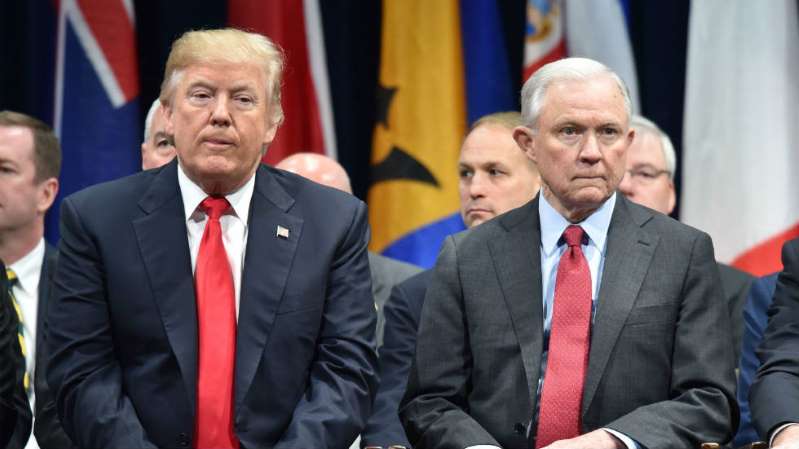
Trump and Cohen: one liar hired another liar?

You’ll need to follow me for just a moment on this one.

Michael Cohen once was Donald J. Trump’s trusted confidant. Trump spoke highly of his lawyer. He called him a good friend, a good lawyer, a dedicated professional.

Then the confidant goes through a change of heart. He says some things about Trump that the president has objected to vigorously. Now he’s a liar. He cannot be trusted.

And then comes the president’s current lawyer, Rudolf Giuliani, who this weekend described Cohen’s lying traits as “pathological.” He is a serial liar. He’s been lying for years, according to the former America’s Mayor.

But … wait!

Trump hired Cohen many years ago because he trusted him. What is Giuliani suggesting? Is he suggesting that Trump — a man with considerable “liar credentials” of his own — hire someone knowing he has this capacity for lying?

So, while Giuliani trashes Cohen’s motives and his credibility, is he also condemning the man who hired him in the first place?

Of course he isn’t. Giuliani has embarked on a credibility trashing campaign on behalf of his boss, Trump.

Which version of Michael Cohen are we expected to believe, the one who slathered all over Donald John Trump, or the one who is declaring his independence from someone he doesn’t trust as far as he can throw him?

Mary Lou Robinson Courthouse? Yes!

My hunch is that you can take this to the bank: Congress is going to attach a revered federal judge’s name on a courthouse in Amarillo, Texas.

I want to offer my heartiest applause from afar.

U.S. Sen. John Cornyn and U.S. Rep. Mac Thornberry, both Republicans, have introduced legislation to rename the federal courthouse building in downtown Amarillo, the Marvin Jones Federal Building and Mary Lou Robinson United States Courthouse.

Yes, it’s a mouthful. However, Judge Robinson long ago deserved this honor.

The House of Representatives passed House Resolution 5772 by a voice vote this week. It’s headed to the Senate, where Sen. Cornyn is carrying this legislation.

I am honored to have made Judge Robinson’s acquaintance. She and I served in the Rotary Club of Amarillo together, which is where I got to know her.

She remains the gold standard for judicial candidates who seek elected office in the Texas Panhandle. I know that from my job as editorial page editor of the Amarillo Globe-News, a job I held for nearly 18 years. Almost to a person, whenever I would ask a candidate after whom they might model their judicial performance, they would mention Mary Lou Robinson. She set the bar high and judicial candidates for county or state district benches would declare their intention to emulate her.

As the Globe-News reported: “Judge Robinson is a legal pioneer who is universally respected and admired,” Thornberry said in an email. “She has always set high standards for herself and others, and our system of justice has benefited. Having the name of these two outstanding public servants on our federal building and courthouse will be a perpetual reminder of their high standards and outstanding contributions to our nation.”

If enacted, this would be the first federal courthouse named after a woman within a five-state area.

She served Potter County’s judicial system, as a court at law judge and as a state district judge; she gravitated to the 7th Court of Appeals. Then in 1977, she received a federal judicial appointment from President Carter.

The building that eventually will carry her name is now known as the Marvin Jones Federal Building and Courthouse.

With all due respect to the great Marvin Jones, he will have to move over to make room for a true judicial giant.

I am delighted to hear about this pending name change.

‘Rigged witch hunt’? C’mon, Mr. President!

Donald John Trump took a moment today from berating our allies in Europe to send a message out via Twitter.

He wrote: How can the Rigged Witch Hunt proceed when it was started, influenced and worked on, for an extended period of time, by former FBI Agent/Lover Peter Strzok? Read his hate filled and totally biased Emails and the answer is clear!

I believe I need to declare once again that Strzok works for a man, Robert Mueller, who was hailed universally when the Justice Department asked him in 2017 to serve as special counsel in the hunt for the truth behind the Russia meddling/collusion matter.

The president has been calling the “Russia thing” probe a “witch hunt.” Now it’s “rigged.”

Mueller is a man of impeccable integrity. He was identified that way when DOJ named him special counsel. His integrity is intact now, even as the investigation inches closer to its conclusion.

I hasten to add that Mueller’s team has been tight. Sound proof. Hermetically sealed. There hasn’t been a single leak from Mueller’s cadre of legal eagles.

The man is doing the job he has been asked to do.

Settle down, Mr. President.

Yes, presidents can be investigated and indicted

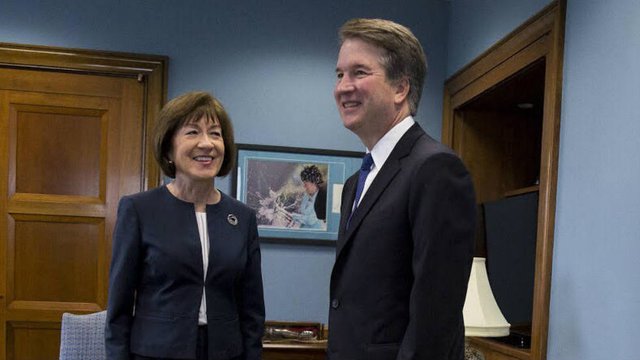
Having offered admittedly muted praise for Judge Brett Kavanaugh’s nomination to the U.S. Supreme Court, I now want to challenge an assertion he has made about whether presidents can be indicted.

He has changed his mind on that one. Kavanaugh once worked for Kenneth Starr while Starr was investigating President Clinton, who eventually got impeached for lying to a grand jury and for — that’s right — obstruction of justice.

Kavanaugh was up to his armpits in assisting the counsel’s task of finding criminality in a president’s behavior.

Then he switched gears. Kavanaugh has since written that presidents have too much to do, too much on their plate to be distracted by potentially criminal investigations. Let me think. Is he providing cover for, oh, the guy who nominated him to the Supreme Court?

Here’s my point.

Of course presidents can be investigated. They aren’t above the law. They must be held to the same standard as their constituents, which is the entire country.

President Clinton was able to perform his presidential duties while he was under investigation and, indeed, while he was being impeached by the House of Representatives and tried by the Senate.

The same is true for President Nixon, who was under investigation for myriad offenses relating to Watergate. The House Judiciary Committee passed articles of impeachment and then the president resigned. Was he able to do his job while all of this was occurring? Of course he was!

My strong hunch is that the Senate Judiciary Committee that will consider Judge Kavanaugh’s nomination will ask him directly and pointedly about what he thought while working for Kenneth Starr and what he thinks these days now that Donald Trump wants him to serve on the highest court in the land.

I hope someone on the panel asks him: What made you change your mind, Judge?

Time to praise SCOTUS selection

I am feeling so good over the rescue of the Thai boys and their soccer coach from that flooded cave in northern Thailand that I want to offer a good word for Donald John Trump’s selection to the U.S. Supreme Court.

I’ll stipulate up front that you’ll deem this to be faint praise, but it’s praise nonetheless.

Appeals Court Judge Brett Kavanaugh’s nomination to the Supreme Court has angered the crackpot Trump “base.” They’re none too happy with Kavanaugh, fearing that he doesn’t appear to be as firmly opposed to Roe v. Wade as the base continues to be. Former U.S. Sen. Rick Santorum of Pennsylvania chided the president for surrendering to what he called the “Washington elite” by selecting Kavanaugh.

To be sure, the justice nominee is a conservative. He appears to be what one could call a “mainstream conservative,” not a goofball/wack-job conservative.

He has pledged to be independent and to study the law as it is written, not as one wishes it were written.

Is this the kind of judge I would have selected? Of course not! However, Trump is the president of the United States.

By anyone’s measure, Kavanaugh is supremely qualified to serve on the high court. He’s a Yale Law School grad, meaning that the entire Supreme Court would comprise Ivy League legal eagles if Kavanaugh is confirmed by the U.S. Senate.

The Senate will nitpick the daylights out of Kavanaugh’s lengthy written record. Senators will need to examine Kavanaugh’s views on health care, as well as on whether sitting presidents can be indicted for criminal offenses. His record suggests he might tilt the “wrong way” on both of those issues.

I continue to believe that while Kavanaugh’s conservative credentials might solidify the court’s right-leaning bias, it doesn’t guarantee it necessarily on every single key ruling that would come before the Supreme Court.

That seeming uncertainty, I submit, is what might be driving the Trump bloc of “base” voters nuts.

Lifetime job has this way of shaping opinions

I tend to interpret the U.S. Constitution the way I interpret the Bible.

That is, I take a more liberal view of what both documents say. That’s just my view. I am not a “strict constructionist” as it regards the Constitution; nor am I a “fundamentalist” as it regards the Bible.

But let’s consider what the future might hold for the body that interprets the former document, the Constitution.

Donald J. Trump has nominated Judge Brett Kavanaugh to join the U.S. Supreme Court. He comes to this nomination after being recommended highly by the Heritage Foundation and the Federalist Society, two staunchly conservative think tanks.

Now, what does this mean for Kavanaugh’s tenure on the high court?

I’ll give you my hope for what happens. I hope Kavanaugh proves to be as unpredictable as previous “conservative” justices who were nominated by “conservative” presidents.

The record going back more than six decades is full of how this has occurred.

  • President Eisenhower appointed two “conservatives” to the high court: Earl Warren as chief justice and William Brennan as an associate justice. They both proved to be progressive in the extreme.
  • President Nixon tapped Harry Blackmun to the high court, only to watch as Blackmun wrote the majority opinion in the landmark Roe v. Wade ruling that legalized abortion.
  • President Ford’s pick to the court, John Paul Stevens, turned out to be a reliably liberal vote.
  • President George H.W. Bush nominated David Souter, who then turned out to be a liberal justice as well.

President Reagan nominated two justices — Sandra Day O’Connor and Anthony Kennedy — who became quite a bit less reliably conservative than the president would have wanted.

No one really saw these justices’ service turning out as they did in advance.

Thus, it well might be that Judge Brett Kavanaugh could join the list of conservatives who take a more, um, expansive view of the Constitution.

That is my hope. But, hey, I’m just one guy — a blogger out here in Flyover Country — who wants history to repeat itself.

Trump’s legal team keeps moving the goal posts

I’ll begin by stipulating the obvious, which is that I am not a lawyer.

Therefore, I am having difficulty understanding the logic of Donald J. Trump’s legal team, which is now insisting that special counsel Robert Mueller produce evidence of a crime before the president agrees to meet with him.

Eh? What? Huh?

Mueller is looking into myriad questions surrounding the president’s conduct. They include possible obstruction of justice, collusion with Russian election meddlers, campaign finance violations and maybe some shady business dealings.

So now we hear that the president’s legal eagles want Mueller to actually have evidence of a crime? Are they suggesting that Muller indict Trump first and then bring him for some Q&A?

What kind of goofy strategy is that?

I’ve always understood that a prosecutor — which is the role Mueller is fulfilling — needs to interview witnesses prior to compiling criminal complaints that might result in an indictment.

Trump’s legal team keeps moving the goal posts. Trump keeps changing his tune: He’ll talk to Mueller, then he won’t; he calls Mueller’s probe a “witch hunt” and a “hoax”; then he’s back to wanting “100 percent” to talk to the special counsel.

The bizarre drama continues.

Meanwhile, the other principal in this saga — Robert Mueller — remains the cool, calm professional. He is saying nothing. He is just doing his job.

Will the SCOTUS pick adhere to the RBG Rule?

I’ve been hearing some chatter in recent days about the RBG Rule, named after Supreme Court Justice Ruth Bader Ginsburg.

President Clinton nominated Justice Ginsburg to the high court in 1993 and she promptly made one thing clear: She would not comment on any question that she believed could compromise the integrity of a decision she might make in a future court hearing.

Her intention was to avoid revealing how she might rule.

The RBG Rule has stood the test of time over the past 25 years.

Donald J. Trump is set to select someone to succeed Justice Anthony Kennedy, who is retiring at the end of this month after 30 years on the Supreme Court.

Here’s my hope for the next pick: He or she should make the same pledge that RBG made in 1993. What’s more, liberal members of the U.S. Senate Judiciary Committee, which will consider the merits of this nomination, should honor that nominee’s pledge … if the nominee makes it.

There likely will be plenty of grist to pore through once the president reveals the identity of his nominee. I keep hearing that all the finalists the president is considering have considerable judicial experience and have developed lengthy and clearly defined paper trails that reveal much about their judicial philosophy.

Should whoever gets nominated be forced to answer how he or she would vote on, say, Roe v. Wade, or on the president’s travel ban, or on affirmative action, or campaign finance?

This nomination is likely to proceed to a relatively swift up/down vote on confirmation, despite the concerns of many that we ought to wait for the midterm election to determine the Senate composition. The Senate majority leader insisted on the completion of an election prior to considering someone to replace the late Antonin Scalia, right?

If the Senate is going to plow ahead with a confirmation process to determine who succeeds Justice Kennedy, then the RBG Rule needs to stand.