Category Archives: environmental news

Limbaugh to flee storm that creates climate change ‘panic’

I cannot let this one pass without a brief comment.

Radio talk show host/blowhard Rush Limbaugh is packing up his belongings and heading for safety in the face of Hurricane Irma, which is bearing down on South Florida, where Limbaugh lives.

Why is this even worth anyone’s attention? Limbaugh said on his talk show that the “liberal media” are hyping the dangers of these killer storms to boost their belief in climate change, which I reckon Limbaugh thinks is a hoax — putting him right next to Donald John Trump Sr. in the climate change denier ranks.

I am left to presume that when faced with the grim reality of Mother Nature’s wrath, Limbaugh is going to do the smart thing after all.

Which is to get the heck out of Hurricane Irma’s path..

Do I expect the talk show gasbag to come to his senses? Will he stop blathering the nonsense about climate change?

Umm. Not for an instant.

Time to tap that limitless prayer well … once again

It’s a good thing that humankind’s wellspring of prayer knows no limit. We can pray forever. For eternity. Until the end of time.

I now shall do so yet again, just as I did for our friends and the millions of others along the Texas Gulf Coast as Hurricane/Tropical Storm Harvey bore down with all its rage and savagery.

The recipients now are those who sit in the path of Hurricane Irma.

Oh … my. What awaits them?

Irma is churning across the Atlantic Ocean. The storm has drawn a bead on South Florida. It’s a Category 5 monster, with sustained winds of about 185 mph. Have you seen the traffic moving north, away from that monster? And have you wondered — as I have — about the few motor vehicles one sees on the news video heading south, toward the storm’s Ground Zero?

We don’t have many friends in South Florida. But I worry specifically about a former colleague and friend. She’s a journalist who lives in Fort Lauderdale. I am going to pray extra hard for her and her loved ones’ well-being.

While all this has occurred here in Texas and what is about to occur along the Florida coast, my hometown of Portland, Ore., is choking from the smoke and ash being deposited from that hideous Eagle Creek fire just east of the city.

The fire started on the Oregon side of the Columbia River Gorge, but it has jumped the big river and is now burning forestland in Washington. I read today that firefighters are beginning finally to contain the blaze — and that the weather might be about to turn in the firefighters’ favor with shifting wind and some rainfall expected over the weekend.

Let it rain! As a friend of mine pleaded, we need to send some of that Texas deluge north to the Pacific Northwest. If only one could do such a thing.

Hurricane Irma is being called the monster of all storm monsters. It’s stronger, windier, larger than any storm in anyone’s memory. Hurricane Andrew in 1992 was a pigmy compared to what Irma is expected to deliver. That’s pretty damn scary, given the damage Andrew brought to South Florida and then to the Louisiana coast.

I guess I should ask those who read this blog to join me in some prayer for our fellow travelers over yonder in Florida and along the Caribbean. Keep praying, too, for those along the Texas coast who are trying to cobble their lives back together. And, yes, please pray that firefighters extinguish the Eagle Creek fire sooner rather than later.

Just remember: Our prayer source is infinite.

Climate change is real, NW fires notwithstanding

I’m seeing a bit of social media chatter that needs to be put in perspective.

Some of it is conflating a couple of key issues: climate change and those horrific fires that have scarred many thousands of forestland in Oregon and Washington.

Critics of climate change deniers are pointing to the Oregon and Washington fires as evidence that climate change is real.

I agree with the notion that Earth’s climate is changing, that its temperatures are warming. The fires that began along Eagle Creek just east of Portland, though, were the result of a dumbass who allegedly was playing with fireworks in tinder-dry woodlands above the Columbia River.

Oregon State Police have a suspect. He’s a teenager. He is a minor, so we won’t know his name, which I guess gives me license to refer to him as a dumbass.

Back to the issue of climate change/global warming. It’s playing out far from the Pacific Northwest.

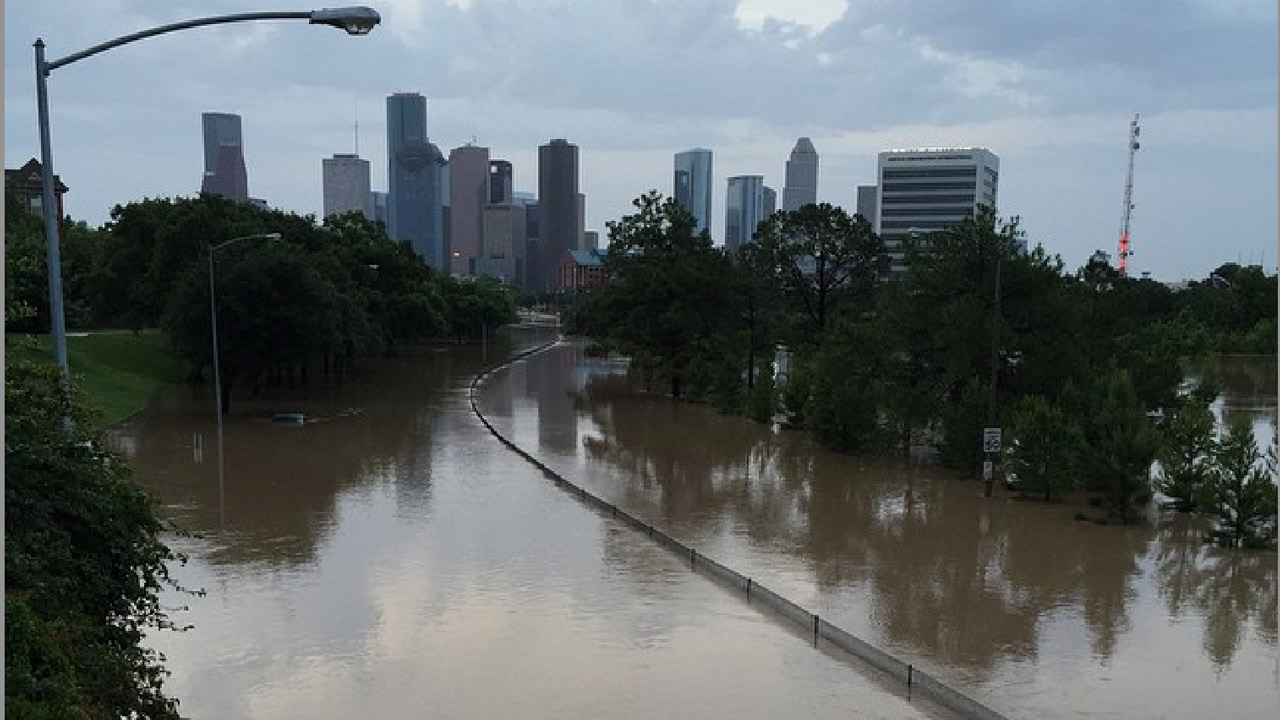
The Texas Gulf Coast just got hit with a Category 3 hurricane/tropical storm. It dumped 50-plus inches of rain on Houston and the Golden Triangle; it brought killer winds to the Coastal Bend. It has created unspeakable grief, agony and misery along the coast.

But wait! Now there’s a Category 5 storm blasting its way toward South Florida. It has winds of 185 mph; gusts are reaching 225 mph.

Meteorologists and other scientists are speaking in unison — more or less — on this subject: We’re going to see more catastrophic storms in quick succession in the future because of climate change.

The debate, though, centers on the cause of this change. The scientific consensus appears to suggest that human activity has exacerbated the change, through carbon emissions and immense deforestation.

The fire will be extinguished. I remain supremely confident that the forest will be restored over a lengthy period of time. Humankind can repair the damage done by a single thoughtless idiot.

The frequency of those storms? The rising sea levels? The intensity of the savagery that boils up out of the ocean?

That problem requires our immediate attention, if only we’d stop bickering over whether the climate is changing. It is. Let’s get busy finding solutions to this worldwide crisis.

Daddy Dittohead goes bonkers once again

I have decided to no longer refer to Rush “Daddy Dittohead” Limbaugh as a “conservative radio talk-show host.”

He’s certifiably loony. His goofiness goes beyond ideology, whatever his might be.

Limbaugh said this about Hurricane Irma, a Category 5 killer storm that is threatening Puerto Rico, South Florida and the Carolinas:

“Here comes a hurricane, local media goes on the air, ‘Big hurricane coming, oh, my God! Make sure you got batteries. Make sure you got water. It could be the worst ever. Have you seen the size of this baby? It’s already a Cat 5. Oh, my God, oh, my God, it’s bigger than the island of Haiti. Oh, my God.’ People run to the stores, they stock up everything, and they hoard. And they end up with vacant stores, nothing there. And it’s a big success. TV stations got eyeballs, the advertising businesses have sold out of business, gotta restock and the cycle repeats.”

Do you get it? He says Irma is a conspiracy to promote makers of emergency supplies. This storm ain’t a punchline, dude!

Limbaugh has said that these killer storms have been used to promote “liberal agenda” items, such as global warming/climate change. He’s not buying it.

He also said: “You don’t need a hurricane to hit anywhere. All you need is to create the fear and panic accompanied by talk that climate change is causing hurricanes to become more frequent and bigger and more dangerous, and you create the panic, and it’s mission accomplished, agenda advanced.”

Earth to Rush: These storms are causing serious human misery. Millions of Americans on the Gulf Coast are suffering at this very moment. Perhaps millions more Americans will suffer from Hurricane Irma’s savage attack on U.S. territories and on South Florida.

Let’s not minimize the impact of these storms by dismissing worry about future calamities that could be a result of climate change.

I once wrote in a column that Rush Limbaugh is to political commentary what Willard Scott — a former TV weatherman/funnyman — was to meteorology. “Except,” I wrote, “Willard Scott makes me laugh. Rush Limbaugh makes me sick.”

Happy Trails, Part 38

I think I’ve just made a command retirement decision.

My wife, Toby the Puppy and I are not going anywhere near the Gulf or Atlantic coasts in August or September.

Hurricane Harvey crashed ashore twice along the Texas coast as a Category 3 monster. First it hit Corpus Christi and Rockport. Then it backed up over the Gulf of  Mexico, downgraded a bit to a tropical storm, then wiped out Houston and the Golden Triangle under 50-something inches of rainfall.

OK, then. The Gulf Coast is out.

Now the nation is awaiting Hurricane Irma, a Category 5 hurricane that is reportedly the most dangerous Atlantic storm ever formed!

Miami and Miami Beach are in Irma’s bulls-eye. Sustained winds are at 185 mph. Residents are starting to flee.

You know what that means? It means we aren’t going that way, either in late summer … not ever!

Climate change is making these monster storms a more frequent occurrence. Do not bitch at me about climate change! I won’t be dissuaded from what I believe, which is that Earth’s climate is changing. I won’t argue with you today about whether it’s manmade or whether it’s part of Earth’s “normal cycle.” The cause doesn’t matter in the context of this decision.

Earth’s climate is changing and that means — for those of us in our household — our happy trails are going to lead us elsewhere at this time of the year.

Let’s learn from Tillamook Burn recovery

I have received a chilling message from a friend of mine who lives in Portland, Ore., the city where I was born … a very long time ago.

“We’ve lost the Gorge,” my friend wrote. The wildfires that have consumed much of the Eagle Creek region east of Portland and have jumped the Columbia River into Washington, according to my friend, have consumed much of the Columbia River Gorge. I’ll take his word for it, that the Gorge — one of America’s true scenic treasures — has been scarred deeply by the fire.

The Gorge forms a significant portion of the border between Oregon and Washington along the Columbia River — which the U.S. Coast Guard has closed to all traffic because of the fire.

Oh, man. This is heartbreaking in the extreme.

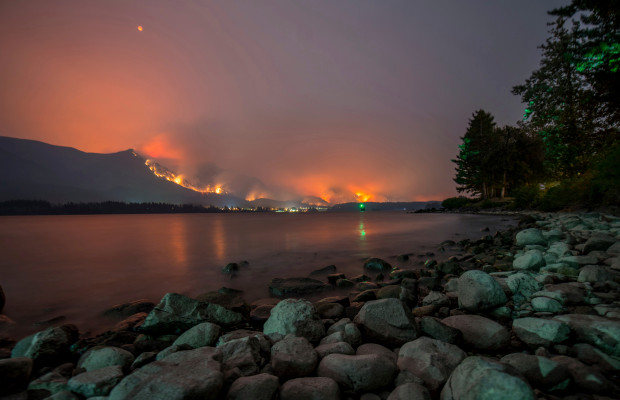
The picture I’ve attached to this blog shows the fire as seen from Stevenson, Wash., across the river from Eagle Creek.

My friend, though, reminded me also of that the damage need not be permanent. It might last a long time. However — as the saying goes — time can heal the wounds.

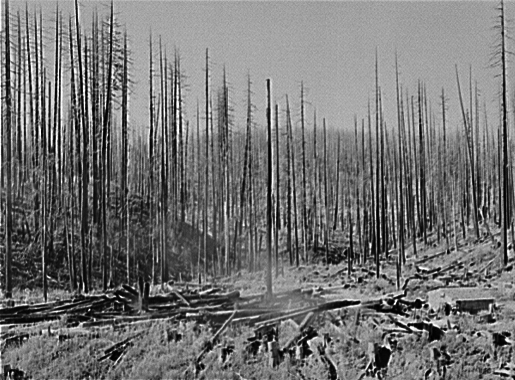
Eighty-four years ago, a huge fire broke out along the Coast Range of Oregon. It was the first of a series of blazes that burned near the town of Tillamook, a coastal community. The fires took out many thousands of acres of pristine forestland. The final blaze in the series occurred in 1951. It came to be known to us as The Tillamook Burn.

I remember driving to the beach with my parents and sisters and passing through many miles of scorched timber. The photo below is of the Burn in 1951.

That changed over time. I am proud to say that I played a teeny-tiny role in the recovery of the forest. I was a Boy Scout and my fellow Scouts and I would venture many times in the early 1960s into the forest to plant trees. We were not alone. Other groups did the same the thing: churches, civic organizations, even large families would make an outing of tree-planting in The Tillamook Burn.

Today, I am happy to report — as my friend noted in his message to me — that the forest is back. My friend wrote: “On our way to the coast we often stop at the Tillamook Forest Center. That’s inspiring to me, the way that Oregonians … came to fix a destroyed forest that we enjoy today. We might have to do that again.”

When the fire is extinguished, I believe there will be a concerted effort to do precisely what occurred along the Oregon Coast Range.

The Columbia River Gorge might be “lost” today. One must not bet that it will stay lost forever.

Feeling cursed by Nature’s wrath

Forgive me if I sound as if I’m feeling cursed these days.

Mother Nature is drawing a bead on communities I know well. Beaumont and the rest of the Golden Triangle along the Texas Gulf coast is bailing out from the deluge dumped on the region by a storm named Harvey.

Most of our friends are OK. Not all, though. There’s a lot of heartbreak and agony to go around as the Triangle struggles to recover from the Harvey’s savagery. Our hearts go out to them … along with our prayers.

Now as we look in the other direction, toward the Pacific Northwest, I see that my hometown is under siege from an entirely different foe.

Fire!

I see pictures on social media from the Columbia River Gorge, one of the world’s greatest natural splendors, and my heart breaks all over again. Flames are consuming many acres of virgin timber. Historical structures are in jeopardy.

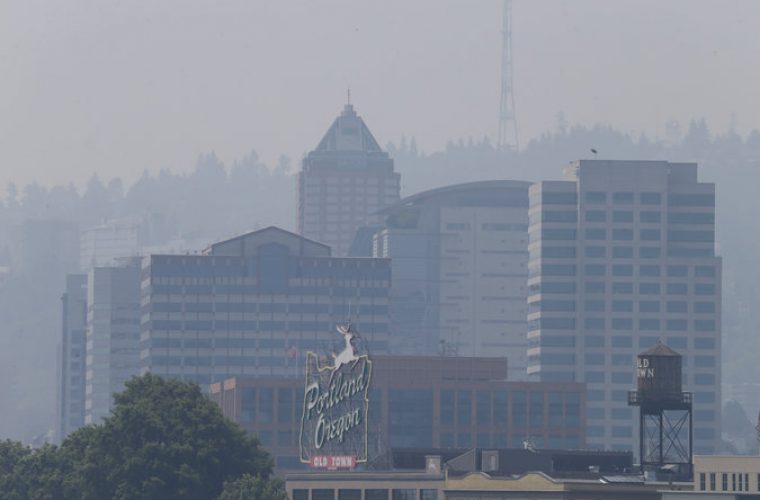
Portland, the city of my birth, is now being showered with ash, reminding residents there of when Mount St. Helens exploded in the spring and summer of 1980, blanketing the city with a fine coat of volcanic ash.

The picture above is of downtown Portland. That ain’t fog, man! It’s smoke billowing over the city from the fires that are burning not far away.

We’re getting ready to head that way for a little R&R. Our trip isn’t coming up in the next few days, but we’ll be hauling our RV in that direction fairly soon. My hope is that the fires are quenched soon. I have considerable faith in the firefighting crews that are on the job. They’re pretty damn good at fighting those forest fires.

Their expertise comes from experience, just as the Gulf Coast rescue crews and other first responders have plenty of experience dealing with the aftermath of killer hurricanes and tropical storms.

But these monstrous events make me nervous in the extreme and they break my heart for tangible reasons.

Happy Trails, Part 37

Oh, the best-laid plans can go awry.

For example, we had intended to venture south and east later this year, when the weather cooled, and the Gulf of Mexico hurricane season had subsided.

We have a lot of friends in the Golden Triangle, where we lived from 1984 until 1995. We had plans to haul our RV south to our former hometown to catch up with many of them.

Oh, wait!

Something happened down yonder. Right? Of course!

Hurricane Harvey came through. The storm crashed ashore first in the Corpus Christi-Rockport region along the Coastal Bend. Then the storm waded back into the Gulf, picked up some more steam and returned to the Triangle as Tropical Storm Harvey.

It dumped a lot of rain. It set a continental United States record at more than 50 inches. 

Now I hear that the Texas Department of Transportation is going to embark on a monumental task. It must repair roads and highways damaged by the storm. According to the Texas Tribune:

Prolonged flooding can wash out bridges, knock down traffic signals and signs and cause asphalt to buckle. Last week, the federal government directed $25 million to the Texas Department of Transportation to help the agency begin repairing the region’s vast transportation system.

But that funding won’t last very long, said TxDOT Deputy Executive Director Marc Williams.

“The size and the duration of this storm is beyond anything we’ve ever experienced in this state,” he said.

When do we plan to return to the Golden Triangle? I don’t know. I can’t project when TxDOT will get all the highways fixed. I am not even aware at this moment whether any of the highways over which we might travel are affected.

We do want to get back. We want to see our friends. We intend to hug their necks and express gratitude and thanks that they’re all OK.

I am not one to trifle, though, with Mother Nature. Nor am I going to wish for TxDOT to speed up its infrastructure repair just to suit my wife and me. It’ll take time. We’ll be patient.

Houston, we have a development problem

There will be time — in due course — to start thinking seriously about the future of a city that’s been devastated by Mother Nature’s awesome power.

It is beginning already, though.

Houston is still bailing out and digging out from impact of Hurricane Harvey. Residents remain displaced. Many thousands of Houstonians are grieving and wondering where they go from here, what they’ll do to rebuild their shattered lives.

Meanwhile, city officials have begun to start asking: What have we done to exacerbate this tragedy?

Houston is known as a city with limited urban planning guidelines. Over many years the city has quite willingly paved over grasslands and wetlands with pavement. They’ve built highways and bridges, paved streets, laid down parking lots, erected skyscrapers. Residential neighborhoods have sprung up where alligators once swam.

The result of all that has helped produced what we’ve witnessed in recent days. Indeed, Harvey’s savagery isn’t the first such incident to bedevil Houston. Hurricanes Ike and Rita, anyone? Hurricanes Carla and Alicia? Yes, we remember those events, too.

What does Houston do? How does the city cope with the potential for future disaster? I fear it’s too late. The city isn’t going to bust up the asphalt. It’s not going to knock down those buildings and bridges. It won’t shoo away the millions of residents who have flocked to the city.

I suppose the city is now left to ponder ways to control more tightly developers’ designs on future construction. I remember some discussion after Hurricane Katrina laid siege to New Orleans in August 2005 about how the city should rebuild whole neighborhoods washed away. There was some talk of turning former Ninth Ward neighborhoods into wetlands and relocating the residents who fled the storm’s fury.

Houston might need to ponder a similar response to recovering from the damage and destruction delivered by Hurricane Harvey.

A word of caution: Don’t dawdle, Houston. The changing climate might well produce another killer storm soon. I don’t need to remind our friends along the Gulf Coast — but I will anyway — that we are now entering the peak of the 2017 hurricane season.

Watch out for the fire ants, man!

One of the more underreported aspects of Hurricane/Tropical Storm Harvey needs some attention. So I’ll offer a bit of it right here.

The raging storm water that has inundated communities from Houston to the Golden Triangle has produced another hazard: fire ants!

We moved from the Golden Triangle in January 1995 and we were thankful for many aspects of our new home in the Texas Panhandle; one of them was the absence of fire ants.

In heavy rain the ants come out of the ground and congregate in massive clusters on the surface of the water. They climb aboard any living creature who happens to slosh and slog their way through them. Then they bite, and they keep biting!

Fire ant bites produce welts almost immediately on one’s skin. The welts fill with pus. The bugs are nasty in the extreme.

Moreover, when the water recedes, people’s lawns are going to sprout fire ant mounts. My best advice? Boil plenty of water and add some ammonia to it. Pour it right onto the mounds. It kills ’em dead. Immediately.

Oh, and you folks at People for the Ethical Treatment of Animals — the nimrods who actually complained when President Obama once swatted a fly on national TV? Keep your traps shut on this one.

Fire ants do serious harm to pets and people.

I haven’t even mentioned — until this very moment — the gators and the venomous snakes one might encounter.

So help me, I will feel every bit of your pain as you cope with this consequence of Harvey, not to mention all the other suffering that will endure long after the water recedes.