Category Archives: State news

It’s kind of like returning to previous haunts

LAKE BOB SANDLIN STATE PARK, Texas — The author Thomas Wolfe once wrote that “you can’t go home again.”

That may be true, but you can return to places that remind you of where you used to live.

This East Texas state park has a curious way of reminding me of a place where my family and I spent more than a decade of our life together just straight south of here.

It’s hot here. And damn humid, too! This state park is near Mount Pleasant, about a two-hour drive east of Dallas. If you drive about four hours straight south, you end up in Beaumont, where my wife, sons and I moved in the spring of 1984.

We weren’t used to the sticky air that shrouds this part of the world when we got to the Golden Triangle. We grew to accept it every late spring and through the summer.

My sons went off to college in the early 1990s and my wife and I moved to Amarillo in early 1995. We moved away from the stifling humidity and into the wind of the Texas Panhandle.

I mentioned to my wife as we walked through the woods at Bob Sandlin State Park, “You know, I am looking at billions of leaves on all these trees and I don’t see a single one of them moving. Nothing is fluttering in anything approaching a breeze.”

We remained holed up in our RV. The air conditioner was running full blast. Our windows got wet with moisture collecting on the outside of them.

We’re likely going to need to get used to this kind of weather all over again. Our plan is to move from the Panhandle to a location in the vicinity of the Metroplex, where our granddaughter, Emma, awaits.

Until then, a lot more travel is on tap for us. A good bit of it will take us back toward this part of Texas, where we’ll be reminded of our prior life when constant perspiration became the norm.

I get that you can’t really “go home again.” We do plan to relearn how to live with what we used to know.

Remembering a great Texas Republican

MOUNT PLEASANT, Texas –– Wherever my wife and I travel these days, I cannot help but think of individuals I’ve either met while working in journalism or those about whom I have some knowledge.

We came to this northeast Texas community in search of a grocery store to buy some, um, groceries. I told my wife that this is the hometown of one of the great all-time Texas politicians.

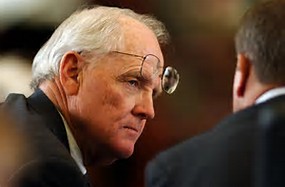
Bill Ratliff was a state senator from Titus County. He was a Republican lawmaker who was held in the highest esteem possible by all 31 of his Senate colleagues. Democrats respected him as much as his fellow Republicans.

Sen. Ratliff was what I have called a “reasonable Republican” who knew how to work across the aisle. Both parties have become so polarized these days that bipartisanship has become a four-letter word.

In 2001, though, the rarest of events occurred in the Texas Senate.

Gov. George W. Bush was elected president in 2000. Because of that vote-counting matter in Florida, Texas Gov. Bush’s election was not a foregone conclusion until a month or so after Election Day. The U.S. Supreme Court stopped the ballot recount in Florida, Bush was leading at the time by 537 votes, Florida’s electoral votes went to Bush — and he was elected president.

Then Bush quit the Texas governorship, elevating Lt. Gov. Rick Perry to the Big Office. That meant the state needed a lieutenant governor to preside over the Texas Senate. To whom did the Senate turn? For the first time in state history, senators elevated Bill Ratliff to the lieutenant governor’s office, a post he held while at the same time serving as state senator during the 2001 Texas Legislature.

He served in that capacity until 2003, when David Dewhurst was elected lieutenant governor.

Ratliff had a nickname among his Senate colleagues, who called him Obi-Wan Kenobi, the wise being from “Star Wars.” Indeed, Ratliff once said of his own Republican views: “I am a Republican because I agree with the Republicans at least 51 percent of the time.”

He was unafraid, therefore, to agree with Democrats when the time — and the cause — was right.

Sen./Lt. Gov. Bill Ratliff is now 80. I wish he was still serving his beloved Texas.

Puppy Tales, Part 36

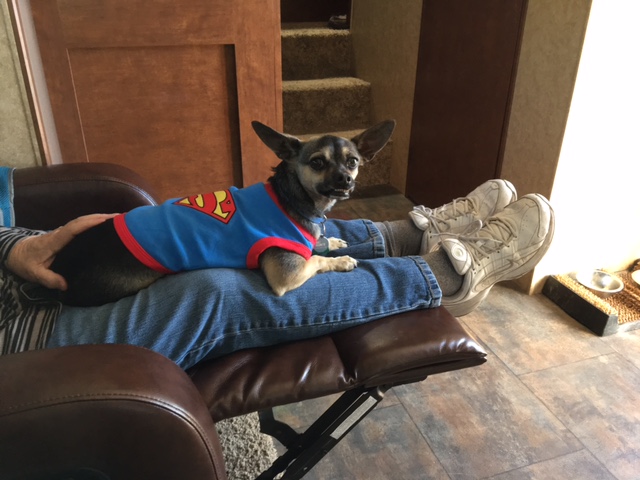
LAKE ARROWHEAD STATE PARK, Texas — Never let it be said that we don’t cater — even in a perverse sort of way — to Toby the Puppy.

We arrived at this state park about a dozen miles south of Wichita Falls. It’s hot as hell out there … about 100 degrees.

The state park ranger in the office greeted me while my wife took Toby for a walk in the heat.

“We have a reservation,” I told her. She looked it up, found it and asked, “Do you want a pull through?” for your fifth wheel RV. I said yes.

“OK, I have two options. I can give you one site that has no shade but it quite lengthy or I can put you in another one. There’s a problem: It’s got a lot of prairie dogs.”

I thought about that one. I consulted then with my wife. We agreed. We wanted the site with no shade. Why? Because the prairie dogs would drive Toby nuts. He’d want to play with all of them.

We went to the unshaded RV site.

Should we have encamped among the prairie dogs? Some might say “yes.” We chose to save Toby the headache of being refused permission to scamper off to chase the little critters.

Therefore, we had the puppy’s best interest at heart. Meanwhile, we are baking in the hot sun.

Oh, the things we do for our little baby.

A higher-office campaign in the making?

The Texas Bathroom Bill is going to be on the agenda for the upcoming special session of the Texas Legislature.

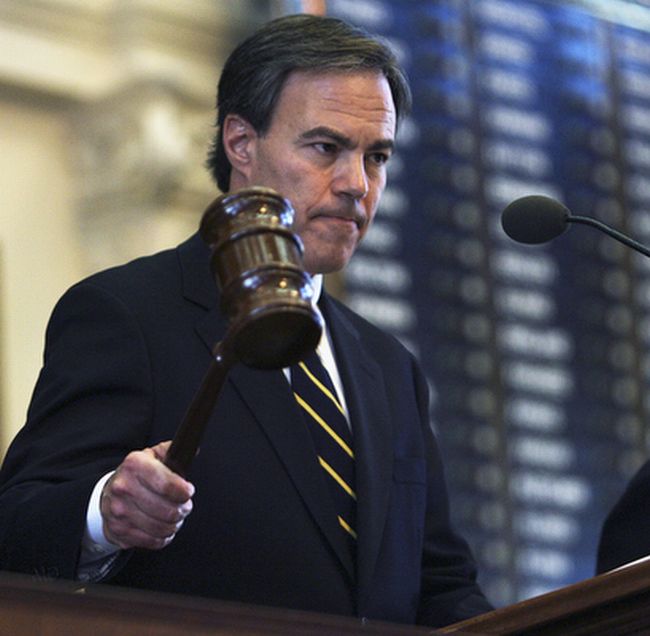
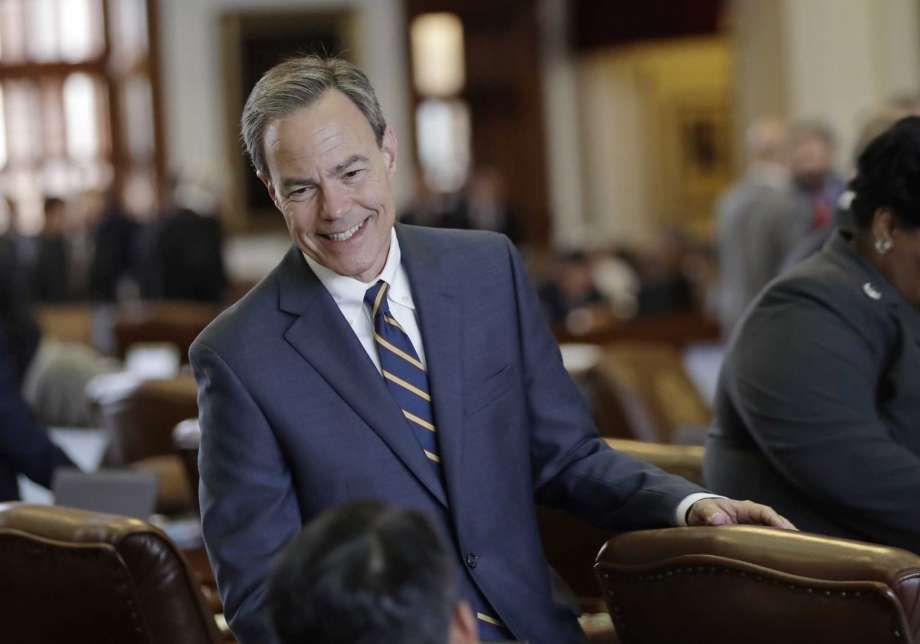
Given that I no longer predict things political, I won’t say this is going to happen. Instead, I’ll just offer my lack of surprise if it does … which is whether Texas House Speaker Joe Straus is angling for a potential run for higher office in 2018.

Straus hates Senate Bill 6, which is the Bathroom Bill that got torpedoed in the regular legislative session. Who loves the bill? That would be Lt. Gov. Dan Patrick, who runs the Texas Senate.

Apparently, Gov. Greg Abbott favors the bill sufficiently to put it on the Legislature’s lengthy list of issues to consider for its special session.

According to the Texas Tribune: “I’m not a lawyer, but I am a Texan,” Straus said. “I’m disgusted by all this. Tell the lieutenant governor I don’t want the suicide of a single Texan on my hands.”

Straus said he is concerned about a potential spike in suicide among transgender Texans. The bill under consideration would require individuals to use public restrooms that align with the gender noted on their birth certificate. Is it discriminatory against transgender people? Straus thinks so, as do I.

Check out the Tribune story.

Straus will be up for re-election next year as well in his San Antonio House district. Were he to run for, say, lieutenant governor or governor in the Republican primary, he would be unable to seek GOP nomination for his House seat at the same time.

However, Straus is sounding quite like a champion for those who oppose the Bathroom Bill and his “disgust” over the legislation might spur him to seek higher office.

I believe I will plan to keep my eyes and ears open to this fellow’s immediate future.

Straus vs. Patrick: main event at special session

This might be nothing more than a sideshow, but it’s beginning to affect the agenda that awaits Texas legislators who are preparing to gather in Austin for a special session.

Lt. Gov. Dan Patrick and House Speaker Joe Straus — both Republicans — are the state’s two leading legislators. Patrick runs the Senate; Straus is the Man of the House.

They are at serious odds over one of the items that Gov. Greg Abbott has placed on the Legislature’s list of items to consider. It’s that damn “Bathroom Bill.”

Patrick insists that the Legislature enact a law that orders people to use public restrooms in accordance with the gender listed on their birth certificate. Straus opposes the bill and has made no secret that he dislikes the bill.

Now we hear that Straus has said something about how the Bathroom Bill is going to cause a spike in suicide among transgender Texans. As the Houston Chronicle reported:

“Lt. Gov. Dan Patrick was rocked back on his heels and clearly on defense early in the week after Texas House Speaker Joe Straus opened a new line of attack on Patrick’s push to restrict restroom access based on gender. In short, Straus said he is concerned that the legislation will cause some vulnerable transgender Texans to take their own lives; it is a population that already has a high suicide rate.

“In an interview with the New Yorker, Straus said he rejected overtures from Patrick to resolve the issue because Straus was ‘disgusted by all this’ and ‘I don’t want the suicide of a single Texan on my hands.'”

Here’s the Chronicle story.

Now this ridiculous bill has become a life-and-death matter? Is that right?

To be blunt, I am disappointed that Gov. Abbott added this bill to the Legislature laundry list of legislative priorities for the special session. I dislike the idea of the state mandating public restroom use in this manner.

I believe it does discriminate against transgender individuals. Moreover, I cannot yet understand just how the state intends to enforce this rule were it ever to become law. Are we going to plant bathroom monitors? Will the state install cameras in restrooms, for crying out loud?

Meanwhile, Lt. Gov. Patrick and Speaker Straus are fighting between themselves over this idiotic notion.

I’m pulling for Straus.

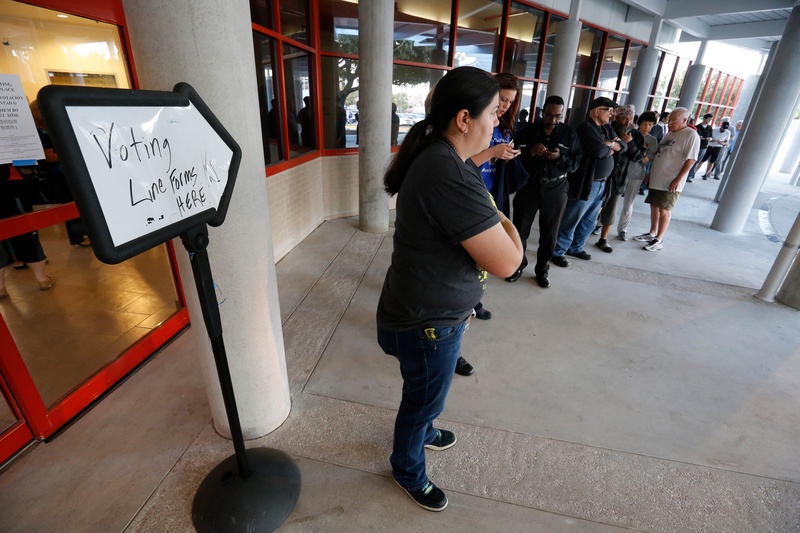
Texas playing ball with vote fraud panel … sort of

I was hoping the Texas secretary of state would follow the lead of his fellow Republican colleague in Mississippi and tell the feds to go “jump in the Gulf of Mexico.”

He didn’t. Instead, the state is going to hand over some voter records to that idiotic voter fraud commission named by Donald J. Trump to root out the hordes of illegal votes — he says — that were cast in the 2016 presidential election.

Good luck with that.

The panel led by Vice President Mike Pence and Kansas Secretary of State Kris Kobach is called the Election Integrity Commission. The president has asserted — with zero evidence at hand — that “millions of illegal immigrants” voted for Hillary Clinton in 2016, giving her the popular vote margin over Trump.

So he cobbled together this group to find a problem in search of a solution.

The Texas secretary of state is the state’s top elections officer. According to the Texas Tribune: “Texas Secretary of State Rolando Pablos said he plans to respond to the request, but it’s not entirely clear how much data he’ll be handing over. Pablos said his agency would treat Kobach’s letter like any other public information request, and would only hand over information that’s considered public under Texas law.

“’The Secretary of State’s office will provide the Election Integrity Commission with public information and will protect the private information of Texas citizens while working to maintain the security and integrity of our state’s elections system,’ Pablos said in a statement. ‘As always, my office will continue to exercise the utmost care whenever sensitive voter information is required to be released by state or federal law.’”

Social Security numbers are private and as I understand it, that’s about the extentof the information Pablos’s office will withhold from this commission.

Check out the Texas Tribune explanation here.

The voter fraud panel’s request has been met with considerable resistance around the country. Officials in states that voted for Trump have said “no” to requests, as have those in states that voted for Clinton.

Honestly, this semi-acquiescence from Rolando Pablos makes me a bit nervous … and I’m a U.S. citizen.

I also wonder about something. Why is the president so damn intent on looking for widespread voter fraud that few local officials believe exist while he continues to ignore the assertion by U.S. intelligence agencies that Russia meddled in our electoral process?

‘Equal protection’ or not, from the high court?

I totally understand that court rulings can be complicated and that there often is more than meets the eye.

Thus, the Texas Supreme Court ruled that Houston city employees aren’t guaranteed all spousal rights if they’re married to someone of the same sex.

The state’s highest civil appellate court said in its ruling that the U.S. Supreme Court’s ruling that legalized gay marriage didn’t cover all the benefit rights that one thought might accrue for the same-sex spouses. As the Texas Tribune reported: “As part of a case challenging Houston’s benefits policy, the Supreme Court suggested a landmark ruling legalizing same-sex marriage does not fully address the right to marriage benefits. Justice Jeffrey Boyd, writing on behalf of the court in a 24-page opinion, said there’s still room for state courts to explore the ‘reach and ramifications’ of the U.S. Supreme Court’s 2015 ruling in Obergefell v. Hodges.”

Court ruling deals blow

I admit readily that I’m a bit slow on the uptake at times. However, as I read the U.S. Supreme Court decision on this matter, I am certain I read something about the court deciding that the 14th Amendment’s “equal protection” extended to gay couples just as it does to all American citizens. The U.S. Constitution is clear in its guarantee of equal protection under the law to every American; it doesn’t take Americans’ sexual orientation into account.

Why, then, aren’t same-sex spouses entitled to the same rights as those involved in heterosexual marriages?

My hope would be that the U.S. Supreme Court could clear up, somehow, this apparent discrepancy.

Political ‘leaders’ too often become ‘tyrants’

Jay Leeson, writing for Texas Monthly’s Burka Blog, wonders how Texas legislators can stiff their constituents in favor of an agenda being pushed by the state’s second-leading politician, Lt. Gov. Dan Patrick.

He wonders if state senators, for instance, are working for the people who they represent back home or for the lieutenant governor.

Implicit in his essay is the question about whether Lt. Gov. Patrick is running the Texas Senate — a body over which he presides — with too heavy a hand.

Read the essay here.

Indeed, we see this developing all too often. Politicians attain positions of power thanks to the votes of their fellow politicians and then decide that their voice is more important than anyone else’s. It’s a bipartisan affliction that crosses party lines.

A notable Texas politician, Democrat Lyndon Baines Johnson, was famous for corralling fellow senators, getting right into their faces and “persuading” them to vote for a bill of his choosing … or else pay the consequences.

Another brief story involves another Texas pol, former Republican U.S. Rep. Larry Combest of Lubbock, who once refused in the 1990s to support legislation dramatically overhauling the nation’s farm program. House Speaker Newt Gingrich wanted him to support it, and pressured him to do so. Combest refused because he said it would do harm to the West Texas farmers and ranchers who sent him to Congress in the first place.

This dance is occurring now in Washington, D.C. Republican leaders want to overhaul health care laws. They have developed an alternative to the Affordable Care Act that has been getting some seriously angry reviews among voters in congressional districts and states all over the country. Senators and House members are hearing about it, too.

Do they vote for their constituents’ interests or the interests of the party leadership?

Democrats exerted the same pressure on their congressional members when they pushed for passage of the ACA in 2010. The law was unpopular out here in the land, but Democratic congressional leaders insisted on approving it. The ACA’s fortunes have turned; Americans want to keep it and they favor it over the alternative that Republicans are trying to shove down our throats.

But GOP congressional leaders won’t be persuaded by silly notions about public opinion or the principle of representing the desires of the “bosses,” voters who elect them — or who can unelect them if they are given the chance.

Political leadership — whether in Austin or Washington — is vulnerable to those who turn it into tyranny.

Not sure boycott will do what it’s intended

I dislike boycotts, even when they are launched to promote a cause with which I might agree.

Sometimes they give me heartburn. Take the decision by California officials to no longer send state employees to Texas because of the Lone Star State’s recent legislation affecting LGBT residents.

I might lose some “friends” over this blog post. If so, well, so be it.

The Texas Legislature recently allowed welfare agencies to deny adoptions for same sex couples based on their religious beliefs. California Attorney General Xavier Becerra declared the law to be discriminatory and as a result, the state no longer will send employees on state-funded trips to Texas.

Yes, the law discriminates. I don’t like it, either. It opens the door for folks to declare religious objections when they faith might not be the actual reason. Is a boycott of Texas the most appropriate response? I tend to doubt it. I am open to discussion about this and would invite comments arguing the point.

My concern is that boycotts tend to inflict gratuitous collateral damage. The people who are hurt by them quite often are business owners or residents of the jurisdiction being boycotted; these individuals might happen to agree with the reason for the boycott, so they are caught in a political vise.

California overreacts?

According to the Texas Tribune: “While the California DOJ works to protect the rights of all our people, discriminatory laws in any part of our country send all of us several steps back,” said Xavier Becerra, the California attorney general. “That’s why when California said we would not tolerate discrimination against LGBTQ members of our community, we meant it.”

OK, Mr. Attorney General. I get it. Raise hell about it. Stomp your feet. Pound on your desk. Declare it to be bad law and urge residents of Texas to seek to overturn it. I agree with you!

I just fail to understand how a boycott is going to bring tangible result, other than to inflict damage to private citizens who would benefit from state employees traveling to Texas.

Rep. Price makes the grade, according to Texas Monthly

Texas Monthly is an entertaining and informative publication.

Its most popular regular feature arguably is its annual Bum Steer Award issue that highlights the antics of the weird throughout our vast state.

The next most popular issue is the one that features the Best and Worst Legislators. Guess what, dear reader: One of the Panhandle’s own made the Best list.

I’ve long been proud of Walter Price IV — aka Four Price — the Republican state representative from Amarillo. He’s a friend and a supremely good guy. According to TM, he’s also one of the Legislature’s most effective members.

The TM list was compiled by veteran political journalist R.G. Ratcliffe, who knows his way around the Capitol Building in Austin.

Price is the only Panhandle delegation member to make either list from the 2017 Legislature. That is not to denigrate the others: Reps. John Smithee of Amarillo and Kenneth King of Canadian, or Sen. Kel Seliger of Amarillo, all of whom are Republicans in the heavily GOP Legislature. It’s interesting to me, though, that GOP Sen. Charles Perry from just down yonder in Lubbock made the Worst list, but since he’s not from the Panhandle, I won’t say any more about him.

TM cites how Four Price — a lawyer by training — often gets overlooked because he makes legislating look easy. As TM notes: “It’s not. As chair of the Public Health Committee, Price introduced more than a dozen bills to reform how Texas cares for those with mental illness, a historically neglected population. Probably the most significant was House Bill 10, which designated a state ombudsman to oversee access to behavioral health care and push insurance companies to cover treatment for mental health the same as they do physical ailments. It passed the House on a 130–13 vote, and the Senate sent the measure to the governor with only one dissention.”

Read the entire article on the Best and Worst legislators here.

I am sure Rep. Price is going to get his share of pats on the back from his friends throughout Amarillo and House District 87, which includes Potter and Moore counties.

That said, I want to join them in offering a good word to a sharp and energetic young man who works hard on behalf of the community that keeps sending him back to the Legislature.