Category Archives: State news

Meanwhile, Texas still cleans up after its own tragedy

The nation is rightfully horrified and increasingly concerned about the humanitarian crisis that is unfolding in Puerto Rico.

It is, though, the latest in a savage series of events that have thrown millions of Americans into varying states of misery.

The Texas Tribune has published a gallery of photographs from a region which I have some intimate familiarity. The Golden Triangle also is recovering, albeit slowly, from its own battle with Mother Nature’s unspeakable force and fury.

Here are the photos from the Texas Tribune.

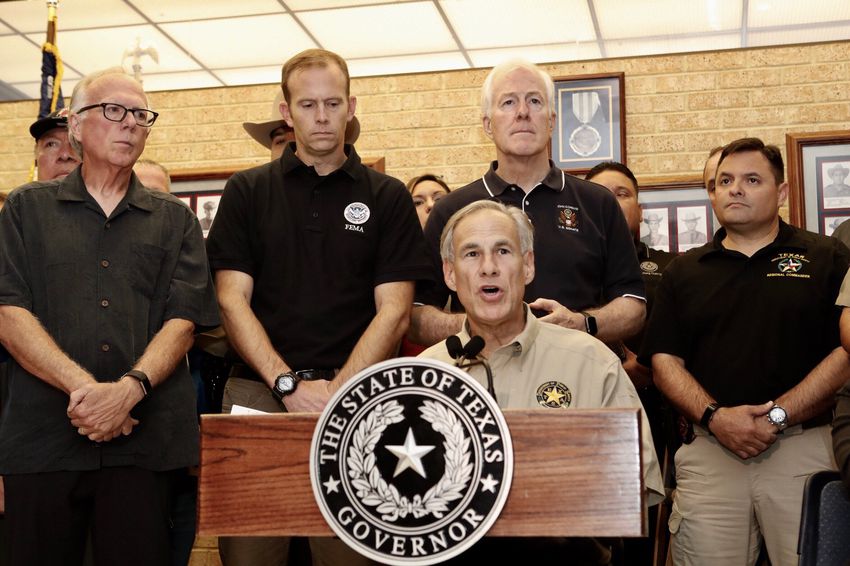
The picture above was taken in Port Arthur, one of the cities comprising the Golden Triangle; the other two are Orange and Beaumont, where my family and I lived for nearly 11 years.

All three cities, along with Houston, were pummeled by the deluge that poured out of the sky from Harvey, which made its initial landfall at Rockport along the Coastal Bend.

Texas has rallied behind the many thousands of Golden Triangle residents who today are still seeking to reassemble their shattered lives. Some of them are friends of my wife and me and former colleagues of mine. Our hearts break for them.

We intend to visit our former haunts. We hope it is sooner rather than later. Our time today is occupied by our effort to prepare to relocate eventually from our home in Amarillo.

Still, I think daily of my friends who are still struggling to regain their equilibrium in the wake of the monstrous storm.

My hope is that the rest of Texas — and the nation — will keep them in their thoughts and prayers, too. I know we’ve got a lot on our minds these days. Puerto Rico is in desperate straits. Florida also is recovering from its own tragedy, the one named Hurricane Irma.

We all possess big enough hearts to wish well for all of our stricken fellow Americans.

MPEV contract signed? Done!

Someone will have to explain to me why the news out of Amarillo City Hall is somehow bad for the city.

It’s going to take a mighty stout argument to persuade me.

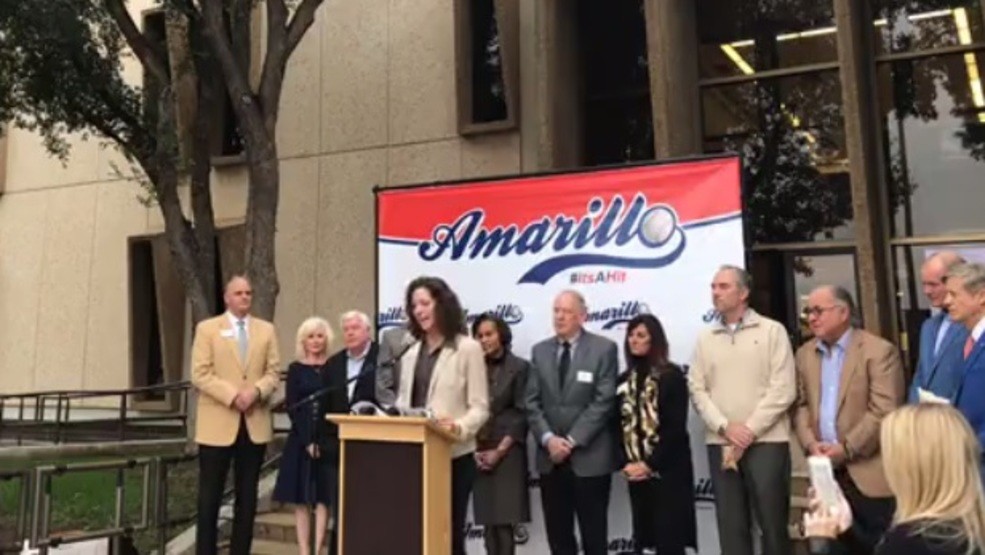
The City Council today announced that Elmore Sports Group, the outfit that owns the San Antonio Missions AA baseball team, has signed a 30-year lease agreement to play minor-league baseball at the new ballpark set to be built across the street from City Hall.

The city plans to pay for the $45.5 million multipurpose event venue with hotel occupancy tax revenue. Elmore will pay the city $400,000 annually to rent the ballpark.

They’re going to break ground on the MPEV in early 2018; they plan to finish the venue in time for the start of the 2019 baseball season.

Get your hot dogs and cold beer right here!

What a journey it has been — and what a journey that lies ahead.

And yet, there is a continual chorus from a cadre of soreheads that keeps casting the city’s downtown revival in negative terms.

It seems like a hundred years ago that Amarillo voters approved a citywide “non-binding referendum” on whether to support construction of the MPEV. The cost of the building in November 2015 — when the election occurred — had been pegged at $32 million. The cost inflated a bit after the ballots were counted, which brought out some howls around the city.

It hasn’t been a smooth ride, to be sure.

Voters elected a new council majority in the spring of 2015 and there was some discussion about the council slamming the brakes on the MPEV. To its credit, the new council majority heeded its better angels and allowed the vote to proceed.

Prior to all of that we got to witness the general managing contractor — an outfit named Wallace Bajjali — disintegrate in a spat between its principal owners. It was damn ugly! They left the city without an organization that was supposed to coordinate all the moving parts. Fortunately for Amarillo, the organization’s demise didn’t damage the city’s commitment to proceeding with the ballpark/MPEV.

But there was some turnover in some key municipal management positions. Melissa Dailey essentially was forced out of her job as head of Downtown Amarillo Inc., City Manager Jarret Atkinson quit over his inability to work with the new council majority and Amarillo Economic Development Corporation President Buzz David retired and moved out of town.

But the MPEV kept moving forward.

The Local Government Corporation was able to get a tentative agreement with the Missions, who wanted out of the Alamo City, which courted a AAA franchise.

And today, everyone signed on the dotted line.

Downtown Amarillo has made tremendous strides in the past half-dozen years. We now have a first-class convention hotel and parking garage across the street from the Civic Center. The city is able to lure conventions to the Civic Center. Business is booming along with construction of downtown residence construction.

Why in the world is all of this is a bad thing for Amarillo?

I want to restate what I believe is quite obvious: Every thriving city in America has virtually one thing in common. They all boast thriving downtown districts.

Amarillo has taken a big step toward a bright future.

Houston mayor seeks to tap Rainy Day Fund

I have to wonder if Houston Mayor Sylvester Turner laughed out loud when he made an interesting suggestion.

The state of Texas, he said, ought to tap into its Rainy Day Fund to help Houston recover from the savage attack leveled on the city by Hurricane Harvey.

Ironic, yes? Well, sort of.

The Rainy Day Fund is set aside by the Legislature as a backup fund for the state to use when emergencies arrive. In August, to be sure, a major emergency arrived on the Texas Gulf Coast when Harvey came ashore not once, but twice. First it came ashore as a hurricane; then it returned as a tropical storm.

It also dumped more than 50 inches of rain on Houston and the Golden Triangle, a record for any single weather event in the continental United States.

I believe the mayor is making a reasonable request. The state does have this money set aside to help. Houston is the state’s largest city. It presents a major economic impact for the state. It is severely damaged by the storm that savaged it.

It’s called a Rainy Day Fund for a reason. I would guess the mayor wouldn’t ever think it would apply so directly to the needs of city created by a rainstorm of epic — even biblical — proportions.

Sen. Seliger gets needed challenge

I used to drive former state Rep. David Swinford borderline batty with my occasional columns about the need for incumbents to get challenged at every election cycle.

My argument always has been that political incumbents at every level need to defend their record against legitimate challengers to their incumbency. The Dumas (Texas) Republican legislator understood that argument … but he still would express some mild (and good-natured) displeasure at my stating it.

One of Swinford’s colleagues — Republican state Sen. Kel Seliger of Amarillo — is getting a serious challenge again this coming year. Regular readers of this blog know that I want Seliger to win his party’s nomination, which is tantamount to election in the GOP-friendly Texas Panhandle.

But he’s going to have to work for it. Which I consider to be good (a) for the incumbent and (b) for the cause of good government.

Former Midland Mayor Mike Canon is stepping up once more to challenge Seliger. The two of them faced off in 2014. The race was close, but Seliger emerged victorious. This year, Amarillo business owner Victor Leal has joined the Republican primary lineup.

The quality of Leal’s candidacy remains to be seen. Canon’s approach four years ago was to talk in TEA Party clichés, talking points and platitudes. He still garnered a lot of votes.

That’s all OK, though.

Seliger has served the sprawling Texas Senate District 31 he has represented since 2004 quite well, in my estimation. That doesn’t mean he should get a free pass.

Representative democracy demands a stout challenge when the opportunity presents itself. It’s doing so in this legislative contest.

Whoever emerges victorious in this primary fight — and I do hope it’s Seliger — figures to be tempered by the difficult campaign he will have endured. That’s good for state government.

Meet one of POTUS’s ‘worst nightmares’

The list of Donald J. Trump’s “worst nightmares” seems to keep growing.

You have Robert Mueller, Stephen Bannon, James Comey, Sean Spicer, Michael Flynn and perhaps Don Trump Jr. standing by to give the Big Man a serious case of heartburn.

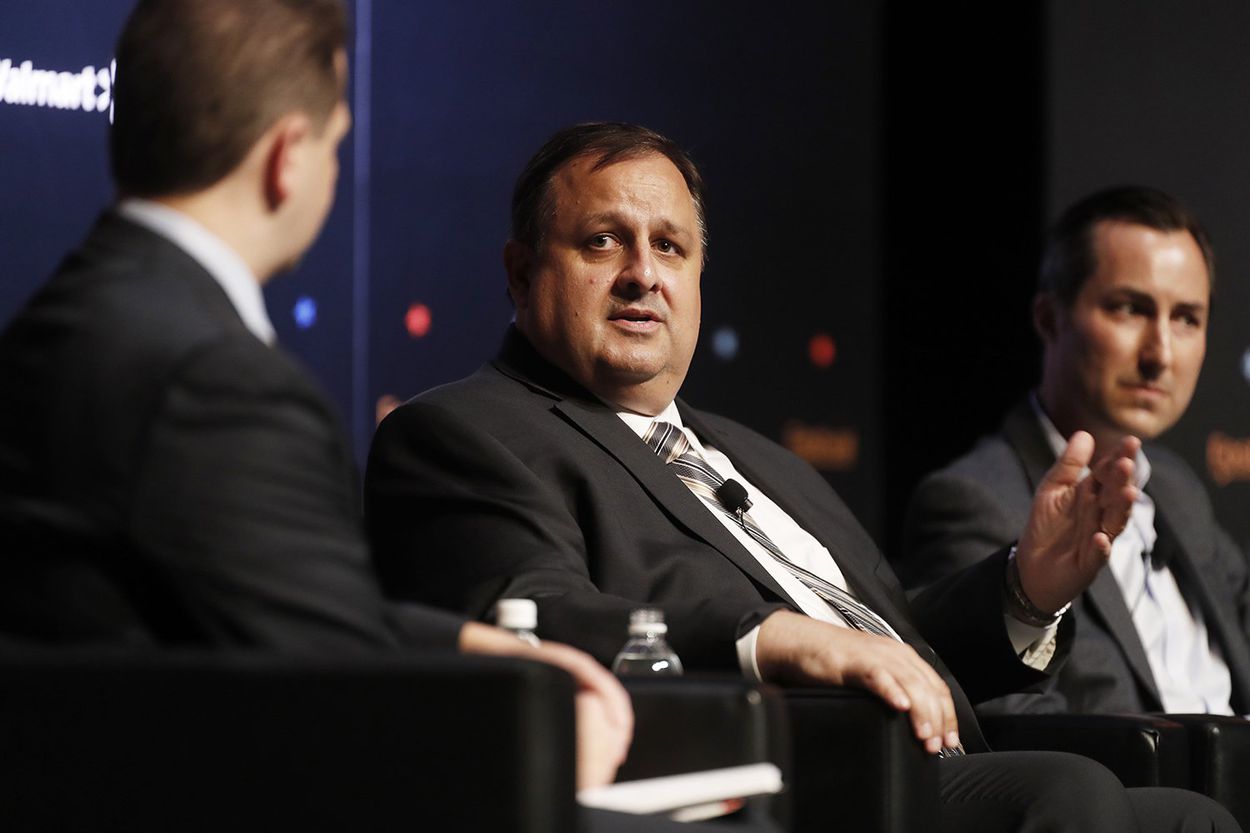
Walter Shaub is no slouch in the “worst nightmare” department, though. The former head of the U.S. Office of Government Ethics, took part in a Texas Tribune discussion to talk about government ethics, which in Shaub’s mind is no oxymoron.

He quit his job at OGE out of frustration dealing with the Trump administration.

As the Tribune reports: The last straw for Shaub, who is now with an organization called the Campaign Legal Center, was having to fight for a month to get basic ethics records that did not even turn out to be useful.

In general, Shaub said, Trump’s actions represent a “significant departure” from “ethical norms.” He added that it will be on the next president to repair the damage that’s been done.

“I put up as good of a fight as I could,” said Schaub, who resigned in July.

I continue to believe that the president’s lack of understanding of government has contributed to the ethical morass he has helped create. Trump’s business background simply is not well-suited to adapt to the complexities associated with service in the massive federal government.

Another panelist at the Tribune event, Richard Painter, former ethics lawyer for President George W. Bush, also has been a harsh critic of Trump. According to the Tribune: “People voted for Donald Trump to be a president … not to be a king,” he said. “He’s gotta respect the Constitution or he’s not gonna keep his job.”

There might lie the greatest problem facing Trump as he seeks to shake loose from the crises that are gripping his administration. He doesn’t know — or seemingly want to know — how the Constitution works, how it limits his power and how it sets forth “checks and balances” on presidential overreach.

One such overreach might involve Mueller, the special counsel assigned to investigate the Trump campaign’s alleged ties to the Russian government. As the Tribune reports: “The biggest threat we’re facing is any threat to Bob Mueller being fired,” Shaub said. Should that happen, Shaub said he would take to the streets and that others should too.

Ethics, Mr. President, really do matter. They matter a great deal. Just listen — for once, sir — to these fellows. They know of which they speak.

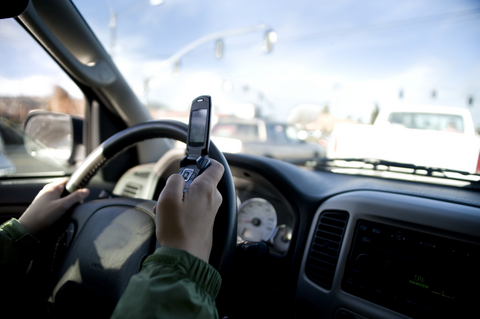
Still looking for cell phone ban sign at border

I was hoping to see something the other day next to the “Welcome to Texas” sign that greeted us on our way back from a long-weekend trip to Colorado.

It would be a “No cell phone use while driving” sign.

I didn’t see it when we re-entered Texas from New Mexico along Interstate 40. Dammit, anyway! Where is the warning to motorists coming here from elsewhere that they need to put their cell phones away while they’re driving on Texas highways?

The Texas Legislature this year approved a cell phone ban while driving bill. Gov. Greg Abbott signed it into law, which took effect Sept. 1.

Most states have laws that ban cell phone usage while driving; even more of them ban texting while driving. New Mexico has a “local jurisdiction” ban, by the way; Colorado bans cell phone use if the driver is operating on a learner’s permit. Colorado also bans texting while driving; New Mexico has no such statewide ban.

My point is that states that ban this act of sheer stupidity should be sure to let motorists know it when they enter those states.

I’m proud of our Legislature for agreeing to implement a statewide ban; I also am proud of Gov. Abbott for signing the bill into law, doing something his predecessor as governor, Rick Perry, declined to do in 2011, citing a ridiculous notion that such a bill was too “intrusive” on drivers’ private lives.

The state needs to take the next step and erect those signs at all its entry points that warn motorists: Keep your cell phones put away while you “Drive Friendly, the Texas Way.”

Houses of worship deserve FEMA assistance

I can almost hear the grumbling now: The U.S. Constitution prohibits any relationship between government and religious organization, which means churches shouldn’t be eligible for federal emergency relief assistance.

I’ll respond this way: As Col. Sherman T. Potter would say: Mule muffins!

Texas Gov. Greg Abbott and Texas Attorney General Ken Paxton have asked for aid from the Federal Emergency Management Agency to help houses of worship ravaged by the wrath of Hurricane/Tropical Storm Harvey.

Abbott and Paxton wrote in their letter to FEMA: “When Hurricane Harvey slammed into Texas, wreaking devastation over a huge swath of the Texas Gulf Coast, scores of churches and houses of worship jumped into action to serve thousands of Americans in their time of need.”

Indeed, those houses of worship also suffered grievously from Harvey’s savagery, just as every other inhabitant along the Texas Gulf Coast.

I get what the U.S. Constitution says about the prohibition against making laws that establish a state religion. This is different. FEMA stands as an agency committed to helping all Americans.

Harvey delivered a killer punch to Texas. It brought substantial misery all along the coast from Corpus Christi to the Golden Triangle — and many miles inland.

Everyone affected by the horrific storm — including houses of worship — deserve assistance from the federal government that aims to serve them.

Trump makes good on Harvey pledge; thank you, Mr. President

Donald Trump’s pledge of $1 million to help the victims of Hurricane/Tropical Storm Harvey had been met with some skepticism.

Critics actually doubted the president would deliver the goods, that he would make the donation he promised to make.

The president has delivered.

He has sent $300,000 each to the Salvation Army and the Red Cross; Samaritans Purse and Reach Out America each got $100,000; the president sent $25,000 each to a number of other charities, including ASPCA, the Humane Society and Habitat for Humanity.

They’re all doing great work to help people — and their pets — recover from the devastation brought by the monster storm that tore across the Texas and Louisiana coasts in late August.

I want to applaud the president for making good on his pledge. Some of that money is going to help my peeps — friends and former colleagues — who live along the Texas Coast and who have been coping with the misery brought by the storm.

We hear on occasion that the best way to help so many people affected by these tragedies is simply to send money. Donald Trump, a man of considerable means, has done the right thing.

Well done, sir.

J.J. Watt now can concentrate fully on his day job

J.J. Watt is a tremendous football player.

He also is a young man with a huge heart. You see, this Houston Texans defensive lineman took it upon himself to help raise money for the stricken residents of his adopted hometown, Houston.

He started out with a goal of raising $200,000 for those who were suffering from the wrath of Hurricane Harvey, which pummeled Houston in late August.

Watt has called a halt to his fundraising effort. He’s raised a cool $37 million.

Watt shows his true stuff.

The National Football League honors one of its players annually with the Walter Payton Man of the Year Award. It’s named after the late, great Chicago Bears running back Walter Payton, who routinely devoted much of his off-the-field activity to helping those who needed help.

J.J. Watt has gone not just above and beyond the call to help his fellow Houstonian and other Texas Gulf Coast residents. He has orbited Earth and at least a couple of other planets in providing assistance to those who remain in serious trouble as a result of Harvey’s savagery.

As Sports Illustrated reports: “Watt recently closed the fundraiser after raising an astonishing $37,097,298, which is more than 185 times his initial goal. More than 200,000 people donated, meaning Watt got as many donors as he expected dollars.”

Astonishing, yes?

I believe young J.J. has earned the Payton Man of the Year Award.

Let’s banish partisan stereotypes

There’s a common stereotype kicked around about Republicans and Democrats.

Republicans are hard-hearted; Democrats are squishy do-gooders.

I want to take on the GOP stereotype briefly here by calling attention to something U.S. Rep. Mike McCaul of Texas said about four of his Republican colleagues who voted recently against a package that include $15 billion in aid to victims of Hurricane Harvey.

You’ve heard of Harvey, yes? It blew in twice over the Texas coast, ravaging communities from the Coastal Bend to the Golden Triangle. Four of McCaul’s GOP colleagues voted “no” on the aid package because it sought to raise the debt limit ceiling.

One of the four happens to be my congressman, Mac Thornberry of Clarendon.

Oh, Mac. I mean, really?

Here’s what McCaul said, according to Texas Monthly: “I don’t want to judge them,” McCaul said Monday on MSNBC’s Morning Joe, according to the Austin American-Statesman. “I judge myself and my conscience, and when I have people dying and hurting in my home state, it was my duty and my moral obligation to help them, and I felt that that vote was a vote of conscience to help people in my state and also now in Florida. I think that’s what Americans do, and I think it’s unconscionable to vote against something like that.” 

Actually, he did “judge them.” But that’s all right with me. Judge away, Rep. McCaul.

More from Texas Monthly: “I think having to raise the debt ceiling was the issue, and the fact is that Mick Mulvaney is the director of [the Office of Management and Budget], and he was a Freedom Caucus guy when he served with us, and he told us point blank that you could not appropriate disaster relief if you didn’t raise the debt ceiling, so we were stuck with that choice,” McCaul said. “What do you with that choice? Just stand on principle and vote ‘no’? And I question that principle. Or do you vote to help people back in your home state who are hurting really badly?”

Well said, Rep. McCaul.

So, let’s end the stereotyping.