Category Archives: State news

What’s missing? Oh, wait! Longhorns vs. Aggies

I was 34 years of age when my family and I moved to Texas. That was in 1984.

At the time I was a fairly avid collegiate football fan. I grew quickly to appreciate one of the country’s more intense gridiron rivalries not long after arriving in the Golden Triangle.

I refer to the University of Texas-Texas A&M rivalry. They used to play that game on Thanksgiving Day. My wife and I became friends in Beaumont with diehard Aggie alumni. They were four brothers, all of whom graduated from A&M; their children went there, too; and so did their grandchildren. They bled Aggie Maroon. I was schooled immediately — and often — about how much Aggie football meant to Texas Aggie families.

I even learned to refer to the University of Texas as “texas university.”

Then the Aggies decided they wanted to bolt to the Southeastern Conference. They wanted to play tackle football against Arkansas, Auburn, Alabama, Georgia, Tennessee … and some other schools.

Then the rivalry was dissolved.

I am still somewhat saddened that we can’t see the Longhorns play the Aggies on Turkey Day.

I have no particular allegiance to either school. I didn’t attend either of them; neither did our sons. I wrote a year ago about missing a Thanksgiving tradition. I still miss it.

https://highplainsblogger.com/2016/11/missing-a-thanksgiving-tradition/

Can’t there be a way for the athletic directors at these schools to work out a non-conference game that pits these football teams against each other … on Thanksgiving Day?

C’mon! You can do this!

Republicans are ‘eating their young’

The late Texas state Sen. Teel Bivins, in an entirely different context, once told me how Republicans occasionally were prone to “eat their young.”

So this form of political cannibalism appears to be occurring in the current election cycle. We’re seeing Republican officeholders making GOP primary endorsements, picking fellow Republicans over other fellow Republicans.

Donald John Trump endorsed U.S. Sen. Luther Strange in his primary contest against Roy Moore in Alabama. Moore ended up winning that primary and … um … it hasn’t worked out too well for the GOP. Moore has been accused of making improper sexual advances on underage girls. It’s getting ugly down yonder, man.

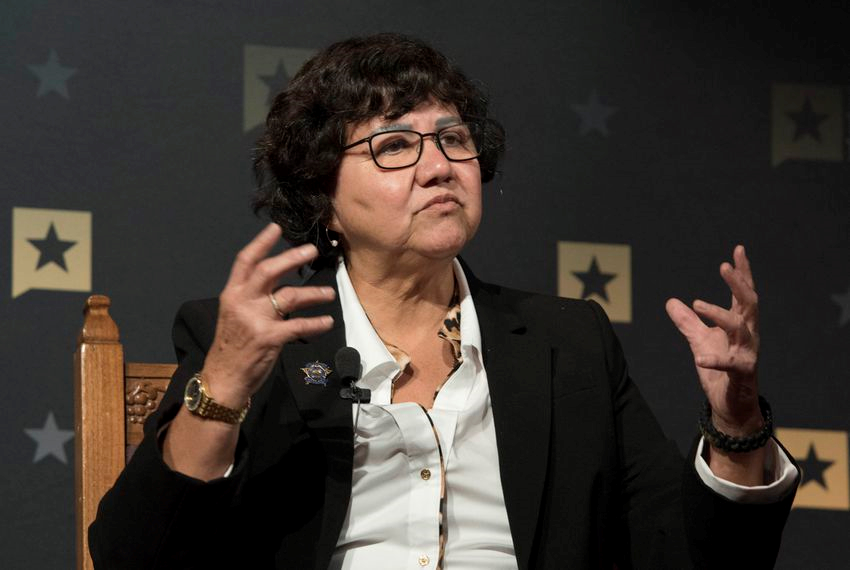
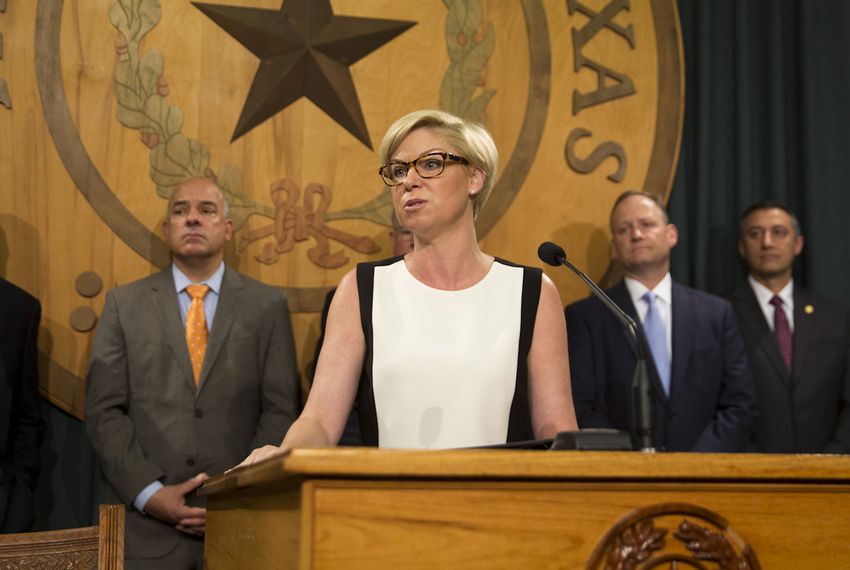
Closer to home, we have Texas Gov. Greg Abbott endorsing a Republican challenger to a GOP state representative. State Rep. Sarah Davis’s primary foe, Susanna Dokupil, has earned the governor’s endorsement.

As Ross Ramsey writes in the Texas Tribune, it is rare for Texas governors to endorse against incumbents; it’s even more rare for them to get involved in primaries of their own political party. Abbott has scored a two-fer with his endorsement in that particular legislative contest.

Abbott weighs in

And so it goes with the Republican Party’s war with itself.

U.S. senators are lining up against the president, who’s firing back at them. GOP Sens. Jeff Flake and Bob Corker are retiring from the Senate in 2019. They both have been highly critical of the president of their own party. Donald Trump has returned the fire with angry statements and a bit of petulant name-calling to boot.

Republicans in both congressional chambers have fought among themselves over how to “repeal and replace” the Affordable Care Act. They’re now arguing over “tax reform” proposals that look good to one legislative chamber, but not nearly so good in the other one.

And, let’s not forget that the D.C. Republican establishment is gnashing its teeth over what to do if Roy Moore wins that U.S. Senate election in Alabama.

It’s no fun to be a Republican these days.

Especially if they’re about to be eaten.

Climate change portends more ‘Harveys’

Hurricane Harvey once would be considered the storm of a lifetime.

Not any longer, according to a new study published by the Massachusetts Institute of Technology. The MIT report suggests that by the end of this century, storms of the magnitude of Harvey could occur once every five-and-a-half years.

The study was put together by Kerry Emmanuel, a professor of atmospheric sciences at MIT. According to Texas Monthly:

“It’s very, very easy for people—even scientists—to get confused by this. You have to be very careful with what you mean by the event,” Emanuel says. The study looks at both Harvey-like storms hitting the greater Houston metro area (which he forecasts will go from a 2,000-year-storm to a 100-year-storm), as well as storms of that size making landfall anywhere in Texas, which is how we get to the 5 1/2 year number.

What do you suppose is the cause for this increasing frequency? Let me think about that for a moment. There. Time’s up. I am pretty certain we’re talking about climate change.

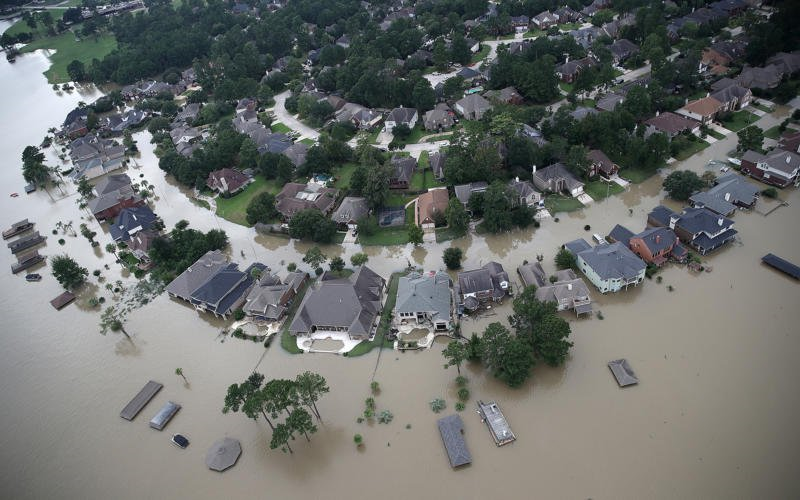
The deluge brought by Harvey dumped 50 inches of rain in a 24-hour period on Houston and the Golden Triangle this past summer. And that event came after Harvey roared ashore at Rockport with killer winds and immense tidal surge.

It will take years for the Texas Gulf Coast to recover fully from the storm. Texas officials have enlisted Texas A&M University System Chancellor John Sharp to oversee the rebuilding of the coastal region from the Coastal Bend to the Golden Triangle. Think of what might await such an effort years from now. No sooner would the work be done than it might occur again.

Read the TM story here

The Texas Monthly piece I’ve posted with this blog entry doesn’t mention climate change/global warming explicitly. I have mentioned it here. I only can surmise as much to explain why the level of storms thought to occur once in a century might take place with such frightening frequency.

This is a terribly ominous trend for the coastal regions of our state.

The question now presents itself: What in the world are we going to do to either protect our coastal region from such destruction?

There’s also this: What are we going to do to reduce the number and ferocity of these storms?

Amarillo poised to become a baseball city again

It is a virtual lead-pipe cinch that I won’t be living in Amarillo when they toss the first pitch at the city’s new downtown ballpark.

The city’s new AA minor-league baseball team will commence its initial season in April 2019 in a shiny new 4,500-seat venue.

The journey toward that end has been fraught with some difficulty, some apprehension and, yes, a bit of controversy. It’s going to come to fruition, which makes me happy for the city my wife and will depart in due course.

I will acknowledge that I was not a regular attendee at the independent league games played by teams that had various names. I did attend a few games at the dump once known as the Dilla Villa, in honor of the Amarillo Dillas who were playing baseball there when my wife and I arrived here in early 1995.

They morphed into another team, which morphed again. Then the outfit that ran that team decided to split its home season between Amarillo and Grand Prairie. That lasted one year. Now they’re gone.

The ballpark, also known as the multipurpose event venue, was conceived by local officials and business leaders while all that nonsense was occurring at the rat hole that passes for a ballpark at the Tri-State Fairgrounds. They had a number of public hearings. They put the issue to a non-binding citywide referendum in November 2015 — and it passed.

The price tag for the referendum was pegged at $32 million. It grew to $45 million. They knocked down the old Coca-Cola distribution center, and relocated that business elsewhere.

Has it been smooth sailing? Not at all. I had my own doubts about whether the Local Government Corp. could pull this deal off. The City Council support for the LGC’s work seemed a bit tenuous. Then this past spring, voters decided to elect a new council.

Let us not forget that the general managing contractor, Wallace Bajjali, vaporized along the way in a dispute between the firm’s principal owners. It didn’t deter the progress toward landing the affiliated AA franchise.

The Elmore Group, which owns the San Antonio Missions, is now going to relocate that team to Amarillo; San Antonio will get a AAA team that will relocate to the Alamo City from Colorado Springs.

Meantime, life is good for diehard baseball fans in Amarillo. They’re going to get to watch a professionally run baseball team play ball in a sparkling new venue.

I wish them all well. This journey has given me a mild case of heartburn along the way. It’s all good now as they prepare to break ground on the ballpark.

I intend to watch it grow and will be cheering from afar when they toss out that first pitch.

Community not likely to ever recover from tragedy

The Sutherland Springs, Texas, church massacre seems significantly different from other such tragedies.

It involves the size of the community. The town has about 400 residents. That’s it. The Sunday morning shooting killed or wounded 46 people. That’s about 10 percent of the entire town’s population.

I am not belittling other cities’ tragedies. Las Vegas, Orlando, Charleston all have suffered terribly, too. Family members in those larger communities terribly, just as they are in Sutherland Springs.

I am inclined to believe, though, that Sutherland Springs’ collective grief will last forever, or at least until the final surviving community member passes from the scene.

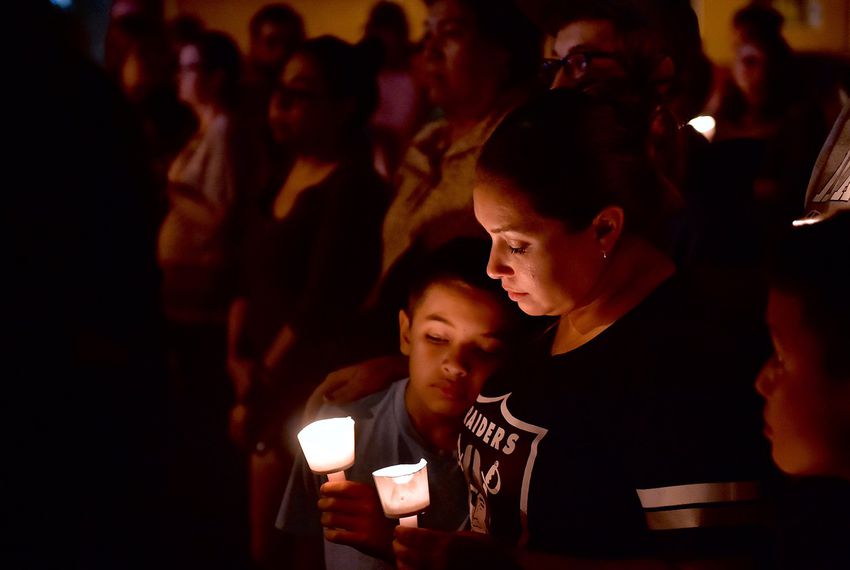
I have swallowed hard several times as I’ve watched the news reporting from Sutherland Springs. What is most heartbreaking is to hear from those who knew the victims and to hear from them how “everyone knows everyone” in Sutherland Springs.

Three generations of a single family, eight people, died in the shooting. The 14-year-old daughter of the First Baptist Church pastor and his wife also died. An 18-month-old infant was among those who died at the hand of the monster who opened fire.

Just how does a community recover from this degree of madness?

Too many communities already have been tagged with a title none of them ever welcomes: the place where gun-related violence erupted. The larger cities do have the opportunity to move farther away from their collective pain.

The tiny town of Sutherland Springs — with a single blinking traffic light — likely has seen its identity changed forever.

It is all simply heartbreaking in the extreme.

Air Force messed up on shooter’s record

More than two decades ago, the 1995 Texas Legislature considered a concealed handgun carry bill. I opposed it with great passion.

The Legislature enacted it. Then-Gov. George W. Bush signed it into law. Over the years, I grew to accept the law, although I never have totally endorsed it.

But get a load of this: The Texas concealed handgun carry law did its job as it regards the Sutherland Springs shooter while the U.S. Air Force failed to do its job.

The loon who killed those 26 worshipers in Sutherland Springs was denied a concealed carry permit in Texas because of a criminal record check the state performed on him when he made his application.

Air Force misfires

But the U.S. Air Force, which sent him packing with a bad conduct discharge, didn’t tell the National Criminal Information Center about a court martial conviction in connection with an assault charge against his wife and her child. That failure to report enabled the shooter to purchase legally the rifle he used to massacre those First Baptist parishioners, including several children.

I’m not going to brag about Texas’s concealed carry law. I still am not a huge fan of it. Still, it hasn’t produced the kind of street-corner violence that many of us — including yours truly — feared would occur.

I am a bit heartened, though, that the state law worked. Texas denied this madman a permit to carry a gun under his jacket.

If only the Air Force had done its job, too.

Maybe it could have prevented this tragedy. Just maybe …

Guns and mental health both played a part

Donald Trump believes the hideous massacre in Sutherland Springs, Texas, is a “mental health issue,” not a “guns issue.”

I’ve been trying to process the president’s statement, which he delivered in Japan. I am coming up empty with that notion.

You see, I happen to believe the lunatic shooter who killed 26 people at First Baptist Church in Sutherland Springs had no business packing the weapon he used to commit the carnage.

In other words, “mental health” and “guns” aren’t mutually exclusive issues as they relate to this horrific episode in our nation’s history.

The shooter was an Air Force veteran who received a bad conduct discharge after he assaulted his wife and young child. Texas Gov. Greg Abbott has pointed out that the gunman applied for a concealed handgun permit, but was denied the permit because of his criminal record.

And that begs the question: How did this sicko get his mitts on an assault rifle? And, yes, I expect to hear the argument that will come forth that bad guys will obtain guns no matter how many laws we have on the books.

The debate on this hideous deed will commence fully in due course. The nation will grieve and a community will bury its victims. I don’t want to wait too long before this debate gets under way.

The president can lead that debate by acknowledging what I believe is painfully obvious about what has transpired. It is that guns need to be part of the discussion topics, right alongside the issue of mental health care.

These issues are not mutually exclusive.

Heroism thrust unto young man in Texas

Oh, man. It is so hard to find anything at all positive to say about the horrific tragedy that unfolded Sunday in a tiny town just east of San Antonio.

I am going to try to say something good.

It involves a young man who happened to be in the right place at the wrong time. He is Johnnie Landendorff, a lanky young man who was having breakfast Sunday morning and was planning to visit his girlfriend. Then he walked out of a diner and started driving. He approached First Baptist Church in Sutherland Springs, Texas. Then he noticed a man dressed in black trading gunshots with someone else.

The fellow who was shooting back at the gunman approached Langendorff. They had never met. They took off in Langendorff’s pickup and chased the lunatic for several miles, at speeds believed to be around 95 mph. Langendorf called the police and gave them directions on his location and of the vehicle he was chasing.

The gunman’s SUV crashed eventually. The shooter was dead inside the vehicle when the police arrived.

Local law enforcement officials now seem to believe the gunman took his own life, either as the vehicle was fleeing the scene or after he crashed. The fellow who joined Langendorff in the pursuit reportedly hit the gunman with a gunshot during the fire fight outside the church. As the Washington Post reported: “The gentleman that was with me got out, rested his rifle on my hood and kept it aimed at him, telling him to get out, get out. There was no movement, there was none of that. I just know his brake lights were going on and off, so he might have been unconscious from the crash or something like that, I’m not sure,” he said.

None of this is likely to give comfort to the families and loved ones of the 26 people who died — or the estimated 20 others who were wounded — in the carnage. However, it is entirely possible that Langendorff and other fellow likely prevented even more heartache with their actions.

It’s been said that heroes usually don’t seek to act out their deeds, that circumstances often are thrust upon them. Such was the case with two Texas men.

I don’t feel like offering any glowing praise in this moment of profound national grief and mourning. I’ll just say simply that we should thank God Almighty that these men had the presence of mind to do what they did.

Once more: Get rid of constables office

Now that we’re talking about law enforcers in Texas today, I want to turn attention briefly to an issue I have raised before — and likely will raise again until the Texas Legislature does what it should do.

When have you ever read about a Texas constable playing any kind of significant role in any case, or made a significant arrest?

I continue to be utterly astounded that Texas allows this office to remain on the books throughout the state. It’s an elected office. Yep, we elect these law enforcement officials. We charge them with delivering summonses and other civil papers to residents; they also are empowered to provide court security in justice of the peace courts.

Their powers go beyond just the humdrum of paper serving and bailiff duties.

In actuality, any of those duties could be done by municipal police and sheriff’s departments.

I have written about this before. The Legislature isn’t taking the hint, which I’ve said out loud is to get rid of the office.

https://highplainsblogger.com/2014/03/constables-who-needs-em/

The 2019 Legislature isn’t likely to budge on this matter. I wish it would. The problem lies in the power of the constables and judges lobby, which is significant in Austin.

The performance of the office as it has been handled in Texas Panhandle counties has been spotty at best. I’ve been observing this office for more than three decades at opposite corners of the state. I have watched it function badly in the Golden Triangle and again in Potter and Randall counties.

I realize that other counties put constables to more effective use than what I have witnessed up close.

Absent a total abolition of this waste of taxpayer money, my hope remains that counties are given the authority to toss aside constable offices where they don’t serve the public good.

I’m still waiting to read or hear about a constable making a tangible difference in local law enforcement.

Shooting decimates S. Texas town

Leave it to The New York Times to put the Sutherland Springs, Texas, massacre today in perspective.

The newspaper notes that the unincorporated town had a population of 362 according to the 2010 census. With an estimated 25 people killed today by a gunman who opened fire at First Baptist Church, the town is likely to have lost about 7 percent of its population in one despicable act.

I am going to refrain from identifying the shooter by name, as has been this blog’s policy for some time. He’s dead. It’s not known if the police shot him or if he took his own life. My reluctance to identify him is because I choose instead to focus on the deed and the victims.

Texas Department of Public Safety officials have said he is a Texas resident.

Texas town is shattered

What now?

Federal, state and local police are going to sift through the gunman’s history to learn about him and try to ascertain why he would launch a Sunday morning church service rampage that reportedly took the lives of several children. The president of the United States, Donald Trump, sent his love and prayers from Japan, where he is attending meetings with foreign leaders. Texas Gov. Greg Abbott is en route to Sutherland Springs. Texas Attorney General Ken Paxton has offered support from his office to aid in the probe of this terrible event.

And, yes, the minute we know about this lunatic’s motivation, we can expect the debate to recommence on ways to curb gun violence of this horrific type.

I welcome the debate when it occurs as soon as is humanly possible.

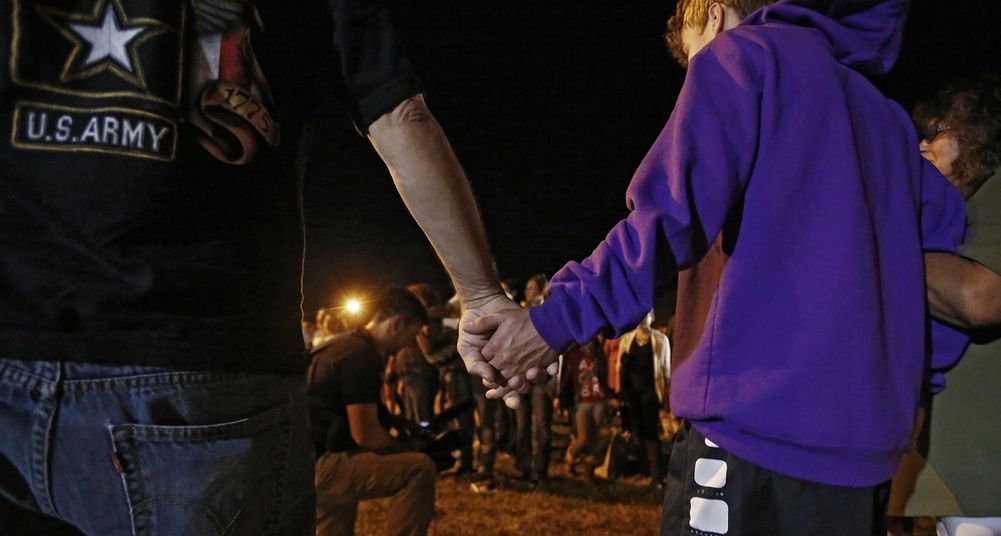
The immediate reaction — as in how we must respond during this calendar day — must center on prayers and love sent from all over the world to a tiny Texas town that is shattered by an all-too-common form of grief.