Category Archives: State news

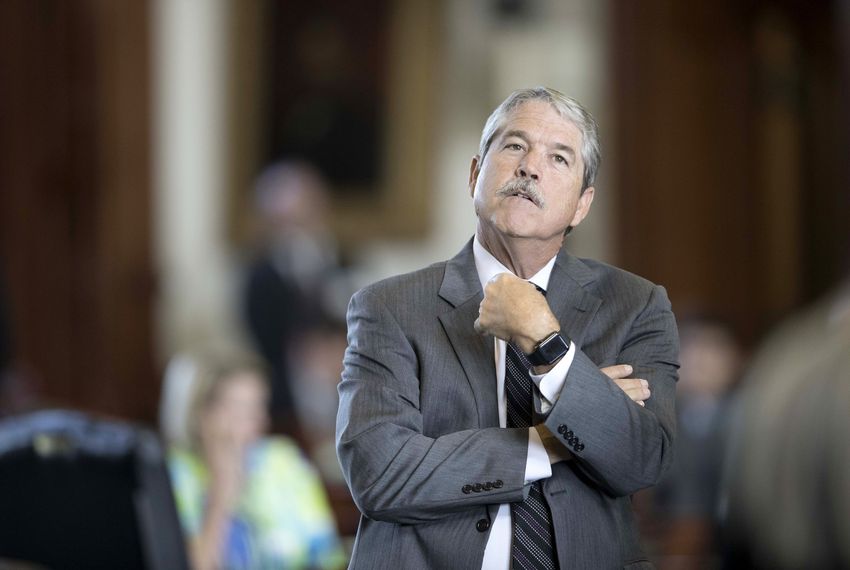
Keep fighting the fight, Sen. Seliger

Stand tall, Kel Seliger. I am with you, my friend.

There you go. I have just laid out my bias in favor of the Amarillo Republican who serves in the Texas Senate representing the sprawling District 31 that stretches from the top of the Panhandle to the Permian Basin.

A thorough Texas Tribune feature story tells how Seliger, who’s served in the Senate since 2004, managed to get on Lt. Gov. Dan Patrick’s sh** list during the 2019 legislative session.

The way Seliger tells it, he is voting on behalf of his West Texas constituents and doesn’t really give much of a damn about the political agenda being pushed by Patrick, the Senate’s presiding officer.

That, I believe, is what we call “representative democracy.”

Seliger says he’s still “paying penance” in the Senate after Patrick stripped the body’s second-most-senior Republican of his committee chairmanships and his role on other key committees. Patrick blamed his response on what he called “lewd” comments from Seliger toward a key Patrick aide; Seliger believes it’s because he has opposed much of Patrick’s legislative agenda.

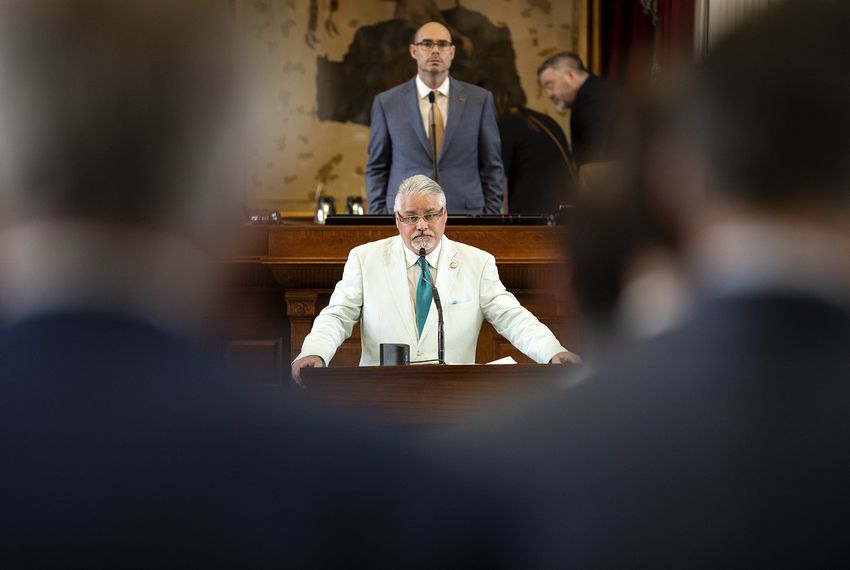
Sen. Seliger has occasionally been the lone Senate GOP vote against some legislation, such as the measure to ban cities from deploying red-light cameras aimed at deterring traffic violators. Seliger called it a matter of “local control.” Amen to that, senator!

I’ve known Seliger since 1995, when I arrived in Amarillo to take my post as editorial page editor of the Globe-News. Seliger was mayor of Amarillo at the time. We hit it off right away, developing a thoroughly cordial professional relationship. Over time, it turned into a personal friendship, particularly after he left public office.

Then the senator from Amarillo, the late Teel Bivins, received an ambassadorial appointment from President Bush and Seliger ran to succeed Bivins in District 31. He has served with distinction and dedication to his constituents ever since.

The Tribune article notes that Seliger hasn’t yet committed to running for another term in 2022. He defeated two GOP primary challenges in 2018, winning the nomination without a runoff.

All the while, Seliger has managed to stick it in Patrick’s ear. He was the only Republican senator to not endorse Patrick for re-election in 2018. Why? My best guess is that Patrick is too, um, ideological to suit Seliger’s taste.

Seliger wears his own brand of conservatism proudly. Indeed, he embodies what I believe is a traditional Republican world view, which is that the state need not meddle in matters that local communities can settle themselves.

I believe Seliger is the same man he’s always been. The shift has occurred elsewhere, within the leadership of the Texas Republican Party. I prefer, thus, to stand with my friend as he continues to serve the people who keep electing him to the Texas Senate.

Texas GOP wages new ‘civil war’ against cities

A progressive publication has called attention to what it sees as a fascinating new reaction to “liberal” cities’ attempts to rid themselves of monuments to arguably the darkest period in American history.

Texas cities are taking action to remove monuments to the Confederate States of America, which formed in 1861, declared war on the United States of America for the purpose of preserving states’ rights to enslave human beings, to allow them to be kept as property.

Dallas is the latest and perhaps most notable city to take action, according to the Texas Observer. The Texas Legislature led by a Republican super-majority in both legislative chambers, is fighting cities’ efforts to eradicate those symbols of treason against the United States.

The Observer notes that more than 30 Confederate monuments have been removed from Texas municipal property between 2015 and 2018. As the Observer noted: This has sparked an intense backlash from Anglo conservatives who see the removal of these monuments as an erasure of their Antebellum heritage. Activist groups pumped out robocalls and radio ads calling on Texas Republicans to keep the monuments in place.

The Dallas City Council approved a measure in 2018 to take down a century-old statue in downtown Dallas. It’s still standing. It has become a rallying cry, according to the Observer, of those who want such symbols to stand as a testament to Texas’s “heritage.”

Two bills, one in each legislative chamber, were introduced this legislative session that would strip local governments’ authority to take down these monuments or to rename public streets, parks or other property. As the Observer noted: Brandon Creighton, a Republican senator from suburban Houston who authored the upper-chamber version, brought the bill to the Senate floor Tuesday, prompting a heated and emotional debate. Houston Senator Borris Miles, one of the Senate’s two black members, called the legislation “disgraceful.”

Is this really going on here? Is this some sort of legislative hanky-panky aimed at circumventing cities’ ability to self-govern? What’s more, is it a form of “municipal aggression,” as the Observer calls it, launched by conservative legislators to get back at more, um, progressive/liberal politicians who wield power in city halls or county courthouses?

Again, from the Observer: Texas isn’t alone. For years, red states have enacted laws prohibiting cities from establishing local minimum wages and other labor protections. In the face of renewed public opposition to Confederate monuments, several Southern states have passed laws making it extremely difficult to remove historical monuments.

I continue to stand with those who believe the Confederacy is nothing to be saluted, or honored. The Confederate States of America committed treason against the United States of America. It was by the grace of President Lincoln who said in his second inaugural speech that he would  seek “with malice toward none and charity for all” to bind the wounds that the Civil War inflicted on the nation.

None of that, though, should stand as a reason to honor the cause of that bloodshed.

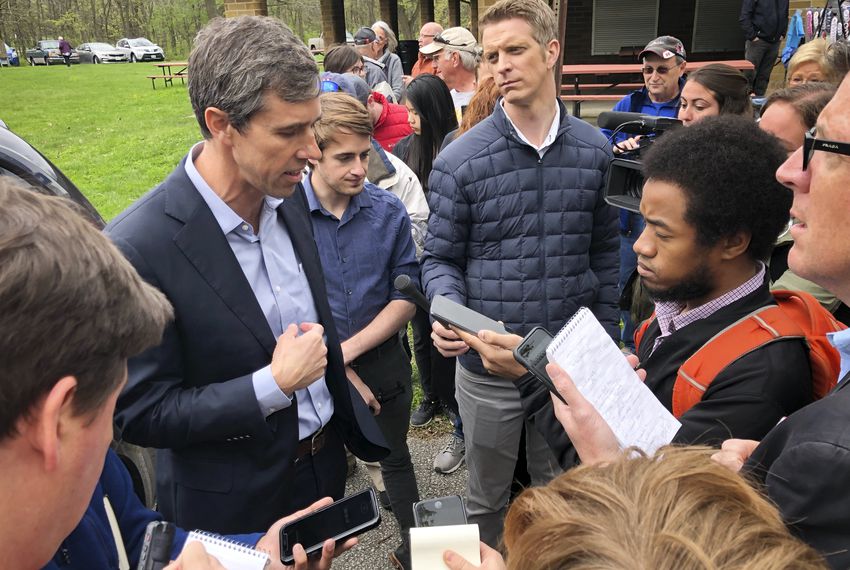
Beto’s early burst needs a boost

Beto O’Rourke burst on the national public political stage with a near-miss loss to a Republican U.S. senator in Texas in 2018.

Then the former El Paso congressman launched his presidential campaign and hearts started fluttering beyond Texas’s state line. He raised a lot of money in the first 24 hours of his 2020 presidential candidacy.

But then . . . O’Rourke plateaued. Other Democrats — and there are a lot of ’em out there — began stealing Beto’s thunder. They spoke in many more specifics than O’Rourke has offered.

So now, according to the Texas Tribune, O’Rourke is now finding himself looking for a bit of a reset. He is settling in for the long haul. The Tribune reports that O’Rourke is still campaigning “aggressively,” but he’s now just one among a large field of politicians who want to become the next president of the United States.

Yep. It’s going to be a long one, no matter how O’Rourke finishes this campaign.

The RealClearPolitics poll average has former Vice President Joseph R. Biden Jr. as the runaway frontrunner for the Democratic Party nomination. Biden stands at 41 percent among all the announced candidates; Sen. Bernie Sanders is next at something like 16 percent. Beto stands at 4 percent, according to the RCP poll average.

It’s way too early to write Beto off, just as it way too early to anoint Joe Biden as the next Democratic Party presidential nominee.

I guess O’Rourke’s recent struggles tell us about the fickle nature of the voting public and offer an example of how a candidate cannot rely solely on a prior campaign . . . that he lost!

Tax shift set aside until 2021 … let’s look for real reduction

It won’t be any better in 2021 than it is this year.

Texas legislators have decided apparently to delay any action on a bill that would have increased the state sales tax by a penny while rolling back local property taxes.

House Joint Resolution 3 and House Bill 4621 had won the endorsement of House Speaker Dennis Bonnen, Gov. Greg Abbott and Lt. Gov. Dan Patrick. Most legislators seemed to like, but opposition arose from interesting and disparate ends of the political spectrum: progressives and archconservatives disliked the measure for wildly different reasons.

I agree with those at both ends.

Progressives believe the sales tax is regressive and punishes poor Texans because they pay the same tax as rich Texans on goods they purchase. Good point, yes? Sure it is!

Conservatives on the right and far right believe the Legislature’s Republican caucus should remain faithful to its members’ pledge to avoid raising new taxes. Another good point? Yep, it is!

Lt. Gov. Patrick had made property tax reduction a key legislative agenda item. I’m OK with that. Why, though, pay for that reduction with a boost in the state sales tax? I’m not so OK with that notion.

If we’re going to reduce property tax, I would be far more in favor of an actual reduction in Texans’ total tax burden.

Let’s hope legislators take some time between the end of this session and the start of the next one to find a way to get there.

Gay conversion therapy debate flares up again

I suffer occasionally from a case of politics-induced heartburn.

It’s flaring up again. The catalyst this time is gay conversion therapy, which is being debated in the Texas Legislature. Some lawmakers want to make it illegal to force someone to undergo the quackery associated with trying to “convert” a gay person into a straight person. Most of them, though, seem satisfied with allowing individuals to endure such nonsense.

House Bill 517 gets scrutiny

A handful of states have made gay conversion therapy illegal. They recognize that a person’s sexual orientation is part of his or her DNA. It’s who they are. Therefore, it is impossible to “convert” someone from one orientation and guide them toward something else.

It’s a belief I have held for a long time, that one does not “choose” to become gay. Nor do they “choose” to become straight, for that matter.

I am nearly 70 years of age. My memory fails me at times, but so help me, I do not ever recall a moment when I was coming of age all those years ago when I gave any thought about whether I preferred to be intimate with women.

Thus, I find it impossible to believe that those who are gay make that choice consciously.

I am left to wonder two things: Why would anyone choose to be vilified by those around them? Why, too, is it often so difficult for those who are gay to “come out” to their loved ones?

Let me clear the air on one key point as well. Even discussing anyone’s sexuality makes me highly uncomfortable. It is a subject that I consider to be no one’s damn business. It is a part of one’s life that should remain utterly, completely and totally private.

Not everyone believes that, apparently. Some legislators in Texas and in many other states believe someone’s sexual orientation should become a matter of public policy.

That’s where this idiocy of “gay conversion therapy” comes into play.

I know I’m going to get grief for stating all this. That’s all right. I get that many Americans feel strongly about gay conversion and believe in their heart and soul that it’s a legitimate psychological therapy. I am not one of them.

Still, the heartburn I suffer from this discussion is real.

There is one constructive way to look at this, though. It is that we’re actually debating this issue in Texas. Maybe that’s a sign of progress.

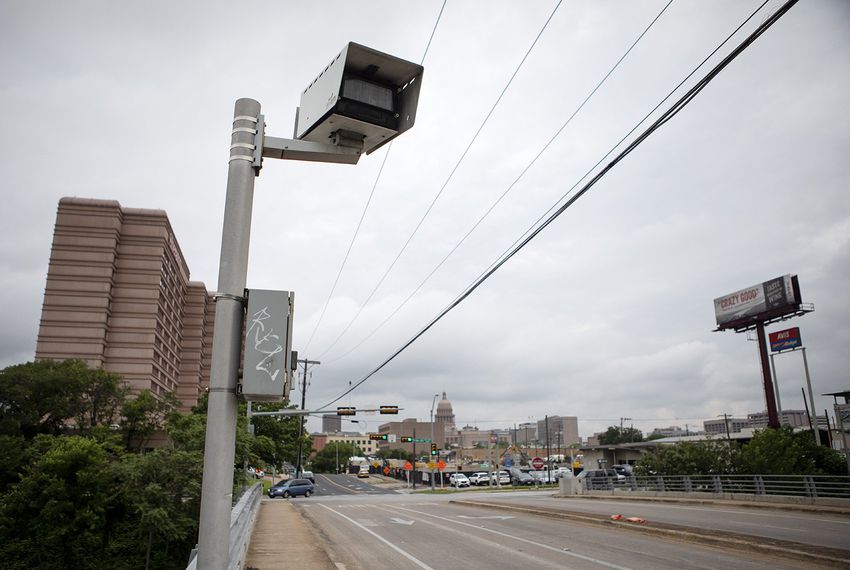
Red-light cameras appear on their way out; what a shame

Texas legislators appear ready to pull the plug on cities that want to do more to protect motorists and pedestrians from those who break the law by running through red lights.

Yep. The Texas House of Representatives has approved a bill written by Rep. Jonathan Strickland, R-Bedford, to disallow cities from deploying the devices.

This, I must say once again with emphasis, is a huge mistake. It’s big, man!

Strickland believes — and this is rich — that the cameras violate constitutional provisions that guarantee accused citizens to face their accuser. Pardon me for saying so, but Strickland is full of crap!

The cameras do not deny anyone any rights as citizens. Those who get cited by the cameras that catch them running through red lights or taking off from a dead stop through an intersection are entitled to appeal their citation to a municipal judge.

The cameras that are used in cities all across Texas take pictures of license plates on the offending vehicles and the citation is sent to the vehicles’ owners. The fines run $75 for a violation.

Let me disclose something: I got caught by one of those cameras in Amarillo several years ago. I made a mistake by racing through an intersection; I was a tad late and I got caught. I paid the fine. That was it.

I am troubled by the Legislature’s motives in repealing the law enabling cities to use the devices. Republicans control both legislative chambers. GOP politicians traditionally have ceded power to local authorities, acknowledging that the locals know best what their communities need.

Many cities, such as Amarillo, determined that the red-light cameras would deter motorists from running through the red lights. City officials have determined that the cameras do their job. They give the city extra sets of “eyes” to monitor the behavior of motorists driving vehicles along public rights-of-way.

The Legislature is considering an amendment to the repeal effort that would allow cities to retain the devices until their contracts with vendors expire. It won’t soften one bit the lack of wisdom the Legislature is demonstrating by ordering cities to take down these devices.

I’ve heard the arguments for and against the cameras. I signed on early as a proponent of the devices. My support for them hasn’t waned. I only wish the Legislature would reconsider this unwise idea.

If cities — which are governed by municipal charters — feel the need to use them to reduce hazards to motorists and pedestrians, let them make that call without legislative interference. 

If Empower Texans favors it, Sen. Seliger opposes it!

I am going to stand with my friend, Texas state Sen. Kel Seliger, the Amarillo Republican who has become a top-tier target of a far-right political action group known as Empower Texans.

Empower Texans is crowing about the passage in the Texas Senate of a property tax overhaul that garnered the support of every legislative Republican except one: Seliger, who, according to Empower Texans, sided with Texas Democratic legislators in opposing the bill.

I’ll save my comment on the legislation, Senate Bill 2, for a later blog post.

Today, though, I want to note briefly that Empower Texans sought to oust Seliger from his Senate District 31 seat in 2018, but failed when Seliger got through the GOP primary against two ultra-conservatives and was effectively re-elected without a runoff in his heavily Republican Senate district.

Seliger has made no effort to disguise his disgust with Michael Quinn Sullivan, the founding guru of Empower Texans, who believes that all Texas officeholders must adhere to his far-right agenda.

For example, Empower Texans favor vouchers for parents who want to pull their kids out of public education; Seliger, long a champion of public ed, opposes it.

With that, Empower Texans has sided with Lt. Gov. Dan Patrick — who also opposes much of what Seliger favors — in pushing for this property tax overhaul.

It boils down to a simple notion. If Empower Texans favors an initiative, it will do so without the support of Sen. Seliger, a man who has represented his sprawling West Texas district with distinction since 2004.

Sen. Seliger is unafraid to tout his own conservative credentials. The only “sin” he commits is that he isn’t conservative enough to suit Michael Quinn Sullivan and his cabal of right-wing ideologues.

Texas seeks comprehensive solution to school gun violence

Texas state Sen. Larry Taylor was hurting nearly a year ago, along with many of the rest of this state, not to mention the rest of America. A gunman opened fire at Santa Fe High School in his Senate district, killing 10 people and wounding 13 others.

Taylor, a Friendswood Republican, sought to do something to at least mitigate such tragic events in the future. He has produced a bill that isn’t perfect, but I’ll be damned if I’m going to protest it here.

Senate Bill 11 — which the Senate approved 29-2 and heads for the House of Representatives — seeks to strengthen mental health initiatives in Texas. According to the Texas Tribune, it gives teachers access to telephones and other electronic communications, and establishes threat assessment teams to help identify potentially dangerous students while determining the best ways to intervene before they erupt.

The bill also “requires school districts to appoint school safety committees that meet once a semester to provide their boards of trustees with recommendations for updates to their districts’ multihazard emergency operations plans,” the Tribune reports.

Does the legislation deal with the purchase of firearms, or the access that bad folks have to obtain them? No, but to my way of thinking it seeks a comprehensive approach to seeking out and identifying those who might be prone to producing the kind of insanity that has shown itself too often.

“We cannot afford to do nothing,” Taylor said, adding that too often legislators let “perfect become the enemy of the good.” So, the bill isn’t perfect. It is, however, a good start.

“Multiple young people’s funerals back to back in a few short days is very difficult,” Taylor said. “That’s why we have to get this done.”

Indeed. We mustn’t have to endure such heartache.

Enforcing state law: tough, practically impossible

I have run out of ways to express my delight in the Texas Legislature’s decision in 2017 to outlaw the use of handheld devices while driving anywhere in this state.

Moreover, I also am glad that Gov. Greg Abbott signed the bill into law, rather than vetoing it, which his predecessor, Rick Perry, did foolishly, citing a ridiculous notion of “invasion of privacy.”

I also am delighted to see that Texas has posted signage on highways entering the state informing motorists that using a handheld device while driving is against the law. We spotted such a sign recently while returning to Texas along Interstate 20 after spending a night in Shreveport, La.

However, I am not totally happy about the outcome. The law is virtually unenforceable, whether the motorist is violating a municipal ordinance or a state law. You see, police cannot be everywhere at once!

My wife and I this every evening were walking along a street in Princeton, not far from our home. We noticed a driver speeding north along the street, exceeding the posted speed limit by a healthy margin. The driver was yapping on a cell phone; thus, she was breaking two laws simultaneously. For all I know she might have plastered to the gills or high as a kite to boot.

Whatever. My point is that these laws are intended to be enforced, but I don’t know how the cops can catch everyone doing it.

Then again, there’s another critical element. It well might be that the Legislature understood the difficulty in enforcing this law, but set up strict penalties for motorists who become distracted by these devices and, therefore, cause motor vehicle accidents.

That’s a reasonable alternative.

Daylight saving or standard time? Let’s decide

Texas lawmakers appear to be on the verge of giving Texans a fascinating election choice later this year.

It will be whether to scrap the twice-a-year switch between standard time and daylight saving time and keep our clocks fixed on the same time all year long.

I like the idea of giving us a chance to vote on this matter, even though I tend to think we vote on too many issues already in Texas.

For the record, I’ll state once again that switching back and forth is no big deal to me. I don’t mind the time change, even in the spring when we supposedly “lose” an hour of sleep because we push our clocks ahead an hour at the start of daylight saving time.

But since the Legislature is going to ask us to state a preference, I guess I should weigh in.

I would like to see us stay on daylight saving time. I prefer the extra hour at the end of the day, which is what a year-long daylight saving time setting would bring us.

But . . . that’s just me.

The Texas Tribune reports that the Legislature is preparing a two-part referendum. The first part asks whether a referendum on daylight saving time can occur; the Texas Constitution doesn’t allow for it now, so approving the first part of the ballot measure would legitimize the second part. That would be whether to follow a standard time or daylight saving time all year long.

I suppose you could presume that rejecting the first part of the ballot measure would be to reject the idea of tossing out the back/forth time change. State Rep. John Smithee, R-Amarillo, my former state legislator, sought to add a third element to the measure — keeping the time-change switch — but the amendment lost on a narrow 72-70 vote.

I do endorse the notion of putting this idea to a vote.

So, let’s settle it once and for all.

Then we cease the bitching about springing forward and falling back twice each year.