Category Archives: political news

Cruz pays for lack of pandering

corn%20ethanol%20us%20policy

Iowa Gov. Terry Branstad has torn Sen. Ted Cruz a new one.

He calls Cruz an unfit Republican presidential nominee and is urging Iowa caucus participants to ensure he doesn’t win that state’s candidate selection process.

I’m going to say something good about Cruz, however, even though I do not believe he should be the next president of the United States.

Branstad’s dislike of Cruz well might have something to do with the Cruz’s refusal to pander to Iowans’ specific needs and desires — to which I say “bravo!” to the senator.

They grow a lot of corn in the Hawkeye State. They use much of that corn to produce ethanol fuel. Cruz has long opposed subsidizing ethanol. Branstad doesn’t like Cruz’s opposition to it. Thus, he says Cruz shouldn’t be the choice of Iowans.

Enlightened self-interest? That’s what they call it. Conservatives who used to love Cruz now think less of him. It’s all about the corn.

Cruz, though, has shied away from pandering to that particular constituency.

Cruz is taking his share of hits from other Republicans, not to mention from Democrats. Lord knows I’ve lobbed my share of stones at the Cruz Missile from this forum.

The ethanol argument, though, is an interesting back story in this Iowa Republican caucus kerfuffle.

The corn used to produce the fuel requires a lot of water. I repeat . . . a lot of water. There used to be a huge demand for it here, on the Texas Tundra. Then it dawned on many folks that the water it consumes is more valuable to the region than the fuel. The fever for ethanol production has cooled considerably in the Panhandle.

Not so in Iowa.

Cruz isn’t going to jump onto the ethanol train. He does favor more exploration for fossil fuel, which isn’t surprising, either, given that he represents Texas in the U.S. Senate. And yep, we produce a lot of oil and natural gas here, correct?

OK, so perhaps Sen. Cruz isn’t being totally and completely high-minded in his opposition to ethanol subsidies.

Still, a lot of politicians have journeyed to Iowa to sing the praises of ethanol production just because their audience wants to hear it from them.


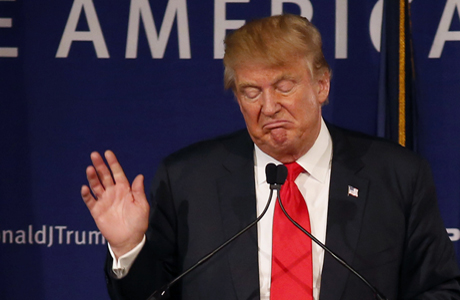
Now Trump is insulting his own supporters

Donald-Trump_3372655b

Donald J. Trump’s insult machine has pelted victims far and wide.

Now he has taken aim at the very people who support him.

Trump said the following — at a Christian school in Iowa, no less: It was that he could “shoot someone” while standing the middle of Fifth Avenue (I presume the one in New York City) and not lose the support of his followers.

Take a moment to digest that.

Those who support him, Trump said in effect, are so blindly loyal that their candidate could commit a felony and they’d still vote for him for president of the United States.

Am I missing something?

Some of my social media friends and acquaintances appear to be avid Trumpsters. They chide me for making anti-Trump statements on my blog or on Twitter. I don’t mind being needled for my opposition to his presidential candidacy.

It’s fair to ask, though: Are they really that blindly loyal to someone who would presume such a thing about them?

Constables: Who needs ’em?

Constable_Flag

Chris Johnson’s campaign signs are popping up all over southern Amarillo.

He is spending a good bit of dough seeking re-election to one of the more curious public offices I’ve ever seen.

He won’t get my vote. It’s not that I have anything against Johnson. I don’t know him. I’ve never had any dealings with him.

He’s a constable in Randall County, Texas.

Constable. What is that? He’s a politician/cop whose duties include (a) serving papers, such as subpoenas and summonses and (b) providing security for justice of the peace courts.

Let me stipulate a couple of things here.

One is that I’ve had a longstanding antipathy toward the very idea of electing constables. Why? We don’t need them. My wish would be for the Texas Legislature to propose a state constitutional amendment to do away with the office. The duties done by the constable can be done by sheriff’s deputies or municipal police officers.

But no-o-o-o-o! We’ve got to have another elected official assigned to do these things.

The other thing is that during my nearly 32 years living in Texas, I’ve voted for one man as a constable. Jeff Lester used to hold the office that Johnson now occupies. Lester, who retired recently from the Amarillo Police Department, ran for the office with one pledge: to get rid of it.

He held the title of constable, but didn’t do anything. He didn’t get paid. He referred all the duties to the sheriff’s department. He wanted to keep the office inactive long enough to enable the Randall County Commissioners Court to abolish the office, which state law empowers it to do after a period of time had lapsed.

Then came reapportionment after the 2010 census had been completed. The county had to redraw political boundaries based on shifts in population as required by state law. County commissioners then reapportioned Lester out of the precinct he had served as constable, meaning he couldn’t run for re-election.

That’s when Johnson ran — and won.

I must reiterate that I have nothing personal against Constable Johnson. It’s the office he holds that bugs the bejeebers out of me.

I get that some counties have a need for constables. The experience in Randall and Potter counties, though, has been spotty at best. We’ve elected constables who haven’t done anything while drawing their salaries. One Potter County constable — who’s since resigned — would suit up in all the gear and the requisite hardware just to serve legal papers.

I’m digging deep trying to remember a time I’ve ever heard of a constable in this part of the state making an arrest, or being involved in a high-profile criminal activity. Have I been asleep all these years?

So, I guess that Constable Johnson will get re-elected this year. Good for him. I’ll kick in my piddling portion to help pay his salary, although I won’t like doing it.

In this era when people say they’re sick of government inefficiency, I keep wondering: Where is the anger over paying for a superfluous law enforcement entity that — from my vantage point — need not exist?

We have plenty of county and municipal law enforcement personnel who are quite capable of doing the constables’ job.


Palin invites criticism

47791261.cached

A former colleague of mine took me to task recently for some critical remarks I made about Sarah Palin, who endorsed Donald Trump for the Republican presidential nomination on the same day her son, Track, was arrested for domestic abuse.

I won’t respond to what he said, but I want to post these remarks from Kevin Drum, writing for Mother Jones magazine’s website:

“I know I said that last night’s Palin-palooza would ‘hold me for a year,’ but I guess I was wrong. Palin’s son Track was arrested Monday on domestic violence charges, and today Palin addressed this:

“‘My own family, my son, a combat vet having served in the Stryker brigade … my son like so many others, they come back a bit different, they come back hardened, they come back wondering if there is that respect … and that starts right at the top.’

“I’m not happy with liberals who use Track’s problems as a way of snickering at Sarah. Yes, when you use your kids as campaign props, you open yourself up to some of this. But parents do their best, and kids sometimes have problems. Whatever Track’s problems are, he and his family should be allowed to deal with them in their own way.

“That said, if you decide to use your son’s problems as a political cudgel, you can hardly expect to others to hold back forever. Palin should be ashamed of herself.'”

Indeed, this is the steep price any politician pays by dragging private, personal family grief into the public arena.


Clinton ‘inevitability’ has vanished

Former Secretary of State Hillary Rodham Clinton reacts as she is introduced to speak at the Massachusetts Conference for Women in Boston, Thursday, Dec. 4, 2014. (AP Photo/Elise Amendola)

There once was a time when Hillary Rodham Clinton was considered a shoo-in to become the second consecutive history-making president in U.S. history.

You’ll recall the narrative.

She would succeed the first African-American president, Barack Obama, by becoming the first female president. She would win in a historic landslide. No one since, say, 1952, when Republican Dwight Eisenhower — who commanded our troops to victory over Hitler during World War II — was considered as destined to become president.

Then a funny thing happened.

Her critics began making points that stuck. They drew blood. The email tempest. Benghazi. Her occasional waffling. Is she trustworthy?

Then along came Bernie Sanders, the independent U.S. senator from Vermont running as a Democrat. He started drawing those huge crowds. He’s blasting the daylights out of big banks, Wall Street and demanding wage equality. He’s a socialist — and let’s cut the crap about “democratic socialist,” which is meant to soften the “s-word.”

Now the once-inevitable president is less so.

Fellow Democrats are now flocking to New Hampshire to say things like “a loss here won’t doom” the candidate. Former Texas Democratic gubernatorial nominee Wendy Davis is among the latest to recite that mantra.

Maybe it won’t. Then gain, maybe it’ll signal a dramatic replay of 2008, when the then-U.S. senator from New York, Clinton, was supposed to be the nominee — only she ran into that young upstart from Illinois, U.S. Sen. Barack Obama, the self-proclaimed “skinny guy with the funny name.”

Does history repeat itself? Are we witnessing a sort of 2.0 version of what occurred eight years ago?

A lot of political analysts still believe Hillary Clinton is the candidate to beat. She has the so-called “ground game” in Iowa, New Hampshire and South Carolina. She’s got the party machine lubed and ready to roll for her in other key primary states.

Let’s remember, though, this truth about the 2016 campaign. All the “conventional wisdom” has been tossed into the Dumpster. I’m one of those who believed Clinton was marching straight to the Oval Office. I didn’t foresee what would transpire . . . any more than I foresaw would be happening on the Republican Party side of this contest.

You want unpredictability in a presidential campaign?

I believe we’ve gotten it.


No one ‘likes’ negative ads . . . but they work!

untitled

Negative political ads are like the proverbial car wreck.

No one wants to look, but they can’t help taking a peek.

Ted Cruz and Donald Trump have gone negative in their head-to-head campaign for the Republican presidential nomination.

Hillary Clinton and Bernie Sanders are doing the same in the Democratic presidential primary campaign.

The candidates say they don’t want to go negative. They do it anyway.

You might ask: Why? They do it because the voting public remembers negative ads with far more regularity than they remember positive ads.

Indeed, when media folks talk about political ads, they harken back almost instinctively to the negative messages they’ve heard over the years. Lyndon Johnson’s “Daisy” ad of 1964? George H.W. Bush’s “Willie Horton” ads of 1988? George W. Bush’s “Swift Boat” ads of 2004?

The only positive ad campaign I can recall is the “Morning in America” ads that President Reagan’s re-election campaign ran in 1984.

We have a latent desire to see these negative ads. It’s in our taste buds, our DNA, our psyche.

So it’s no surprise that Trump vs. Cruz and Clinton vs. Sanders would go negative. The polls are tightening prior to those Iowa caucuses.

I guess perhaps it’s time the candidates stop fooling themselves while they try to fool the rest of us. No matter what they say about their loathing of negative ads, they do “approve this message” when they hit their airwaves.

As for those of us out here in Voter Land who also complain about negative political advertising, let’s all confess, too, that we can’t get enough of them.


When did National Review become a GOP pariah?

27buckley4-600

I’m puzzled.

I’ve always thought that the National Review was seen as the “bible” of conservative thought. The magazine founded by the late, great William F. Buckley was the go-to publication for conservatives to get their view distributed among the masses.

The National Review was the magazine to read.

What in the name of all that is holy is happening?

The Republican National Committee has cut the National Review out of its debate participation. GOP presidential frontrunner calls the magazine a “failing” publication.

Times are changing, yes?

William Buckley might not recognize what’s happening these days to the conservative movement.

Or that his once-revered publication has been shoved aside. There once was a time when thoughtful conservative leaders would occupy the platform that the National Review provided. They would offer their policy views on this or that issue.

Conservatives would embrace them; liberals might not join in the group hug, but they would at least consider the argument made, if only to shore up their own bias.

We have not entered a new age of wisdom when we toss aside thoughtfulness in favor of anger and shoot-from-the-hip talk-show rhetoric.

Mr. Buckley, wherever you are, I wish you were around to talk some sense into these guys who have redefined the conservative movement you once led.


Commander in chief test? Trump’s already failed it

Trump-and-gun-and-cadets

Politico asks in a story whether Donald J. Trump will flunk the commander in chief test.

Republican Party brass is terrified, Politico reports, of Trump getting nominated and then having to answer difficult questions regarding national security.

Trump already has failed that test, in my oh-so-humble view.

In spades.

Time and again on the campaign trail, Trump has exhibited a shocking ignorance of such things as the “nuclear triad,” which is the nation’s three-pronged nuclear weapons system involving land-based missiles, submarine-based missiles and bombs dropped from aircraft.

He cannot articulate with anything approaching precision how he intends to solve the myriad defense-related issues. His answer to illegal immigration is to “build a wall” and “make Mexico pay for it.”

He praises leaders such as Russian leader Vladimir Putin and — get this — North Korean despot/maniac Kim Jong Un for their “leadership” skills.

But I keep coming back to the wackiness of this campaign.

It has produced surprise upon surprise all along the way.

Trump has been criticized by leading conservatives for not understanding the details of foreign and military policy. Never mind what progressives are saying about him; it goes without saying that they would be highly critical of the real estate mogul/reality TV personality.

Before you get all twisted up, I’m also well aware of those who believe the current president has failed the commander in chief test — while he’s been on the job. I simply do not share that criticism.

I totally get that one man’s buffoon is another man’s statesman.

You know where Trump fits in that equation as far as I’m concerned.

DeLay’s the latest GOPer to skewer Trump

untitled

I am no fan of former U.S. House of Representatives Majority Leader Tom “The Hammer” DeLay . . . but you knew that already.

However, the fiery Texan has written an essay that conservatives such as himself should take to heart.

Take a look.

DeLay questions the Republican presidential campaign frontrunner’s commitment to Christian principles. He said the next president ought to be a conservative who bases his political beliefs on Scripture.

DeLay also takes a shot at what he calls Trump’s “clumsy” pandering to evangelicals at Liberty University in Lynchburg, Va., when he cited “Two Corinthians,” apparently not knowing that the common reference to that New Testament book is “Second Corinthians.”

He then wonders aloud just how a President Trump — my fingers still tremble when I write those two words — would make sure that retail outlets instruct their staffers to wish customers “Merry Christmas” during the holiday season. How would he do that? DeLay wondered. “By executive order?”

DeLay is just the latest political conservative to reveal what many of us on the other side of the fence have believed for a very long time, which is that Trump is a phony.

In this crazy, goofy and bizarre political environment, though, Trump’s brand of phoniness is more appealing to his true believers than the so-called phony rhetoric coming from “establishment politicians.”


Can politics intrude on a politician’s day job?

DNC Chair Rep. Debbie Wasserman Schultz, D-FL, speaks at the Democratic National Committee's Womens Leadership Forum Issues Conference in Washington, DC on September 19, 2014. AFP PHOTO/Mandel NGAN        (Photo credit should read MANDEL NGAN/AFP/Getty Images)

I’ve long wondered something about full-time politicians who take on jobs outside of the job they were elected to do.

Debbie Wasserman Schultz? Well, she’s my latest example.

Schultz is a Democratic member of Congress who represents southern Florida. She also is chair of the Democratic National Committee.

She’s certainly not the first full-time pol to assume duties unrelated to her congressional work. Former U.S. Sen. Bob Dole once represented Kansas while serving as chair of the Republican National Committee. Interestingly, he resigned his Senate seat when the GOP nominated him to run for president in 1996; he said he couldn’t do both things at the same time, so he decided to set aside his Senate duties.

Schultz doesn’t do that. No, she runs the Democratic Party while serving her constituents in south Florida.

How well does she do either job, or both?

This issue of running for a higher office while holding down an elected job already has come up during the 2016 presidential campaign. GOP contender Marco Rubio has been criticized for missing many Senate votes while stumping for his party’s nomination. New Jersey Democrats made noise about seeking Gov. Chris Christie’s ouster after Christie declared he wanted to be the Republican nominee this year.

Other members of Congress are seeking the presidency this year. To my knowledge there’s been little said about how well they’re doing their current job while they seek to be elected to another one.

Schultz was re-elected in 2014 by a wide margin, so I guess her constituents think she’s doing all right.

It’s fair to wonder though: How does she deal with purely local issues? How much attention do her constituents get from her — or her staff — when they have concerns about their Social Security or military pension checks?

Schultz has a big job running a major political party. She also has a big job representing her constituents on Capitol Hill; the latter job also pays her $175,000 annually, plus all the ancillary perks she and her colleagues get while serving in Congress.

I occasionally wonder whether politicians who hold down full-time government jobs can do those jobs adequately when other matters divert their attention from the duties they were elected to perform.