Category Archives: political news

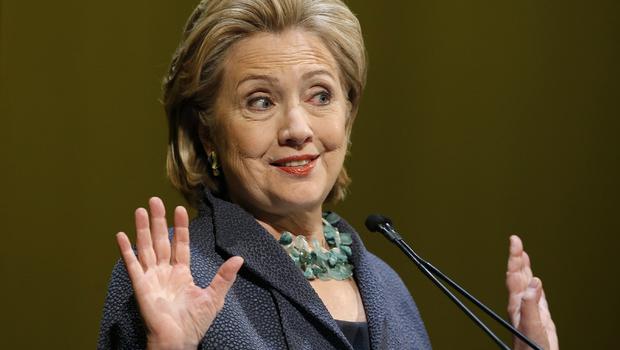
Hey, Hillary . . . it’s time for a message

hillary

Chris Hayes is a smart young analyst who works for MSNBC.

Last night he offered a most interesting assessment of Hillary Rodham Clinton’s presidential campaign.

It’s that she lacks a message.

Hayes noted that U.S. Sen. Bernie Sanders’ big win in the New Hampshire primary Tuesday came because of his clear mantra: He intends to break up the big banks and drive relentlessly for income equality.

I’m not endorsing or condemning Sanders’ overarching theme. It’s clear as a bell, however.

Hayes’ assessment of Clinton’s message? It’s that she’ll do a good job and that she’s well-prepared to be president of the United States of America.

“That’s not a message,” Hayes said.

Bingo, young man!

She now finds herself playing catch-up with Sanders, who walloped Clinton among young voters who — I should add — appeared to actually turn out Tuesday to vote for their candidates.

It wasn’t Clinton.

Should Clinton be in panic mode? I’m thinking she has time to pull it together.

South Carolina is the next stop on the presidential primary parade route. The former senator/secretary of state can harvest plenty of votes there from a huge African-American base. Here is where she needs to enlist some serious help from her husband, the 42nd and unofficial “first black president” of the United States.

Clinton can paper over all she wants about the expected outcome in New Hampshire. The truth is she got walloped.

Chris Hayes had it right. She lacks a coherent message that resonates with voters who have a serious gripe about what they perceive is wrong with the political system.

Oh, I know too that she’s got those other issues hanging over her. Those e-mails, Benghazi, a perceived lack of authenticity . . . blah, blah, blah.

This once-invincible candidate is now looking, well, a lot less formidable.

Are you standing by, Vice President Joe Biden?


Both major parties seeing huge transformation?

Horserace

I spent most of my day in airports and on airplanes today, so I was a bit out of the political loop.

Until I got home.

Then I found out that Donald J. Trump won the Republican primary in New Hampshire in a yuuuuge way. I also found out that Bernie Sanders buried Hillary Clinton in the Democratic primary.

What does it mean?

Beats the devil out of me.

I’m not going to suggest just yet that both major political parties are in the midst of a major makeover.

Sanders’ win was expected, given that he is a virtual favorite son, as he represents next-door Vermont in the U.S. Senate. Clinton admitted as much earlier this evening when she conceded the New Hampshire primary to Sanders.

On she and Sanders will march to South Carolina, where a hefty African-American voter base is expected to give Clinton a built-in advantage.

Now, what about them Republicans?

Trump won by a lot. Perhaps the bigger tempest will occur among those who finished behind Trump. John Kasich finished in second place. Now the Ohio governor becomes the latest favorite of the GOP “establishment wing” to challenge Trump. What happened to Marco Rubio? Or Ted Cruz? Or Chris Christie?

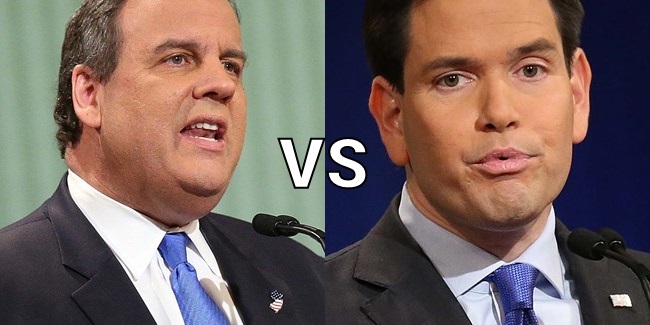
As I finish up this post, I am hearing reports on cable TV news that Christie’s bid might be over. He savaged Rubio at the latest GOP debate, which appears to have inflicted near-mortal wounds on the young senator from Florida. Christie, though, didn’t get the bounce he expected. He’s heading for New Jersey, the TV talking heads report, to consider his options.

Look, I’ve noted already that some serious balloting is yet to occur. We’ve got the Super Tuesday event in early March, which includes big, bad Texas taking part in that primary donnybrook.

Will these results determine the future of both major political parties? Perhaps.

However, so help me, this election is impossible to chart with semblance of certainty.


‘Size matters’ in this year’s primary campaigns

texas-primary-voters-to-get-more-say-in-2016-than-plannedb093ef659b7986d4659b

Texas is back in the big leagues of the presidential primary season.

The state goes to the polls on March 1 with both the Republican and Democratic presidential nominations very much in doubt . . . although the GOP nomination is more in doubt than the Democratic contest.

As the Texas Tribune’s Ross Ramsey notes in his excellent analysis of the upcoming Lone Star State primary: Size matters.

Texas is back in the game

It’s not clear yet whether the Texas primary, which occurs with several other states, will be decisive. Let’s just presume for a moment that it will be more decisive than, say, the New Hampshire primary that occurs Tuesday, or the Iowa caucus that took place this past week.

On the Democratic side, Vermont’s U.S. senator, Bernie Sanders, is basically running essentially as a favorite son in neighboring New Hampshire. He figures to win. He might even win big. Hillary Clinton hopes to carve into his lead in the final hours before voting starts and if she can finish anywhere near Sanders, she will look for a reason to declare some form of “victory.”

On the Republican side, Donald J. Trump appears headed to victory — if we are to believe those polls.

But none of it matters — truth be told — as much as the big Texas primary that’s about to take place.

Texans are going to cast many more ballots and will select huge delegations to the parties’ political conventions later this year.

In many prior election cycles, the contests were virtually decided by the time the primary caravans rolled into Texas. This year, by the grace of the state and national parties, we get an early shot at making this most critical political decision.

My own hunch is that the Republican primary will be much busier than the Democrats’ primary. One reason is quite obvious: Texas has many more Republicans than Democrats. The other reason is that the GOP primary will be up for grabs and with candidates like Trump and Texas home boy U.S. Sen. Ted Cruz garnering most of the attention, then the Republican polling stations are bound to get most of the election day business.

Still, as an avid political junkie, I happen to be glad to see Texas back in the thick of the presidential selection fight.


Torture returns to the political debate arena

peva9h1ifqikizuyye9w

It’s back. Torture has made its return as an issue being discussed by presidential candidates.

Donald J. Trump has dredged it from the has-been issue pile, saying something about how he would order the waterboarding of bad guys in order to get information from them.

Don’t do it, says someone who knows a thing or three about torture.

I prefer to stand with the expert on these things. That would be U.S. Sen. John McCain, R-Ariz., who lost the presidency in the 2008 campaign to fellow Sen. Barack Obama.

What’s a bit ironic, of course, is that McCain and Trump would be at loggerheads over this issue. Why the irony? You’ll recall that one of Trump’s initial insults was tossed in McCain’s direction when he said that the senator is a war hero only because he got captured by the North Vietnamese during the Vietnam War and that he (Trump) preferred people “who weren’t captured, OK?”

Here they are again. McCain has long opposed the use of waterboarding as an “enhanced interrogation” technique. He calls it torture, which he believes breaks faith with American principles.

What does McCain now about torture? More than most Americans ever will know, and certainly far more than Donald Trump knows about it.

McCain’s five-plus years as a captive after being shot down during the Vietnam War included many years of torture: beatings, solitary confinement and the communists’ various versions of “enhanced interrogation.”

When the senior senator from Arizona calls a particular act a form of torture, well, I am inclined to believe him.

I am doing so in this particular exchange.

He’s right as well to suggest that the information gleaned from waterboarding has been sketchy at best and has not provided nearly as much actionable intelligence as has been suggested.

Sen. McCain isn’t speaking as some soft-pedaling, squishy, politically correct liberal. He speaks as someone who’s been straight to hell and back.


If Hillary comes close to Sanders, she’ll declare ‘victory’

08CLINTONHISTORY-span-master1050

Politics has this way of giving those who lose tough races a chance to declare victory.

Eugene McCarthy did it in 1968 when he lost the New Hampshire primary to President Lyndon Johnson; George McGovern did the same thing in 1972 when he finished third in a primary that was won by Edmund Muskie; ditto for Bill Clinton in 1992 when he lost to Paul Tsongas.

History well might be about to repeat itself Tuesday — if Hillary Clinton moves to within shouting distance of Bernie Sanders in the Granite State’s Democratic primary.

She’s trailing now. She might be closing the gap, according to some polls. If she loses to Sanders by, say, 8 or fewer percentage points, I can hear it now: Hillary Clinton will proclaim herself to be the “second comeback kid.” The first, of course, was husband Bill.

When Ted Cruz won last week’s Iowa caucus, we heard to other “losers” proclaim victory. One of them was Donald J. Trump, who reminded voters that the polls he loves to trumpet said he didn’t have a prayer in Iowa when he entered the race; he finished second behind the Cruz Missile.

Even more fascinating was how third-placer Marco Rubio declared victory in that astonishing speech to his supporters. Hey, Marco . . . you finished third, young man!

Of course, actually finishes don’t mean much in political terms. Candidates have perfected the art of the spin for as long as the process itself. These days the necessity is made more important given the presence of social media and 24/7 cable news networks.

The trick is to get the “victory” declarations out there before anyone has a chance to catch their breath. Get ahead of the story and make damn sure you stay ahead of it.

Bill Clinton declared victory 24 years ago. He didn’t actually win. He just made sure voters thought he did.

I’m almost willing to bet real American money that his strategy has not been lost on his wife’s campaign team.

Now it’s Marco Rubio in the bulls-eye

christie-vs-rubio-rivalry-23620

It’s interesting to me how the center of attention among the Republican presidential candidates keeps changing.

Donald J. Trump? Step aside for now. Ted Cruz? Take a seat. Ben Carson? Well, your time might be up anyway.

Today’s target appears to be Marco Rubio, the young senator from Florida who this evening took some heavy incoming fire from Chris Christie . . . among others.

It’s a moving target.

Perhaps eventually the center of attention will settle on one individual. My guess is that it’ll be either Trump or Cruz. With GOP candidates dropping out after poor finishes, the field of candidates will narrow and the “targets of opportunity” will be reduced accordingly.

I was particularly amused by Christie’s attack line this evening when he chided Rubio for his canned-sounding responses to questions. He’s too rehearsed, too polished, too scripted, Christie seemed to say. The young senator — who’s not seeking re-election this year — needs to have an executive job, Christie said, like being a governor, a job Christie holds in New Jersey.

Indeed, some media are reporting this evening that the remaining governors and former governors in the GOP field — Christie, John Kasich of Ohio and Jeb Bush of Florida — took particular delight in unloading on the others who don’t have that kind of government “executive experience.”

Frankly, I cannot blame the governors for taking umbrage at the success some of these others are enjoying in this campaign — at the expense of the governors. I mean after all, we’ve seen several governors and ex-governors already drop out: Rick Perry, Bobby Jindal and Scott Walker all have tossed in the towel.

Now, though, the target du jour is Sen. Marco Rubio, the latest poster boy for the so-called “establishment wing” of the Republican Party.

New Hampshire’s primary is set for Tuesday. Voters in both parties will be casting actual secret ballots in secure polling places for the individuals they believe should become the next president.

After this first round of voting, the question is likely to become: Who will be the next candidate to take the heavy fire?


Debate produces a memorable sound bite

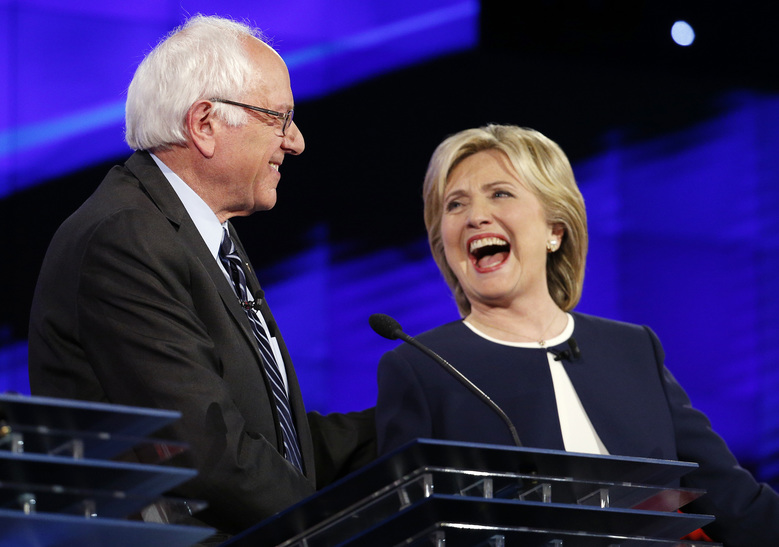
Sen. Bernie Sanders, of Vermont,, left, and Hillary Rodham Clinton laugh during the CNN Democratic presidential debate, Tuesday, Oct. 13, 2015, in Las Vegas. (AP Photo/John Locher)

Hillary Clinton can take ownership now of perhaps the second of three memorable sound bites that have stuck with some us over many years.

Last night the Democratic presidential candidate referred to the attacks leveled against her by primary opponent Sen. Bernie Sanders as an “artful smear.”

Bingo, Madame Secretary.

That will go down in history right along with another one of her gems, when she referred to the “vast right-wing conspiracy” that concocted the sex-related scandals that enveloped her husband during his time as president of the United States.

The third memorable sound bite comes from a federal judge who was nominated by President George H.W. Bush to join the U.S. Supreme Court. Clarence Thomas famously referred during his Senate Judiciary Committee confirmation hearing to allegations of sexual harassment as a “high-tech lynching.”

There you have it. There well could be more, but those jump out at me.

Those, in my mind, are the Big Three of sound bites relating to scandals and/or controversies.

The debate between Clinton and Sanders, though, did prove edifying, educational and at times entertaining.

It also was memorable now for what is certain to become a sound bite that will live forever.


Comparative politics: alive and well

Negative

A euphemism for negative campaigning can be termed as “making comparisons” among opposing candidates.

OK, so the campaigns for president in both political primaries are getting negative.

The two Democrats still standing for their party’s nomination — Hillary Clinton and Bernie Sanders — are demonstrating the differences between them in terms of experience and philosophy.

The same can certainly be said of the remaining Republicans. They, too, are going after each other with ferocity. No one not named “Trump” wants Donald Trump to be the nominee. Ted Cruz isn’t getting much love, either. Now we have a third front-tier candidate, Marco Rubio, who is taking opponents’ fire.

Honestly, I am intrigued by it all.

I normally dislike intense negativity in these political campaigns. I prefer to hear what candidates will do for me, not necessarily how they differ with someone else.

This election cycle, though, is providing some fascinating discussion among the candidates.

It’s revealing the type of men and women who are seeking this great office. It is telling us about their psyche, their personalities, what makes them tick; it’s revealing where their “hot buttons” are located.

Clinton and Sanders are showing us tonight how different they are from each other. I am glad that their party’s nomination fight has been reduced to just two of them.

I remain hopeful that the Republican primary will continue to cull the weaker candidates from the still-large herd of hopefuls. It’s hard for me to keep up with all the stones being tossed in so many directions from so many sources.

Still, it’s educational to watch.

It’s also rather entertaining.


Stay in the debate game, Megyn Kelly

kelly

I am not one generally to speak well of the Fox News Channel.

The cable news network that keeps boasting about its “fair and balanced” approach to news reporting is neither fair or balanced, in my view. Then again, that’s likely my own bias revealing itself . . . for which I will not apologize.

I do applaud Fox, though, for standing behind its superstar news anchor/debate moderator Megyn Kelly.

Fox announced that Kelly will be co-moderator — along with fellow news anchors Chris Wallace and Bret Baier — in a Republican presidential debate scheduled for March.

Big deal? Sure. Donald J. Trump is angry with Kelly because she had the utter gall to ask him a pointed question in the network’s first debate about Trump’s comments regarding women.

He said Kelly disrespected him. I guess he wasn’t paying attention to the heavy lumber she was tossing at the other candidates as well.

Trump was so angry that he didn’t participate in the final GOP debate, also sponsored by Fox, before the Iowa caucuses. His absence from that debate might have played a role in his losing the caucus fight to U.S. Sen. Ted Cruz of Texas.

Kelly’s  role as moderator should not rest on the pique of a particular candidate who demonstrates a remarkably thin skin as he seeks to become the head of state of the world’s most powerful nation.

This Kelly-Trump feud has become the No. 1 sideshow of this Republican presidential primary campaign.

I happen to be glad that Fox is treating it that way by refusing to knuckle under to a political candidate’s demands.


Sanders’ ‘revolution’ might be overstated

revolution

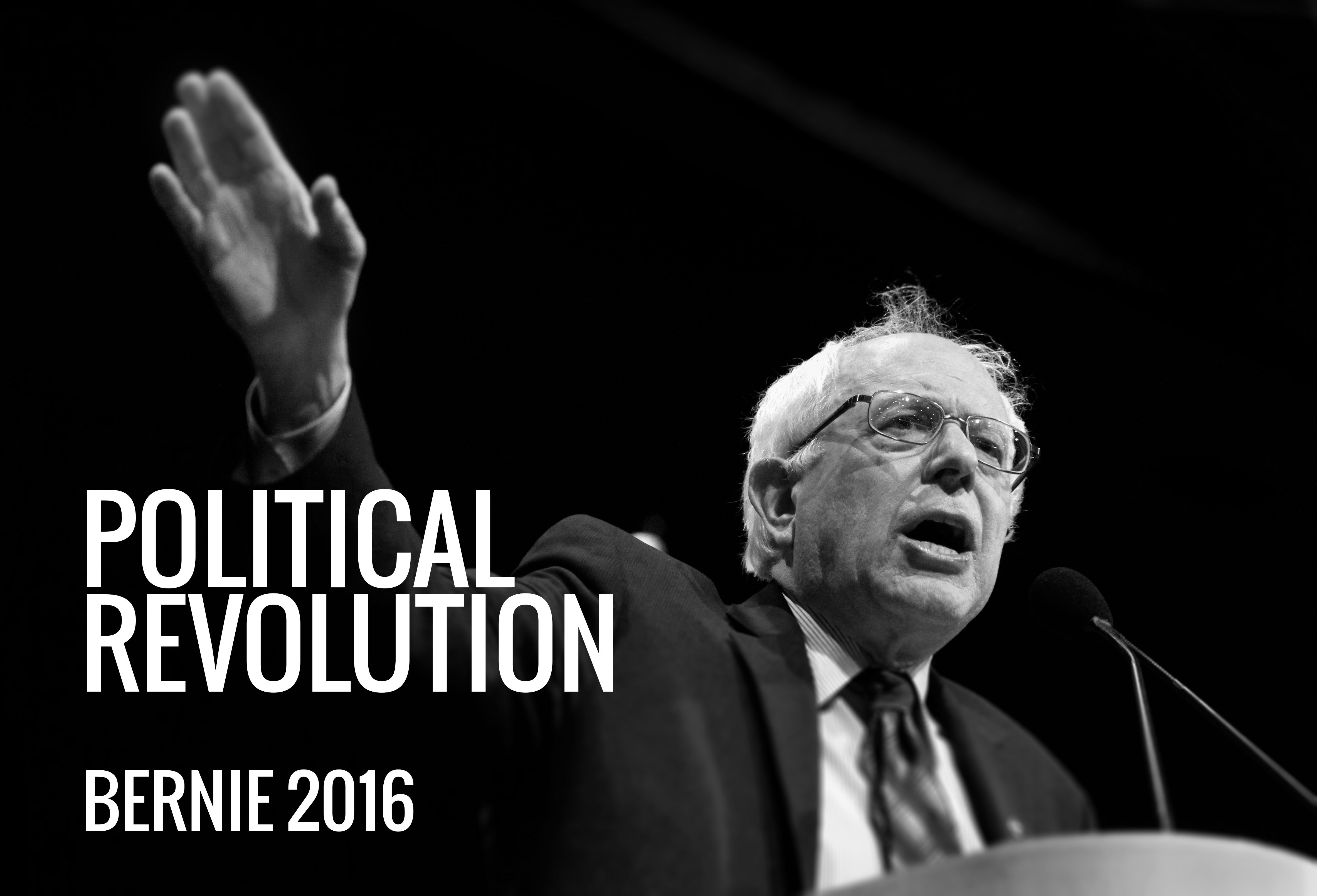
Sen. Bernie Sanders is now using the word “revolution” to describe the nature of his bid to become president of the United States.

He’s leading Hillary Clinton in every poll there is in New Hampshire, which I think is filling the Vermont senator’s head with visions of overinflated grandeur.

It’s not that his Democratic support is fake. It’s real. But let’s cool the “revolution” talk for a bit.

Three presidential campaigns of the late 20th century also were labeled “revolutions” in some quarters. How did they do?

1964: Sen. Barry Goldwater of Arizona took the Republican Party presidential nomination by storm, defeating “establishment” candidates, such as New York Gov. Nelson Rockefeller in a wild primary fight. He went on to lose the general election that year to President Lyndon Baines Johnson in a historic landslide. LBJ, of course, traded a good bit on the legacy of his slain predecessor, John Kennedy, and vowed to continue pursuing JFK’s unfinished agenda.

1968: Just four years later, the Vietnam War caused another revolution. LBJ’s popularity had gone south. Democrats looked for an alternative. They turned to one in Sen. Eugene McCarthy of Minnesota, who stunned LBJ with a stronger-than-expected showing in the New Hampshire primary. In came another anti-war candidate, Sen. Robert F. Kennedy of New York, brother of the murdered president and a political hero to many Americans — including yours truly. Vice President Hubert Humphrey, another “establishment” candidate, won the nomination, but then lost to Republican Richard Nixon by a narrow margin that fall.

1972: Let’s call this one the Anti-Vietnam War Revolution 2.0. The flag bearer this time would be U.S. Sen. George McGovern of South Dakota, who beat the party “establishment” led by Sen. Ed Muskie of Maine to win the nomination. McGovern drew big crowds to rallies, too, just like Sanders. Did they equate to votes that November? Ummm, no. President Nixon won 49 out of 50 states and buried McGovern’s “revolution” under the landslide.

Yes, some “revolutions” succeed. Ronald Reagan’s landslide victory in 1980 is one. Barack Obama’s election in 2008 could be considered another one. But they required extraordinary circumstances. The Iranian hostage crisis hurt President Carter grievously in voters’ minds in ’80 and the economic free-fall of 2008 helped lift Sen. Obama into the White House eight years ago.

Sanders might think he’s carrying the torch for another revolution. Then again, Republicans such as Donald Trump, Ted Cruz and perhaps even Marco Rubio might want to say the same thing . . . for entirely different reasons.

I just want to remind the revolutionaries out there that the political establishment doesn’t get to be so entrenched and powerful by being made up of pushovers or patsies.