Category Archives: political news

What, precisely, does ‘original intent’ mean?

founders

U.S. Sen. Marco Rubio tonight paid glowing tribute to the late U.S. Supreme Court Justice Antonin Scalia.

The praise came while Rubio was taking part in the Republican presidential debate.

He said something that struck me as, well, fascinating. Rubio said Scalia’s legal brilliance was rooted in his belief that the U.S. Constitution is not a “living document,” but that the Constitution should be interpreted precisely as the founders intended.

I don’t believe for one second that Justice Scalia wanted to roll back the advances that came about in the many years since the founders wrote the Constitution — in the late 18th century.

However, if Rubio’s praise of Scalia is to be taken literally, it seems fair to wonder: Does he believe the founders were right to deny women the right to vote, or that African-Americans should be enslaved?

Of course he doesn’t.

However, we can see the discrepancy — in my view — in the debate over whether the Constitution is a living document. The argument of those who favor the so-called “original intent” of the founders breaks down.

Why? Because of the many reforms approved in the 200-plus years since the Constitution was ratified, the document does indeed evolve as our nation has evolved.

It’s alive, man.


A major battle now looms

chapman.0830 - 08/29/05 - A Supreme Court headed by Supreme Court Justice Antonin Scalia has questions for Chapman University Law School professor John Eastman as he and California Attorney General Bill Lockyer argue the 1905 ''Lochner v. State of New York'' case during a re-enactment Monday afternoon at Chapman University. (Credit: Mark Avery/Orange County Register/ZUMA Press)
)

Supreme Court Justice Antonin Scalia’s sudden death today has stunned the nation.

As President Obama said this evening, the 30-year member of the nation’s highest court was one of the “most consequential” legal minds of our time.

The president now faces arguably the “most consequential” appointment of his time in office.

To say that Justice Scalia’s passing upsets the ideological balance of the highest court would commit the supreme understatement.

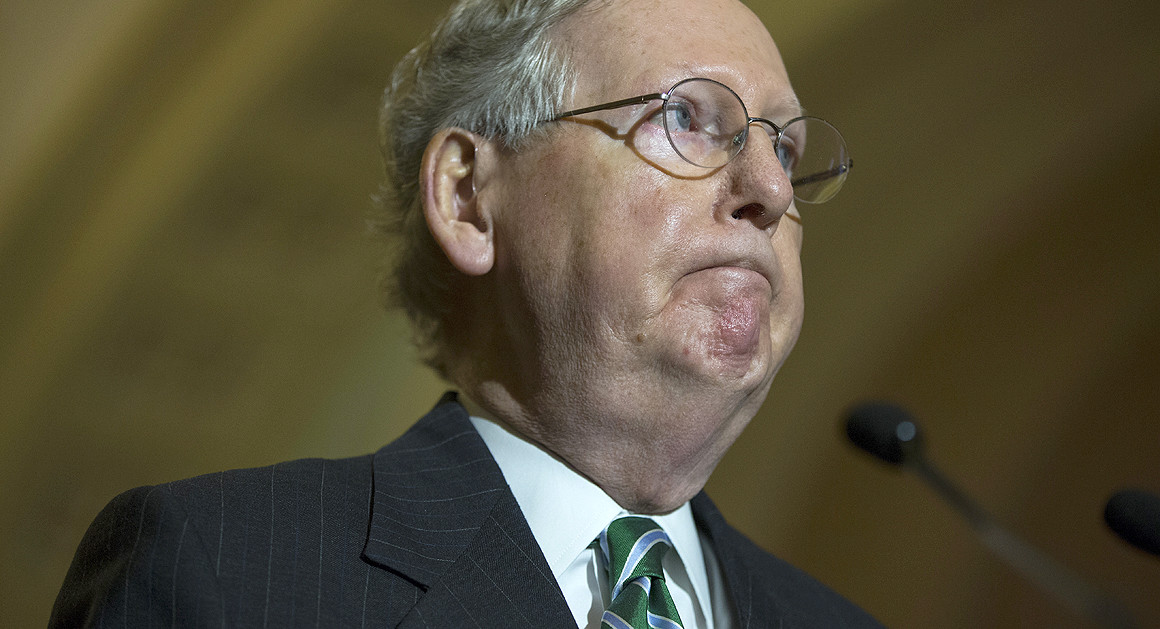
And, oh yes, the partisan divide opened wide immediately upon news of Scalia’s death. Senate Majority Leader Mitch McConnell, a Republican, said the Senate should wait until after Barack Obama leaves office to vote on a replacement; meanwhile, Senate Minority Leader Harry Reid, a Democrat, wants the Senate to act quickly.

Who could have seen that coming?

The president said he’ll make the appointment “in due time.” He wants a thorough, fair hearing and a “timely vote.” As the president — lame duck nor not — Barack Obama deserves the chance to nominate someone of his choosing.

Indeed, the appointment coming from a left-of-center president to fill a vacancy created by the death of a right-of-center Supreme Court justice sets up a huge battle that likely will dwarf any of the many fights Barack Obama has waged already with the U.S. Senate.

The court’s narrow balance has just been shaken to its very foundation.


Kasich gets the nod from a major media outlet

kasich

Newspaper editorial boards have at times been accused of being “homers,” sometimes favoring the home-town or home-state candidates over more qualified challengers.

The Dallas Morning News has chosen, however, to make its recommendation for the Republican presidential nomination — and it’s not U.S. Sen. Ted Cruz of Texas.

The DMN’s nod goes to Ohio Gov. John Kasich.

The paper likes Kasich’s record of accomplishment and believes it would suit him — and the nation — well if he were to be elected the next president of the United States.

What’s most compelling — to me, at least — is the paper’s nod to Kasich’s ability and willingness to work with Democrats. He did so while serving in Congress, where he chaired the House Budget Committee and helped craft a balanced federal budget.

One does not do such a thing in a vacuum, and Kasich showed his bipartisan chops in that regard.

I’m glad to see the Dallas Morning News climb aboard the Kasich bandwagon, such as it is in Texas.

* *

But what does a newspaper endorsement mean?

More than likely not a damn thing, at least not in this election season.

The leading Republican candidate for president says outrageous things about his foes, other politicians in general, the media, the voters, women — he uses amazingly grotesque language to describe one of his leading opponents — but, what the heck. That’s OK. He scores points for tossing aside “political correctness.”

Kasich remains one of the grownups in this GOP primary contest. A newspaper editorial board endorsement likely won’t be singularly decisive in determining whether he wins the state’s primary on March 1.

I just hope Texas Republicans heed the rationale behind the recommendation.

What’s in a name?

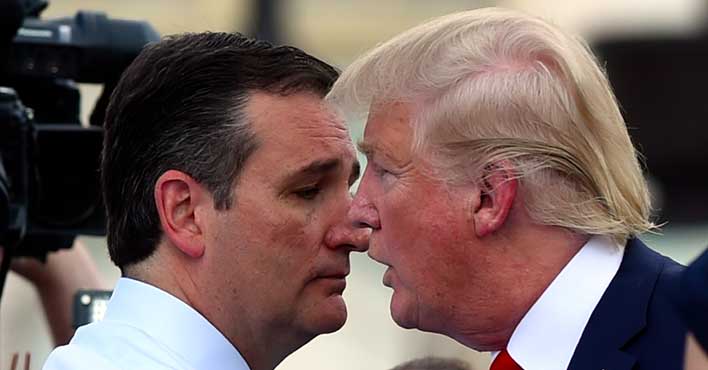
Obama-Cruz

Social media provide a wonderful — but occasionally maddening — forum for passing around silly quips and observations.

This one came across my Facebook feed the other day.

It noted that President Obama’s critics have been fond of referring to him as “Barack Hussein Obama.” Yet one of those critics doesn’t get the same treatment by his foes who could refer to him as “Rafael Eduardo Cruz.”

To be fair, I don’t recall hearing Texas Republican U.S. senator and presidential candidate Ted Cruz use the president’s full, given name when referring to him. Maybe he did. Whatever …

I have heard the president make plenty of fun of his own name.

During two appearances with Republican rivals at the Al Smith Dinner in New York City — which is a political ritual of sorts, bringing opponents together for a night of fun and bipartisan fellowship — Obama cracked jokes about his name.

In 2008, he said he got his name from “someone who never thought I’d run for president.” Referring to a line that Republican nominee U.S. Sen. John McCain had used in a debate with Sen. Obama, he joked, “Barack is actually Swahili for ‘that one.'”

In 2012, while running for re-election, the president noted something in common with his GOP foe, Mitt Romney. “We both have unusual names,” he said, noting that “Mitt” is Romney’s middle name. “I wish I could use my middle name,” the president quipped with feigned wistfulness, again to huge laughter.

What’s the connection between Obama and Cruz? They both have faced — and are facing — equally ridiculous questions about their eligibility to seek the presidency.

What’s the lesson here?

It might rest in that old saying about something being “sauce for the goose … and the gander.”


About those elected offices …

1407859219000-Election-3-

Let’s take an earlier blog post briefly to the next level.

I questioned why we elect certain officials in Texas on partisan ballots, why we choose between Democrats and Republicans.

Here’s the blog.

A friend poses an excellent question: Why must we elect some of these officials at all?

He makes the excellent point that tax assessor-collectors, district clerks, county clerks and treasurers — all countywide elected offices — don’t set policy. They follow policy set by state legislators and, to a lesser degree, by county commissioners. They are “functionaries,” he says.

I guess I harken back to an earlier point: Texans love to elect people to public office. It’s in our political DNA, I reckon. Perhaps we like to hold them accountable to us exclusively; we don’t want some intermediary standing between these individuals and the people who elect them.

But my friend’s point remains well-taken.

Then again, that would call for an even more drastic leap of faith were we to recommend such a drastic change to our antiquated Texas Constitution.

I’m willing to take it.


Partisan labels ought to go

democrat_republican

I arrived in Texas in the spring of 1984 with my eyes open about the state’s vigorous political climate.

Perhaps I should have opened my eyes just a little bit wider so that I could see something that got past me as I studied up on the way things would be done in my new home state.

I knew that Texans like to elect people to public office. We have more elected offices than I’d ever seen, for instance, at the county level.

What I didn’t quite grasp, though, were the partisan labels that we attach to all the candidates. Perhaps most fascinating is how we elect judges in this state — as Republicans or Democrats.

My new Texas home would be — for my first 11 years in this state — in Beaumont, where Democrats ruled. Indeed, the entire state was still controlled by Democrats, who held most of the elective office statewide.

What I couldn’t quite grasp, though, is why we elect choose Democrats and Republicans among candidates seeking public office.

I’m left now, 32 years later, to keep asking: Can someone identify for me the difference between a Democratic and a Republican tax assessor-collector, or county clerk, or district clerk, or treasurer? For that matter, does a sheriff or district attorney arrest and prosecute criminal suspects differently if they’re Democrat or Republican?

I posed these questions once in a column I wrote for the Amarillo Globe-News. I got an interesting response from a county elected official — a loyal Republican, naturally — who agreed with me. She couldn’t fathom the difference, either, between how individuals of one party would do the job she took an oath to do any differently from individuals of another party.

Judgeships have proved to be the most troublesome.

In the early to mid-1980s, solid Republican were getting booted out of office or were losing elections simply because they were of the wrong party. It was wrong then, just as it is wrong now to see more qualified Democratic candidates losing to Republicans for precisely the same reason.

I don’t intend — yet — to make this a major issue for this blog. I just feel inclined to suggest that a change to a more reasonable and logical election system would serve the state better than the system we have now.

State legislators, governors and other statewide officeholders — except judges — surely can make the case that partisan differences exist. I’m fine with that.

Judges? That’s another matter.

I’ve all but given up arguing for a retention system in which judges are appointed and then stand for retention at the ballot box. At this point, I’d settle for a change in the way we elect judges, simply by having them run on their judicial philosophy rather than on whether they belong to a certain political party.

How would we change all that? Through a constitutional amendment, which requires a vote of all Texans — and which is equally cumbersome, antiquated and nonsensical.

That, though, is a subject for another day.


How does Bernie attract young voters?

Young-Voters-For-Sanders-530x318

Many of my friends seem to think I live, eat, drink and breathe politics.

Not true. I actually have a life outside of the political world. Still, I enjoy the give-and-take of political discussion.

This morning a friend of mine and I were talking about the presidential race. The conversation turned to Bernie Sanders, the independent U.S. senator from Vermont who’s running for the Democratic nomination.

“Why do young people like him so much?” my friend asked.

I haven’t given it that much thought as I’ve watched Sanders chip away at Hillary Rodham Clinton’s one-time inevitability as the Democratic nominee.

Then it dawned on me as my friend posed the question: Sanders has a grandfatherly appeal.

Back in the very old days, when I was a twentysomething idealist, I joined an army of young voters who supported the late Sen. George McGovern. His campaign centered on a single issue: ending the Vietnam War.

By 1972, the war was still raging. My own interest in the war was a bit different from many of my peers. They faced the prospect of going there. I had been there and returned. I came back after my Army stint as confused and confounded about our mission in ‘Nam as I was when I went over in the spring of 1969.

Sanders’ appeal to young voters today — more than four decades later — is a bit more elusive. I have trouble understanding his economic appeal, but then again, maybe it’s just me; I might be a bit slower on the uptake than I used to be.

I’ve concluded that perhaps a lot of Sanders’ appeal rests on the fact that he’s a bit longer in the tooth than any of the other candidates running for president this year — although Clinton isn’t that much younger.

Hillary Clinton faces an authenticity challenge. Sanders doesn’t. He seems to be precisely how he presents himself: a loveable curmudgeon.

I’ll admit that I haven’t talked to that many young people about Sanders’ candidacy. Another young friend with whom I’ve recently gotten acquainted asked me this morning about Michael Bloomberg — the former New York mayor who’s pondering an independent/third party candidacy for president.

I haven’t a clue what would drive a Bloomberg candidacy, other than be a spoiler, I said. He, too, is an older gentleman. Would my young friend support Bloomberg because he reminds her of Grandpa? I might ask next time I see her.

Yes, this election season is the most unconventional many of us ever have seen. This fascinating love affair that Old Man Bernie has developed with younger voters just might be yet another result of the unrest that’s gripped so many Americans.


‘Democratic socialist’ sounding more, um, socialist

berniesanders-61515-1434466786

The  more I hear from U.S. Sen. Bernie Sanders, the more convinced I become that it’s time to end the qualifier when describing his economic philosophy.

The presidential candidate calls himself a “democratic socialist.”

I believe I understand the message he’s trying to convey, which is that his brand of socialism isn’t dependent entirely on the government taking care of every American’s needs.

Sanders has been using the democratic socialist label — again, in my view — to take some of the sting out of the s-word that conservatives are fond of using to describe policies such as, oh, the Affordable Care Act.

Then on Thursday night, near the end of the Democratic presidential candidate debate with Hillary Rodham Clinton, Sanders launched into a lengthy riff about the two political leaders he most admired.

He ended with Winston Churchill, but only after he described Franklin Delano Roosevelt’s tenure as president.

He told us how FDR took office in 1933 while 25 percent of Americans were out of work. We were in the throes of the Great Depression.

How did FDR get us moving again? By energizing government to create jobs. The WPA and CCC were government-financed employment programs. The money to pay for them didn’t just materialize. Americans paid for them with taxes.

Social Security became law in 1935.

Gradually, the nation began to work its way out of the Great Depression.

Then came Pearl Harbor in December 1941. Everything changed after that.

But as I listened Thursday night to Sen. Sanders go on and on about FDR’s leadership, I was struck by the belief that he was talking about socialism. Not just a form of it, but the unvarnished version of it.

I happen to share Sanders’ view that 80-plus years ago, President Roosevelt faced a terrible, miserable set of circumstances when he took his seat behind the big desk in the Oval Office. He felt he had to do something dramatic to get the country going.

Sanders also said something else at the end of the debate that I found a bit curious. He seems to believe the nation is ready for another “revolution,” that the income inequality gap of today sets up a need to create some kind of massive government infusion of money to bolster working families who are suffering while the “top 1 percent of Americans” are doing fabulously.

He wants free college education. Sanders vows to bring universal health care to every American. He intends to push for a dramatic increase in the federal minimum wage.

How does he intend to pay for it? He wants to raise taxes on all Americans.

How, then, is he going to do that with Republicans retaining control of the House of Representatives, where all tax legislation must originate?

He sounds like a socialist.

Not a democratic socialist.

He sounds like the real thing.

I believe I heard someone who is overreaching as he pulls the lever on the economic alarm bell.

FDR faced a grave economic crisis the likes of which will not confront the next president.


As GOP field thins out, so might Trump’s support

republican-elephant-668x501

An interesting dynamic might be unfolding as the Republican presidential field continues to thin out.

It involves Donald J. Trump and the support he’s been able to get so far.

I believe it’s fair to ask: Who are the voters supporting the dropouts going to endorse?

The GOP field now is down to seven candidates; it started out at 17, if you’ll recall.

Some of the so-called “establishment” candidates have packed it in. The latest significant casualty was New Jersey Gov. Chris Christie. Others have gone by the wayside and none of them appears to be friends of Trump, who’s managed to insult his way to the top of the GOP heap.

I’m wondering if Trump’s support now will dwindle as Republican voters who were loyal, say, to Christie, or Mike Huckabee, or Rick Santorum, or Bobby Jindal start looking around for someone else to support.

Ted Cruz is mining the ultraconservative voters. Marco Rubio, although now severely damaged by the battering he took in the most recent GOP debate, is on the hunt for the same folks. John Kasich, my favorite Republican, also is beginning to gather some steam. Jeb Bush also could find himself thrust into the game.

All of these individuals stand to gain from the remnants of support that rallied around the candidates who’ve departed the campaign trail.

Where does that leave Trump? With his base of support, comprising voters who somehow are infatuated with the candidate’s brashness and don’t seem to care one little bit that he doesn’t seem to possess a political philosophy on which he would govern.

Let’s just watch this thing continue to play out.

I’ve seen the polls that show Trump still leading in South Carolina. However, as we’ve seen in previous election cycles, the Palmetto State is where the GOP campaign has been known to get nasty … as in real nasty.

I’m now wondering how well Trump will hold up when the mud starts flying.


Lee Atwater’s home state: dirty tricks thrive there

maxresdefault

Lee Atwater has been dead for some time, but his legacy lives on.

The late Republican Party operative — a South Carolina native — was known as an aggressive campaigner. He was so aggressive, in fact, that many observers called him “dirty,” “mean-spirited,” “cheap.”

The GOP presidential dog-and-pony show is heading into the Palmetto State, where it appears to be quite likely that the nastiness that has punctuated the party primary campaign just might get whole lot nastier.

Oh, I remember some of the recent history relating to South Carolina.

Dirty tricks await the candidates

Perhaps the most memorable hatchet job occurred in 2000, when U.S. Sen. John McCain, fresh off his Republican primary victory in New Hampshire, ran into a dirty-trick buzzsaw.

Someone floated a bogus rumor that Cindy McCain — wife of the former Vietnam prisoner of war — had a “drug problem.” Then came another falsehood, that Sen. McCain had fathered an African-American child out of wedlock.

McCain blamed the dirty tricks on Texas Gov. George W. Bush’s campaign. It rankled McCain so badly that at one GOP debate that year, McCain told Bush to “take your hand off” the senator’s arm.

Lee Atwater was known as a tough-as-nails operative. He died of cancer in 1991. Wherever he is today, I’m quite certain he’d wish he could return to take part in what is likely to become a bloodbath.

It’s the South Carolina way.

So much for southern gentility.