Category Archives: national news

Mayor stands for principle in commissioning of ship

USS Portland

This story caught my eye initially because it involved a vessel named after the city of my birth.

Then I learned more about the real story. It’s about principle.

The USS Portland is going to commissioned late next year in Portland, Ore., rather than in Pascagoula, Miss., where it was scheduled to be commissioned.

Why the change? Portland’s lame-duck mayor, Charlie Hales, said he wouldn’t go to Pascagoula to take part in the commissioning because of a Mississippi law he and others say discriminates against gay and transgender people.

You go, Mr. Mayor!

Hales is standing on the principle of non-discrimination and for that he should be applauded.

The USS Portland is an amphibious transport ship that the U.S. Navy has just built. It’s a gleaming vessel of the San Antonio class.

It’s going to be christened in Pascagoula. Hales was going to attend the christening, but backed out because of the discriminatory law.

Portland has some world-class freshwater maritime facilities, as it straddles the Willamette River near where it empties into the mighty Columbia River. According to a report in the Portland Tribune, the commissioning will occur late next year at Terminal 2.

As the Tribune reported: “’The commissioning ceremony of a Navy ship is steeped in a time-honored tradition that places a ship in active service,’ says Mike Hewlett, chair of the Portland Council of he Navy League, an international organization of civilians that supports the maritime services, including the U.S. Navy, the U.S. Marines, the U.S. Coast Guard and the Merchant Marine.”

That “tradition” should not be done in an environment where some Americans face a state-sanctioned discrimination.

Accordingly, Mayor Hales should be applauded for standing firm on his belief that such laws mustn’t be tolerated.

I don’t know Charlie Hales, who has made me proud of my hometown.


Confederate flag debate swirls on and on and on …

BBrGYBt

I’m pretty sure that for as long as the Confederate flag flies over official government property that the debate over its meaning will stay front and center on the national stage.

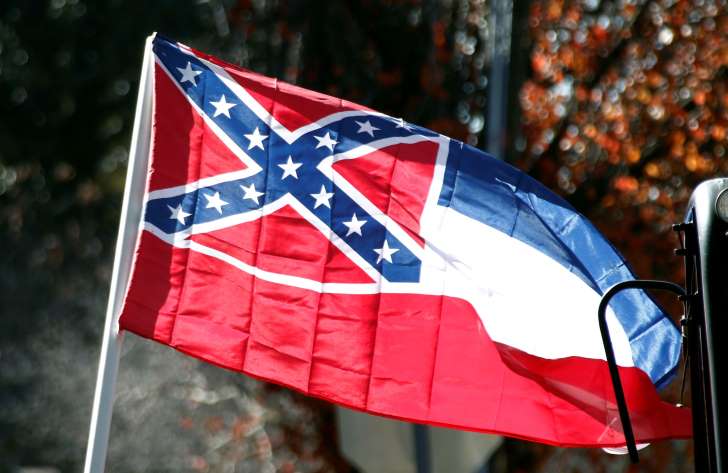
A Mississippi judge has ruled that the state flag — which includes the Confederate emblem — is “un-American.” The reason, said Judge Carlton Reeves, is simple: It represents an effort to break away from the United States of America.

I happen to agree with him. The judge, though, stopped short of ordering the Confederate symbol to be removed from the Mississippi state flag.

Reeves’ opinion came after he heard arguments from an African-American plaintiff who argued that the symbol violates his “dignity.” Carlos Moore, a lawyer, said the U.S. Supreme Court ruling that legalized gay marriage protected citizens’ fundamental rights of dignity.

Reeves, who also is African-American, didn’t issue a definitive ruling on the flag, but said that the symbol of the Confederacy is inherently un-American.

An assistant state attorney general argued that the decision to remove the symbol ought to come from the state legislature, as it is a political issue. Perhaps it is.

I totally understand the anger that the symbol gins up in the minds of Americans. For me, the symbol suggests treason.

The Confederacy came into being by those who wanted to remove themselves from the United States of America. They wanted to create a separate nation. The Confederate States of America then went to war with the U.S. of A., seeking to defeat the United States on the battlefield and then form a sovereign nation that would sanction, among other things, the enslavement of human beings.

Can there be anything more un-American than that?

Stay tuned. This debate is going to fire itself up … all over again.

Gov. Kasich faces a bitter irony

kasich

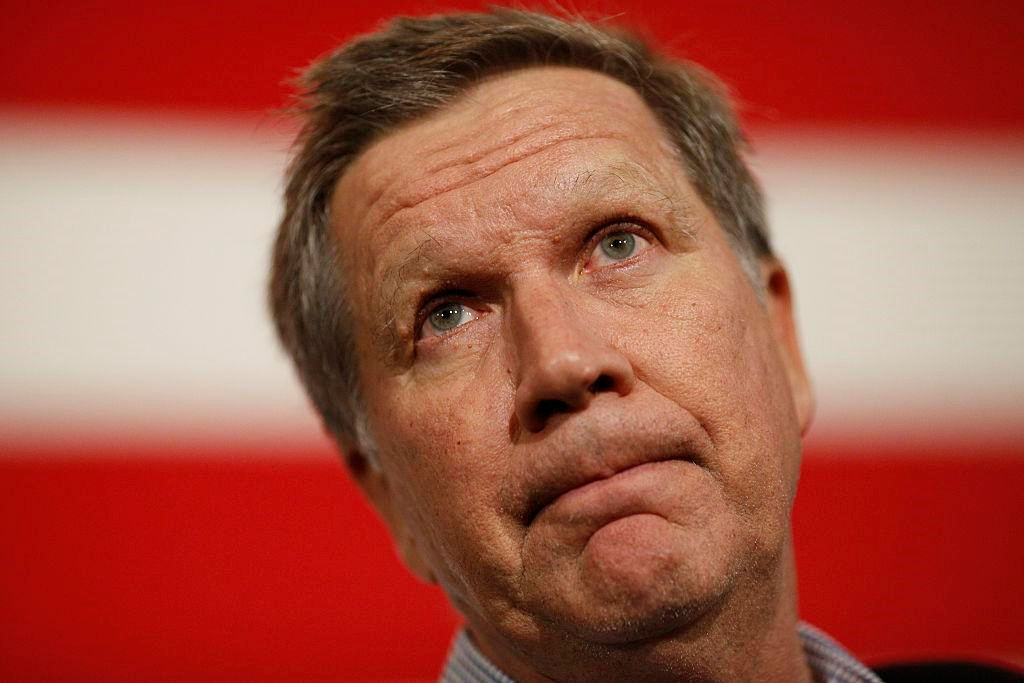
John Kasich must feel like the unluckiest politician in America.

He’s caught in perhaps the most bitter irony in recent political history.

The Ohio governor is running for the Republican Party’s presidential nomination. He’s one of three men still standing in what began as a 17-candidate GOP primary free-for-all.

Given that we’ve been talking — a lot! — about public opinion polling in this presidential campaign, it’s good to mention this: Kasich stands alone among the three men still running as the only candidate who can defeat probable Democratic nominee Hillary Rodham Clinton. Donald Trump loses big to Clinton; so does Sen. Ted Cruz of Texas.

Why, then, does Gov. Kasich still struggle as the longest shot of all the GOP candidates who will become the party’s presidential nominee this summer?

The Republican base has endorsed Trump and Cruz in all those primaries and caucuses. Kasich has won exactly one contest: in Ohio, the state he governs. Hey, man, he had to win that one, right?

I’ve heard pundit after pundit, voter after voter say the same thing: Gov. Kasich is the last grown-up in this race.

Trump and Cruz are despised by the Republican establishment for varying reasons. Trump lacks a governing philosophy; Cruz seems to have virtually no friends in the U.S. Senate, where he has served since January 2013.

It appears, though, that one of those two individuals is going to carry the GOP banner into the fall against Clinton. Those polls? They keep showing they’ll lose. Maybe by a lot.

Kasich continues to poll far better vs. Clinton than either of them.

He also continues to lag far behind in the Republican Party polls of primary voters.

Poor guy. I feel sorry for Gov. Kasich.


Ryan settles it: He’s will not accept it

90

I’ve been waiting for this declaration.

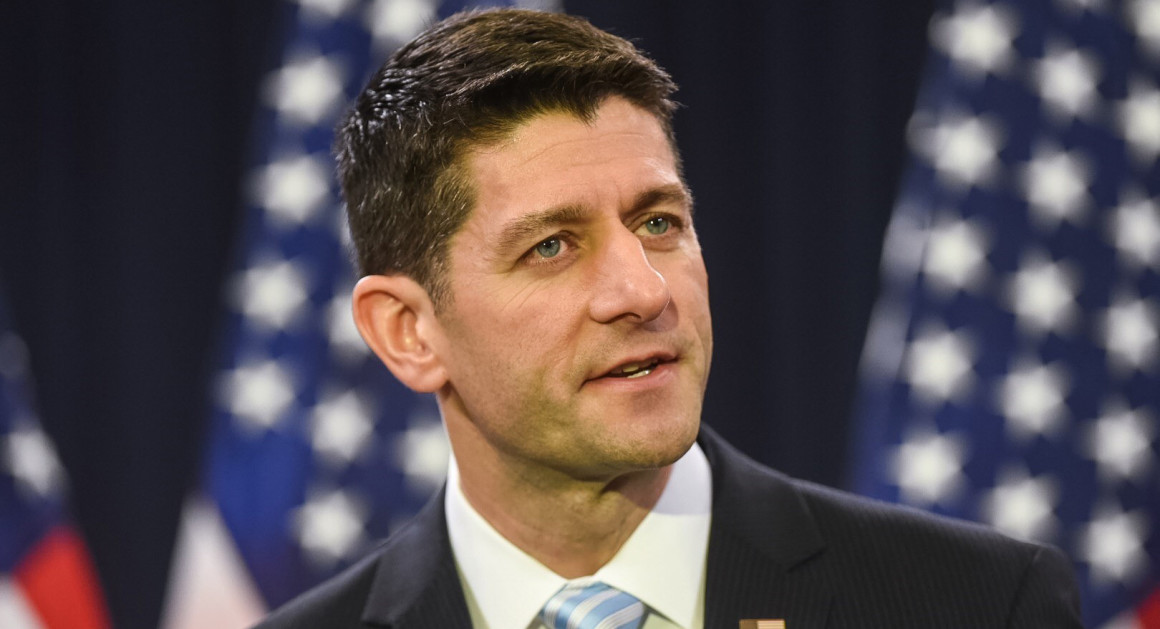
Today, it finally came from U.S. House Speaker Paul Ryan, who declared that he will not accept the Republican Party’s presidential nomination if it’s offered to him.

There. It’s a done deal.

Ryan’s declaration spells out a gloomy prospect for the Republican Party. It’s going to nominate — more than likely — one of two men who hold tremendous negative ratings among rank-and-file voters.

Donald J. Trump will go to the GOP convention with more delegates than anyone else. U.S. Sen. Ted Cruz of Texas will show up with the second-most delegate stash.

Neither of these fellows is going to defeat probable Democratic nominee Hillary Rodham Clinton, although surely their partisans will argue differently.

Ryan might have been able to rescue his party from what could turn out to be an electoral landslide loss. He’d bobbed, weaved, dodged and danced all over the question about whether he’d be open to a draft at the convention in Cleveland, Ohio.

“Count me out,” he said today. The convention should nominate someone who “actually ran for the job,” he said.

Don’t misread my intention here.

I don’t think Paul Ryan should become the next president. I voted against the ticket on which he ran in 2012 as the VP nominee with GOP presidential nominee Mitt Romney.

It would have been a fascinating development in the extreme, though, to see whether the convention could turn to him as a sort of political savior.

It won’t happen.

Now the party is left with a sour choice.

Here’s a thought: Let’s join OPEC

hf_128935_article

The Organization of Petroleum Exporting Countries has becomes something of a four-letter word in the United States.

OPEC is evil. It intends to do us harm. We don’t want to be “dependent” on oil produced in countries that hate us.

You’ve heard the mantra. I’ve heard it, too. It all started about the time of the first Arab oil embargo in 1973.

Here, though, is a notion that ought to get some serious consideration.

Now that the United States also is a “petroleum exporting country,” why don’t we join OPEC at the conference table?

OPEC comprises a lot of nations that do hate the United States. Venezuela is one of them. Iran, too.

However, now that we’re the big dog in the fossil fuel-producing pack, it would seem to make sense that we could exert our own influence over OPEC’s decision-making as it grapples with whether to reduce or increase production in an effort to control worldwide fuel prices.

Through a series of on-going efforts, Americans have eliminated this country’s dependence on imported oil. We’re now on the verge of becoming No. 1 in the world. We’ve overtaken Russia and Saudi Arabia. We’ve developed more renewable energy sources, helping increase the glut of petroleum on the world market.

OPEC, though, keeps meeting and deciding how much — or how little — oil to produce.

Isn’t it time the United States of America join OPEC? For that matter, we ought to bring our oil-rich allies in Canada and Mexico into the organization with us — providing, of course, that they’d be willing. We no longer need to curse the organization.


Cruz and Cornyn: an uneasy Senate team?

cornyn and cruz

Every state is represented in the U.S. Senate by two individuals who, under an unwritten rule of good government, would seek to work in close political partnership.

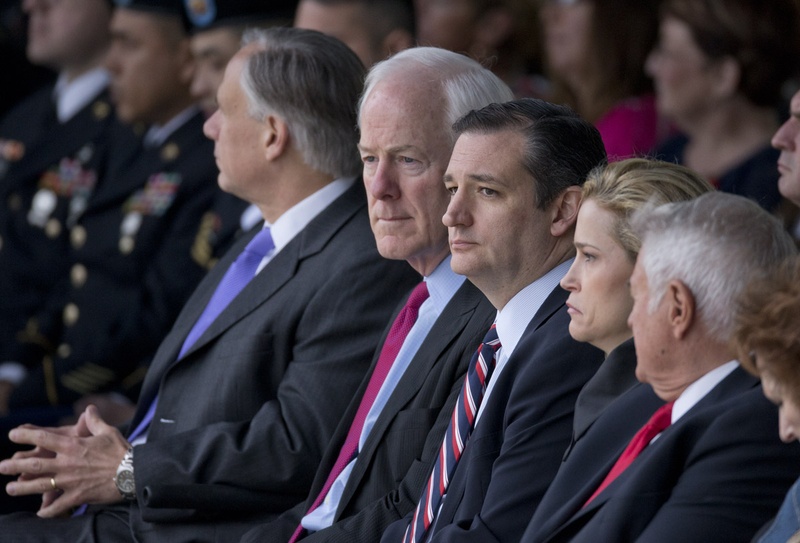
The Texas Tribune has published an interesting analysis of the relationship of Texas’s two Republican senators, one of whom is running for president of the United States.

Ted Cruz and John Cornyn, according to the Tribune, aren’t exactly close. They aren’t joined at the hip. You don’t see them singing each other’s praises.

Is it a metaphor for what we’ve heard about Cruz?

It’s been stated repeatedly during this Republican primary campaign that Cruz hasn’t made many “friends” in the Senate. He doesn’t “play well with others,” the saying goes. He called the Senate majority leader, Mitch McConnell, a “liar” in a Senate floor speech and then just this past week said he had no intention to take back what he said.

It might be a big deal — in a normal election cycle. This one isn’t normal. As the Tribune reports: “In any other circumstance, it would be curious that a viable presidential candidate did not have the support of his fellow state Republican. But each man in this case represents the visceral divide raging in the party: Cornyn is the consummate establishment team player, while Cruz is the TEA Party insurgent.”

Cruz has been a senator for slightly more than three years. Cornyn was elected in 2002. What’s more, the Senate is Cruz’s first elected office; Cornyn, on the other hand, served as Texas attorney general and, before that, as a member of the Texas Supreme Court.

Cornyn knows how to play the political game in Texas. He’s good at it. Is he exactly my kind of senator? Hardly, but I do respect the man’s political skill.

Cruz brings another element to this game. I would consider it his amazing degree of hubris and utter fearlessness.

It’s long been said that the U.S. Senate is a 100-member club that requires a bit of time for members to feel comfortable. It took young Ted Cruz no time at all to grab a microphone on the Senate floor and begin blasting away at his rivals.

It’s only a hunch on my part but it might be that the Texas rookie’s rush to the center of the stage could have been a bit off-putting to the more senior legislator.

It used to be said that the “most dangerous place in Washington” was the space between Sen. Phil Gramm and a microphone. Gramm left the Senate some years ago. Ted Cruz has taken up that new — apparently with great gusto.

Is he a team player? Are Texas’s two senators — Cornyn and Cruz — on the same page all the time? Consider this from the Tribune:

“There are no whispered tales in Senate circles about heated arguments between the two men or icy glares on the Senate floor. Instead, the most frequently used word observers use to describe the relationship is ‘disconnected.’”


No mandatory vote law needed, Mr. President

obama

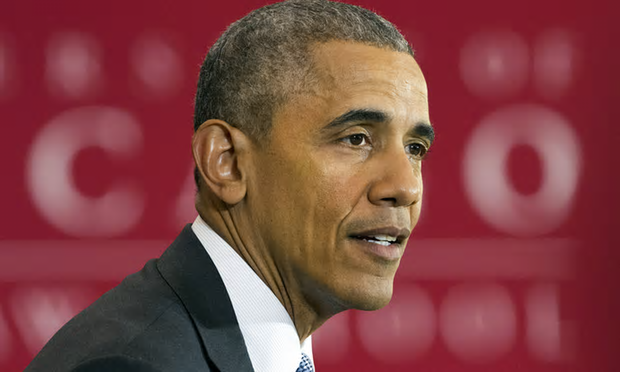
Barack Obama is frustrated at the political division and the apparent apathy among voters in the United States.

I share the president’s frustration.

However, I don’t share his enthusiasm for a suggested remedy.

Make voting mandatory, he said in a speech at the University of Chicago law school.

The Australians  do it right, he said, by requiring citizens to vote. He said such a requirement would be “transformative” by boosting turnouts to the 70 to 80 percent range.

There are ways to encourage turnout without making citizens do it, Mr. President.

We could declare Election Day a national holiday. Give everyone a day off from work to vote. That’s an idea.

As for mandatory voting, the U.S. Constitution grants us the right to vote. It doesn’t specify it as a condition of citizenship. Our rights as citizens depend on whether we choose to take full advantage of them.

I am proud to vote. I almost always wait to do so on Election Day, whether it’s in the primary or in the general election. There’s just something ham-handed and, dare I say, dictatorial in declaring that Americans must vote.

I also lament the pitiful voter turnouts. Only 53.6 percent of Americans voted for president in 2012. The Australian turnout was greater than 90 percent in its most recent general election. Yes, that is vastly better than our own electoral performance.

“We really are the only advanced democracy on Earth that systematically and purposely makes it really hard for people to vote,” Obama told the law students.

That might be true. There are many options out there to make it easier for Americans to vote. Writing that requirement into law isn’t one of them.

We must remain free to vote — or not vote — as we see fit.

For better or worse, that’s the American way.

Boston Globe crawls under Trump’s skin

trump04-2016getty

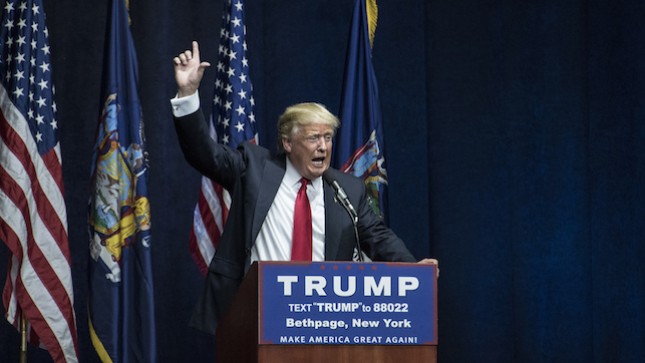
Donald J. Trump’s thin skin causes some hysterical reaction.

Take his response to a satirical front page the Boston Globe published today that imagines a Trump presidency.

The paper’s front page screamed with headlines about deportation of illegal immigrants, a tripling of immigration enforcement personnel and the filing of libel lawsuits against the media.

Trump called the Globe “worthless” and launched into a tirade in which he said the paper wrote a “dishonest story.”

It was a joke, Mr. Trump. I get that he wouldn’t find it funny. I also get that he dislikes any media outlet that criticizes him for the statements he has made while campaigning for the Republican Party’s presidential nomination.

But the Globe’s editorial page laid down the predicate for the bogus front page. There was no secret agenda involved here. The paper’s view of Trump is well-known. The editors of the Globe do not want the real estate mogul to become president. So, they engaged in a bit of satire to illustrate their point.

In the highly unlikely event that Donald Trump ever were to be elected president, he would certainly face a torrent of criticism for the statements he would make and for the policies he would enact. Sure, he also would get praise from some quarters.

This kind of critical analysis, though, simply goes with the territory.

The man needs to toughen up his skin.


Paradise awaits political panderers

panda1.0

New York is a paradise for those who love to pander for votes.

That’s especially true in New York City, the Big Apple.

Think of it: The city of 8 million-plus residents has a large Jewish-American population; the Catholic Church is big there, as well; it has a large African-American bloc of residents and a significant LGBT community; it is home to blue-collar and white-collar residents; progressives and conservatives live there; a lot of veterans call NYC home; immigrants from all over the world have settled there.

Why, there’s a group to which to pander for any of the five candidates competing for their parties’ presidential nomination.

The city has enough groups to go around several times among all five of them.

The state’s all-important primary is coming up a week from this coming Tuesday.

For Democratic candidate Bernie Sanders, this is it. He’s got to win it to stay viable as a presidential hopeful. Donald J. Trump must win the Republican primary big, too. Bernie was born in Brooklyn; Trump was born in Queens. They’re home boys. They might have less need to pander than the others.

Rest assured, though, they’re going to pander to the home-boy crowd, the folks who want to vote for one of their own.

I can hear them now talking smack with crowds about how they know more about the city than their rivals. Yep, that’s pandering, too.

Meanwhile, the others — even Hillary Clinton, who represented New York in the Senate for eight years — are going to try to out-pander each other in their quests for votes.

It won’t be pretty.

Then again, gut-fighter politics hardly ever is a thing of beauty.


Who’s done most to earn presidency?

kasich

Now that the debate over which presidential candidates are “qualified” to assume the office if they get elected is more or less over, let’s turn to actual accomplishment.

Part of the qualification argument ought to include who among the five individuals running for the office have done something worthy of consideration. Do they have sufficient executive experience? Have they accomplished anything of substance legislatively? Does business experience matter?

Let’s get the easy stuff out of the way first.

The business experience is helpful in a limited way. Yep, that notion zeroes in on Donald J. Trump. However, as I’ve noted before — although not recently — government is not intended to be run “like a business.” Trump seems to equate everything to “cutting deals.” Treaty negotiation? “I’ll make the best deals imaginable,” he says. Working with Congress? Same thing. Trade agreements? “We’re losing everywhere; we won’t when I’m president,” he boasts.

Knock it off, Trump! You cannot do these things in a vacuum.

He’s got zero government experience. To borrow a phrase: Trump is a loser.

Government executive experience matters much more. Of the remaining candidates, Ohio Gov. John Kasich and former Secretary of State Hillary Clinton qualify. I’d rate Kasich’s years as governor over Clinton’s as secretary of state. Kasich has had to manage a budget, deal with legislators, fight with constituents — sometimes all at once.

Clinton has managed a huge federal agency. She flew more miles to more countries than any previous secretary of state; I’m unsure where here successor, John Kerry, stands in that regard. She has sought to negotiate disputes between nations and, yes, has been caught up in controversy. But her time at State matters … a lot!

Legislative accomplishment?

Here’s where it’s kind of a runaway.

Clinton, U.S. Sens. Ted Cruz of Texas and Bernie Sanders of Vermont all have congressional experience. None of them can boast of an accomplishment that measures up to Kasich’s time in the U.S. House of Reps.

I’m trying to figure out which major piece of legislation has any the names of Clinton, Cruz or Sanders. Cruz’s major “accomplishment” was to mount that idiotic filibuster in an effort to wipe out the Affordable Care Act. Sanders and Clinton can’t even “brag” about something so ridiculous.

Kasich, though, served as chairman of the House Budget Committee that played a major role in achieving a balanced federal budget in the 1990s. That is no small feat, given the toxic political climate at the time. The House was run by Republicans; the president, Bill Clinton, is a Democrat. The White House and Capitol Hill had different notions on how to achieve a balanced budget. They found common ground.

There, my friends, is where one candidate’s record shines.

Is it enough for Republicans to nominate him? Probably not. They’re going to haggle at their convention over whether to nominate two patently frightening “outsiders,” one of whom is the real thing (Trump), the other of whom (Cruz) keeps trashing the legislative body where he’s served since January 2013.

Sure, each of these people is technically “qualified” constitutionally to run for the office. And yes, that includes the Canadian-born-to-an-American-mother Cruz.

I still rate Clinton’s combined government experience — and I include her policy-making influence during her eight years as the nation’s first lady — as giving her a slight edge in the overall presidential qualification contest.

If only the Republican delegates this summer would come to their senses and deliver their party’s nomination to the remaining candidate, Gov. Kasich, who actually has something to show for his lengthy public service record. Then we could have a serious debate this fall on who to select as the nation’s next president.

If only …